Reviewed · 2-DAY EXPERIENCES
Two Day Angkor Temples Tours
Angkor rewards those who slow down. This two-day private tour brings together the major temples around Siem Reap with an air-conditioned vehicle, flexible planning, and guides who can explain both the stones and the beliefs behind them. I especially like the mix of famous sites and quieter monuments, plus the chance to work with guides such as Borey, Kim, Kimhoeun, or Bunleat, depending on availability.
I also like the strong focus on photography and personal attention. The tour is not a fixed group outing, since only your own party takes part, and guides can adjust the pace to your interests. The main drawback is that the $102.57 price does not include temple admission or GST, so your final cost will be higher. Two days also make for full sightseeing, particularly in Cambodia’s heat.
In This Review
- Key Points Before You Book
- Why Two Days Works Well at Angkor
- Day One: Fine Carving and Forgotten Corridors
- Banteay Srei, the Small Temple with Big Detail
- Banteay Samre and the World of Suryavarman II
- Preah Khan, a Maze of Stone and Shade
- Neak Pean, a Small Shrine on Water
- Ta Som, a Quick Look at a Tree-Framed Gate
- Eastern Mebon and Pre Rup, Two Temple-Mountains
- Day Two: Angkor’s Grandest Monuments
- Angkor Wat, the Essential Two-Hour Visit
- Phnom Bakheng, a Brief Stop on the Schedule
- Angkor Thom and the Bayon
- Ta Prohm, Where Trees Share the Ruins
- Guides, Transport, and the Private Format
- Is $102.57 a Good Value?
- Who Should Choose This Tour?
- Should You Book the Two-Day Angkor Tour?
- FAQ
- How long is the Angkor temples tour?
- What sites are visited on the first day?
- What sites are visited on the second day?
- Is the Angkor admission ticket included?
- Is GST included?
- What transportation is provided?
- Is this a private tour?
- Is hotel pickup available?
- What level of fitness is needed?
- Can I cancel for a full refund?
Key Points Before You Book
- Banteay Srei adds delicate detail: This pinkish stone temple is one of the finest places in the Angkor area for close-up carvings.
- The private format gives you room to adjust: Your guide can respond to your pace, photography stops, and favorite temples.
- Day two covers the essential icons: Angkor Wat, Angkor Thom, and Ta Prohm form the heart of the experience.
- The guides are a major strength: Borey, Kim, Kimhoeun, and Bunleat are praised for clear English, historical context, flexibility, and friendly service.
- Admission is extra: The tour price covers the air-conditioned vehicle, but not the Angkor pass or GST.
- The schedule favors variety: You see Hindu temples, Buddhist monuments, temple-mountains, reservoirs, galleries, and tree-covered ruins.
Why Two Days Works Well at Angkor
The Angkor complex is not one temple. It is a wide collection of monuments built over several centuries, with different rulers, religions, designs, and purposes. Trying to cover the highlights in one rushed day can leave you with a blur of towers and stone corridors.
This plan gives you two distinct sightseeing days. The first moves through Banteay Srei and several less famous temples, including Preah Khan, Neak Pean, Ta Som, Eastern Mebon, and Pre Rup. The second focuses on the best-known monuments: Angkor Wat, Phnom Bakheng, Angkor Thom, and Ta Prohm.
That division makes sense. Day one has more stops, but several are compact. Day two gives longer visits to the grandest sites. You should still expect a full schedule, with plenty of walking, uneven ground, stairs, and outdoor exposure. A moderate level of physical fitness is advised.
The private setup is especially useful here. You are not tied to the interests of a large group, and the guide can spend more time on a carving, a religious symbol, or a photo angle if it catches your attention. Some guides also adapt the plan after seeing which temples interest you most.
A few more options around Siem Reap worth reading up on
- Angkor Wat Sunrise or Sunset Tour with Guide from Siem Reap
★ 5.0 · 12,109 reviews - Siem Reap: Angkor Wat: Small-Group Sunrise or Sunset Tour
★ 5.0 · 9,444 reviews - From Siem Reap: Kampong Phluk Floating Village Tour by Boat
★ 4.9 · 6,979 reviews
Day One: Fine Carving and Forgotten Corridors
Banteay Srei, the Small Temple with Big Detail
The day begins at Banteay Srei, built in the 10th century and dedicated to Shiva. Unlike the huge monuments that follow, this temple is relatively small, but its pinkish stone and precise carvings make it a highlight.
I would give this stop your full attention. The scale lets you study the decoration at close range, and the stone has a warmer color than much of Angkor. The one-hour visit is well judged for a first look, though you may want more time if you enjoy photography or architectural detail.
Admission is not included, so you will need the required temple pass separately. The site is also farther from the central Angkor group than several other stops, which is one reason it is useful to include it within a planned private route.
Banteay Samre and the World of Suryavarman II
Banteay Samre dates from the 12th century, the same broad period as Angkor Wat, and was dedicated to Vishnu under King Suryavarman II. Its preservation is described as fairly strong, giving you a useful contrast with the more heavily weathered ruins.
The one-hour stop helps break up the day. You can look at the structure as a complete temple rather than only a collection of surviving walls. The visit also prepares you for Angkor Wat by introducing the religious and architectural world of the same royal period.
Something completely different for another day:
- Sunset tour of Kampong Phluk stilts home village on the Tonle Sap
★ 5.0 · 4,865 reviews - Siem Reap: Angkor Wat 2-Day Tour with Sunrise and Sunset
★ 4.9 · 4,429 reviews - Siem Reap: Kampong Phluk Floating Village Tour with Boat
★ 4.9 · 3,843 reviews - Siem Reap: Full-Day Angkor Wat Guided Tour with Sunset
★ 4.9 · 3,803 reviews
Preah Khan, a Maze of Stone and Shade
Preah Khan means Sacred Sword, and it is one of the largest complexes in Angkor. The plan allows about an hour, enough to see its vaulted corridors, carvings, and lichen-covered stonework without treating the temple as a quick photo stop.
Preah Khan is a good choice for anyone who likes ruins that feel layered and slightly mysterious. It provides a useful counterpoint to Ta Prohm, which appears on day two. Preah Khan generally receives fewer visitors than the most famous sites, though you should not expect solitude.
Your guide’s explanations matter here. A large complex can be confusing without help, and the guides associated with this tour are praised for explaining not only dates and kings, but also Hindu and Buddhist ideas. That context can turn a maze of corridors into a place with a clearer purpose.
Neak Pean, a Small Shrine on Water
Neak Pean, also called Preah Neak Poan, is a petite Buddhist temple built by Jayavarman VII. It sits on an artificial island in the middle of Jayatataka, a man-made reservoir north of the Baray.
The visit lasts about 40 minutes. That is enough for a compact monument, but the approach and setting are part of the appeal. Neak Pean gives you a change of pace after Preah Khan, shifting from enclosed stone corridors to a structure associated with water and healing.
This is not the stop to choose if you want another massive temple. Its value comes from the design and setting, not size.
Ta Som, a Quick Look at a Tree-Framed Gate
Ta Som was built in the late 12th century by Jayavarman VII and is considered a satellite temple of Preah Khan. The itinerary allows 30 minutes, making it one of the shortest visits.
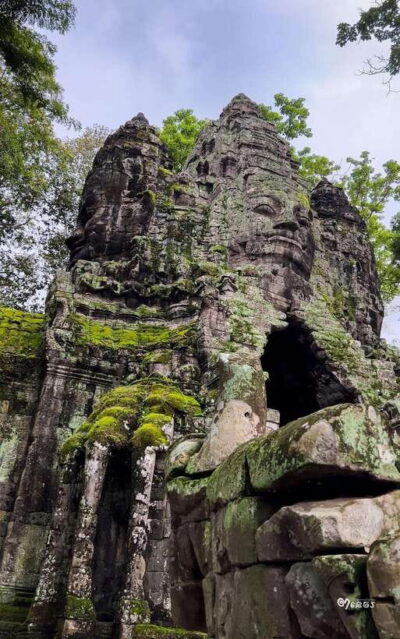
The eastern gate, with its large sculpted head and vegetation, is the feature most likely to stay in your memory. The stop works well as a brief pause, particularly if you want a photograph without spending another hour exploring a major complex.
If small temples appeal to you, tell your guide. The tour is private, so you may be able to adjust how much time you spend here, within the limits of the day’s route.
Eastern Mebon and Pre Rup, Two Temple-Mountains
Eastern Mebon was built by Rajendravarman II between 944 and 968. It once stood on an island in the center of the Eastern Baray reservoir, but the reservoir is now dry and the temple sits on land.
The 50-minute visit offers a chance to see a Hindu temple shaped by the old water system. The lost water around it is important: Angkor’s monuments were closely tied to reservoirs, canals, and royal planning. Without that context, Eastern Mebon can look like an isolated ruin. With it, the site becomes part of a much larger system.
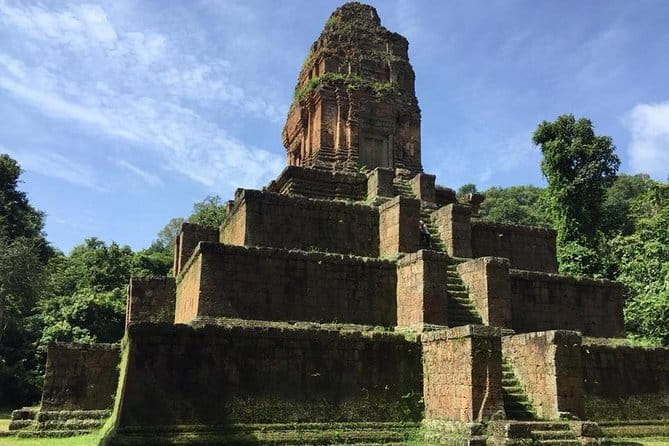
Pre Rup, about a kilometer south, was also built by Rajendravarman II. It is a pyramid-shaped temple-mountain with three upper tiers. The schedule allows about 40 minutes.
Pre Rup is a strong final stop for day one because its stepped form is easy to understand from the ground. You can see how the temple rises in stages toward the upper sanctuary. It is another useful contrast with the long galleries of Angkor Wat and the maze of Preah Khan.
Seven stops make day one busy. The advantage is variety. The tradeoff is that you will not study every monument at length. If your group prefers slow exploration, speak with the guide before the day begins.
Day Two: Angkor’s Grandest Monuments
Angkor Wat, the Essential Two-Hour Visit
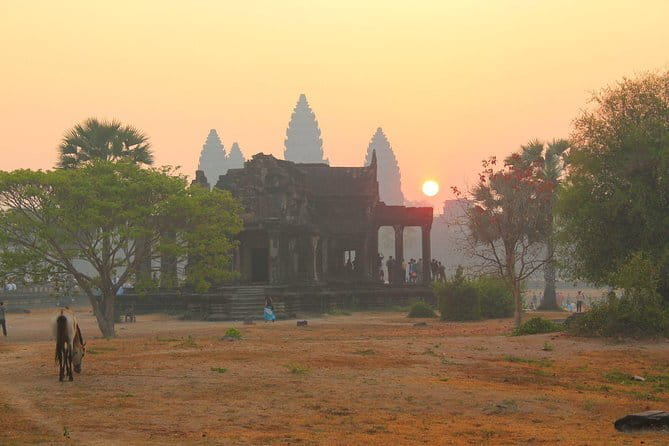
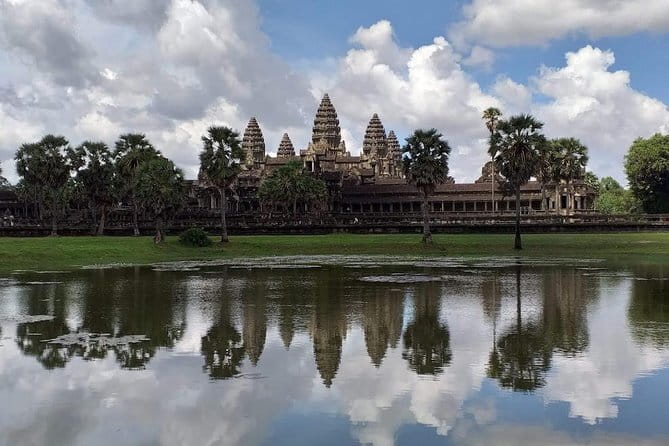
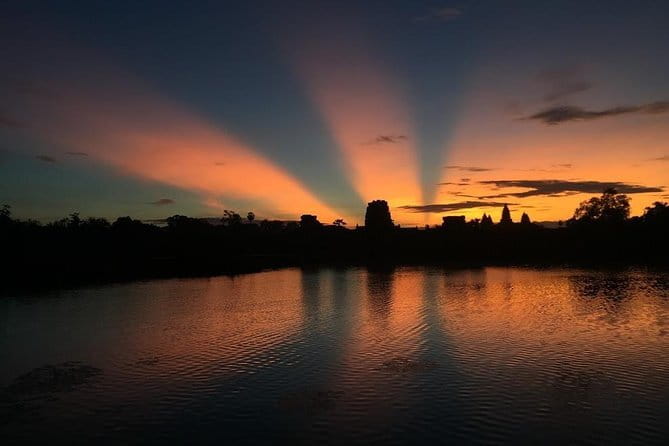
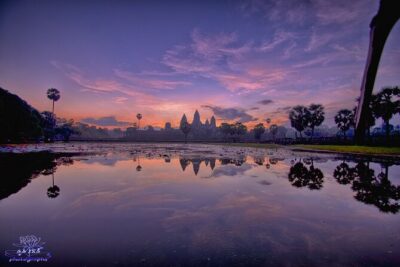
Angkor Wat was built by Suryavarman II in the 12th century to honor Vishnu, the Hindu deity with whom the king identified. It is the largest and most famous monument in the complex, and the two-hour visit gives you a reasonable amount of time to appreciate its scale.
Do not treat Angkor Wat as a single viewpoint. Its towers, galleries, courtyards, and carvings deserve a slow look. The temple’s size can make the visit feel overwhelming at first, so a guide is useful for pointing out the main design and religious themes.
The tour does not include admission. You will need to arrange the Angkor pass separately, and you should account for that when judging the $102.57 cost. The price covers a private two-day vehicle and guiding service, not entry to the monuments.
Phnom Bakheng, a Brief Stop on the Schedule
Phnom Bakheng was built by Yasovarman I in the early 10th century and is regarded as the first temple-mountain built near Angkor. It has five tiers and seven levels of towers.
The listed duration is only one minute, so this should be understood as a very brief stop or viewing point rather than a full temple visit. If Phnom Bakheng matters to you, ask the guide how it fits into the day before booking. The supplied schedule does not promise an extended climb or a long visit.
That short timing may be practical because day two already includes three major monuments. Still, anyone specifically interested in temple-mountains should clarify the plan.
Angkor Thom and the Bayon
Angkor Thom means Great City and was the last city of Angkor, built by Jayavarman VII. At its height, the surrounding region may have supported a population of one million people. The two-hour visit allows you to explore more than a single shrine.
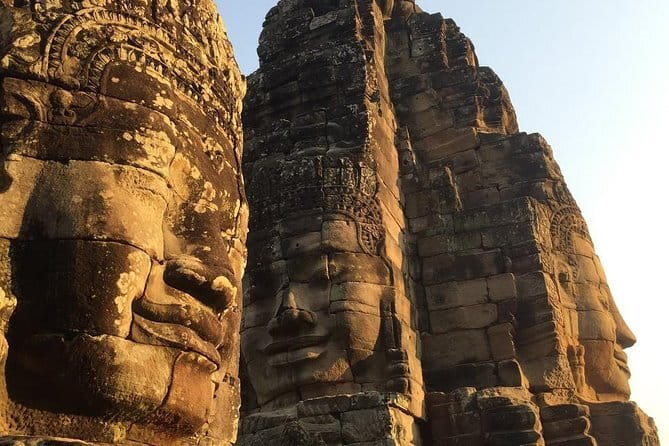
The city is centered on the Bayon, which is known for its monumental carved faces. Angkor Thom is valuable because it gives you a sense of urban scale. You are not just looking at a temple, but at the center of a royal city.
A guide can help you separate the city’s gates, walls, terraces, and central temple area. Without that help, the complex can feel like a series of disconnected stops. With clear explanations, you get a better picture of how Jayavarman VII shaped the capital.
Ta Prohm, Where Trees Share the Ruins
Ta Prohm is one of the most atmospheric ruins at Angkor. Its fame comes from the way trees and roots have grown through the stone, giving the site a powerful sense of age and change.
You have about an hour here. That is enough to see the major areas and take photographs, but the temple’s popularity can make the pace feel slower. The roots and galleries are the attraction, yet they also create narrow passages and crowded viewing points.
Ta Prohm is a good place to tell your guide what kind of visit you want. Some people care most about photographs, while others want the temple’s religious purpose and restoration story explained. The guides connected with this experience are praised for both photography help and cultural interpretation.
Guides, Transport, and the Private Format
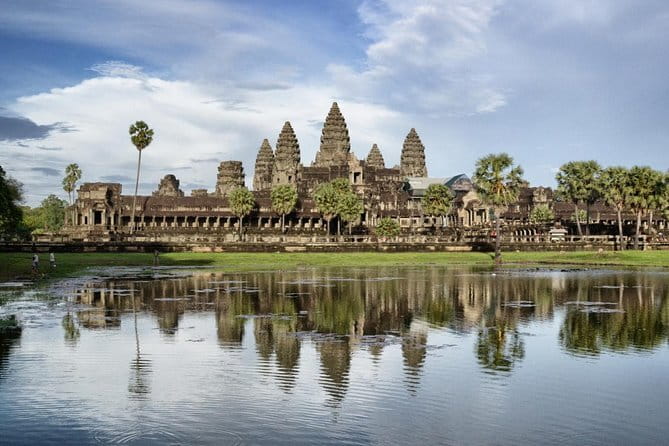
The guide can make or break an Angkor visit. The strongest praise for this experience centers on the guiding, especially the English ability, historical explanations, friendly manner, and willingness to adjust plans.
Borey is repeatedly singled out for his communication before the tour, flexibility, local roots in Siem Reap, and skill at finding photo spots. He is also praised for carrying cold water and helping with iPhone photography. Kim is described as adding useful detail about both ancient Angkor and Cambodia’s more recent past.
Kimhoeun has worked alongside Borey and is praised for strong knowledge of the Angkor kingdom and attentive service. Bunleat is noted for spending extra time explaining details, which can be a plus if you prefer an academic style.
Guide availability may vary, so you should not assume a particular person is guaranteed unless confirmed when booking. The stated qualities are consistent: honest, reliable, flexible, and interested in what you want from the day.
Transport is by air-conditioned vehicle. That matters in Siem Reap, where two days of temple visits mean repeated movement between outdoor sites. The private vehicle also keeps your group together and avoids the fixed pace of a large coach.
Is $102.57 a Good Value?
At $102.57 per person, the tour is not an all-inclusive temple package. The Angkor admission ticket and GST are extra, so calculate the total before you commit.
Still, the value is fairly strong for a private two-day experience if you are traveling with family or friends. You receive an air-conditioned vehicle, a dedicated guide, a broad route, and the ability to discuss changes with the person leading your group. Group discounts may also improve the per-person price.
The value is weaker if you only want transportation or prefer to explore independently. In that case, paying for a private guide may feel unnecessary. But Angkor covers a large area, and the historical, religious, and photographic help can make the extra cost worthwhile.
The high customer satisfaction figure, with 100 percent recommending the experience and 18 listed reviews, supports the tour’s reputation. I would still focus on the practical details: admission is extra, day one is packed, and the brief Phnom Bakheng stop needs clarification.
Who Should Choose This Tour?
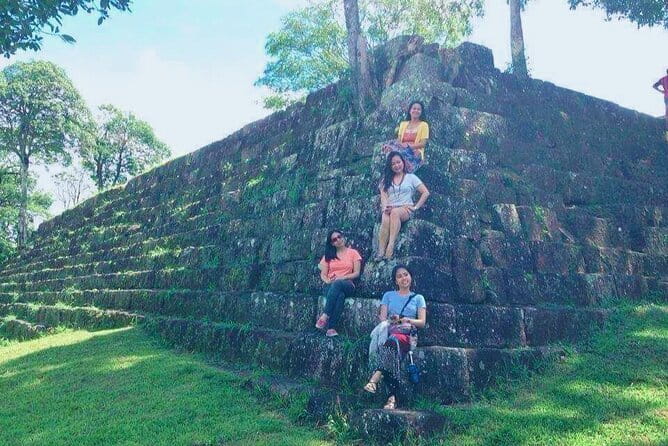
This experience suits first-time visitors who want the major Angkor sites without arranging separate transport and guides. It also works well for families, couples, and small groups who want their own pace.
You will get the most from it if you enjoy hearing how Hinduism, Buddhism, royal power, water systems, and temple design connect. It is also a good match if photography matters to you, since the guides make that part of the service a priority.
You may want a different plan if you prefer very slow visits, long independent walks, or only the central temples. Seven stops on day one can feel like a lot, and the two-hour blocks at Angkor Wat and Angkor Thom may pass quickly for serious architecture fans.
You should have moderate physical fitness. The supplied information does not promise special accessibility arrangements, so ask before booking if mobility is a concern.
Free cancellation is available up to 24 hours before the start time. Cancellations within 24 hours are not refunded, and poor weather may lead to a different date or a full refund.
Should You Book the Two-Day Angkor Tour?
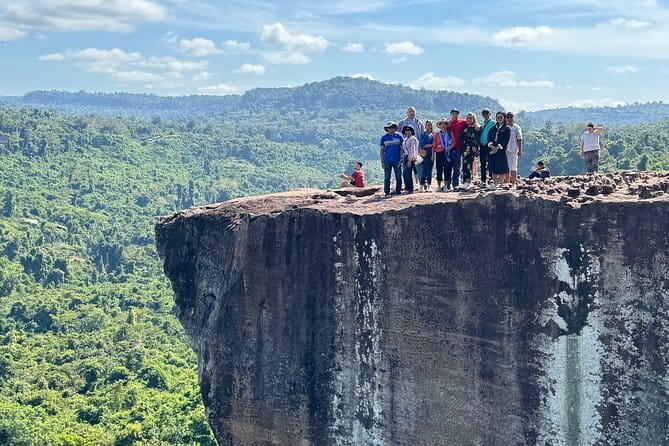
I would book this tour if you want a private, well-organized introduction to Angkor with a guide who can explain more than names and dates. The combination of Banteay Srei’s carving, Preah Khan’s corridors, Angkor Wat’s scale, Angkor Thom’s city plan, and Ta Prohm’s tree-covered ruins gives you a broad and satisfying look at the area.
Before paying, confirm the guide assigned to your group, the separate temple-pass cost, and how Phnom Bakheng will be handled. If you are comfortable with those details and prefer personal service over a large group, this is a strong choice for two days in Siem Reap.
FAQ
How long is the Angkor temples tour?
The experience lasts approximately two days.
What sites are visited on the first day?
Day one includes Banteay Srei, Banteay Samre, Preah Khan, Neak Pean, Ta Som, Eastern Mebon, and Pre Rup.
What sites are visited on the second day?
Day two includes Angkor Wat, Phnom Bakheng, Angkor Thom, and Ta Prohm.
Is the Angkor admission ticket included?
No. Admission tickets are not included in the tour price.
Is GST included?
No. GST, or Goods and Services Tax, is listed as an additional expense.
What transportation is provided?
An air-conditioned vehicle is included.
Is this a private tour?
Yes. Only your own group participates in the activity.
Is hotel pickup available?
Pickup is offered, but the stated ticket redemption point is Angkor Enterprise on Apsara Road in Krong Siem Reap.
What level of fitness is needed?
A moderate level of physical fitness is recommended.
Can I cancel for a full refund?
Yes, if you cancel at least 24 hours before the experience begins. Cancellations within 24 hours are not refunded. If poor weather causes the operator to cancel, you will be offered another date or a full refund.
Newest reviews from Siem Reap
- War Museum, Killing Field, and APOPO Hero RATs Tour★ 5.0 · 7 reviews
- Angkor Wat at Sunrise★ 4.0 · 7 reviews
- Siem Reap Angkor Airport Taxis (from Airport to Hotel)★ 5.0 · 44 reviews
- Cambodian Cooking Class and Oxcart Ride with Local Village Tour★ 5.0 · 4 reviews
- Secret Temples of Angkor – Guided Tour in Siem Reap★ 5.0 · 6 reviews
- Short Cycling at Countryside★ 5.0 · 29 reviews
- SIEM REAP E-BIKE HALF-DAY COUNTRYSIDE (25-30 km)★ 4.0 · 1 review
- Unveiling the Mystical Beauty of Phnom Kulen National Park★ 5.0 · 6 reviews
2-Day Experiences, compared.
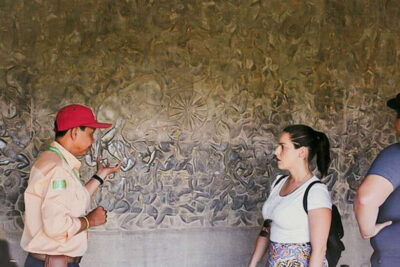
Angkor Wat 2-Day Tour with Sunrise and Sunset
Read our review →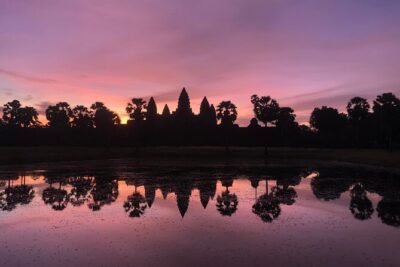
Angkor 2-Day Sunset & Sunrise Small-Group Tour
Read our review →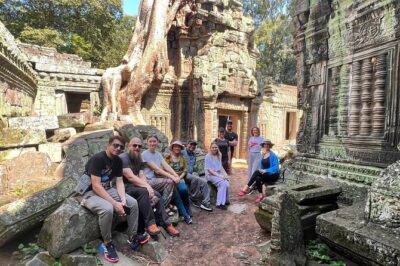
2 Days Exclusive Temple Highlights with Sunset and Sunrise Tour
Read our review →
Angkor Sunrise 1- or 2-Day Guided Temples Tour
Read our review →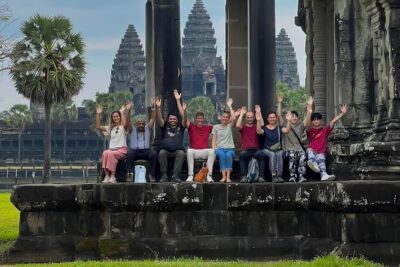
2-Day Angkor Wat With Small, Big Circuit and Banteay Srei Tour
Read our review →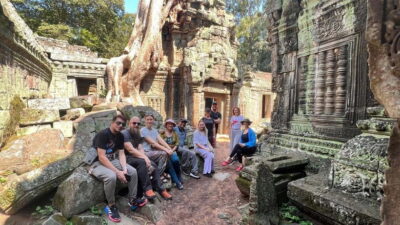
2-Day Temple Highlights Sunrise and Sunset Option
Read our review →