
Reviewed · CYCLING TOURS
SIEM REAP E-BIKE HALF-DAY COUNTRYSIDE (25-30 km)
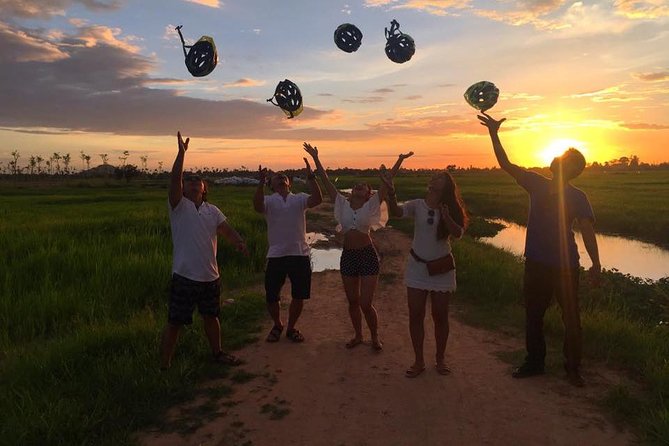
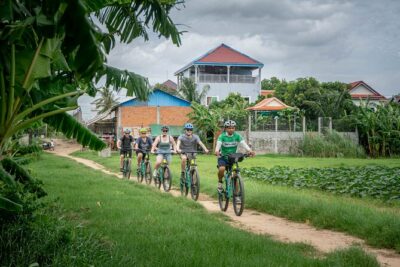
Quiet roads begin just beyond town. This five-hour e-bike tour trades Siem Reap’s temple crowds for village markets, rice fields, farms, and Prasat Wat Atvea. I like the chance to see everyday rural life, and I like that the route includes a 12th-century temple many visitors miss. The main concern is the riding itself: rough tracks and early traffic mean you should have recent bicycle or motorbike experience.
The $44.88 price covers your guide, hotel pickup and drop-off, electric bike, helmet, snacks, and refreshments, which makes it a fair half-day package. I also like the small local details, from village-made cakes at the market to duck, fish, vegetable, and lotus farms. Still, this is not a passive sightseeing ride. You need to steer, balance, and manage the bike yourself.
In This Review
- Key points to know before you book
- Why this half-day ride feels different
- The 8:00 am start and ride out of Siem Reap
- A rural market filled with everyday food
- Village homes and working farms
- The Buddhist pagoda and lotus farm
- Prasat Wat Atvea, a quieter 12th-century stop
- What riding the electric bike is really like
- Guide commentary and the private format
- Is $44.88 good value?
- Weather, clothing, and practical preparation
- Who should book this countryside e-bike tour?
- Should you book it?
- FAQ
- What time does the tour start?
- How long does the experience last?
- How far do you ride?
- Is hotel pickup included?
- Is the tour private?
- Is an electric bike and helmet provided?
- Is lunch included?
- Can I cancel for a full refund?
Key points to know before you book
- Start at 8:00 am: The morning departure gives you cooler conditions than a later ride, though the first stretch through town can meet peak-hour traffic.
- Ride about 25 to 30 kilometers: The route covers much more ground than a walking tour, moving from Siem Reap into rural villages and farms.
- Expect real countryside tracks: Some surfaces are rough, so recent bicycle or motorbike experience matters.
- Taste local market food: You can sample village-made cakes and other products sold alongside vegetables, fish, and meat.
- Visit Prasat Wat Atvea: This 12th-century Buddhist temple dates from the same period as the Angkor temples and usually sees fewer visitors.
- Private, not shared: Only your group participates, with an English-speaking guide leading the way.
Why this half-day ride feels different
Many Siem Reap outings focus on major Angkor monuments. This one points in another direction. You leave the town center and spend the morning looking at how food is grown, sold, and prepared in the villages around the city.
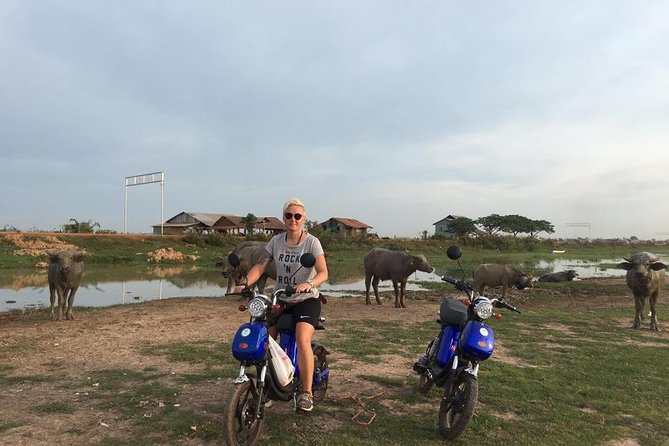
That change of pace is the tour’s main appeal. You are not just being driven past farmland. You are traveling at ground level, stopping at a rural market, looking at homes, and seeing farms that raise everyday food. An electric bike lets you cover 25 to 30 kilometers without the noise and fuel fumes of a standard motorbike.
The route is also efficient. A half-day ride can reach several types of countryside scenery, then finish at an old temple before returning you to your hotel. You get a useful taste of rural Cambodia without giving up an entire day.
The trade-off is clear. You must be comfortable controlling the bike. The tour uses electric motorbikes, and the route includes rough tracks. If you have not ridden a bicycle or motorcycle reasonably recently, this is not the right place to relearn balance and braking.
More Bike Tours in Siem Reap
- Siem Reap Countryside Bike Tour / E-Bike or Tuk Tuk
★ 5.0 · 935 reviews - Angkor Sunrise Bike Tour / E-Bike or Tuk Tuk
★ 5.0 · 615 reviews - Siem Reap: Bike the Angkor Temples – Full-Day 30km Tour
★ 5.0 · 463 reviews
The 8:00 am start and ride out of Siem Reap
Hotel pickup is included, and the tour begins at 8:00 am. That early start matters in Cambodia, where heat and humidity can build quickly. November, December, and January are described as the most pleasant months, while light cotton clothing is suggested for the warmer part of the year.
The first ride covers roughly four kilometers from town to a rural market. This sounds easy on paper, but the route begins in Siem Reap traffic. One important practical warning is that peak-hour traffic can make the opening section tricky, especially if you are not used to riding in a busy Southeast Asian town.
Your guide leads the group and provides commentary along the way. Since this is a private activity, the pace and attention are limited to your own group rather than a large mixed crowd. That should make it easier to ask questions or pause for help, though the tour still follows a planned half-day route.
Take the first section seriously. Wear clothing that keeps you cool, pay close attention to traffic, and do not assume the e-bike handles exactly like a regular bicycle. The supplied helmet is part of the tour, and the operator says the bikes are maintained and roadworthy.
A rural market filled with everyday food
The first major stop is a local market in a rural area. Here you can see villagers selling vegetables, fish, meat, and local cakes. The food is not presented as a staged cultural display. It is part of the ordinary shopping life of the community.
The market is a useful introduction to the countryside because it connects the farms later in the tour with the food you see for sale. You may look at a vegetable plot later and understand its place in the local economy. You may also notice how much of the market depends on products made or raised close by.
You have the chance to sample some of the local cakes and products. Snacks and refreshments are included, but lunch is not. That distinction matters. This is a morning outing with light food, not a full meal experience, so you should plan your lunch after the tour ends.
Market visits can also feel less predictable than a monument stop. Conditions depend on the day and what is being sold. The value comes from observing normal commerce rather than expecting a polished food demonstration.
Village homes and working farms
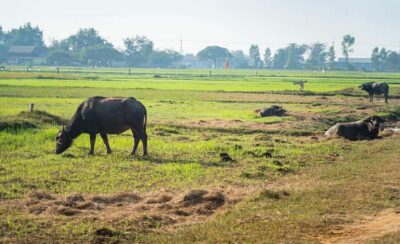
After the market, the ride continues through villages. You see Cambodian houses and get a closer look at how people live outside Siem Reap’s tourist center. The route then reaches farms growing vegetables and raising animals.
The listed stops include fish farms and duck farms, along with rice fields and wild birds. These are simple sights, but that is exactly why they matter. They show the basic work behind the food sold in the market and offer a fuller picture of life around Siem Reap.
I like this section because it gives the tour a clear purpose. You are not simply riding for scenery. You are following a chain from village homes to farming areas to the market. The guide’s English commentary helps explain what you are seeing, though the exact amount of detail may depend on the guide and your questions.
The ride also lets you notice changes in the surroundings at a slower speed than a car or tuk-tuk. You can stop at points along the route to look at fields, farms, and birds. Still, remember that this is an active ride. The rough surfaces may demand steady handling, particularly when the ground is uneven or loose.
Something completely different for another day:
- Angkor Wat Sunrise or Sunset Tour with Guide from Siem Reap
★ 5.0 · 12,109 reviews - Siem Reap: Angkor Wat: Small-Group Sunrise or Sunset Tour
★ 5.0 · 9,444 reviews - From Siem Reap: Kampong Phluk Floating Village Tour by Boat
★ 4.9 · 6,979 reviews - Sunset tour of Kampong Phluk stilts home village on the Tonle Sap
★ 5.0 · 4,865 reviews
The Buddhist pagoda and lotus farm
The route includes a Buddhist pagoda and a lotus farm. These stops add a quieter, more reflective part to the morning after the market and farms.
The pagoda gives you a look at a religious site outside the famous Angkor complex. The tour description does not promise a ceremony or a special event, so you should expect a visit rather than a scheduled religious performance. Dress in a respectful, practical way, especially since you will also be riding in hot weather.
The lotus farm offers a different kind of rural scene. Lotus cultivation is tied to food, local customs, and visual beauty in Cambodia, and the farm gives you a chance to see it as working agriculture rather than as a decorative garden.
Do not expect a long stop at every location. With a 25 to 30 kilometer route packed into about five hours, the schedule has to keep moving. The attraction is the range of places you see in one morning, not lengthy time at a single farm.
Prasat Wat Atvea, a quieter 12th-century stop
The final major sight is Prasat Wat Atvea, a temple built in the 12th century, during the same broad period as the Angkor temples. It gives the ride a strong historical finish without taking you into the most crowded temple circuit.
This temple is especially useful for people who have already seen Angkor Wat and want a different setting. The experience here is likely to feel more restrained than a visit to Siem Reap’s headline monuments. You can connect the architecture to the wider Khmer period while staying on a countryside route.
The temple also makes the e-bike practical. By riding, you reach a site that may not be part of every standard city itinerary, while still keeping the visit within a half-day plan. The route is not only about farms. It joins rural life with Cambodia’s older sacred architecture.
The supplied details do not give a precise visit length or describe the temple’s current condition, so keep expectations sensible. The value is in seeing a less commonly visited 12th-century site as part of a broader rural outing, not in treating this as a full temple-study tour.
What riding the electric bike is really like
The e-bike is fully charged, maintained, and supplied with a helmet. It provides the power needed to cover the route without the effort of a standard bicycle, but it does not remove the need for riding skill.
You still need to balance, steer, slow down, and adjust to changing surfaces. One particularly useful warning is that parts of the route are very rough. Good balance and weight transfer are important, especially if you have not ridden recently.
The tour suits someone who already rides bicycles or motorbikes with confidence. You do not need to be a competitive cyclist, but you should be able to handle five hours of mixed riding and remain alert in traffic.
If you are uncertain, think about your recent experience rather than your general fitness. A fit person who has not ridden for years may struggle more than a less athletic person who regularly rides. The operator asks you to check that your travel insurance covers the necessary travel activities, which is sensible advice for any motorbike-based excursion.
Guide commentary and the private format
An English-speaking guide leads the tour and explains the countryside, farms, market, and temple. That commentary is important because many of the stops would otherwise be easy to pass without understanding their purpose.
The guide can connect what you see at the market with what you see at the farms. You can also ask questions about village life, the crops, or the temple as you go. The available information does not provide the guide’s name, so there is no particular person to request when booking.
Because the tour is private, only your group takes part. This is a useful feature for a ride. A smaller group can make it easier to stay together, manage stops, and communicate with the guide. It also avoids the awkwardness of being matched with riders of very different abilities in a large group.
Private does not mean fully flexible. The experience still has a stated start time and a planned route, and the 25 to 30 kilometer distance remains a real commitment. Ask about any special needs when booking rather than assuming the route can be shortened.
Is $44.88 good value?
At $44.88 per person, the price is reasonable if you want transport, a guide, and several countryside stops in one package. It includes hotel pickup and drop-off, the electric bike, helmet, snacks, and refreshments. You are paying for more than bike rental.
The strongest value comes from the combination of transport and access. You cover rural roads efficiently, reach farms and a temple, and avoid arranging separate transportation. The guide also gives context that you would miss on a self-guided ride.
Lunch is not included, so allow for another meal afterward. That is not a serious weakness for a five-hour morning trip, but it is worth remembering when you budget for the day.
The price makes the most sense for an independent-minded visitor who wants to see beyond the main temple route. It makes less sense if you want a relaxed vehicle tour, dislike traffic, or are mainly interested in major Angkor monuments.
Weather, clothing, and practical preparation
Wear light cotton clothes. Cambodia can be hot and humid, and you will be outside for most of the morning. The cooler period is listed as November through January, but conditions can still vary.
A helmet is provided. The bikes are described as fully maintained and roadworthy, but you should still inspect your bike before setting off and tell the guide if anything feels wrong.
Bring a sensible attitude toward dust, heat, and uneven roads. The route includes markets, village tracks, farms, and fields, so it is not designed as a smooth city cycle. Your comfort will depend as much on riding confidence as on the weather.
Pickup and drop-off reduce the need to find the meeting point yourself. The start time is 8:00 am, and booking confirmation is provided at the time of reservation. Free cancellation is available if you cancel at least 24 hours before the start time. Changes or cancellations made inside that window are not accepted for a refund.
Who should book this countryside e-bike tour?
I would choose this for someone who has already seen, or plans to see, the major Angkor temples and wants a closer look at present-day rural Cambodia. It also suits you if you enjoy active sightseeing, local markets, farms, and a little uncertainty under your wheels.
It is a good fit for confident bicycle and motorbike riders who want to cover ground without a standard petrol motorbike. The private format is another plus if you prefer traveling with your own group and asking questions at your own pace.
I would hesitate if you have not ridden recently, dislike busy traffic, or want a soft, easy morning. The opening ride through Siem Reap can be demanding, and rough tracks continue after you leave town.
Should you book it?
Book this tour if you want working countryside, local food, and a quieter temple in one active morning. The market, farms, lotus fields, and Prasat Wat Atvea give you a broader view of Siem Reap than a standard monument-only visit.
Skip it if the riding is the uncertain part. The rough tracks and town traffic are not minor details, and the tour depends on your ability to control an electric motorbike. For the right rider, $44.88 is a fair price for a private, well-rounded outing. For a nervous or inexperienced rider, a vehicle-based countryside tour would be the wiser choice.
FAQ
What time does the tour start?
The tour starts at 8:00 am.
How long does the experience last?
The tour lasts approximately five hours.
How far do you ride?
The route covers about 25 to 30 kilometers.
Is hotel pickup included?
Yes. Hotel pickup and drop-off are included.
Is the tour private?
Yes. Only your group participates in this private activity.
Is an electric bike and helmet provided?
Yes. The tour includes a fully charged, maintained electric bike and a helmet.
Is lunch included?
No. Light snacks and refreshments are included, but lunch is not.
Can I cancel for a full refund?
Yes, if you cancel at least 24 hours before the experience start time. Cancellations or changes made less than 24 hours before the start time are not accepted for a refund.
Newest reviews from Siem Reap
- War Museum, Killing Field, and APOPO Hero RATs Tour★ 5.0 · 7 reviews
- Angkor Wat at Sunrise★ 4.0 · 7 reviews
- Siem Reap Angkor Airport Taxis (from Airport to Hotel)★ 5.0 · 44 reviews
- Short Cycling at Countryside★ 5.0 · 29 reviews
- Cambodian Cooking Class and Oxcart Ride with Local Village Tour★ 5.0 · 4 reviews
- Secret Temples of Angkor – Guided Tour in Siem Reap★ 5.0 · 6 reviews
- Unveiling the Mystical Beauty of Phnom Kulen National Park★ 5.0 · 6 reviews
- Khmer Cooking Class in Cambodia★ 5.0 · 36 reviews
Cycling Tours, compared.
Siem Reap Countryside Bike Tour / E-Bike or Tuk Tuk
Read our review →
Phnom Penh Silk Island Bike Tour/ E-Bike or Tuk Tuk
Read our review →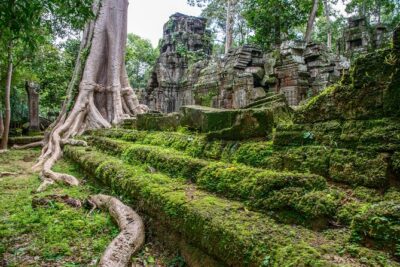
Angkor Wat Sunrise Bike Tour & Jungle Breakfast
Read our review →
Local Livelihood Half Day Bike Tour in Battambang
Read our review →Browse the lists this tour appears in