
Reviewed · CYCLING TOURS
Siem Reap: Bike the Angkor Temples – Full-Day 30km Tour
Angkor is better at bicycle speed. This full-day ride pairs Angkor Wat, Bayon, and Ta Prohm with quiet forest paths, village roads, and a look at everyday Cambodian life that you would miss from a car. I especially like the small-group format, the steady supply of cold water and fruit, and the guides who make the temples easier to understand without turning the day into a lecture.
The main catch is the distance. You will pedal about 25 to 30 kilometers, or 15 to 18 miles, in tropical heat, and some sandy or bumpy trails are not suitable for a complete beginner. The tour costs $35 per person, but the Angkor Pass is extra at $37 for one day, so you should think of the base outing as a $72 experience before adding the optional lunch.
In This Review
- The essential details at a glance
- Why a bicycle works so well at Angkor
- Starting at 7:30 a.m. with a proper bike fitting
- Angkor Wat: begin with the great monument
- Bayon and Angkor Thom: faces, gates, and royal terraces
- Srah Srang and a Khmer lunch break
- Ta Prohm: the afternoon highlight
- The ride back through villages
- Heat, clothing, and fitness: the real preparation
- What the $35 price really buys you
- Who should book this ride?
- Final call: a strong way to meet Angkor
- FAQ
- How far do you cycle on the Angkor temple tour?
- What temples does the tour visit?
- Is the Angkor Pass included in the tour price?
- Is lunch included?
- What should I wear to the temples?
- Where does the tour start and finish?
The essential details at a glance
- Three major temple stops: Visit Angkor Wat, Bayon, and Ta Prohm, with time at the Terrace of the Elephants and Terrace of the Leper King.
- Back roads instead of just the main circuit: Ride through wooded tracks, small villages, and rural areas around the archaeological park.
- About 25 to 30 kilometers of cycling: Most roads are flat, but sand, dirt, and uneven trails add effort.
- Small groups capped at 10 people: You can also choose a private outing for more direct attention from your guide.
- Practical support throughout the day: The price includes a mountain bike, helmet, English-speaking guide, fruit, snacks, and bottled water.
- Lunch is optional: Choose the lunch package for a local Khmer meal, or book the option without lunch.
Why a bicycle works so well at Angkor
Angkor Archaeological Park covers a huge area, roughly half the size of New York City. Walking between the main temples is not realistic, and riding in a vehicle can make the park feel like a string of parking lots connected by roads.
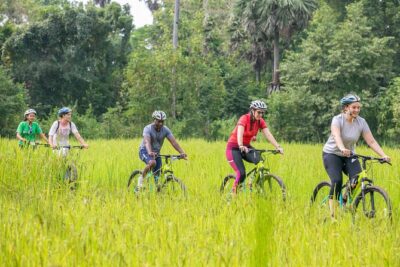
A bicycle gives you a useful middle ground. You cover enough ground to see the headline temples, but you also notice the trees, road shrines, houses, farm plots, and changing sounds between them. The ride itself becomes part of the visit rather than dead time between monuments.
I particularly like the use of smaller roads and forest tracks. Several riders found that cycling through village areas and wooded sections gave them a better sense of Siem Reap than a standard car-based circuit. You may pedal on asphalt for part of the route, but the more memorable sections are the dirt paths and shaded trails.
That freedom comes with a price. Sand and uneven ground can make the bike work harder than the mileage suggests. One rider found the route more tiring than expected, while others described it as easy but noted that fitness matters. You do not need to be a competitive cyclist, but you should be comfortable riding for much of a day.
More Bike Tours in Siem Reap
- Siem Reap Countryside Bike Tour / E-Bike or Tuk Tuk
★ 5.0 · 935 reviews - Angkor Sunrise Bike Tour / E-Bike or Tuk Tuk
★ 5.0 · 615 reviews - Siem Reap: Angkor Wat Sunrise Bike Tour & Jungle Breakfast
★ 5.0 · 415 reviews
Starting at 7:30 a.m. with a proper bike fitting
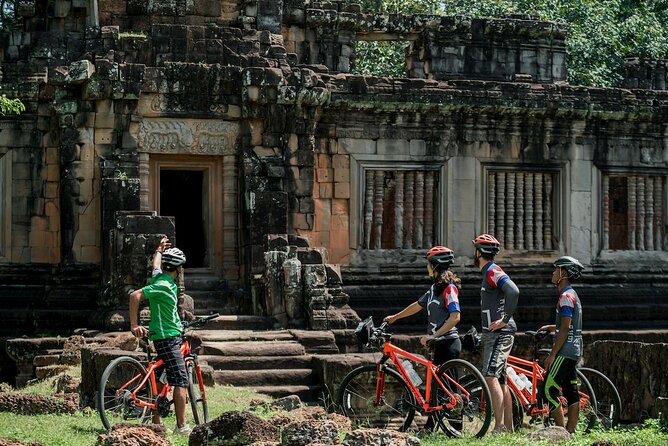
You meet at ផ្ទះគ្រូ Café in Siem Reap at 7:30 a.m. The tour does not include hotel pickup or drop-off, so plan your own way to the café. The activity begins with introductions, a safety briefing, and bike fitting.
The bikes are described as well-maintained mountain bikes, and the staff adjusts them to your height. A helmet is included. Some riders appreciated that the bikes were labeled and prepared before departure, while a guide or assistant remained near the back of the group to help with safety.
That support matters on a mixed route. You may ride on public roads, forest tracks, and sandy paths, so the pace is set for control rather than speed. Guides have also used hand signals and explained riding positions before setting out.
The maximum group size is 10, which is small enough for a guide to keep an eye on the group. A private option is available if you want more individual attention or a more flexible feel. The English-speaking guides have included Wich, Moon, Mun, Meun, Chen, Pat, Samnang Chan, Samie, and Sam. The strongest praise has centered on their temple explanations, local knowledge, patience, and care with the group.
Angkor Wat: begin with the great monument
Your first temple stop is Angkor Wat, the enormous 12th-century complex that most people picture when they hear the name Angkor. You receive about an hour here, including time to walk through the galleries, inspect the carvings, and take photographs.
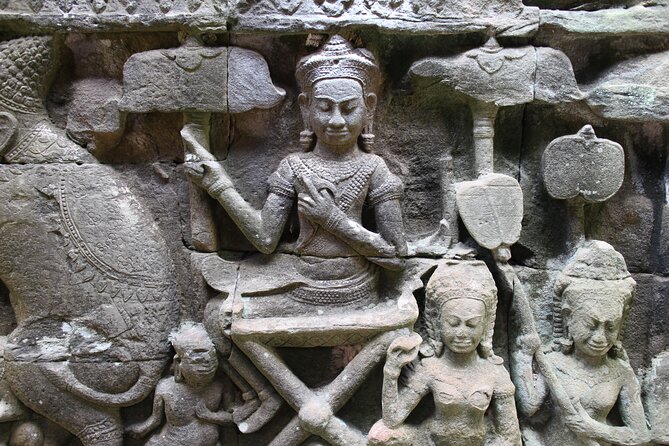
The temple’s bas-reliefs illustrate stories from the Hindu epic Ramayana, and your guide helps place the carvings and towers in context. That makes a real difference. Without explanation, Angkor Wat can be a grand but confusing collection of courtyards, corridors, and stone figures. With a guide, you get a clearer sense of how the complex was designed and what its carvings represent.
The morning timing is useful because the light can be gentler than later in the day, although the site can still be warm and busy. Dress for both sun and temple rules. Sleeveless or see-through tops are not permitted, and pants or shorts must reach at least the knee.
One practical point: the tour price does not include admission to Angkor Archaeological Park. A one-day Angkor Pass costs $37, paid separately at the entrance. Your guide helps you purchase it, which makes the process easier, but you still need to budget for it.
Bayon and Angkor Thom: faces, gates, and royal terraces
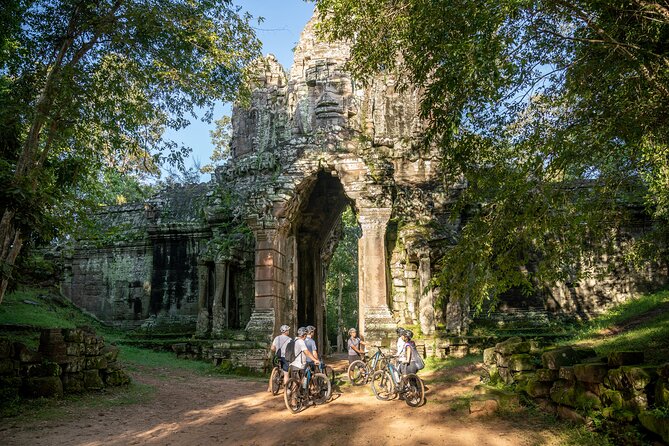
From Angkor Wat, you follow the main road toward Angkor Thom. The ride takes you past the stone sculptures of divinities and demons lining the approach, a powerful introduction to the ancient city.
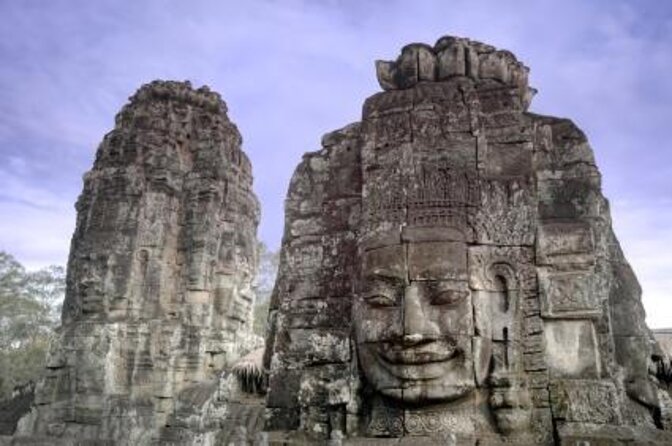
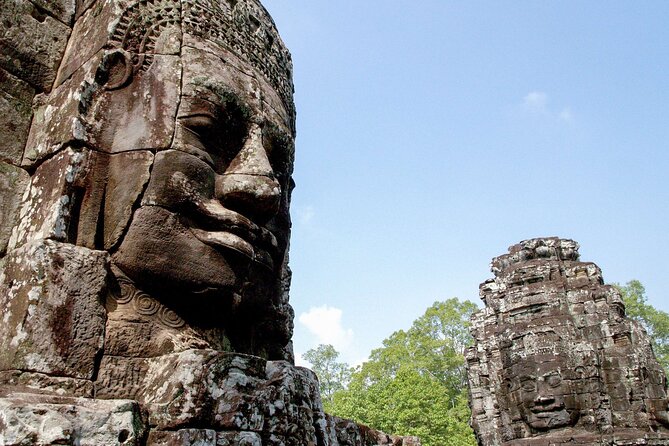
Bayon is the dramatic centerpiece. Its towers carry large smiling bodhisattva faces that look down from several directions. The temple is more compact and maze-like than Angkor Wat, so a guide is helpful here. You can easily walk past important carvings or miss the way the towers fit into the wider plan.
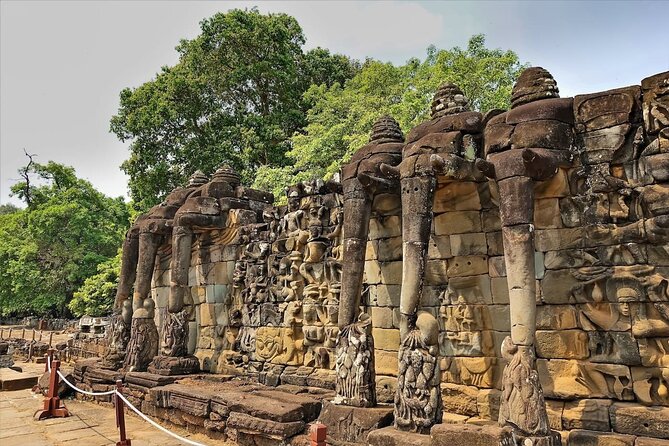
The route also includes the Terrace of the Leper King, the Terrace of the Elephants, and the Royal Enclosure. These areas offer a change from enclosed temple corridors. The long terraces once served public and royal functions, and their carved details reward a slower look.
The itinerary gives roughly an hour at Bayon, with additional time around the terraces. That balance works well for a first visit because you see the major features without spending the entire morning at one site. Still, this is not a deep archaeological study of every monument. If you want extended time for detailed photography or quiet sketching, the full group schedule may feel brisk.
Something completely different for another day:
- Angkor Wat Sunrise or Sunset Tour with Guide from Siem Reap
★ 5.0 · 12,109 reviews - Siem Reap: Angkor Wat: Small-Group Sunrise or Sunset Tour
★ 5.0 · 9,444 reviews - From Siem Reap: Kampong Phluk Floating Village Tour by Boat
★ 4.9 · 6,979 reviews - Sunset tour of Kampong Phluk stilts home village on the Tonle Sap
★ 5.0 · 4,865 reviews
Srah Srang and a Khmer lunch break
The middle of the day is built around a longer pause near Srah Srang. The schedule allows about two hours for lunch, snacks, and cultural information, which is welcome after the morning ride.
If you choose the lunch option, a local Khmer meal is arranged in advance. Riders repeatedly praised the food as generous and tasty, with one group saying they could order freely from the menu and add a beer if they wished. The exact menu is not specified, so tell the operator about dietary requirements when booking.
Fruit and snacks help prevent the familiar mid-ride energy crash. Bottled water is supplied during the day, and several riders appreciated the regular refills in hot conditions. The return to the office may include a cold coconut drink, and some riders also received a cold towel. Those small touches matter when the temperature reaches about 35 degrees Celsius.
You can choose the tour without lunch, but I think the meal option offers better value for most people. You are already committing to a full day, and stopping for a proper local meal is more practical than trying to solve lunch on your own along the route.
Ta Prohm: the afternoon highlight
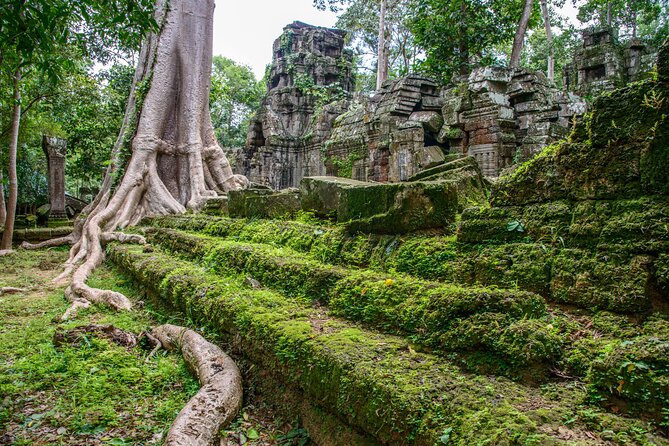
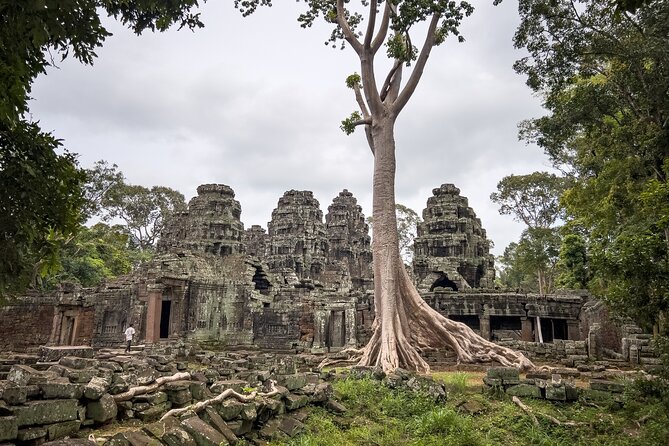
Ta Prohm is the most atmospheric stop on the route. Tall trees and spreading roots push through the old stonework, creating the famous scene of temple ruins wrapped in the forest.
The temple feels different from Angkor Wat and Bayon. Angkor Wat impresses through scale, Bayon through its faces, while Ta Prohm offers a more enclosed and untamed experience. Your guide shares the site’s history, stories, and symbolism, then gives you time to explore and photograph the root-covered walls.
Getting there by bicycle adds to the mood. Instead of arriving by vehicle and immediately joining a crowd, you approach through quieter forest corridors and dirt paths. The ride can be bumpy, and sand may slow you down, but that is also what gives the afternoon a sense of adventure.
Some riders suggested that Angkor Wat would make a stronger final stop because it is the biggest visual finish. That is a fair point. Ending at Ta Prohm means the final temple is atmospheric rather than monumental, though many people will find the forest ride and tangled roots a memorable close to the temple portion.
The ride back through villages
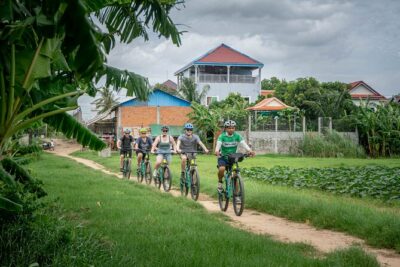
The return to Siem Reap takes you through small villages and rural areas. This is one of the tour’s best features because the day shifts from ancient stonework to present-day Cambodia.
You may see homes, farm yards, wooded paths, and rice-growing areas along the route. The details are modest, but they help you understand that Angkor is not an isolated museum. People live and work around the archaeological park, and the bicycle lets you pass through these areas at a pace slow enough to notice them.
The route is not all scenic dirt track. You should expect stretches of paved road, public traffic, sand, and rougher ground. One rider praised the guide for matching the pace of local cyclists and using proper hand signals. Another warned that knees may ache after the sandy sections. Bring practical clothing and shoes, and do not wear anything you would regret tearing on a branch or rough trail.
The tour ends back at ផ្ទះគ្រូ Café. The listed duration is about eight and a half hours, with a start at 7:30 a.m. The exact return time can vary with the group, heat, temple stops, and road conditions.
Heat, clothing, and fitness: the real preparation
The heat is the main physical challenge, not hills. Much of the route is flat, but 25 to 30 kilometers, temple walking, and repeated stops add up.
I would rate this as a moderate active day. It suits you if you regularly ride a bicycle, can manage a long outing in warm weather, and do not mind dirt or uneven surfaces. It may not suit you if you rarely cycle, have current knee problems, or want a relaxed sightseeing day with minimal exertion.
Pack or wear:
- Knee-length shorts or trousers
- A shirt that covers the shoulders
- Sunscreen and a hat
- Closed, practical shoes
- Clothing suitable for dust, sand, and possible snags
- Any personal snacks or medication you may need
Water, fruit, snacks, and lunch support are included as specified by your booking choice, but you should still arrive hydrated. Child seats are available on request for children weighing up to 14 kilograms. Most people can participate, and service animals are allowed, but the distance and terrain still call for sensible judgment.
What the $35 price really buys you
At $35 per person, the tour is reasonably priced for an eight-hour guided day with a bike, helmet, guide, refreshments, and access to three major temples. The value improves if you choose the lunch option and make use of the local route rather than treating the bicycle as simple transport.
The important extra cost is the Angkor Pass, priced at $37 for a single day. That brings the basic combined cost to $72 per person, before any optional lunch or personal spending. It is still a fair deal if you want guided visits and a supported route, but it is not a $35 all-in temple tour.
You are also paying for route planning and support. The operator handles the bike setup, guides you through the park entrance, provides safety support, and selects roads that reduce some of the main-road riding. A self-guided bicycle rental may cost less, but it would not provide the same temple commentary, navigation, or food and water arrangement.
Who should book this ride?
I would choose this tour for a first visit to Angkor when you want more than a vehicle-to-temple circuit. It is especially good for active couples, families with older children, solo riders who like joining a small group, and anyone interested in seeing village life alongside the monuments.
It also suits history fans. Guides such as Chen, Pat, Wich, Moon, and Samnang Chan have been praised for explaining not only the temples but also Cambodian history and modern culture. The strongest part of the experience is the combination of useful storytelling and an active route.
I would choose something shorter if your main goal is leisurely temple photography. I would also think twice if hot-weather cycling is not your thing. This is a full day, and the return ride can feel long after three temple stops and lunch.
Final call: a strong way to meet Angkor
Book this tour if you want Angkor to feel like a place, not just a list of monuments. The combination of Angkor Wat, Bayon, Ta Prohm, village roads, forest trails, good food, and attentive guides gives you a fuller day than a standard transport loop.
Just budget for the separate $37 temple pass, wear proper clothing, and prepare for heat and rough patches. If you can handle the distance, the bicycle is the memorable part, and the $35 tour fee represents good value for the support and local perspective it provides.
FAQ
How far do you cycle on the Angkor temple tour?
The bicycle route covers about 25 to 30 kilometers, or 15 to 18 miles. Most of the roads are flat, but some dirt trails include sand and uneven surfaces.
What temples does the tour visit?
The main stops are Angkor Wat, Bayon, and Ta Prohm. The route also includes the Terrace of the Leper King, the Terrace of the Elephants, the Royal Enclosure, and Srah Srang.
Is the Angkor Pass included in the tour price?
No. Admission to the Angkor Archaeological Park is separate. A single-day Angkor Pass costs $37, and the guide assists with purchasing it at the entrance.
Is lunch included?
Lunch is included only if you select the lunch option when booking. Fruit, snacks, and bottled water are included, and specific dietary requirements should be provided at booking.
What should I wear to the temples?
Sleeveless and see-through shirts are not allowed. Pants and shorts must reach at least the knee. You should also wear practical clothing and shoes for cycling on dirt, sandy, and bumpy trails.
Where does the tour start and finish?
The tour starts at ផ្ទះគ្រូ Café in Siem Reap at 7:30 a.m. It ends back at the same meeting point. Hotel pickup and drop-off are not included.
Newest reviews from Siem Reap
- War Museum, Killing Field, and APOPO Hero RATs Tour★ 5.0 · 7 reviews
- Angkor Wat at Sunrise★ 4.0 · 7 reviews
- Siem Reap Angkor Airport Taxis (from Airport to Hotel)★ 5.0 · 44 reviews
- Short Cycling at Countryside★ 5.0 · 29 reviews
- Cambodian Cooking Class and Oxcart Ride with Local Village Tour★ 5.0 · 4 reviews
- Secret Temples of Angkor – Guided Tour in Siem Reap★ 5.0 · 6 reviews
- SIEM REAP E-BIKE HALF-DAY COUNTRYSIDE (25-30 km)★ 4.0 · 1 review
- Unveiling the Mystical Beauty of Phnom Kulen National Park★ 5.0 · 6 reviews
Cycling Tours, compared.
Siem Reap Countryside Bike Tour / E-Bike or Tuk Tuk
Read our review →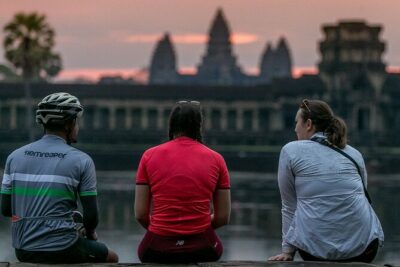
Phnom Penh Silk Island Bike Tour/ E-Bike or Tuk Tuk
Read our review →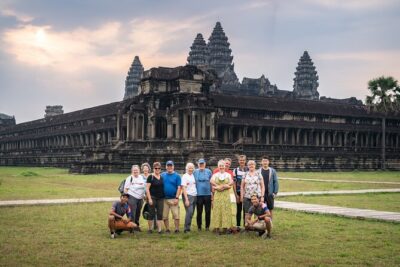
Angkor Wat Sunrise Bike Tour & Jungle Breakfast
Read our review →
Local Livelihood Half Day Bike Tour in Battambang
Read our review →
Silk Island Cycling Adventure & lunch with locals
Read our review →Browse the lists this tour appears in