
Reviewed · MULTI-DAY TOURS
Siem Reap: Angkor Sunrise 1- or 2-Day Guided Temples Tour
Sunrise makes Angkor Wat feel almost unreal. This tour pairs the famous temple with Banteay Srei’s fine carvings and the jungle-wrapped ruins of Ta Prohm, giving you a broad look at the Angkor complex without having to plan every turn yourself. I especially like the small-group format and the steady supply of cold water and towels. The main catch is the early start and the extra $62 temple pass, which is not included.
The two-day plan is the better choice if you want context rather than a quick photo stop. Guides such as Sak, Pal Saruon, Sokpee, Pi, and Bun have been praised for clear explanations, local stories, and help with photographs. You should also expect plenty of walking, uneven ground, steep steps, heat, and a long first day that can run later than the headline schedule.
In This Review
- Key points to know before booking
- What the $19 price really covers
- Day 1: Pre Rup and the road to Banteay Srei
- Banteay Srei and Cambodia’s finest carving
- Neak Pean and the quiet water setting
- Preah Khan, roots, stone, and restoration
- Sunset and the long first day
- Day 2: The pre-dawn run to Angkor Wat
- Reading Angkor Wat with a guide
- Angkor Thom and the faces of Bayon
- Ta Prohm, the jungle temple
- Transport, group size, and comfort
- The 1-day or 2-day choice
- Who should book it
- Should you book this Angkor tour?
- FAQ
- Is the temple pass included in the tour price?
- Are meals included?
- What time does the sunrise day begin?
- When does Day 2 finish?
- When does Day 1 finish?
- Is hotel pickup included?
- What language is the tour conducted in?
- How large is the group?
- What should I wear to the temples?
Key points to know before booking
- Sunrise begins before dawn: Hotel pickup is usually between 4:20 and 4:35 AM on Day 2, so you need to be ready well before daylight.
- Banteay Srei is the artistic highlight: Its small scale and unusually detailed sandstone carvings make it very different from Angkor Wat.
- Cold towels are more than a nice extra: Drivers regularly provide chilled water and refreshing towels after temple visits, a real help in Cambodia’s heat.
- The two-day route has good variety: You see major monuments, jungle ruins, city gates, terraces, reservoirs, and smaller temples rather than repeating the same style all day.
- The pass costs extra: The $19 tour price does not include the required 2 or 3-day temple pass, listed at $62 per person.
- Small groups keep the day manageable: The group is limited to 15 people, though some departures have been much smaller.
What the $19 price really covers
At first glance, $19 for a full day or two-day temple program looks almost too cheap. The price covers hotel pickup and drop-off, an English-speaking guide, an air-conditioned vehicle, bottled water, and cool towels. It also gives you a planned route through a huge archaeological area where distances between temples can make independent sightseeing awkward.
The important extra cost is the temple pass. You pay $62 per person for the 2 or 3-day pass, and that fee is separate from the tour. The pass can be purchased online and arranged to be sent one day before the tour begins, according to the booking information. Meals are also extra, with stops at local restaurants near the temples.
That makes the real cost higher than $19, but the tour can still be good value. You are paying for transport, a driver, an English-speaking guide, route planning, historical explanations, and the ease of returning to an air-conditioned vehicle after walking in the sun. If you tried to arrange each temple, driver, and guide separately, the apparent bargain might not remain so simple.
I would not choose this for a quiet, slow temple visit. You are covering many sites over two days, and the schedule depends on staying on time. One review specifically noted that the program is strict because it covers so much. That is a fair warning, especially if you prefer lingering at one ruin for an hour without watching the clock.
More Sunrise Tours in Siem Reap:
- Angkor Wat Sunrise or Sunset Tour with Guide from Siem Reap
★ 5.0 · 12,109 reviews - Siem Reap: Angkor Wat: Small-Group Sunrise or Sunset Tour
★ 5.0 · 9,444 reviews - Siem Reap: Angkor Wat 2-Day Tour with Sunrise and Sunset
★ 4.9 · 4,429 reviews
Day 1: Pre Rup and the road to Banteay Srei
Pickup on the first day is listed around 7:40 to 8:10 AM, though the exact time is supplied the day before. The group then heads toward the temples outside Angkor Thom, where the setting is generally less concentrated than at the central monuments.
Pre Rup is an early stop and a useful introduction to the Khmer temple style. Built in 961 or 962, this Hindu temple uses laterite and sandstone. Its layered form and elevated terraces give you a sense of how Khmer builders combined heavy, weather-resistant blocks with more carefully carved stone.
The site is also a reminder that Angkor is not one single temple. It is a huge collection of monuments built across different periods, religions, and royal reigns. A good guide helps you see those changes instead of treating every pile of stone as the same.
Banteay Srei and Cambodia’s finest carving
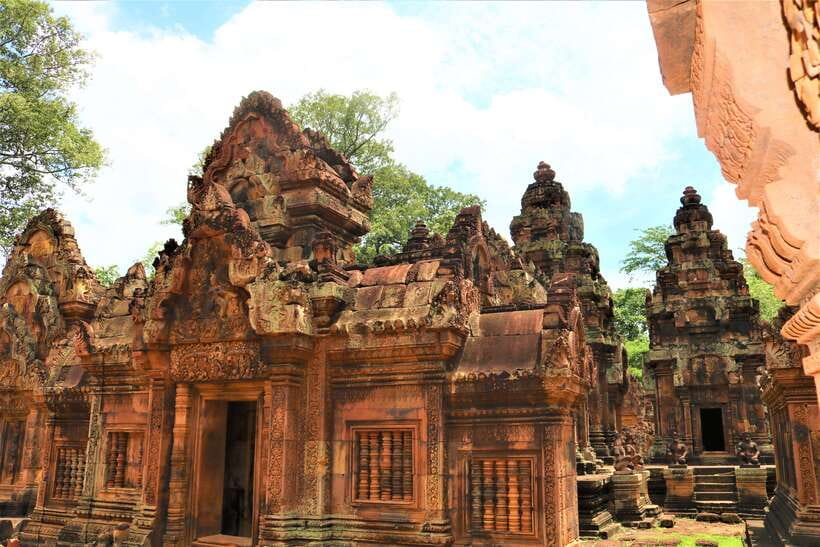
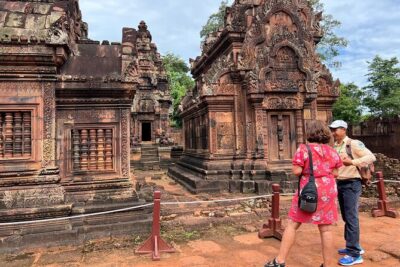
Banteay Srei is one of the strongest reasons to choose the two-day option. It is smaller than Angkor Wat, but the sandstone reliefs are exceptionally detailed and well preserved. The name is often translated as Citadel of the Women, and the temple is known for delicate carving rather than massive scale.
You will see tightly worked scenes and ornamental details that reward a slower look. The stonework feels almost jewelry-like compared with the broad walls and enormous galleries at Angkor Wat. This is a place where your guide’s explanation matters, since the carvings can be easy to overlook if you simply walk around taking pictures.
The drawback is distance. Banteay Srei sits outside the central Angkor group, so reaching it adds driving time to an already full day. For me, that trade makes sense because the temple offers a different visual experience, but visitors with limited energy may prefer a shorter central circuit.
Neak Pean and the quiet water setting
On the return route, the tour visits Neak Pean, a Buddhist temple on a circular artificial island within Jayatataka Baray. The approach across the water gives this stop a different mood from the dry stone terraces and forest ruins elsewhere on the route.
Neak Pean is not the largest or most intact monument, so manage your expectations. Its appeal comes from the water setting, the unusual layout, and the chance to see how Angkor’s builders shaped large reservoirs and religious spaces together. It works well as part of a varied day, though someone focused only on grand architecture may find it less immediately impressive.
More multi-day routes in Siem Reap:
- Angkor 2-Day Sunset & Sunrise Small-Group Tour
★ 5.0 · 2,567 reviews - 2-Day Angkor Wat With Small, Big Circuit and Banteay Srei Tour
★ 5.0 · 545 reviews - Siem Reap: 2-Day Temple Highlights Sunrise and Sunset Option
★ 4.9 · 445 reviews - Angkor Wat 2-Day complex Sun rise & Sun set with Guided Tour
★ 4.9 · 439 reviews
Preah Khan, roots, stone, and restoration
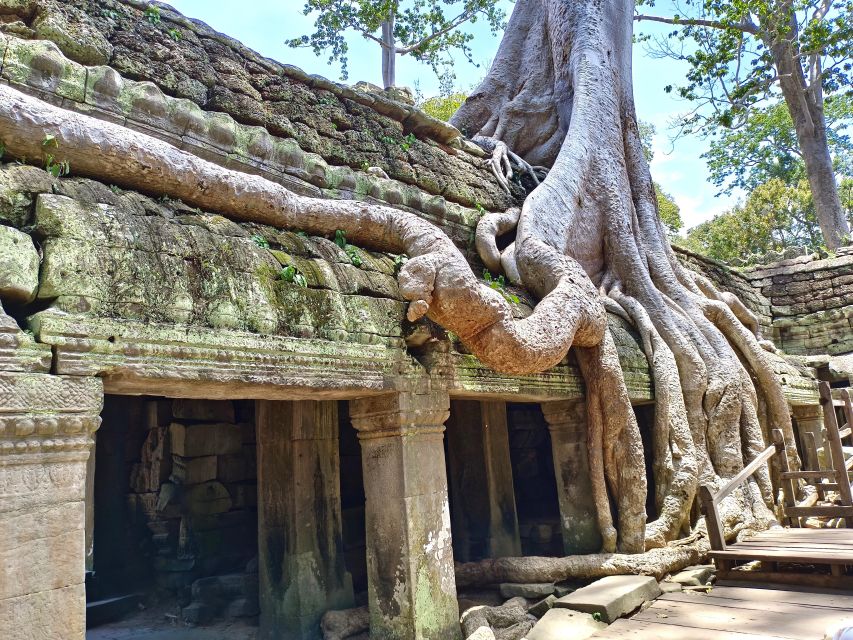
Preah Khan is one of the most atmospheric stops on Day 1. Tree roots, crumbling walls, narrow passages, and surviving stonework create a strong sense of age without turning the temple into a simple jungle photo backdrop.
Jayavarman VII commissioned Preah Khan in honor of his father. It is smaller than Angkor Wat but still complex enough to reward a guided walk. The World Monuments Fund is restoring parts of the site, and some sections are in remarkably good condition.
I like this stop because it gives you a useful contrast. Angkor Wat presents order, symmetry, and grand scale. Preah Khan feels more layered and weathered. The two temples together help explain why a two-day route is more satisfying than treating Angkor as a single monument.
Sunset and the long first day
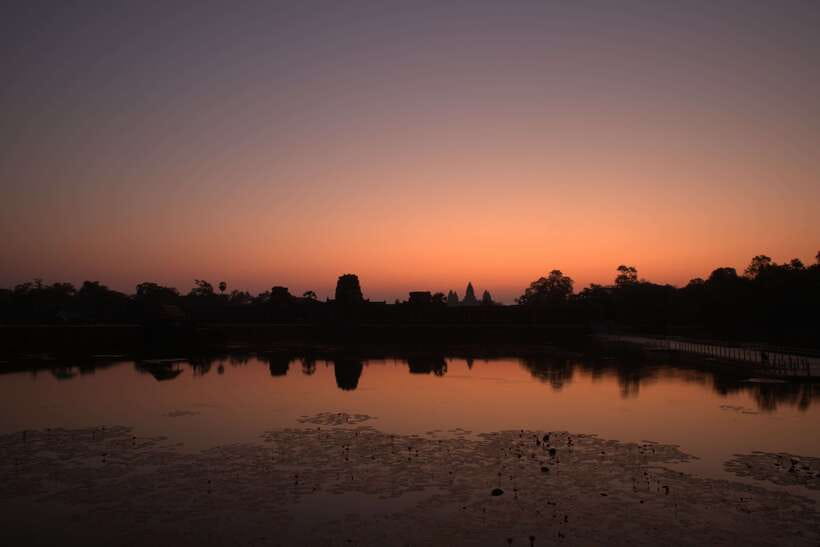
The first day finishes with a sunset stop before the return to Siem Reap. The exact return time is not entirely consistent in the supplied schedule: some details place drop-off around 4 to 5 PM, while the sunset plan and other timing notes indicate arrival closer to 6 to 7:30 PM.
Plan for the longer version. A sunset visit naturally pushes the day late, and the route includes several temples outside the central area. That means Day 1 can last around 10 hours in practice. It is a beautiful finish, but you may be tired by the time you reach the hotel.
Bring a hat, sunglasses, comfortable shoes, and insect repellent. Long trousers or clothing that covers the knees are useful, and your shoulders and knees must be covered inside the temples. Shorts are listed as not allowed, so dress for both temple rules and hot weather.
Day 2: The pre-dawn run to Angkor Wat
Day 2 begins around 4:20 to 4:35 AM. That is not a typo. You need to be ready in the hotel lobby before dawn, and the exact pickup time is confirmed the previous day.
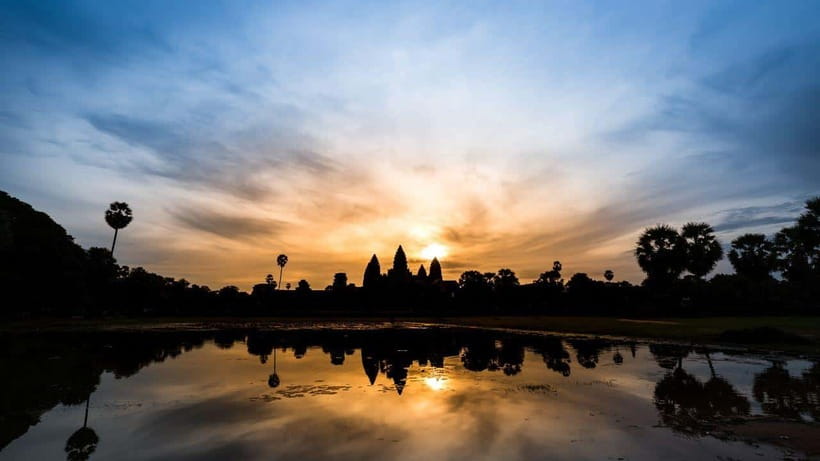
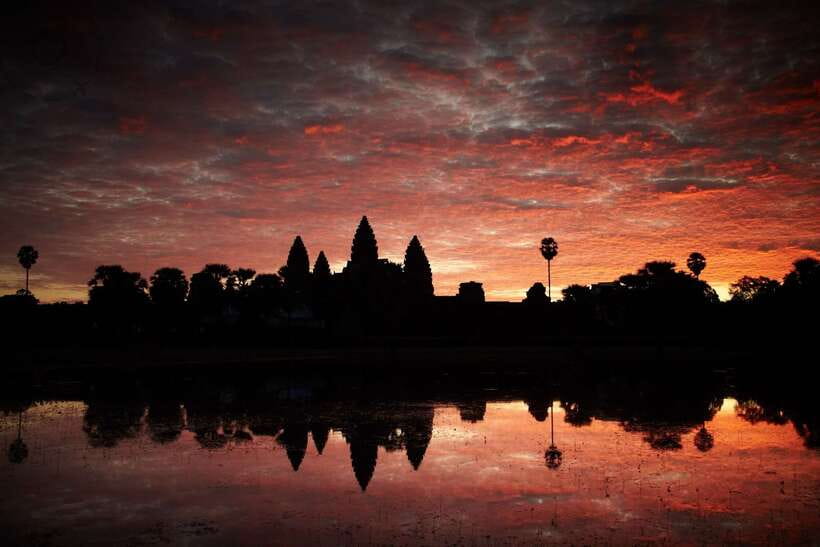
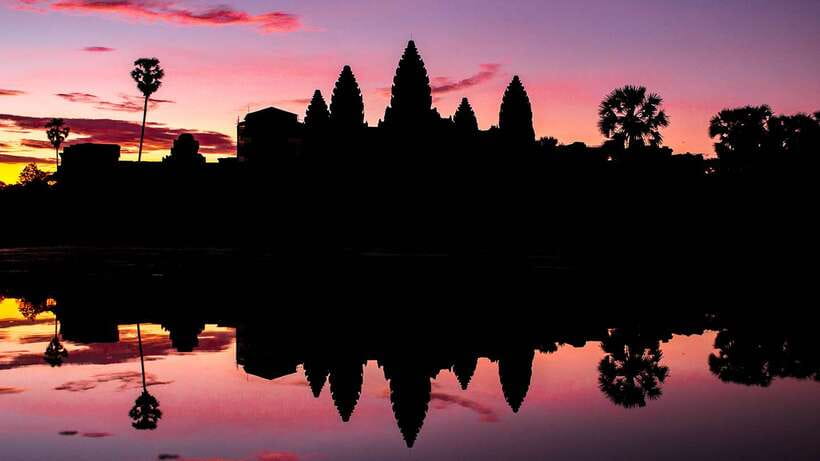
The reward is sunrise outside Angkor Wat, the world’s largest sacred building. You will wait in the dark, then watch the sky brighten behind the temple towers. Weather controls the result, so a perfect reflection or clear color is never guaranteed. One person on the tour had cloudy conditions, while sunset turned out beautifully, a useful reminder that nature keeps part of the schedule to itself.
Your guide may suggest a viewing position away from the most crowded area. Several guides, including Sak and Pi, have been praised for getting groups into strong photo positions and helping solo visitors with pictures. Arriving early matters if you want a good place, so do not treat the 4:20 AM pickup as optional padding.
After sunrise, you spend about two hours inside Angkor Wat. That is enough time to see corridors, central chambers, upper terraces, and major bas-reliefs without reducing the temple to a quick exterior photograph.
Reading Angkor Wat with a guide
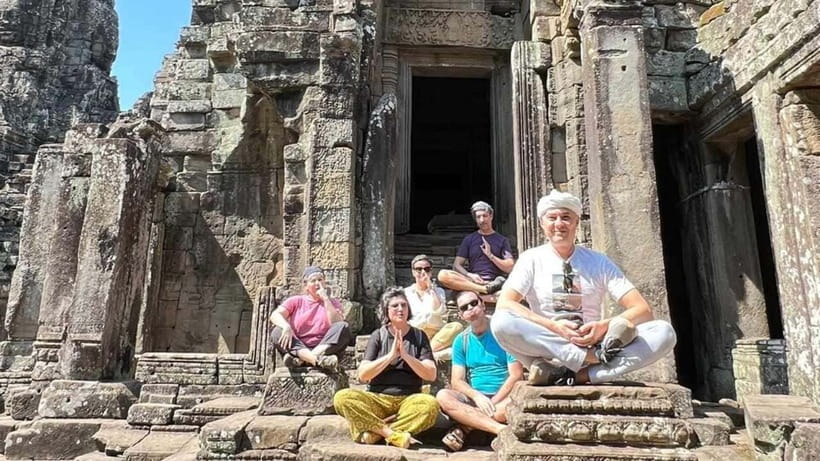
Angkor Wat is much easier to appreciate when someone explains what you are seeing. The bas-reliefs carry stories from Hindu tradition, while later use of the temple reflects the importance of Buddhism in Cambodia. A well-prepared guide can connect the carvings, architecture, royal power, and daily life during the Khmer Empire.
The strongest praise for this tour has focused on the guides’ ability to explain more than dates and names. Sak has been described as offering information gathered from several sources, while Chhay and Sokpee have been praised for adding Cambodian cultural details and personal context. Pal Saruon is often singled out for combining temple knowledge with humor and excellent photo help.
That human element is important. Without a guide, you can still admire the towers, galleries, and stone figures, but you may miss why the temple was built, how its imagery fits together, and what changed over time. The guide also gives you free time at many sites, so the day is not simply one long lecture.
Breakfast is taken near Angkor Wat at your own expense. Food is not included, and the restaurant stops are practical rather than part of the tour price. Bring money and expect to buy meals locally.
Angkor Thom and the faces of Bayon
The route continues to Angkor Thom through the Southern Gate. A row of 54 stone figures lines each side of the approach, with gods on one side and demons on the other. This entrance gives you a strong sense of the city’s scale before you reach the central monuments.
Angkor Thom was a fortified city, not just a temple enclosure. Its roads, gates, walls, and central buildings show how political power and religious life were organized around the royal center. This is one of the places where a guide can help you understand the difference between a city and an isolated shrine.
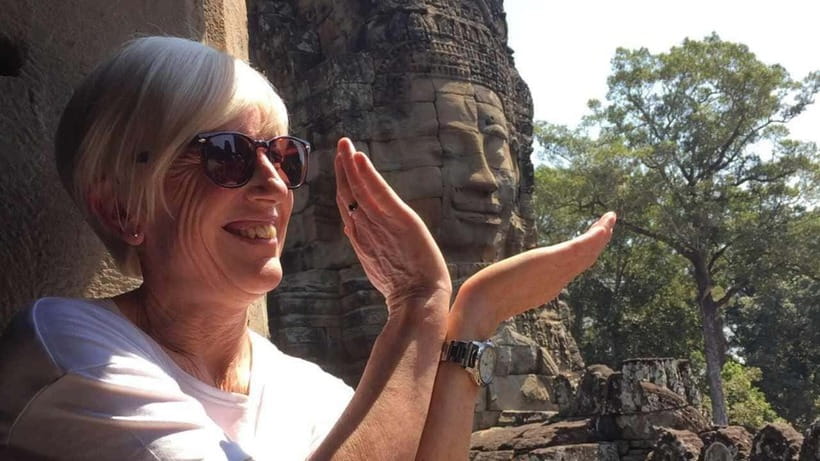
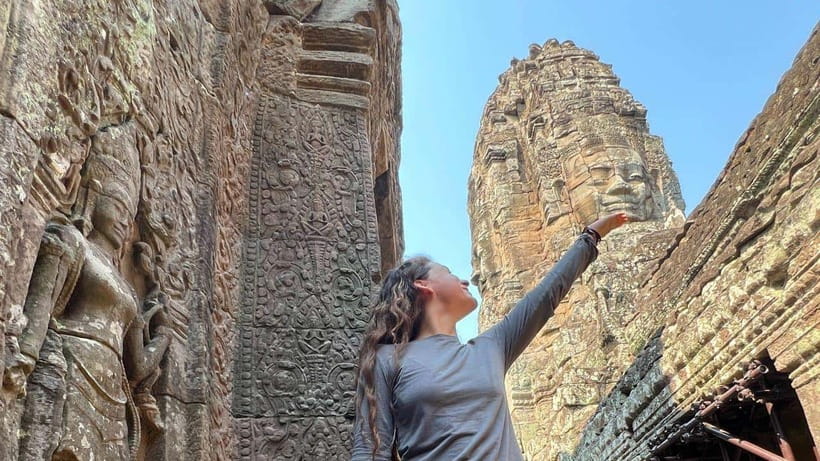
Bayon is the visual shock of the morning. Its central towers carry more than 200 enormous carved faces, looking out from different levels of the temple. The faces can be difficult to photograph cleanly when the site is busy, so follow the guide’s advice about timing and angles.
You will also visit the Terrace of the Elephants and the Terrace of the Leper King. These terraces are more open than Bayon and offer a change of pace after enclosed galleries and crowded towers. Expect uneven surfaces, stairs, and some rubble. The tour is not suitable for wheelchair users, and children under eight are not accepted.
Ta Prohm, the jungle temple
Ta Prohm is the final major stop and perhaps the most immediately memorable. It was once home to almost 3,000 monks, but most people know it for the trees and roots growing through the ruins.
The tree-covered walls are striking, yet Ta Prohm is more than a backdrop for photographs. The damage and restoration questions here make the site a good place to think about how Cambodia protects ancient monuments while keeping them open to the public.
It can also be crowded, especially around the most photographed sections. A guide who knows alternate viewpoints can help you avoid standing in one slow-moving line for every picture. The site involves walking over rough ground and around fallen stones, so sturdy footwear matters.
After Ta Prohm, the group returns to Siem Reap, usually between 12:30 and 1:30 PM. The early start makes the short afternoon finish welcome. You get the main Angkor circuit before the hottest part of the day, though Day 2 still requires several hours of walking.
Transport, group size, and comfort
The tour uses an air-conditioned vehicle, with hotel pickup and drop-off included. Transport has received especially strong marks, with 94 percent of ratings giving it a perfect score.
Drivers such as Vichet, Naro, Ro, Mao, Seyha, Keal, and others have been praised for safe driving, punctuality, and practical care. The repeated mention of cold bottled water and chilled or eucalyptus-scented towels is not trivial. After a hot temple walk, a cool bus, water, and a damp towel can make the next stop feel possible.
The group limit is 15 people, but some departures have had only five or six participants. A small group makes it easier to hear the guide, keep the walking pace together, and get help with photos. It is still a shared tour, so you will not control every stop or departure time.
The service sounds well organized, but do not expect a private car experience. You follow a group schedule, eat at group-friendly stops, and visit a lot of sites in a short period. That is the price of seeing this much in two days.
The 1-day or 2-day choice
The one-day format suits you if Angkor Wat is a priority and your time in Siem Reap is short. The sunrise day includes Angkor Wat, Angkor Thom, Bayon, the terraces, and Ta Prohm. It gives you the essential central sights, but you miss Banteay Srei, Neak Pean, Preah Khan, and the sunset program.
Choose two days if you want a fuller picture of the area. Day 1 has more outlying temples and a slower change of architectural styles, while Day 2 focuses on the famous central monuments. The split also prevents every major site from being squeezed into one exhausting run.
I would choose two days for a first visit if your schedule allows it. The guides provide a balance of explanation and independent time, and the extra day adds the temples that make Angkor feel like a civilization rather than one famous building.
Who should book it
This suits first-time visitors who want history, transport, and a clear route handled for them. It is also useful for solo visitors, since guides often help with photographs, and for anyone staying in Siem Reap only briefly.
You should be comfortable walking for hours over uneven surfaces and climbing temple steps. The experience is not suitable for wheelchair users or children under eight, and the pre-dawn start will not appeal to everyone.
Cancellation is flexible up to 24 hours before the tour for a full refund, and general last-minute date changes can be made up to seven hours before departure without an added fee. You do not need a passport for the tour.
Should you book this Angkor tour?
Book it if you want to see the major Angkor sights plus Banteay Srei, Preah Khan, Neak Pean, and sunset without arranging the transport yourself. The best reasons are the route variety, small groups, strong guide performance, and thoughtful cooling service from the drivers.
Skip it if you want a private, unhurried visit or if you dislike early mornings and fixed schedules. Also budget properly: the $19 activity price is only the tour component, with the $62 temple pass and meals added separately.
For most first visits, I would pick the two-day option. Ask for the confirmed pickup times, prepare clothing that covers your knees and shoulders, and follow the guide’s advice on sunrise positions. With those details handled, this is a practical and good-value way to give Angkor the time it deserves.
FAQ
Is the temple pass included in the tour price?
No. The required 2 or 3-day temple pass costs $62 per person and must be purchased separately.
Are meals included?
No. Meals are not included, but you can buy breakfast and other food at local restaurants near the temples.
What time does the sunrise day begin?
Pickup for Day 2 is generally between 4:20 and 4:35 AM. The exact time is provided one day before the tour.
When does Day 2 finish?
Return to your hotel is usually between 12:30 and 1:30 PM.
When does Day 1 finish?
The published times vary. Some information gives a 4 to 5 PM return, while the sunset schedule can bring arrival closer to 6 to 7:30 PM. Confirm the exact timing before departure.
Is hotel pickup included?
Yes. Hotel pickup and drop-off are included for both days.
What language is the tour conducted in?
The live tour guide speaks English.
How large is the group?
The tour is limited to 15 participants. Some departures may be smaller.
What should I wear to the temples?
You must cover your knees and shoulders. Comfortable shoes, sunglasses, a sun hat, a camera, and insect repellent are also recommended. Shorts are not allowed.
Newest reviews from Siem Reap
- War Museum, Killing Field, and APOPO Hero RATs Tour★ 5.0 · 7 reviews
- Angkor Wat at Sunrise★ 4.0 · 7 reviews
- Siem Reap Angkor Airport Taxis (from Airport to Hotel)★ 5.0 · 44 reviews
- Secret Temples of Angkor – Guided Tour in Siem Reap★ 5.0 · 6 reviews
- Short Cycling at Countryside★ 5.0 · 29 reviews
- Cambodian Cooking Class and Oxcart Ride with Local Village Tour★ 5.0 · 4 reviews
- SIEM REAP E-BIKE HALF-DAY COUNTRYSIDE (25-30 km)★ 4.0 · 1 review
- Unveiling the Mystical Beauty of Phnom Kulen National Park★ 5.0 · 6 reviews
Multi-Day Tours, compared.
Angkor Wat 2-Day Tour with Sunrise and Sunset
Read our review →
Angkor 2-Day Sunset & Sunrise Small-Group Tour
Read our review →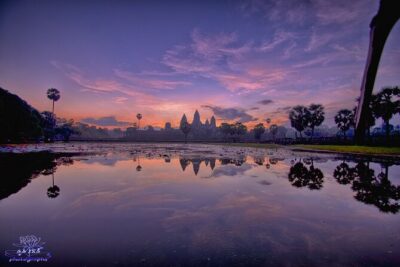
2-Day Angkor Wat With Small, Big Circuit and Banteay Srei Tour
Read our review →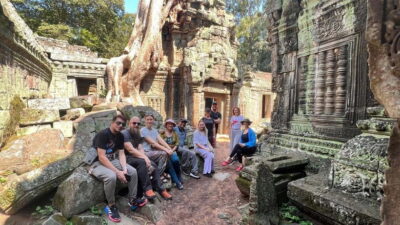
2-Day Temple Highlights Sunrise and Sunset Option
Read our review →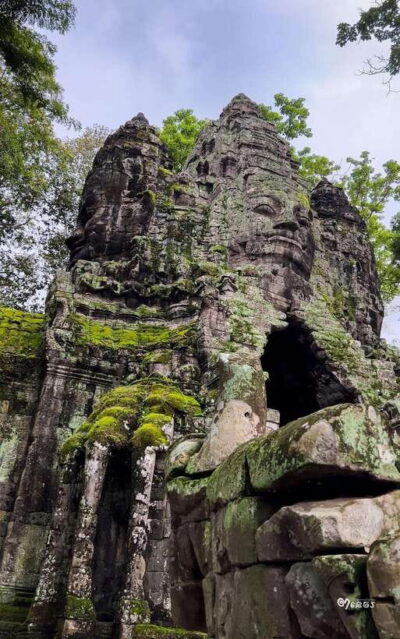
Angkor Wat 2-Day complex Sun rise & Sun set with Guided Tour
Read our review →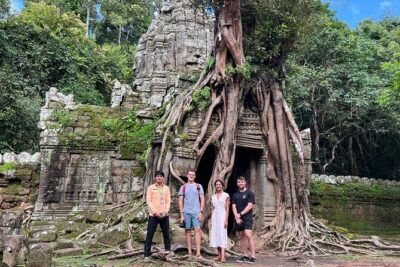
2-Day Angkor Wat Tour with Banteay Srei and Floating Village
Read our review →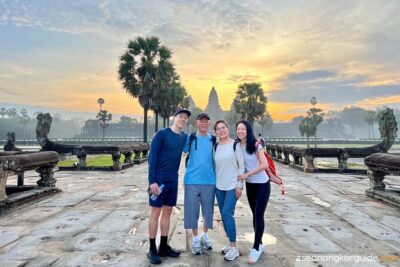
2-Day Angkor Wat and Banteay Srei with Countryside Exploration
Read our review →Browse the lists this tour appears in