
Reviewed · ANGKOR WAT TOURS
Angkor Wat 2-Day complex Sun rise & Sun set with Guided Tour
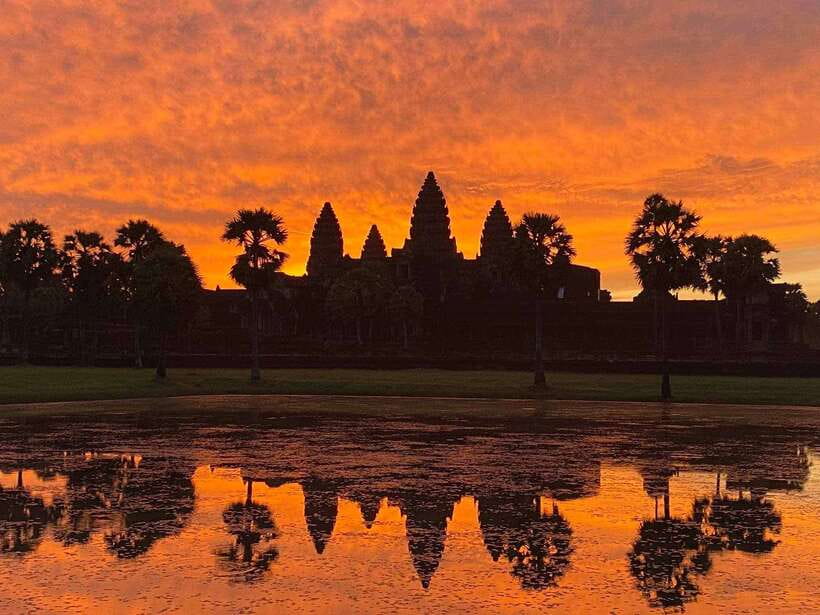
Angkor Wat is best seen before breakfast. This $30 two-day tour gives you both the famous sunrise and a full circuit of 11 temples, from Angkor Wat and Bayon to Preah Khan and Phnom Bakheng. I like the way the schedule splits the sites into two manageable days, and I especially like having an air-conditioned minibus waiting after each walk.
The guides are another strong point. Names such as Sam, Sayon, John, Nick, Vone, Sary, and Rith come up repeatedly for their clear explanations, good humor, and help with photographs. The main caution is the first morning pickup, which can come as early as 4:00 to 4:20 a.m. Some people may spend a long time waiting in darkness before sunrise.
In This Review
- Five useful things to know before booking
- Two days, two different views of Angkor
- Day 1: Angkor Wat sunrise and the small circuit
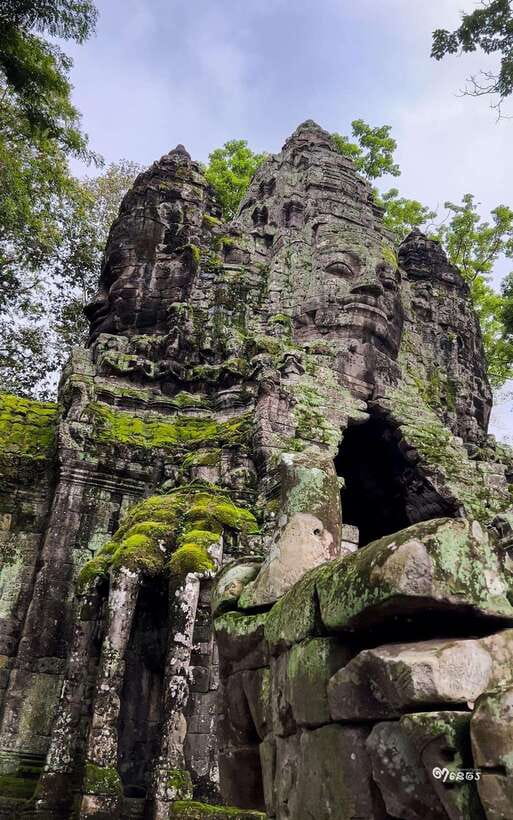
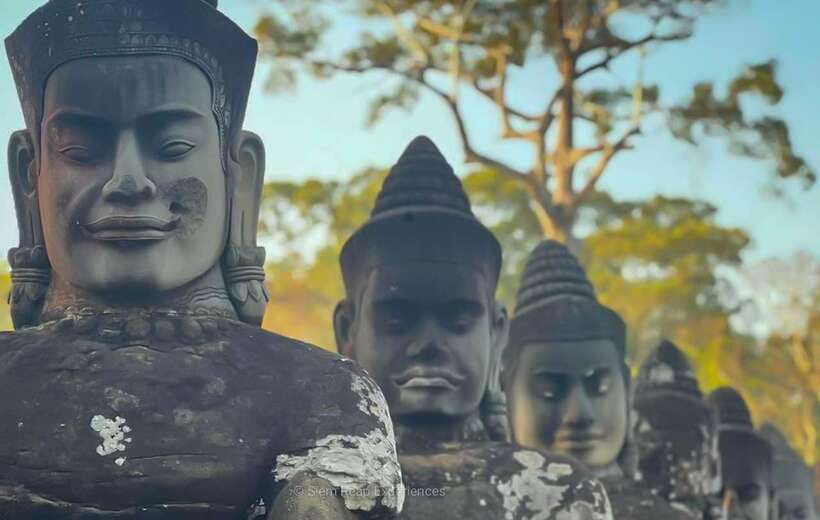
- Angkor Thom and the smiling faces of Bayon
- Banteay Kdei and Ta Keo: quieter stops with different character
- Day 2: Preah Khan and the larger circuit
- East Mebon and Pre Rup before sunset
- Phnom Bakheng sunset and the final view
- Guides, photographs, and the human side of the tour
- Transport, breaks, and what to bring
- Who will get the most from this tour?
- Should you book the Angkor Wat two-day tour?
- FAQ
- How much does the two-day Angkor tour cost?
- Is the temple pass included?
- What time is pickup on Day 1?
- What time is pickup on Day 2?
- What time does the tour finish?
- How many temples does the tour visit?
- Is hotel transportation included?
- Is food included?
- What language is the tour conducted in?
- What should I wear to the temples?
Five useful things to know before booking
- Sunrise begins before dawn: Pickup on Day 1 is scheduled between 4:00 and 4:20 a.m., so plan for a very early start.
- The two days cover different temple circuits: Day 1 focuses on Angkor Wat and the closer small circuit, while Day 2 visits the larger circuit and ends at Phnom Bakheng.
- You visit 11 temples: The schedule includes major monuments and quieter sites, giving you more than the standard Angkor Wat photo stop.
- The $30 price does not include admission: You also need an Angkor Archaeological Park pass, priced at $37 for one day or $62 for two to three days.
- Small-group transport keeps the day practical: The minibus holds up to 13 participants and includes hotel pickup, air conditioning, cold bottled water, and refreshing towels.
- Guides often help with photos: Sayon, Sam, Nick, John, and several other guides are praised for finding good viewpoints and taking pictures for visitors.
Two days, two different views of Angkor
A two-day plan is a sensible way to see Angkor. Trying to cover all these temples in one long day would turn the experience into a hot race from one ruin to the next. Here, you get one early morning for the inner temples and a later second day for the larger outer circuit.
Day 1 runs roughly from 4:30 a.m. to 1:00 p.m. Day 2 runs from about 10:30 a.m. to 7:00 p.m. The break between days gives you time to rest in Siem Reap instead of spending every waking hour among the stones.
The tour is priced at $30 per person, which is good value for transport and guiding. However, calculate the real cost before booking. Since the two-day visit needs a park pass, you will usually pay $62 for a two to three-day ticket, bringing the basic total to about $92 per person before food.
You need to arrange the temple ticket separately. Buying it online through the official Angkor Enterprise website one day ahead, or earlier, is recommended.
More ways to see Angkor Wat:
- Angkor Wat Sunrise or Sunset Tour with Guide from Siem Reap
★ 5.0 · 12,109 reviews - Siem Reap: Angkor Wat: Small-Group Sunrise or Sunset Tour
★ 5.0 · 9,444 reviews - Siem Reap: Angkor Wat 2-Day Tour with Sunrise and Sunset
★ 4.9 · 4,429 reviews
Day 1: Angkor Wat sunrise and the small circuit
The first day starts at your Siem Reap accommodation. You should wait in the hotel lobby 30 minutes before pickup, and the driver will look for a sign showing your last name. Pickup can occur as early as 4:00 a.m., so set out your clothes, ticket details, camera, and water the night before.
The early departure is designed to put you at Angkor Wat before sunrise. The first light over the temple towers is the emotional center of the tour. It is also the coolest part of the day, which matters in Cambodia, where heat and humidity can make an afternoon temple walk tiring.
There is a practical downside. In winter, sunrise may not occur until around 6:30 a.m., and a very early departure can leave you waiting in darkness for a long time. In the rainy season, clouds can also reduce the drama of the sunrise. The temple itself still gives you plenty to see, but the timing is not equally rewarding every day.
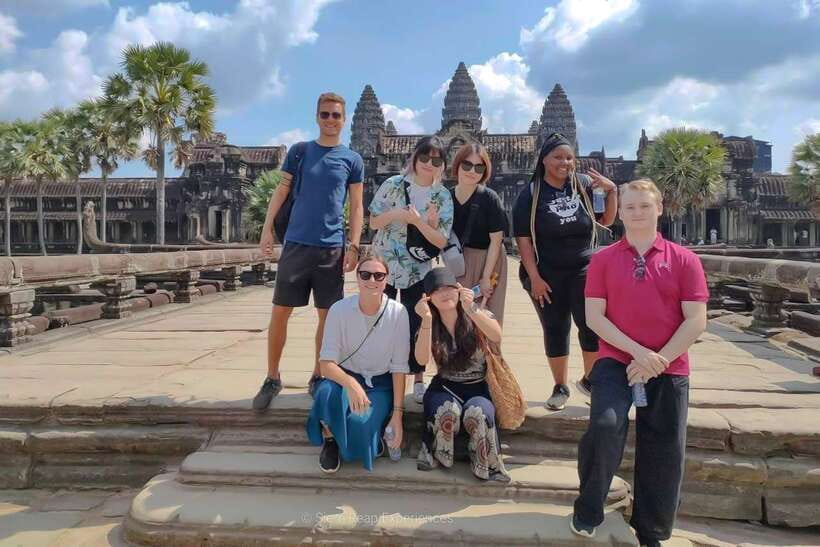
Once the sky brightens, you explore Angkor Wat, Cambodia’s best-known monument and the largest attraction in the park. Your English-speaking guide explains the temple’s role, design, carvings, and connection to the Khmer Empire. The guided approach helps you read the stone rather than simply walk through a vast set of galleries.
Allow yourself to enjoy the scale. Angkor Wat is not a quick photo stop. Its towers, corridors, bas-reliefs, and long approaches work best when you slow down and look closely. A guide also helps you understand details you could easily miss on your own.
Angkor Thom and the smiling faces of Bayon
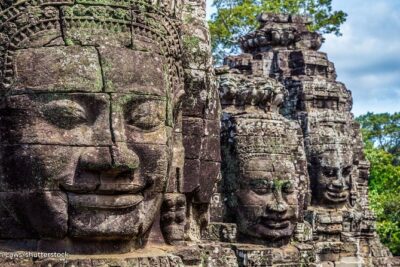
The route continues to Angkor Thom, the great walled city that contains several important monuments. At its center is Bayon, famous for its enormous stone faces with calm, smiling expressions.
Bayon is one of the most memorable stops because the faces appear from different angles as you move through the temple. The corridors can feel confusing, but that is part of the fun. A good guide points out the carvings and explains how the temple fits into Khmer religious and royal life.
The tour leaves room for photographs and some independent wandering. That balance matters. You get a clear explanation first, then a chance to look around without having every minute filled with commentary.
The early start also helps with comfort. Morning temperatures are easier on the body, and several people particularly valued the air-conditioned vehicle waiting between sites. After walking across stone courtyards and temple paths, that cool ride is not a luxury. It is part of what makes a long temple day manageable.
Banteay Kdei and Ta Keo: quieter stops with different character
Banteay Kdei provides a change from the scale of Angkor Wat and Bayon. This Buddhist temple has a more enclosed, atmospheric feel, with galleries and carved stone that reward a slower pace. Monks use the site, which adds a living connection to the religious setting.
Ta Keo is different again. Built in the 10th century, it is a mountain temple with a strong pyramid form. Its plain stone mass and steep structure show another side of Khmer design, less dependent on delicate decoration and more focused on height and geometry.
These smaller stops are important because the Angkor experience is not only about the two famous monuments. You get a wider sense of how temple design changed and how the empire used different forms for different religious and royal purposes.
Day 1 ends with a return to your accommodation between about 1:00 and 1:30 p.m. That early finish is welcome. You can eat, rest, swim, or simply escape the heat before the next morning’s later start.
More multi-day routes in Siem Reap:
- Angkor 2-Day Sunset & Sunrise Small-Group Tour
★ 5.0 · 2,567 reviews - Siem Reap: Angkor Sunrise 1- or 2-Day Guided Temples Tour
★ 4.9 · 1,132 reviews - 2-Day Angkor Wat With Small, Big Circuit and Banteay Srei Tour
★ 5.0 · 545 reviews - Siem Reap: 2-Day Temple Highlights Sunrise and Sunset Option
★ 4.9 · 445 reviews
Day 2: Preah Khan and the larger circuit
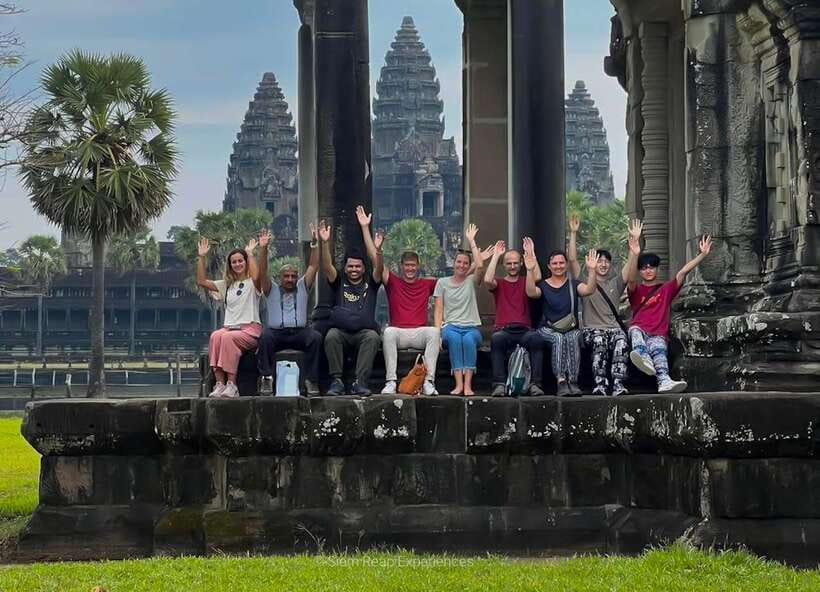
Day 2 begins around 10:00 to 10:20 a.m. in your hotel lobby, with the main temple visits starting at approximately 10:30. The later pickup is a relief after the sunrise morning, though it does mean some of the walking takes place during hotter hours.
The first stop is Preah Khan, described as the largest temple on this circuit. Built by King Bayon for his father, it has broad passageways, carved galleries, and a strong sense of scale. It is a good place to notice the mixture of religious symbols and the way vegetation has become part of the ruins.
You then visit Neak Pean, an island temple surrounded by water. The water was used for bathing during the Angkor period. The setting gives this stop a different mood from the larger stone temples, with the temple reached across a causeway and viewed in relation to its surrounding pools.
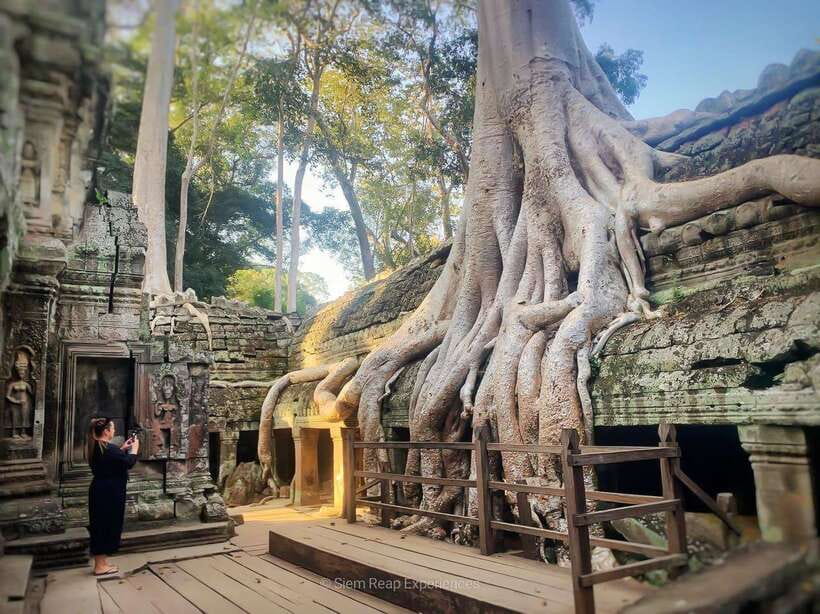
Ta Som follows. Its best-known feature is the tree growing over the East Gate. This is one of those places where the stone and the forest seem to have become one image. It is also a good reminder that the ruins are not frozen museum pieces. Weather, roots, and time continue to shape what you see.
East Mebon and Pre Rup before sunset
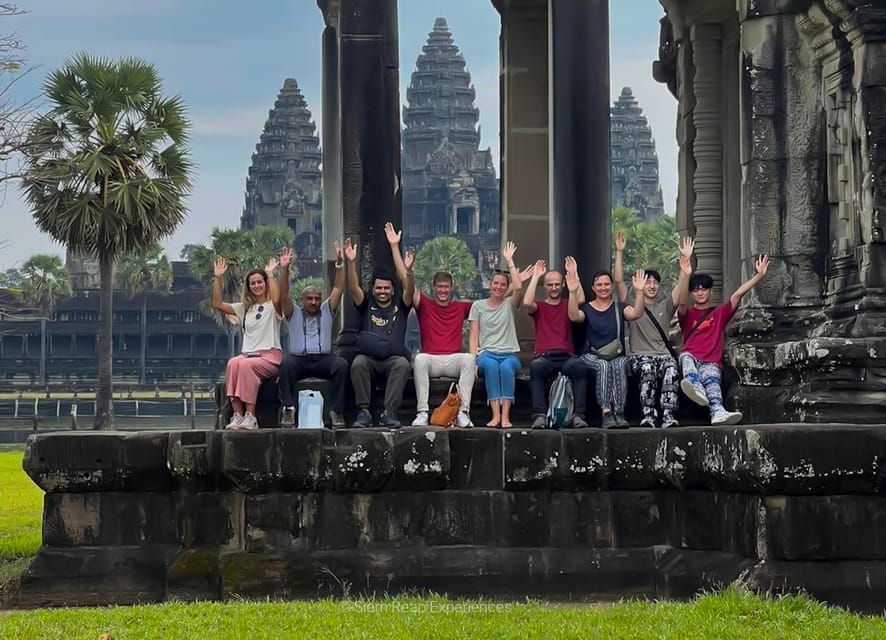
East Mebon was once built on an artificial island in a reservoir. The reservoir is now dry, so the temple no longer has the same water setting its builders intended. That change gives your guide a useful chance to explain how water management supported Angkor’s cities and temples.
Pre Rup is the next major stop. This stone structure was used by Hindus to meditate on the full moon. Its tiered form and elevated position make it a strong architectural contrast to the enclosed galleries at Banteay Kdei and Preah Khan.
The schedule places these temples before the final sunset visit. This is a sensible order because you see several important sites while you still have time to ask questions, take pictures, and walk at your own pace. You are not spending the whole day waiting for the final viewpoint.
Food is not included. Breakfast or lunch can be purchased at local restaurants near the temples, and the schedule includes a rest stop around the middle of the day. Food service can take time, so bring cash and keep your expectations practical. One morning stop received criticism for slow service and incorrect orders, while other meals were described as generous and served in air-conditioned restaurants.
Phnom Bakheng sunset and the final view
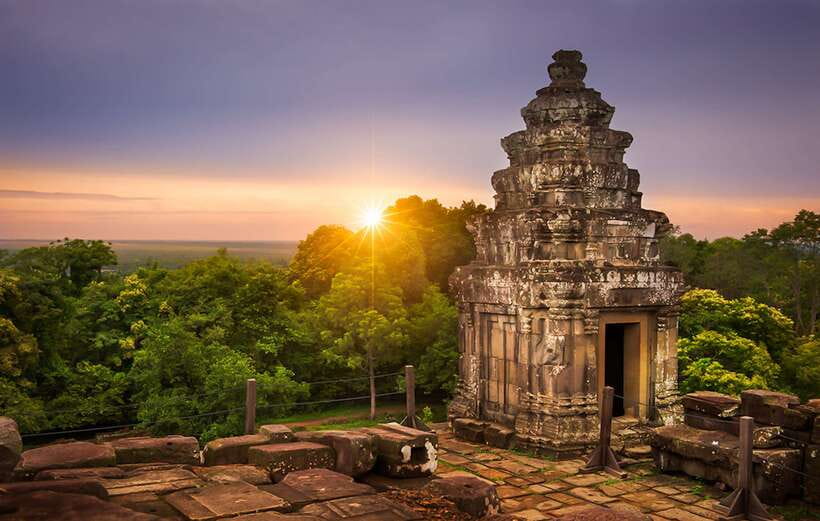
The second day ends at Phnom Bakheng, a hilltop temple with 33 towers representing the heavens. Its position makes it the natural sunset stop, and the changing light gives the stone a warmer, softer appearance than it has in the middle of the day.
You should expect this to be a popular ending. The tour description does not promise an empty viewpoint, so bring patience and focus on the setting rather than expecting a private sunset. The hilltop location also means you should wear sensible clothing and shoes for walking.
After sunset, the minibus returns you to Siem Reap, with arrival expected around 7:00 p.m. That is a full day, but the structure gives you a clear finish rather than leaving you to arrange an evening transfer from the park.
Guides, photographs, and the human side of the tour
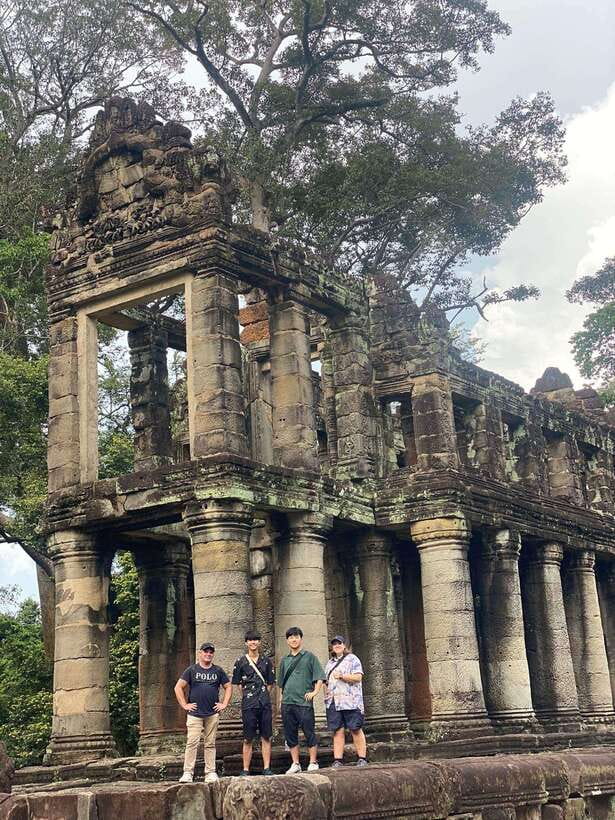
The strongest part of this experience is the guiding. Sam is frequently praised for his calm manner, historical explanations, and personal connection to Cambodia. One useful detail is that he was formerly a monk, which may add depth when he discusses Buddhist temples and religious practices.
Sayon is also a particularly good choice if photography matters to you. He is known for finding less crowded viewpoints, keeping the group together, and taking pictures at useful angles. Nick is praised for explaining the day clearly, pointing out wildlife, and allowing time to wander. John brings humor and personal stories about growing up in Cambodia.
You cannot guarantee a particular guide when booking, but the repeated strength of the guiding team is reassuring. Guides such as Vone, Rith, Sary, Pheap, Chon, Sok, Pip, and Heang are also praised for their friendliness and explanations.
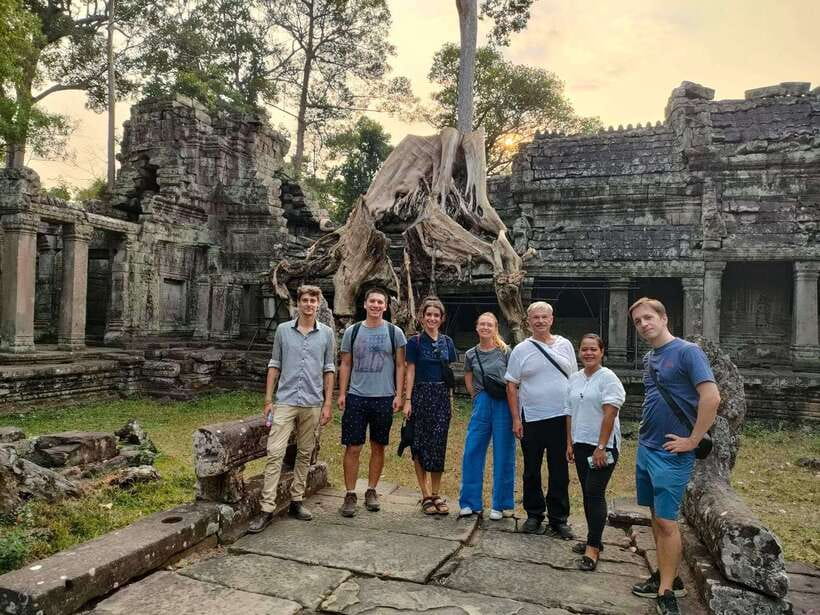
The groups are limited to 13 people, although the usual group may be around 10 to 15 depending on the day. That is small enough for questions without the price of a fully private tour. You may have a different guide on each day, which is normal for this arrangement.
Transport, breaks, and what to bring
The air-conditioned minibus is one of the tour’s most useful features. You are not arranging separate transport between 11 temples, and the vehicle gives you a cool place to recover after each walk. The transport has received very high marks, with 96 percent of ratings giving it a perfect score.
Cold bottled water and refreshing towels are included. You should still carry sunscreen, a hat, cash, and your camera. Long pants are a good choice, and you need clothing that covers your knees and shoulders at the temples. A sarong can help if you need extra coverage.
Shorts, short skirts, and sleeveless shirts are not allowed at the temple sites. Alcohol and drugs are also prohibited. The tour is not suitable for babies under one year, people over 95, or wheelchair users.
The stone surfaces are not always even, especially when walking before sunrise. Bring a phone light or small flashlight if you have one. It is not listed as required, but the early approach can be dark, and careful footing is sensible.
Who will get the most from this tour?
I would choose this tour if you want a broad first look at Angkor without arranging tuk-tuks, drivers, and guides yourself. It suits people who want history explained in plain English, a set route, regular transport, and a chance to see both sunrise and sunset.
It is also a good fit for solo visitors and couples who want company during a major sightseeing day. A small group can make it easier to share photo help and compare impressions, while still leaving some time for independent exploration.
I would think twice if you dislike fixed schedules or early mornings. Day 1 begins very early, and both days are packed with temples. You also need to buy your own park pass and pay separately for food and drinks.
The tour is less suitable if you need step-free access or cannot manage long walks on uneven temple surfaces. The operator specifically excludes wheelchair users and very young babies.
Should you book the Angkor Wat two-day tour?
I would book it if you want strong value, broad coverage, and a guide who adds meaning to the ruins. For $30, the transport, two days of guiding, water, towels, hotel transfers, and 11 temples make a convincing package, even after adding the $62 park pass.
The main compromise is the early Day 1 pickup. If sunrise is your priority, accept that you may wait in the dark before the sky changes. If that sounds miserable, you might prefer a later private arrangement.
For most first-time visitors staying in Siem Reap, this is a practical way to see the essential temples and several less famous ones. Bring proper clothing, buy your pass ahead of time, carry cash for meals, and ask your guide for help with photographs. The combination of Angkor Wat at dawn, Bayon’s faces, tree-covered Ta Som, and Phnom Bakheng at sunset gives you a full and memorable introduction to the Angkor complex.
FAQ
How much does the two-day Angkor tour cost?
The tour costs $30 per person. The Angkor Archaeological Park ticket is separate and costs $37 for one day or $62 for two to three days.
Is the temple pass included?
No. You need to purchase the Angkor Archaeological Park ticket separately. Online purchase through the official Angkor Enterprise website is recommended one day before the activity or earlier.
What time is pickup on Day 1?
Pickup is scheduled between 4:00 and 4:20 a.m. You should wait in your hotel lobby 30 minutes before the scheduled pickup time.
What time is pickup on Day 2?
Day 2 pickup is scheduled between 10:00 and 10:20 a.m. at your hotel lobby.
What time does the tour finish?
Day 1 usually ends with hotel arrival between 1:00 and 1:30 p.m. Day 2 ends with hotel arrival at about 7:00 p.m.
How many temples does the tour visit?
The tour visits 11 temples over two days, including Angkor Wat, Bayon, Banteay Kdei, Ta Keo, Preah Khan, Neak Pean, Ta Som, East Mebon, Pre Rup, and Phnom Bakheng.
Is hotel transportation included?
Yes. Hotel pickup and drop-off in Siem Reap are included, along with an air-conditioned minibus.
Is food included?
No. Food and soft drinks are not included. Breakfast or lunch can be purchased at local restaurants near the temples.
What language is the tour conducted in?
The live tour guide speaks English.
What should I wear to the temples?
You need to cover your knees and shoulders. Short skirts, sleeveless shirts, and shorts are not allowed. Long pants and a sarong are useful choices.
Newest reviews from Siem Reap
- War Museum, Killing Field, and APOPO Hero RATs Tour★ 5.0 · 7 reviews
- Angkor Wat at Sunrise★ 4.0 · 7 reviews
- Siem Reap Angkor Airport Taxis (from Airport to Hotel)★ 5.0 · 44 reviews
- Cambodian Cooking Class and Oxcart Ride with Local Village Tour★ 5.0 · 4 reviews
- Secret Temples of Angkor – Guided Tour in Siem Reap★ 5.0 · 6 reviews
- Short Cycling at Countryside★ 5.0 · 29 reviews
- SIEM REAP E-BIKE HALF-DAY COUNTRYSIDE (25-30 km)★ 4.0 · 1 review
- Unveiling the Mystical Beauty of Phnom Kulen National Park★ 5.0 · 6 reviews
Angkor Wat Tours, compared.
Angkor Wat Sunrise or Sunset Tour with Guide from Siem Reap
Read our review →
Angkor Wat: Small-Group Sunrise or Sunset Tour
Read our review →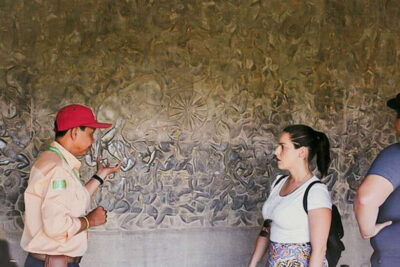
Angkor Wat 2-Day Tour with Sunrise and Sunset
Read our review →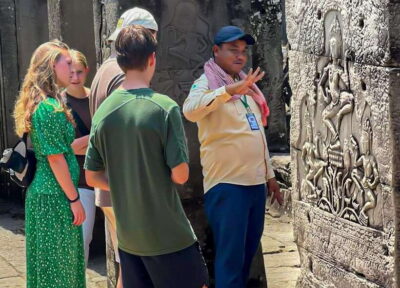
Angkor Wat Sunrise tour with Small – Group and Guide tours
Read our review →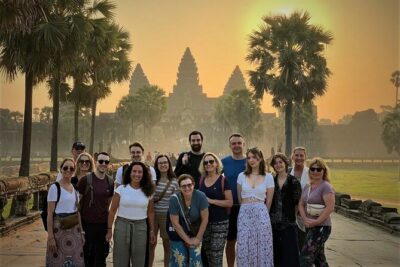
Angkor Wat Highlights and Sunrise Guided Tour from Siem Reap
Read our review →
Angkor Wat Sunset Small Group Tour with Lunch Included
Read our review →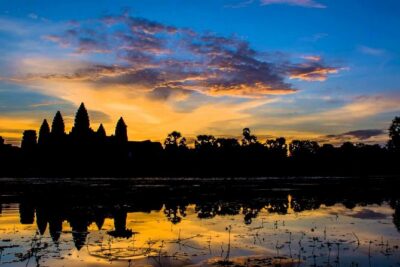
Full-Day Angkor Wat Sunrise Private Tour with Guide from Siem Reap
Read our review →Browse the lists this tour appears in