
Reviewed · MULTI-DAY TOURS
Siem Reap: 2-Day Temple Highlights Sunrise and Sunset Option
Angkor reveals itself slowly. This two-day tour gives you a smart route through Siem Reap’s major temples, from the fine carvings of Banteay Srei to sunrise at Angkor Wat and the tree-covered stones of Ta Prohm. I especially like the wide mix of temples and the care taken with timing, transport, water, and rest stops. The main catch is that the $46 price does not include the Angkor pass, which adds $62 per person.
I also like the small-group format, the air-conditioned vehicle, and the chance to learn about Khmer history, Hinduism, Buddhism, and temple design from an English-speaking guide. Guides such as Sak, Pi, Bun, Chhay, Pal, and Sam have been praised for clear explanations, humor, photos, and good pacing. You should still expect early starts, plenty of walking, heat, uneven stone, and two full days on your feet.
In This Review
- Key points before you book
- Why two days works better than one
- Day 1: Pre Rup, Banteay Srei, Neak Pean and Preah Khan
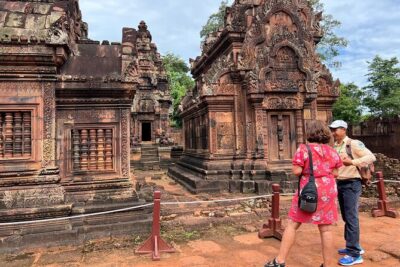
- Banteay Srei and Cambodia’s finest carvings
- Neak Pean, a temple on an artificial island
- Preah Khan, roots, corridors and quiet corners
- Choosing between the rice fields and Bakheng sunset
- Day 2: Angkor Wat before dawn
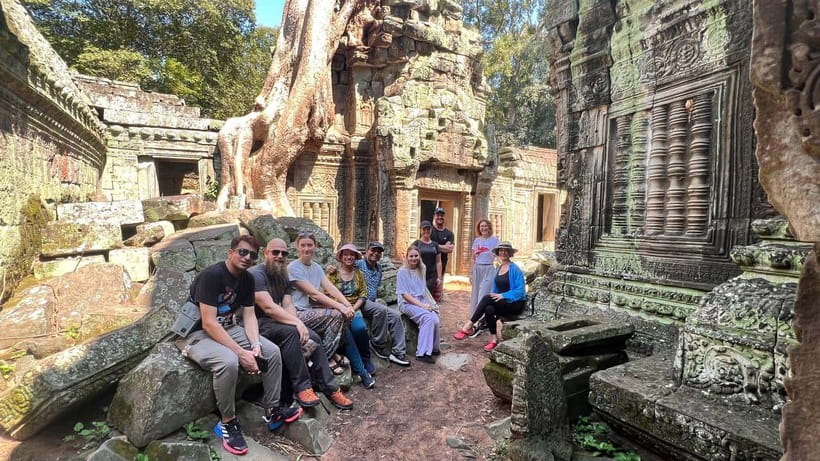
- Ta Prohm and Ta Nei after sunrise
- Angkor Thom, Bayon and the royal terraces
- Guides, drivers and the human side of the tour
- What $46 really buys you
- Who should book this temple tour?
- Should you book it?
- FAQ
- How long does the tour last?
- What temples are included?
- Is sunrise at Angkor Wat included?
- Do I need to bring a torch?
- Does the price include the temple pass?
- Are meals included?
- Is hotel pickup available?
- Is the tour wheelchair accessible?
Key points before you book
- Sunrise begins in darkness: Bring a torch or phone light for the eastern entrance to Angkor Wat.
- Banteay Srei is the artistic highlight: Its small scale and remarkably detailed sandstone carvings reward close attention.
- Cooling service matters: The driver supplies bottled water and cool towels after temple walks.
- The $46 price is not the full cost: Add the required $62 two or three-day temple pass, plus meals.
- Sunset depends on your booking type: A private option includes a rice field sunset drink, while the small-group option includes sunset at Bakheng Temple.
- The route is tiring but well spaced: You see major temples and quieter sites without cramming everything into one day.
Why two days works better than one
Angkor is too large for a rushed single visit. A one-day outing can cover Angkor Wat, Ta Prohm, and Bayon, but it leaves little room for the smaller temples that explain how the Khmer religious and political world developed.
This plan spreads the main sights across two days. Day 1 travels farther from the central Angkor Thom area and focuses on temples with different moods and designs. Day 2 begins before dawn at Angkor Wat, then moves through jungle ruins and the fortified city of Angkor Thom.
That variety is the tour’s strongest feature. You are not looking at the same sort of temple all day. You move from a brick temple mountain to an island sanctuary, from delicate carvings to huge stone faces. The changes keep your attention fresh, even when the heat begins to wear you down.
The schedule is active. You will walk over stone paths, climb some temple steps, and cross uneven ground. Still, the vehicle returns between sites, and the air-conditioning gives you a useful break. A number of guides have also adjusted the pace when people were tired, which matters in Cambodia’s heat.
More Sunrise Tours in Siem Reap:
- Angkor Wat Sunrise or Sunset Tour with Guide from Siem Reap
★ 5.0 · 12,109 reviews - Siem Reap: Angkor Wat: Small-Group Sunrise or Sunset Tour
★ 5.0 · 9,444 reviews - Siem Reap: Angkor Wat 2-Day Tour with Sunrise and Sunset
★ 4.9 · 4,429 reviews
Day 1: Pre Rup, Banteay Srei, Neak Pean and Preah Khan
The first stop is Pre Rup, a Hindu temple built as the state temple of King Rajendravarman. It was dedicated in 961 or early 962 and uses brick, laterite, and sandstone in the form of a temple mountain.
Pre Rup is a good opening stop because its structure is easy to read. You can see the rising levels and central towers that express the idea of a sacred mountain. The brickwork also gives the site a warmer, earthier appearance than the pale sandstone temples later in the route.
The steps can be steep and the stone underfoot is uneven. Take your time here, especially if your knees are not at their best. One guide and driver received particular praise for helping an older passenger and a person with a knee problem, but you should still tell the tour team about physical limits before setting out.
Banteay Srei and Cambodia’s finest carvings
The drive to Banteay Srei takes you away from the main cluster of Angkor temples. The reward is a smaller sandstone temple covered in unusually fine relief work.
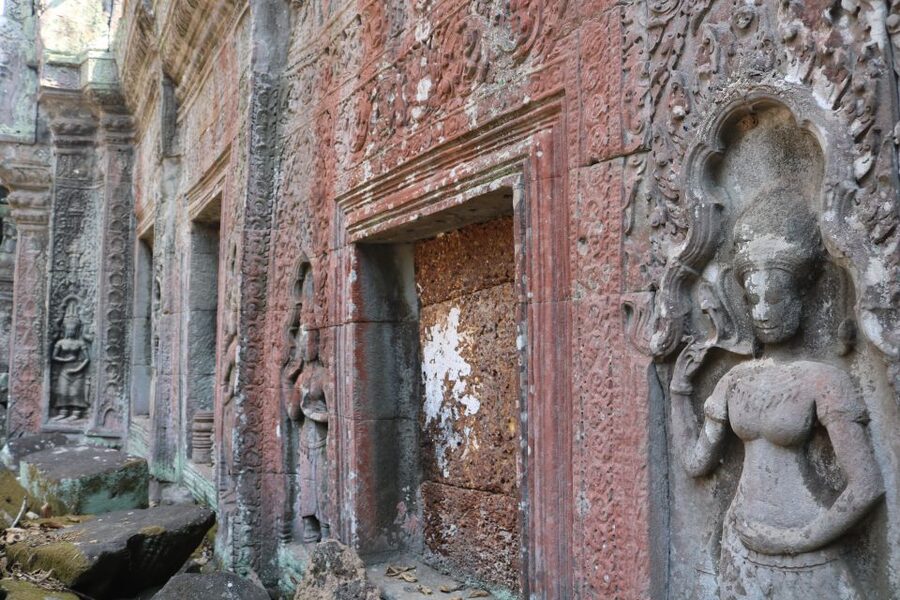
Banteay Srei is often treated as an essential stop because the carvings are so precise. Figures, plant forms, and mythological scenes cover the pinkish sandstone, with a level of detail that can be harder to appreciate at larger temples. Your guide can help explain the Hindu stories and point out details you might otherwise walk past.
The temple has a more intimate feel than Angkor Wat. You are not standing before a huge ceremonial complex. Instead, you are looking closely at craftsmanship, proportion, and ornament.
Banteay Srei has only been accessible since the late 1990s, after the Khmer Rouge left the area. That recent access adds a sobering modern layer to the visit. It also helps explain why this site feels less worn and less familiar than Angkor’s central monuments.
Because Banteay Srei is farther out, this stop adds driving time to Day 1. I think the journey is worthwhile if you care about sculpture and temple detail. If you mainly want the largest monuments, you may find the travel time less appealing.
Neak Pean, a temple on an artificial island
After Banteay Srei, the route returns toward the central Angkor area for Neak Pean. This Buddhist temple sits on a circular artificial island in Jayatataka Baray.
Neak Pean is different from the temple mountains and enclosed galleries elsewhere. Its setting around water gives it a calmer, more symbolic character. The central structure and surrounding arrangement were part of a carefully planned sacred space.
The approach is generally as important as the small temple itself. You walk out toward the island, with water and open space changing the rhythm after the detailed stonework of Banteay Srei. It is a good place to listen to your guide’s explanation of Buddhist ideas and the purpose of the site.
Do not expect a large complex here. Neak Pean is compact, and the attraction is its design and setting rather than the amount of architecture to explore.
More multi-day routes in Siem Reap:
- Angkor 2-Day Sunset & Sunrise Small-Group Tour
★ 5.0 · 2,567 reviews - Siem Reap: Angkor Sunrise 1- or 2-Day Guided Temples Tour
★ 4.9 · 1,132 reviews - 2-Day Angkor Wat With Small, Big Circuit and Banteay Srei Tour
★ 5.0 · 545 reviews - Angkor Wat 2-Day complex Sun rise & Sun set with Guided Tour
★ 4.9 · 439 reviews
Preah Khan, roots, corridors and quiet corners
Preah Khan is one of Day 1’s most atmospheric stops. King Jayavarman VII commissioned it in honor of his father, and the temple combines long corridors, crumbling stone structures, and tree roots.
The site makes a useful contrast with Angkor Wat. It feels less formal and less monumental, with more space for wandering and noticing small details. In some sections, restoration work by the World Monuments Fund has helped preserve the buildings while keeping their weathered character.
Your guide can help you make sense of the layers here. Preah Khan was not simply a single-purpose shrine. Its scale and layout point to a large religious and institutional center, and the remaining corridors give you a sense of how complex Angkor’s sacred sites could be.
The uneven surfaces and fallen stones require care. You should avoid treating the temple as a climbing playground, even when tree roots and broken galleries make dramatic photo scenes.
Choosing between the rice fields and Bakheng sunset
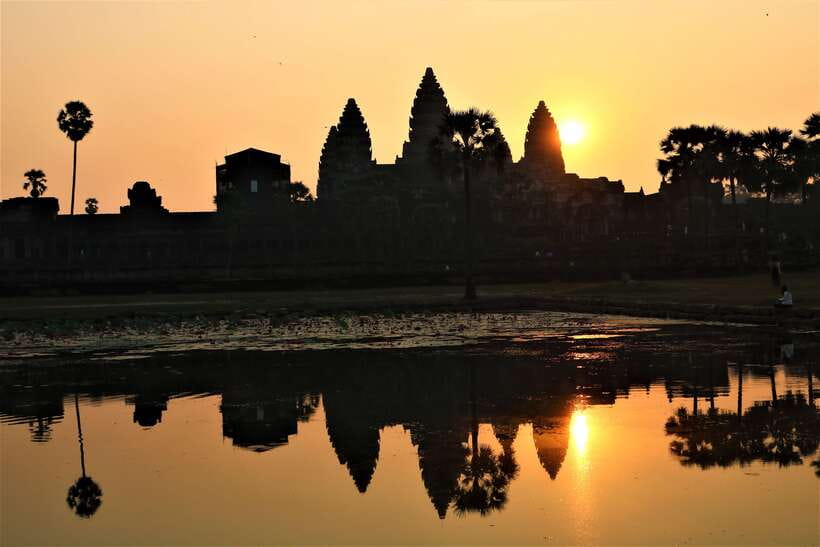
Day 1 finishes with a sunset experience, but the exact version depends on the booking type. The private option includes a drink in Siem Reap’s rice fields as the sun drops over the horizon. The small-group option includes sunset at Bakheng Temple.
The rice field stop sounds more relaxed and local in character. You can sit in a peaceful rural setting after a long temple day, with a drink rather than another demanding climb. It is a good fit if you want a quiet finish and a glimpse of life beyond the monuments.
Bakheng Temple offers a more elevated sunset setting, but it can involve steps and a more concentrated crowd. The temple is associated with sunset views, so timing and access matter. If sunset photography is your priority, confirm which option applies to your booking.
This is one point where the tour description needs your attention. Do not assume that every booking includes both the rice field drink and Bakheng sunset. The inclusions differ between private and small-group arrangements.
Day 2: Angkor Wat before dawn
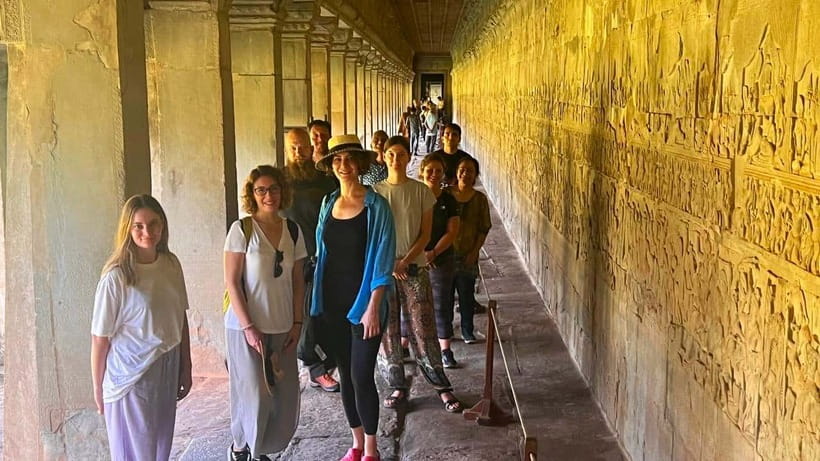
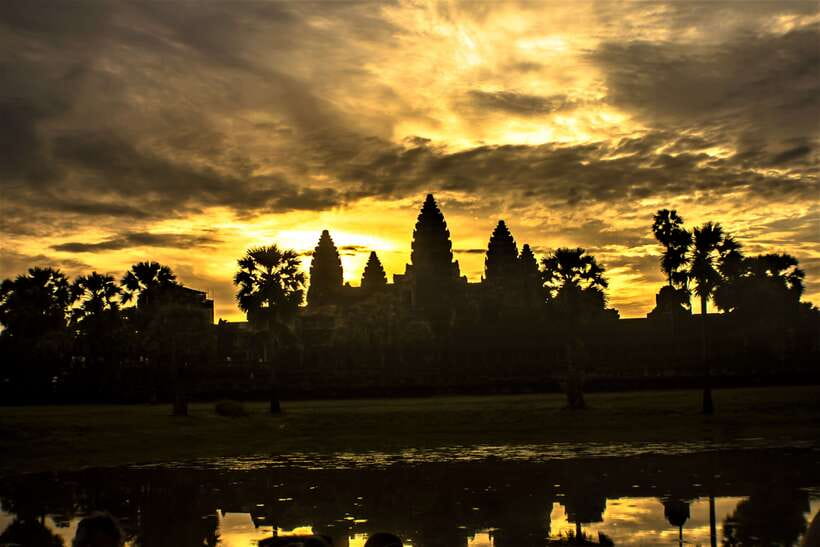
Day 2 starts before sunrise. You enter Angkor Wat in darkness from the eastern side, which is described as a quieter approach than the usual western entrance.
Bring a torch. The early walk through the cloisters is part of the experience, but it also means uneven ground and limited light. Comfortable shoes are not optional here.
The route takes you through long galleries and past an immense stretch of bas-relief carvings. Your guide can point out scenes, symbols, and construction details as the light improves. Entering before dawn also gives you a chance to see the temple change from shadowed stone to the familiar sunrise silhouette.
The sunrise view is the emotional center of the trip. You will not be alone, and the best positions can fill quickly. Guides such as Sak and Pi were praised for getting groups into good viewing areas, but no guide can control the crowd or the weather. Bring patience, keep expectations realistic, and enjoy the changing light rather than focusing only on one photograph.
Breakfast outside the temple follows. Meals are not included, so budget for this stop and for lunch on Day 1. Several groups found the meal breaks useful, especially after the early start, but you should not expect food to be part of the $46 price.
Ta Prohm and Ta Nei after sunrise
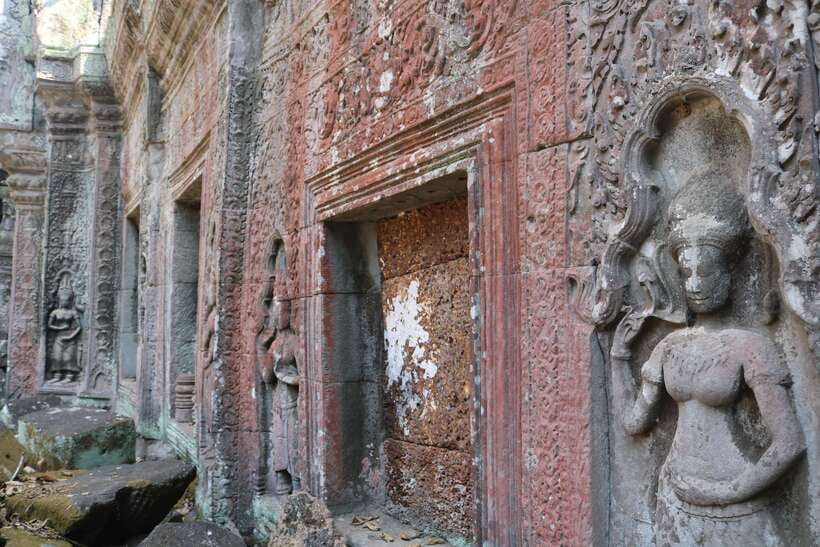
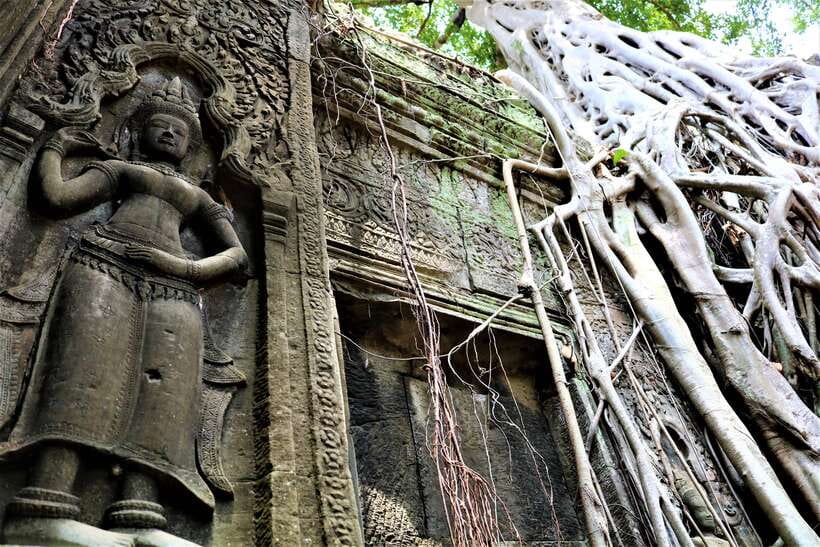
After breakfast, you visit Ta Prohm, the temple most closely linked with jungle imagery and the film Tomb Raider. Trees grow through and around the stonework, giving the site a powerful sense of age.
Ta Prohm once housed 2,740 monks. Today, its partly ruined galleries and roots make it one of the most memorable places in Angkor. The site looks much as it did when French explorer Henri Mouhot encountered it in the early 1850s, though restoration and visitor management now shape the experience.
Ta Prohm is also one of the busiest stops. The tree roots create famous photo points, so expect people around the most recognizable sections. Your guide may take you toward quieter corners and explain how the temple functioned, which helps turn a photo stop into a more meaningful visit.
Ta Nei is a smaller late 12th-century stone temple in the Angkor area. It offers a useful change of pace after Ta Prohm. You get another look at a less imposing site, with fewer grand visual effects and more emphasis on atmosphere and close observation.
By this stage, you may be tired. That is not a flaw in the route so much as a fact of Angkor. The value of Ta Nei depends on your energy and interest. If you want every stop, it adds another worthwhile layer. If your legs are done, tell your guide. The schedule has been adjusted for tired groups according to several detailed accounts.
Angkor Thom, Bayon and the royal terraces
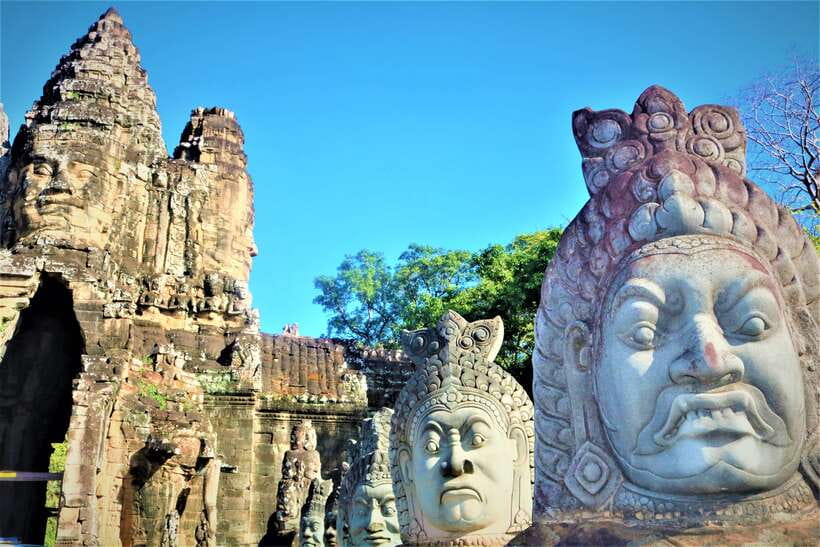
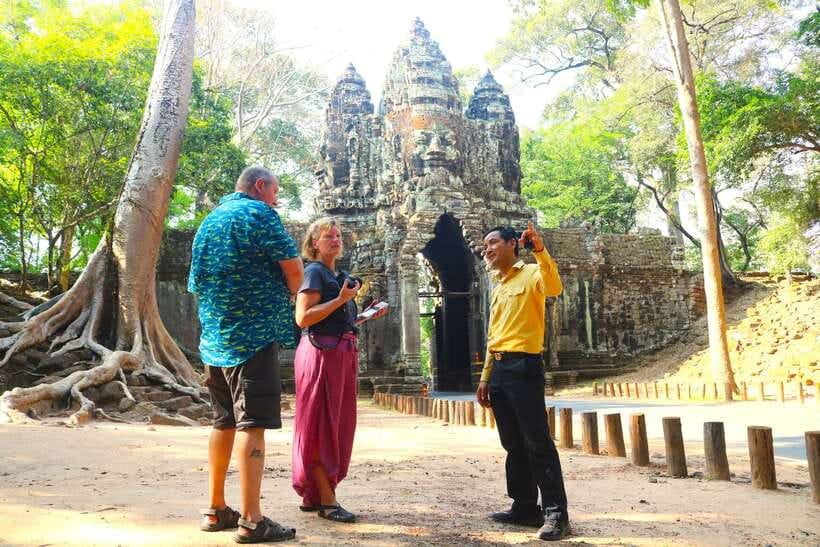
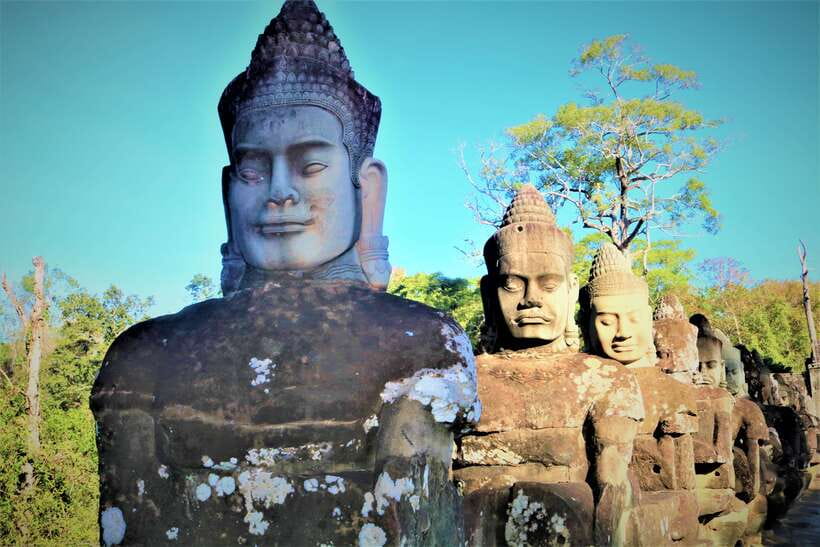
The final major section brings you to the southern gate of Angkor Thom. The gate is flanked by 54 stone figures on each side, with gods on the left and demons on the right.
This entrance gives you a strong sense of the city’s scale and symbolism. The figures hold a naga, creating a visual line that leads toward the gate. Your guide can explain the religious imagery and the larger ideas behind the city’s design.
Inside Angkor Thom, Bayon is the star. Its central towers carry more than 200 enormous carved faces, creating an unusual mix of solemn expression and visual confusion. From different angles, faces appear and disappear among the towers.
Bayon is not always easy to understand without help. The towers crowd together, and it can be difficult to see how the structure was planned. A good guide makes a real difference by showing you where to look and explaining the temple’s Buddhist setting under Jayavarman VII.
The tour also visits the Terrace of the Leper King and the Terrace of Elephants. These long platforms offer a final look at royal ceremony, sculpture, and public architecture. They are less enclosed than the main temples, so you can finish the day with a broader view of Angkor Thom’s former civic center.
Guides, drivers and the human side of the tour
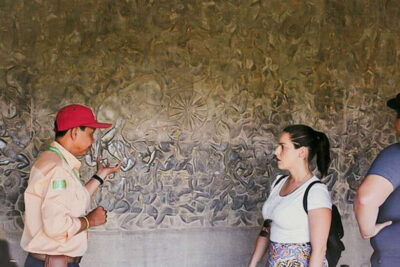
The temples are extraordinary, but the guide can decide how much you take away. The strongest guiding accounts describe people who explain Hindu and Buddhist beliefs, answer questions about modern Cambodia, use maps or visual material, and keep the group laughing during long drives.
Names frequently associated with strong experiences include Pi, Sak, Bun, Chhay, Pal, Sam, So, Yuth, and Saruon Pal. Guide assignments can vary, so you cannot select a particular person unless the operator confirms it. What you can reasonably expect is an English-speaking licensed guide with experience explaining the Angkor complex.
Photo help is another repeated strength. Guides often offer to take pictures and know useful angles, but you should still allow time for your own quiet looking. A tour works best when the guide explains a section, then gives you room to explore.
The driver’s work is less visible but just as important. The air-conditioned vehicle links far-flung sites, and drivers such as Vichet, Keal, Mao, Naroo, Sal, and Seyha were praised for punctual pickups, safe driving, cold water, and cool towels.
Those towels are not a fancy extra in Cambodia. After walking through exposed courtyards in hot weather, a cold cloth can make the next temple possible. The transport received a 96 percent perfect score, and the overall experience carries a 4.9 rating from 445 reviews, which supports the view that the service is unusually dependable for this price level.
What $46 really buys you
At $46 per person, the tour is good value for a guided two-day route with hotel pickup and drop-off, air-conditioned transport, a licensed English-speaking guide, bottled water, and cool towels.
But the real admission cost is higher. You must add the $62 Angkor pass for two or three days, bringing the basic total to $108 per person before meals. That is important when comparing this tour with other packages.
The value comes from the route and support. You are not just paying to be driven to Angkor Wat. You are covering Banteay Srei, Neak Pean, Preah Khan, Ta Prohm, Ta Nei, Bayon, the Angkor Thom terraces, Pre Rup, and sunrise or sunset timing across two days.
Meals are extra, and the tour is not wheelchair accessible. It is not suitable for children under eight, people with mobility impairments, or wheelchair users. You need covered shoulders and knees, comfortable walking shoes, and insect repellent. Shorts are not allowed, so dress for temple rules as well as heat.
Free cancellation is available up to 24 hours before the activity, and you can reserve now and pay later. Those terms help if your Siem Reap plans are still shifting.
Who should book this temple tour?
I would choose this tour if you have two days in Siem Reap and want both the famous monuments and smaller sites that are easy to miss. It suits first-time visitors who want context, couples or friends who value photo help, and solo visitors who prefer a small group to exploring the huge complex alone.
It is also a strong choice during hot weather. The vehicle, water, and towels soften the physical effort, while the guide can adjust the pace. You still need reasonable fitness, since air-conditioning cannot remove the walking, stairs, heat, and early wake-up.
You may prefer a private arrangement if you want more control over meal timing, the pace, and the sunset setting. A small group is likely the better value if you enjoy meeting people and want a lower price per person.
Should you book it?
Book it if you want an organized, educational introduction to Angkor without reducing the visit to only three famous temples. The route is varied, the transport is practical, and the guides appear to add real value through stories, religious context, history, humor, and photo help.
Skip it if you dislike early mornings, group schedules, long temple days, or extra costs beyond the advertised price. Before booking, check the group type, confirm whether you receive the rice field drink or Bakheng sunset, and set aside money for the $62 pass and meals.
For most reasonably mobile visitors with two days in Siem Reap, this is a well-priced way to see Angkor with less guesswork and a much better chance of understanding what you are looking at.
FAQ
How long does the tour last?
The activity lasts two days.
What temples are included?
The route includes Pre Rup, Banteay Srei, Neak Pean, Preah Khan, Bakheng Temple or a rice field sunset experience depending on the option, Angkor Wat, Ta Nei, Ta Prohm, Angkor Thom, Bayon, the Terrace of the Leper King, and the Terrace of Elephants.
Is sunrise at Angkor Wat included?
Yes. Day 2 begins with a pre-dawn visit to Angkor Wat for sunrise.
Do I need to bring a torch?
Yes. You enter Angkor Wat in darkness from the eastern side, so bring a torch.
Does the price include the temple pass?
No. The Angkor pass costs $62 per person for a two or three-day pass.
Are meals included?
No. Meals are not included, although the itinerary includes a breakfast stop after visiting Angkor Wat.
Is hotel pickup available?
Yes. Pickup and drop-off are available from hotels in Siem Reap City.
Is the tour wheelchair accessible?
No. The activity is not wheelchair accessible and is not suitable for wheelchair users or people with mobility impairments.
Newest reviews from Siem Reap
- War Museum, Killing Field, and APOPO Hero RATs Tour★ 5.0 · 7 reviews
- Angkor Wat at Sunrise★ 4.0 · 7 reviews
- Siem Reap Angkor Airport Taxis (from Airport to Hotel)★ 5.0 · 44 reviews
- Cambodian Cooking Class and Oxcart Ride with Local Village Tour★ 5.0 · 4 reviews
- Secret Temples of Angkor – Guided Tour in Siem Reap★ 5.0 · 6 reviews
- Short Cycling at Countryside★ 5.0 · 29 reviews
- SIEM REAP E-BIKE HALF-DAY COUNTRYSIDE (25-30 km)★ 4.0 · 1 review
- Unveiling the Mystical Beauty of Phnom Kulen National Park★ 5.0 · 6 reviews
Multi-Day Tours, compared.
Angkor Wat 2-Day Tour with Sunrise and Sunset
Read our review →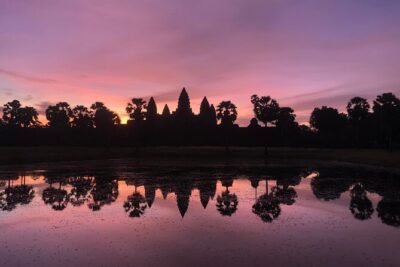
Angkor 2-Day Sunset & Sunrise Small-Group Tour
Read our review →
Angkor Sunrise 1- or 2-Day Guided Temples Tour
Read our review →
2-Day Angkor Wat With Small, Big Circuit and Banteay Srei Tour
Read our review →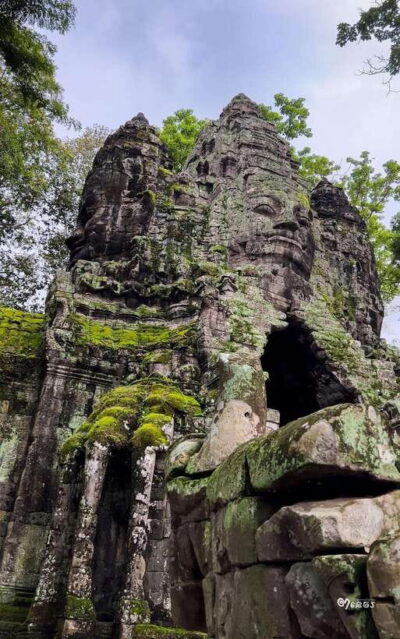
Angkor Wat 2-Day complex Sun rise & Sun set with Guided Tour
Read our review →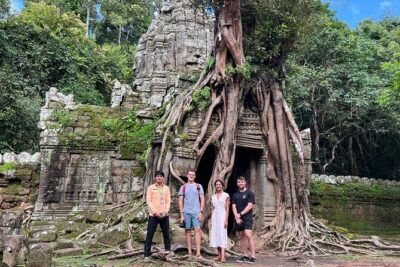
2-Day Angkor Wat Tour with Banteay Srei and Floating Village
Read our review →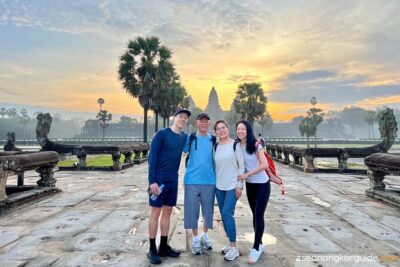
2-Day Angkor Wat and Banteay Srei with Countryside Exploration
Read our review →Browse the lists this tour appears in