
Reviewed · ANGKOR WAT TOURS
2-Day Angkor Wat Tour with Banteay Srei and Floating Village
Angkor rewards an early start. This two-day private tour gives you a strong first look at Siem Reap, from Bayon’s giant stone faces and Ta Prohm’s tree roots to the delicate carvings of Banteay Srei. I like the private air-conditioned vehicle, which makes the long temple days easier, and I like the guides’ personal touch, especially their help with photographs and quieter routes. The main drawback is cost: the $130 tour price does not include the Angkor admission fee, the optional Tonle Sap boat trip, meals, or soft drinks.
The schedule is packed, but it covers nearly every major temple named on a first visit. You get a guide and driver dedicated to your group, so you can adjust the pace and, when practical, add or remove stops. That flexibility matters when the heat rises or your feet begin to complain.
The second day begins at 4:40 AM for sunrise, followed by a full circuit of temples and a trip to Kampong Phluk. You should book this tour if you want a well-organized introduction to Angkor and prefer private help over working out transport and temple order yourself. You should think twice if you dislike early mornings, long walking days, or extra charges added to the headline price.
In This Review
- What makes this Angkor tour worth considering
- Day One: Bayon faces and the royal city of Angkor Thom
- Bayon Temple, 45 minutes
- Baphuon Temple, 30 minutes
- Terraces of the Elephants and Leper King
- Angkor Wat after the royal city
- Angkor Wat, 90 minutes
- Sunset at Phnom Bakheng, up to 45 minutes
- Day Two begins at 4:40 AM
- Ta Prohm and the smaller eastern temples
- Ta Prohm, one hour
- Pre Rup, 40 minutes
- Eastern Mebon, 30 minutes
- Ta Som, 30 minutes
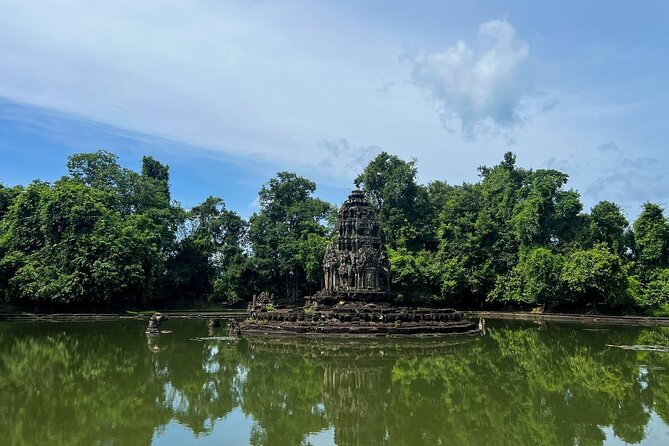
- Neak Pean, 30 minutes
- Preah Khan, one hour
- Banteay Srei: small temple, fine carving
- Kampong Phluk and Tonle Sap
- Guides, drivers, and the private-tour advantage
- What the $130 price really covers
- Who should book this tour?
- Final verdict: a strong first Angkor itinerary
- FAQ
- How long is the tour?
- What time does the second day begin?
- Is transportation private?
- Is the Angkor admission fee included?
- Is the floating village visit included?
- Are meals included?
- What should I bring?
What makes this Angkor tour worth considering
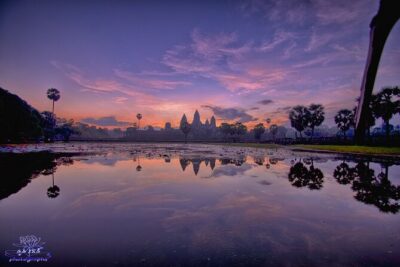
- Sunrise at Angkor Wat: You reach the temple before dawn, when the pools and towers can catch the changing light.
- A private guide and vehicle: Your group travels in an air-conditioned car or minivan, with cold water and towels provided during the day.
- Nearly every essential temple: The route includes Angkor Wat, Bayon, Ta Prohm, Preah Khan, Banteay Srei, and several smaller sites.
- Guides who help with photos: Guides such as Sean, Seila, Mony, Sam, Raman, and Makara were praised for good timing, temple knowledge, and carefully framed pictures.
- Tonle Sap as an optional add-on: Kampong Phluk adds a look at flooded and fishing communities, but the boat and pass cost extra.
- A useful fit for short stays: If you have only three days and two nights in Siem Reap, this tour covers a great deal without requiring you to plan every transfer.
Day One: Bayon faces and the royal city of Angkor Thom
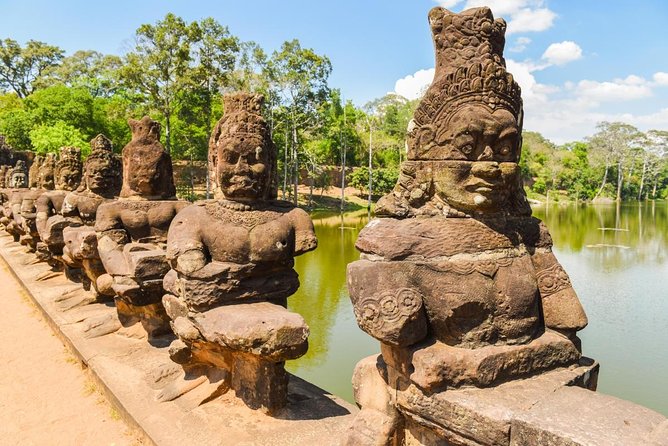
Your first day begins with Angkor Thom, the great walled city that became the capital under Jayavarman VII. This is not one single temple, but a large royal center with several important monuments. The city was part of Jayavarman VII’s ambitious building program, and its scale helps you understand that Angkor was once a major seat of power, not simply a collection of photogenic ruins.
More ways to see Angkor Wat:
- Angkor Wat Sunrise or Sunset Tour with Guide from Siem Reap
★ 5.0 · 12,109 reviews - Siem Reap: Angkor Wat: Small-Group Sunrise or Sunset Tour
★ 5.0 · 9,444 reviews - Siem Reap: Angkor Wat 2-Day Tour with Sunrise and Sunset
★ 4.9 · 4,429 reviews
Bayon Temple, 45 minutes
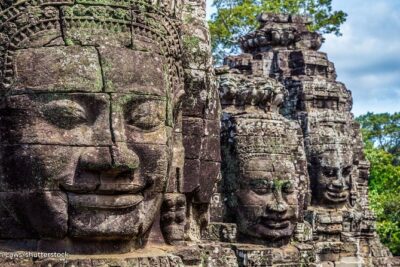
Bayon is the dramatic opening stop. Its towers carry enormous carved faces, often linked with Jayavarman VII, and the temple’s passageways can feel wonderfully confusing. Your guide earns the fee here by explaining how the temple was built as a Mahayana Buddhist state temple in the late 12th or early 13th century.
The 45-minute stop is enough for a clear introduction, but not enough for every corner. I would pay attention to the lower galleries, where carved scenes show daily life, battles, and ceremonies. The faces are the obvious draw, but the reliefs reward a slower look.
Baphuon Temple, 30 minutes
Baphuon is a three-tiered temple mountain built in the mid-11th century. It has a different feel from Bayon, with a more ordered climb and a strong sense of height. Thirty minutes lets you see the structure and appreciate its form, though anyone who wants to linger over details may find the stop brief.
Wear shoes with a good grip and expect some walking between the vehicle and the monuments. The tour includes transport, not temple admission, so keep your pass arrangements in mind before the day begins.
Terraces of the Elephants and Leper King
The Terrace of the Elephants takes about 15 minutes. It was used as a viewing platform for royal ceremonies and victories, and its carved elephants are best understood from the broad face of the terrace rather than as a stand-alone temple visit.
The Terrace of the Leper King gets about 10 minutes. That is short, but the hidden inner carvings are worth seeing. Your guide can help you understand the terrace’s later name and its place in the royal square. These stops are quick, yet they break up the larger temples and give you a better sense of Angkor Thom’s civic design.
More trips out to Banteay Srei:
- Full-Day Banteay Srei & 4 Temples – Grand Tours Join-in Tour
★ 5.0 · 1,155 reviews - Siem Reap Tour: Angkor Wat Sunrise, Bayon, Ta Prohm, Banteay Srei
★ 5.0 · 931 reviews - 2-Day Angkor Wat With Small, Big Circuit and Banteay Srei Tour
★ 5.0 · 545 reviews - From Siem Reap: Banteay Srei Temple & Grand 5 Temple Tour
★ 4.8 · 262 reviews
Angkor Wat after the royal city
After a lunch stop of roughly 45 to 60 minutes at a local restaurant, you continue to Angkor Wat. Food and drinks are your responsibility, so confirm prices before ordering and carry water, even though the driver supplies bottled water during the tour.
Angkor Wat, 90 minutes
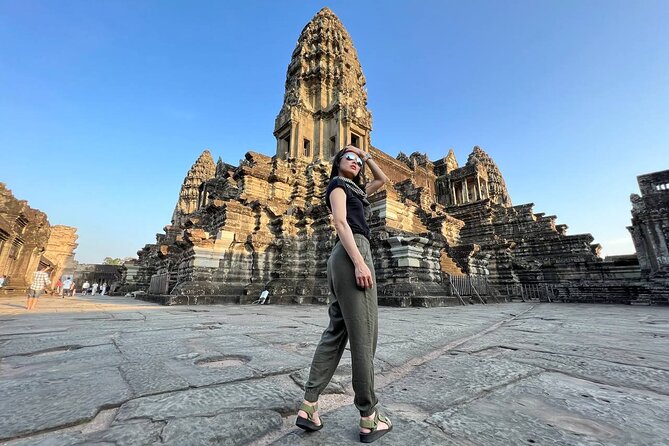
Angkor Wat is the centerpiece, and the 90-minute visit gives you time to see the main approach, galleries, towers, and major reliefs. Built as a Hindu temple dedicated to Vishnu, it later became a Buddhist site. Its size is hard to grasp from photographs, especially when you walk along the long causeway toward the central towers.
I like having Angkor Wat on the first afternoon as well as at sunrise on the second day. The first visit helps you get oriented without the pressure of dawn, while the later sunrise gives you a different mood and light. Ninety minutes is still not enough for every carved panel, so let your guide steer you toward the sections that best match your interests.
Sunset at Phnom Bakheng, up to 45 minutes
If weather and energy allow, the guide may take you to Phnom Bakheng for sunset. Treat this as an optional finish, not a guarantee. After a day of temples, stairs, heat, and walking, you may decide that dinner and sleep are the wiser choice.
The sunset stop can add a memorable view, but it also makes an already full day longer. Tell your guide honestly how you feel. One major advantage of a private tour is that your schedule is not locked to a large group.
Day Two begins at 4:40 AM
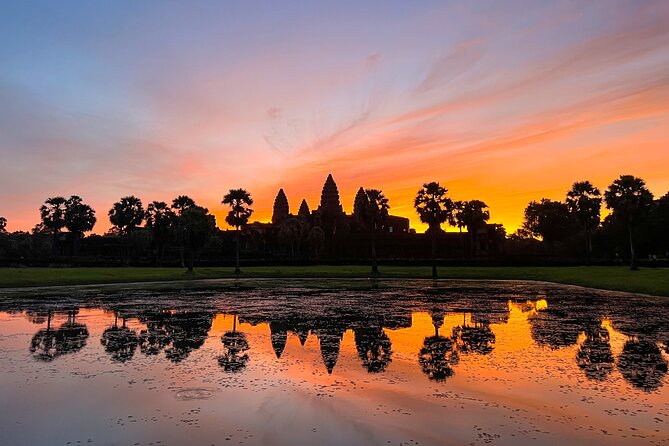
The early pickup is the hardest part of the tour and the reason you should not schedule a late night before it. You are collected from your hotel lobby at about 4:40 AM and taken to Angkor Wat for sunrise.
The exact visual effect depends on clouds, season, and crowd conditions, so do not treat a perfect reflection as a promise. Still, arriving before daylight lets you see the temple change from a dark outline to a detailed monument. After sunrise, breakfast is included on Day Two, which is a useful touch after the pre-dawn start.
Ta Prohm and the smaller eastern temples
Ta Prohm, one hour
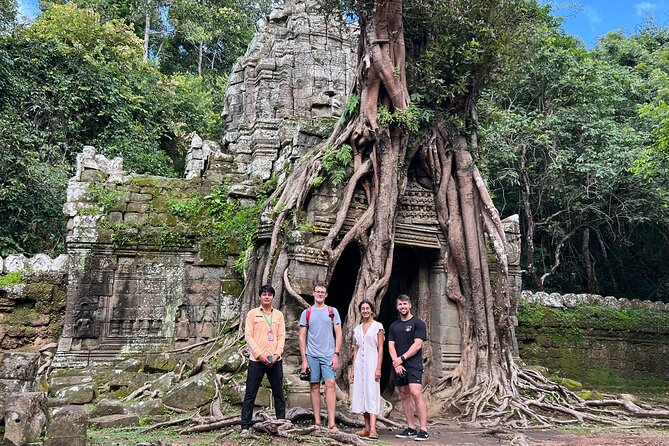
Ta Prohm is the temple people often picture when they imagine Angkor covered by jungle. Large roots grow over and around sections of the structure, while other areas remain open enough to show the temple’s plan. The site has a powerful sense of age, though the paths can be busy and uneven.
The one-hour stop is well judged. You have time for the famous root-covered views, but you are not left wandering through every corridor. Guides such as Mony and Sam were praised for selecting quieter routes and good photo positions, which can make a real difference at Ta Prohm.
Pre Rup, 40 minutes
Pre Rup is a Hindu temple built as the state temple of Rajendravarman in 961 or early 962. Its brick and stone form gives you a useful contrast with the later Buddhist monuments. Forty minutes allows a steady look at the terraces and upper levels without making the visit feel rushed.
Eastern Mebon, 30 minutes
Eastern Mebon was built in the 10th century on an artificial island in the now-dry East Baray reservoir. The dry reservoir is an important part of the story. It shows how closely Angkor’s temples were tied to large-scale water management.
This is a good place to listen to the explanation rather than simply collect another temple photograph. Thirty minutes is enough for the main details, including the temple’s elevated setting and surviving stonework.
Ta Som, 30 minutes
Ta Som is a smaller late-12th-century temple associated with Jayavarman VII. It feels more compact than Angkor Wat or Bayon, and the half-hour stop gives you a change of scale. The remains are easier to take in quickly, but you should still watch your footing on the uneven surfaces.
Neak Pean, 30 minutes
Neak Pean was built during Jayavarman VII’s reign in 1191. The temple is linked to a water setting and is reached along a raised walkway. Its appeal comes from the unusual arrangement, not from towering architecture.
Water levels and surrounding conditions can affect how the site looks. Your guide’s explanation helps you picture how this place functioned when the water system was in use.
Preah Khan, one hour
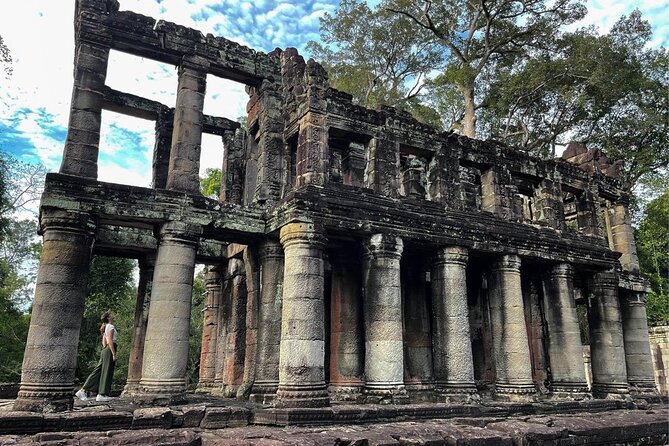
Preah Khan was built in the 12th century for Jayavarman VII in honor of his father. It is one of the more rewarding stops on the second day because its long corridors, courtyards, and partially restored sections show how a large temple complex fits together.
Give yourself time here. One hour allows you to notice the mix of religious imagery and architectural layers. It is also a good point to use the cold towel and water waiting at the vehicle afterward.
Banteay Srei: small temple, fine carving
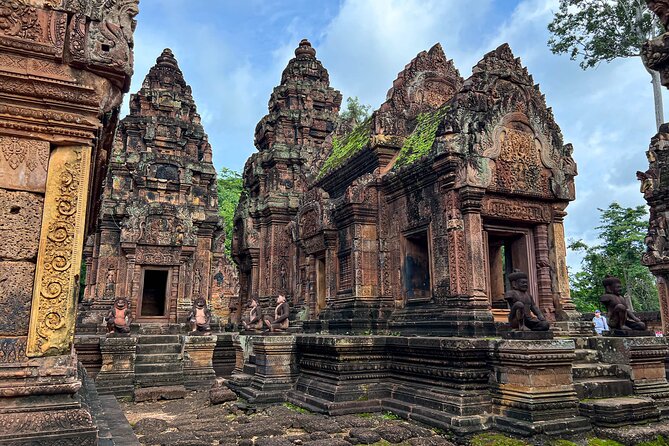
After another lunch stop at a local restaurant, you drive to Banteay Srei. The temple visit lasts about 45 minutes, and admission is listed as free for this stop, though your main Angkor admission is separate.
Banteay Srei is smaller than the main Angkor temples, but its sandstone carvings are exceptionally fine. The detail is the point: look closely at the reliefs around doorways and pediments rather than judging the site by size. The drive out also gives the day a change of pace after the concentrated temple circuit.
This is one of the reasons the tour offers good value for a first visit. You are not limited to the central Angkor monuments. You also reach a more distant temple that many independent visitors might skip when time is short.
Kampong Phluk and Tonle Sap
The final stop is Kampong Phluk, about 21 kilometers from Siem Reap town. It is a flooded and fishing village connected with Tonle Sap Lake. At the port, you take a local boat, with the ride lasting about 90 minutes.
This is not simply another monument stop. You see how the village changes with the water cycle and how daily life is tied to fishing and seasonal flooding. From late March through late July, water levels begin to recede. Some boats may become stuck, and smaller canoes may not be able to pass through the forest, but the lower water can show parts of village life that remain hidden during wetter months.
Set your expectations correctly. Kampong Phluk may not deliver the postcard views you imagine during the dry season. It can still be worthwhile if you want to see a working community rather than only temples and stone carvings.
The boat ride is optional and costs $15 per person, including the Tonle Sap pass and a private boat according to the stated pricing. Ask for the current details before departure, since this is the largest extra attached to the village visit.
Guides, drivers, and the private-tour advantage
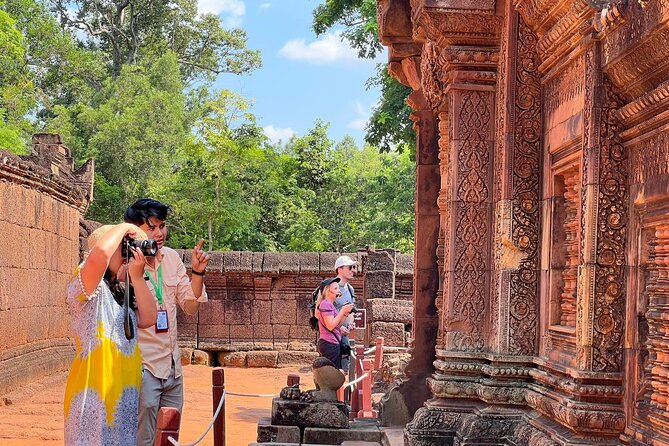
The strongest part of this experience is the guide service. English-speaking guides including Sean, Saylor, Seila, Phanne, Raman, Sam, Mony, and Makara received repeated praise for clear explanations, good organization, kindness, and flexibility.
Several guides were also singled out for finding strong photo locations. Makara was praised for taking portrait and panoramic pictures, while other guides helped position people and choose quieter paths. If photographs matter to you, ask your guide early in the tour what kind of pictures you want.
The driver matters just as much in this heat. Cold bottles of water and cool towels were repeatedly prepared when people returned to the vehicle. That small routine becomes valuable after walking through exposed temple grounds.
Because this is a private activity, only your group participates. You can adjust timing and, when possible, add or remove stops. The schedule remains full, but it is more forgiving than a fixed group departure.
What the $130 price really covers
At $130 per person, the tour includes:
- An English-speaking professional guide
- A private air-conditioned car or minivan
- A driver
- Cool towels and water
- Breakfast on Day Two
The stated price does not include the Angkor admission fee, listed as $62 per person for the Angkor Thom South Gate admission, or food and soft drinks. The optional Tonle Sap pass and private boat cost $15 per person.
If you add both listed admission and boat charges, your basic per-person cost reaches at least $207, before lunch and other drinks. That is not a budget temple outing, but you are paying for private transport, two long guided days, route planning, hotel pickup, and a guide who can explain what you are seeing.
For two or more people, the private format becomes easier to justify, especially if you value comfort and flexibility. Group discounts are offered, but the exact saving is not provided, so ask before booking.
Who should book this tour?
I would choose this tour if you have limited time in Siem Reap and want the major temples arranged efficiently. It suits couples, families, and small groups who want their own vehicle and a guide who can adjust the day.
It is also a good choice for first-time visitors who want cultural context instead of simply being dropped at temple gates. Families may appreciate the ability to shorten a stop, and photography-minded visitors may benefit from the guides’ help with angles and timing.
I would be cautious if you are not comfortable with a 4:40 AM pickup, a full day of walking, or additional admission and boat fees. You may also prefer a shorter temple plan if you want long, quiet visits at just two or three monuments.
Bring insect repellent, sunscreen, a sun hat, and comfortable shoes. The vehicle offers relief, but much of the experience takes place outdoors on uneven temple ground.
Final verdict: a strong first Angkor itinerary
Book this tour if you want a private, carefully guided overview of Angkor with sunrise, Banteay Srei, and Tonle Sap included in one plan. Its best features are the flexible schedule, thoughtful guides, reliable cooling breaks, and broad range of temples.
Before paying, confirm the total price with the Angkor admission and Tonle Sap charges added. If you accept the early morning and busy schedule, this is an efficient way to make two days in Siem Reap count. If you want slow temple study, remove a few stops and use the private format to create more breathing room.
FAQ
How long is the tour?
The experience lasts approximately two days. It includes temple visits on both days, sunrise at Angkor Wat, Banteay Srei, and an optional boat trip at Kampong Phluk.
What time does the second day begin?
Pickup from your hotel lobby is scheduled for about 4:40 AM so you can watch sunrise at Angkor Wat.
Is transportation private?
Yes. Your group travels in a private air-conditioned car or minivan, with an English-speaking guide and driver.
Is the Angkor admission fee included?
No. The stated information lists an admission fee of $62 per person for Angkor Thom South Gate, separate from the $130 tour price.
Is the floating village visit included?
The Kampong Phluk visit is part of the itinerary, but the Tonle Sap pass and private boat ride cost an additional $15 per person.
Are meals included?
Breakfast on Day Two is included. Lunch, food, and soft drinks are not included and must be paid for separately.
What should I bring?
Bring insect repellent, sunscreen, a sun hat, and comfortable shoes. The tour also provides cool towels and water during the temple visits.
More Multi-day Routes in Siem Reap
- Angkor 2-Day Sunset & Sunrise Small-Group Tour
★ 5.0 · 2,567 reviews - Siem Reap: Angkor Sunrise 1- or 2-Day Guided Temples Tour
★ 4.9 · 1,132 reviews - Siem Reap: 2-Day Temple Highlights Sunrise and Sunset Option
★ 4.9 · 445 reviews - Angkor Wat 2-Day complex Sun rise & Sun set with Guided Tour
★ 4.9 · 439 reviews
More Floating Village Trips
- From Siem Reap: Kampong Phluk Floating Village Tour by Boat
★ 4.9 · 6,979 reviews - Sunset tour of Kampong Phluk stilts home village on the Tonle Sap
★ 5.0 · 4,865 reviews - Siem Reap: Kampong Phluk Floating Village Tour with Boat
★ 4.9 · 3,843 reviews - Siem Reap Floating Village Kampong Phluk Sunset with Boat
★ 5.0 · 1,962 reviews
Newest reviews from Siem Reap
- War Museum, Killing Field, and APOPO Hero RATs Tour★ 5.0 · 7 reviews
- Siem Reap Angkor Airport Taxis (from Airport to Hotel)★ 5.0 · 44 reviews
- Angkor Wat at Sunrise★ 4.0 · 7 reviews
- Cambodian Cooking Class and Oxcart Ride with Local Village Tour★ 5.0 · 4 reviews
- Secret Temples of Angkor – Guided Tour in Siem Reap★ 5.0 · 6 reviews
- Short Cycling at Countryside★ 5.0 · 29 reviews
- SIEM REAP E-BIKE HALF-DAY COUNTRYSIDE (25-30 km)★ 4.0 · 1 review
- Unveiling the Mystical Beauty of Phnom Kulen National Park★ 5.0 · 6 reviews
Angkor Wat Tours, compared.
Angkor Wat Sunrise or Sunset Tour with Guide from Siem Reap
Read our review →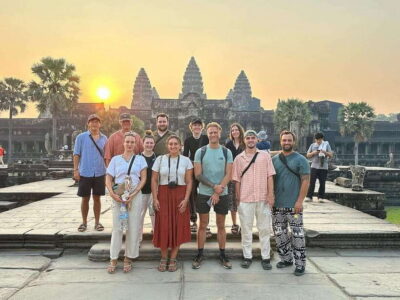
Angkor Wat: Small-Group Sunrise or Sunset Tour
Read our review →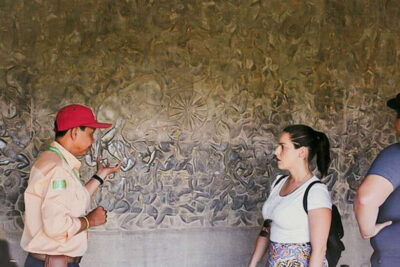
Angkor Wat 2-Day Tour with Sunrise and Sunset
Read our review →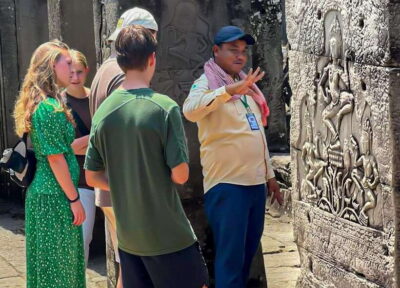
Angkor Wat Sunrise tour with Small – Group and Guide tours
Read our review →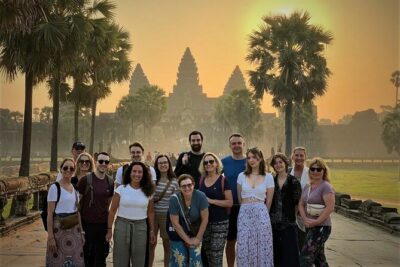
Angkor Wat Highlights and Sunrise Guided Tour from Siem Reap
Read our review →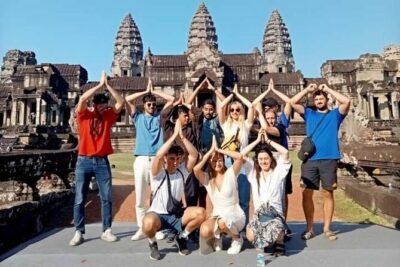
Angkor Wat Sunset Small Group Tour with Lunch Included
Read our review →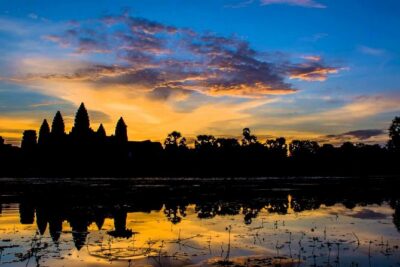
Full-Day Angkor Wat Sunrise Private Tour with Guide from Siem Reap
Read our review →Browse the lists this tour appears in