
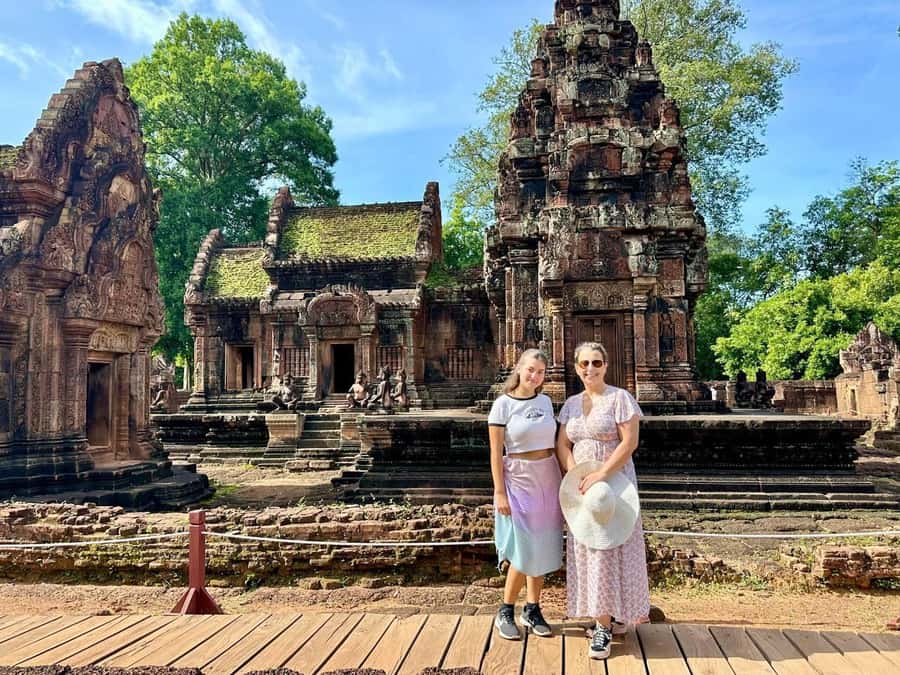
Reviewed · BANTEAY SREI TOURS
From Siem Reap: Banteay Srei Temple & Grand 5 Temple Tour
Small temples, big stories. This full-day trip from Siem Reap combines Banteay Srei’s fine carvings with five important Grand Circuit temples, giving you a wider view of Angkor beyond the usual Angkor Wat and Bayon route. I like the clear focus on Khmer religious ideas, Hindu traditions, and everyday Cambodian life.
I also like the practical touches: hotel pickup, air-conditioned transport, bottled water, and cold towels. Guides such as Phyrom, Ry, Nara, Narath, Tola, and Dara Try are repeatedly praised for explaining architecture and mythology in clear English, often adding thoughtful photo stops. The main drawback is the heat and walking. This is a long day outdoors, and the shared option is not suitable for children under 12 or people with mobility limitations.
In This Review
- Key points to know before you book
- Why this Grand Circuit day is worth your time
- Starting from Siem Reap at 7:50 AM
- Pre Rup: A strong opening at an ancient capital
- Banteay Srei: The day’s finest carvings
- Preah Dak Village: A pause from stone and symbolism
- Lunch near Banteay Srei
- East Mebon and the lost reservoir
- Neak Poan: Sacred water on an island
- Ta Som: Tree roots and a memorable gateway
- Preah Khan: A fitting final temple
- The guides are the tour’s biggest strength
- Heat, clothing, walking, and what to pack
- Is $20 good value?
- Should you book this Banteay Srei tour?
- FAQ
- What temples are included in the tour?
- Is the Angkor entrance pass included?
- Is lunch included?
- What time is hotel pickup?
- Is the tour suitable for children?
- What should I wear to the temples?
- What should I bring?
- What language is the tour offered in?
Key points to know before you book
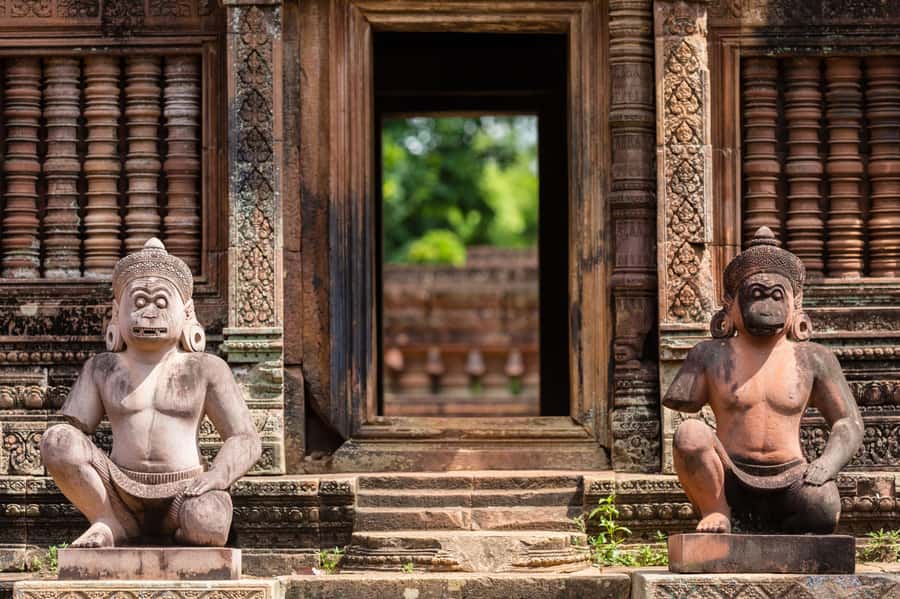
- Banteay Srei is the visual star: Its pink sandstone and unusually delicate carvings make it one of the most rewarding temples in the Angkor region.
- Six temple stops fill the day: You visit Pre Rup, Banteay Srei, East Mebon, Neak Poan, Ta Som, and Preah Khan.
- The guide makes a big difference: The best guides explain Hindu and Buddhist symbols, connect the temples to one another, and answer questions patiently.
- You get a look at rural Cambodia: The route includes Preah Dak Village, where you can observe local life away from the temple ruins.
- Lunch and the temple pass cost extra: The $20 tour price covers transport and guiding, but not the Angkor entrance pass or your meal.
- Cold towels matter here: After walking in the tropical heat, a chilled towel and cold water are more than a small courtesy.
Why this Grand Circuit day is worth your time
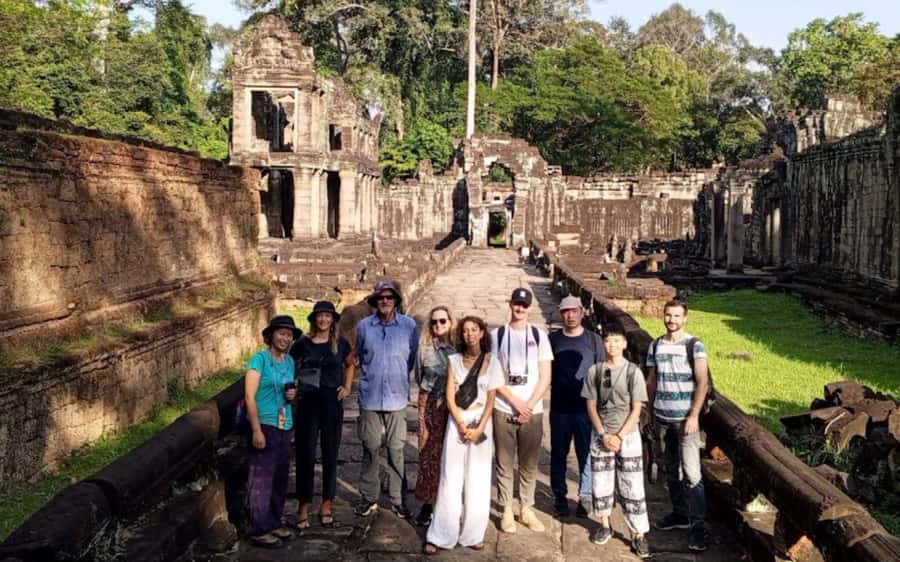
Many first visits to Siem Reap revolve around Angkor Wat and Bayon. That makes sense, but the Angkor complex is far larger than those two famous monuments. This tour takes you to the Grand Circuit, a route with older, quieter, and often more varied temples.
I like this approach because the sites do not all look alike. Pre Rup is a compact brick-and-laterite temple mountain. Neak Poan is reached across a causeway over water. Ta Som has trees pressing into its stone gateway, while Preah Khan spreads out as a large former monastic center. You get variety instead of six versions of the same ruin.
The tour also gives you historical and religious context. A good guide can help you notice how Hindu gods, Buddhist images, temple plans, reservoirs, sacred water, and royal power fit together. Without that background, Angkor can become a long parade of carved stones. With it, the ruins begin to make sense.
At $20 per person, the tour offers good value if you want transport, a guide, hotel pickup, and a structured route. You are not paying for an entrance ticket or lunch, so the final cost will be higher. Still, arranging a private car and a strong guide separately can cost more, especially if you are traveling alone or as a small group.
More trips out to Banteay Srei:
- Full-Day Banteay Srei & 4 Temples – Grand Tours Join-in Tour
★ 5.0 · 1,155 reviews - Siem Reap Tour: Angkor Wat Sunrise, Bayon, Ta Prohm, Banteay Srei
★ 5.0 · 931 reviews - 2-Day Angkor Wat With Small, Big Circuit and Banteay Srei Tour
★ 5.0 · 545 reviews
Starting from Siem Reap at 7:50 AM
Pickup begins with a hotel lobby meeting time of 7:50 AM. Be ready early. The day may begin with a shuttle taking you to a meeting point, where you board the vehicle assigned for the temple route. One traveler particularly appreciated having the chance to buy tea, coffee, and snacks at this gathering point.
The transport is described as comfortable and air-conditioned, with a careful driver. That matters because the roads between the temples take time, and the Cambodian heat can become tiring long before the final stop. At several points during the day, the driver provides bottled water and cold towels.
This is a shared tour, so expect a group setting rather than a private schedule. That can be a social advantage, especially for solo visitors. You may meet people from different countries, but you will have less freedom to linger at one temple or change the order of the day.
The company operates in all weather. Bring light clothing that still meets the temple dress rules, along with sunscreen and insect repellent. A rain shower will not automatically stop the tour, so a small weatherproof layer may be useful, though large bags and luggage are not allowed.
Pre Rup: A strong opening at an ancient capital
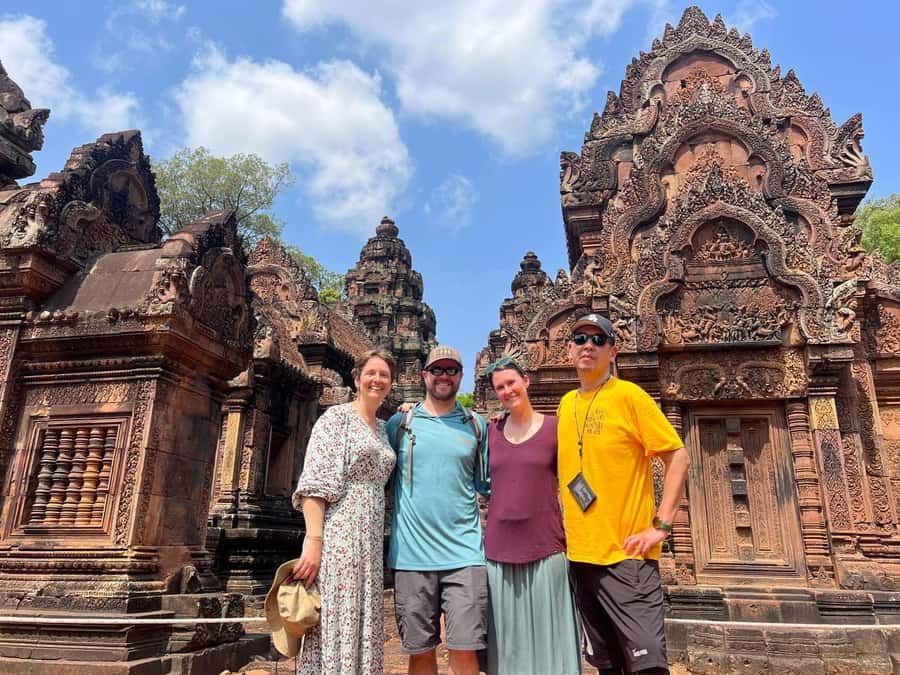
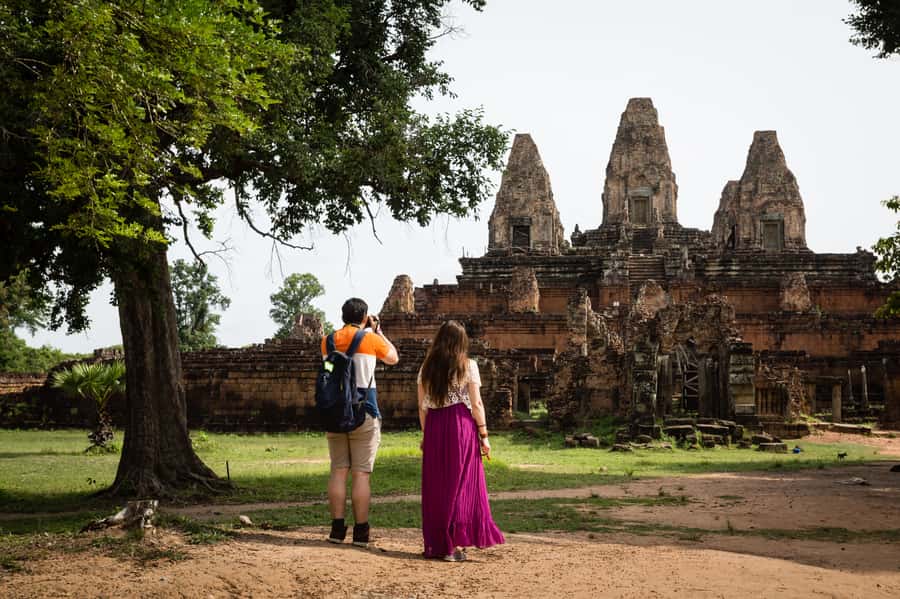
Pre Rup is the first temple stop. It is one of the few remaining complete structures in the Angkor complex, and it gives you an immediate sense of the scale and ambition of the former Khmer capital.
Its stepped form makes it easy to read as a temple mountain. The structure rises in levels, drawing your eye upward and offering a clear example of how Khmer builders expressed sacred geography through architecture. Your guide can explain the religious meaning behind the layout and point out details that are easy to miss when you are walking alone.
Pre Rup is also a useful first stop because it introduces the Khmer practice of building temples as symbolic centers of the universe. The tour later moves to temples associated with reservoirs, sacred water, Buddhist imagery, and monastic life, so this opening visit helps set the stage.
You should expect stairs and uneven ground. The site is not suited to anyone with significant walking difficulty, and comfortable hiking shoes are a sensible choice. The temple itself is not decorated with the same fine pink carvings found at Banteay Srei, but it provides a sturdy architectural beginning to the day.
Banteay Srei: The day’s finest carvings
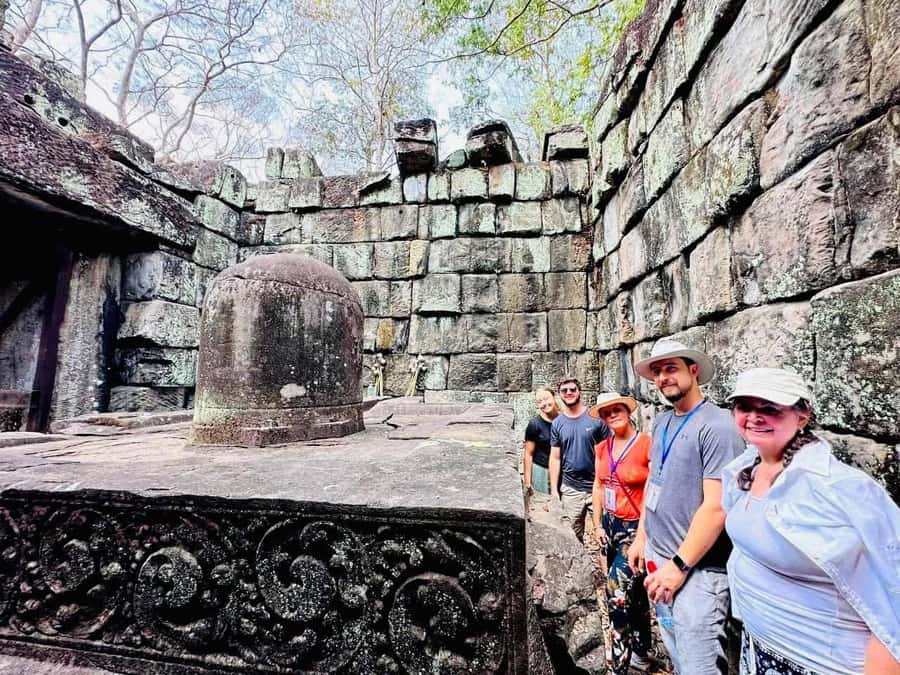
Banteay Srei is the major reason many people choose this tour. Its name is commonly translated as Citadel of Women, and it is famous for small-scale architecture, pink sandstone, and exceptionally detailed carvings.
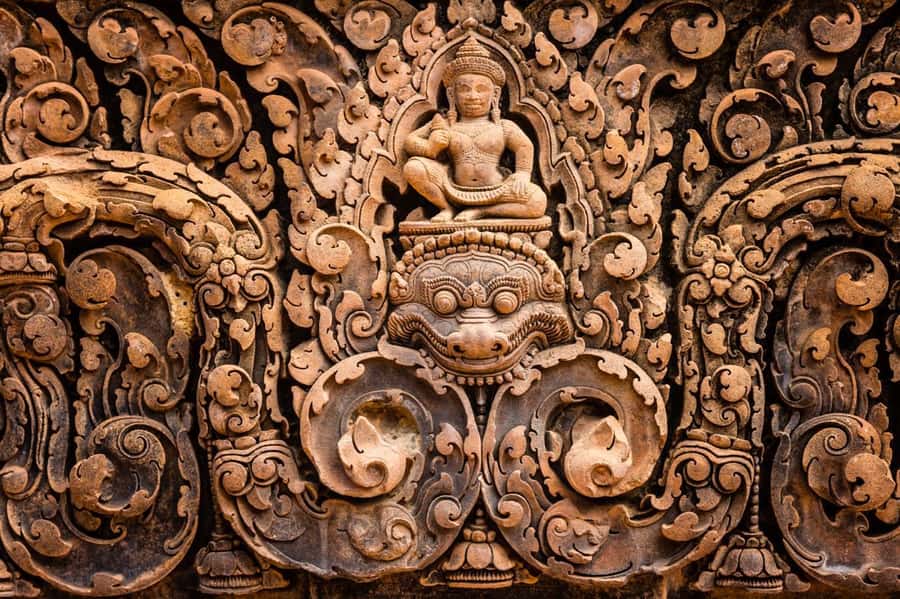
The stone allows for delicate work that can feel almost jewel-like. You may see finely carved figures, floral patterns, and scenes drawn from Hindu mythology. The details are far more intimate than the giant galleries at Angkor Wat, so you will want time to look closely rather than simply walk around the outer walls.
The idea that women made much of the refined carving is often repeated, but the important point for you is the unusual level of precision. The temple feels carefully finished. Many people find it more immediately charming than the larger monuments because the carvings are close to eye level and easier to appreciate.
The temple lies near Phnom Dei, in a more rural setting away from the busiest central Angkor sights. That extra distance is part of the appeal, but it also helps explain why you want a vehicle and guide. Reaching Banteay Srei independently is possible, but this tour folds it into a larger route.
A guide can make this visit far more useful. Names such as Ry Cheng, Phyrom, Narath, Lok, and Dara Try appear often in the praise for this experience, with specific approval for their explanations of Khmer history, Hindu mythology, architecture, and symbolism. Dara Try is also praised for taking strong photographs, while Chenda is noted for finding attractive picture locations.
Do not rush this stop. If you have been visiting temples for several days, Banteay Srei may be the place that resets your attention. Its smaller scale and sharp carving give your eyes a welcome change from vast courtyards and enormous walls.
A few more options around Siem Reap worth reading up on
- Angkor Wat Sunrise or Sunset Tour with Guide from Siem Reap
★ 5.0 · 12,109 reviews - Siem Reap: Angkor Wat: Small-Group Sunrise or Sunset Tour
★ 5.0 · 9,444 reviews - From Siem Reap: Kampong Phluk Floating Village Tour by Boat
★ 4.9 · 6,979 reviews - Sunset tour of Kampong Phluk stilts home village on the Tonle Sap
★ 5.0 · 4,865 reviews
Preah Dak Village: A pause from stone and symbolism
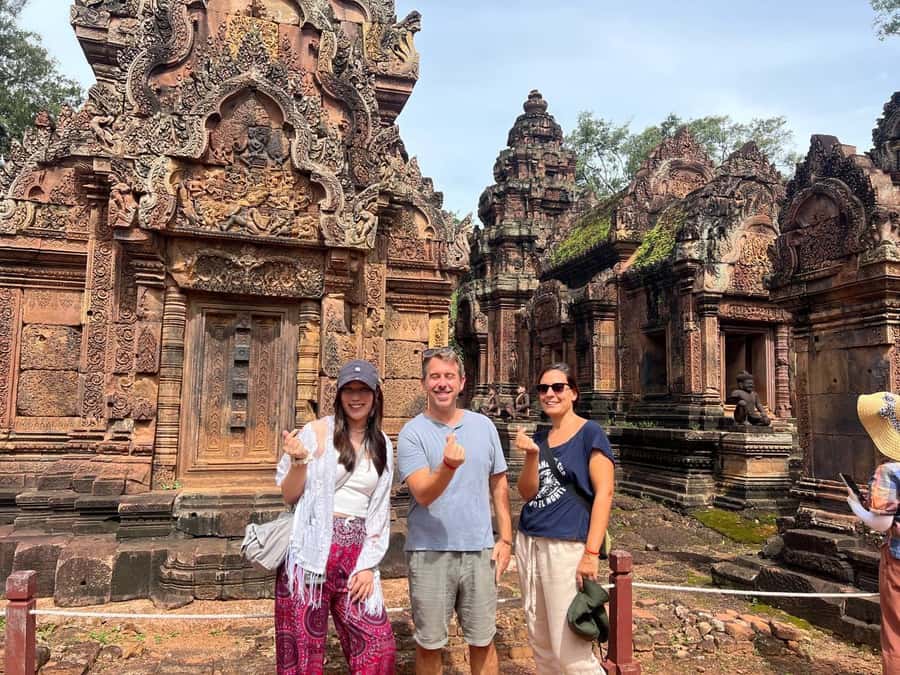
Outside the temples, the tour includes a visit to Preah Dak Village. This is one of the most useful parts of the day because it shifts your attention from royal monuments to present-day Cambodian life.
You can observe local routines and learn about the area from your guide. Several guides are praised for talking about daily life, local customs, nearby nature, and their own experiences in Cambodia. That personal context can make the journey between temples feel less like dead time.
The village visit is not presented as a long workshop or formal cultural performance. Think of it as a short look at local life along the route. That makes it a good counterpoint to the grand religious buildings, which were created for kings, priests, monks, and ceremonies rather than ordinary households.
You may also encounter small food or farm-related moments on the road. One guide, Nara, cut mangoes from trees and shared them with the group. That is not something you should assume will happen on every departure, but it reflects the friendly, informal character some guides bring to the day.
Lunch near Banteay Srei
Lunch takes place at a nearby restaurant and is paid for separately. The available food includes traditional Cambodian curries, soups, and stir-fries.
This arrangement keeps the base price low and gives you some choice. On the other hand, you should carry cash and remember that lunch is not included in the advertised $20. If you have dietary needs, ask the guide or restaurant staff what is available before ordering.
One traveler described the restaurant as serving a good selection of tasty food. That is encouraging, but a group lunch is still a practical break rather than a carefully planned food tour. You are stopping to refuel before the afternoon temples, so do not expect the meal itself to be the main attraction.
East Mebon and the lost reservoir
After lunch, the route continues to East Mebon. This temple once stood on an island in the center of a vast reservoir, an important reminder that Angkor was supported by major waterworks as well as stone buildings.
The reservoir is no longer experienced in the same way, but the temple’s original position helps explain the relationship between power, farming, water management, and religion in the Khmer Empire. Your guide can connect the site to the wider system of reservoirs and temples that shaped the capital.
East Mebon is also useful for comparison. After the pink sandstone precision of Banteay Srei, you return to a more monumental structure with a different setting and purpose. Look for the surviving carvings and the overall temple plan rather than expecting one single dramatic feature.
The day’s schedule means your time at each temple is organized. That keeps the group moving, but it also means you may need to accept a set pace. If you prefer to photograph one doorway for half an hour, a private option would give you more control, though the private guide is an add-on.
Neak Poan: Sacred water on an island
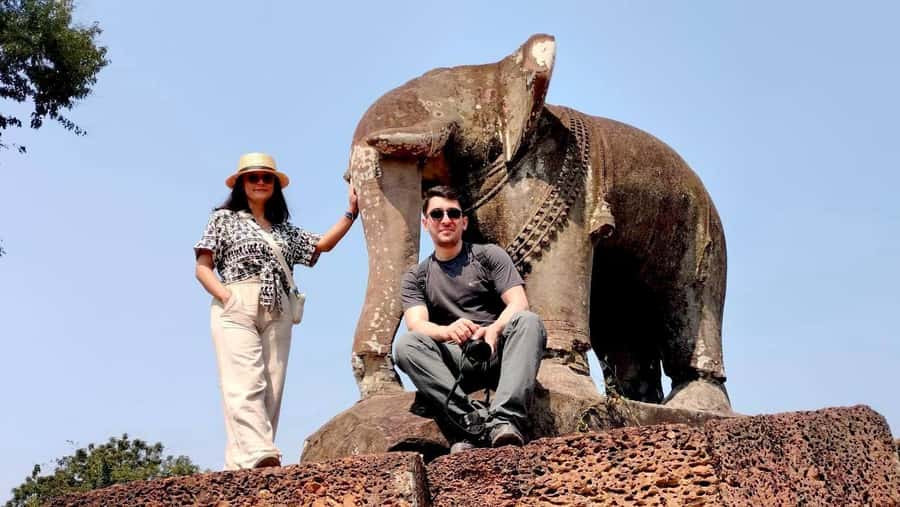
Neak Poan is a small temple set on an island in Jayatataka Baray. It is associated with the mythical Himalayan lake believed to have healing waters.
The approach is part of the experience. Rather than walking straight into a broad temple enclosure, you cross toward a small island surrounded by water. That setting gives Neak Poan a calmer mood than some of the larger sites.
The temple reflects the importance of sacred water in Khmer religious thought. A guide can explain how water, healing, cosmology, and ritual came together here, and why the site was more than a decorative island in a reservoir.
You should not expect a huge complex at Neak Poan. Its appeal comes from the relationship between the small shrine, the water, and the symbolic idea behind it. This is a place where a short explanation adds a great deal.
Ta Som: Tree roots and a memorable gateway
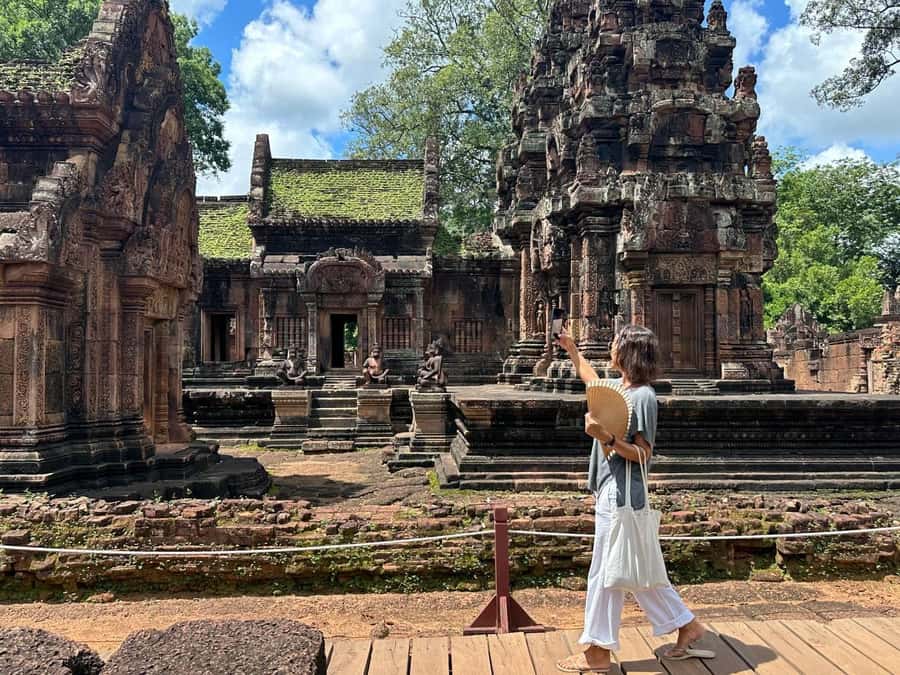
Ta Som is one of the easier temples to remember because nature has become part of the architecture. Its stone gate is embraced by large tree roots, creating the dramatic image many visitors hope to see on the Grand Circuit.
The roots are not simply a photo prop. They show how quickly vegetation can reclaim abandoned stone when a monument is no longer maintained as a living religious or royal center. The result is visually striking, but it also raises questions about conservation and the fine line between preserving ruins and preserving the wild appearance people come to see.
Ta Som is smaller and quieter than Preah Khan. That can make it a pleasant late-afternoon stop, especially after the larger spaces earlier in the day. It is also a good place to ask your guide about how temple restoration works and how the monuments have changed over time.
Several guides, including Ra, Tola, and Ho Heang, are praised for keeping the pace comfortable and adding information about the surrounding countryside and nature. That kind of commentary is valuable here, since the trees are part of what makes the site special.
Preah Khan: A fitting final temple
Preah Khan is the final major stop and one of the largest sites on the route. It was a monastic complex, and its long corridors, carvings, and layered spaces give you a sense of how a temple could function as more than a single shrine.
After the compact scale of Ta Som, Preah Khan feels expansive. You can expect more walking, uneven surfaces, and plenty of carved architectural detail. It is a place where a map or a clear explanation helps prevent the complex from becoming confusing.
Guide Phyrom is especially praised for showing maps and photographs to explain how the sites connect. That approach would be useful at Preah Khan, where the plan can seem sprawling. He is also praised for explaining the religious meaning of both Hindu and Buddhist elements in simple terms.
The final stop can be tiring because it comes after a full day of heat and walking. Still, it is a strong ending. Preah Khan gathers many themes from the tour: royal authority, religious practice, monastic life, changing beliefs, and the gradual return of the forest.
Some departures may finish with a sunset view over the lake, as happened for one group. Treat that as a possible bonus rather than a guaranteed feature, since the exact timing and weather can affect it.
The guides are the tour’s biggest strength
The route is good, but the guide determines how much you take away. The strongest guides on this experience do not simply name a king or point at a carving. They explain what you are seeing, why it was built, and how Hindu and Buddhist ideas shaped the Khmer world.
Phyrom is praised for a broad grasp of Cambodian history, maps, religious symbolism, and a warm sense of humor. Ry is noted for calm explanations and for making sure the group was not rushed. Narath is praised for excellent English, patience, and a willingness to answer questions about both Cambodia and the temples.
Tola is described as funny, flexible, and able to adjust the schedule when requested. Dara Try is praised for accommodating individual needs in a small group and for taking photographs. Chenda is remembered for combining cultural knowledge with a talent for finding good photo angles.
You may be assigned a different guide, so no particular person can be guaranteed from the information provided. Still, the repeated praise for guides such as Kim, Ra, Pip, John Long, Lok, Nara, and Ho Heang suggests that guiding is central to the operator’s service rather than an afterthought.
Heat, clothing, walking, and what to pack
This is a physically active day. You will walk over uneven temple grounds, cross open areas, and deal with strong sun. The tour is not recommended for people with walking disabilities or wheelchair users.
Wear proper walking or hiking shoes. Sandals may feel too flimsy on rough surfaces, especially late in the day when your feet are tired. Pack sunscreen, insect repellent, cash for the entrance pass and lunch, and a small water-resistant layer if rain is possible.
Temple clothing rules are strict. Your knees and shoulders must be covered, for both men and women. Shorts and sleeveless tops can lead to refused entry, so dress for the temples from the start rather than relying on a cover-up that may not meet the rules.
Large bags and luggage are not allowed. Pets and smoking are also not permitted. The tour runs in all weather, so check the forecast, but plan as if you will be outside for the full day.
The Angkor entrance pass is purchased at the Apsara Authority Ticket Office during the outing. That stop is built into the schedule, but the pass itself is not part of the $20 price.
Is $20 good value?
Yes, for the right kind of day. The price includes hotel pickup and drop-off, transport in a quality vehicle, an English-speaking guide, local taxes, bottled water, and cold towels. It gives you a practical way to reach six temple sites that are spread across the Angkor area.
The value is strongest for solo visitors, couples, and small groups who want a guide without paying for a fully private vehicle. It is also useful if you already have a multi-day Angkor pass and want to use another day for temples beyond Angkor Wat and Bayon.
Remember the extras. You pay separately for the Angkor Temple Pass, lunch, and any private guide add-on. The shared tour is not suitable for infants or children under 12, so families with younger children should consider another arrangement.
The rating of 4.8 from 262 ratings supports the impression of a well-run outing, particularly for punctual pickup, safe driving, clear communication, comfortable transport, and strong guiding. The consistent praise for chilled water and towels may sound minor, but in Cambodia’s heat, it can make the final temples much more enjoyable.
Should you book this Banteay Srei tour?
I would book it if you want more than the standard Angkor Wat circuit and you value explanation over simply collecting temple photographs. Banteay Srei is the visual prize, while Neak Poan, Ta Som, and Preah Khan give the day enough variety to justify the long route.
Choose it especially if you are traveling alone, do not want to arrange transport, or have an Angkor pass that you want to use across several days. You should skip it if you dislike group schedules, struggle with long walks, or want to spend an entire day at only one or two monuments.
For the best experience, arrive early for pickup, dress correctly, bring cash, and save some energy for Preah Khan. The temples are the reason to go, but a patient guide such as Phyrom, Ry, Narath, Tola, or Dara Try can turn the route into a connected story about Cambodia rather than a string of impressive ruins.
FAQ
What temples are included in the tour?
The tour includes Pre Rup, Banteay Srei, East Mebon, Neak Poan, Ta Som, and Preah Khan. Banteay Srei is the Citadel of Women, while the other five sites form part of the Angkor Grand Circuit route.
Is the Angkor entrance pass included?
No. You stop at the Apsara Authority Ticket Office to purchase the Angkor entrance pass, but the pass is not included in the $20 tour price.
Is lunch included?
No. Lunch is taken at a nearby restaurant and is paid for separately. Cambodian choices include curries, soups, and stir-fries.
What time is hotel pickup?
You should be ready in your hotel lobby at 7:50 AM for pickup. Some departures use a shuttle to a meeting point before you board the main tour vehicle.
Is the tour suitable for children?
The shared tour is not suitable for infants or children under 12 years old. The experience also involves considerable walking and is not recommended for people with mobility disabilities.
What should I wear to the temples?
Your knees and shoulders must be covered. Shorts and sleeveless tops are not allowed, and entry may be refused if your clothing does not meet the temple dress code.
What should I bring?
Bring hiking shoes, sunscreen, insect repellent, and cash. Bottled water and cold towels are provided, but you will need money for lunch and the Angkor entrance pass.
What language is the tour offered in?
The tour is offered in English with an English-speaking guide. The operator has provided guides who explain Khmer history, Hindu and Buddhist traditions, architecture, and local life.
Newest reviews from Siem Reap
- War Museum, Killing Field, and APOPO Hero RATs Tour★ 5.0 · 7 reviews
- Angkor Wat at Sunrise★ 4.0 · 7 reviews
- Siem Reap Angkor Airport Taxis (from Airport to Hotel)★ 5.0 · 44 reviews
- Cambodian Cooking Class and Oxcart Ride with Local Village Tour★ 5.0 · 4 reviews
- Secret Temples of Angkor – Guided Tour in Siem Reap★ 5.0 · 6 reviews
- Short Cycling at Countryside★ 5.0 · 29 reviews
- SIEM REAP E-BIKE HALF-DAY COUNTRYSIDE (25-30 km)★ 4.0 · 1 review
- Unveiling the Mystical Beauty of Phnom Kulen National Park★ 5.0 · 6 reviews
Banteay Srei Tours, compared.
Full-Day Banteay Srei & 4 Temples – Grand Tours Join-in Tour
Read our review →
Siem Reap Tour: Angkor Wat Sunrise, Bayon, Ta Prohm, Banteay Srei
Read our review →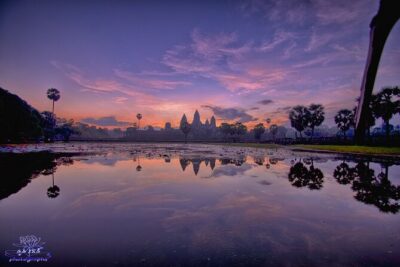
2-Day Angkor Wat With Small, Big Circuit and Banteay Srei Tour
Read our review →
3-Days Discovery Of Angkor: Waterfalls,Floating Village and Banteay Srei temple
Read our review →
Banteay Srei, Kulen Waterfall & Beng Mealea Exploration
Read our review →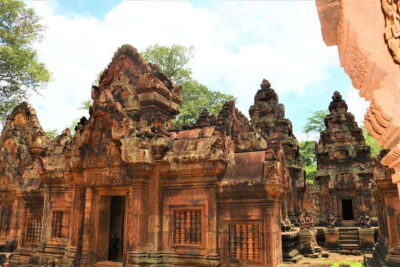
Banteay Srei and Grand Circuit Heritage Tour from Siem Reap
Read our review →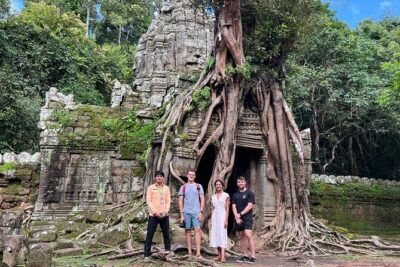
2-Day Angkor Wat Tour with Banteay Srei and Floating Village
Read our review →Browse the lists this tour appears in