
Reviewed · MULTI-DAY TOURS
Private Tour: (Avoid Crowds & Heat) 2-Day Angkor Temples
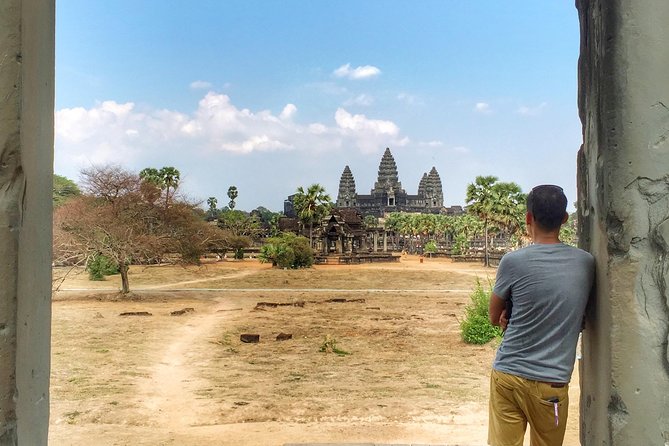
Temples reward an early start. This private two-day tour gives you a thoughtful route through Angkor, from the finely carved pink sandstone of Banteay Srei to the massive towers of Angkor Wat. I like the mix of famous monuments and quieter sites, especially Ta Nei and Neak Pean. I also like having a licensed guide, private air-conditioned transport, hotel pickup, snacks, and refreshments built in.
The advertised tour price is $62, but the Angkor park pass costs another $62 per person for a two or three-day visit. That makes the final cost much higher, though the private format and two full days of guiding can still offer good value. You should also be ready for heat, uneven ground, and plenty of stairs.
In This Review
- Key points to know before booking
- Why two days works better than one
- Day one: detailed carvings and quieter ruins
- Banteay Srei and its pink sandstone carvings
- Banteay Samre, a peaceful stop with Angkor Wat echoes
- Pre Rup and the colors of laterite, brick, and sandstone
- Preah Khan, a former city and Buddhist university
- Neak Pean and its symbolic pool
- Day two: Angkor Wat, Angkor Thom, and the jungle
- Angkor Wat, the essential two-hour visit
- Angkor Thom and the royal city inside the walls
- Ta Prohm, where trees share the ruins
- Ta Nei, a small temple with breathing room
- What the private setup adds
- Price, park pass, and overall value
- Who should book this two-day route
- Should you book it?
- FAQ
- What is included in the $62 tour price?
- Is the Angkor entrance ticket included?
- Is this a private tour?
- What time does the tour start?
- Can I add sunrise or sunset?
- Which temples are visited on day one?
- Which temples are visited on day two?
- Is the tour suitable for people who do not climb easily?
Key points to know before booking
- The first day takes you beyond the headline sights: Banteay Srei, Banteay Samre, Pre Rup, Preah Khan, and Neak Pean create a strong introduction to Khmer architecture.
- Day two covers Angkor’s essential monuments: You visit Angkor Wat, Angkor Thom, Bayon, Baphuon, Ta Prohm, and the quieter Ta Nei.
- Private transport makes the heat easier: Hotel pickup, an air-conditioned vehicle, snacks, cold water, and refreshments are included.
- Crowd control is part of the appeal: Your guide can adjust the order and pace, with Ta Nei offering a short break from the busiest ruins.
- You can request sunrise or sunset: Tell your guide on the first day if you want this complimentary addition on the following day.
- The extra park ticket matters: The $62 tour price does not include the $62 Angkor Archaeological Park pass.
Why two days works better than one
Angkor is not one temple. It is a huge collection of religious buildings, royal cities, reservoirs, gates, terraces, and jungle-covered ruins spread around Siem Reap. A one-day visit can show you Angkor Wat and a few nearby monuments, but it often turns into a hot race from one stop to the next.
This itinerary gives you two different kinds of temple days. The first moves farther from the central Angkor complex and focuses on smaller, more detailed, and less familiar ruins. The second brings you to the monuments most people come to Cambodia to see.
I like that order. You get time to learn the basic story of Khmer architecture before reaching Angkor Wat. You also avoid spending both days in the same cluster of busy sites.
The private format is important here. Only your group joins the tour, so you can ask questions, linger over a carving, or move along when a ruin has lost your attention. The guide can also alter the order to reduce crowds. One guide, Tay, was praised for managing the route to find better views with fewer people around.
The tour starts at 7:30 a.m. from your Siem Reap hotel or another agreed point in the city. That is early enough to help with the heat, though it is not an extremely early start unless you add the optional sunrise plan.
More multi-day routes in Siem Reap:
- Siem Reap: Angkor Wat 2-Day Tour with Sunrise and Sunset
★ 4.9 · 4,429 reviews - Angkor 2-Day Sunset & Sunrise Small-Group Tour
★ 5.0 · 2,567 reviews - Siem Reap: Angkor Sunrise 1- or 2-Day Guided Temples Tour
★ 4.9 · 1,132 reviews
Day one: detailed carvings and quieter ruins
Banteay Srei and its pink sandstone carvings
Banteay Srei is about 20 kilometers north of Angkor and is often one of the most memorable stops on the whole circuit. Built in the second half of the 10th century, it is smaller than Angkor Wat but famous for its delicate decoration.
The temple’s pink sandstone gives the carvings a warm color that changes with the light. You will see fine figures, floral designs, and carefully cut details that reward a slow walk and close attention. The name is often translated as Citadel of Beauty, and the nickname makes sense once you see how much ornament fits onto its walls.
The planned visit lasts about an hour. That is enough for a useful look, but you may want to ask your guide to point out the most important scenes rather than trying to inspect every surface yourself.
Banteay Srei is also a good early stop because it sets up a contrast with the larger temples. Instead of scale and grand avenues, you begin with craftsmanship and detail. Keep in mind that the drive north makes this a longer outing than the central Angkor temples, but the change of setting is part of its value.
Banteay Samre, a peaceful stop with Angkor Wat echoes
Banteay Samre was built in the first half of the 12th century. Its tower style has similarities to Angkor Wat, which gives you a useful preview of the architectural forms you will see on day two.
The setting is described as isolated and peaceful. That makes this 45-minute visit a welcome change after Banteay Srei, especially if the larger sites feel crowded. It is not as famous as Angkor Wat or Ta Prohm, so you can focus more easily on the structure itself.
I would treat Banteay Samre as a place for steady looking rather than a must-see landmark. Its value comes from the calm setting and the chance to compare its design with later Khmer buildings.
A few more options around Siem Reap worth reading up on
- Angkor Wat Sunrise or Sunset Tour with Guide from Siem Reap
★ 5.0 · 12,109 reviews - Siem Reap: Angkor Wat: Small-Group Sunrise or Sunset Tour
★ 5.0 · 9,444 reviews - From Siem Reap: Kampong Phluk Floating Village Tour by Boat
★ 4.9 · 6,979 reviews - Sunset tour of Kampong Phluk stilts home village on the Tonle Sap
★ 5.0 · 4,865 reviews
Pre Rup and the colors of laterite, brick, and sandstone
Pre Rup dates from the middle of the 10th century. Its name means turning the body, a reference connected with funerary beliefs. The monument is built from a striking combination of laterite, brick, and sandstone.
The 30-minute stop is short, but it gives you a quick lesson in material and form. Laterite provides a rougher, darker surface, while brick and sandstone add different textures and colors. Your guide can help you see how those materials work together instead of treating the temple as just another pile of stones.
Pre Rup involves stairs and climbing, an issue worth taking seriously. A separate visit note points out that the temples include lots of stairs and climbing. If you have mobility concerns, ask about the exact route and the amount of walking before you book.
Preah Khan, a former city and Buddhist university
Preah Khan receives about an hour, and it deserves the time. Jayavarman VII built it in the late 12th century as a Buddhist university and city. Its long corridors and layered spaces can feel similar to Ta Prohm, but it has its own character.
Look for the unusual round-columned, two-story building. It is one of the details that helps Preah Khan feel different from the better-known ruins. The site gives you a sense of how large religious complexes could also function as places of learning and daily activity.
Preah Khan is one of the strongest stops on day one because it combines scale, atmosphere, and architectural variety. It can also be tiring. The corridors are extensive, and the uneven surfaces require careful footing, so good shoes matter.
Neak Pean and its symbolic pool
Neak Pean takes about 30 minutes. Jayavarman VII built it in the late 12th century as a place connected with miraculous healing. The central monument appears in the middle of a pond, creating a different experience from the long galleries and towers at Preah Khan.
The water and unusual layout make Neak Pean visually distinct. Its meaning is also important. The site was designed around ideas of purity and healing, so your guide’s explanation adds real value here. Without context, you may simply see a small monument surrounded by water.
This stop is brief and may feel less dramatic than Banteay Srei or Preah Khan. I would still keep it on the route because it shows another side of Khmer religious planning.
Day two: Angkor Wat, Angkor Thom, and the jungle
Angkor Wat, the essential two-hour visit
Day two begins with Angkor Wat, the world’s largest religious monument. Two hours gives you enough time to approach through the outer areas, view the towers, enter the galleries, and study the bas-reliefs without making the stop a rushed photo break.
Angkor Wat can be overwhelming because its scale is so great. Start by looking at the whole design, then let your guide draw your attention to the carvings, galleries, and religious symbols. The site rewards both the quick first impression and the slower second look.
The tour’s crowd-avoidance goal matters most here. Angkor Wat is the site most likely to feel packed, especially around popular viewing points. A private guide can help you adjust the route, but no timing plan can remove crowds completely. You should expect other people at the major monument.
You can also request sunrise or sunset at no extra charge. Tell the guide on day one if you want the following day arranged around sunrise or sunset. The information provided does not give a precise sunrise meeting time, so confirm the details directly.
Angkor Thom and the royal city inside the walls
Angkor Thom is not one temple but a large walled capital city. You spend about two hours exploring its major monuments, including Bayon, Phimeanakas, Baphuon, the Terrace of the Elephants, and the Terrace of the Leper King.
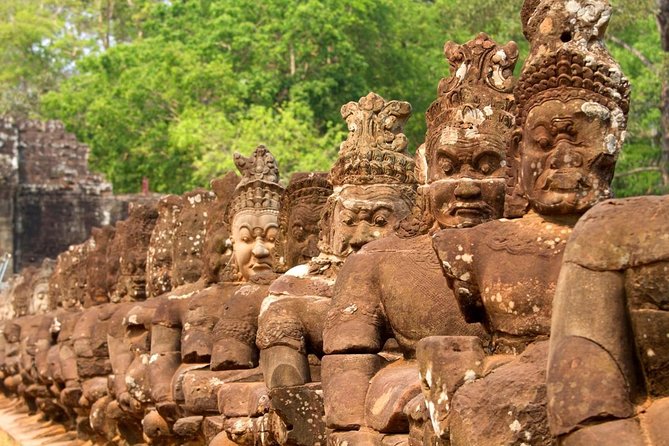
Bayon is usually the visual centerpiece, with its famous carved faces. It can be hard to understand the structure from a quick walk, since towers, galleries, and narrow passages overlap. This is where a guide earns the fee by explaining what you are seeing and helping you find a sensible route.
Baphuon adds another layer to the visit. Its raised form and long approach make it feel different from Bayon, while the terraces show how royal display and religious architecture worked together. The two-hour allocation is useful because Angkor Thom has more than one stop worth your attention.
You will walk on uneven stone and climb steps. The heat can build quickly inside the walls, so use the included water and refreshments, and do not treat the schedule as a race.
Ta Prohm, where trees share the ruins
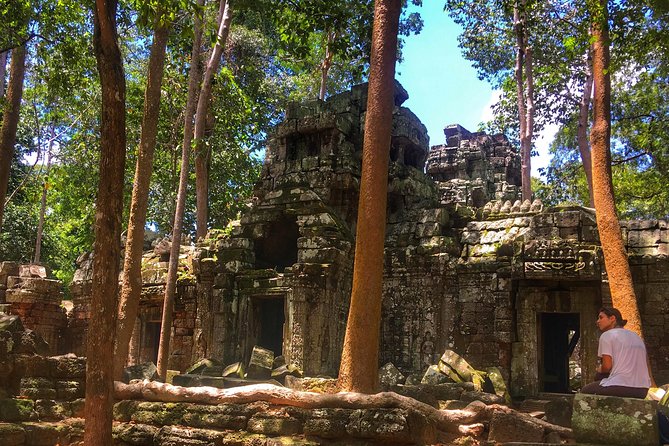
Ta Prohm is the romantic stop on the second day. Its towers, galleries, and walls are threaded through with strangler figs and silk-cotton trees. The trees are not a decorative addition. They are part of what gives the temple its powerful, unsettled appearance.
You receive about an hour here. That is enough to see the best-known sections and appreciate the relationship between stone and roots. Ta Prohm is also known for its connection with film, which may make it familiar before you arrive.
The fame has a downside. This is one of the busiest stops, so the narrow paths can feel crowded. Your guide’s ability to adjust the route may help, but you should expect a lively visit rather than complete solitude.
Ta Nei, a small temple with breathing room
Ta Nei is a late 12th-century Buddhist temple built during the reign of Jayavarman VII. The visit lasts about 30 minutes and is designed as a quieter counterpoint to Ta Prohm.
This is the kind of stop I appreciate on a packed temple day. Ta Nei is smaller and less polished, but its unrestored feel lets you see a ruin without the same level of crowds and staging. The tour information describes it as a good place to avoid the crowds, which fits its role in the route.
Do not expect Ta Nei to provide the grand scale of Angkor Wat. Its appeal is the calm, the jungle setting, and the contrast with the famous monuments you have just seen.
What the private setup adds
Your guide is a professional licensed guide, and the strongest praise attached to this experience focuses on guiding rather than transport alone. Tay, Sopheara, Viet, Kim, and Tai are all named for clear explanations, strong historical understanding, patience, and careful route planning.
One guide, Viet, is praised for turning the temples into a carefully shaped personal experience. Sopheara is noted for intelligence and strong command of the subject, while Kim is described as polite, safe, and patient with questions. These details matter because Angkor is much easier to understand when someone can connect the buildings, rulers, religious changes, and daily life.
The vehicle is private and air-conditioned. Snacks, cold water, refreshments, and cool towels are included, with one account specifically praising lemongrass-scented cool towels. Those small comforts become valuable after walking across hot stone.
Hotel pickup and drop-off in Siem Reap are included. Since only your party participates, the day should feel less rigid than a large group excursion. Still, the listed stop times add up to a full schedule, so do not assume every temple can receive unlimited attention.
Price, park pass, and overall value
The tour price is listed as $62, with group discounts available. The Angkor Archaeological Park entrance pass is separate and costs $62 per person for a two or three-day visit. In practical terms, you should budget at least $124 per person before considering any discount or other personal spending.
That extra ticket is not a minor footnote. It is the main cost difference between the advertised rate and the real price of a two-day visit. The pass covers the park access, while the tour fee pays for the guide, private vehicle, hotel transport, snacks, and the planned service.
For a private tour, the value is strongest if you are traveling with two or more people and want help with route planning. You are paying for time saved, air-conditioning, interpretation, and the ability to keep the day focused on your own group.
The value is weaker if you only want a driver or prefer to explore every temple alone. You may also find the two-day format demanding if you dislike early starts, long walks, stairs, and heat.
Who should book this two-day route
I would recommend it most strongly to first-time visitors who want the main Angkor sights plus a broader sense of the surrounding temple zone. History fans will get the most from the guide’s explanations, especially at Preah Khan, Neak Pean, Angkor Thom, and Banteay Srei.
It also suits small groups, couples, families with older children, and anyone who prefers not to share a vehicle with strangers. The private format gives you more control over stops and questions.
You should think twice if you have serious difficulty with stairs or uneven ground. The schedule includes repeated walking and climbing, and at least one direct account stresses the physical demands. Ask the operator what adjustments are possible before booking.
Free cancellation is available if you cancel at least 24 hours before the start time. Changes or cancellations made inside that window are not accepted for a refund.
Should you book it?
Book this tour if you want a well-rounded first look at Angkor without arranging every temple, vehicle, and guide yourself. The combination of Banteay Srei, Preah Khan, Angkor Wat, Angkor Thom, Ta Prohm, and quiet Ta Nei gives you both the famous images and the less crowded corners.
The strongest reason to choose it is the guide-led, private format. Guides such as Tay, Sopheara, Viet, Kim, and Tai have been praised for clear teaching and smart timing. Just budget for the separate $62 park pass, confirm your sunrise or sunset request on day one, and prepare for heat and stairs.
If that sounds manageable, this is a solid two-day introduction to Cambodia’s temple world, with enough variety to keep the second day from feeling like a repeat of the first.
FAQ
What is included in the $62 tour price?
The tour includes a professional licensed guide, hotel pickup and drop-off, a private air-conditioned vehicle, snacks, and refreshments.
Is the Angkor entrance ticket included?
No. The Angkor Archaeological Park entrance pass costs $62 per person for a two or three-day visit and must be paid separately.
Is this a private tour?
Yes. Only your own group participates in the activity.
What time does the tour start?
The listed start time is 7:30 a.m. from Siem Reap.
Can I add sunrise or sunset?
Yes. Sunrise or sunset on the following day is complimentary. Tell your guide on day one if you would like to request it.
Which temples are visited on day one?
Day one includes Banteay Srei, Banteay Samre, Pre Rup, Preah Khan, and Neak Pean.
Which temples are visited on day two?
Day two includes Angkor Wat, Angkor Thom, Ta Prohm, and Ta Nei. Angkor Thom contains Bayon, Phimeanakas, Baphuon, the Terrace of the Elephants, and the Terrace of the Leper King.
Is the tour suitable for people who do not climb easily?
The tour involves lots of stairs and climbing, so you should consider your physical ability before booking. The available information says most people can participate but does not provide a specific accessibility plan.
Newest reviews from Siem Reap
- War Museum, Killing Field, and APOPO Hero RATs Tour★ 5.0 · 7 reviews
- Angkor Wat at Sunrise★ 4.0 · 7 reviews
- Siem Reap Angkor Airport Taxis (from Airport to Hotel)★ 5.0 · 44 reviews
- Cambodian Cooking Class and Oxcart Ride with Local Village Tour★ 5.0 · 4 reviews
- Secret Temples of Angkor – Guided Tour in Siem Reap★ 5.0 · 6 reviews
- Short Cycling at Countryside★ 5.0 · 29 reviews
- SIEM REAP E-BIKE HALF-DAY COUNTRYSIDE (25-30 km)★ 4.0 · 1 review
- Unveiling the Mystical Beauty of Phnom Kulen National Park★ 5.0 · 6 reviews
Multi-Day Tours, compared.
Angkor Wat 2-Day Tour with Sunrise and Sunset
Read our review →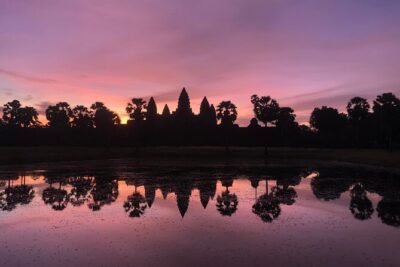
Angkor 2-Day Sunset & Sunrise Small-Group Tour
Read our review →
Angkor Sunrise 1- or 2-Day Guided Temples Tour
Read our review →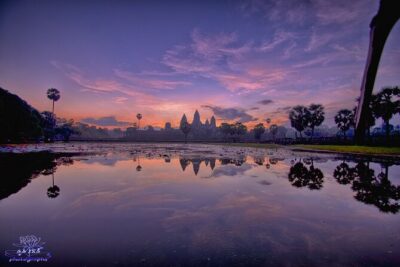
2-Day Angkor Wat With Small, Big Circuit and Banteay Srei Tour
Read our review →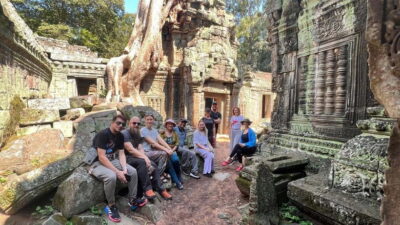
2-Day Temple Highlights Sunrise and Sunset Option
Read our review →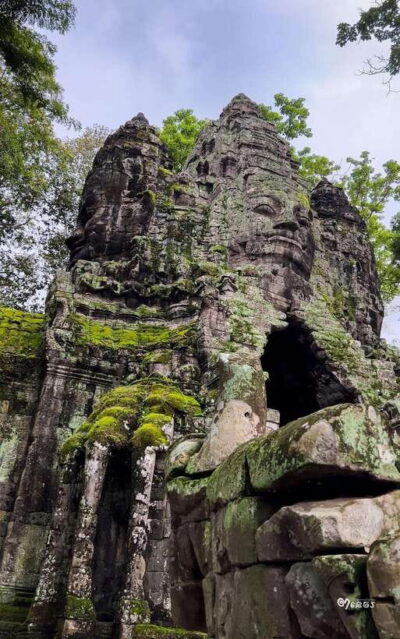
Angkor Wat 2-Day complex Sun rise & Sun set with Guided Tour
Read our review →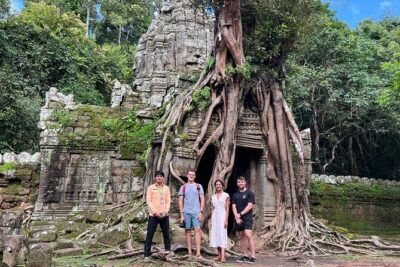
2-Day Angkor Wat Tour with Banteay Srei and Floating Village
Read our review →
Browse the lists this tour appears in