
Reviewed · 3-DAY EXPERIENCES
Angkor Cab: Siem Reap 3 day private tour: ‘off the beaten track’
Three days, fewer crowds, better pacing. Angkor Cab’s private Siem Reap tour combines the famous Angkor temples with quieter sites, Tonle Sap Lake, and a long trip to Beng Mealea. I like the private car and flexible schedule, and I like that the route includes both major monuments and smaller temple sites. The main drawback is cost: at $550 for up to three people, you still need to pay separately for temple passes, food, and some other fees.
This is a strong choice if you want your own driver, an English-speaking temple guide, and a relaxed plan without joining a large bus group. The days are full, though, and day two begins around 5 a.m. for sunrise at Angkor Wat. You will also spend a good amount of time in the car on day three.
In This Review
- Key points to know before booking
- What the $550 private price really buys
- Day one: Banteay Srei and the quieter eastern temples
- Day two: Angkor Wat at sunrise, Angkor Thom, and Ta Prohm
- Day three: Beng Mealea and the earliest capital temples
- A private vehicle changes the pace
- The guide matters more than the vehicle
- Who should book this three-day route?
- Should you book Angkor Cab?
- FAQ
- How much does the private tour cost?
- Are temple admission tickets included?
- Is lunch included?
- What time does the tour start?
- Can the itinerary or times be changed?
- Is this a private group tour?
Key points to know before booking
- A private Lexus-style car keeps the three-day trip cool and comfortable, with air conditioning and bottled water provided.
- The route mixes famous and quieter temples, from Angkor Wat and Ta Prohm to Banteay Samre, Preah Ko, and Bakong.
- Beng Mealea requires a long drive, about one and a half hours each way, but gives day three a more remote feel.
- Tonle Sap adds a change of pace, replacing carved stone with open water, floating communities, and a look at life around Southeast Asia’s largest freshwater lake.
- The schedule can be adjusted, including different start or finish times and other places requested in advance.
- The $550 price covers the group, not each person, so it offers better value for three people than for a solo visitor.
What the $550 private price really buys
The price is $550 per group of up to three people for approximately three days. That works out to about $183 per person for three people, or $275 each for two. A solo guest pays the full group price, so this tour makes the most financial sense for a small family or group of friends.
You are paying for a private tour rather than simply a vehicle transfer. A driver handles the road time, a professional English-speaking guide explains the temples, and the itinerary is arranged around your group. Bottled water is included. A past booking also used a private Lexus, with the car kept ready and cool between stops.
That comfort matters in Siem Reap. Temple visits involve walking, steps, heat, and uneven surfaces. Having a private air-conditioned vehicle means you can return to the car when you need a break instead of waiting for a large group.
The price does not include the Angkor Temple Pass. Food and drinks are also separate, with lunch suggested at roughly $5 to $10 per person depending on what you order. You should budget for those costs before booking, along with any other activity fees that apply.
For three people, the price can be fair for a private three-day service with a guide and driver. For one person, it is harder to call it good value unless personal space, flexible timing, and private transport are your top priorities.
More multi-day routes in Siem Reap:
- Siem Reap: Angkor Wat 2-Day Tour with Sunrise and Sunset
★ 4.9 · 4,429 reviews - Angkor 2-Day Sunset & Sunrise Small-Group Tour
★ 5.0 · 2,567 reviews - Siem Reap: Angkor Sunrise 1- or 2-Day Guided Temples Tour
★ 4.9 · 1,132 reviews
Day one: Banteay Srei and the quieter eastern temples
The first day begins with a drive of about 45 minutes from your hotel to Banteay Srei. The journey itself is part of the appeal. You will pass local activity and get a look at daily life beyond the central temple circuit.
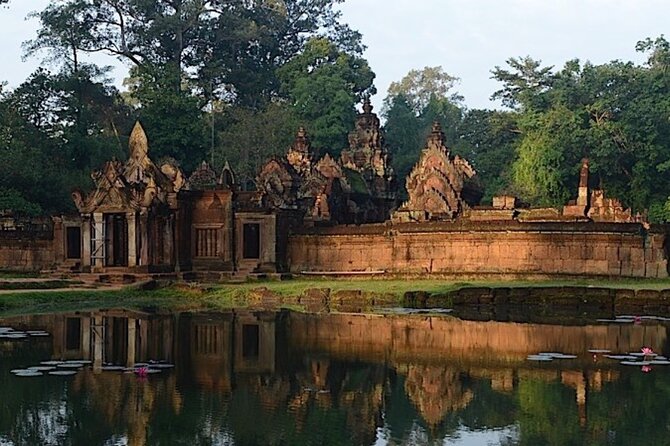
Banteay Srei is a small 10th-century temple famous for its pink sandstone and fine carving. The scale is more intimate than Angkor Wat, but the decoration is unusually detailed. Your guide explains the carvings and the temple’s design during about an hour on site.
Admission is not included, so your temple pass must be handled separately. The stop is short enough to fit well into a busy day, but you may want to take your time here. Banteay Srei rewards close looking more than a quick photo stop.
Next comes Banteay Samre, a 12th-century temple about 400 meters east of the East Baray. You get around 45 minutes here. Its location away from the best-known central monuments helps the day feel less repetitive, and the visit gives your guide another chance to explain Khmer temple planning and decoration.
The first two stops are a good pairing. Banteay Srei gives you delicate pink carvings, while Banteay Samre provides a larger, more enclosed temple setting. Both are less central than Angkor Wat, so the route has a calmer rhythm.
After a local lunch, you continue to Banteay Kdei. This Buddhist temple was built from the mid-12th to early 13th century under King Jayavarman VII. Its name means Citadel of Chambers, and the layout gives you plenty to inspect as you walk through the complex.
Plan on about an hour here. Banteay Kdei is close to the better-known Ta Prohm, but it is handled on day one, when you can see it without trying to squeeze it into the busiest Angkor circuit. The temple can feel more open and less polished than Angkor Wat, which is part of its interest.
Srah Srang is directly across from Banteay Kdei. You spend about 30 minutes at this large reservoir, built in the 10th century and later modified by Jayavarman VII. The name is often translated as Royal Bathing Pool, but the key experience is the broad water view and the contrast with the stone temples.
The day ends at Tonle Sap Lake, with about two hours set aside. This is a useful change after a full day of ruins. Tonle Sap covers about 10,000 square kilometers during the wet season and around 3,000 during the dry season. Five Cambodian provinces surround the lake, and its size and changing water levels shape local life.
The lake visit is not simply a rest stop. It gives you a look at Cambodia beyond the temple zone. Conditions can vary by season, and the tour information does not promise a specific boat or village activity, so confirm any additional activity fees before you go.
Day two: Angkor Wat at sunrise, Angkor Thom, and Ta Prohm
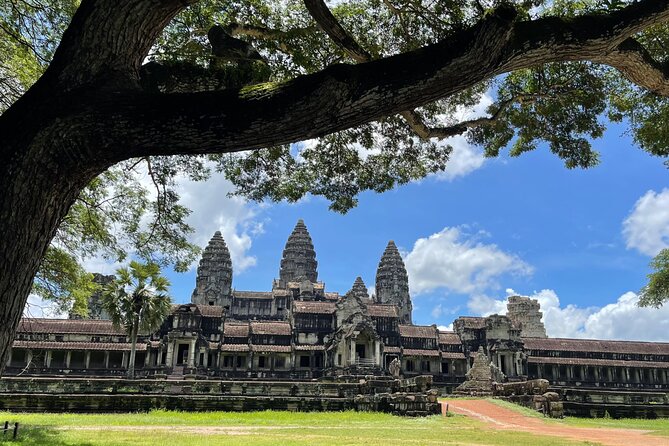
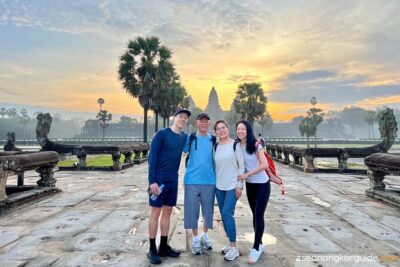
Day two starts around 5 a.m. at your hotel. It takes about 30 minutes to reach Angkor Wat, where you can watch the sun rise behind the temple. This is the most popular sunrise stop in Siem Reap, so an early start is essential.
The sunrise is worth considering, but it is also the day’s biggest timing challenge. You need to be ready before dawn, and the popular viewing area can be busy. A private tour does not make the site private, but it does let you leave on your own schedule and avoid waiting for a coach group.
You spend about three hours at Angkor Wat. That gives you time to see the main structure, examine the galleries, and listen to your guide explain the reliefs and layout. The temple is enormous, so do not expect to understand every corner in one visit. A good guide helps you focus on the important sections instead of wandering without a plan.
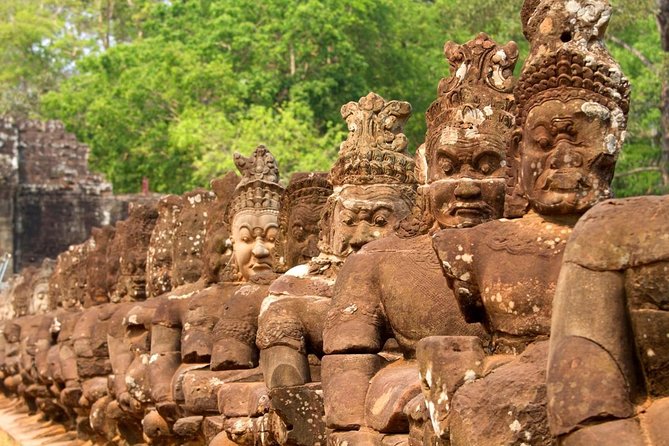
After Angkor Wat, you drive about five minutes to Angkor Thom. The first stop is the South Gate, where you can take photos before entering the ancient capital. The route then continues to the main temples within Angkor Thom, with roughly two hours for the visit.
Angkor Thom is less a single temple than a large royal city area. The South Gate provides a dramatic entrance, while the inner monuments help you understand how the capital was organized. Two hours is useful but still limited, especially after an early start.
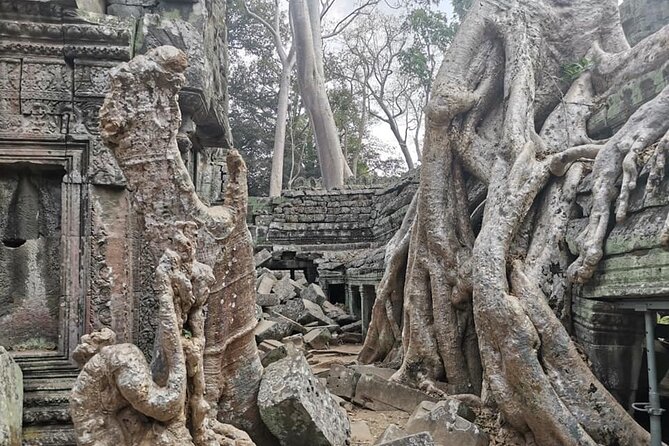
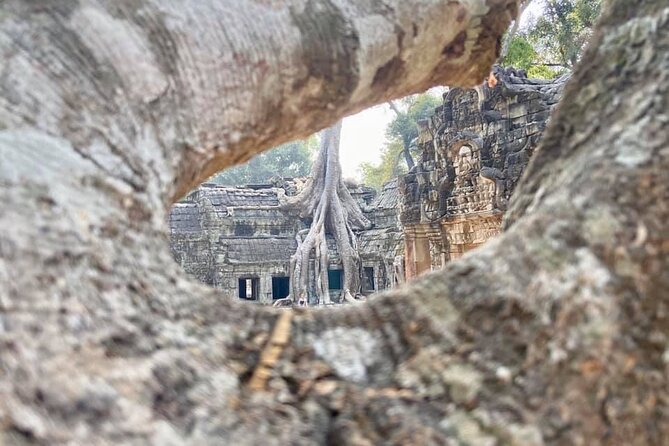
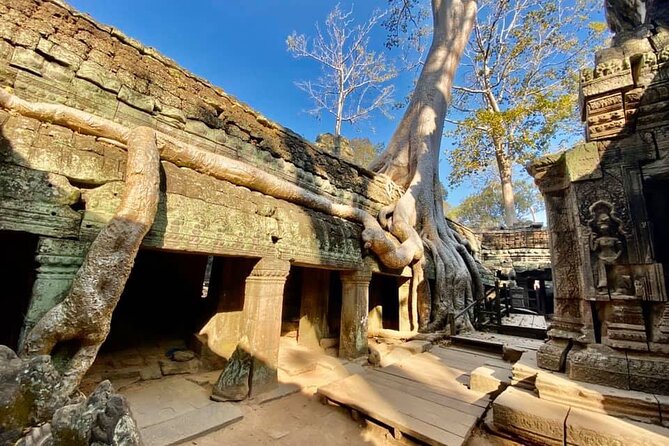
Ta Prohm follows, about a 15-minute drive away. The temple is famous for trees growing over and through the stonework. Along the way, the tour includes a stop at a stone bridge with a tree growing on top, adding a smaller detail before the main monument.
Ta Prohm is one of the most recognizable stops in Cambodia, and for good reason. The mix of roots, galleries, collapsed stones, and narrow passages gives it a different mood from the more formal Angkor Wat. It can also be one of the busiest places on the route.
The tour allows about an hour at Ta Prohm, with lunch included as a stop but not as a paid part of the tour. You choose and pay for your own meal, so carry enough cash or confirm payment options with your guide. Since the day begins so early, lunch is a useful chance to slow down before the final temple visit.
Day three: Beng Mealea and the earliest capital temples
Day three begins around 9 a.m. with a drive to Prasat Beng Mealea. The trip takes about one and a half hours each way, so this is the longest road day of the tour.
Beng Mealea is the reason to choose this itinerary over a standard two-day Angkor plan. It sits farther from the central temple area and gives you a different sense of scale and setting. You have about three hours there, which allows time for a serious visit rather than a rushed stop.
The trade-off is clear: three hours at the temple comes with roughly three hours of driving. If you dislike long road journeys, this may be the least appealing day. If you want a quieter, less central monument and a break from the usual Angkor loop, it is probably the trip’s most distinctive stop.
After Beng Mealea, you head to Bakong, one of the temples connected with the ancient Khmer capital of Hariharalaya. Bakong was built in the 9th century by King Indravarman I and is associated with the Hindu god Shiva.
The visit lasts about 40 minutes. Bakong’s pyramid form helps show how early Khmer temple design developed before the later grandeur of Angkor Wat. The setting also gives your guide a chance to place the temple within the wider story of the old capital.
Preah Ko comes next, with about 30 minutes on site. Its name means Sacred Bull, and it was the first temple built in the ancient city of Hariharalaya, in 879, by Indravarman I. It was dedicated to Shiva.
These final two stops work well together. Bakong gives you the pyramid temple, while Preah Ko brings you closer to the earlier religious center and its Hindu dedication. They are shorter visits, but they add useful context to the later monuments seen on day two.
A few more options around Siem Reap worth reading up on
- Angkor Wat Sunrise or Sunset Tour with Guide from Siem Reap
★ 5.0 · 12,109 reviews - Siem Reap: Angkor Wat: Small-Group Sunrise or Sunset Tour
★ 5.0 · 9,444 reviews - From Siem Reap: Kampong Phluk Floating Village Tour by Boat
★ 4.9 · 6,979 reviews - Sunset tour of Kampong Phluk stilts home village on the Tonle Sap
★ 5.0 · 4,865 reviews
A private vehicle changes the pace
The private format is the strongest practical feature of this tour. You are not tied to another group’s lunch, shopping stop, or temple pace. You can ask for a different start or finish time, and the itinerary can be customized if you make the request in advance.
That flexibility is especially useful on day two. Sunrise at Angkor Wat requires an early start, while day three begins at 9 a.m. The schedule already varies by day, and a private setup gives you a better chance of adjusting it to your energy level.
The transport is also designed for comfort. The tour supplies bottled water, and the private car described in the booking experience had air conditioning running and cold water ready. That small service can make a major difference after walking around exposed temple courtyards.
The tour requires a moderate level of physical fitness. You will walk for several hours across temple grounds, and some sites may include uneven ground or steps. The information does not promise special accessibility arrangements, so ask before booking if you have mobility concerns.
The guide matters more than the vehicle
A driver gets you between the sites, but the guide shapes how much you understand. This tour includes a professional guide who speaks English fluently and explains details at the temples.
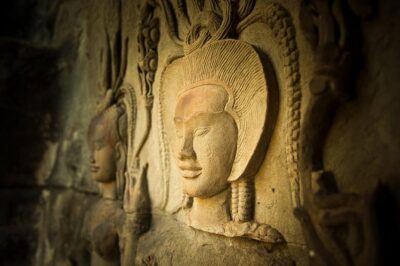
That is important at places such as Banteay Srei, where small carvings can be easy to miss, and at Bakong and Preah Ko, where the earlier temple designs benefit from context. At Angkor Wat and Angkor Thom, a guide also helps you use limited time wisely.
The provider is associated with Panha, who personally replied to a family after their trip and thanked them for choosing his business. The available information does not clearly say that Panha will be your guide, so do not assume you will meet him. Ask for the guide’s name before the tour if that matters to you.
Who should book this three-day route?
I would recommend it to a couple, family, or small group that wants a private schedule and a broad first look at Siem Reap. First-time visitors get the major temples, while returning visitors may appreciate Banteay Samre, Beng Mealea, and the Hariharalaya sites.
It also suits people who want to see more than stone monuments. Tonle Sap brings in water, agriculture, and local life, while the drives show some of the activity outside the city center.
I would think twice if you have only one or two days, dislike early mornings, or want a slow holiday with little time in the car. Day two is an early start, and day three is a long out-and-back journey.
The cancellation terms are forgiving if your plans change: you can receive a full refund when canceling at least 24 hours before the start time. Changes or cancellations inside that window are not accepted for a refund.
Should you book Angkor Cab?
Book this tour if you value private transport, flexible timing, and a guide-led temple visit more than the lowest possible price. For three people, the $550 group rate can be sensible, especially with air conditioning, bottled water, and a full three-day route.
The best reason to choose it is the mix of experiences. You get sunrise at Angkor Wat and the famous trees of Ta Prohm, but also Banteay Srei, Beng Mealea, Tonle Sap, Bakong, and Preah Ko. That gives you a fuller picture of Siem Reap than a short central-temple circuit.
Before paying, confirm your Angkor Temple Pass, lunch budget, any lake activity fees, and the exact guide arrangements. If those costs are clear and you are comfortable with the early morning and long drive, this is a well-paced private introduction to the temples around Siem Reap.
FAQ
How much does the private tour cost?
The tour costs $550 per group for up to three people and lasts approximately three days.
Are temple admission tickets included?
No. The Angkor Temple Pass and other admission fees are not included in the tour price.
Is lunch included?
No. Food and drinks are separate. Lunch is estimated at about $5 to $10 per person, depending on what you choose.
What time does the tour start?
The listed meeting time is 9 a.m. Day two begins around 5 a.m. for the Angkor Wat sunrise, while day three begins around 9 a.m.
Can the itinerary or times be changed?
Yes. You can request a different place to visit or a different start and finish time in advance, allowing the tour to be customized.
Is this a private group tour?
Yes. Only your group participates, with a driver, professional guide, private transport, and bottled water included.
Newest reviews from Siem Reap
- War Museum, Killing Field, and APOPO Hero RATs Tour★ 5.0 · 7 reviews
- Angkor Wat at Sunrise★ 4.0 · 7 reviews
- Siem Reap Angkor Airport Taxis (from Airport to Hotel)★ 5.0 · 44 reviews
- Cambodian Cooking Class and Oxcart Ride with Local Village Tour★ 5.0 · 4 reviews
- Secret Temples of Angkor – Guided Tour in Siem Reap★ 5.0 · 6 reviews
- Short Cycling at Countryside★ 5.0 · 29 reviews
- Khmer Cooking Class in Cambodia★ 5.0 · 36 reviews
- SIEM REAP E-BIKE HALF-DAY COUNTRYSIDE (25-30 km)★ 4.0 · 1 review
3-Day Experiences, compared.
3-Day Angkor Wat with All Interesting Major Temples, Banteay Srei & Beng Mealea
Read our review →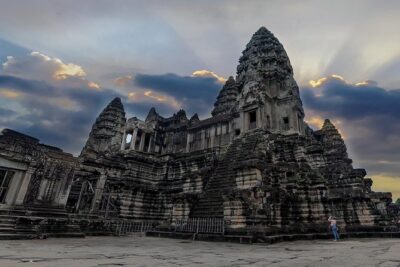
3-Day Angkor Wat & All Interesting Major Temples & Kulen Mount Waterfall
Read our review →
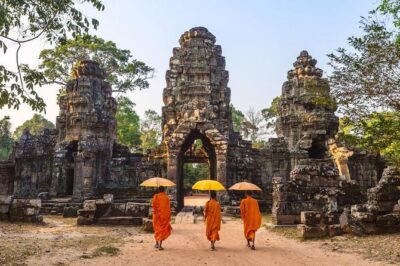
Best of Siem Reap 3-Day Private Tour to Angkor Wat & Tonle Sap
Read our review →
Private Siem Reap 3 Day Tour Discover All Highlight Angkor Temple
Read our review →
Private 3-Day Mekong Delta River Tour from Phnom Penh to Ho Chi Minh City
Read our review →Browse the lists this tour appears in