Reviewed · 3-DAY EXPERIENCES
3 Days Siem Reap Explorer – Small Group
Angkor Wat rewards an early alarm. This three-day Siem Reap tour combines sunrise at Cambodia’s most famous temple with the quieter ruins of Preah Khan, Banteay Srei, and Pre Rup. I like the small maximum of 15 people, which gives the guide room to answer questions and keep the group moving, and I like the mix of temple time, Tonlé Sap village life, and Cambodian performance.
The main drawback is the schedule. Day two begins around 4:00 to 4:30 in the morning, and the three-day temple pass costs an extra $62 per person. Meals are also separate, so the advertised $129 price is not the full cost for anyone following the complete temple program.
In This Review
- Key points to know before booking
- What the three days are really designed to do
- Day one: Tonlé Sap villages and the Roluos beginnings
- Kampong Phluk Floating Village
- Bakong and the Roluos group
- Phare Cambodian Circus
- Day two: sunrise at Angkor Wat and the royal city
- Angkor Wat before breakfast
- South Gate and Angkor Thom
- Ta Prohm, roots and ruined walls
- Day three: quieter ruins and the finest carvings
- Preah Khan and Neak Pean
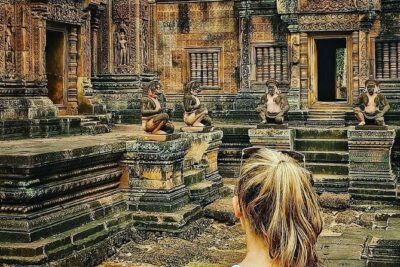
- Banteay Srei, the small temple with fine detail
- Pre Rup at the end of the route
- Group size, guiding, and comfort on the road
- Price, temple pass, and who gets good value
- Should you book the 3 Days Siem Reap Explorer?
- FAQ
- What is included in the $129 tour price?
- Is the Angkor temple pass included?
- What time does the tour start?
- Is Tonlé Sap Lake visited on every departure?
- How large is the tour group?
- Are meals included?
- What should I wear at the temples?
- Can children join the tour?
- Can I cancel for a full refund?
Key points to know before booking
- Sunrise enters Angkor Wat from the eastern side: The early entry gives you a quieter approach before the main crowds gather.
- The $129 tour needs a $62 temple pass: Your practical starting total is $191 per person, before meals.
- The group has a maximum of 15 people: That is small enough for a more personal guided visit without paying private-tour rates.
- Day one combines Tonlé Sap or Phare Circus with Roluos temples: The seasonal schedule matters, so confirm which version operates during your dates.
- Banteay Srei adds a long but worthwhile outing: Its fine sandstone carvings offer a different look from the giant temple complexes.
- Guide quality matters here: Sok receives especially warm praise, so request him if the operator can accommodate that.
What the three days are really designed to do
This is not simply a bus ride between famous ruins. The route gives you three different views of Siem Reap: the living communities around Tonlé Sap, the great royal temples of Angkor, and the smaller ruins where carved stone and tree roots share the scene.
You also get an English-speaking licensed guide, an air-conditioned vehicle, hotel pickup and drop-off, local tax, and mineral water. Those details matter in Cambodia, where hot afternoons and long temple walks can drain your energy quickly.
The group limit of 15 is one of the strongest features. A very large group can turn a temple explanation into a distant speech, while a private guide costs more. Here, you should get a useful middle ground, provided the group fills close to its maximum.
The tour costs $129 per person, but add the required $62 three-day temple pass and your base cost becomes $191. You choose and pay for meals yourself. That price is fair if you value transport, guiding, and a tightly planned route, but it is not the cheapest way to see Angkor if you only want a few temples or prefer to arrange your own tuk-tuk.
A few more options around Siem Reap worth reading up on
- Angkor Wat Sunrise or Sunset Tour with Guide from Siem Reap
★ 5.0 · 12,109 reviews - Siem Reap: Angkor Wat: Small-Group Sunrise or Sunset Tour
★ 5.0 · 9,444 reviews - From Siem Reap: Kampong Phluk Floating Village Tour by Boat
★ 4.9 · 6,979 reviews
Day one: Tonlé Sap villages and the Roluos beginnings
The first morning begins with hotel pickup at about 7:30. General meeting information lists an 8:00 start, so use your confirmed pickup time rather than relying on the general schedule.
The road heads through the countryside toward Tonlé Sap Lake, one of the world’s largest freshwater lakes and a major part of Cambodian life. The lake changes dramatically with the seasons, expanding to about 12,000 square kilometers during the wet half of the year.
Kampong Phluk Floating Village
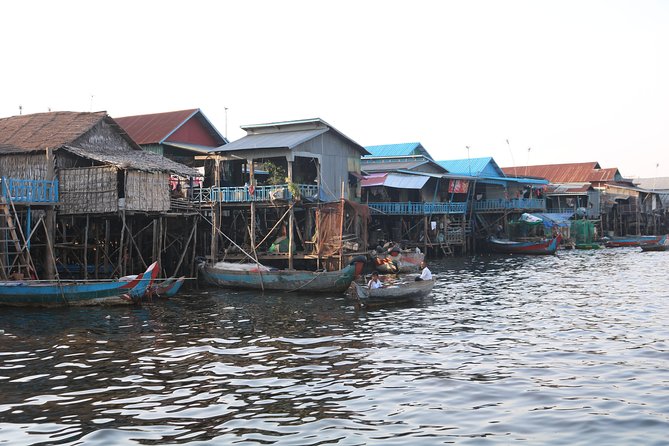
Kampong Phluk offers a look at traditional Khmer homes built on tall stilts. During high water, the community appears to float above the lake. In the dry season, the water drops and the height of the houses becomes especially clear.
The included boat cruise and entrance fee make this a useful addition to a temple-heavy trip. You are not only looking at old stone. You are seeing how families adapt to the lake’s yearly rise and fall, with fishing central to local life.
Allow about three hours for this stop. The boat ride depends on water conditions and the seasonal schedule, so the scene can change significantly between visits. Keep your expectations practical. This is a community visit, not a polished attraction, and the purpose is to see daily life rather than search for a staged show.
The biggest planning point is the seasonal substitution. From March 1 through August 31, the program says the group visits Phare, The Cambodian Circus instead of Tonlé Sap. Since the general description presents the lake and circus as alternatives, check the operating plan for your travel dates before booking.
Bakong and the Roluos group
The Roluos ruins take you back to the ninth century, to the reign of King Indravarman I. Bakong is the key stop here, an early Khmer temple that helps you see how the architecture developed before Angkor reached its grandest scale.
The planned visit lasts about three hours, which gives the guide time to explain the early form of the Khmer temple mountain. Bakong is less famous than Angkor Wat, and that is part of its appeal. The scale feels more manageable, and the older stonework gives useful context for the larger monuments on days two and three.
The temple admission is not included in the individual stop details, but the separate $62 three-day temple pass covers the Angkor sites included in the program. Budget for that compulsory pass on the first day.
Something completely different for another day:
- Sunset tour of Kampong Phluk stilts home village on the Tonle Sap
★ 5.0 · 4,865 reviews - Siem Reap: Angkor Wat 2-Day Tour with Sunrise and Sunset
★ 4.9 · 4,429 reviews - Siem Reap: Kampong Phluk Floating Village Tour with Boat
★ 4.9 · 3,843 reviews - Siem Reap: Full-Day Angkor Wat Guided Tour with Sunset
★ 4.9 · 3,803 reviews
Phare Cambodian Circus
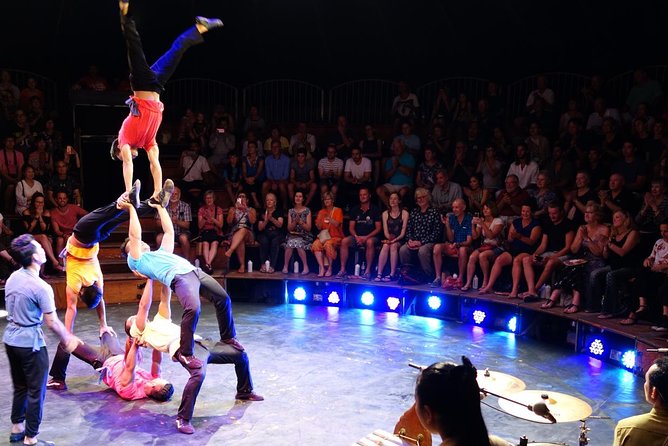
When the seasonal schedule includes Phare, the performance lasts about two hours and uses seat C admission. The show is known for acrobatics, music, and theatrical storytelling, with origins connected to Cambodia’s recovery after the Khmer Rouge period.
That background gives the evening more weight than a standard circus performance. Phare grew from an arts and education effort for young Cambodians, and its work connects performance with cultural renewal. You get an entertaining night, but also a window into a modern Cambodian story.
If you are choosing between the lake and the circus, think about your priorities. Tonlé Sap offers a closer look at rural life and the water economy. Phare gives you a lively evening performance with a strong social and cultural background. The season may make the choice for you.
Day two: sunrise at Angkor Wat and the royal city
The second day is the hardest physically and one of the best. Pickup begins around 4:00 to 4:30, depending on the time of year. You need comfortable walking shoes, water, and clothing that covers your shoulders and knees inside the temples.
Angkor Wat before breakfast
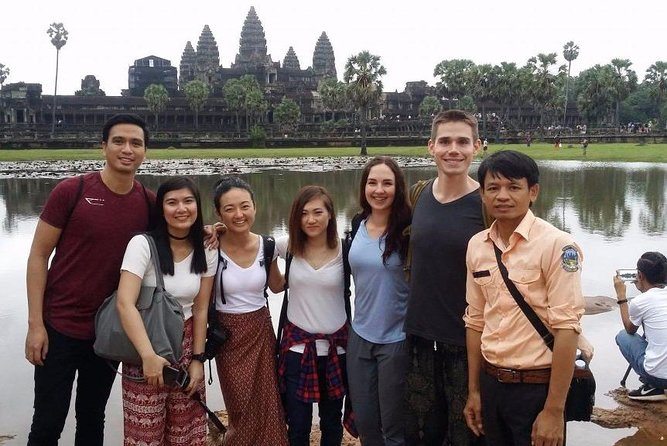
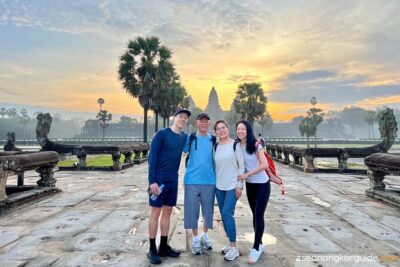
The early start is not a gimmick. Arriving before dawn lets you approach Angkor Wat from the less-used eastern side, entering the great complex while it is still dark. As daylight builds, the towers and galleries come into view piece by piece.
The sunrise itself depends on clouds and weather, so do not judge the morning only by the color of the sky. The real benefit is experiencing the temple at the quietest point of the day and having a guide explain its design before the heat grows stronger.
Plan on about three hours at Angkor Wat. That is enough for a serious introduction, though not enough to inspect every gallery in detail. The temple is enormous, so stay close to the guide and save energy for the rest of the morning.
A practical warning: this is a very early departure followed by several hours of walking. If you need a slow morning, this tour will feel demanding. If you want the best chance of seeing Angkor Wat before the main daytime crowds, the sacrifice is worthwhile.
South Gate and Angkor Thom
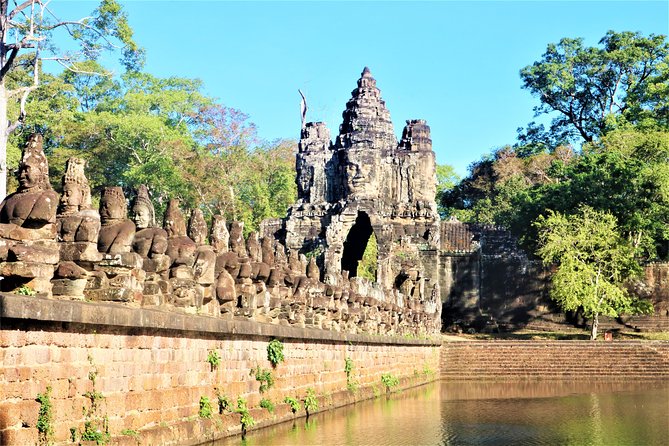
The South Gate of Angkor Thom gives you a dramatic entrance into the former Khmer capital. The approach includes monumental figures and a broad causeway, setting up the scale of the walled city beyond.
The stop is scheduled for about 30 minutes, followed by roughly 90 minutes inside Angkor Thom. The guide can connect the gate to the larger plan of the city, rather than treating it as a quick photo stop.
Bayon is the heart of the visit. Its towers carry serene carved faces that look in different directions across the temple. The effect is less clean and symmetrical than Angkor Wat, but more mysterious. You may find yourself looking upward as much as forward, trying to count faces among the stone towers.
The route also passes the Terrace of the Leper King and the Terrace of the Elephants. These terraces once formed part of the ceremonial center of Angkor Thom. They are not long standalone stops, but they help you understand how the capital functioned as a royal stage.
Ta Prohm, roots and ruined walls
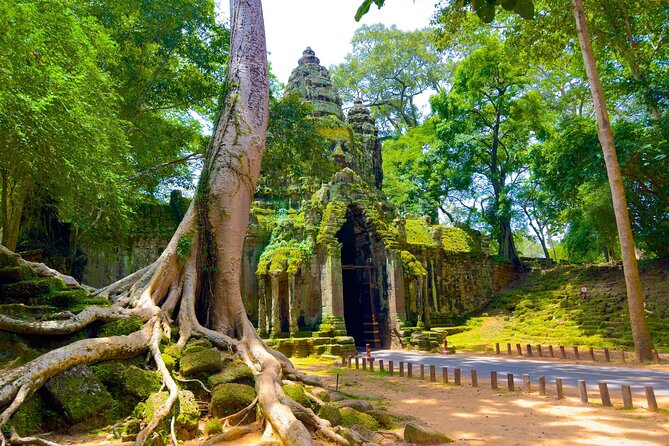
Ta Prohm is the temple most closely linked with the Tomb Raider film, but its appeal is older than cinema. Trees push through walls, roots wrap around doorways, and collapsed galleries create a sense of a place being slowly reclaimed by nature.
The visit lasts about an hour. That is enough to see the best-known sections with a guide, though the site can be crowded and the narrow passages may slow your progress.
Ta Prohm once housed 2,740 monks, a detail that helps put the ruins into perspective. This was not a small retreat in the forest. It was a working religious complex with a large community, now reduced to stone corridors and massive roots.
Day two ends with a strong group of major sites, but it may also be your most tiring day. You have the pre-dawn departure, extensive walking, steps, uneven ground, and heat. A quiet evening afterward is a smart plan.
Day three: quieter ruins and the finest carvings
The final day shifts away from the most famous temples. You still see major monuments, but the pace and setting feel different. The schedule includes Preah Khan, Neak Pean, Banteay Srei, and Pre Rup.
Preah Khan and Neak Pean
Preah Khan is a long, atmospheric ruin where tree roots and crumbling stone share the corridors. It was once an important temple complex, and its partially ruined condition gives you a clearer sense of how Angkor’s buildings age over time.
The visit lasts about an hour. Watch your footing and allow time for the guide to point out the mix of religious and architectural details. Preah Khan rewards patience more than a quick stop for photographs.
Neak Pean is reached on an artificial island in the Jayatataka Baray, a large reservoir connected with the temple complex. The temple sits on a circular island and has a very different design from the temple mountains and walled compounds seen earlier.
The planned visit lasts about 40 minutes. It is shorter and more focused, making it a good contrast after Preah Khan. The setting around the water also breaks up the steady rhythm of stone corridors.
Banteay Srei, the small temple with fine detail
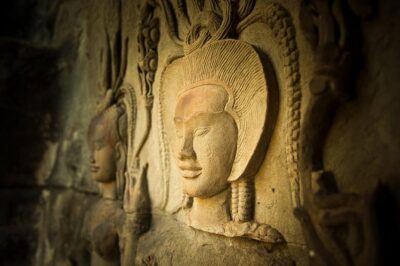
Banteay Srei is smaller than Angkor Wat, Angkor Thom, or Ta Prohm, but its sandstone carvings are among the most finely worked in Cambodia. The reliefs are precise, with decorative details that reward a closer look.
The tour allows about 90 minutes here. That is useful because Banteay Srei is best appreciated slowly. Instead of only checking off another major temple, you can look at the carving quality and the way the smaller scale changes your view of Khmer design.
The distance from the central Angkor area makes this a longer outing, but it adds variety to the three days. If your main goal is only the biggest monuments, you might question the extra driving. I think the contrast is worthwhile, especially for anyone interested in sculpture and architectural detail.
Pre Rup at the end of the route
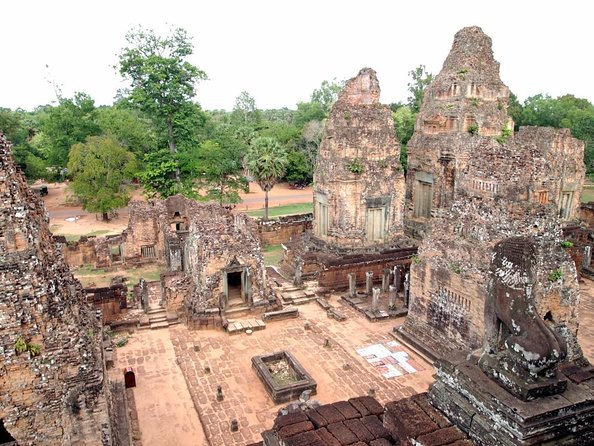
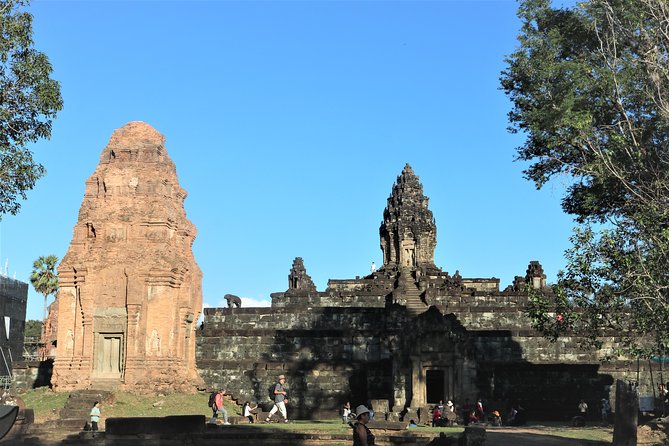
Pre Rup is a temple mountain built as the state temple of King Rajendravarman, dedicated in 961 or early 962. Its construction combines brick, laterite, and sandstone, giving it a different color and texture from the large sandstone complexes.
The visit is scheduled for about 90 minutes. The upper levels offer the kind of broad view and strong lines that make a temple mountain memorable, though stairs and uneven surfaces require care.
Because Pre Rup comes last, you may be tired. Still, it is a fitting final stop, bringing the focus back to the classic Khmer temple form after the watery setting of Neak Pean and the delicate carving at Banteay Srei.
Group size, guiding, and comfort on the road
A maximum of 15 people is small enough to matter. You can usually hear explanations more easily than in a large coach group, and the guide has a better chance of noticing when someone needs a pause or clarification.
The tour uses an air-conditioned vehicle and includes hotel pickup and drop-off. That is valuable on the long route to Banteay Srei and on the hot return from the temples. Mineral water is included, but bring extra if you need more than the supplied amount.
Guide quality will shape the experience. Sok is singled out for especially strong praise, so it is reasonable to ask if he is available when you book. The company identifies its guides as licensed, experienced, and English speaking.
Meals are not included. That keeps the price flexible, since you can choose what and where to eat, but you should plan for food costs and meal timing. The long temple days make breakfast, snacks, and lunch important rather than minor details.
Price, temple pass, and who gets good value

At $129, the tour looks inexpensive for three days of transport and guiding. Once you add the required $62 temple pass, the cost is $191 per person, before meals. The pass is payable on the day of the activity and is a separate cost you should include in your budget from the start.
I see the value in the package if you want a clear route, an English-speaking guide, air conditioning, and a small group. You also get the Tonlé Sap boat cruise and entrance fee, or the Phare Circus ticket when that seasonal version applies.
The value is weaker for independent visitors who already have transport, know which temples they want, or prefer long unstructured stops. This program covers a lot of ground, so you trade some freedom for efficiency.
The tour suits first-time visitors to Siem Reap, couples, families with older children, and anyone who wants the major temples explained rather than simply photographed. Children younger than five are not allowed, and anyone under 18 must be accompanied by an adult.
Book at least 24 hours before the start time if you need the free cancellation option. Changes or cancellations inside that window are not accepted for a refund.
Should you book the 3 Days Siem Reap Explorer?
I would choose this tour if you want Angkor Wat at sunrise, a strong selection of temples, and a manageable group without arranging every transfer yourself. The combination of Ta Prohm, Bayon, Banteay Srei, and Pre Rup gives you more than the standard one-day circuit.
You should skip it if a 4:00 morning pickup sounds miserable, if you want private touring, or if you only plan to visit Angkor Wat and one nearby temple. Also confirm whether your dates include Tonlé Sap or Phare Circus, since that changes the character of day one.
For a first Siem Reap visit, the three days make sense. You see the grand monuments, older ruins, detailed carvings, a living lake community or a Cambodian performance, and enough of the region to understand why staying longer than one day pays off.
FAQ
What is included in the $129 tour price?
The price includes three days of guided touring, hotel pickup and drop-off, an air-conditioned vehicle, an English-speaking licensed guide, local tax, mineral water, and the Tonlé Sap entrance fee and boat cruise or Phare Circus seat C ticket, depending on the schedule.
Is the Angkor temple pass included?
No. The required three-day temple pass costs an additional $62 per person and is paid directly on the day of the activity.
What time does the tour start?
Day one pickup is listed at about 7:30 am, while general meeting information gives an 8:00 am start. Day two begins around 4:00 to 4:30 am for the Angkor Wat sunrise visit. Confirm your exact pickup time when booking.
Is Tonlé Sap Lake visited on every departure?
No. From March 1 through August 31, the schedule states that the group visits Phare, The Cambodian Circus instead of Tonlé Sap Lake. Confirm the exact program for your dates.
How large is the tour group?
The maximum group size is 15 people.
Are meals included?
No. Meals are not included, and you choose and pay for them separately.
What should I wear at the temples?
Shoulders and knees must be covered inside the temples. Comfortable walking shoes are recommended.
Can children join the tour?
Children must be accompanied by an adult. Children younger than five years old are not allowed.
Can I cancel for a full refund?
Yes, if you cancel at least 24 hours before the experience start time. Cancellations or changes made less than 24 hours beforehand are not accepted for a refund.
Newest reviews from Siem Reap
- War Museum, Killing Field, and APOPO Hero RATs Tour★ 5.0 · 7 reviews
- Angkor Wat at Sunrise★ 4.0 · 7 reviews
- Siem Reap Angkor Airport Taxis (from Airport to Hotel)★ 5.0 · 44 reviews
- Cambodian Cooking Class and Oxcart Ride with Local Village Tour★ 5.0 · 4 reviews
- Secret Temples of Angkor – Guided Tour in Siem Reap★ 5.0 · 6 reviews
- Short Cycling at Countryside★ 5.0 · 29 reviews
- SIEM REAP E-BIKE HALF-DAY COUNTRYSIDE (25-30 km)★ 4.0 · 1 review
- Unveiling the Mystical Beauty of Phnom Kulen National Park★ 5.0 · 6 reviews
3-Day Experiences, compared.
3-Day Angkor Wat with All Interesting Major Temples, Banteay Srei & Beng Mealea
Read our review →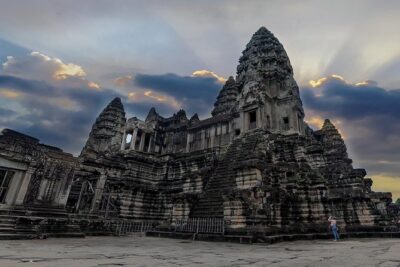
3-Day Angkor Wat & All Interesting Major Temples & Kulen Mount Waterfall
Read our review →
Best of Siem Reap 3-Day Private Tour to Angkor Wat & Tonle Sap
Read our review →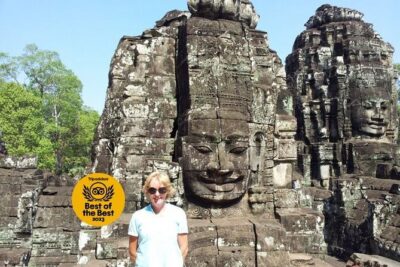
Private Siem Reap 3 Day Tour Discover All Highlight Angkor Temple
Read our review →
Private 3-Day Mekong Delta River Tour from Phnom Penh to Ho Chi Minh City
Read our review →