
Reviewed · ANGKOR WAT TOURS
3-Day Angkor Wat with All Interesting Major Temples, Banteay Srei & Beng Mealea
Angkor rewards patience, not a rushed checklist. This three-day private tour covers the major Angkor temples, adds the finely carved Banteay Srei and jungle-wrapped Beng Mealea, and gives you a guide to explain what you are seeing. I especially like the private hotel pickup and the mix of famous sites with quieter stops such as Ta Nei. I also like that guides such as Mony, Vanna, Mr. Khmer, Mr. Thou, and Mr. Chen are praised for history, photography, local advice, and friendly service.
The main drawback is the pace. Day one runs from Angkor Wat through Angkor Thom and on to Phnom Bakheng, while day two begins at 5:00 a.m. for sunrise. The advertised $261 price also does not include the $62 temple pass or lunches, so your real cost will be higher.
In This Review
- Key points to know before booking
- Why three days works better than one
- Day one: Angkor Wat, Ta Prohm, and the royal city
- Day two: sunrise, the grand circuit, and Banteay Srei
- Day three: Beng Mealea and the Roulous temples
- Guides, transport, and the human side of the tour
- What the $261 price really covers
- Who should book this three-day plan?
- FAQ
- How long is the tour?
- Is hotel pickup included?
- Is the Angkor temple pass included?
- Are meals included?
- Is this a private tour?
- What time does the sunrise day begin?
- Can I skip the sunset, Artisans Angkor, or Old Market?
- Should you book it?
Key points to know before booking
- Sunrise and sunset are both included: Day two starts at Angkor Wat before dawn, while day one ends at Phnom Bakheng, subject to the site’s visitor limit.
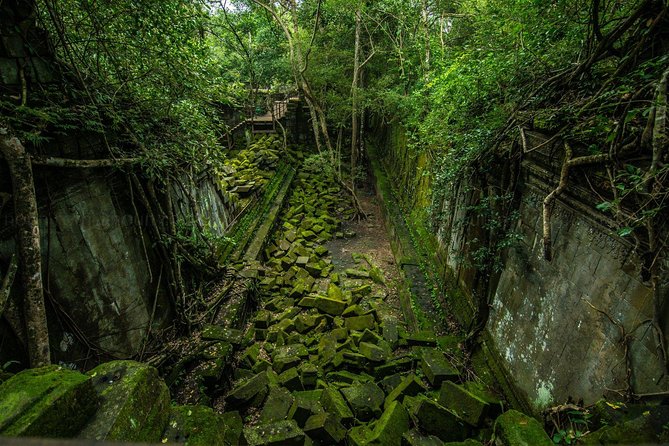
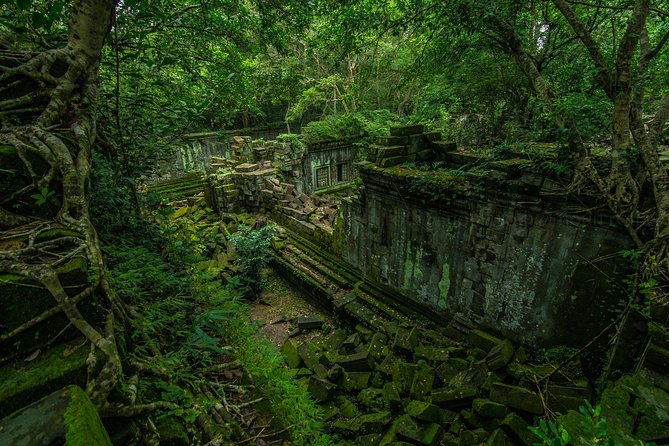
- Beng Mealea adds a wilder side of Cambodia: This large temple sits about 68 kilometers northeast of Siem Reap, with jungle growth covering much of the ruins.
- You get a full Angkor circuit: Angkor Wat, Ta Prohm, Bayon, Baphuon, Preah Khan, Pre Rup, Banteay Kdei, and other major temples are all included.
- Banteay Srei is a highlight for detail lovers: Its pink sandstone carvings are smaller and more delicate than the grand monuments closer to Siem Reap.
- It is private, not a shared group outing: Your group receives its own licensed English-speaking guide, air-conditioned vehicle, driver, hotel pickup, and return.
- The final day reaches beyond the main complex: The Roulous temples, Artisans Angkor, and Siem Reap’s Old Market round out the schedule.
Why three days works better than one
Angkor Archaeological Complex is too large for a single pleasant day. You can see Angkor Wat and a few nearby temples in one outing, but you will spend much of your time watching the clock, sitting in traffic, or trying to absorb names that blur together.
This tour spreads the main sights across two days inside the Angkor area, then uses a third day for Beng Mealea and the Roulous group. That arrangement gives you more variety. You see temple mountains, flat galleries, tree-covered ruins, royal terraces, small shrines, and large sites far beyond the most photographed corners.
The private format matters here. You do not need to find the correct road, negotiate each transfer, or work out how to connect distant temples. Your guide can adjust explanations to your interests, and your driver takes you back to your Siem Reap hotel at the end of each day.
The vehicle is air-conditioned, and cool water and wet towels are provided. Those are small comforts, but after several hours among stone walls in Cambodia’s heat, they matter. Parking fees and road tolls are also covered.
More ways to see Angkor Wat:
- Angkor Wat Sunrise or Sunset Tour with Guide from Siem Reap
★ 5.0 · 12,109 reviews - Siem Reap: Angkor Wat: Small-Group Sunrise or Sunset Tour
★ 5.0 · 9,444 reviews - Siem Reap: Angkor Wat 2-Day Tour with Sunrise and Sunset
★ 4.9 · 4,429 reviews
Day one: Angkor Wat, Ta Prohm, and the royal city
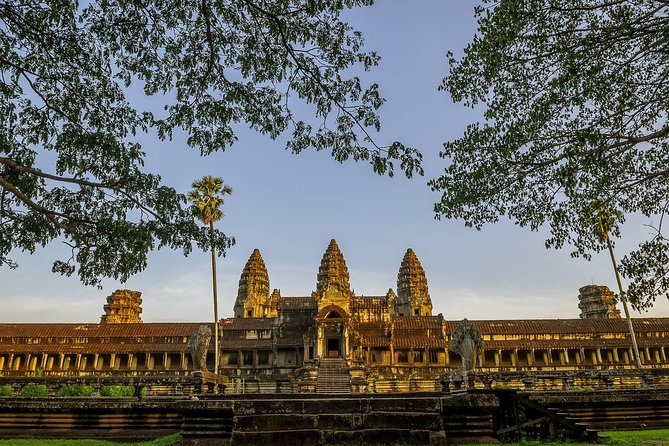
Pickup begins at 8:00 a.m. at your hotel or guesthouse. The first stop is Angkor Wat, with about two and a half hours set aside. The temple pass is not included, and the tour allows time to buy it along the way.
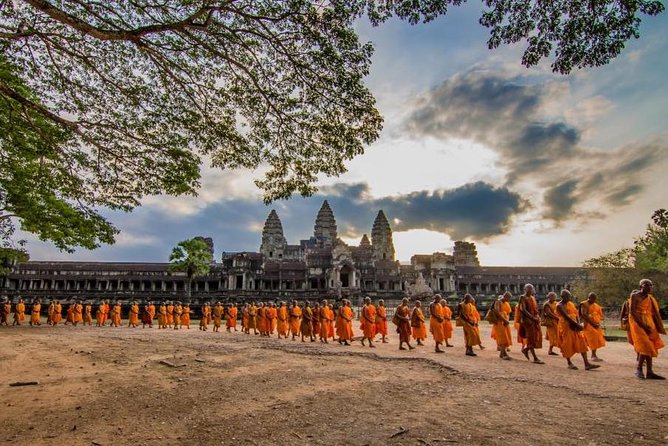
Angkor Wat deserves a slow start. Its towers, galleries, courtyards, and carved scenes can easily fill half a day, yet this itinerary also has many more temples ahead. A good guide is useful here because the building is much more than a postcard view. Personalized commentary can help you understand the religious purpose, the design, and the stories shown in the carvings without forcing you to read every sign alone.
After Angkor Wat, you continue along the small circuit road to Ta Prohm. Allow about two hours. This is the temple where enormous tree roots have grown across walls and doorways, creating the scene made famous by the film Tomb Raider.
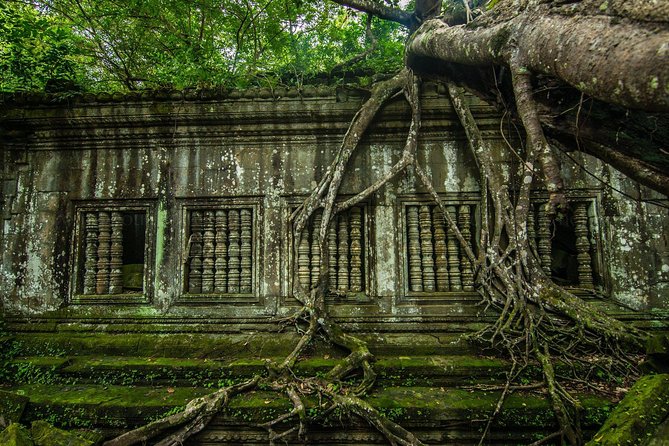
Ta Prohm is visually striking, but it can also be one of the busiest stops. Your guide can help you focus on more than the most crowded photo spots. Look for the way roots, galleries, and collapsed stones overlap. The ruin feels powerful because nature has not merely decorated the temple. It has become part of the structure’s appearance.
Ta Nei follows, with about 45 minutes. This smaller Buddhist temple has less restoration and is surrounded by large trees. I like its place in the schedule because it gives you a quieter contrast after Ta Prohm. Do not expect the scale or polish of Angkor Wat. Ta Nei’s appeal is its simpler setting and the chance to see a less reconstructed ruin.
The route then enters Angkor Thom through the Victory Gate. This is a quick ten-minute stop for photos before Bayon. Angkor Thom was a major walled city, and the gate gives you a sense of entering a defined royal center rather than visiting isolated ruins scattered in the forest.
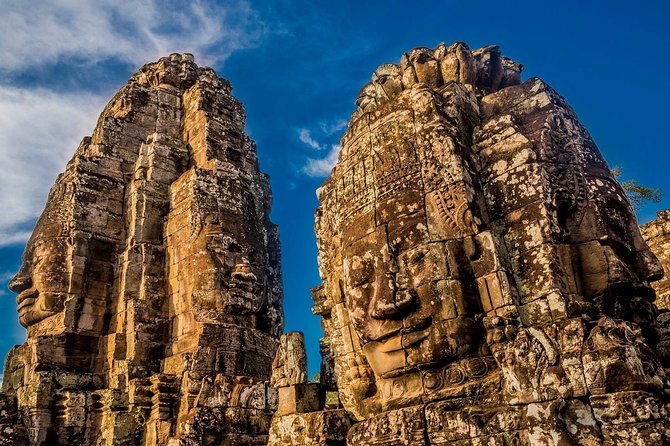
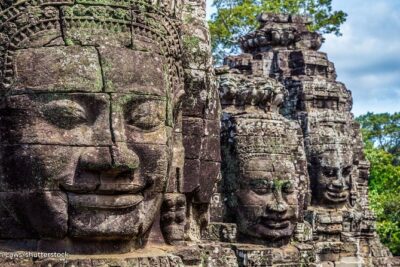
Bayon sits at the center of Angkor Thom and receives about 45 minutes. Its towers carry the famous serene faces associated with the bodhisattva Avalokitesvara. The description gives 49 towers and 196 faces, though the condition and visibility of individual faces vary as you move around the monument.
Bayon can be confusing without direction. Towers overlap, passages turn suddenly, and the faces appear at different heights. A guide can point out how the temple’s design works and explain the Buddhist ideas behind it. The short visit means you will see the central features, but anyone who enjoys carved details may wish for extra time.
Baphuon is next, with about 30 minutes. This Hindu temple dates to the 11th century, before Angkor Wat. Behind it is a large reclining Buddha added in the 16th century. The combination shows how religious use changed over time, which is one reason the Angkor area rewards a guide’s historical explanation.
Phimeanakas receives 15 minutes. This pyramid-shaped Hindu temple dates to the 10th century and lies within the former royal palace area. You also see the ancient Royal Enclosure Wall. The stop is brief, so think of it as part of a larger royal complex rather than a full temple visit.
The Terraces of the Elephants and the Leper King are quick stops, about ten minutes each. The Elephant Terrace served as a platform from which kings viewed returning armies, and elephant carvings decorate its wall. The nearby Leper King Terrace has a more enclosed, carved character.
The first day ends at Phnom Bakheng. The schedule allows about two hours for the climb and sunset wait. The hilltop gives wide scenic views, but access is limited because only a set number of people may be allowed up at one time. The timing may mean waiting, and sunset access can depend on crowd levels.
That is an important practical point. Phnom Bakheng is not simply a final photo stop. You may need to climb the hill and then wait. If you prefer a less tiring ending, the itinerary allows you to skip the sunset portion.
Day two: sunrise, the grand circuit, and Banteay Srei
Day two starts at 5:00 a.m. for sunrise at Angkor Wat. About one hour and 45 minutes is allocated to this first visit. Sunrise is a major attraction, but it is also the least restful part of the tour. You will need to accept an early alarm, darkness at pickup, and a busy viewing period.
The reward is seeing the temple change as the morning light reaches the towers and pools. Weather controls how dramatic the colors appear, so keep your expectations sensible. The experience is still worthwhile because the temple feels different before the daytime heat and activity build.
After breakfast, the route continues to Preah Khan. Allow about an hour. This large Buddhist temple was built by King Jayavarman VII and dedicated to his father. Its long galleries and complex plan make it one of the more rewarding sites for a guided visit.
Neak Pean comes next for about 30 minutes. This small island temple sits in the middle of the last baray, or reservoir. The setting matters as much as the structure. You are looking at a compact shrine connected with water and healing ideas, rather than another giant stone mountain.
Ta Som receives another 30 minutes. It is a small Buddhist temple east of Neak Pean, with trees and a less imposing scale. It pairs well with the larger Preah Khan because you get both a broad ceremonial complex and a modest ruin where the surrounding vegetation is part of the experience.
Eastern Mebon is a 20-minute stop. This temple mountain rises in three levels and has five towers. Large elephant statues mark its corners, giving you clear details to look for even during a short visit.
Pre Rup follows, with about an hour. Built in the late 10th century and dedicated to Hindu gods, it is another temple mountain. Its name is linked with turning the body, and the site has associations with funeral practices. The steep levels and brick construction offer a useful comparison with Angkor Wat and the later Bayon style.
After a lunch break, you travel to Banteay Srei. Lunch is not included, and the listed estimate is about $5 per person, depending on the menu. You can expect to stop at a local restaurant selected along the route, so bring some flexibility about the meal.
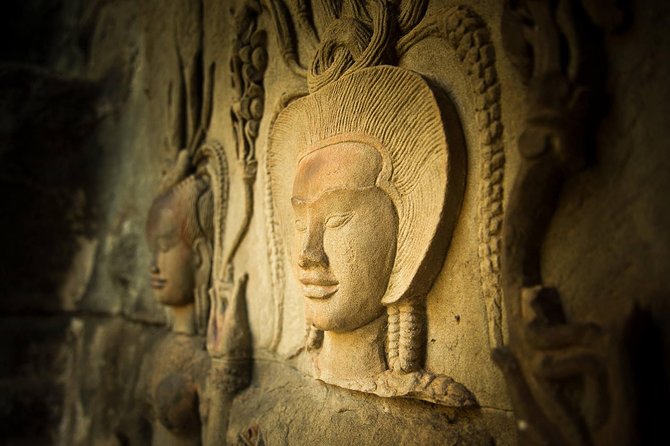
Banteay Srei is one of the strongest stops for anyone who enjoys carving. Built in the 10th century from pink sandstone, it has fine decoration on a smaller scale than the main Angkor monuments. The name Ladies Temple is widely used, although the important point for your visit is the precision of the carvings and the warm color of the stone.
Because Banteay Srei lies away from the central cluster, the drive adds time to the day. That extra travel is worthwhile for many people, but you should not choose this tour expecting every stop to be close together.
Banteay Samre follows for about 45 minutes. This 12th-century Hindu temple is often compared in design with Angkor Wat. Its layout offers another useful contrast, especially after the pink sandstone detail of Banteay Srei.
The final stop is Banteay Kdei, a 12th-century Buddhist temple visited for about 45 minutes. Its style resembles Ta Prohm and Bayon, so it helps connect the day’s earlier themes. By this point you may be tired, but the temple provides a quieter finish than the large headline sites.
Day three: Beng Mealea and the Roulous temples
Day three begins with Beng Mealea, about 68 kilometers northeast of Siem Reap. The visit lasts roughly three and a half hours, making this the day’s main event.
Beng Mealea is the tour’s clearest change of mood. Nature has spread across the ruins, and the temple feels less ordered than the monuments on the central circuits. You move through a large, mysterious complex where fallen blocks, tree growth, and broken galleries shape the view.
The long visit is welcome because Beng Mealea needs time. A rushed walk would reduce it to a pile of stones and roots. With several hours available, you can appreciate the scale and the way the jungle has overtaken the site. The tradeoff is the road time from Siem Reap, so this day is not a light add-on.
The route then turns to the Roulous group, an early cluster of temples connected with the ancient city of Hariharalaya. Lolei is a small 9th-century Hindu temple and receives about 20 minutes. Its scale and age make it useful for understanding how Khmer temple building developed before the largest Angkor monuments.
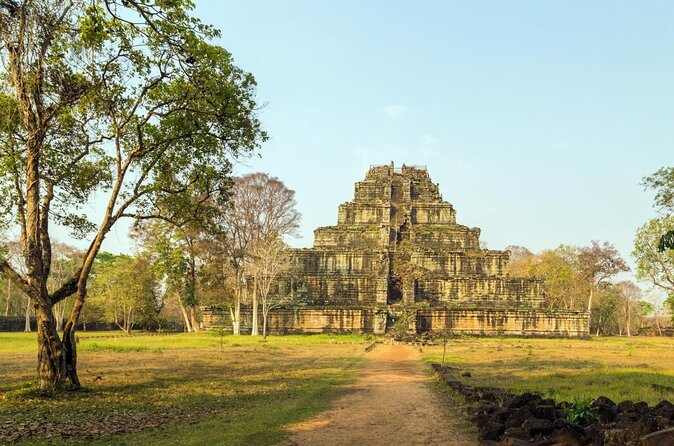
Preah Ko was the first temple built in Hariharalaya. The 20-minute visit is short, but the site gives you another early example of Khmer religious architecture. It is best seen as part of the Roulous sequence, not as a standalone blockbuster.
Bakong is the largest temple in the Roulous group and receives about an hour, including a lunch break along the way. It is described as the first sandstone temple mountain built by Khmer rulers. Its importance comes from both its early date and its design, which points toward the temple-mountain form used in later, larger sites.
This morning and early afternoon require patience. Beng Mealea is far from the central complex, and the Roulous temples have a different feel from Angkor Thom. If you want only the most famous photographs, this day may seem long. If you want to understand how the architecture developed, it adds real value.
The final optional stops are Artisans Angkor and Psar Chaa, the Old Market in Siem Reap. Artisans Angkor is known for traditional crafts including stone carving, wood carving, lacquering, gilding, and silk processing. You can skip it if you prefer more time in town.
Psar Chaa is the local market in central Siem Reap. It is also optional, so the end of the day can be adjusted to your interests. These stops are less about ancient temples and more about present-day craft and shopping.
More trips out to Banteay Srei:
- Full-Day Banteay Srei & 4 Temples – Grand Tours Join-in Tour
★ 5.0 · 1,155 reviews - Siem Reap Tour: Angkor Wat Sunrise, Bayon, Ta Prohm, Banteay Srei
★ 5.0 · 931 reviews - 2-Day Angkor Wat With Small, Big Circuit and Banteay Srei Tour
★ 5.0 · 545 reviews - From Siem Reap: Banteay Srei Temple & Grand 5 Temple Tour
★ 4.8 · 262 reviews
Guides, transport, and the human side of the tour
The strongest part of this experience is the guide service. Mony is praised for making the trip educational and easy, while Vanna is noted for explaining the origins of temples, statues, and carved stories. Mr. Khmer is described as an archaeologist and teacher with particular strength in construction methods and religious meaning.
Mr. Thou is also praised for combining temple history with practical suggestions about Siem Reap and stories about Cambodian life. Mr. Chen and driver Mr. Sambo are noted for creating a warm, comfortable experience. These names matter because the quality of a long temple program depends heavily on the person walking beside you.
The guide is licensed and speaks English. The tour is private, so only your group participates. That gives you room to ask questions, request more time at a favorite temple, or skip the optional market and craft stops.
The driver handles the roads, parking, and daily hotel returns. You receive an air-conditioned vehicle, water, and cool wet towels. This is more comfortable than arranging separate transport for each circuit, particularly on the 5:00 a.m. morning.
What the $261 price really covers
The listed price is $261 per person. It includes the private vehicle, licensed English-speaking guide, hotel pickup and return, water, wet towels, parking fees, and road tolls.
The Angkor Wat and all-temples admission pass costs another $62 per person. Lunches are also extra, with an estimate of about $5 per person depending on your food choices. That puts the basic known total at $323 per person before meals.
For a three-day private experience covering central Angkor, Banteay Srei, Beng Mealea, and Roulous, the price can make sense if you value convenience and interpretation. You are paying for transport over long distances, a dedicated guide, and a schedule that would be awkward to organize independently.
Group discounts are available, though the exact reduction is not specified. Since the activity is private, a larger party may get better value per person than a solo booking. The tour is booked, on average, 21 days ahead, so planning early is sensible if your Siem Reap dates are fixed.
Free cancellation is available up to 24 hours before the start time. Changes or cancellations inside that period are not accepted for a refund.
Who should book this three-day plan?
I would choose this tour if you want the major temples explained rather than simply photographed. It suits people who enjoy architecture, Cambodian history, religious art, and the different moods of restored and jungle-covered ruins.
It also fits you if you prefer a private vehicle and do not want to manage Siem Reap roads. The itinerary is useful for first-time visitors because it covers the famous names while adding places many short tours leave out.
You should think twice if early mornings are difficult or if you prefer slow, unstructured visits. Day one is full, day two starts at 5:00 a.m., and day three includes a long drive to Beng Mealea. The schedule is broad rather than leisurely.
FAQ
How long is the tour?
The experience lasts approximately three days.
Is hotel pickup included?
Yes. Pickup and return to your hotel or guesthouse in Siem Reap are included each day.
Is the Angkor temple pass included?
No. The Angkor Wat and all-temples admission fee is listed as $62 per person.
Are meals included?
No. Lunch is not included. The listed estimate is about $5 per person, depending on the menu.
Is this a private tour?
Yes. Only your group participates, with a private vehicle and guide.
What time does the sunrise day begin?
The guide meets you at your accommodation at 5:00 a.m. on day two for sunrise at Angkor Wat.
Can I skip the sunset, Artisans Angkor, or Old Market?
Yes. The itinerary says you can skip the Phnom Bakheng sunset if you do not want to wait, and Artisans Angkor and Psar Chaa are also optional.
Should you book it?
Book this tour if you want broad Angkor coverage, private transport, and a guide who can explain the temples in clear historical and religious context. The inclusion of Beng Mealea and the Roulous group gives the third day real purpose, while Banteay Srei adds some of the finest carved detail in the region.
Before booking, budget for the separate $62 pass and extra lunches. Then decide if you can handle two early or demanding days. If the answer is yes, this is a well-rounded way to see Siem Reap’s ancient sites without spending your holiday arranging roads, tickets, and temple transfers yourself.
More Multi-day Routes in Siem Reap
- Angkor 2-Day Sunset & Sunrise Small-Group Tour
★ 5.0 · 2,567 reviews - Siem Reap: Angkor Sunrise 1- or 2-Day Guided Temples Tour
★ 4.9 · 1,132 reviews - Siem Reap: 2-Day Temple Highlights Sunrise and Sunset Option
★ 4.9 · 445 reviews - Angkor Wat 2-Day complex Sun rise & Sun set with Guided Tour
★ 4.9 · 439 reviews
More Trips out to Beng Mealea
- Siem Reap: Kulen Mountain, Beng Mealea and Tonle Sap Tour
★ 5.0 · 1,483 reviews - Kulen Mountain with Beng Mealea and Tonle Sap Small Group Tour
★ 5.0 · 780 reviews - Koh Ker Temple Group & Beng Mealea Full-Day Join-in Tour
★ 5.0 · 710 reviews - From Siem Reap: Koh Ker and Beng Mealea Temples Tour
★ 4.9 · 293 reviews
Newest reviews from Siem Reap
- War Museum, Killing Field, and APOPO Hero RATs Tour★ 5.0 · 7 reviews
- Angkor Wat at Sunrise★ 4.0 · 7 reviews
- Siem Reap Angkor Airport Taxis (from Airport to Hotel)★ 5.0 · 44 reviews
- Cambodian Cooking Class and Oxcart Ride with Local Village Tour★ 5.0 · 4 reviews
- Secret Temples of Angkor – Guided Tour in Siem Reap★ 5.0 · 6 reviews
- Short Cycling at Countryside★ 5.0 · 29 reviews
- SIEM REAP E-BIKE HALF-DAY COUNTRYSIDE (25-30 km)★ 4.0 · 1 review
- Unveiling the Mystical Beauty of Phnom Kulen National Park★ 5.0 · 6 reviews
Angkor Wat Tours, compared.
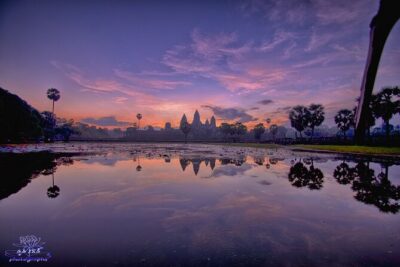
Angkor Wat Sunrise or Sunset Tour with Guide from Siem Reap
Read our review →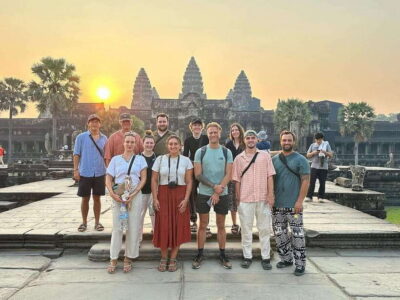
Angkor Wat: Small-Group Sunrise or Sunset Tour
Read our review →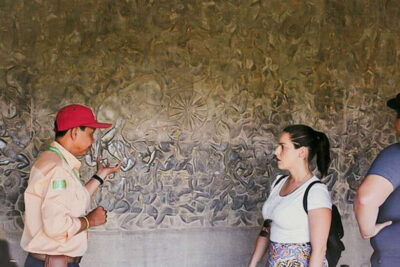
Angkor Wat 2-Day Tour with Sunrise and Sunset
Read our review →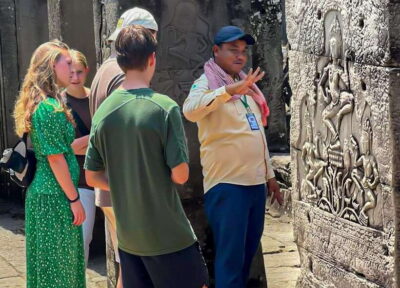
Angkor Wat Sunrise tour with Small – Group and Guide tours
Read our review →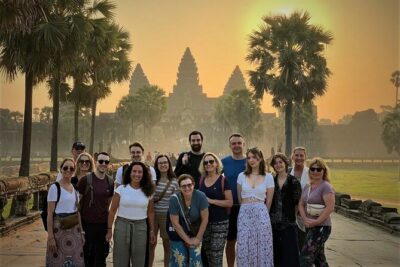
Angkor Wat Highlights and Sunrise Guided Tour from Siem Reap
Read our review →
Angkor Wat Sunset Small Group Tour with Lunch Included
Read our review →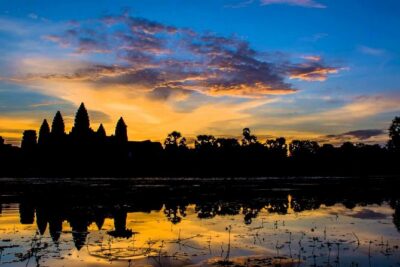
Full-Day Angkor Wat Sunrise Private Tour with Guide from Siem Reap
Read our review →Browse the lists this tour appears in