
Reviewed · BANTEAY SREI TOURS
3-Day Tour(Unforgettable Angkor Temple Complex, Banteay Srei& Floating Village)
Ancient stone, jungle roots, and a lake village. This three-day private tour pairs Siem Reap’s famous temples with quieter corners that many short visits miss. I especially like the private format, which lets you spend more time at the places that interest you, and the chance to meet Khmer families around Kampong Phluk on Tonle Sap. The main drawback is cost control: the $245 price excludes temple passes, the floating-village boat, meals, and accommodation.
The schedule is full, but it has a sensible shape. Day one covers Angkor Thom and its forest temples, day two begins before dawn at Angkor Wat, and day three reaches Banteay Srei and the water village. Your English-speaking guide and driver handle the roads, shade, cold water, and wet towels, though you should be ready for heat, stairs, early starts, and long hours outside.
In This Review
- What makes this three-day Angkor tour worth considering
- A smart three-day plan for Siem Reap
- Day one: Ta Prohm and the quieter eastern temples
- Bayon and Angkor Thom’s royal terraces
- Day two: Angkor Wat before breakfast
- Day three: Banteay Srei’s fine pink sandstone
- Kampong Phluk and life on Tonle Sap
- What the private format really adds
- Who should book this experience?
- Should you book the three-day Angkor experience?
- FAQ
- Is the tour private?
- Is pickup included?
- Is the Angkor temple pass included?
- Is the floating-village boat ticket included?
- Are meals included?
- What time does the Angkor Wat sunrise visit begin?
- What is the cancellation policy?
What makes this three-day Angkor tour worth considering
- Sunrise at Angkor Wat begins at 4:30 a.m., giving you the best chance to see the temple before the day grows hot.
- A private vehicle and guide mean you are not locked into a large group pace.
- Ta Nei and Preah Palilay add quieter, more atmospheric stops to the better-known Angkor route.
- Banteay Srei and Banteay Samre show a different side of Khmer temple design, with fine carvings and pink sandstone.
- The Roluos Group takes you to some of the earliest major monuments connected with the Angkor area.
- Kampong Phluk adds daily life on Tonle Sap, not just carved stone and royal ruins.
A smart three-day plan for Siem Reap
This is not a relaxed temple sampler. It is a focused sightseeing program for someone who wants to see a large portion of the Angkor area in three days, then add a countryside and lake experience.
The private setup matters here. You travel in an air-conditioned vehicle with a professional driver, and the guide can offer suggestions for local food and other places to visit. A previous customer singled out Mr. Lion for his temple knowledge, photo help, and choice of local restaurants. That sort of practical help can save time, especially when you are trying to fit ten stops into a day.
The tour costs $245 per person. That is a fair value if you would otherwise arrange a private guide, car, driver, and a three-day schedule yourself. Still, do your arithmetic before booking. The Angkor Archaeological Park pass is extra, the boat ticket at the floating village is extra, and you pay for lunches, drinks, hotel accommodation, tips, and personal purchases.
The tour includes pickup and return transfers for people staying inside Siem Reap. It is operated privately, so only your group participates. Most people can take part, but the days involve walking over uneven temple ground, climbing at some sites, and handling very early mornings.
More trips out to Banteay Srei:
- Full-Day Banteay Srei & 4 Temples – Grand Tours Join-in Tour
★ 5.0 · 1,155 reviews - Siem Reap Tour: Angkor Wat Sunrise, Bayon, Ta Prohm, Banteay Srei
★ 5.0 · 931 reviews - 2-Day Angkor Wat With Small, Big Circuit and Banteay Srei Tour
★ 5.0 · 545 reviews
Day one: Ta Prohm and the quieter eastern temples
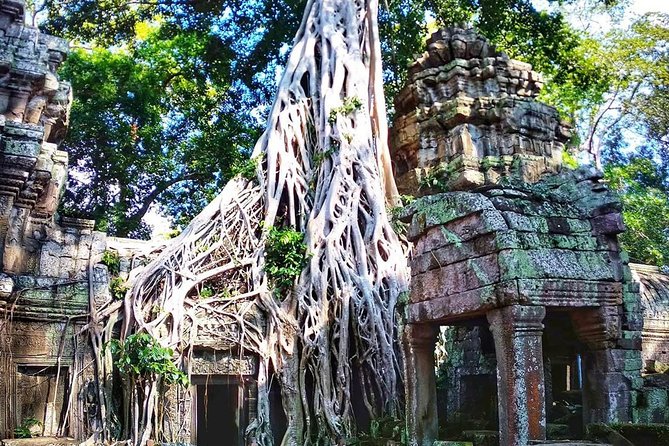
The opening stop is Ta Prohm, one of the most atmospheric places in the Angkor area. Parts of this former monastic complex remain tangled with jungle growth, creating the famous tree-and-stone views. You have about 90 minutes here, enough to appreciate the setting without rushing through every corridor.
Ta Prohm can be crowded, and its fame means you will not have the place to yourself. The private guide is useful because you can ask for time at the courtyards and photo points that appeal to you instead of simply following a group through.
Ta Nei comes next, with about 45 minutes. This smaller jungle temple has a similar forest mood to Ta Som, but it usually feels less grand and less polished than Ta Prohm. That is part of its appeal. You get a better sense of how a temple looks when nature and time still shape the experience.
The next stop, Ta Keo, is a tall temple mountain dedicated to Shiva. It is notable for its plain sandstone construction and strong vertical form. There is less decorative detail here than at Bayon or Banteay Srei, so I would treat this stop as an architectural contrast rather than a carving showcase. If stairs are difficult for you, take the visit at your own pace.
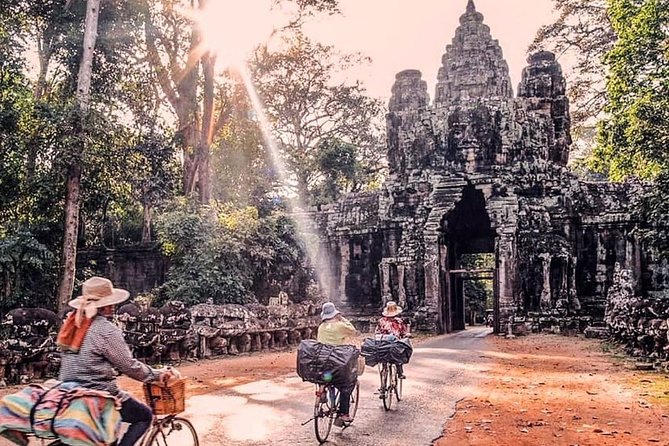
After a short stop at the Victory Gate, the route enters Angkor Thom through its South Gate. The gate and causeway are lined with stone figures connected to the Hindu story of the churning of the ocean of milk. This is a useful introduction to the symbolic world you will see repeated across the Angkor monuments.
Lunch is at your own expense, either at a local restaurant in the temple area or back at your hotel. The schedule allows only about 30 minutes for this break, so do not expect a long meal. Carrying some extra cash in US dollars is sensible because meals, drinks, and tips are not part of the tour price.
Bayon and Angkor Thom’s royal terraces
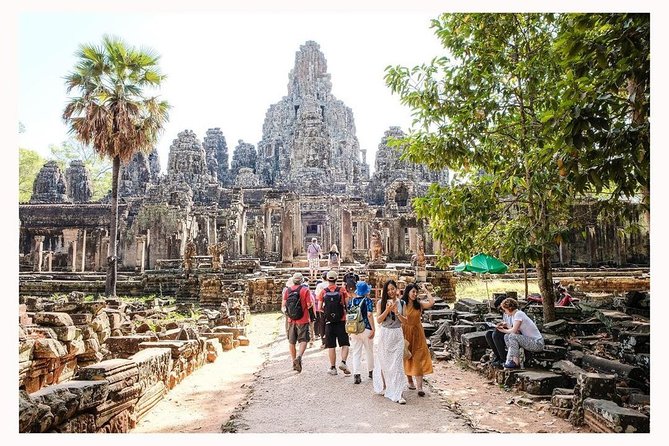
Bayon receives about an hour, and it deserves the time. Its towers carry huge carved faces that have become one of the defining images of Khmer art. The temple can feel confusing at first, with narrow passages, stacked galleries, and faces appearing from different angles.
Your guide can help explain what you are seeing and point out the difference between the main towers, reliefs, and surrounding structures. I like that the tour does not stop at Bayon and move on immediately. An hour gives you room to look up, move through the interior, and take in the changing expressions of the stone faces.
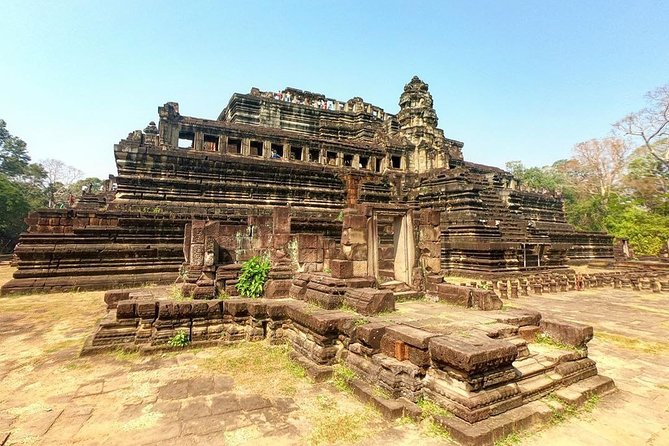
Baphuon follows for about 30 minutes. This three-tiered temple mountain was built as a state temple for Shiva. Its scale is impressive, but the stairs and upper levels can make the visit physically demanding. The site also follows a strict clothing rule, so cover your shoulders and wear clothing that falls below the knees.
The Terrace of the Elephants stretches for roughly 300 meters through the center of Angkor Thom. Its wall is decorated with elephants and garudas, and the long frontage helps you picture the ceremonial heart of the old city. The visit is brief, around 30 minutes, but the scale is easier to grasp from this broad terrace than from inside a temple.
The Terrace of the Leper King is smaller but packed with carved nagas, demons, and mythological figures. It has a double wall, so look closely at the inner carvings rather than simply walking past the outer face.
The final stop is Preah Palilay, a sandstone and laterite tower in a shaded forest setting. Its Buddhist carvings and cool surroundings provide a quieter finish after the busier central monuments. Day one gives you a strong mix: famous architecture, jungle atmosphere, royal spaces, and less visited corners.
Day two: Angkor Wat before breakfast
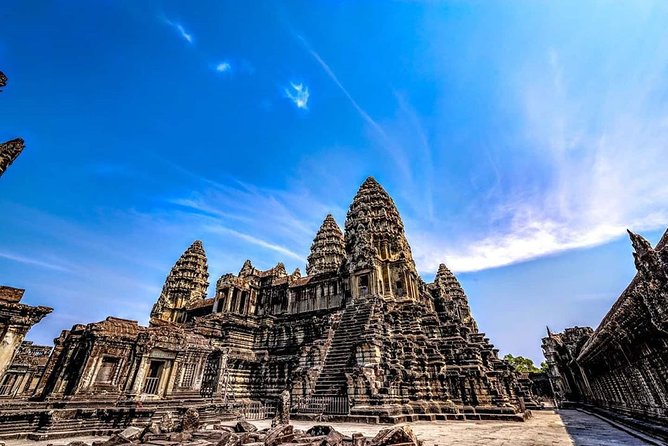
The second day starts at about 4:30 a.m. for sunrise at Angkor Wat. This is the tour’s hardest start, but it is also one of its most valuable features. You avoid beginning the main temple visit in the hottest part of the day, and early light can give the towers a softer appearance.
You should plan your evening before this outing carefully. The day continues for about four hours at Angkor Wat, so this is not just a quick sunrise photo stop. The temple is enormous, with galleries, courtyards, towers, and detailed reliefs requiring time and steady walking.
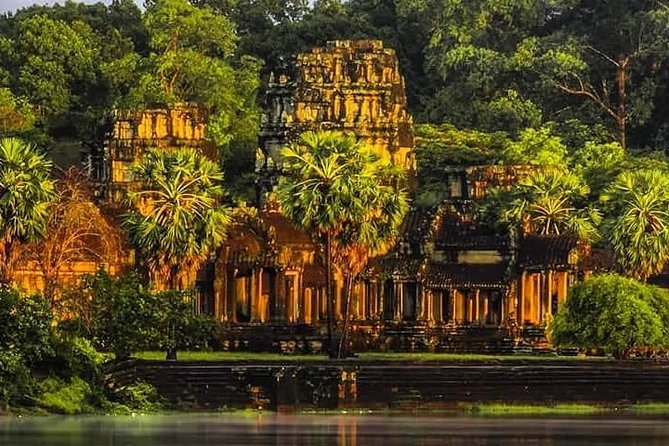
Angkor Wat was built in the 12th century and is both a Hindu temple and a vast architectural statement. The scale can be difficult to understand from a single viewpoint. A guide helps connect the layout, towers, galleries, and religious ideas, rather than leaving you with only a collection of impressive photographs.
The long visit also gives you a chance to slow down. Look at the carved bas-reliefs, the symmetry of the main towers, and the way the temple changes as you move from the outer enclosure toward the central sanctuary. Dress respectfully and keep your shoulders and knees covered. Bright clothing or shirts with offensive images may cause an entry problem at some temple sites.
In the afternoon, the tour travels to the Roluos Group, one of the earliest major temple areas associated with the Angkor region. The journey adds a change of pace after the monumental scale of Angkor Wat.
Bakong is the main stop, with about 45 minutes. Built during the reign of Indravarman I, it has the classic temple-mountain shape and offers a useful comparison with later Angkor monuments. Its earlier date makes the design feel more direct and less refined than the grandest temples in the central complex.
Lolei takes about 30 minutes. This ninth-century Hindu temple was dedicated to Shiva. It is smaller than Angkor Wat, but its age gives it an important place in the story of Khmer architecture.
Preah Ko, meaning sacred bull, completes the Roluos visits. Built in 879 and dedicated to Shiva, it is named for the Nandi bulls associated with the god. The three temples together help you see that Angkor was not created all at once. It developed through several periods, rulers, religious traditions, and building styles.
More floating village trips:
- From Siem Reap: Kampong Phluk Floating Village Tour by Boat
★ 4.9 · 6,979 reviews - Sunset tour of Kampong Phluk stilts home village on the Tonle Sap
★ 5.0 · 4,865 reviews - Siem Reap: Kampong Phluk Floating Village Tour with Boat
★ 4.9 · 3,843 reviews - Siem Reap Floating Village Kampong Phluk Sunset with Boat
★ 5.0 · 1,962 reviews
Day three: Banteay Srei’s fine pink sandstone
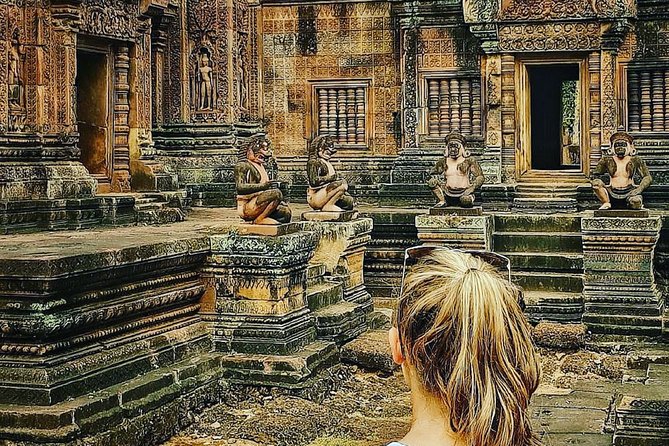
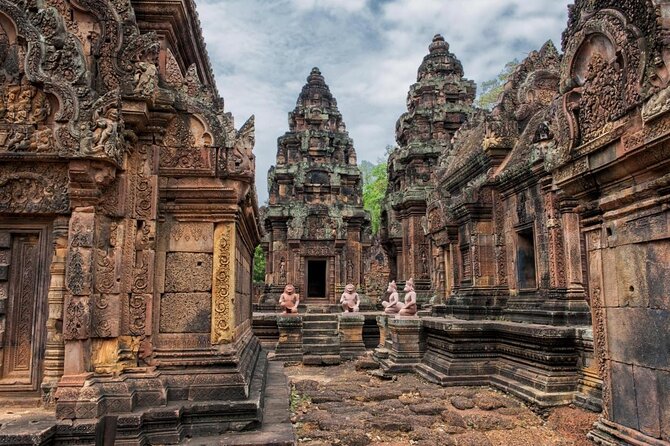
Banteay Srei is about 25 kilometers north of Angkor Wat and receives two hours. Many people consider it one of the most finely carved temples in the area. Its pink sandstone allows for small, precise details, and the relatively compact scale makes it easier to study the carvings up close.
The temple is often linked with the idea of a women’s temple, but the important point for your visit is the craftsmanship and Hindu imagery. Your guide can explain the figures, stories, and religious setting behind the decorations. This is a place where a slow walk pays off more than a fast circuit.
The drive outside the central Angkor area also gives you a look at the countryside around Siem Reap. The tour description does not promise specific village activities along the way, so treat the road journey as a change of scenery rather than a separate attraction.
Banteay Samre follows for about an hour. It was built in the style of Angkor Wat and dates from roughly the same period. It is a larger, lower temple, and its layout offers a useful contrast with Banteay Srei’s smaller and more delicate design.
I like the pairing of these two sites. Banteay Srei rewards close attention to carved detail, while Banteay Samre gives you a broader sense of temple construction and proportion. By this point, you will have seen enough monuments to compare them instead of viewing each one as an isolated stop.
Kampong Phluk and life on Tonle Sap
The afternoon moves from temples to Kampong Phluk Floating Village, with about three hours allocated for the visit. The boat ride is intended to show the daily routine of people who live and work around Tonle Sap, including local fishing life.
This is an important change from the temple circuit. You are not simply looking at an old monument. You are seeing a living community shaped by the lake, water levels, boats, and fishing. The experience depends on the boat ride, which is not included in the $245 price.
You should confirm the current boat cost before setting out, since it is one of the tour’s extra expenses. The weather can also affect the outing. If poor weather causes cancellation, you are offered another date or a full refund under the stated policy.
The day also includes time at the Old Market. The three-hour period covers the floating village and market visit, so the exact division of time may depend on the day’s conditions and the guide’s plan. You can use the market stop for local shopping, food, or a final look at Siem Reap’s commercial center, but personal purchases are your responsibility.
What the private format really adds
A private tour does not make the temples empty or remove the heat. It does give you a more adaptable day. If you want more time at Bayon’s faces, fewer minutes at Ta Keo, or advice about local food, you can discuss that with your guide.
The vehicle is air-conditioned, and cool water and wet towels are supplied. Those sound like small comforts, but after walking through exposed stone courtyards, they matter. The professional driver also takes care of transport between the scattered sites, which is especially useful on the long third day.
The English-speaking guide is included. Other languages can be requested, subject to availability and an extra charge. A previous booking specifically praised Mr. Lion for taking photographs and recommending local places to eat. That makes one practical point clear: bring a camera or phone, but also ask the guide for help with angles and timing.
Protect electronic equipment from natural elements. Heat, moisture, and dust can cause trouble, and the responsibility for wrapping and protecting your camera or phone remains with you.
Who should book this experience?
I would recommend this tour to you if you have three days in Siem Reap and want both the major temples and less familiar sites. It is particularly suitable if you value a private guide, prefer a planned route, and want the flexibility to ask questions or request photo help.
It also suits first-time visitors who want context. The program moves from early Roluos temples to later Angkor monuments, then adds a Hindu temple famous for detailed carvings and a community on Tonle Sap. You get a wider picture than a one-day Angkor circuit can provide.
I would think twice if you dislike early mornings, long temple days, stairs, or extra costs paid locally. The price does not cover the archaeological-site pass, meals, the floating-village boat, accommodation, tips, or travel insurance. You also need suitable clothing for temple entry and comfortable shoes for uneven ground.
Pickup and return transfers apply only to accommodation inside Siem Reap. Confirmation is provided at booking, but the exact pickup time may sometimes be confirmed the day before. Free cancellation is available up to 24 hours before the start time. Inside that window, changes and refunds are not accepted.
Should you book the three-day Angkor experience?
Book it if you want a private, wide-ranging introduction to Siem Reap rather than a quick checklist of Angkor Wat and Bayon. The best parts are the early Angkor Wat visit, the quieter Ta Nei and Preah Palilay stops, Banteay Srei’s delicate stonework, and the shift from ancient temples to life on Tonle Sap.
The value is strongest for couples, families, or small groups who would otherwise hire separate transport and guiding. Before paying, budget for the temple pass, boat ticket, meals, and tips. If you are comfortable with the 4:30 a.m. start and three busy sightseeing days, this is a well-planned way to see far more than the standard Siem Reap highlights.
FAQ
Is the tour private?
Yes. Only your group participates, with an English-speaking guide and professional driver.
Is pickup included?
Pickup and return transfers are included for customers staying inside Siem Reap.
Is the Angkor temple pass included?
No. You are responsible for buying the Angkor Archaeological Site pass. Passes range from one day to seven days, and the fees are charged in US dollars. Children under 12 enter free.
Is the floating-village boat ticket included?
No. The boat ticket for Kampong Phluk Floating Village is an additional cost.
Are meals included?
No. Lunch and other meals are paid separately, along with drinks and personal expenses.
What time does the Angkor Wat sunrise visit begin?
The sunrise tour starts at about 4:30 a.m. on day two and includes about four hours at Angkor Wat.
What is the cancellation policy?
You can cancel at least 24 hours before the experience for a full refund. Cancellations or changes made within 24 hours are not accepted for a refund. If poor weather cancels the experience, you are offered another date or a full refund.
More Multi-day Routes in Siem Reap
- Siem Reap: Angkor Wat 2-Day Tour with Sunrise and Sunset
★ 4.9 · 4,429 reviews - Angkor 2-Day Sunset & Sunrise Small-Group Tour
★ 5.0 · 2,567 reviews - Siem Reap: Angkor Sunrise 1- or 2-Day Guided Temples Tour
★ 4.9 · 1,132 reviews - Siem Reap: 2-Day Temple Highlights Sunrise and Sunset Option
★ 4.9 · 445 reviews
Newest reviews from Siem Reap
- War Museum, Killing Field, and APOPO Hero RATs Tour★ 5.0 · 7 reviews
- Angkor Wat at Sunrise★ 4.0 · 7 reviews
- Siem Reap Angkor Airport Taxis (from Airport to Hotel)★ 5.0 · 44 reviews
- Short Cycling at Countryside★ 5.0 · 29 reviews
- Cambodian Cooking Class and Oxcart Ride with Local Village Tour★ 5.0 · 4 reviews
- Secret Temples of Angkor – Guided Tour in Siem Reap★ 5.0 · 6 reviews
- SIEM REAP E-BIKE HALF-DAY COUNTRYSIDE (25-30 km)★ 4.0 · 1 review
- Unveiling the Mystical Beauty of Phnom Kulen National Park★ 5.0 · 6 reviews
Banteay Srei Tours, compared.
Full-Day Banteay Srei & 4 Temples – Grand Tours Join-in Tour
Read our review →
Siem Reap Tour: Angkor Wat Sunrise, Bayon, Ta Prohm, Banteay Srei
Read our review →
2-Day Angkor Wat With Small, Big Circuit and Banteay Srei Tour
Read our review →
3-Days Discovery Of Angkor: Waterfalls,Floating Village and Banteay Srei temple
Read our review →
Banteay Srei, Kulen Waterfall & Beng Mealea Exploration
Read our review →
Banteay Srei and Grand Circuit Heritage Tour from Siem Reap
Read our review →Browse the lists this tour appears in