
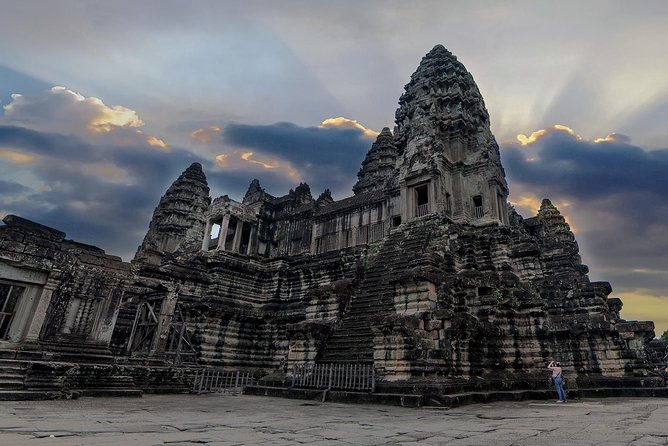
Reviewed · ANGKOR WAT TOURS
3-Day Angkor Wat & All Interesting Major Temples & Kulen Mount Waterfall
Ancient stones, jungle roots, and a mountain swim make this a full Cambodian adventure. I like the private air-conditioned vehicle and the chance to see both famous Angkor temples and quieter sites such as Ta Nei. I also like that the tour includes a licensed English-speaking guide, cool water, wet towels, road tolls, and hotel pickup and return. The main drawback is the pace: this is a packed three days, with an early sunrise and long temple walks in the heat.
The tour costs $248.50 per person, but you should add $62 for the Angkor temple pass, $20 for Phnom Kulen, and about $5 per lunch. I especially value the guide-led explanations, since the monuments are easier to understand when you know who built them and why. Guides including Chhay, Pal Saruon, Chandri, Em Somuch, and Small Mony have been praised for clear storytelling, flexible timing, and good photo stops.
In This Review
- Key points to know before booking
- A packed introduction to Angkor Wat
- Angkor Thom, from Victory Gate to the royal terraces
- Phnom Bakheng sunset and the limits of a long day
- Phnom Kulen adds water and a change of mood
- Sunrise, Jayavarman VII, and the eastern temples
- The Roluos Group and Angkor before Angkor Wat
- Artisans Angkor and Old Market as optional endings
- What the private format is worth
- Cost, effort, and who should book
- Should you book this Angkor tour?
- FAQ
- How long is the experience?
- Is hotel pickup included?
- Is this a private tour?
- Is transportation included?
- Is an English-speaking guide included?
- Are temple admission fees included?
- Is the Phnom Kulen entrance fee included?
- Are meals included?
- What time does the sunrise day begin?
Key points to know before booking
- Three very full days: You cover Angkor Wat, Angkor Thom, the Roluos Group, Banteay Srei, Phnom Kulen, and many smaller temples.
- Private touring: Only your own group participates, with a private vehicle, driver, and English-speaking guide.
- Waterfall time at Phnom Kulen: The five-hour visit includes the 1000 Lingas riverbed, a reclining Buddha, and swimming at a waterfall.
- Extra costs matter: The advertised price does not include the $62 Angkor pass, $20 Kulen entrance fee, or meals.
- Sunrise and sunset are included: Day one may finish at Phnom Bakheng for sunset, while day three begins at 5:00am for Angkor Wat sunrise.
- Strong guide service: The best part of the experience is the personal interpretation, with guides praised for temple knowledge, history, flexibility, and photo advice.
A packed introduction to Angkor Wat
Your guide meets you at your hotel or guest house at 8:00am on the first day. You stop to buy the required temple pass, then head to Angkor Wat, the monument that gives the whole visit its scale and purpose.
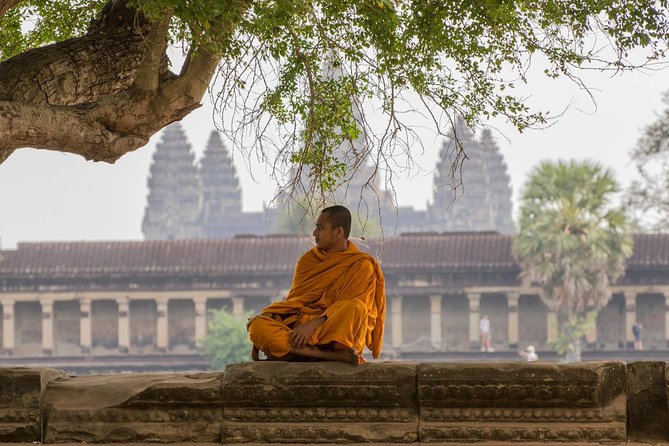
Allowing two and a half hours here is sensible. Angkor Wat is not a quick photo stop. You have time to see its galleries, towers, courtyards, and carved scenes while your guide explains its Hindu beginnings and later Buddhist use. The sheer size can be tiring, but it also gives the first morning a strong sense of occasion.
The ticket is not included, so budget carefully before you arrive. The Angkor pass and Kulen fee add $82 per person to the headline price. That brings the basic tour and entrance cost to $330.50 per person before lunch.
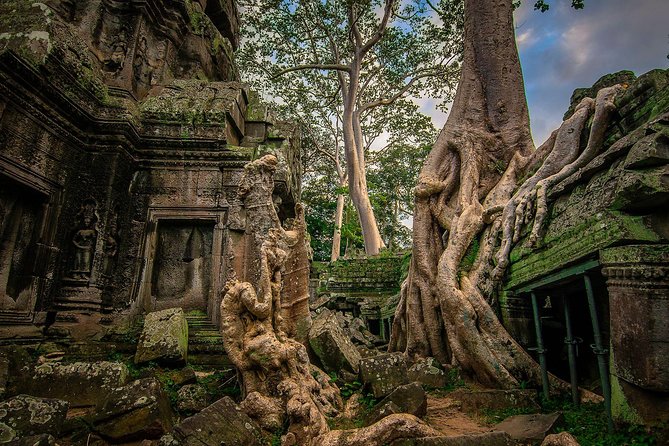
After Angkor Wat, you continue to Ta Prohm on the small circuit road. This is the temple associated with the Tomb Raider film, but the movie connection is only part of its appeal. Huge tree roots press across walls and doorways, creating the famous meeting of stone and forest.
Ta Prohm is one of the busiest stops, and two hours allows time to move beyond the first striking viewpoint. Your guide can help explain how the temple fits into the building program of King Jayavarman VII. The setting is dramatic, but uneven surfaces and heat make sturdy shoes and water important.
Ta Nei offers a welcome change. It is smaller, surrounded by large trees, and less restored than the headline temples. I like this stop because it gives you a quieter look at Angkor, with fewer polished surfaces and more signs of age. Forty-five minutes is enough to explore without adding too much strain.
More ways to see Angkor Wat:
- Angkor Wat Sunrise or Sunset Tour with Guide from Siem Reap
★ 5.0 · 12,109 reviews - Siem Reap: Angkor Wat: Small-Group Sunrise or Sunset Tour
★ 5.0 · 9,444 reviews - Siem Reap: Angkor Wat 2-Day Tour with Sunrise and Sunset
★ 4.9 · 4,429 reviews
Angkor Thom, from Victory Gate to the royal terraces
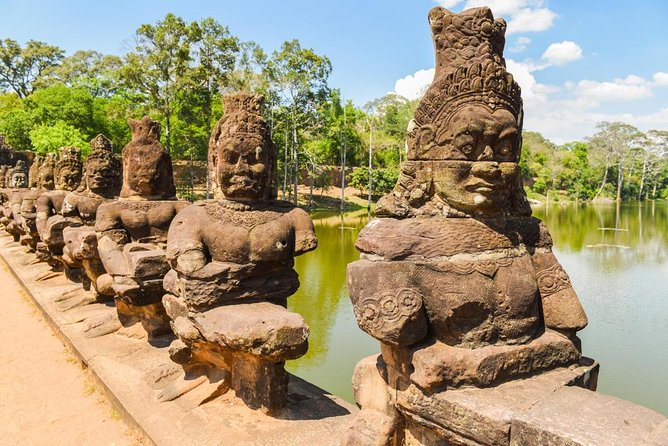
The eastern Victory Gate is a short stop, only about ten minutes, but it gives you a useful entry point into Angkor Thom. You can take photos before moving on to Bayon, the city’s central temple.
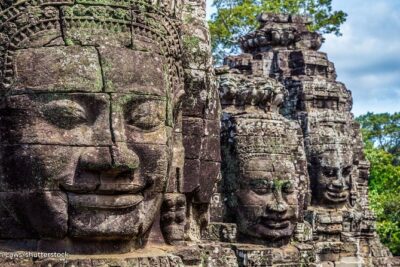
Bayon is famous for its towers carved with enormous calm faces. The tour description counts 49 towers and 196 faces associated with the Buddhist bodhisattva Avalokitesvara. Numbers vary in popular explanations, but the important point is the visual effect: faces appear at different heights and angles as you walk through the temple.
The scheduled visit is 45 minutes. That works for a first look, though you may wish for longer if you enjoy carved details. A private guide helps here because the temple can feel confusing from ground level. A good guide can point out the faces, bas-reliefs, and changing views instead of leaving you to wander without context.
Nearby Baphuon is an earlier Hindu temple, built before Angkor Wat in the 11th century. Behind it is a reclining Buddha added in the 16th century. The stop lasts about 30 minutes, so expect an overview rather than a slow architectural study.
Phimeanakas is a small but important pyramid temple in the former royal area of Angkor Thom. It dates to the 10th century and can be visited along with the ancient Royal Enclosure Wall. At 15 minutes, this is a brisk stop, but it helps you picture Angkor Thom as a royal city rather than a collection of isolated monuments.
The nearby Terraces of the Elephants and the Leper King are also short visits. The Elephant Terrace was used by kings to view returning armies, and elephant carvings line its platform. The Leper King Terrace has more intricate carved surfaces and sits just north of it.
These stops work best as part of the larger route. On their own, ten minutes may feel brief. Together, they explain how royal ceremony, warfare, religion, and public display shaped Angkor Thom.
Phnom Bakheng sunset and the limits of a long day
The first day may finish at Phnom Bakheng, where you climb the hill to wait for sunset. The schedule allows about two hours, partly because access is limited and waiting may be required.
This is an optional ending. If you do not want to wait for sunset, you can skip it. That flexibility is valuable because day one already includes many temples, walking, and time in the heat. I would treat Phnom Bakheng as a bonus, not a reason to book the tour.
If you want the sunset, expect this to be the point where fatigue catches up with you. Ask your guide about the timing on the day, since the experience depends on the access limit and the size of the crowd. Private touring does not mean every site will feel private.
Phnom Kulen adds water and a change of mood
Day two leaves the main Angkor area for Phnom Kulen National Park, more than 60 kilometers away. The visit lasts about five hours, making it the longest single stop on the schedule.
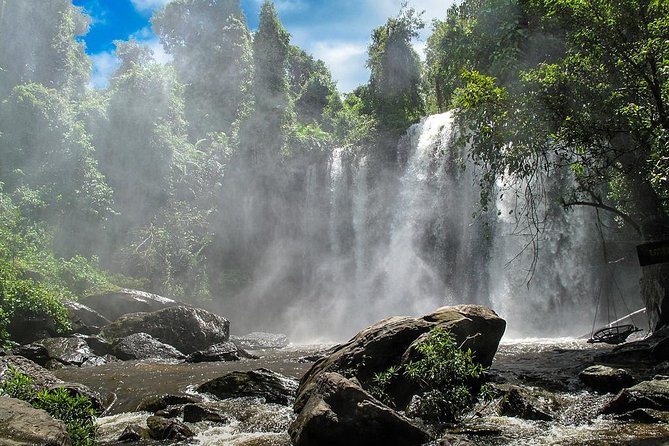
Phnom Kulen is not simply another temple complex. At the 1000 Lingas site, sculptures cover the riverbed, representing lingas linked with Shiva. You also visit the rock reclining Buddha and have time at a waterfall.
The chance to swim is the clear reward after the temple-heavy first day. Pack suitable swimwear, a towel, and dry clothing. The supplied information confirms swimming at the waterfall, but it does not specify changing facilities, so keep your belongings organized and ask your guide what arrangements apply on the day.
The long drive is the tradeoff. Phnom Kulen sits well beyond the central park, so this day is less efficient if your only goal is temple sightseeing. I think the change is worth it for anyone who wants nature and a break from carved stone, but temple-focused visitors may prefer to spend more time inside Angkor.
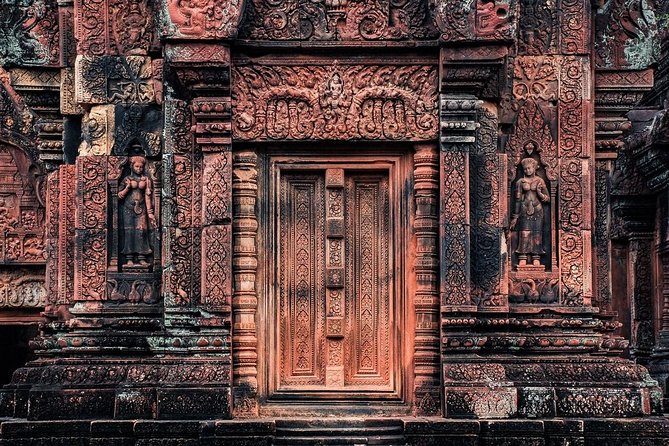
After Phnom Kulen, you visit Banteay Srei. This Hindu temple was built in the latter half of the 10th century from pink sandstone and was dedicated mainly to Shiva. Its smaller scale and detailed stonework make it different from Angkor Wat and Bayon.
One hour is a useful amount of time here. Banteay Srei is often one of the most memorable temples because the carvings feel especially precise, while the pink sandstone gives the site a distinct color.
Banteay Samre follows for about 45 minutes. This 12th-century Hindu temple is often compared architecturally with Angkor Wat. It is a good middle stop after Banteay Srei, though the day’s long drive and waterfall visit can leave you tired.
Pre Rup finishes the temple program on day two. Built in the late 10th century and dedicated to Hindu gods, it is a temple mountain with strong vertical lines. The name is associated with turning the body, and the site is linked in interpretation with funerary practice.
The 30-minute visit keeps the day moving. If you prefer quiet time at each monument, tell your guide early. The private format allows some adjustment, though the route contains too many stops for every site to receive an unhurried visit.
More multi-day routes in Siem Reap:
- Angkor 2-Day Sunset & Sunrise Small-Group Tour
★ 5.0 · 2,567 reviews - Siem Reap: Angkor Sunrise 1- or 2-Day Guided Temples Tour
★ 4.9 · 1,132 reviews - 2-Day Angkor Wat With Small, Big Circuit and Banteay Srei Tour
★ 5.0 · 545 reviews - Siem Reap: 2-Day Temple Highlights Sunrise and Sunset Option
★ 4.9 · 445 reviews
Sunrise, Jayavarman VII, and the eastern temples
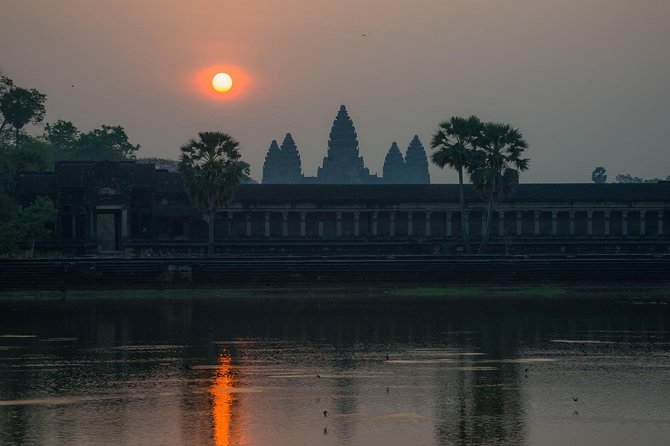
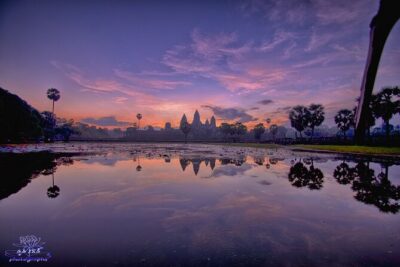
Day three begins at 5:00am. You return to Angkor Wat for sunrise, with about one hour and 45 minutes planned for the stop.
This early start is not for everyone. You need enough energy for another full day afterward, and sunrise conditions cannot be guaranteed. Still, seeing Angkor Wat in the morning light gives the monument a different mood from the first day’s daytime visit. If sunrise matters to you, keep the evening before as quiet as possible.
After breakfast, the route turns to Preah Khan. This large Buddhist temple was built by King Jayavarman VII and dedicated to his father. It was once a major monastic and religious center, and the one-hour visit gives you room to appreciate its long corridors, courtyards, and carved remains.
Preah Khan is one of the most rewarding stops for people who want more than the famous postcard sites. It feels extensive and layered, so stay close enough to your guide to hear the explanation. The site can also be tiring because of its size.
Neak Pean is a small island temple in the middle of the last baray, or reservoir. The visit lasts about 30 minutes. Its setting makes it a pleasant contrast to the enclosed temple interiors, but the experience depends on the water level and the approach available at the time.
Ta Som is another small Buddhist temple, located east of Neak Pean. It also receives about 30 minutes. Like Ta Nei, it gives you a smaller-scale look at Angkor, with trees and less monumental proportions.
Eastern Mebon is larger, rising in three levels with five towers and large elephant statues at the corners. One hour is scheduled here, enough to understand its temple-mountain design and walk around the main structure.
The Roluos Group and Angkor before Angkor Wat
The afternoon continues to Lolei, Preah Ko, and Bakong in the Roluos Group. These temples matter because they represent an earlier phase of Khmer construction.
Lolei is a small 9th-century Hindu temple, and the visit lasts about 15 minutes. Preah Ko was the first temple built in the ancient city of Hariharalaya, and you have around 30 minutes there.
Bakong is the largest of the three and the first major sandstone temple mountain built by Khmer rulers. The scheduled hour gives it the attention it deserves. It is a useful reminder that Angkor Wat did not appear from nowhere. The empire developed its religious and architectural ideas over generations.
Lunch is taken at a restaurant along the route, with meals not included. The listed estimate is about $5 per person, depending on the menu. Carrying extra money for food is wise, especially on the long second day and the early sunrise morning.
Artisans Angkor and Old Market as optional endings
Artisans Angkor is a 30-minute stop focused on traditional crafts such as stone carving, wood carving, lacquering, gilding, and silk processing. This adds a modern cultural angle after days of ancient monuments.
The stop is optional. If you are interested in Cambodian craft, it can help connect temple decoration with living skills. If you are tired or prefer more free time in Siem Reap, you can ask to skip it.
The final optional stop is Psar Chaa, the Old Market, in central Siem Reap. It lasts about 30 minutes and gives you time to browse a local market setting. Again, the private format makes it possible to leave this out if you would rather return to your hotel.
What the private format is worth
The strongest practical feature is the private vehicle. You are not waiting for a large group at every gate, and you can discuss small changes with your guide. The air conditioning matters after hours outside, while cold water and wet towels are welcome on hot temple days.
The driver and guide are separate roles. That means your guide can focus on explaining the monuments while the driver handles the road. Specific guides praised for this experience include Chhay, Pal Saruon, Chandri, Em Somuch, and Small Mony. Chhay is repeatedly described as passionate, well informed, and good at choosing photo spots. Pal Saruon is praised for detailed explanations, while Em Somuch has led a shaded shortcut walk that added variety to a hot day.
Do not assume that every guide will deliver the exact same style. The clearest strength is the provider’s guide service, but your experience will depend on the person assigned. At booking, it is reasonable to state whether you want more history, more photography, a slower pace, or less time at optional stops.
Cost, effort, and who should book
At $248.50 per person, this is not a bare-bones temple transfer. You receive three days of private transport, a driver, a licensed English-speaking guide, hotel pickup and return, parking fees, road tolls, drinking water, and wet towels.
The real minimum cost is higher. Add $62 for the Angkor pass and $20 for Phnom Kulen, bringing the total to $330.50 before food. With three lunches at roughly $5 each, plan on about $345.50 per person, although the food estimate depends on the menu.
I see good value here if you want a guide and private transport across a wide area. Arranging Angkor Wat, remote temples, Phnom Kulen, and the Roluos Group separately would require more planning. The value is weaker if you want slow temple study, long breaks, or a relaxed holiday.
The tour suits active adults, couples, families, and small groups who want to cover a lot in limited time. It is less suitable if you dislike early mornings, long drives, repeated walking, or a tightly filled schedule. Most people can participate, but the physical demands should be considered before booking.
Free cancellation is available if you cancel at least 24 hours before the local start time. Changes or cancellations made within 24 hours are not accepted for a refund.
Should you book this Angkor tour?
Book it if you want the major Angkor temples plus Phnom Kulen, and you value a private guide who can explain what you are seeing. The blend of monumental sites, quieter ruins, an old temple group, traditional crafts, and a waterfall makes the three days varied.
Skip it if you want a gentle pace or if Angkor Wat alone is your main goal. For most people with only a few days in Siem Reap, I like the balance, provided you budget for the extra tickets and accept that day one and day three begin or end at demanding hours.
FAQ
How long is the experience?
The experience lasts approximately three days.
Is hotel pickup included?
Yes. Pickup begins at your hotel or guest house, and the tour ends with drop-off at your hotel.
Is this a private tour?
Yes. Only your own group participates in the private activity.
Is transportation included?
Yes. A private air-conditioned vehicle with a driver is included, along with parking fees and road tolls.
Is an English-speaking guide included?
Yes. The tour includes a licensed English-speaking guide.
Are temple admission fees included?
No. The Angkor Wat and other Angkor temple pass costs $62 per person.
Is the Phnom Kulen entrance fee included?
No. The entrance fee for Phnom Kulen is $20 per person.
Are meals included?
No. Meals are separate. Lunch is estimated at about $5 per person, depending on the menu.
What time does the sunrise day begin?
The guide meets you at your accommodation at 5:00am on day three for sunrise at Angkor Wat.
Newest reviews from Siem Reap
- War Museum, Killing Field, and APOPO Hero RATs Tour★ 5.0 · 7 reviews
- Angkor Wat at Sunrise★ 4.0 · 7 reviews
- Siem Reap Angkor Airport Taxis (from Airport to Hotel)★ 5.0 · 44 reviews
- Secret Temples of Angkor – Guided Tour in Siem Reap★ 5.0 · 6 reviews
- Short Cycling at Countryside★ 5.0 · 29 reviews
- Cambodian Cooking Class and Oxcart Ride with Local Village Tour★ 5.0 · 4 reviews
- SIEM REAP E-BIKE HALF-DAY COUNTRYSIDE (25-30 km)★ 4.0 · 1 review
- Unveiling the Mystical Beauty of Phnom Kulen National Park★ 5.0 · 6 reviews
Angkor Wat Tours, compared.
Angkor Wat Sunrise or Sunset Tour with Guide from Siem Reap
Read our review →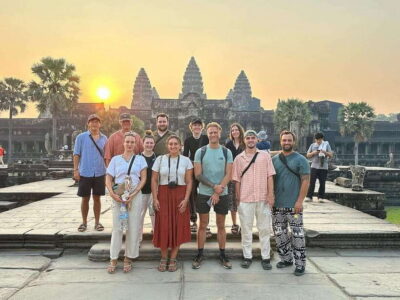
Angkor Wat: Small-Group Sunrise or Sunset Tour
Read our review →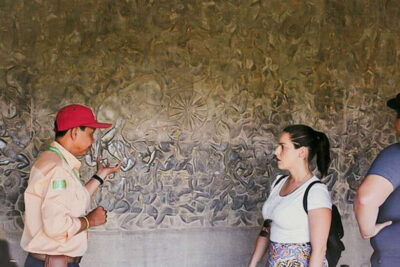
Angkor Wat 2-Day Tour with Sunrise and Sunset
Read our review →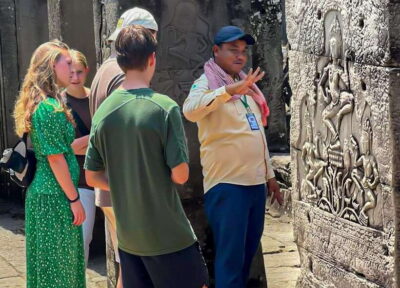
Angkor Wat Sunrise tour with Small – Group and Guide tours
Read our review →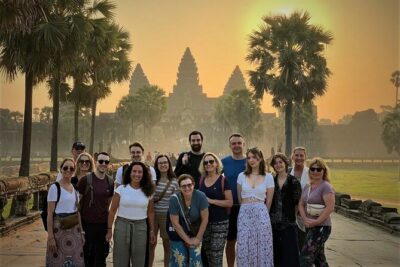
Angkor Wat Highlights and Sunrise Guided Tour from Siem Reap
Read our review →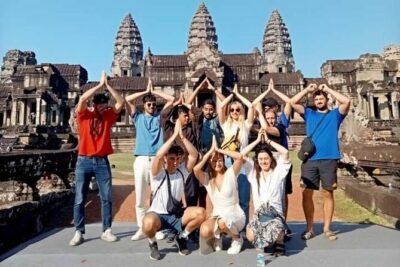
Angkor Wat Sunset Small Group Tour with Lunch Included
Read our review →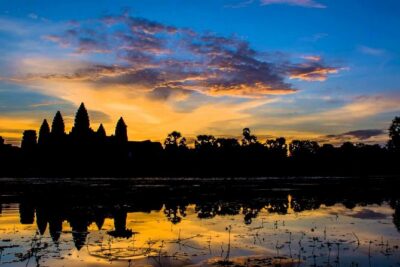
Full-Day Angkor Wat Sunrise Private Tour with Guide from Siem Reap
Read our review →Browse the lists this tour appears in