
Reviewed · 3-DAY EXPERIENCES
3-Day private Tour of Siem Reap with Pick Up
Ancient temples are only half the story. This three-day private tour pairs Angkor’s famous monuments with rural markets, bamboo sticky rice, Tonle Sap communities, and traditional crafts. I like the mix of major sights and everyday Cambodia, and I like that hotel pickup, a private vehicle, an English-speaking guide, and bottled water are included. The main drawback is the packed schedule, with long temple walks, early starts, and extra costs for meals, accommodation, and the Angkor entrance pass.
Guide Rith receives specific praise for making the experience enjoyable, and that personal touch matters on a route with so many stops. You should also note that the tour is priced at $175 per person, with group discounts offered, so its value improves when several people share the private arrangements.
In This Review
- Key points at a glance
- Why this three-day route works
- Day one: bamboo rice, markets, and Beng Mealea
- Beng Mealea: the day’s most atmospheric temple
- Banteay Srei and the finest small carvings
- Day two: sunrise at Angkor Wat and the faces of Bayon
- Angkor Thom’s south gate and Bayon
- Baphuon, Phimeanakas, and the royal terraces
- Ta Prohm: roots, ruins, and a famous film connection
- Day three: markets and life on Tonle Sap
- Kampong Phluk and the changing water
- Artisans Angkor and Khmer craft
- Comfort, clothing, and timing
- Who will get the most from the $175 price?
- Should you book this Siem Reap tour?
- FAQ
- Is hotel pickup included?
- Is the tour private?
- Is the Angkor Wat entrance ticket included?
- Do children under 12 need a temple ticket?
- Are meals and accommodation included?
- What should I wear for the temples?
- Can I cancel for a full refund?
Key points at a glance
- Beng Mealea takes you beyond the main Angkor circuit: You’ll see a partly ruined jungle temple with roots, collapsed galleries, and a quieter mood than Angkor Wat.
- The Angkor Wat sunrise plan uses the eastern entrance: Starting in darkness helps you approach the temple away from the usual front-facing crowd.
- Banteay Srei rewards close inspection: Its red sandstone carvings are among the finest in Cambodia.
- Day three brings you to Tonle Sap life: Kampong Phluk shows stilt houses, fishing work, flooded trees, and seasonal changes in the water.
- You get more than temple photographs: Markets, palm sugar, Khmer noodles, woven goods, stone carving, and village life broaden the trip.
- Private transport keeps the long route manageable: Hotel pickup and drop-off save you from arranging separate rides across three full days.
Why this three-day route works
Siem Reap is easy to reduce to Angkor Wat, Bayon, and Ta Prohm. This tour gives those temples their due, then adds places that explain how people live around them. You’ll visit markets where residents buy fish and vegetables, villages producing food and palm sugar, and a lake community shaped by changing water levels.
That variety is the strongest reason to consider the trip. Day one reaches the outlying temples. Day two focuses on the great Angkor circuit. Day three shifts from stone monuments to fishing, handicrafts, and local life.
The private format also changes the pace. Only your group takes part, so you can ask questions, pause for photographs, and spend more time at a place that catches your interest. Still, private does not mean leisurely. The schedule is full, and several stops involve walking over uneven temple ground.
At $175 per person, the price is reasonable for a three-day private service if you are traveling with companions and make good use of the vehicle and guide. It covers transport, guiding, hotel pickup and drop-off, and water. You will need to budget separately for accommodation, food, and the Angkor temple ticket.
More multi-day routes in Siem Reap:
- Siem Reap: Angkor Wat 2-Day Tour with Sunrise and Sunset
★ 4.9 · 4,429 reviews - Angkor 2-Day Sunset & Sunrise Small-Group Tour
★ 5.0 · 2,567 reviews - Siem Reap: Angkor Sunrise 1- or 2-Day Guided Temples Tour
★ 4.9 · 1,132 reviews
Day one: bamboo rice, markets, and Beng Mealea
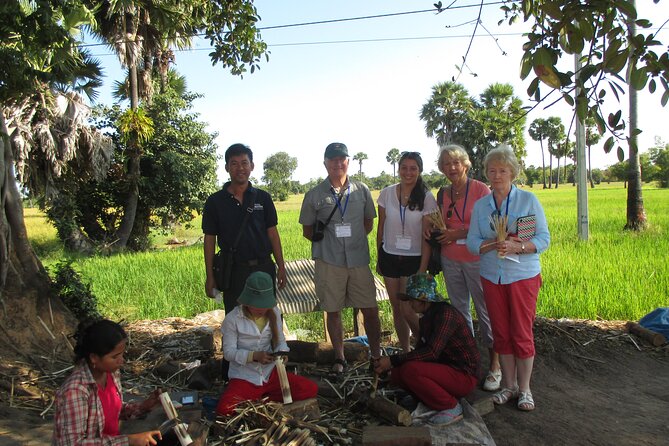
The first day begins with a look at Cambodian food culture at Wat Khsach. Bamboo sticky rice is made with sweet rice, black beans, coconut cream, and other ingredients packed into a section of bamboo and cooked over heat. You can taste it along with seasonal fruit and take photographs.
This is a short stop, listed at about 20 minutes, so think of it as an introduction rather than a cooking class. It works well because it gives you something concrete to connect with later village visits: Cambodia’s food traditions are part of the journey, not just fuel between temples.
Next comes Damdek Market, in Sonikhum Town. The market serves local residents shopping for vegetables, meat, fruit, freshwater fish, and household goods. A 40-minute visit gives you time to look around without turning the stop into a rushed photo opportunity.
I like this kind of market visit because it shows ordinary routines. You can watch how a local market functions, but you should be respectful with cameras and remember that people are shopping, not performing for visitors.
Beng Mealea: the day’s most atmospheric temple
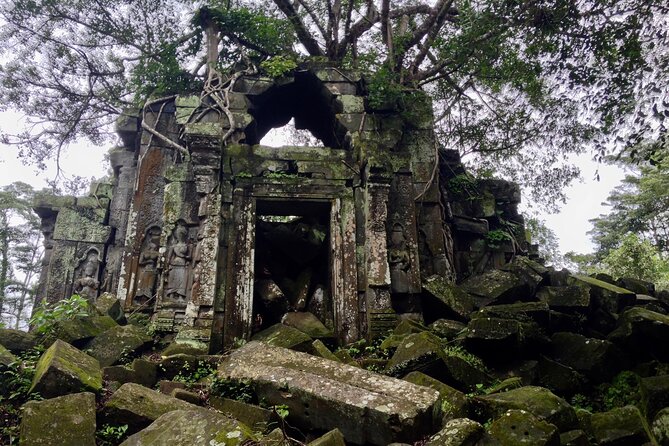
The drive to Beng Mealea passes through rural villages, making the journey part of the experience. The temple lies outside the main Angkor area and was built in the 11th century under King Suryavarman II. It shares several design features with Angkor Wat, including encircling galleries and four gates, but it feels more broken and untamed.
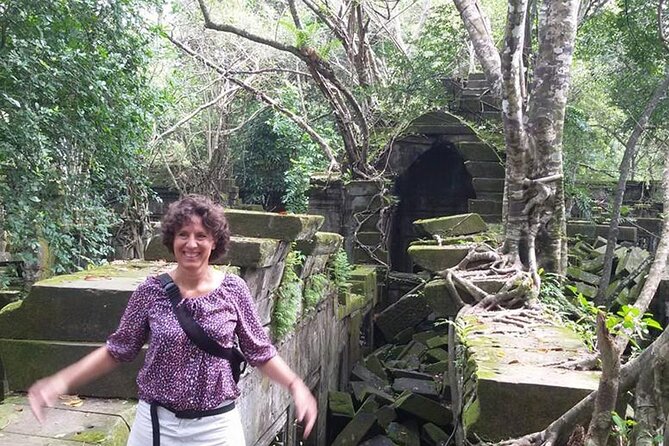
You’ll have about two hours here. Some sections remain remarkably intact, while other parts have collapsed into piles of stone. Tree roots cover walls and doorways, and the site’s partial isolation gives it a quieter, more mysterious character than the headline temples near Siem Reap.
The appeal is not perfect preservation. It is the contrast between ordered Khmer architecture and ruins reclaimed by vegetation. If you prefer polished monuments with clear paths and fewer obstacles, Beng Mealea may feel rough around the edges. If you enjoy atmosphere and photographs of weathered stone, it is one of the best stops on the route.
Banteay Srei and the finest small carvings
Banteay Srei receives about two hours and deserves careful attention. Built largely from red sandstone, the temple is known for its precise reliefs and detailed decoration. It was constructed in the 10th century by a king’s counselor rather than by a monarch, which makes it unusual among the major Angkor temples.
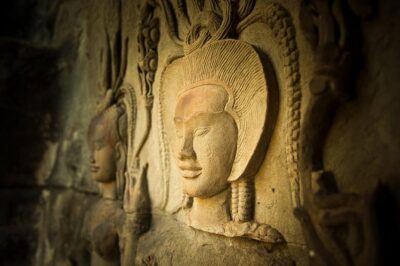
The scale is smaller than Angkor Wat, but the carvings reward close viewing. Look for the fine work around doorways and walls rather than judging the temple by size. The red sandstone also gives the site a different color and feel from the gray stone used at many other Angkor monuments.
Day one may also include the Cambodia Landmine Museum and Relief Center, the butterfly center near Angkor Wat, and Preah Dak Village. The museum explains the dangers of landmines and supports education for Cambodian youth. The butterfly center uses a large netted garden to show Cambodian butterflies and moths while connecting tourism with conservation.
Preah Dak is known for Khmer noodles and palm sugar production. A 40-minute visit gives you a look at local food and village work. Because the day already includes several major stops, check the exact order and timing with your guide, especially if you want to spend longer at Beng Mealea or Banteay Srei.
A few more options around Siem Reap worth reading up on
- Angkor Wat Sunrise or Sunset Tour with Guide from Siem Reap
★ 5.0 · 12,109 reviews - Siem Reap: Angkor Wat: Small-Group Sunrise or Sunset Tour
★ 5.0 · 9,444 reviews - From Siem Reap: Kampong Phluk Floating Village Tour by Boat
★ 4.9 · 6,979 reviews - Sunset tour of Kampong Phluk stilts home village on the Tonle Sap
★ 5.0 · 4,865 reviews
Day two: sunrise at Angkor Wat and the faces of Bayon
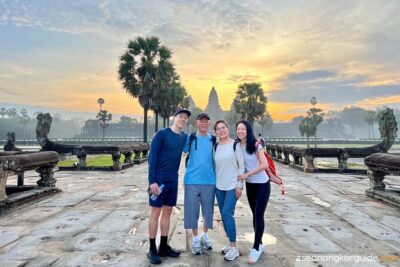
Day two starts before dawn. At Angkor Wat, you enter from the less-used eastern side in darkness and follow a path toward the area used for sunrise viewing. The early start is demanding, but it helps you beat some of the heat and gives the visit a stronger sense of occasion.
The sunrise itself depends on clouds and conditions, so you should treat it as an opportunity rather than a guarantee of a perfect reflection. Afterward, you’ll explore the temple’s central chambers and bas-reliefs with the guide’s explanations of the myths, stories, and historical scenes carved into the walls.
Angkor Wat is the largest religious monument in the world and was built in the 12th century. It is also unusually well preserved and has remained an active religious center since its foundation. Allow about two hours at this stop, though the full morning can feel longer once you add walking, waiting, and photography.
You need to buy the Angkor entrance ticket separately. The guide is expected to send a link for purchasing the temple e-ticket several days in advance. Children under 12 receive free temple admission, according to the tour information.
Angkor Thom’s south gate and Bayon
The South Gate of Angkor Thom is a short stop of about 30 minutes. A bridge lined with 54 stone figures on each side leads toward one of the gates of the ancient capital. The figures represent the scale and symbolism of the Khmer imperial city before you even enter the temple zone.
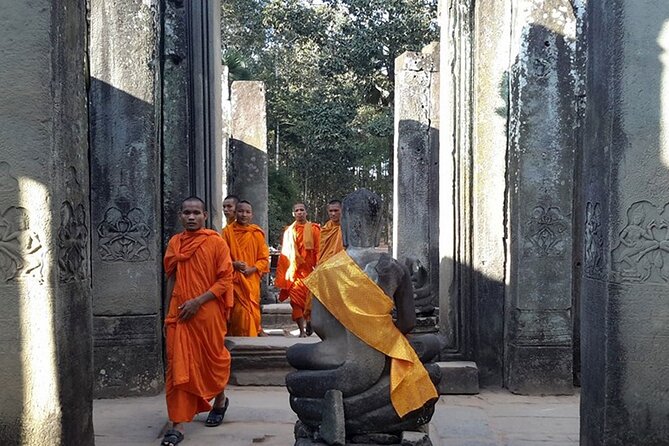
Bayon follows with about an hour. Its famous towers carry more than 200 enormous stone faces, each with a calm expression. The temple also contains two sets of bas-reliefs. One set shows royal and historical events along with everyday Khmer scenes, while the inner reliefs present mythological subjects.
Bayon can be confusing without a guide because its towers, galleries, and narrow passages fit together in a crowded plan. This is one place where a good explanation adds real value. Rith’s praised ability to keep the day enjoyable would be useful here, particularly when the heat and crowds begin to wear you down.
Baphuon, Phimeanakas, and the royal terraces
Baphuon is a three-tiered temple mountain northwest of Bayon. It dates to the mid-11th century and was once the state temple. The structure measures about 120 meters east to west and 100 meters north to south at its base, with a height of roughly 34 meters excluding its tower.
The visit lasts about an hour. Its raised form and long approach make it physically more demanding than a quick ground-level monument, so flat, comfortable shoes are a must.
Phimeanakas, also called the celestial temple, sits inside the walled royal enclosure of Angkor Thom. Built in the shape of a three-tier pyramid, it dates to the late 10th and early 11th centuries. The stop is scheduled for about 45 minutes.
The Terrace of the Elephants takes about 40 minutes. Its carved facade runs for roughly 350 meters and served as a viewing stand for ceremonies and royal audiences. The Terrace of the Leper King, also allotted 40 minutes, is a U-shaped structure associated by some with royal cremation rites. Its modern name comes from a sculpture found there, depicting Yama, the Hindu god of death.
These stops are important, but the middle of the day may feel monument-heavy. I would keep your expectations realistic: you are seeing several significant sites, not spending a relaxed hour at each one with unlimited time for sketching or quiet reflection.
Ta Prohm: roots, ruins, and a famous film connection
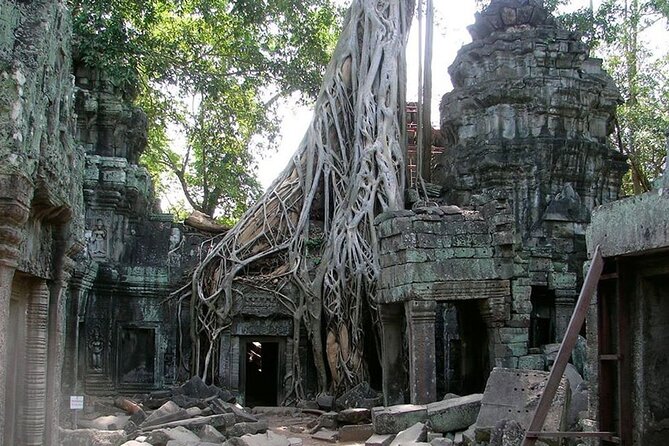
Ta Prohm is the final major temple of day two and receives about an hour. Its trees, roots, fallen stones, and jungle setting create the most immediately recognizable temple photographs in the Angkor area. It is also known as the Tomb Raider temple.
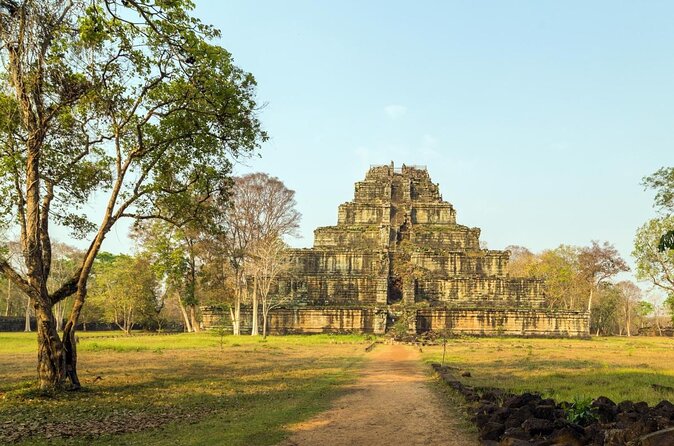
The site was built in the 13th century and was part of a religious complex connected with an ancient Khmer university. Unlike some restored temples, Ta Prohm retains much of the condition in which it was found, although conservation work and visitor management continue.
This is a popular stop, so the early start on day two does not guarantee quiet everywhere. Still, the private vehicle and guide may help with the order of visits. Two short surprise stops in Angkor Thom are also included, described as places that most people do not see. No detailed information is provided about them, so consider them a pleasant extra rather than a central reason to book.
Day three: markets and life on Tonle Sap
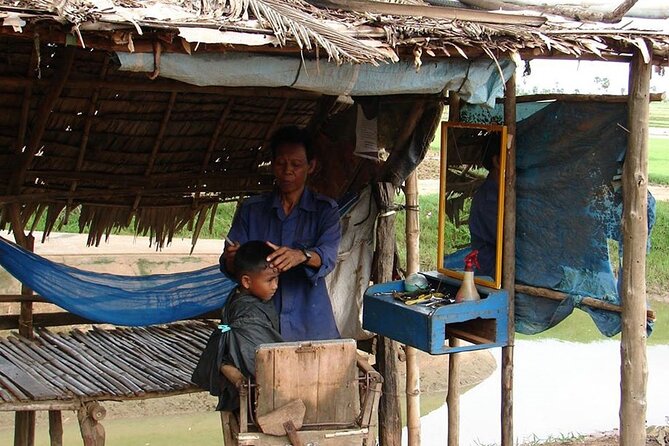
The last day begins at Rolous Market, located beside the Rolous River. It is described as the oldest Khmer market in the area and serves local residents buying fresh produce, meat, fruit, freshwater fish, and household goods. You’ll have about 40 minutes.
The market visit echoes Damdek Market from day one, but the setting and local rhythm may differ. If you enjoy seeing how people shop and work, the repetition reinforces the point that Cambodia is more than its monuments. If you mainly want temples, this day will feel less essential.
Kampong Phluk and the changing water
Kampong Phluk is the heart of day three. The community sits on Tonle Sap, Cambodia’s major freshwater lake and a key source of fish and protein for the country. You’ll see fishing villages, flooded mangrove trees, and homes built on stilts to handle changing water levels.
Many buildings rise between six and nine meters above the ground. During the wet season, fishing is central to local livelihoods. In the dry season, from November through April, the water recedes and some residents turn to farming to supplement their income.
The tour includes a boat-related visit to the village area, with about an hour listed for the main Kampong Phluk stop and another hour for the community portion. The exact appearance of the flooded forest depends on the season and water level. That seasonal change is part of the point, but it also means you should not expect the same view year-round.
You’ll have the chance to see the local market, school, Buddhist temple, and fishing areas, then walk in parts of the village and speak with local people about daily work. This is a useful counterweight to the temple days because it connects the surrounding communities with the lake that supports them.
Artisans Angkor and Khmer craft
The final stop is Artisans Angkor, a Cambodian social business founded in 1992. It creates rural employment while supporting traditional Khmer crafts, including stone carving, wood carving, statue painting, lacquering, and silver plating.
You can visit the showroom and craft room for about an hour. This is a better stop than a generic souvenir shop because the organization’s stated purpose links sales with training, jobs, and the revival of local techniques. You can look at the finished work while seeing how the craft is made.
Lunch near the ancient temple complex is mentioned as part of the day’s plan, but meals are not included in the price. Confirm where and when lunch will take place so you can plan your budget and avoid assuming that food is covered.
Comfort, clothing, and timing
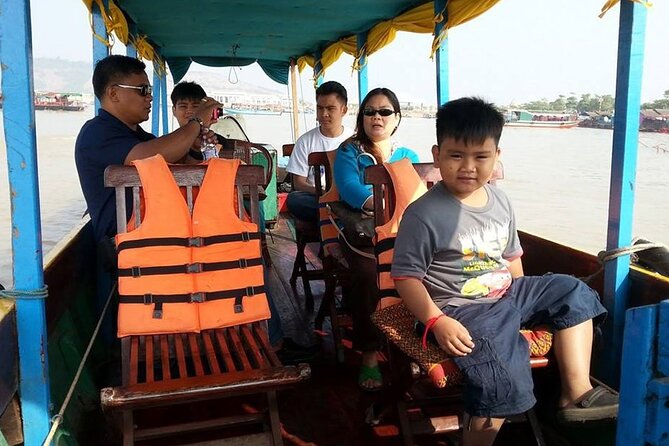
The tour provides a private comfortable vehicle, hotel pickup and drop-off, an English-speaking guide, and bottled water. Those basics matter in Siem Reap, where the route combines dusty rural roads, long temple days, and a pre-dawn departure.
Wear flat shoes with good support. You’ll walk across temple grounds, climb or approach raised structures, and encounter uneven surfaces at places such as Beng Mealea and Baphuon.
Sacred areas require clothing that covers your knees and shoulders. Pack light, breathable clothing that meets those rules, along with water and sun protection. The route is designed to help you avoid some crowds and escape the worst heat, but no three-day Angkor program can remove heat, walking, or popular sightseeing entirely.
Confirmation is provided at booking, and the tour is described as suitable for most people. It is private, so your group alone participates. Near public transportation is also noted, though hotel pickup and drop-off are already included.
Free cancellation is available if you cancel at least 24 hours before the start time. Cancellations or changes made within 24 hours are not refunded or accepted.
Who will get the most from the $175 price?
I would consider this tour a good fit for first-time visitors who want the major Angkor temples but also want food, markets, villages, crafts, and Tonle Sap in one organized plan. Families and small groups may appreciate the private vehicle and the ability to stay together without joining strangers.
It also suits photographers who want several different settings: red sandstone at Banteay Srei, jungle-covered stone at Ta Prohm, rural markets, bamboo food preparation, flooded trees, and stilt houses. The private format gives you more control over short photo stops, though the schedule remains busy.
The tour is less suitable if you want long, quiet periods at each temple or if you dislike early mornings. Day two is especially full, and the combination of Angkor Wat sunrise, Angkor Thom, several terraces, and Ta Prohm requires stamina.
At $175 per person, the calculation depends on your group size. The cost includes three days of private transport and guiding, so it can offer solid value when divided among several people. You should add the Angkor ticket, meals, accommodation, and any personal purchases to the final budget.
Should you book this Siem Reap tour?
Book it if you want a broad first look at Siem Reap without arranging separate transport for remote temples, Angkor’s core monuments, and Tonle Sap. Beng Mealea and Banteay Srei make day one especially strong, while Kampong Phluk gives day three a clear purpose beyond more stonework.
Before booking, confirm the precise day-one stops, the timing of lunch, the sunrise meeting time, and the current temple ticket process. Ask your guide how the optional museum and butterfly center fit into the day, since the schedule already contains plenty.
If you want Cambodia reduced to its most famous temples, a shorter Angkor tour may suit you better. If you want the temples placed alongside food, markets, village work, and local craft, this private three-day plan gives you a fuller picture. Rith’s strong praise is an encouraging sign, but the real value comes from choosing the tour for its range and arriving ready for long, active days.
FAQ
Is hotel pickup included?
Yes. Hotel pickup and drop-off are included in the tour.
Is the tour private?
Yes. Only your group participates in this private activity.
Is the Angkor Wat entrance ticket included?
No. The Angkor temple admission fee is not included. The guide will send a link for purchasing the temple e-ticket several days in advance.
Do children under 12 need a temple ticket?
Children under 12 have free temple entrance according to the tour information.
Are meals and accommodation included?
No. Accommodation and meals are not included. Lunch near the ancient temple complex is mentioned, but you pay for meals separately.
What should I wear for the temples?
Wear clothing that covers your knees and shoulders when entering sacred areas. Flat, comfortable shoes are recommended for walking.
Can I cancel for a full refund?
Yes, if you cancel at least 24 hours before the experience start time. Cancellations or changes made less than 24 hours before the start are not refunded or accepted.
Newest reviews from Siem Reap
- War Museum, Killing Field, and APOPO Hero RATs Tour★ 5.0 · 7 reviews
- Angkor Wat at Sunrise★ 4.0 · 7 reviews
- Siem Reap Angkor Airport Taxis (from Airport to Hotel)★ 5.0 · 44 reviews
- Cambodian Cooking Class and Oxcart Ride with Local Village Tour★ 5.0 · 4 reviews
- Secret Temples of Angkor – Guided Tour in Siem Reap★ 5.0 · 6 reviews
- Short Cycling at Countryside★ 5.0 · 29 reviews
- SIEM REAP E-BIKE HALF-DAY COUNTRYSIDE (25-30 km)★ 4.0 · 1 review
- Unveiling the Mystical Beauty of Phnom Kulen National Park★ 5.0 · 6 reviews
3-Day Experiences, compared.
3-Day Angkor Wat with All Interesting Major Temples, Banteay Srei & Beng Mealea
Read our review →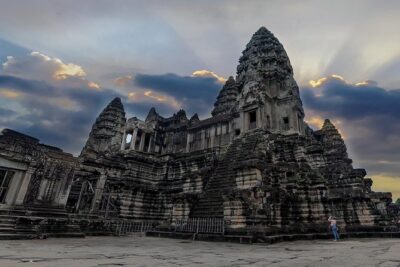
3-Day Angkor Wat & All Interesting Major Temples & Kulen Mount Waterfall
Read our review →
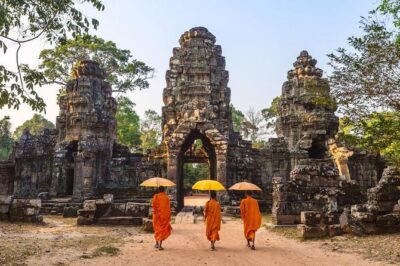
Best of Siem Reap 3-Day Private Tour to Angkor Wat & Tonle Sap
Read our review →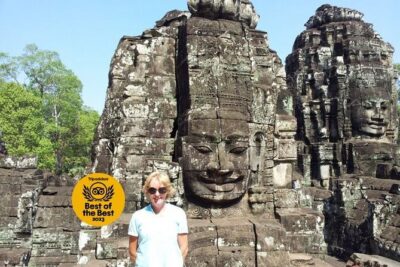
Private Siem Reap 3 Day Tour Discover All Highlight Angkor Temple
Read our review →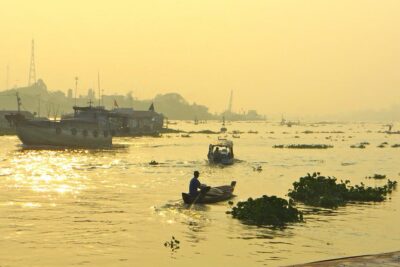
Private 3-Day Mekong Delta River Tour from Phnom Penh to Ho Chi Minh City
Read our review →Browse the lists this tour appears in