
Reviewed · MULTI-DAY TOURS
2-Day Eight Temple Tour with Optional Sunrise
Eight temples, two full days, and plenty to remember. This private Siem Reap tour brings together Angkor Wat, Bayon, Ta Prohm, Banteay Srei, and four other major Khmer sites without leaving you to arrange transport between them. I especially like the private guide, which lets you ask questions and set a comfortable pace, and the mix of famous ruins with quieter, less familiar temples.
The main drawback is cost planning. The $98 tour price does not include food, drinks, personal spending, accommodation, or the required three-day temple pass, listed at $62 per person. The tour is also packed with major sites, so anyone hoping to linger at every ruin may find two days a little brisk.
The itinerary makes good sense. Day one moves through Pre Rup, Banteay Samre, Banteay Srei, Ta Prohm, and Banteay Kdei. Day two focuses on Angkor Wat, Preah Khan, and Bayon, giving you both the grand centerpiece and the atmospheric ruins that make the Angkor area so memorable.
In This Review
- Key Points Before You Book
- Why This Two-Day Route Works
- Day One: Pre Rup and the First View Across the Countryside
- Banteay Samre and Strong Khmer Design
- Banteay Srei: Small Scale, Fine Carving
- Ta Prohm: The Tomb Raider Temple
- Banteay Kdei and the End of Day One
- Day Two: Angkor Wat Gets the Main Stage
- Preah Khan and a More Untouched Feel
- Bayon: Faces, Inscriptions, and Narrow Corners
- The Guide and Private Transport
- What the $98 Price Really Covers
- Clothing, Timing, and Practical Comfort
- Who Should Book This Temple Tour?
- FAQ
- How long is the Eight Temple Tour?
- Which temples are included?
- Is the tour private?
- Is hotel pickup included?
- Is the temple pass included in the price?
- Are food and drinks included?
- What should I wear to the temples?
Key Points Before You Book
- Eight important temples in two days: The route includes Angkor Wat, Bayon, Ta Prohm, Banteay Srei, Preah Khan, Pre Rup, Banteay Samre, and Banteay Kdei.
- Private touring pace: Only your group takes part, so you are not tied to the habits of a large coach group.
- A guide adds the context: Your guide explains the history and stories behind each temple rather than leaving you with stones and photographs alone.
- The temple pass costs extra: Budget another $62 per person for the required three-day pass.
- Sunrise may be available: The experience title includes an optional sunrise, but the supplied details do not explain its timing or added cost, so confirm this before booking.
- Dress for temple rules: Shoulders and knees must be covered when entering the temples.
Why This Two-Day Route Works
Siem Reap has a concentration of ancient temples that can be hard to organize independently, especially when you want to see both the headline sites and the outlying ruins. This tour solves the basic transport problem with hotel pickup in Siem Reap and private transport suited to your group size.
I like the way the route spreads the experience across two days. The first day is a broad sampler of different temple styles and moods. The second day saves the biggest names for a more focused visit: Angkor Wat, Preah Khan, and Bayon.
That structure also helps with expectations. This is not a slow, single-site archaeological tour. You are covering eight temples, and each stop has a different reason to be there. Some deserve careful attention to carvings. Others are best enjoyed for their setting, scale, or unusual arrangement.
The private format matters here. You can spend longer at a carved doorway that catches your eye, ask your guide to explain an inscription, or move on when your attention starts to fade. A group discount is advertised, but the exact terms are not provided, so ask how the price changes for additional people.
More Sunrise Tours in Siem Reap:
- Angkor Wat Sunrise or Sunset Tour with Guide from Siem Reap
★ 5.0 · 12,109 reviews - Siem Reap: Angkor Wat: Small-Group Sunrise or Sunset Tour
★ 5.0 · 9,444 reviews - Siem Reap: Angkor Wat 2-Day Tour with Sunrise and Sunset
★ 4.9 · 4,429 reviews
Day One: Pre Rup and the First View Across the Countryside
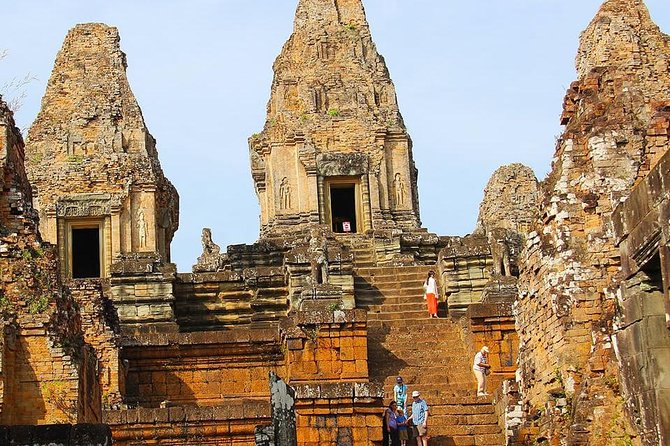
The first stop is Pre Rup, an early temple built by Khmer kings. It is often described as a mountain temple because of the steep climb to the towers at the top.
That climb is part of the point. From above, you get a broad view of the countryside around Siem Reap. The temple also gives you an early look at the classic Khmer approach of building upward toward a central tower. If stairs are uncomfortable for you, ask your guide about the practical route before climbing. The details provided do not describe accessibility arrangements.
Pre Rup is popular, so the private format can help you avoid being hurried along by a larger group. Still, the tour covers several more temples that day, so your guide will need to keep an eye on the clock.
Banteay Samre and Strong Khmer Design
Banteay Samre follows, offering a striking example of Khmer architecture built in a style similar to Angkor Wat. This stop is useful because it lets you compare the design language of a smaller temple with the vast scale of Angkor Wat itself.
You can spend about an hour exploring the towers and studying the carvings. That length of time gives you more than a quick photo stop, though it may feel short if you want to inspect every detail.
I would pay attention to how the temple feels as a complete structure. The towers, galleries, and carved surfaces work together, and a guide can help you understand what you are seeing rather than reducing the visit to a checklist.
Banteay Srei: Small Scale, Fine Carving
Banteay Srei is one of the most distinctive stops on the route. It was built from pink sandstone quarried in the Kulen Mountain range, and its carvings are especially intricate.
The temple is smaller than Angkor Wat, but that does not make it less important. Its appeal comes from the precision of the details. Doorways, towers, and reliefs reward slow looking, and this is a good place to ask your guide about the stories shown in the stone.
A local legend says the carvings were too beautiful to have been made by men, so women must have carved them. Treat that as a charming legend rather than established fact, but it gives the stop a memorable human touch.
Banteay Srei is also farther from the central cluster than some of the other temples, so the transport included in the tour is valuable. You avoid the effort of arranging another vehicle and can use the ride to rest between stops.
More multi-day routes in Siem Reap:
- Angkor 2-Day Sunset & Sunrise Small-Group Tour
★ 5.0 · 2,567 reviews - Siem Reap: Angkor Sunrise 1- or 2-Day Guided Temples Tour
★ 4.9 · 1,132 reviews - 2-Day Angkor Wat With Small, Big Circuit and Banteay Srei Tour
★ 5.0 · 545 reviews - Siem Reap: 2-Day Temple Highlights Sunrise and Sunset Option
★ 4.9 · 445 reviews
Ta Prohm: The Tomb Raider Temple
Ta Prohm is the tour’s most dramatic meeting of architecture and jungle. It is widely known as the Tomb Raider temple because it was used as a set for the film starring Angelina Jolie.
The movie connection draws attention, but the temple is worth seeing even if you have never watched the film. Ta Prohm has been left largely to the elements, with trees and jungle growth pushing through the old structure. The result is an uneasy, photogenic mix of collapse and survival.
This is a place where the private guide can help you look beyond the famous picture points. You will want photographs, but you should also notice the damaged galleries, narrow passages, and the way plant growth changes your sense of scale.
The drawback is predictable: a famous film location attracts many people. The tour promises that crowds will not hold your group up, but it cannot make a popular temple empty. A private visit gives you freedom within the site, not exclusive access to it.
Banteay Kdei and the End of Day One
Banteay Kdei is close to Ta Prohm and is known as the Citadel of Chambers or the Citadel of Monks’ Cells. This Buddhist temple provides a useful contrast after Ta Prohm’s famous jungle setting.
Its name hints at the spaces that make the site interesting: chambers, corridors, and areas that feel more intimate than the huge ceremonial scale of Angkor Wat. After several larger impressions, Banteay Kdei can slow the rhythm of the day.
By this point, you will have visited five temples. That is a productive day, but it is also a demanding one. Wear practical clothing, carry the cold water supplied by the tour, and keep your expectations realistic. You will see a great deal, but you will not have unlimited time at every doorway.
Day Two: Angkor Wat Gets the Main Stage
The second day begins with Angkor Wat, the reason many people come to Siem Reap. It is the largest temple built during the Khmer Empire and the centerpiece of the Angkor Archaeological Park, a UNESCO World Heritage site.
The scale is difficult to grasp from a single photograph. Give yourself time to take in the full design before chasing individual carvings. The outer areas, towers, galleries, and central structure all contribute to the sense of ambition.
This is where a guide’s storytelling can make a real difference. Angkor Wat is too large to understand through a quick circuit alone. A good guide can point out what matters, explain the temple’s place in Khmer history, and help you avoid spending the whole visit searching for the most familiar image.
The tour includes private transport and hotel pickup, but the supplied details do not give start times or a precise visit length. Ask for the expected pickup time, especially if you are considering the optional sunrise. The title includes that option, but no sunrise schedule or supplement is stated.
Preah Khan and a More Untouched Feel
After Angkor Wat, the route continues to Preah Khan, a 12th-century temple built by King Jayavarman VII. Unlike many restored temples, Preah Khan has seen little restoration work. It has been made safe for visitors, but the site retains a more weathered appearance.
That makes Preah Khan valuable after the order and scale of Angkor Wat. Here, you can get a stronger sense of time passing through stone. The remaining structures, broken sections, and plant growth create a less polished setting.
I would ask your guide to explain which parts have been stabilized for safety and which remain close to their older condition. The limited restoration is part of the appeal, but it also means you should pay attention to where you walk and follow site instructions.
Bayon: Faces, Inscriptions, and Narrow Corners
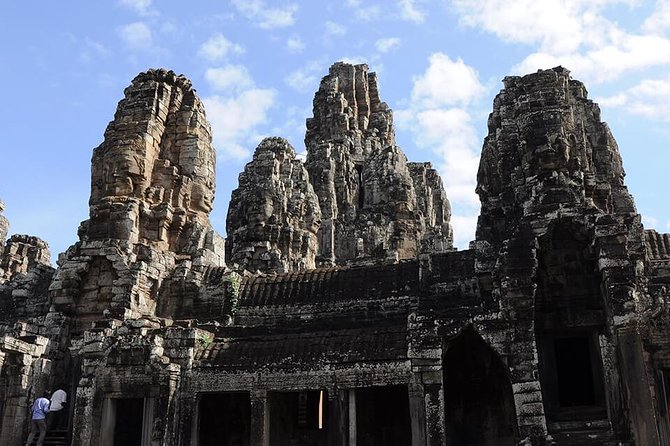
The last major stop is Bayon, often a favorite because of its many stone faces and maze of towers. It also contains traces of Hindu inscriptions as well as Mahayana and Theravada Buddhist inscriptions.
That mixture gives Bayon more than one story to tell. It reflects changes in religious practice and the long life of the temple complex. You can spend a few hours exploring its corners, which is a welcome amount of time for a site that rewards wandering and close inspection.
Bayon is not a simple open courtyard. Its passages and towers can make it feel confusing at first, which is exactly why the guide is useful. Let the guide give you an overview, then take time to look closely at faces, carvings, and the relationship between the inner and outer spaces.
Ending with Bayon is a strong choice. Angkor Wat gives you scale, Preah Khan gives you atmosphere, and Bayon gives you complexity and detail.
The Guide and Private Transport
The tour includes a guide, cold water, and transport appropriate for the group size. Hotel pickup in Siem Reap is included, which removes one of the day’s small but annoying tasks.
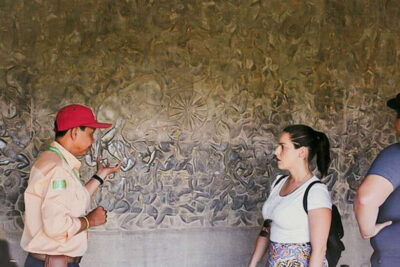
The strongest praise in the available feedback goes to the guiding. Sam is described as a master storyteller with strong photography skills, and that combination is useful at a place where good framing and clear explanation can save time. Another review praises the guide as personable and able to make the two-day route a delight.
Those comments point to the tour’s real strength. The temples are the reason to come, but the guide shapes how much you understand and how smoothly the days run. Since only your group participates, you can raise questions without worrying about holding up a busload of strangers.
Do not assume that a private tour means every stop will be slow and leisurely. Eight temples require some planning. If you have one site that matters most, tell the guide early and ask how much time you can spend there.
What the $98 Price Really Covers
At $98, the tour price covers the guide, cold water, private transport, and the two-day service itself. The main extra cost is the three-day temple pass, listed at $62 per person. Food, drinks, accommodation, and personal expenses are also separate.
That makes the real cost higher than the headline price, but the comparison should be fair. You are paying for transport between eight temples, hotel pickup, a private guide, and the convenience of not planning the route yourself.
I see the value most clearly for two or more people who want a private experience. Solo visitors should calculate the full cost carefully because the temple pass is charged per person and the tour price may feel less economical alone.
The three-day pass is longer than the two-day tour. The supplied information does not explain why that pass is required, so confirm the ticket arrangement before paying. Do not arrive assuming the tour fee includes temple admission.
Clothing, Timing, and Practical Comfort
Temple dress rules are clear: shoulders and knees must be covered. Choose light, modest clothing that works for walking and climbing, and avoid relying on a cover-up you might forget in the vehicle.
Cold water is included, which is helpful during long temple days. Food and drinks beyond that are not included, so plan for your own meals and other refreshments. The tour description does not identify meal stops or provide a meal plan.
Most people can participate, according to the supplied information, but the route includes steep climbing at Pre Rup and extensive temple exploration. If you have concerns about stairs or walking, ask the provider about the exact route before booking.
The tour offers free cancellation if you cancel at least 24 hours before the experience start time. Changes or cancellations made less than 24 hours ahead are not accepted for a refund, and cut-off times follow local time in Siem Reap.
Who Should Book This Temple Tour?
I would recommend it to you if you have two days in Siem Reap and want the major Angkor sites arranged in a sensible order. It suits people who value explanation, private transport, and the freedom to travel only with their own group.
It is also a good fit if you want more than Angkor Wat. Banteay Srei, Pre Rup, Banteay Samre, Banteay Kdei, and Preah Khan give the trip variety, while Ta Prohm and Bayon provide two very different famous temple experiences.
I would hesitate if you want a slow photographic study of only two or three temples. The route is full, and the number of stops means some visits will be more focused than leisurely. I would also ask extra questions if sunrise is essential, since the available details do not specify how that option works.
For a private two-day introduction to Angkor’s major sites, this is a strong choice. Book it if you want the logistics handled and a guide to bring the carvings and royal stories into focus. Skip it only if you prefer to set your own route completely or spend an entire day at one temple.
FAQ
How long is the Eight Temple Tour?
The tour lasts approximately two days.
Which temples are included?
The route includes Pre Rup, Banteay Samre, Banteay Srei, Ta Prohm, Banteay Kdei, Angkor Wat, Preah Khan, and Bayon.
Is the tour private?
Yes. Only your group participates in the private tour or activity.
Is hotel pickup included?
Yes. Private transport includes convenient pickup from your Siem Reap hotel.
Is the temple pass included in the price?
No. The three-day temple pass costs $62 per person and is not included in the $98 tour price.
Are food and drinks included?
No. Food and drinks are not included, although cold water is provided.
What should I wear to the temples?
You must cover your shoulders and knees to enter the temples.
Newest reviews from Siem Reap
- War Museum, Killing Field, and APOPO Hero RATs Tour★ 5.0 · 7 reviews
- Angkor Wat at Sunrise★ 4.0 · 7 reviews
- Siem Reap Angkor Airport Taxis (from Airport to Hotel)★ 5.0 · 44 reviews
- Cambodian Cooking Class and Oxcart Ride with Local Village Tour★ 5.0 · 4 reviews
- Secret Temples of Angkor – Guided Tour in Siem Reap★ 5.0 · 6 reviews
- Short Cycling at Countryside★ 5.0 · 29 reviews
- SIEM REAP E-BIKE HALF-DAY COUNTRYSIDE (25-30 km)★ 4.0 · 1 review
- Unveiling the Mystical Beauty of Phnom Kulen National Park★ 5.0 · 6 reviews
Multi-Day Tours, compared.
Angkor Wat 2-Day Tour with Sunrise and Sunset
Read our review →
Angkor 2-Day Sunset & Sunrise Small-Group Tour
Read our review →
Angkor Sunrise 1- or 2-Day Guided Temples Tour
Read our review →
2-Day Angkor Wat With Small, Big Circuit and Banteay Srei Tour
Read our review →
2-Day Temple Highlights Sunrise and Sunset Option
Read our review →
Angkor Wat 2-Day complex Sun rise & Sun set with Guided Tour
Read our review →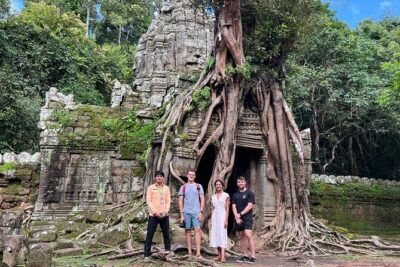
2-Day Angkor Wat Tour with Banteay Srei and Floating Village
Read our review →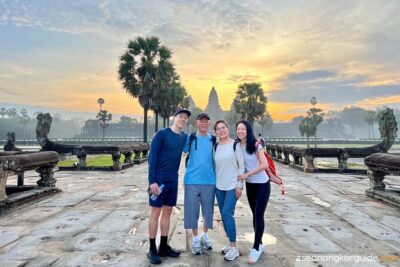
Browse the lists this tour appears in