
Reviewed · MULTI-DAY TOURS
2 Day Cambodia Private Guided Tour in Angkor Temples
Angkor rewards a well-planned two-day route. This private tour pairs the famous temples with quieter corners, a village visit, and a personal English-speaking guide, giving you more context than a quick temple shuttle. I especially like the private group format and the reliable comfort of a private air-conditioned vehicle.
I also like that the route includes both major sights and lesser-known stops such as Ta Nei and Neak Pean. The main drawback is the long list of temples packed into two days, and the Angkor entrance ticket is not included in the $107 price, so your total cost will be higher.
In This Review
- Key points at a glance
- Why two private days work well at Angkor
- Day one: Angkor Thom and the faces of Bayon
- Ta Nei and Ta Prohm: two very different jungle settings
- Angkor Wat and sunset at Phnom Bakheng
- Day two: the Grand Circle and Banteay Srei
- A palm sugar village adds a welcome change
- What the private service is really worth
- Who should book this two-day route
- Should you book it?
- FAQ
- Where does the tour take place?
- How long is the experience?
- Is this a private tour?
- Is hotel pickup included?
- Is the Angkor temple entrance ticket included?
- What language does the guide speak?
- What is included in the vehicle service?
Key points at a glance
- Private touring: You travel only with your own group, guide, and driver rather than joining a large coach.
- Strong temple variety: The route covers Angkor Thom, Bayon, Ta Prohm, Angkor Wat, Banteay Srei, Preah Khan, and many more.
- Personal guide service: Guides named Sara and Chet received especially warm praise for their organization, flexibility, and care.
- Useful vehicle comforts: Hotel transfers, air conditioning, cold water, and fresh tissues are included throughout the trip.
- A local touch: Day two includes a traditional Khmer house and a demonstration of palm sugar making in a village.
- Important extra cost: Temple entry tickets and tips are separate from the tour price.
Why two private days work well at Angkor
Angkor Archaeological Park covers about 401 square kilometers and contains more than 250 temples. You could spend far longer here, but two days gives you a sensible first look if you want the major monuments without arranging every transfer yourself.
The private format matters. You can ask your guide to explain a carving again, pause for photographs, or adjust the pace within the day’s route. You are not tied to the needs of a full busload of people. That flexibility was a key strength for Ulrike, who praised guide Sara for helping create a personal journey.
The $107 per person price covers two days of guiding, private transport, hotel pickup and return, water, and fresh tissues. That is a fair package for a private experience, especially if you are sharing the vehicle with family or friends. Still, treat the advertised amount as the tour service price, not the final price of your Angkor visit. The temple pass is extra, and tips for the guide and driver are not included.
Your guide helps you buy the temple ticket before visiting the sites. That is convenient, but you should still budget for the separate entry charge before you arrive. The exact ticket price is not given here, so confirm the current amount when booking or with the operator.
More multi-day routes in Siem Reap:
- Siem Reap: Angkor Wat 2-Day Tour with Sunrise and Sunset
★ 4.9 · 4,429 reviews - Angkor 2-Day Sunset & Sunrise Small-Group Tour
★ 5.0 · 2,567 reviews - Siem Reap: Angkor Sunrise 1- or 2-Day Guided Temples Tour
★ 4.9 · 1,132 reviews
Day one: Angkor Thom and the faces of Bayon
Your guide and driver collect you from your hotel lobby after breakfast. You need to provide the hotel name and address when booking, and you should be ready at the starting time selected for the tour.
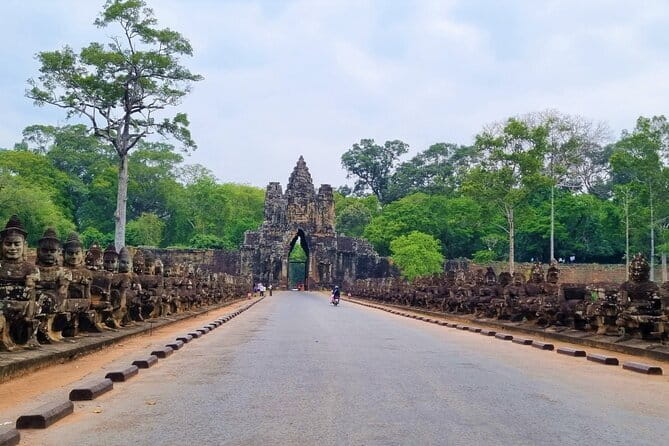
The first major stop is Angkor Thom, the large walled city at the center of the old Khmer capital. The name means Great City, and the scale helps you understand that Angkor was not just a collection of isolated shrines. It was an enormous royal and religious center.
Inside, the route includes Bayon, Baphuon, Phimeanakas, the Terrace of the Elephants, and the Terrace of the Leper King. These stops work well together because they show different sides of the complex: towers, raised platforms, ceremonial spaces, and carved stone galleries.
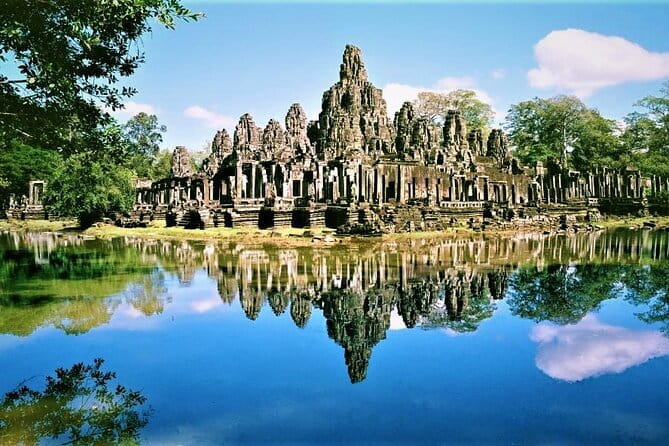
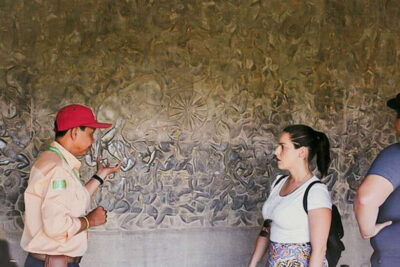
Bayon is likely to be one of your most memorable stops. Its towers carry the famous large stone faces, and your guide can help explain how to read the structure rather than leaving you to wander past the carvings with only a few photographs. The temple can feel visually busy, so a personal guide is useful here.
Baphuon adds another style and scale to the morning. Phimeanakas is more restrained, while the Terraces offer carved details and a sense of how royal ceremonies may have been staged. Do not rush these stops simply to collect names. The value of the morning comes from seeing how the temples relate to one another.
Ta Nei and Ta Prohm: two very different jungle settings
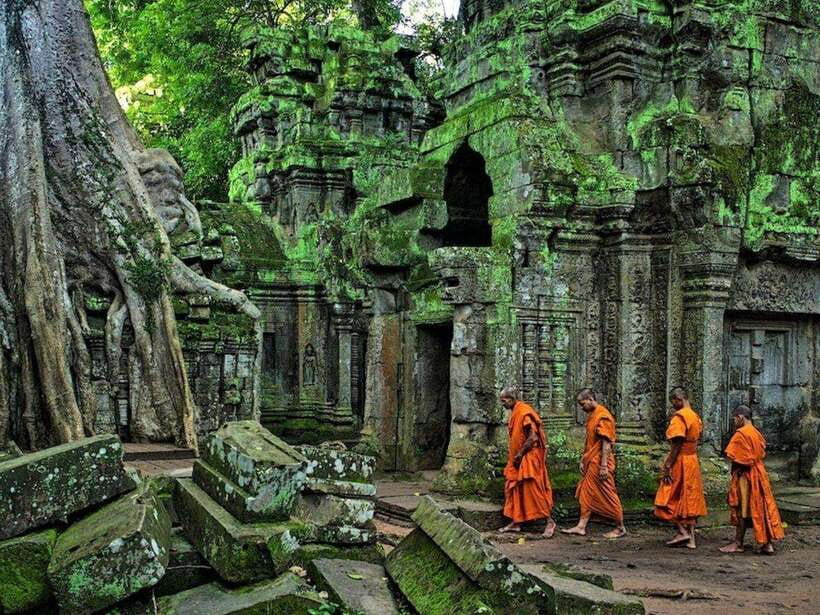
The route then moves to Ta Nei, a smaller jungle temple that receives less attention than the park’s headline monuments. This is a good inclusion for anyone who wants a quieter pause between the grand royal structures and the famous temples.
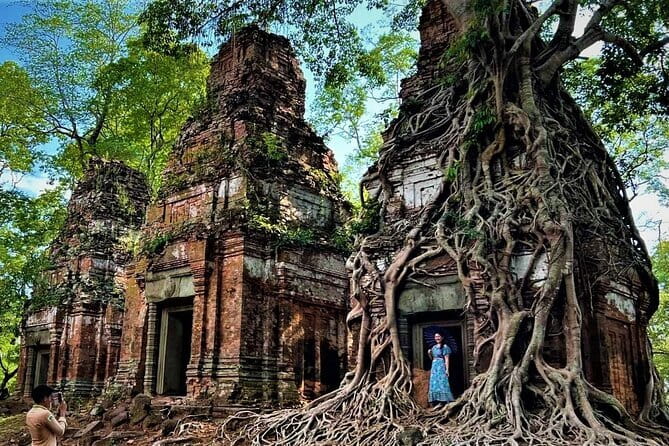
Ta Nei is not presented as a fully restored showpiece. Its appeal comes from its more secluded character and weathered stonework. You might find this stop less polished than Angkor Wat or Bayon, but that is precisely why it adds variety to the day.
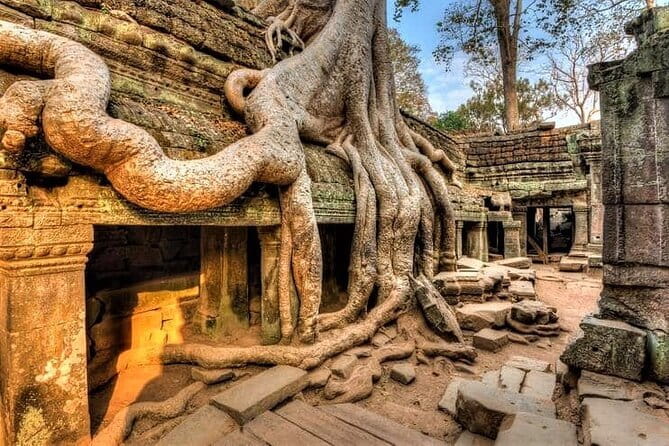
Ta Prohm offers a much more recognizable scene, with trees growing around and over the temple ruins. Its atmosphere is striking, but it is also one of the best-known stops in the park. The private vehicle and guide help you move through the route without having to solve the transport problem between each site.
I would expect day one to feel full. You visit several major monuments before ending at Phnom Bakheng, so comfortable clothing, sensible footwear, and a willingness to take breaks will make the day easier. The included drinking water and fresh tissues are small details, but in a hot temple complex they matter. Michael specifically praised receiving cold water and a cooled towel after each temple visit, along with the care provided by driver Paul and guide Chet.
Angkor Wat and sunset at Phnom Bakheng
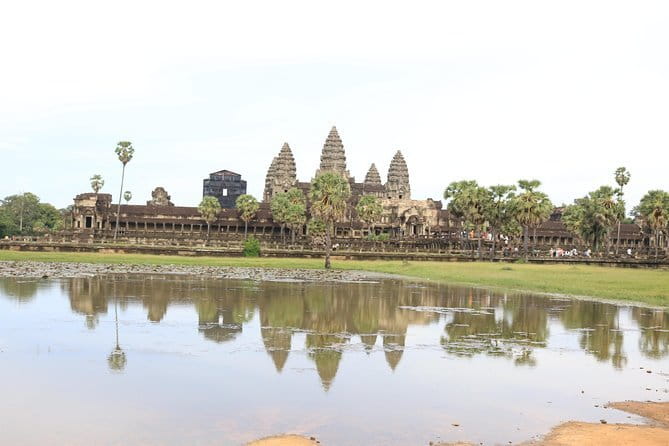
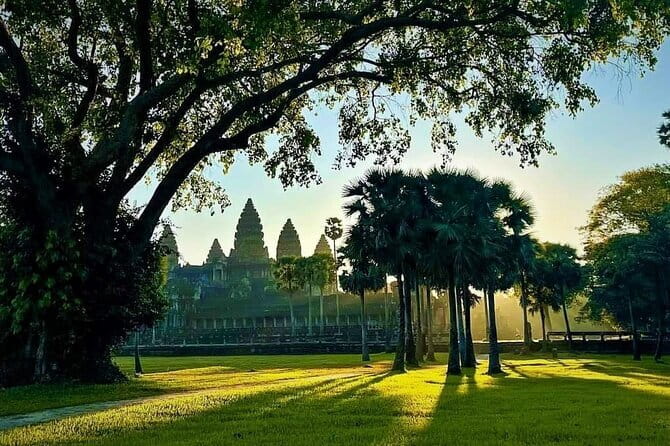
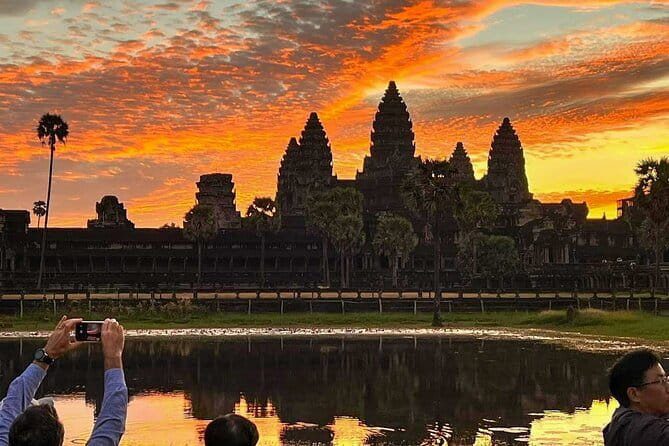
Angkor Wat is the day’s headline attraction. Built in the twelfth century, it is the temple most closely associated with Cambodia, but it deserves more than a quick photo stop. Its galleries, towers, courtyards, and carefully arranged proportions reward time with a guide who can point out what you are seeing.
The schedule places Angkor Wat before sunset at Phnom Bakheng. That allows you to see the park’s most famous monument and then finish with a high viewpoint rather than ending the day at another enclosed temple.
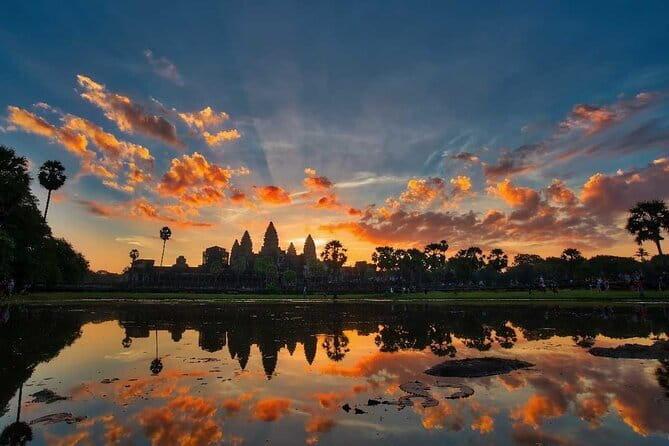
Phnom Bakheng is known as a sunset location, so the timing is appealing. It is also worth keeping expectations practical. Sunset stops can be popular, and the light and visibility depend on the conditions that day. The tour includes the stop, but it cannot guarantee a particular sky or unobstructed view.
After sunset, your driver returns you to the hotel. A private air-conditioned vehicle is especially helpful at this point. You avoid arranging a tuk-tuk or negotiating another ride after a long day on foot.
A few more options around Siem Reap worth reading up on
- Angkor Wat Sunrise or Sunset Tour with Guide from Siem Reap
★ 5.0 · 12,109 reviews - Siem Reap: Angkor Wat: Small-Group Sunrise or Sunset Tour
★ 5.0 · 9,444 reviews - From Siem Reap: Kampong Phluk Floating Village Tour by Boat
★ 4.9 · 6,979 reviews - Sunset tour of Kampong Phluk stilts home village on the Tonle Sap
★ 5.0 · 4,865 reviews
Day two: the Grand Circle and Banteay Srei
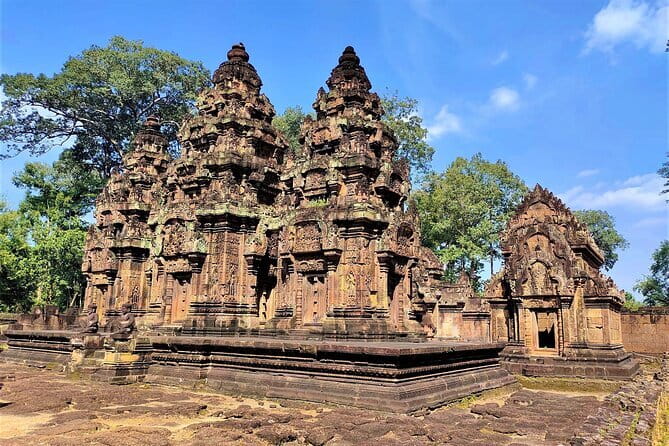
Day two begins after breakfast and heads toward the temples of the Angkor Grand Circle. The route includes Preah Khan, Neak Pean, Ta Som, East Mebon, Banteay Samre, Banteay Srei, and Pre Rup.
Preah Khan is an important early stop because it gives you another large temple complex with long corridors and layered spaces. It feels different from Angkor Wat, and the contrast helps you see that Angkor was not built in one single style.
Neak Pean is unusual. Rather than functioning like a conventional temple complex, it is associated with a central structure and surrounding pools. Its design gives the stop a different rhythm after the enclosed galleries of Preah Khan.
Ta Som is smaller and more intimate. It is another place where the route shifts away from monumental scale. East Mebon, by contrast, brings you back to a more formal temple setting with strong architectural structure.
The itinerary also includes Banteay Samre, a temple with a compact feel and detailed stonework. The schedule lists this temple before Banteay Srei and later mentions Banteay Samre again, so it is worth confirming the precise order with the operator. The main point is that both temples are part of the day’s plan.
Banteay Srei is often considered one of the most finely detailed temples in the Angkor area. It is smaller than Angkor Wat, but its carved surfaces make it a major reason to choose this longer second-day route. If you care about stone decoration and close-up architectural details, do not treat Banteay Srei as a minor add-on.
Pre Rup provides a strong final temple stop. Its name is often associated with a cremation-related function, but your guide can explain the site in the context of Khmer religious and royal traditions. After a day of temples with different sizes and designs, it gives you one more broad architectural view before the village visit.
A palm sugar village adds a welcome change
The village stop is one of the most useful parts of the second day because it shifts your attention from carved stone to everyday Khmer life. You visit a village with a traditional Khmer house and see how palm sugar is made.
This is not a substitute for a full cultural program, but it gives the day a human scale. After hours among royal monuments, you get a look at a local craft and a traditional style of home. I like this balance because a visit to Angkor should not be only a checklist of ruins.
The information does not specify how long the village visit lasts or whether tastings are included, so you should not assume either. Think of it as a short local stop built into the temple route.
What the private service is really worth
The strongest practical advantage is door-to-door transport. Pickup and drop-off at your hotel are included, and the vehicle is private and air-conditioned. That saves you from arranging separate rides across a very large park.
You also have one guide for your own group. This can make a real difference at sites such as Bayon, where the carvings are easy to admire but harder to interpret. Guides Sara and Chet were singled out for their care and organization, while Sara was praised for adapting the day to personal interests.
The tour is offered in English, and the guide is described as a licensed English-speaking tour guide. You should still confirm your preferred start time and hotel details before the day begins, since the pickup depends on the information you provide.
Cold water and fresh tissues are included for the whole trip. One detailed account also praised the repeated supply of cooled towels after temple visits. That is not a grand attraction, but it is exactly the kind of service you appreciate after walking through warm, open ruins.
The tradeoff is that private touring costs more than joining a shared group. At $107 per person, the value improves when two or more people share the booking. Solo visitors pay the same listed per-person price, while a small group gets the privacy and convenience without bearing the entire vehicle cost alone.
Who should book this two-day route
I would recommend this tour to you if you want to see the major Angkor monuments but do not want to plan the transport, temple order, and daily logistics yourself. It suits couples, families, and small groups who value a private guide and a cool vehicle between stops.
It is also a good match if you want more than Angkor Wat. The inclusion of Ta Nei, Neak Pean, East Mebon, Banteay Samre, and the palm sugar village gives the trip more range than a one-day highlights outing.
You should think twice if you dislike full sightseeing days or prefer to explore at a very slow pace. The itinerary contains many temples, and day one in particular asks you to cover a lot before sunset. A private guide may help adjust the pace, but the number of planned stops remains high.
It is less suitable if you are trying to keep the total cost as low as possible. The $107 fee does not include the Angkor entrance ticket or tips. The guide can assist with purchasing the ticket, but you still need to pay for it separately.
The tour offers free cancellation up to 24 hours in advance and a reserve-now, pay-later option. Those terms make it easier to hold your plans while you confirm your Siem Reap hotel and schedule.
Should you book it?
Book this tour if you want private transport, personal guiding, and broad temple coverage in two organized days. The combination of Angkor Thom, Bayon, Ta Prohm, Angkor Wat, Banteay Srei, the Grand Circle temples, and a village visit offers a good first look at the area.
Before booking, confirm the current temple ticket cost, your pickup time, and the exact order of the second-day stops. If you are comfortable with long sightseeing days and a separate entrance fee, the service offers solid value, especially for a small group. The personal care associated with Sara, Chet, Mr. La, and Paul is another encouraging sign for anyone who wants a well-run visit rather than a bare-bones ride between ruins.
FAQ
Where does the tour take place?
The tour takes place in Siem Reap Province, Cambodia, within and around the Angkor Archaeological Park.
How long is the experience?
The tour lasts two days.
Is this a private tour?
Yes. The tour is restricted to your own group and includes a personal guide and private vehicle.
Is hotel pickup included?
Yes. Pickup and drop-off at your hotel are included. You need to provide your hotel name and address when booking.
Is the Angkor temple entrance ticket included?
No. The temple entrance ticket is not included in the tour price. The guide helps you purchase it on the day before visiting the temples.
What language does the guide speak?
The live tour guide speaks English.
What is included in the vehicle service?
Transfers are provided in a private air-conditioned vehicle. Drinking water and fresh tissues are also included throughout the two-day trip.
Newest reviews from Siem Reap
- War Museum, Killing Field, and APOPO Hero RATs Tour★ 5.0 · 7 reviews
- Angkor Wat at Sunrise★ 4.0 · 7 reviews
- Siem Reap Angkor Airport Taxis (from Airport to Hotel)★ 5.0 · 44 reviews
- Short Cycling at Countryside★ 5.0 · 29 reviews
- Cambodian Cooking Class and Oxcart Ride with Local Village Tour★ 5.0 · 4 reviews
- Secret Temples of Angkor – Guided Tour in Siem Reap★ 5.0 · 6 reviews
- SIEM REAP E-BIKE HALF-DAY COUNTRYSIDE (25-30 km)★ 4.0 · 1 review
- Unveiling the Mystical Beauty of Phnom Kulen National Park★ 5.0 · 6 reviews
Multi-Day Tours, compared.
Angkor Wat 2-Day Tour with Sunrise and Sunset
Read our review →
Angkor 2-Day Sunset & Sunrise Small-Group Tour
Read our review →
Angkor Sunrise 1- or 2-Day Guided Temples Tour
Read our review →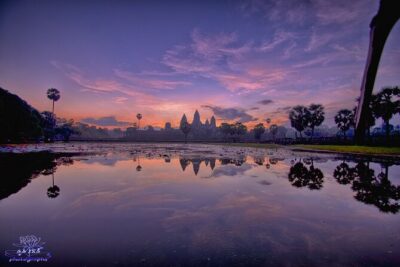
2-Day Angkor Wat With Small, Big Circuit and Banteay Srei Tour
Read our review →
2-Day Temple Highlights Sunrise and Sunset Option
Read our review →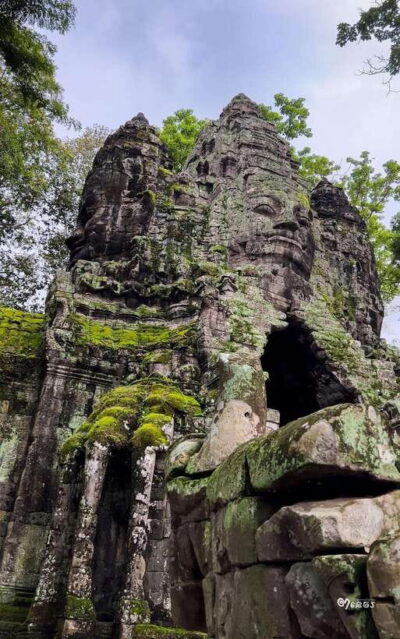
Angkor Wat 2-Day complex Sun rise & Sun set with Guided Tour
Read our review →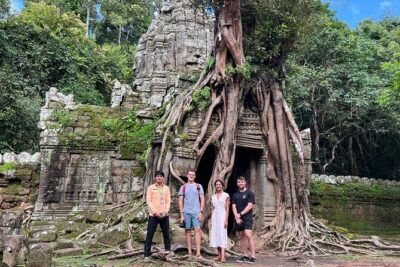
2-Day Angkor Wat Tour with Banteay Srei and Floating Village
Read our review →
Browse the lists this tour appears in