
Reviewed · ANGKOR WAT TOURS
2-Day Angkor Wat Small, Big Circuit & Banteay Srei Tour
Temple days begin before breakfast. This two-day private tour packs Angkor Wat, Ta Prohm, Bayon, Banteay Srei, and a long list of smaller temples into a well-planned route around Siem Reap. I like the private vehicle and flexible pacing, and I like the mix of famous sights with quieter Ta Nei. The main drawback is simple: the $50 price does not include the Angkor Pass, and the schedule is demanding.
You will spend two full days among Khmer temples, with hotel pickup, an English-speaking licensed guide, air conditioning, drinking water, and cool towels included. Guide Longdy is described as friendly, flexible, and well informed, which matters when you are facing early starts, heat, crowds, and a great many stones that can begin to look alike.
In This Review
- Key points to know before booking
- What the $50 price really gives you
- Day one begins at Angkor Wat
- Ta Prohm gives the day its famous photograph
- Ta Nei is the quiet change of pace
- Angkor Thom strings together several major sights
- Phnom Bakheng closes day one with a climb
- Day two starts with Angkor Wat sunrise
- The Big Circuit moves from grand halls to water and forest
- Banteay Srei is the day two highlight
- Banteay Samre and Banteay Kdei round out the route
- How the private format affects the experience
- Who should book this two-day plan
- Should you book it?
- FAQ
- How much does the two-day Angkor tour cost?
- Is the Angkor Pass included?
- What time does pickup begin?
- Is this a private or shared tour?
- Is hotel pickup and drop-off included?
- Are meals included?
- What is included with transportation and guiding?
Key points to know before booking
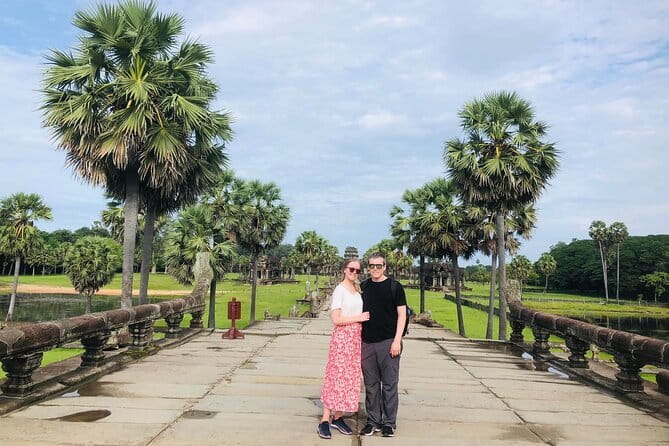
- Two different Angkor experiences: Day one follows the Small Circuit and Angkor Thom, while day two covers the Big Circuit and reaches Banteay Srei.
- Sunrise and sunset are included: You start at Angkor Wat at 5:00am on day two and finish day one at Phnom Bakheng.
- A private tour for your group: You are not placed with a large mixed group, making it easier to adjust photo stops and temple time.
- The $50 price is not the full cost: The three-day Angkor Pass is extra, and lunch is also paid separately.
- Ta Nei offers a quieter pause: This small, less-restored temple gives you a break from the most visited monuments.
- Expect long, active days: The schedule includes walking, temple steps, a hill climb, an early wake-up, and many hours outdoors.
What the $50 price really gives you
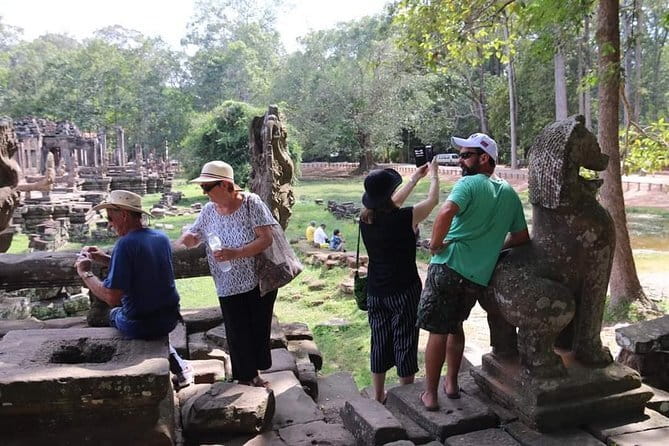
At $50 per person, this tour offers good value if you want transport and a guide for two full days without arranging each temple yourself. You are paying for hotel pickup and drop-off, an air-conditioned vehicle with driver, a licensed English-speaking guide, bottled or cool water, and cool wet towels.
The most important extra cost is the Angkor Pass. It is not included, and the tour specifies a three-day pass for the itinerary. Even though the tour lasts two days, the pass covers the temple visits in the required way. Add that cost to your budget before comparing this tour with other options.
Lunch is also separate. The planned meal stop lasts about 45 minutes to one hour, with dishes starting around $5 depending on what you order. This gives you some choice, but it means the advertised tour price is not an all-inclusive figure.
Tips are not included either. They are listed as appreciation for the guide and driver, so you can decide what feels fair after the service. Since the tour is private, you are not splitting the experience with strangers, and that gives the $50 price more weight than a basic shared transfer.
More ways to see Angkor Wat:
- Angkor Wat Sunrise or Sunset Tour with Guide from Siem Reap
★ 5.0 · 12,109 reviews - Siem Reap: Angkor Wat: Small-Group Sunrise or Sunset Tour
★ 5.0 · 9,444 reviews - Siem Reap: Angkor Wat 2-Day Tour with Sunrise and Sunset
★ 4.9 · 4,429 reviews
Day one begins at Angkor Wat
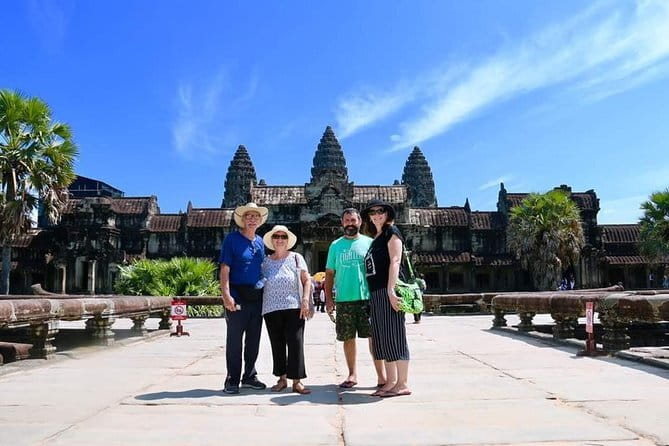
Pickup is scheduled for 8:00am from your hotel or guesthouse. The first stop is Angkor Wat, with about two hours set aside for the monument.
This is the right place to begin. Angkor Wat is the largest religious monument in the world, and its scale can be hard to grasp from photographs. You will see long galleries, towers, carved scenes, and broad courtyards that reward a slow walk rather than a quick photo stop.
Two hours gives you a useful first look, though it will not cover every corner. Your guide can help explain the layout and point out details that are easy to miss when you first enter. The pass is handled along the way to the temples, but remember that admission remains outside the tour price.
Because the first morning starts at 8:00am, you do not get the sunrise here on day one. That is saved for the following morning, when the pickup moves to 5:00am.
Ta Prohm gives the day its famous photograph
After Angkor Wat, you continue to Ta Prohm on the Small Circuit road. About two hours are scheduled here.
Ta Prohm is the temple most closely linked with the film Tomb Raider. Its appeal is not only the movie connection. Huge tree roots press over walls and doorways, making the temple feel caught between stone and forest. The partially restored character also helps you picture how many Angkor sites looked before modern work stabilized them.
This is one of the tour’s strongest stops, but it can also be busy. The private format helps because your guide can adjust the order or pause for photographs when conditions allow. Do not rush through the galleries simply to recreate a film image. The worn carvings and narrow passages are often more rewarding than the best-known root-covered doorway.
After two substantial temple visits, lunch arrives at a useful point in the day. You will eat at a local restaurant nearby, with roughly 45 minutes to one hour for the break. Food is ordered from a menu and costs from about $5 per dish.
Ta Nei is the quiet change of pace
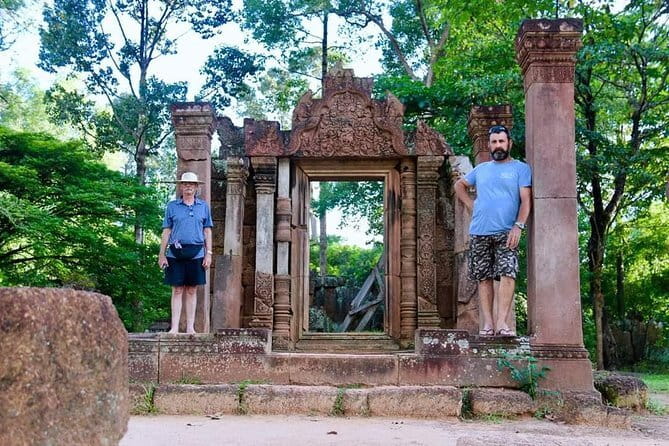
After lunch, Ta Nei receives about 30 minutes. This is a small temple with less restoration, surrounded by large trees.
I like the role Ta Nei plays in the route. Angkor Wat and Ta Prohm are major stops with famous names. Ta Nei gives you a shorter, quieter visit where the atmosphere matters more than scale. Its less-restored condition may appeal to you if you prefer seeing weathered stone and tree cover instead of polished paths and grand entrances.
Thirty minutes is enough for a look around, but not a long study of every structure. Treat it as a calm pause before the larger monuments of Angkor Thom.
More trips out to Banteay Srei:
- Full-Day Banteay Srei & 4 Temples – Grand Tours Join-in Tour
★ 5.0 · 1,155 reviews - Siem Reap Tour: Angkor Wat Sunrise, Bayon, Ta Prohm, Banteay Srei
★ 5.0 · 931 reviews - 2-Day Angkor Wat With Small, Big Circuit and Banteay Srei Tour
★ 5.0 · 545 reviews - From Siem Reap: Banteay Srei Temple & Grand 5 Temple Tour
★ 4.8 · 262 reviews
Angkor Thom strings together several major sights
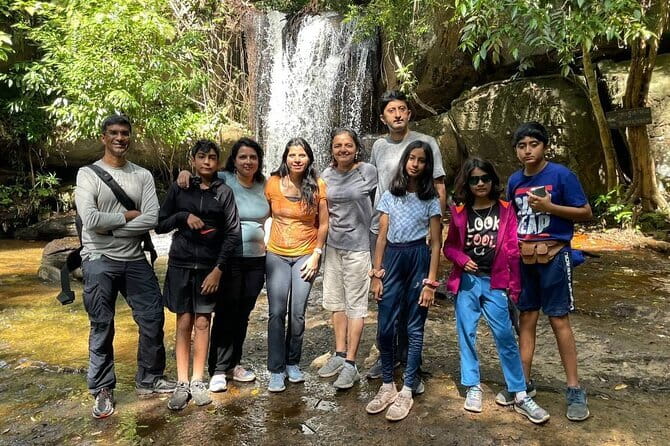
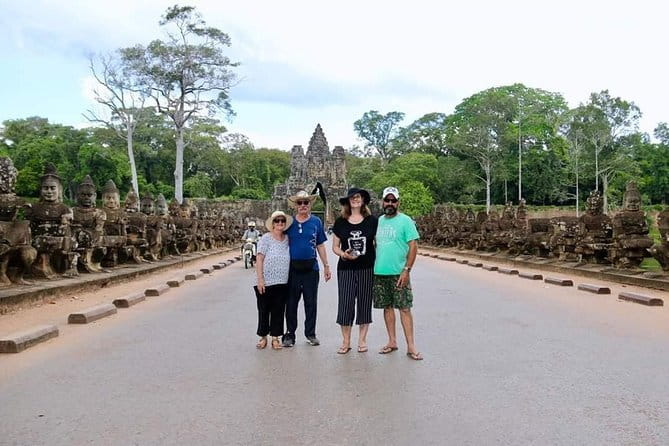
The route next reaches the Victory Gate on the east side of Angkor Thom. About 30 minutes are allowed for the stop, including photographs.
The gate makes a useful introduction to Angkor Thom, the old city area that contains several of the day’s most important monuments. From here, the tour continues to Bayon, the city’s central temple, for about one hour.
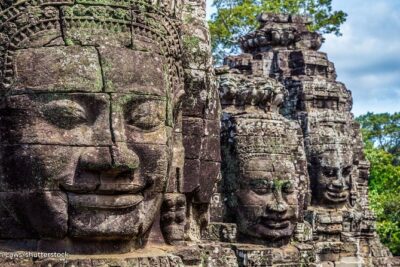
Bayon is famous for its towers carved with serene faces. The supplied description counts 49 towers and 196 faces, often identified with the Buddhist figure Avalokitesvara. The exact visual effect is what matters most: faces appear at different heights and angles, creating a remarkable sense of being watched over as you move through the temple.
One hour is a sensible amount of time for Bayon, though the crowded passages and uneven stone can slow you down. Listen closely as your guide explains what you are seeing, then allow yourself time to look upward. The faces are easy to miss if you focus only on the ground.
Baphuon follows, with about 20 minutes. This Hindu temple predates Angkor Wat and dates to the 11th century. Behind it is a large reclining Buddha added in the 16th century. The stop is brief, so you should expect a quick visit rather than a full exploration.
Another 20 minutes are set aside for Phimeanakas and the ancient Royal Enclosure Wall. Phimeanakas is a 10th-century pyramid temple in the center of the former royal area. The structure is less immediately dramatic than Bayon, but it helps you understand how temples fitted into the wider city.
The Terrace of the Elephants receives about 20 minutes. Kings used this platform to watch returning armies, and elephant carvings line its walls. Nearby, the Terrace of the Leper King gets another 20 minutes. These are mainly viewing and explanation stops, not long temple walks.
The benefit is efficiency. You see a broad section of Angkor Thom without having to organize each turn yourself. The cost is that several sites receive only a short visit. If you want to study every carving, this pace may feel fast.
Phnom Bakheng closes day one with a climb
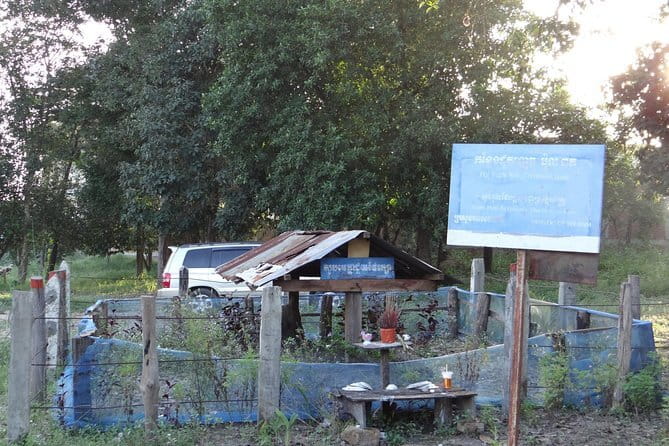
The final stop is Phnom Bakheng, with about two hours scheduled for the sunset visit. You climb the hill to wait for the view.
This is the most physically tiring part of the first day. You have already spent hours walking around temples, and the hill adds another effort at the end. Bring water, use the cool towel, and be honest about your energy. The tour allows you to skip sunset if you do not want to wait.
The sunset plan can be appealing, but it is not a guarantee of a private viewpoint or perfect sky. The value is the chance to see the Angkor area from higher ground after a long day among the ruins. If you would rather have an earlier dinner or rest for the 5:00am pickup, skipping this stop is a sensible choice.
Day two starts with Angkor Wat sunrise
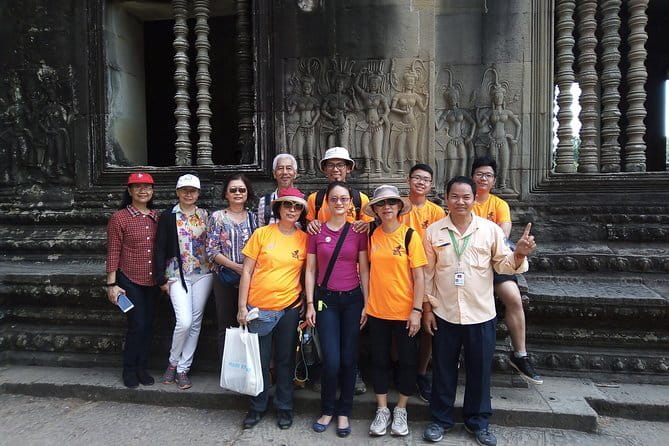
Day two begins with pickup at 5:00am. You go to Angkor Wat for sunrise, with about 90 minutes allocated before returning to your hotel for breakfast.
This early start changes the feel of the monument. The temple appears first as a dark outline, then gradually gains color as the sky brightens. Conditions can vary, and the tour does not promise a particular sunrise, but the timing gives you the best chance to see Angkor Wat in the morning light.
The return to your hotel for breakfast is practical. You do not have to carry a full meal through the morning, and you can reset before the Big Circuit begins. Still, the split schedule makes day two long. If you value sleep above sunrise photographs, the 5:00am departure is the main point to consider.
The Big Circuit moves from grand halls to water and forest
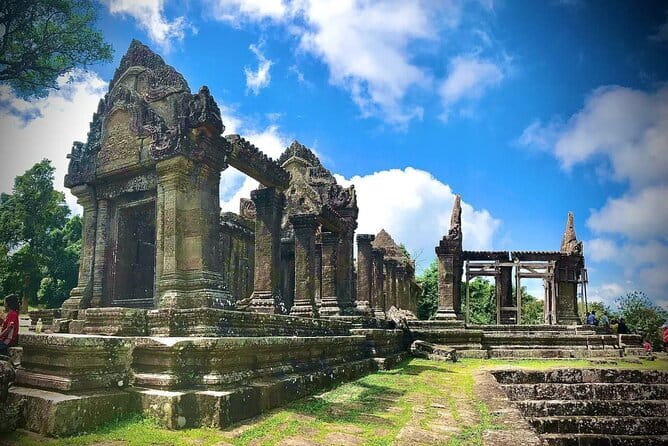
After breakfast, you return to the temples for Preah Khan. About one hour is planned here.
King Jayavarman VII built Preah Khan in honor of his father. It served as a Buddhist monastery and school and once supported more than 1,000 monks. The complex is large, so one hour lets you see its main route without trying to inspect every corridor.
Neak Pean follows for about 30 minutes. This small island temple sits in the middle of the last baray, or reservoir, in the Angkor area. Its setting gives you a different kind of visit. Instead of towering galleries, you get an approach across water and a compact temple at the center.
Ta Som comes next, with about 20 minutes. Built in the late 12th century for Jayavarman VII and dedicated to his father, it is a small temple northeast of Angkor Thom. Its scale and setting make it a good complement to Preah Khan. The short stop is enough to see the main features, though not enough for a slow exploration.
The morning ends at East Mebon and Pre Rup. East Mebon is a three-level temple-mountain crowned by five towers, with about 20 minutes allowed. Pre Rup receives about one hour and was built in the late 10th century for Hindu gods. Its name means turn the body, and it is linked with Khmer funeral beliefs.
Pre Rup is one of the more substantial morning stops, but the full sequence is still active. You will cover several sites before lunch, so comfortable shoes matter more than fashionable footwear.
Banteay Srei is the day two highlight
After lunch, the route travels to Banteay Srei, also called the Ladies Temple. About one hour is planned here.
Banteay Srei was built in the 10th century under the Hindu king Rajendravarman II and dedicated mainly to Shiva and the Hindu trinity. Its rare pink sandstone gives the temple a different color from the larger gray stone monuments, while its carvings are known for fine, jewelry-like detail.
This is the temple where a guide adds real value. Small figures, borders, and mythological scenes can disappear into the stone if you do not know where to look. The one-hour visit gives you time to circle the main structures and take in the careful carving.
Banteay Srei is farther from the central Angkor group than most stops, so the drive adds time to an already full day. I still consider it worth the effort if you want something more delicate and detailed than Angkor Wat’s massive scale.
Banteay Samre and Banteay Kdei round out the route
Banteay Samre follows Banteay Srei, with about 20 minutes. This 12th-century Hindu temple is thought to share architectural ideas with Angkor Wat, although the available information offers limited certainty about its wider story. The short visit works well as a final major stop outside the central circuit.
The route then includes Banteay Kdei for about 40 minutes. This 12th-century Buddhist temple shares stylistic similarities with Ta Prohm and Bayon. If Ta Prohm appealed to you, Banteay Kdei gives you another look at a temple shaped by the same broad period and design language, but with its own layout and condition.
This final addition makes day two especially full. You see more temples than the basic Small Circuit and Big Circuit labels might suggest. The reward is variety. The tradeoff is fatigue, particularly after sunrise and the long morning circuit.
How the private format affects the experience
This is a private activity, so only your group participates. That is one of the strongest practical reasons to choose it.
You can ask your guide to explain a carving again, slow down at Bayon, or shorten a stop if the heat catches up with you. The available feedback specifically praises Longdy for being friendly and flexible, qualities that matter more here than polished commentary alone.
The air-conditioned vehicle is also important. Angkor days involve repeated walks in open heat, and the vehicle gives you a place to cool down between sites. Cool water and wet towels are small inclusions, but they are useful ones.
The tour is designed for most participants, and service animals are allowed. No special access details are provided, so you should expect the normal uneven stone, steps, walking, and hill climb that come with these temple visits.
Who should book this two-day plan
I would choose this tour if you want the major Angkor sights in a compact two-day visit and prefer a private guide to handling the route yourself. It suits first-time visitors who want context, transport, sunrise, sunset, and Banteay Srei in one plan.
It is also a good match if you want some flexibility. Ta Nei, Banteay Samre, and Banteay Kdei prevent the experience from becoming only a parade of the most famous monuments.
I would hesitate if you dislike early mornings, long outdoor days, or short stops. The plan includes a 5:00am start, a Phnom Bakheng climb, many temple visits, and a second afternoon that ends after several hours on the road.
Free cancellation is available if you cancel at least 24 hours before the local start time. Changes or cancellations inside that window are not accepted for a refund, so keep that deadline in mind.
Should you book it?
Book this tour if you want maximum temple coverage with private transport and a guide at a reasonable base price. The route has a strong balance of famous sights, quieter corners, sunrise, sunset, and the pink sandstone detail of Banteay Srei.
Before booking, budget separately for the three-day Angkor Pass, lunch, and a possible tip. If you accept the early alarm and busy schedule, this is a practical way to see a great deal of Angkor in two days. If you want slow photography and long pauses, ask for a gentler pace or choose a shorter private itinerary instead.
FAQ
How much does the two-day Angkor tour cost?
The tour costs $50 per person. The Angkor Pass, meals, and appreciation tip are not included.
Is the Angkor Pass included?
No. The tour requires an Angkor Pass, and the stated plan uses a three-day pass. You must pay for the pass separately.
What time does pickup begin?
Day one pickup is scheduled for 8:00am. Day two begins with a 5:00am pickup for sunrise at Angkor Wat.
Is this a private or shared tour?
This is a private activity. Only your group participates.
Is hotel pickup and drop-off included?
Yes. Pickup and drop-off at your hotel or guesthouse in Siem Reap are included.
Are meals included?
No. Lunch is taken at a local restaurant near the temples, but you pay separately. Dishes are described as starting at about $5, depending on your order.
What is included with transportation and guiding?
The tour includes a licensed English-speaking guide, an air-conditioned vehicle with driver, cool water, and cool wet towels.
More Multi-day Routes in Siem Reap
- Angkor 2-Day Sunset & Sunrise Small-Group Tour
★ 5.0 · 2,567 reviews - Siem Reap: Angkor Sunrise 1- or 2-Day Guided Temples Tour
★ 4.9 · 1,132 reviews - Siem Reap: 2-Day Temple Highlights Sunrise and Sunset Option
★ 4.9 · 445 reviews - Angkor Wat 2-Day complex Sun rise & Sun set with Guided Tour
★ 4.9 · 439 reviews
Newest reviews from Siem Reap
- War Museum, Killing Field, and APOPO Hero RATs Tour★ 5.0 · 7 reviews
- Siem Reap Angkor Airport Taxis (from Airport to Hotel)★ 5.0 · 44 reviews
- Angkor Wat at Sunrise★ 4.0 · 7 reviews
- Cambodian Cooking Class and Oxcart Ride with Local Village Tour★ 5.0 · 4 reviews
- Secret Temples of Angkor – Guided Tour in Siem Reap★ 5.0 · 6 reviews
- Short Cycling at Countryside★ 5.0 · 29 reviews
- SIEM REAP E-BIKE HALF-DAY COUNTRYSIDE (25-30 km)★ 4.0 · 1 review
- Unveiling the Mystical Beauty of Phnom Kulen National Park★ 5.0 · 6 reviews
Angkor Wat Tours, compared.
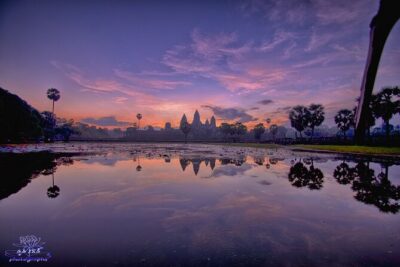
Angkor Wat Sunrise or Sunset Tour with Guide from Siem Reap
Read our review →
Angkor Wat: Small-Group Sunrise or Sunset Tour
Read our review →
Angkor Wat 2-Day Tour with Sunrise and Sunset
Read our review →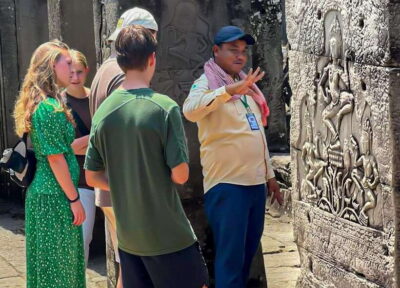
Angkor Wat Sunrise tour with Small – Group and Guide tours
Read our review →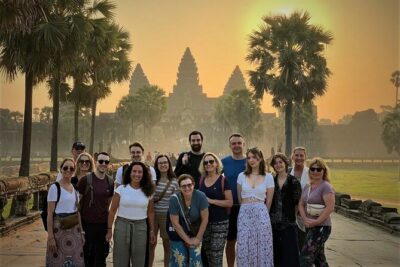
Angkor Wat Highlights and Sunrise Guided Tour from Siem Reap
Read our review →
Angkor Wat Sunset Small Group Tour with Lunch Included
Read our review →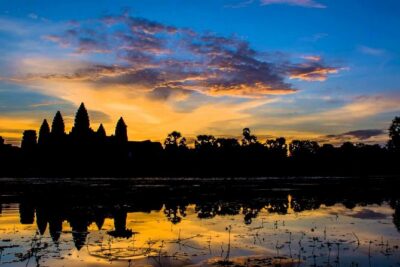
Full-Day Angkor Wat Sunrise Private Tour with Guide from Siem Reap
Read our review →Browse the lists this tour appears in