
Reviewed · MULTI-DAY TOURS
2-Day ‘Angkor & Village’ Tour
Angkor rewards a careful two-day plan. This private tour combines the major temples with smaller sites, a sunrise at Angkor Wat, and a motorized boat trip through Kompong Phluk on Tonle Sap. I especially like the private air-conditioned transport and the English-speaking guide, since both make long temple days easier. The main drawback is the physical effort: climbing uneven steps and walking between ruins can be hard, particularly in Cambodia’s heat.
The tour costs $130, before temple admission and meals. That is a fair price for a private vehicle, hotel pickup and drop-off, a guide, bottled water, cold towels, and the flexibility to travel only with your own group. Still, you should budget separately for the Angkor pass, listed here as $67 per person for two days, and confirm the current fee before you go.
In This Review
- What makes this two-day plan useful
- Your first morning: tickets, Angkor Thom, and Bayon
- Ta Prohm and the royal terraces
- Angkor Wat in the afternoon, then Phnom Bakheng
- Sunrise at Angkor Wat requires an early return
- Banteay Samre and Pre Rup add variety
- Kompong Phluk gives the temples a human setting
- What the $130 price really covers
- Comfort, fitness, and guide quality
- Who should book this tour?
- Should you book it?
- FAQ
- Is hotel pickup included?
- Is this a private tour?
- Is the Angkor temple pass included?
- Are meals included?
- Does the tour include the boat at Kompong Phluk?
- Can Kompong Phluk be replaced with more temples?
What makes this two-day plan useful
- Sunrise and a full daytime visit at Angkor Wat: You see Cambodia’s most famous temple twice, first in the early morning and again when you have time to explore its galleries and towers.
- Private transport from your hotel: Your vehicle leaves your accommodation at the stated start time and remains available for the temple routes, which saves you from arranging separate rides.
- A guide who adds context: Guides such as Seng and Mr. Choup have been praised for explaining the temples and adjusting the day to match what your group wants to see.
- Banteay Srei and Banteay Samre: These two outlying temples offer finely carved stonework and a quieter change from the busiest central sites.
- Kompong Phluk by motorized boat: The tour adds a look at stilt-built villages and fishing life on Tonle Sap, not just more temple ruins.
- A useful backup route: If you prefer more temples, the Kompong Phluk visit can be replaced with Preah Khan, Neak Poan, Ta Som, and East Mebon.
Your first morning: tickets, Angkor Thom, and Bayon
Pickup begins at 8:30 a.m. from your hotel or guest accommodation. Since this is a private activity, only your group rides in the air-conditioned vehicle. That gives you a little more control than a large coach tour, though the vehicle still departs at the scheduled start time rather than waiting indefinitely for late sleepers.
The first stop is the Angkor Enterprise ticket office. You need an Angkor pass before entering the temple park. The supplied information gives a two-day price of $67 per person, while the ticket-office guidance also lists $62 for three days and $72 for seven days. Those figures do not line up perfectly, so ask the operator to confirm the current pass options before departure.
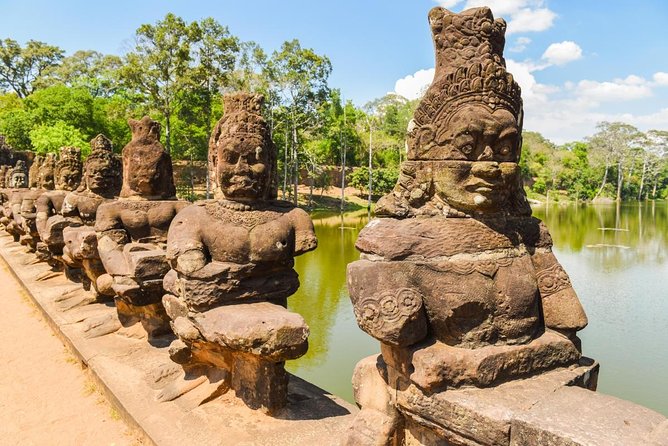
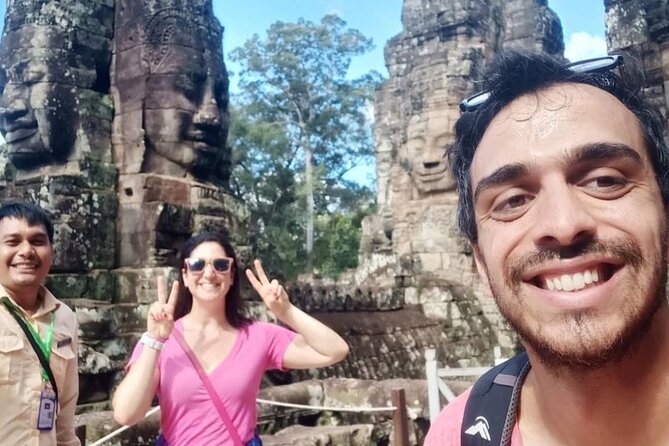
After tickets, the route heads into Angkor Thom, the great walled city that contains Bayon and Baphuon. Bayon is the dramatic introduction. Its towers carry the famous serene stone faces associated with King Jayavarman VII, and the temple is packed with carved details that make a guide especially useful.
Plan on about an hour at Bayon. You will walk through narrow galleries and around heavy stone towers, often stopping to study carvings or listen to the story behind the building. The footing is uneven, so practical shoes matter more than stylish ones.
Baphuon follows with another hour. This temple mountain was built in the mid-11th century as a Hindu state temple dedicated to Shiva. Its raised structure means more stairs and sloping paths, so the route is not a gentle stroll. If you want to see the main monuments properly, you need reasonable walking ability and comfort with climbing.
More multi-day routes in Siem Reap:
- Siem Reap: Angkor Wat 2-Day Tour with Sunrise and Sunset
★ 4.9 · 4,429 reviews - Angkor 2-Day Sunset & Sunrise Small-Group Tour
★ 5.0 · 2,567 reviews - Siem Reap: Angkor Sunrise 1- or 2-Day Guided Temples Tour
★ 4.9 · 1,132 reviews
Ta Prohm and the royal terraces
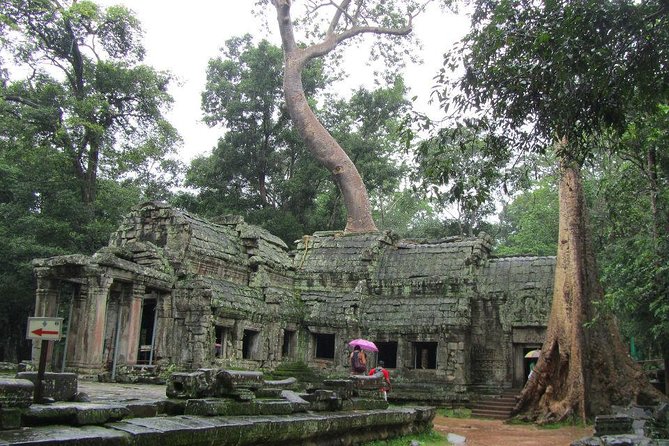
Ta Prohm brings a different mood. Built in the late 12th and early 13th centuries, it is associated with the Bayon style and was originally called Rajavihara. The temple is known for the way trees and stonework appear together, making it one of the most memorable stops on the route.
You have about an hour here. Ta Prohm rewards slow looking, but the route can feel crowded and confined. Stay close to your guide, since the courtyards and galleries can be confusing, and watch your footing around broken stone.
The Terrace of the Elephants takes about 30 minutes. It formed part of the eastern edge of the royal palace grounds, facing the parade area. The carved elephants give the terrace its name, while the nearby Terrace of the Leper King adds another layer of sculpture and royal symbolism.
This is a shorter stop, but it helps connect the temples to the former city around them. I like that the tour does not treat Angkor as a string of isolated monuments. You get a sense of how the royal center, parade grounds, state temples, and processional spaces fitted together.
Angkor Wat in the afternoon, then Phnom Bakheng
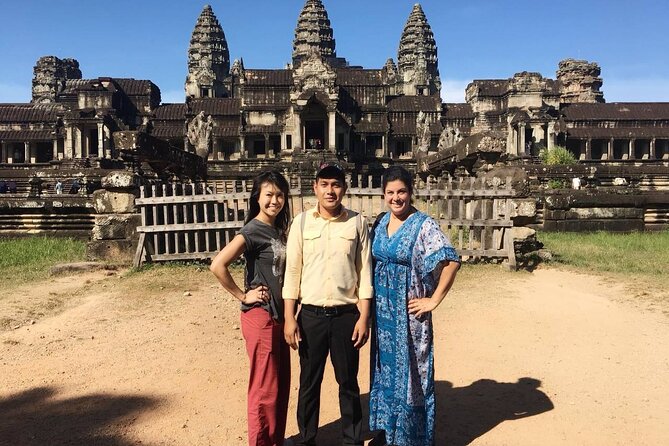
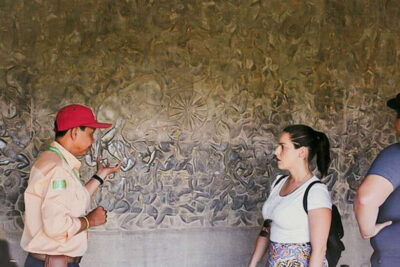
After lunch, you spend about three hours at Angkor Wat. The temple complex covers a vast site and was first built as a Hindu temple before later use connected it with Buddhism. Its long approach, galleries, bas-reliefs, courtyards, towers, and scale require time.
Three hours is a sensible amount for a first visit, though you may still wish for more. Your guide can help you focus on the key areas instead of wandering until the heat takes over. Bring water, use the supplied cold towels, and pace yourself.
Angkor Wat is not a quick photo stop. You will walk a fair distance, and reaching higher areas involves stairs. The main reward comes from seeing the whole design, from the causeway and outer enclosure to the central towers and detailed carvings.
The day ends with up to three hours at Phnom Bakheng. This temple mountain, dedicated to Shiva and built during the reign of Yasovarman, sits on a hill above the surrounding area. The climb adds another physical test after a full day of ruins.
The schedule suggests a late-day visit, and one published comment describes the experience as including a sunset tour. The supplied itinerary itself does not promise a specific sunset time, so treat the timing as dependent on the day’s pace and local conditions. Phnom Bakheng is best for people who still have energy after Angkor Wat, not for anyone hoping to finish the day with an easy ride and no stairs.
Sunrise at Angkor Wat requires an early return
Day two starts with a return to Angkor Wat for sunrise. The listed time at the temple is three hours, followed by a return to your hotel for breakfast.
The exact pickup time is not stated, so ask your guide or operator for it in advance. The point of this arrangement is practical: you see the early morning view, then go back to your accommodation rather than carrying breakfast supplies through the temple complex.
Sunrise also gives you a second chance to appreciate Angkor Wat from a different angle. The first day gives you time inside the monument, while the morning visit focuses more on the approach, silhouette, reflection, and changing light. Do not expect the same quiet experience every morning, since Angkor Wat is one of the area’s main attractions.
After breakfast, the tour heads northeast to Banteay Srei. This 10th-century temple is dedicated to Shiva and lies about 25 kilometers from the main Angkor group. The drive makes it a longer outing, but the change of scale is worth it.
Banteay Srei is smaller than Angkor Wat and many of the central temples. Its appeal comes from finely worked stone carvings and close-up detail. You spend about two hours here, which gives you time to examine the decoration rather than simply walk around the outer walls.
A few more options around Siem Reap worth reading up on
- Angkor Wat Sunrise or Sunset Tour with Guide from Siem Reap
★ 5.0 · 12,109 reviews - Siem Reap: Angkor Wat: Small-Group Sunrise or Sunset Tour
★ 5.0 · 9,444 reviews - From Siem Reap: Kampong Phluk Floating Village Tour by Boat
★ 4.9 · 6,979 reviews - Sunset tour of Kampong Phluk stilts home village on the Tonle Sap
★ 5.0 · 4,865 reviews
Banteay Samre and Pre Rup add variety
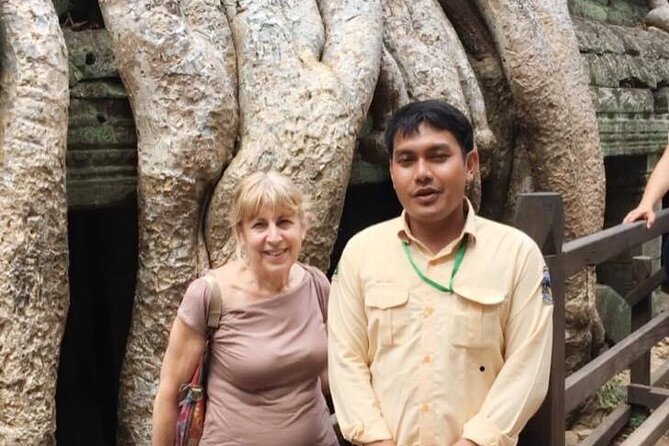
Banteay Samre follows for about an hour. Built in the early 12th century during the reigns of Suryavarman II and Yasovarman II, it is a Hindu temple in the Angkor Wat style.
The stop gives you another look at sandstone construction and temple planning without repeating the same experience as Angkor Wat. Since Banteay Srei and Banteay Samre are both outside the central cluster, this part of the day feels more like a journey through the wider Angkor area.
Pre Rup takes another hour. Built as the state temple of Rajendravarman and dedicated in 961 or 962, it uses brick, laterite, and sandstone in a temple-mountain design. Its stepped form again means climbing, but the structure is different enough from the earlier stops to keep the day varied.
At this point, the tour has already included a great deal of walking. If you are tired, tell the guide. The private format should make it easier to adjust the pace than a fixed large-group excursion, although the schedule still contains several substantial stops.
Kompong Phluk gives the temples a human setting
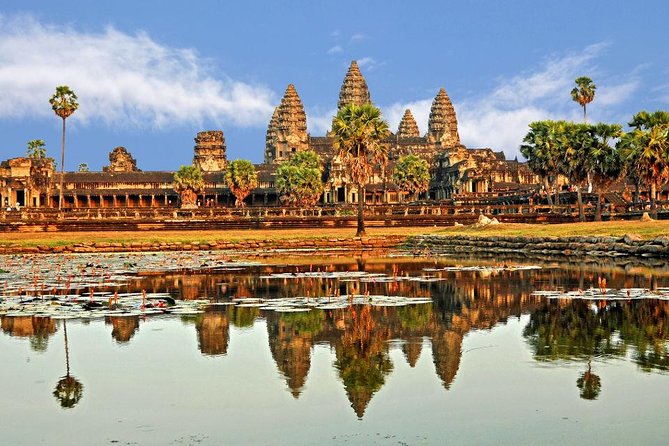
The final main stop is Kompong Phluk, a group of villages built largely on stilts along Tonle Sap. The community depends heavily on fishing, with wet-season fishing from May through October forming an important part of local life.
The visit lasts about three hours and includes the motorized boat fee. This is one of the tour’s most useful additions because it shifts your attention from monuments to present-day communities and the water system around Siem Reap.
You should think of Kompong Phluk as a real village visit, not simply a scenic boat ride. Water levels and seasonal conditions affect what you see. The supplied details do not promise a particular wildlife sighting or a specific village activity, so go for the setting and local way of life rather than a guaranteed photo moment.
The boat portion also offers a welcome break from stone steps. You still have a long day, but sitting on the water changes the pace. The tour returns to town at about 5 p.m.
If you would rather use the final three hours for temples, the alternative route includes Preah Khan, Neak Poan, Ta Som, and East Mebon. That choice suits an archaeology-focused trip. Kompong Phluk suits you better if two days of temple viewing feels like too much of one thing.
What the $130 price really covers
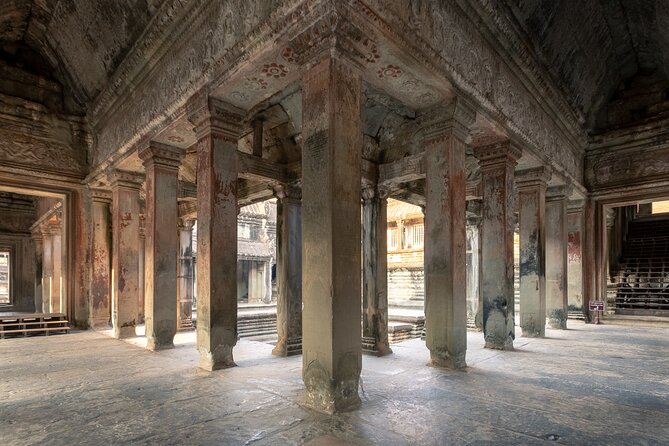
At $130, the tour offers solid value for a private two-day arrangement, especially if you are sharing it with family or friends. The cost includes hotel transfers, the air-conditioned vehicle, an English-speaking guide, bottled water, cold towels, and the motorized boat fee.
The private format is the key value. You are not paying only for transport between famous sites. You are paying for a guide who can explain what you are seeing, a driver who handles the long routes, and a vehicle where you can cool off between temples.
The temple pass is extra. The supplied price information lists a two-day pass at $67 per person, but it also gives separate three-day and seven-day figures. Confirm the exact current rate when booking, since the pass is a major addition to the total cost.
Meals, soft drinks, and alcohol are also excluded. Lunch is mentioned in the day-one sequence, but it is not included in the stated package. Plan to pay separately for food and bring enough cash for personal purchases.
Group discounts are available, which can improve the price for a larger private party. A solo visitor will feel the cost more sharply, while two or more people can share the vehicle and guiding expense.
Comfort, fitness, and guide quality
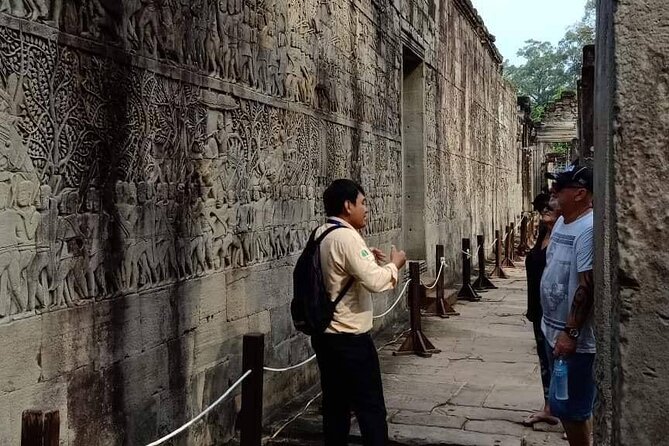
The air-conditioned vehicle matters here. You spend long hours outside among stone temples, and the ride between stops gives you a chance to cool down. Bottled water and cold towels are small inclusions, but they are genuinely useful after climbing Baphuon, Phnom Bakheng, or the upper sections of Angkor Wat.
This is not a suitable choice if you cannot walk normally or have below-average fitness. The route involves uneven ground, stairs, slopes, and long periods on your feet. One particularly useful warning is that the climbing can be challenging, even for someone who is eager to see everything.
Wear secure walking shoes and keep your day bag light. The tour information does not list special equipment, so do not assume that walking aids, meals, or temple admission are supplied.
The strongest part of the service appears to be the guide and driver team. Seng is specifically praised for explaining the temples and adding Tonle Sap to the plan, while Mr. Choup is praised for taking a couple to everything they wanted and more. That suggests a good fit for people who want structure without giving up all flexibility.
The tour is conducted in English and is private. Children under three are not accepted, while most other participants can take part. The pickup area is near public transportation, though hotel pickup and drop-off are already included.
Who should book this tour?
I would choose this tour if you have only two full days in Siem Reap and want both the essential temples and one major non-temple experience. The balance is strong: Bayon, Ta Prohm, Angkor Wat, Banteay Srei, smaller temple sites, sunrise, and Tonle Sap.
It also suits you if you value explanations. Angkor can blur into a series of impressive stones without context, and an English-speaking guide can help you understand why each temple was built and how the sites relate to one another.
I would think twice if you dislike early mornings, long walking days, or fixed schedules. The sunrise return, multiple climbs, and late-day Phnom Bakheng visit create a demanding two days.
The private format makes this a better pick than a large group tour for couples, families with older children, and friends who want to adjust the pace. If your main goal is only photography, a shorter temple plan may feel less tiring. If you want the broadest first look at Siem Reap, this itinerary covers a lot for the money.
Should you book it?
Book this tour if you want a well-rounded first visit, comfortable transport, and a guide who can shape the day around your interests. The best features are the private vehicle, the sunrise and daytime Angkor Wat visits, and the choice between Kompong Phluk and four additional temples.
Before paying, confirm the current temple-pass price, the sunrise pickup time, and whether the day’s route will include Phnom Bakheng at the time you hope to visit. Remember that meals are extra and that the walking is serious.
The booking has free cancellation up to 24 hours before the start time for a full refund. That gives you some room to change plans, but changes or cancellations inside 24 hours are not accepted.
FAQ
Is hotel pickup included?
Yes. Complimentary pickup and drop-off are included at your guest accommodation. The stated tour start time is 8:30 a.m., and the vehicle departs the hotel at the tour start time.
Is this a private tour?
Yes. Only your own group participates in the activity. The vehicle and guide are provided for your private group.
Is the Angkor temple pass included?
No. The temple pass is separate. The supplied information lists a two-day pass at $67 per person, with other ticket-office figures also provided, so confirm the current price before departure.
Are meals included?
No. Meals, soft drinks, and alcohol are not included. Bottled water and cold towels are included.
Does the tour include the boat at Kompong Phluk?
Yes. The fee for the motorized boat is included when you take the Kompong Phluk option.
Can Kompong Phluk be replaced with more temples?
Yes. As an alternative, you can visit Preah Khan, Neak Poan, Ta Som, and East Mebon. The alternative is listed as a three-hour stop.
Newest reviews from Siem Reap
- War Museum, Killing Field, and APOPO Hero RATs Tour★ 5.0 · 7 reviews
- Angkor Wat at Sunrise★ 4.0 · 7 reviews
- Siem Reap Angkor Airport Taxis (from Airport to Hotel)★ 5.0 · 44 reviews
- Cambodian Cooking Class and Oxcart Ride with Local Village Tour★ 5.0 · 4 reviews
- Secret Temples of Angkor – Guided Tour in Siem Reap★ 5.0 · 6 reviews
- Short Cycling at Countryside★ 5.0 · 29 reviews
- SIEM REAP E-BIKE HALF-DAY COUNTRYSIDE (25-30 km)★ 4.0 · 1 review
- Unveiling the Mystical Beauty of Phnom Kulen National Park★ 5.0 · 6 reviews
Multi-Day Tours, compared.
Angkor Wat 2-Day Tour with Sunrise and Sunset
Read our review →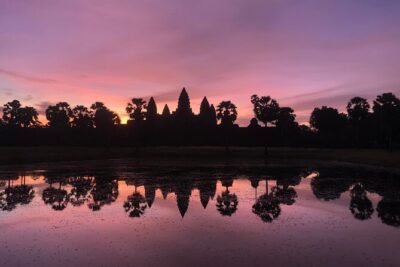
Angkor 2-Day Sunset & Sunrise Small-Group Tour
Read our review →
Angkor Sunrise 1- or 2-Day Guided Temples Tour
Read our review →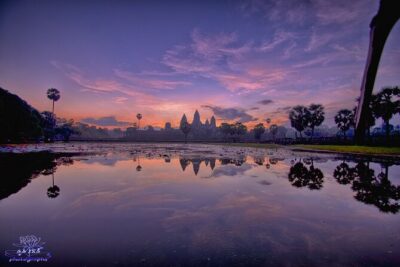
2-Day Angkor Wat With Small, Big Circuit and Banteay Srei Tour
Read our review →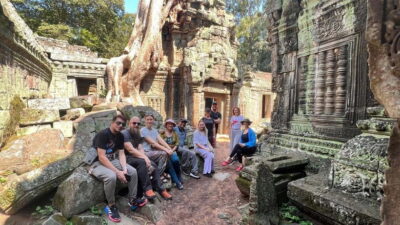
2-Day Temple Highlights Sunrise and Sunset Option
Read our review →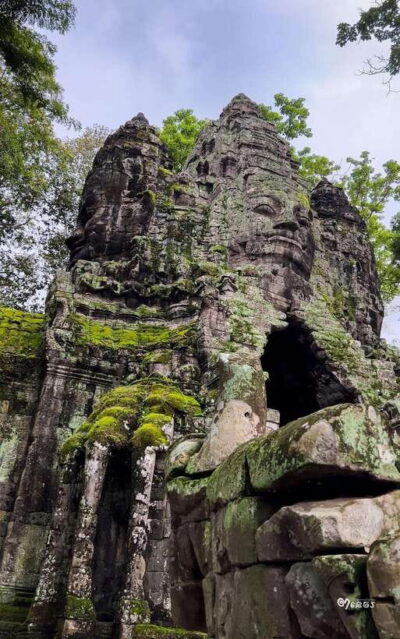
Angkor Wat 2-Day complex Sun rise & Sun set with Guided Tour
Read our review →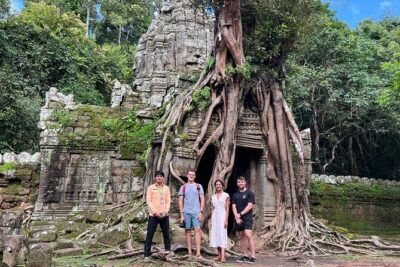
2-Day Angkor Wat Tour with Banteay Srei and Floating Village
Read our review →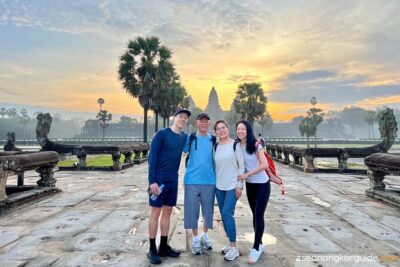
Browse the lists this tour appears in