
Reviewed · COOKING CLASSES
Khmer Cuisine Cooking Class In Siem Reap
Start with the market. This four-hour Siem Reap experience pairs a local food walk with a practical Khmer cooking lesson, giving you more than a meal and a recipe card. I like the early market visit at Phare Ler Market and Samaki Market, where you learn how to choose vegetables and meet local sellers. I also like that the $30 price includes hotel pickup, lunch, drinks, taxes, photos, and a cooking certificate.
The main consideration is the early start. Pickup begins at 8AM, and the class runs until about 2PM, so this is a full morning and early afternoon rather than a quick holiday activity. The group can reach 20 people, which may feel less personal than a small private lesson.
In This Review
- Key points at a glance
- A Siem Reap cooking class that starts at the market
- Phare Ler Market and Samaki Market from 8:10AM
- Arriving at the Khmer Cuisine Cooking Class garden
- Learning why the chosen menu matters
- Making your own lunch
- Photos, recipes, and a cooking certificate
- What $30 includes and what it does not
- Timing, comfort, and the morning schedule
- Who will enjoy this experience most
- Should you book the Khmer cuisine cooking class?
- FAQ
- Where does the Khmer cuisine cooking class take place?
- What time does hotel pickup begin?
- Which markets are included?
- How long is the market visit?
- What time should the class reach the cooking venue?
- What happens during the cooking lesson?
- Is lunch included?
- Are drinks included?
- What do I receive after the class?
- What is the cancellation policy?
Key points at a glance
- Two local markets before breakfast cooking: Visit Phare Ler Market and Samaki Market from about 8:10AM to 9AM, with guidance on selecting local vegetables and food.
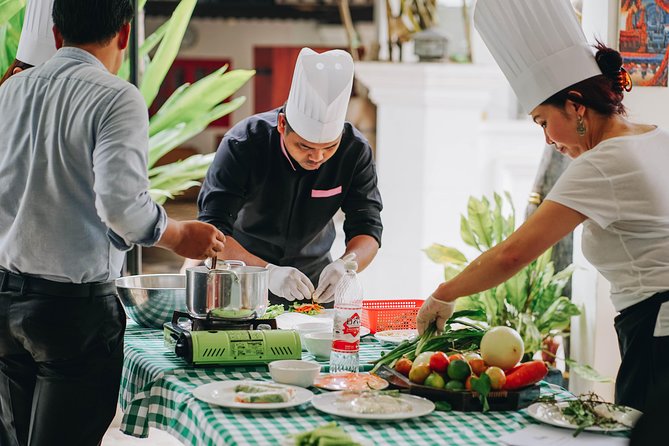
- Hands-on cooking in a garden setting: Continue to the Khmer Cuisine Cooking Class garden, expected around 9:20AM.
- Food with cultural context: The chef explains the background of your chosen menu and its place in Cambodian food culture before you begin cooking.
- Lunch is the food you prepare: You sit at a private table by the pool and eat the dishes made during class.
- Useful take-home extras: You receive food recipes, activity photos, and a cooking certificate.
- Strong value at $30: Private transportation, lunch, coffee or tea, bottled water, taxes, and fees are included. Alcohol costs extra.
A Siem Reap cooking class that starts at the market
Many cooking lessons begin when the chopping starts. This one begins earlier, at the market, and that is one of its best ideas. You are not simply handed ingredients in a classroom. You first see the food in the place where local buying takes place, then carry that connection into the kitchen.
Pickup is scheduled for 8AM from your hotel. Private transportation is included, which matters in Siem Reap because you do not need to arrange a separate ride to the market or cooking venue. The morning schedule is tight but clear: market visits from about 8:10AM to 9AM, arrival at the cooking garden around 9:20AM, and the end of the class at about 2PM.
The experience is operated by Damnak Kitchen Restaurant. The cooking venue is called the Khmer Cuisine Cooking Class garden, a setting that leads to lunch beside the pool. The supplied details do not identify the chef or guide by name, so you should not expect to choose a particular instructor when booking.
More Cooking Classes in Siem Reap
- Khmer Cooking Class at a Local’s Home in Krong Siem Reap
★ 5.0 · 2,731 reviews - Siem Reap: Khmer Cooking Class at a Local’s Home
★ 5.0 · 1,108 reviews - Award-Winning Cooking Class Experience with Professional Teacher
★ 5.0 · 745 reviews
Phare Ler Market and Samaki Market from 8:10AM
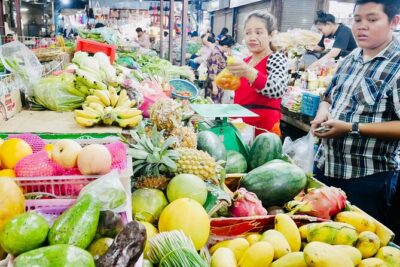
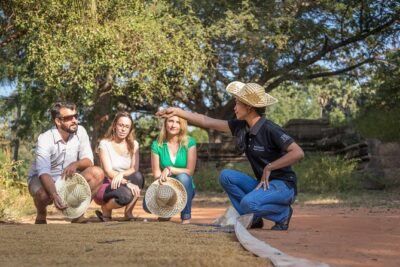
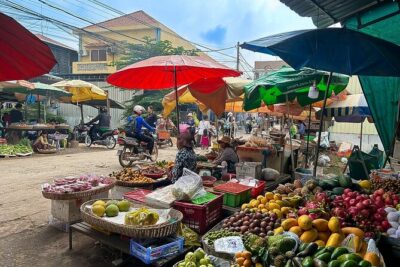
The market visit is not just a sightseeing stop. Your guide shows you how to select the best local vegetables and food, which gives you a useful skill for the rest of your time in Cambodia. Even if you do not plan to cook again during the trip, this makes unfamiliar ingredients easier to understand.
You visit both Phare Ler Market and Samaki Market. The time is short, about 50 minutes, so think of this as a focused introduction rather than a long market study. You will have enough time to look at ingredients, meet local vegetable sellers, and watch the buying process, but not necessarily enough time for a leisurely browse through every aisle.
A particularly appealing detail is the chance to test your bargaining skill. That adds a little play to the visit, though you should keep your expectations sensible. The experience promises guidance on choosing food and contact with sellers, but it does not promise that you will personally purchase a large basket of ingredients or conduct every negotiation yourself.
I like this portion because it adds local context to the recipes. A cooking class can feel disconnected when ingredients appear from nowhere. Here, you see the raw materials first, then learn how they become lunch.
Arriving at the Khmer Cuisine Cooking Class garden
After the markets, you go directly to the cooking venue, with arrival expected at about 9:20AM. The garden setting and poolside meal give the class a relaxed finish, especially after the early start and the activity of the markets.
The program does not provide a detailed description of the venue layout, cooking stations, or equipment. You should therefore focus on what is promised: a guided lesson, the food you prepare, lunch at a private table by the pool, and a collection of take-home materials.
The schedule leaves several hours between arrival and the planned 2PM finish. That gives the chef time to explain the menu, demonstrate the recipe, guide your cooking, arrange photographs, and serve lunch. It also means this is not a rushed demonstration where you watch someone else do all the work.
Learning why the chosen menu matters
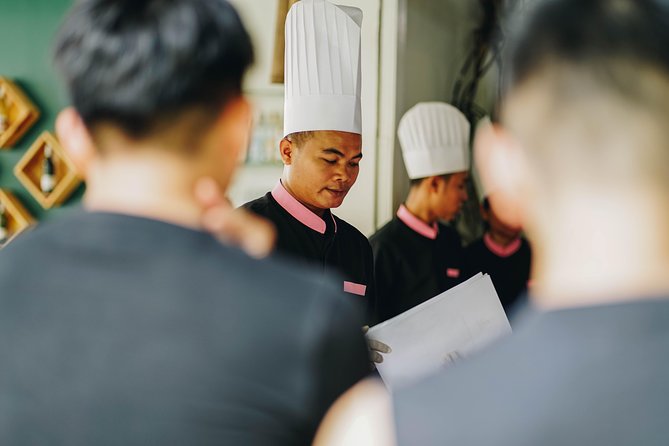
The chef begins by explaining the history of your chosen menu and why it became a cultural signature food of Cambodia. That introduction is important because it turns a recipe into a piece of local culture. You learn not only what goes into the dish, but why the dish matters.
The available details do not name the menu options. You should check the current choices before booking if you have a strong preference or dietary concern. The experience promises a chosen menu, but it does not state that vegetarian, vegan, allergy-sensitive, or children’s alternatives are available.
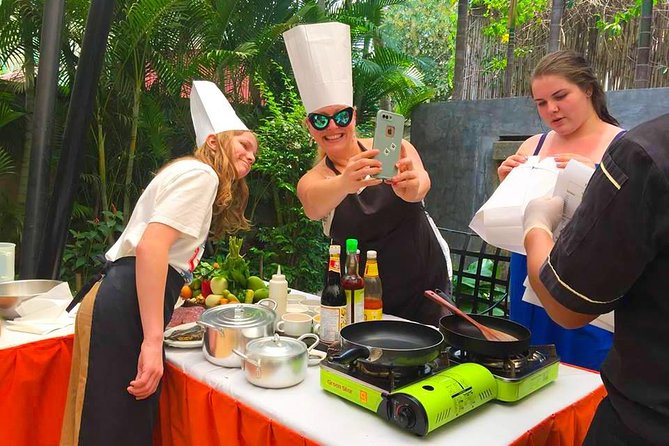
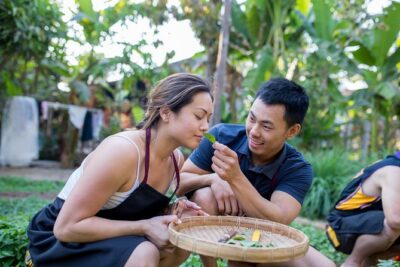
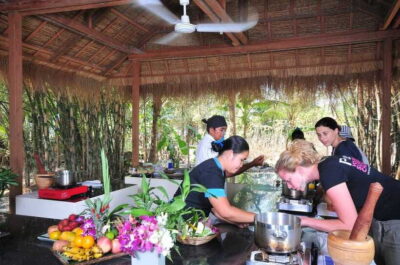
After the explanation, the chef demonstrates the recipe. You then cook under the chef’s guidance, with the stated aim of helping you produce food with a good taste. This is the part I would value most if I wanted to take the lesson home. A recipe sheet is useful, but watching the method and getting corrections while you work is much better than reading instructions later.
The description does not spell out every dish, cooking technique, or ingredient. That is a small limitation for anyone choosing a class based on a specific Cambodian favorite. For a broad introduction to Khmer food, though, the format makes sense: market ingredients, cultural explanation, demonstration, then practice.
Something completely different for another day:
- Angkor Wat Sunrise or Sunset Tour with Guide from Siem Reap
★ 5.0 · 12,109 reviews - Siem Reap: Angkor Wat: Small-Group Sunrise or Sunset Tour
★ 5.0 · 9,444 reviews - From Siem Reap: Kampong Phluk Floating Village Tour by Boat
★ 4.9 · 6,979 reviews - Sunset tour of Kampong Phluk stilts home village on the Tonle Sap
★ 5.0 · 4,865 reviews
Making your own lunch
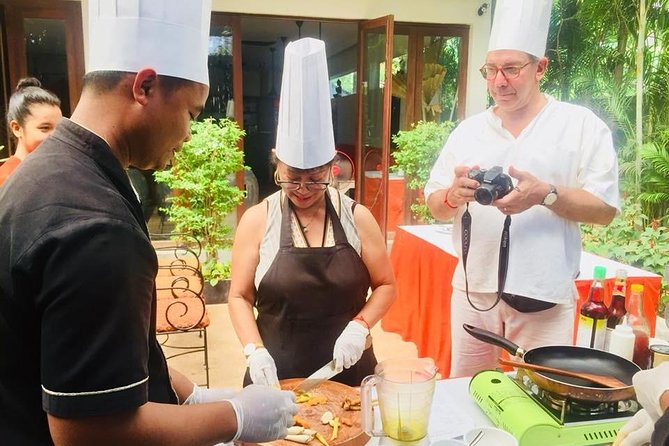
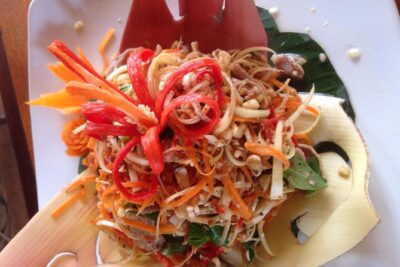
The food you cook becomes your lunch. That gives the class a clear payoff and helps you judge the result while the lesson is still fresh. You are not simply sampling a dish prepared by someone else, so the meal has a personal connection to the work you have just done.
Lunch is served at a private table by the pool. The word private suggests a separate table arrangement, though the supplied information does not explain whether every booking receives a completely separate dining area. The poolside setting should make the meal feel calmer than the market portion.
Coffee or tea and bottled water are included. Alcoholic drinks are not included, so plan to pay separately if you want them and if they are available at the venue. There is no need to budget for the food you cook, taxes, or basic drinks because those are covered in the $30 price.
Photos, recipes, and a cooking certificate
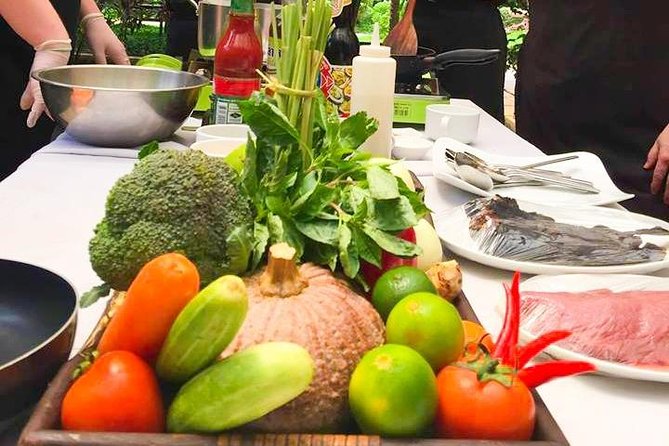
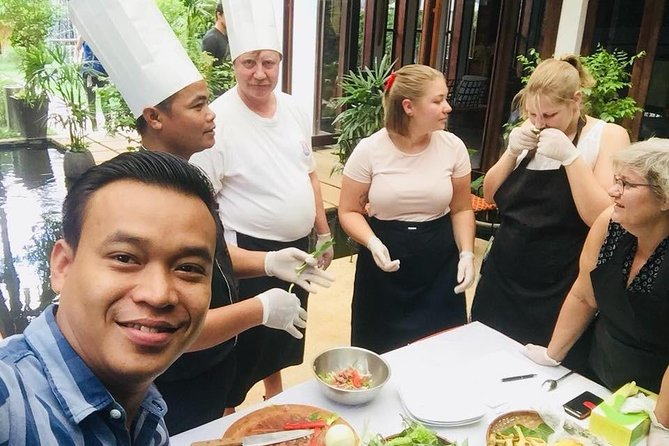
The class includes group photographs and activity photographs during the cooking process. You also receive photos at the end, along with the food recipe and a cooking certificate. These extras are simple, but they improve the value of the experience.
The photos help preserve more than a final plate. They can capture the market visit, cooking steps, and the group working together. The certificate is a light souvenir rather than a professional qualification, but it can be fun for families and friends.
The recipe may be the most useful item. One strong reason to book a cooking class is the chance to repeat the dish at home. The experience is designed for that, and the personal account provided with the tour describes plans to cook the food for family after returning home.
I would still photograph or save the recipe carefully. The information says you receive it, but it does not specify whether it is printed, digital, or available in several languages.
What $30 includes and what it does not
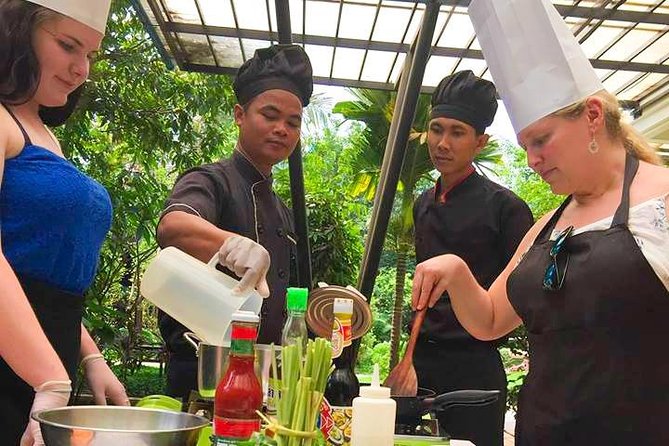
At $30 per person, this is priced as an accessible half-day activity. The value is good because the fee covers several costs that can quickly add up elsewhere:
- Hotel pickup and private transportation
- All fees and taxes
- The cooking class
- Lunch made from the food you prepare
- Coffee or tea
- Bottled water
- Cooking photos
- Food recipes
- A cooking certificate
You are paying for more than instruction. You are also buying transportation, a guided market visit, food, drinks, and a set of souvenirs. If you had to arrange a ride and purchase a separate lunch after a shorter class, the difference would matter.
Alcoholic beverages are excluded. The group size can reach 20 people, so the price is especially attractive for people who do not require one-to-one teaching. If you want a very intimate lesson, ask about the expected group size before booking. A maximum of 20 does not mean every session will have 20 people, but it is the largest stated group.
Group discounts are offered. The information does not give the discount amount or the number of people needed, so larger families and groups should ask for the current terms before paying.
Timing, comfort, and the morning schedule
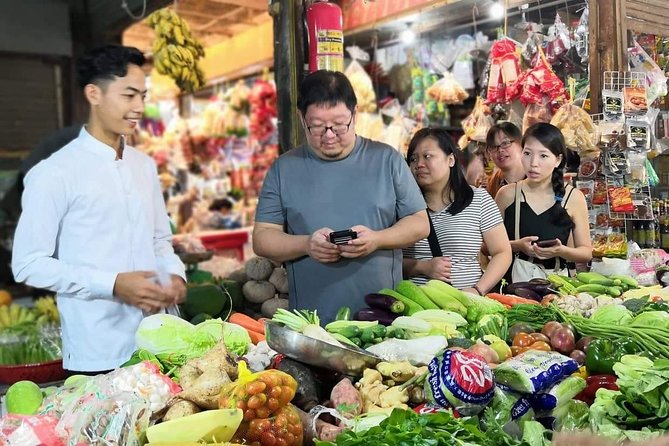
The biggest practical issue is timing. Pickup starts at 8AM, and you should be ready before then. The market visit begins around 8:10AM, followed by transport to the cooking garden and a class that ends around 2PM.
This schedule works well if you want a substantial activity during the cooler part of the day. It is less appealing if you prefer slow mornings or have a packed temple schedule immediately afterward. Since the program ends at 2PM, leave room for the ride back and for a rest before another major outing.
The experience requires good weather. If poor weather forces cancellation, you receive the choice of a different date or a full refund. It also requires a minimum number of participants. If that minimum is not reached, you are offered another date or experience, or a full refund.
Confirmation is provided when you book. A mobile ticket is available, which keeps the practical side simple. The information does not state whether the venue is air-conditioned, how much standing is required, or whether the cooking stations are adapted for mobility needs. If those points matter to you, contact Damnak Kitchen Restaurant before booking.
Who will enjoy this experience most
I would recommend this class to anyone who wants food to be part of their understanding of Cambodia, not just another meal. The market visit is especially useful for first-time visitors who want help identifying local produce and seeing how ingredients enter everyday cooking.
It also suits couples, families, and groups of friends. The photos, certificate, and hands-on format give the activity a social side, while the recipe makes it more useful after the holiday. People who enjoy learning by doing will get more from it than people who prefer to sit back and watch.
This may be less suitable for someone with a strict dietary requirement unless the provider confirms an appropriate menu. It may also disappoint a visitor hoping for a highly specialized class focused on one named dish, since the available information does not list the menu choices.
The early start is another dividing line. If you can manage 8AM pickup, the market adds real value. If you are trying to protect every morning for temple visits or sleep, this activity takes a meaningful block of time.
Should you book the Khmer cuisine cooking class?
Book it if you want a reasonably priced, practical introduction to Cambodian food with the market included. The strongest features are the local vegetable shopping lesson, the chef’s explanation of the menu’s cultural role, and the fact that you cook and eat your own lunch.
At $30, the inclusions are generous: transport, food, drinks, taxes, photos, a recipe, and a certificate. The tradeoffs are the early start, the possible 20-person group, the unnamed menu choices, and the lack of stated information about dietary adaptations.
My advice is simple. Confirm the available menu and any food needs before booking, then arrive ready for a full morning. If you want to bring home a Cambodian recipe you can actually repeat, this is a sensible choice.
FAQ
Where does the Khmer cuisine cooking class take place?
The experience is in Siem Reap, Cambodia. The cooking portion takes place at the Khmer Cuisine Cooking Class garden, operated by Damnak Kitchen Restaurant.
What time does hotel pickup begin?
Hotel pickup begins at 8AM.
Which markets are included?
The market visit includes Phare Ler Market and Samaki Market.
How long is the market visit?
The market tour is scheduled from about 8:10AM to 9AM.
What time should the class reach the cooking venue?
Arrival at the Khmer Cuisine Cooking Class garden is expected around 9:20AM.
What happens during the cooking lesson?
The chef explains the history of the chosen menu, discusses its cultural importance in Cambodia, demonstrates the recipe, and guides you while you cook.
Is lunch included?
Yes. Lunch is prepared from the food you cook and is served at a private table by the pool.
Are drinks included?
Coffee or tea and bottled water are included. Alcoholic beverages are not included.
What do I receive after the class?
You receive food recipes, photographs, and a cooking certificate.
What is the cancellation policy?
You can receive a full refund if you cancel at least 24 hours before the experience start time. Cancellations or changes made within 24 hours are not refunded or accepted. Poor weather or failure to meet the minimum number of participants may result in another date, another experience, or a full refund.
Newest reviews from Siem Reap
- War Museum, Killing Field, and APOPO Hero RATs Tour★ 5.0 · 7 reviews
- Angkor Wat at Sunrise★ 4.0 · 7 reviews
- Siem Reap Angkor Airport Taxis (from Airport to Hotel)★ 5.0 · 44 reviews
- Cambodian Cooking Class and Oxcart Ride with Local Village Tour★ 5.0 · 4 reviews
- Secret Temples of Angkor – Guided Tour in Siem Reap★ 5.0 · 6 reviews
- Short Cycling at Countryside★ 5.0 · 29 reviews
- SIEM REAP E-BIKE HALF-DAY COUNTRYSIDE (25-30 km)★ 4.0 · 1 review
- Unveiling the Mystical Beauty of Phnom Kulen National Park★ 5.0 · 6 reviews
Cooking Classes, compared.
Khmer Cooking Class at a Local’s Home in Krong Siem Reap
Read our review →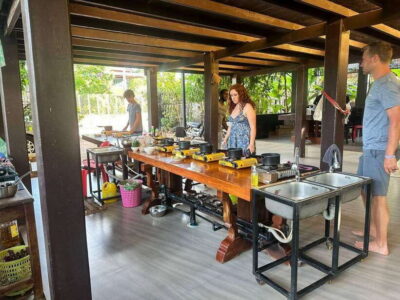
Award-Winning Cooking Class Experience with Professional Teacher
Read our review →
Browse the lists this tour appears in