
Reviewed · COOKING CLASSES
Award-Winning Cooking Class Experience with Professional Teacher
Come hungry and curious. This three-hour Paper Tiger class gives you a useful introduction to Khmer food through a market visit, hands-on cooking, and a meal you prepare yourself. I like the chance to choose dishes such as fish amok, chicken curry, beef loc lac, green mango salad, and vegetarian options. I also like the small-group format, with no more than 20 people and several teachers praised for their patience, especially Sopheap, Sinuon, and Channy.
The $22 price is fair because it covers the market tour, professional instruction, and lunch or dinner. The main caution is comfort: the cooking area is open to the outside, and one detailed account found it very hot, with concerns about kitchen equipment and recipe follow-up. Bring water, confirm your meeting details, and keep your expectations practical rather than polished.
In This Review
- Key Points Before You Book
- Why Khmer Cooking Is a Good Way to Meet Siem Reap
- Meeting in the Middle of Pub Street
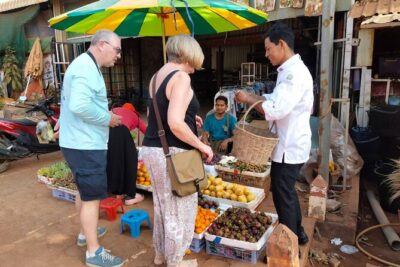
- The Market Visit: Ingredients Before Recipes
- Choosing Your Three-Course Menu
- From Chopping to Curry Paste
- Sitting Down to Eat What You Made
- Heat, Equipment, and Comfort
- The Recipe Book You Take Home
- Is $22 a Good Price?
- Who Will Enjoy This Class Most?
- Booking Advice and Cancellation
- Should You Book Paper Tiger Cooking Class?
- FAQ
- How long does the Paper Tiger cooking class last?
- Where does the class meet?
- Is transportation included?
- What dishes can I learn to cook?
- Is a meal included?
- How many people can join the class?
- What is the cancellation policy?
Key Points Before You Book
- A Khmer food lesson with a meal attached: You prepare and eat a three-course menu, rather than simply watching a chef work.
- A short walk through a local market: The opening tour introduces fresh produce, meat, spices, and ingredients used in Cambodian cooking.
- Choose from meat, fish, and vegetarian dishes: Popular examples include amok, curry, loc lac, green mango salad, and flambéed bananas.
- Teachers make the difference: Sopheap, Sinuon, and Channy receive especially warm praise for clear instruction, patience, humor, and help with children.
- Good value at $22: Food, class instruction, market tour, and digital recipes are included, but private transport and drinks are not.
- Plan for heat and a possible language of timing: The class takes place near Pub Street, with an open-air kitchen and a maximum group size of 20.
Why Khmer Cooking Is a Good Way to Meet Siem Reap
Siem Reap is best known for Angkor Wat, but food gives you a quicker route into daily Cambodian life. A cooking class lets you ask why certain herbs are used, how curry paste is built, and which local ingredients are common at home rather than only on a restaurant menu.
Paper Tiger has been teaching visitors since 2001, so this is not a one-off demonstration arranged for a single group. The format is built around participation. You tour the market, prepare ingredients, cook under guidance, then sit down to eat what you made.
I like that structure. You are not merely handed a plate and told that it is traditional. You see ingredients before they are chopped, learn basic preparation, and taste the final result with a better sense of how it came together.
The class is listed for ages 8 to 70. That broad range makes it suitable for families, couples, friends, and solo visitors who enjoy meeting people over food. Children still need an adult’s attention around knives, hot pans, and the open flame, but the teachers’ patience with younger participants has been singled out as a strength.
More Cooking Classes in Siem Reap
- Khmer Cooking Class at a Local’s Home in Krong Siem Reap
★ 5.0 · 2,731 reviews - Siem Reap: Khmer Cooking Class at a Local’s Home
★ 5.0 · 1,108 reviews - Cambodian Village Cooking Class
★ 5.0 · 265 reviews
Meeting in the Middle of Pub Street
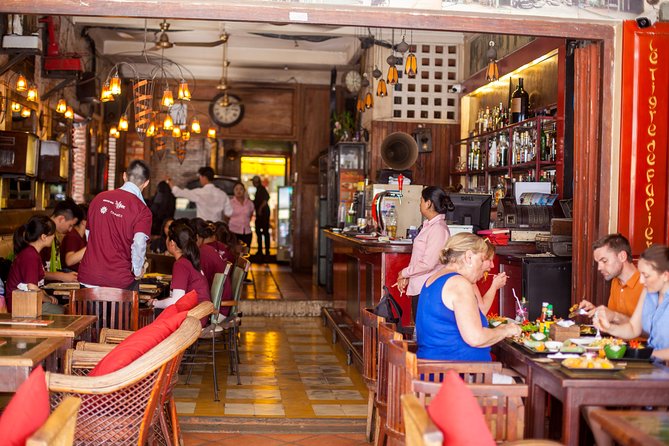
The class begins at Paper Tiger Cooking Class, at 9V33+XWF, 59 Street 08, in Krong Siem Reap. The meeting point is in the middle of Pub Street, which makes it easy to combine with an evening walk, a meal afterward, or a visit to the central part of town.
You arrange your own way there. Private transportation is not included, although the location is near public transportation. The activity ends back at the same meeting point, so you do not need to work out a separate return transfer.
Take the meeting instructions seriously. Almost every account describes a smooth experience, but one person reported arriving at the stated point and finding no one there, despite sending messages to the operator. That appears to be an exception, but I would still save the confirmation, check the address before leaving, and arrive with enough time to find the restaurant.
The class lasts about three hours. It is available as a lunch or dinner experience, and the morning or afternoon timing can be useful if you want to avoid filling every daylight hour with temple visits.
The Market Visit: Ingredients Before Recipes
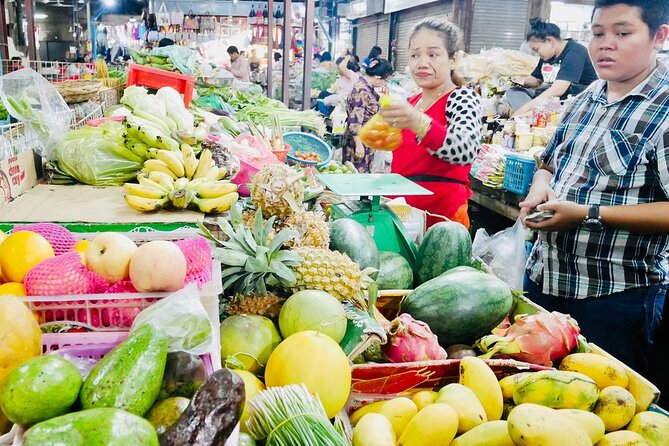
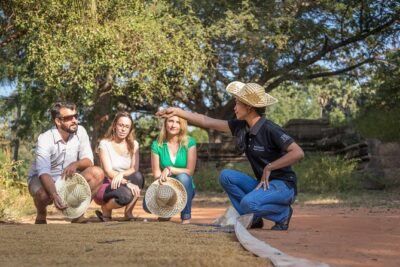
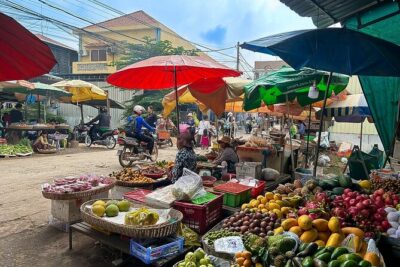
The market tour is one of the most useful parts of the class. It takes place at a nearby historic market, where you can look at the fresh produce and meats used in Khmer meals. The point is not simply to walk past stalls. Your teacher explains ingredients and helps connect what you see with the recipes you will later prepare.
This gives the cooking lesson some local context. Dragon fruit, herbs, vegetables, spices, and meat are not just items on a printed menu. They are part of the food supply you see in ordinary Cambodian life.
The quality of this portion depends heavily on the teacher. Channy is praised for explaining local produce with enthusiasm, while Sinuon is described as helpful when answering questions about market products. One less positive account found the visit rushed and said the instructor gave only brief identifications before moving on. If you are especially interested in markets, make a point of asking questions rather than waiting quietly at the back.
The market is also a good place to learn what Cambodian cuisine is not. Some ingredients are local, while others may be imported or familiar across Southeast Asia. A short walk cannot explain every regional difference, but it gives you a useful starting point before you pick up a knife.
Choosing Your Three-Course Menu
The class generally works around a starter, a main dish, and a dessert. You may be able to choose your own dishes, and several people appreciated the ability to select different options within the same group.
Popular combinations include green mango salad and fish amok. Other examples include chicken curry, beef loc lac, and flambéed bananas. Meat, fish, and vegetarian choices are available, although the exact selection can vary. If you have dietary restrictions or a strong preference, ask about the menu when booking or at the beginning of the class.
Choosing different dishes is especially useful for couples. One person can prepare a vegetarian starter while the other works on chicken or fish, allowing you to taste more of the menu. In a larger group, it may be possible to see several dishes being prepared, though each person’s actual hands-on role can depend on the group setup.
The portions appear generous. Several accounts describe having food left over, and one family had enough remaining for the next couple of days. That makes the price look even better, but it also means you should not eat a large meal immediately before class.
Something completely different for another day:
- Angkor Wat Sunrise or Sunset Tour with Guide from Siem Reap
★ 5.0 · 12,109 reviews - Siem Reap: Angkor Wat: Small-Group Sunrise or Sunset Tour
★ 5.0 · 9,444 reviews - From Siem Reap: Kampong Phluk Floating Village Tour by Boat
★ 4.9 · 6,979 reviews - Sunset tour of Kampong Phluk stilts home village on the Tonle Sap
★ 5.0 · 4,865 reviews
From Chopping to Curry Paste
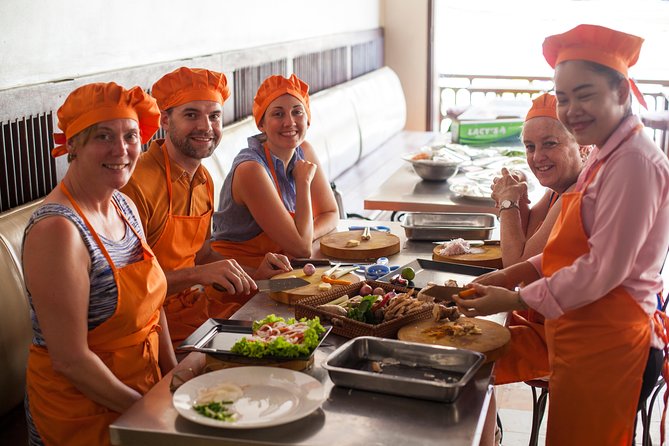
After the market visit, you return to the kitchen to prepare the meal. Your teacher explains the ingredients and the method for each dish, then guides you as you chop vegetables, mix seasonings, and cook.
The class includes practical work rather than only a chef’s performance. One person described chopping most of the vegetables and spices and making amok paste. That sort of task is exactly what you need if your goal is to reproduce the meal at home.
Amok is an especially good dish to learn because its flavor depends on the balance of paste, aromatics, and seasoning. You learn that Cambodian cooking is not simply about adding heat. It is about building flavor carefully, then cooking the ingredients in the right order.
Chicken curry offers another useful lesson in technique, while beef loc lac shows a different side of Khmer food. Green mango salad adds freshness and texture, and a sweet banana dessert gives the meal a clear finish. The variety helps you understand that a Cambodian meal can move from sharp and fresh to creamy, savory, and sweet.
Teachers named in the most enthusiastic accounts include Sopheap, Sinuon, and Channy. Sopheap is praised for clear explanations, humor, and patience with a child. Sinuon receives repeated praise for being warm, flexible, and attentive. Channy is described as intuitive about how much help each person needs. These details matter because cooking classes can become frustrating when the instructor either takes over or leaves beginners guessing.
Sitting Down to Eat What You Made
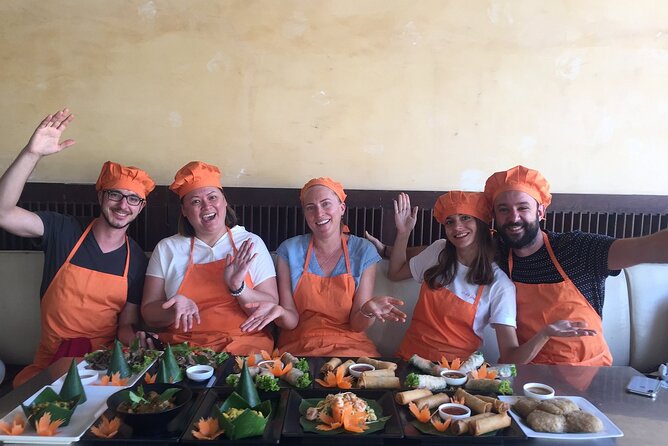
The best part comes after the heat and chopping. You sit down to eat lunch or dinner prepared during the class, usually with a full three-course meal in front of you.
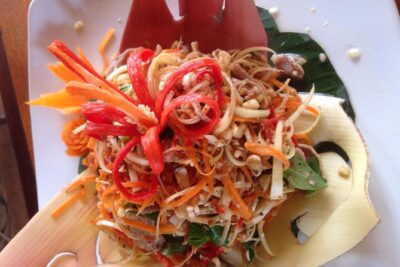
This shared meal gives the class a satisfying shape. You can compare the dishes, see how different cooking methods work together, and enjoy the result without rushing off to another stop. Several accounts describe the food as delicious, with presentation receiving praise as well.
The meal is also a useful test of the recipes. A demonstration can look easy, but eating the finished dish tells you whether you actually understand the balance of flavors. If something tastes different from what you expected, you still have the teacher there to explain what happened.
Drinks are a small point to clarify. Lunch or dinner is included, but private drinks are not listed as part of the package. One account reported paying extra for bottled water without being told in advance. I would bring additional water and ask about the cost of any drink before ordering.
Heat, Equipment, and Comfort
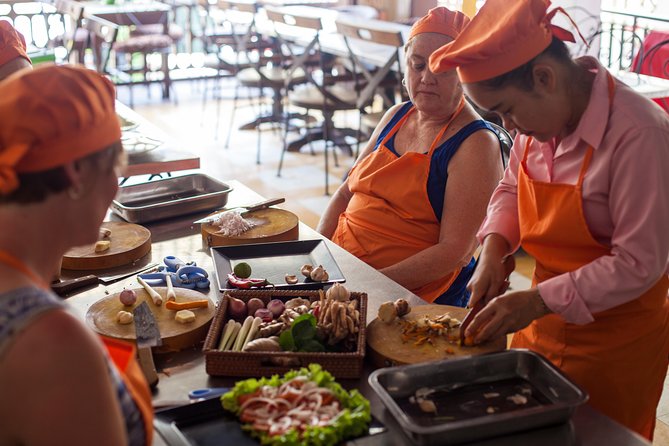
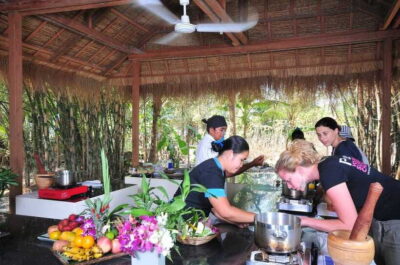
The open-air kitchen helps you see and participate in the cooking, but it may not be comfortable for everyone. One detailed account described temperatures above 35 degrees Celsius, limited ventilation, and a fan rather than air conditioning. Cooking over an open flame adds more heat.
That is worth considering if you are sensitive to hot weather or are planning the class during the warmest part of the day. Light clothing, secure footwear, and water are sensible choices. You should also expect a working kitchen rather than a modern culinary school with spotless display counters and restaurant-style equipment.
Most descriptions are positive about the atmosphere, and one person specifically found the place clean and easy for learning. Still, a critical account raised concerns about worn pans, open spice containers, and sanitation practices. Those claims conflict with the more favorable descriptions, so I would treat them as a reason to inspect conditions for yourself, not as proof that every class has the same problem.
If kitchen hygiene is a major concern for you, ask how ingredients and utensils are handled before you begin. That is a fair question in any cooking class.
The Recipe Book You Take Home
A digital recipe book is provided so you can make the dishes again after returning home. This is an important part of the value. A cooking class is much more useful when it gives you enough written guidance to repeat the meal, rather than leaving you with a few photographs and a vague memory of what went into the pan.
There is one qualification. One person said the recipes received did not match the dishes prepared and were not explained clearly enough. Most accounts do not raise this issue, but you should check that you receive the digital recipes and that they correspond to your menu.
During class, take your own notes if a teacher gives a useful substitution, cooking time, or seasoning tip. Write down the names of the dishes you prepared. That small bit of effort may help if the digital file is too general.
Is $22 a Good Price?
At $22 per person, this is a strong value if you want three things in one outing: a market introduction, practical cooking instruction, and a substantial meal.
You are not paying only for ingredients. You are paying for a teacher’s time, a prepared kitchen, the chance to cook several dishes, and a meal that can replace lunch or dinner. The generous portions described in several accounts make the price more attractive, particularly for couples and families.
The value is lower if you want a refined, air-conditioned setting or a long, detailed market lecture. It is also less attractive if you are looking only for a quick food demonstration. This class is hands-on and informal, with some unevenness possible from one teacher or session to another.
Group discounts may be available, and the maximum group size is 20. A group of that size can feel social, but you may receive less individual attention than a smaller session. Some bookings have ended up with only two people, creating what felt like a private class. That can be a pleasant surprise, but it is not something you should count on.
Who Will Enjoy This Class Most?
I would recommend it to you if you want a friendly introduction to Cambodian food and prefer doing something rather than simply sightseeing. It suits first-time visitors to Siem Reap, families with older children, couples, and anyone who wants recipes to take home.
It is also a good choice for people who are unsure about Southeast Asian flavors. The teacher can explain the ingredients and methods as you work, which makes unfamiliar herbs, spices, and sauces less intimidating.
You may want to choose another class if you need strict luxury standards, guaranteed air conditioning, advanced chef-level instruction, or tightly controlled dietary preparation. The available information does not promise any of those things.
The age range is 8 to 70, but the kitchen work includes hot pans and knives. Children can take part, especially with an attentive adult nearby, and the positive account about Sopheap working patiently with a son is encouraging.
Booking Advice and Cancellation
You receive confirmation at booking, and the activity offers mobile tickets. Free cancellation is available up to 24 hours before the scheduled start time. Cancellations or changes made less than 24 hours ahead are not accepted for a refund, and the cut-off follows local Siem Reap time.
Before you go, save the meeting address and the operator’s contact details. Wear clothes suitable for cooking, bring water, and avoid planning a large meal right before the class. If you need vegetarian food or have other dietary needs, confirm the available choices early.
Should You Book Paper Tiger Cooking Class?
Yes, if you want a practical and affordable taste of Khmer life. The market walk, hands-on preparation, generous meal, and recipe book give you more than a standard restaurant dinner. The teachers most often named, especially Sopheap and Sinuon, appear to bring the patience and warmth that make a cooking class work.
Book it with realistic expectations. This is an informal, open-air experience, not a polished studio kitchen. Ask about drinks, confirm your meeting point, and keep an eye on the recipe materials afterward. For $22, the class offers a lot: three hours of food, instruction, conversation, and a meal you helped create.
FAQ
How long does the Paper Tiger cooking class last?
The class lasts approximately three hours, including the market visit, cooking instruction, and the lunch or dinner you prepare.
Where does the class meet?
It meets at Paper Tiger Cooking Class at 9V33+XWF, 59 Street 08, Krong Siem Reap 171000, Cambodia, in the middle of Pub Street. The activity ends at the same meeting point.
Is transportation included?
No. Private transportation is not included, although the meeting point is near public transportation.
What dishes can I learn to cook?
Menu examples include Khmer fish amok, chicken curry, beef loc lac, green mango salad, and flambéed bananas. Meat, fish, and vegetarian options are available, and you may be able to choose your dishes.
Is a meal included?
Yes. Lunch or dinner prepared during the class is included. Drinks are not listed as included, so ask about beverage prices or bring extra water.
How many people can join the class?
The maximum group size is 20 people. Some sessions may have fewer participants, depending on bookings.
What is the cancellation policy?
You can cancel at least 24 hours before the start time for a full refund. Changes or cancellations made less than 24 hours before the experience are not accepted for a refund.
Newest reviews from Siem Reap
- War Museum, Killing Field, and APOPO Hero RATs Tour★ 5.0 · 7 reviews
- Angkor Wat at Sunrise★ 4.0 · 7 reviews
- Siem Reap Angkor Airport Taxis (from Airport to Hotel)★ 5.0 · 44 reviews
- Cambodian Cooking Class and Oxcart Ride with Local Village Tour★ 5.0 · 4 reviews
- Secret Temples of Angkor – Guided Tour in Siem Reap★ 5.0 · 6 reviews
- Short Cycling at Countryside★ 5.0 · 29 reviews
- SIEM REAP E-BIKE HALF-DAY COUNTRYSIDE (25-30 km)★ 4.0 · 1 review
- Unveiling the Mystical Beauty of Phnom Kulen National Park★ 5.0 · 6 reviews
Cooking Classes, compared.
Khmer Cooking Class at a Local’s Home in Krong Siem Reap
Read our review →
Browse the lists this tour appears in