
Reviewed · MULTI-DAY TOURS
2 Day-Phnom Penh by Private Tours
Phnom Penh tells Cambodia’s story quickly. This private two-day tour brings together the city’s royal landmarks, Buddhist temples, colonial-era streets, major markets, and difficult Khmer Rouge memorials. I like the private air-conditioned vehicle, which gives you a cool break from Phnom Penh’s heat, and I like that admission fees, hotel transfers, water, and an English-speaking guide are included.
The main drawback is the packed schedule. You move from grand palace rooms to genocide sites and then to shopping, so the experience can feel hurried. The tour also describes both the Russian Market and Central Market, so you should confirm which market is planned before booking.
The tour costs $155 per person and normally runs with only your own group. That is a fair price if you value a guide, private transport, and a carefully arranged route. It is less appealing if you prefer long, quiet visits or want to explore Phnom Penh at your own pace.
In This Review
- Key points to know before booking
- What the two days reveal about Phnom Penh
- Day One: Phnom Penh’s royal center
- Tuol Sleng: the hardest stop of the first afternoon
- Choeung Ek and the Khmer Rouge story
- Markets and the practical side of the route
- Day Two: temples, national memory, and city landmarks
- Wat Ounalom and Phnom Penh’s Buddhist heart
- How good is the $155 value?
- Who should book this private Phnom Penh tour?
- Should you book it?
- FAQ
- How long does the Phnom Penh private tour last?
- What time does the tour start?
- Is hotel pickup included?
- Is transportation provided during the tour?
- Is the tour private?
- Is an English-speaking guide included?
- Are entrance fees included?
- Is lunch included in the price?
- Are tips included?
- Can I cancel for a full refund?
- What happens if bad weather cancels the tour?
Key points to know before booking
- A private vehicle keeps the two-day route comfortable, especially during the hot middle of the day.
- Thorn is specifically praised for clear commentary, humor, and thoughtful lunch arrangements.
- The Royal Palace and Silver Pagoda provide the grand, ceremonial side of Phnom Penh.
- Tuol Sleng and Choeung Ek require emotional preparation, since both explain the violence of the Khmer Rouge period.
- The market details need clarification, since the overall description mentions Russian Market while the detailed stops name Central Market.
- The $155 price includes hotel pickup, drop-off, transport, guide service, entrance fees, and drinking water.
What the two days reveal about Phnom Penh
Phnom Penh can feel confusing at first. Wide boulevards, old French buildings, royal compounds, Buddhist monasteries, traffic, and modern development all sit close together. This tour gives you a useful framework by dividing the city between its major sights and its twentieth-century tragedy.
You will not see every corner of Phnom Penh. You will, however, cover the landmarks most visitors want to understand on a first visit. The private format matters here. You can ask questions without waiting for a large group, and you have a driver rather than needing to arrange several separate rides.
The stated start time is 8:00 am. That early departure helps you reach the first sights before the day becomes more tiring. Since the tour lasts about two days, you should expect full sightseeing days rather than a relaxed city break.
The route includes both free stops and paid attractions. All sightseeing fees named in the plan are covered, along with service charges and current government VAT. Tips for the guide and driver are not included, so keep that separate from your tour budget.
More multi-day routes in Phnom Penh:
- Private 3-Day Mekong Delta River Tour from Phnom Penh to Ho Chi Minh City
★ 4.0 · 28 reviews - 2-Day Phnom Penh to Siem Reap and Angkor Wat Temples
★ 5.0 · 22 reviews - Phnom Penh to Siem Reap, Angkor Wat & Return, 2 Day Private Tour
★ 5.0 · 5 reviews
Day One: Phnom Penh’s royal center
The first day begins with Phnom Penh itself as the subject. The city was once called the Pearl of Asia and retains many signs of its French colonial past. A cyclo ride is described as a traditional way to see backstreets and architecture, but the included transport is a private air-conditioned vehicle, so do not assume a cyclo ride is part of the package.
This opening city visit is useful for orientation. Phnom Penh is Cambodia’s national capital and its economic, industrial, and cultural center. A guide can help connect the buildings and boulevards you pass with the city’s larger story, rather than leaving you with a series of unrelated photo stops.
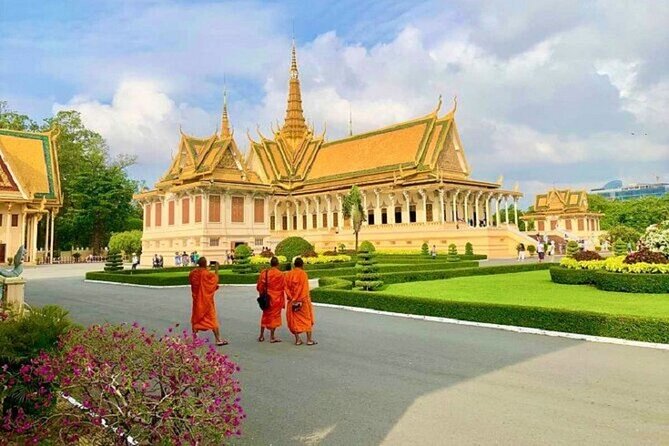
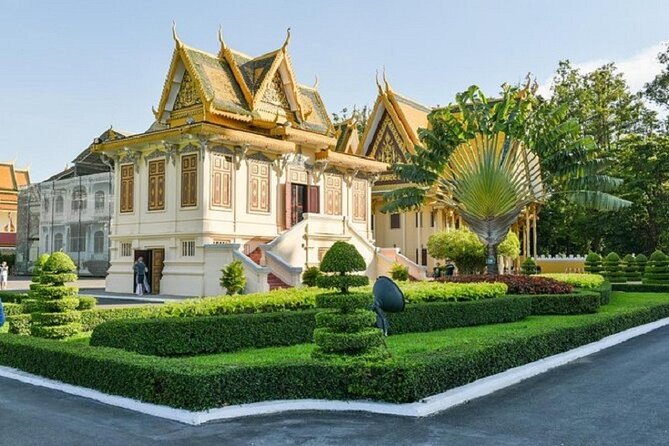
The route then moves to the Royal Palace, one of Phnom Penh’s essential sights. Construction began in 1886 after King Norodom moved the royal capital to Phnom Penh. The complex was completed before World War I and remains the residence of Cambodia’s king.
You should allow about an hour here. The palace is not simply an old monument. It is still tied to the Cambodian monarchy, which means the setting carries a ceremonial importance that ordinary historic ruins do not. Dress respectfully, with shoulders and knees covered, and follow any instructions about where photography is allowed.
Next door, the Silver Pagoda offers a different mood. Its garden provides a pause from the city streets, while the interior is known for handcrafted silver tiles covering the floor. The building is also called the Temple of the Emerald Buddha because its principal Buddha statue is made from emerald or baccarat crystal.
I like the pairing of these two stops. The Royal Palace shows the official face of the monarchy, while the Silver Pagoda gives you a closer look at Buddhist worship and royal religious tradition. An hour is allotted to the pagoda, which should give you time to appreciate the floor, statues, and garden without treating the visit as a quick photograph.
The schedule includes a lunch break after the palace and pagoda. Lunch is not listed as an included cost, but the guide Thorn received particular praise for arranging good lunch options during both days. That is a useful service in a city where choosing a restaurant during a busy sightseeing day can cost you time.
Tuol Sleng: the hardest stop of the first afternoon
After lunch, the tone changes sharply at the Tuol Sleng Genocide Museum, also known as S-21. The site was once a secondary school. Under the Khmer Rouge, it became Security Prison 21, a detention and torture center used from 1975 until the regime fell in 1979.
The museum records the imprisonment of an estimated 20,000 people, although the exact number is unknown. The former school buildings make the subject especially painful. You are not entering a distant battlefield. You are walking through a place that was turned into a prison during the Khmer Rouge period.
Plan for about two hours. This is not a stop to rush through, and it is not suitable for everyone. The displays can be distressing, particularly for children or anyone who finds accounts of imprisonment and torture difficult to face.
A guide is especially valuable here. Historical facts alone can feel cold or confusing, while a clear explanation helps you understand the site without reducing it to a list of dates. Thorn is praised for combining useful information with a light touch when appropriate, but the mood at Tuol Sleng naturally calls for respect and restraint.
The museum explains that Tuol Sleng was one of many detention and torture centers established during the Khmer Rouge period. Its name means Hill of the Poisonous Trees, or Strychnine Hill. That detail gives the place a sense of how language and location were drawn into the machinery of the regime.
Choeung Ek and the Khmer Rouge story
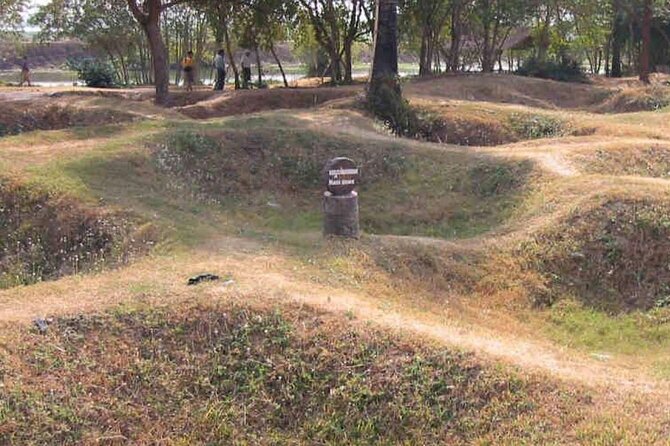
Choeung Ek Genocidal Center, commonly called one of the Killing Fields, is about 17 kilometers south of Phnom Penh. The former orchard became a site where people were executed between 1975 and 1979. After the Khmer Rouge fell, mass graves containing 8,895 bodies were found there.
The visit lasts about an hour and a half. Choeung Ek is now a memorial marked by a Buddhist stupa. Its setting is different from Tuol Sleng, but the two stops belong together. Tuol Sleng shows the prison system, while Choeung Ek shows what happened to many people who were sent out of it.
You should not expect this to be a light afternoon outing. The memorial asks for quiet attention, and the subject can stay with you long after you leave. I would schedule some calm time after the visit if possible, rather than planning an evening packed with more major attractions.
Including both sites is one of the strongest parts of the tour. Visiting only the palace and markets would give you an incomplete view of Phnom Penh. The genocide museums are painful, but they are central to understanding modern Cambodia.
A few more options around Phnom Penh worth reading up on
- The Killing Field and Toul Sleng Genocide Museum (S21) Tour
★ 5.0 · 1,977 reviews - Phnom Penh: Sunset Cruise with Unlimited Beers & BBQ Buffet
★ 4.5 · 727 reviews - Aroma Therapy Massage, Relaxation therapeutic aromatherapy oil massages.
★ 5.0 · 645 reviews - Killing field and Toul Sleng genocide museum Tour
★ 5.0 · 610 reviews
Markets and the practical side of the route
Shopping is part of the overall experience. The tour description mentions Phnom Penh’s popular Russian Market as a place to browse for bargains and souvenirs. The detailed schedule, however, names Central Market on the second day.
That distinction matters because the two markets are not the same stop. Before you pay, ask Angkor Dynasty Travel whether the plan includes Russian Market, Central Market, or a choice between them. This is a small question, but it prevents an avoidable surprise.
Central Market is housed in a large Art Deco dome built in 1937. Four broad arms extend from the central structure, with many stalls selling goods. The building was renovated from 2009 to 2011 with funding from the French Development Agency, so the market combines an older architectural design with an active commercial purpose.
You have about 30 minutes there. That is enough for a quick look, a few purchases, or photographs of the building, but not enough for a slow shopping session. Bargaining may be part of the fun, although the supplied details do not specify how much time the guide allows for shopping.
The market stop adds a useful change of pace after the museums and temples. You can look for souvenirs, but you also see a part of ordinary city life rather than only official monuments. Keep your purchases modest if you are continuing through the city, since carrying bags all day becomes tiring.
Day Two: temples, national memory, and city landmarks
The second day begins at Wat Phnom, a temple on a 27-meter-high, tree-covered hill. It is the only hill in town, and local tradition says that a woman named Penh found four Buddha statues deposited by the Mekong River. A first pagoda was built here in 1373 to house them.
The main entrance rises by an eastern staircase guarded by lions and naga balustrades. You have about an hour at the site. The elevated position gives the visit a different feel from the low-lying streets around it, while the legend helps explain the name and identity of Phnom Penh.
This is a good morning stop because it combines a short climb, a temple visit, and a foundation story about the capital. Wear comfortable shoes and be prepared for steps. The schedule does not describe any special ceremony or extended religious activity, so think of this as a focused cultural visit rather than a long temple retreat.
The route continues to the Statue of King Father Norodom Sihanouk in Independence Square. The bronze memorial is located in central Phnom Penh and takes about 30 minutes. This is a brief stop, but it gives your guide a chance to explain the role of King Father Norodom Sihanouk in Cambodia’s modern national story.
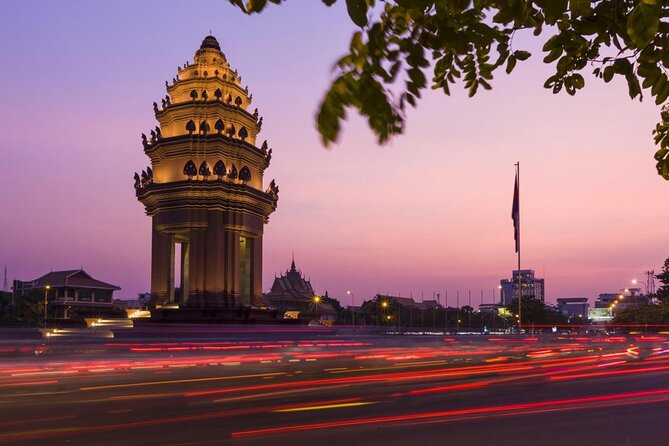
You then visit the Independence Monument, another 30-minute stop. Built in 1958 to mark Cambodia’s independence from France in 1953, the monument was designed by Cambodian architect Vann Molyvann. Its lotus-shaped stupa design recalls Khmer temple architecture, including forms seen at Banteay Srei.
The monument is 37 meters tall and sits at the intersection of Norodom Boulevard and Sihanouk Boulevard. During national celebrations, it becomes a central gathering point, and a ceremonial flame inside the pedestal may be lit by a royal or senior official.
I appreciate this stop because it connects the city’s French colonial past with Cambodia’s return to independence. It is mainly an exterior visit, so do not expect a long museum experience. The value comes from the explanation and the chance to see how national identity is expressed in the middle of the capital.
Wat Ounalom and Phnom Penh’s Buddhist heart
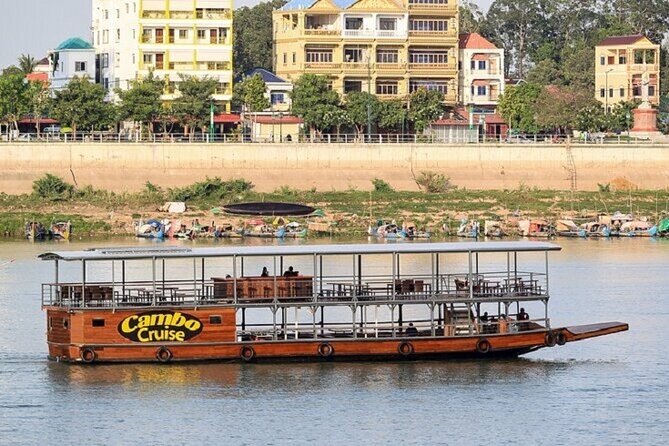
Wat Ounalom is one of Phnom Penh’s five original monasteries, dating to 1422. It sits near the riverfront, about 250 meters north of the Royal Palace, facing the Tonle Sap River.
The pagoda has housed the Institute Bouddhique and library and serves as the headquarters for one of Cambodia’s most respected Buddhist patriarchs. You have about 30 minutes here, which makes it a compact but meaningful stop between the larger city landmarks.
This visit works best if you pay attention to the setting as well as the buildings. Phnom Penh’s pagodas are not only attractions. They remain part of the city’s religious life. Be respectful, dress modestly, and remember that a functioning monastery deserves a quieter approach than a purely historic site.
The short stop also helps keep the second day varied. You see a hilltop temple, public memorials, a national monument, a major monastery, and a market. The route is broad rather than deeply focused on one subject.
How good is the $155 value?
At $155 per person, the tour is not the cheapest way to see Phnom Penh. You are paying for convenience and private service rather than just entrance tickets.
The price includes hotel pickup and drop-off, all transfers in a private comfortable air-conditioned vehicle, an English-speaking licensed guide, sightseeing fees named in the schedule, service charges, current government VAT, and cool drinking water. Those inclusions remove several small costs that can add up during two full days.
The value improves if you are traveling as a small private group and want control over the pace. Group discounts are offered, though no discount amount is provided. The private format also means you are not sharing the vehicle with unrelated people.
The price is less attractive if you mainly want to visit the markets, Wat Phnom, and the Independence Monument. Those stops are free or inexpensive, while the strongest justification for the cost comes from the private vehicle, guide, palace complex, and genocide sites.
A single review praised Thorn for his clear information, good jokes, and well-organized lunch choices. That is important because the guide can shape the whole experience. The company is Angkor Dynasty Travel, but guide assignment may vary, so ask if Thorn is available if his style appeals to you.
Who should book this private Phnom Penh tour?
I would recommend this tour to a first-time visitor who wants Phnom Penh’s main sights arranged into a sensible two-day plan. It suits you especially well if you want historical context, private transportation, and help with the practical details of meals and transfers.
It also works for families or small groups who want to stay together. Most people can participate, and the experience is private, meaning only your group joins the activity.
I would think twice if you dislike fixed schedules or need a lot of unplanned time. The tour includes several 30-minute stops, two major genocide sites, palace grounds, markets, and several temples. That is a lot for two days.
You should also prepare yourself emotionally for Tuol Sleng and Choeung Ek. They are essential to the story of Phnom Penh, but they are not easy sightseeing. If you want to include them, this tour makes the process simple. If you would rather focus on architecture, food, and daily life, ask whether the schedule can be adjusted.
The tour requires good weather. If poor conditions cancel it, you are offered another date or a full refund. You can also cancel for a full refund up to 24 hours before the start time. Changes or cancellations inside that 24-hour window are not accepted.
Should you book it?
Book this tour if you want a well-supported first look at Phnom Penh, with a private vehicle, a guide, major admission fees, and both the royal and Khmer Rouge chapters included.
The best reasons to choose it are the efficient two-day coverage and the private format. The main cautions are the full schedule, the emotional weight of the genocide sites, and the need to confirm the market stop.
For $155 per person, it offers solid value when you want comfort and explanation rather than a bare-bones sightseeing ride. Ask about the guide, lunch arrangements, and Russian Market versus Central Market before booking. If those details suit you, this is a practical way to get your bearings fast in Cambodia’s capital.
FAQ
How long does the Phnom Penh private tour last?
The experience lasts approximately two days.
What time does the tour start?
The stated start time is 8:00 am.
Is hotel pickup included?
Yes. Hotel pickup and drop-off are included.
Is transportation provided during the tour?
Yes. All transfers are provided in a private, comfortable, air-conditioned vehicle.
Is the tour private?
Yes. Only your own group participates in the private tour or activity.
Is an English-speaking guide included?
Yes. The tour includes an English-speaking licensed guide.
Are entrance fees included?
Yes. Sightseeing fees for the attractions named in the schedule are included.
Is lunch included in the price?
Lunch is not listed among the included services. A guide may help organize lunch options, but the cost is not included.
Are tips included?
No. Tips for the tour guide and driver are not included.
Can I cancel for a full refund?
Yes. You can cancel at least 24 hours before the experience start time for a full refund. Cancellations less than 24 hours before the start time are not refunded.
What happens if bad weather cancels the tour?
You are offered a different date or a full refund if poor weather causes the experience to be canceled.
Newest reviews from Phnom Penh
- 10 Day Ethical Animals Tour Where the Wild Things Roam★ 5.0 · 1 review
- Watch Live Khmer Traditional boxing in Phnom Penh★ 5.0 · 46 reviews
- Watch Khmer Kickboxing with Free Beers by Ringside Seats★ 5.0 · 11 reviews
- The killing field and Toul Sleng Genocide museum (S21) Tour★ 4.5 · 19 reviews
- Warm Stone Massage★ 5.0 · 23 reviews
- Private Transfer from Phnom Penh to Siem Reap by VIP Alphard 2005★ 5.0 · 2 reviews
- S-21 Prison and Killing Fields★ 5.0 · 8 reviews
- Private Taxi Between Phnom Penh – Siem Reap Stop Sightseeing★ 5.0 · 23 reviews
Multi-Day Tours, compared.
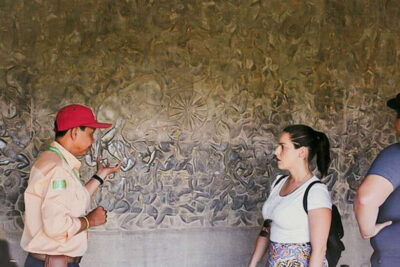
Angkor Wat 2-Day Tour with Sunrise and Sunset
Read our review →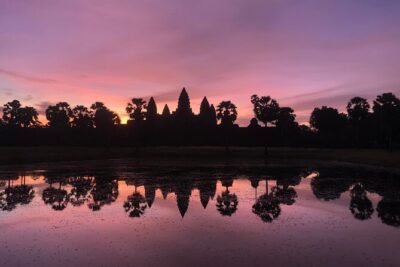
Angkor 2-Day Sunset & Sunrise Small-Group Tour
Read our review →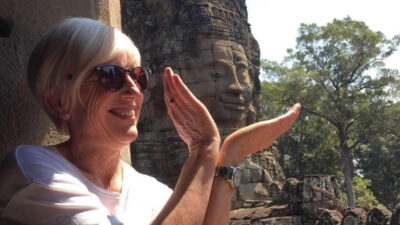
Angkor Sunrise 1- or 2-Day Guided Temples Tour
Read our review →
2-Day Angkor Wat With Small, Big Circuit and Banteay Srei Tour
Read our review →
2-Day Temple Highlights Sunrise and Sunset Option
Read our review →
Angkor Wat 2-Day complex Sun rise & Sun set with Guided Tour
Read our review →
2-Day Angkor Wat Tour with Banteay Srei and Floating Village
Read our review →
Browse the lists this tour appears in