
Reviewed · BANTEAY SREI TOURS
Private Tour to Beng Mealea, Banteay Srei and Floating Village
Jungle temples and lake villages make this a full Cambodian day. This private Siem Reap tour combines Kampong Phluk, the flooded forest and Tonle Sap, with two very different Khmer temples: ruined Beng Mealea and finely carved Banteay Srei. I like the mix of major sights and ordinary village life, and I like having a private air-conditioned vehicle with an English-speaking guide rather than being tied to a large bus group. The main drawback is the packed schedule. Eight hours is enough to see the highlights, but the long drive and several stops can make the day feel brisk.
The tour costs $79 per person, with group discounts available. That is a fair price if your group values private transport, guiding, bottled water, and a boat ride, but temple and floating-village admission fees are extra. The route also includes optional stops, so your final pace may depend on what you choose to add.
In This Review
- Key points at a glance
- Why this route works for a full day from Siem Reap
- Rolous Market: a practical start to the day
- Kampong Phluk and Tonle Sap by short boat ride
- Wat Khsach and bamboo sticky rice
- Beng Mealea: Cambodia’s rough-edged temple experience
- The ancient quarry and the stones of Angkor
- Banteay Srei and its red sandstone carvings
- Optional stops worth considering
- What the $79 price really covers
- Who should book this private day?
- FAQ
- How long does the tour last?
- Is hotel pickup included?
- Is this a private tour?
- Is an English-speaking guide included?
- Are temple entrance fees included?
- Is the Kampong Phluk boat ticket included?
- What should I wear to the temples?
- Is bottled water provided?
- Can I visit the Landmine Museum or palm sugar village?
- Should you book this tour?
Key points at a glance
- Kampong Phluk changes with the seasons: Stilted homes, fishing activity, and the flooded mangrove forest look different during the wet and dry months.
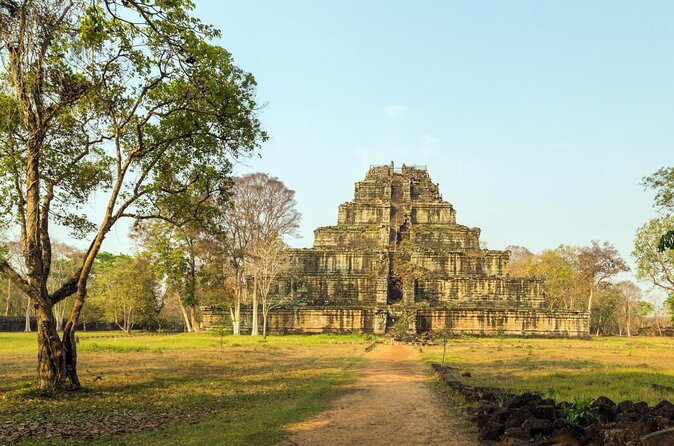
- Beng Mealea feels far removed from Angkor Wat: Tree roots, collapsed galleries, and jungle growth give this 11th-century temple a rougher, quieter character.
- Banteay Srei rewards close attention: Its red sandstone carvings are unusually fine and detailed, even though the temple is smaller than Angkor Wat.
- The private format gives you flexibility: You can ask questions, pause at village stops, and request optional visits such as the Landmine Museum or palm sugar village.
- Local food is part of the route: At Wat Khsach, you can taste sticky rice cooked in bamboo and seasonal fruit.
- Mr. Sim and the drivers received strong praise: Specific comments highlight an enthusiastic guide, an informative service, and a clean car.
Why this route works for a full day from Siem Reap
This tour is built around contrast. You begin with a local market, move to a lake community, then spend the afternoon among ancient stone temples and rural food producers. That gives you more than a standard temple circuit, though it also means you will spend a fair amount of time in the vehicle.
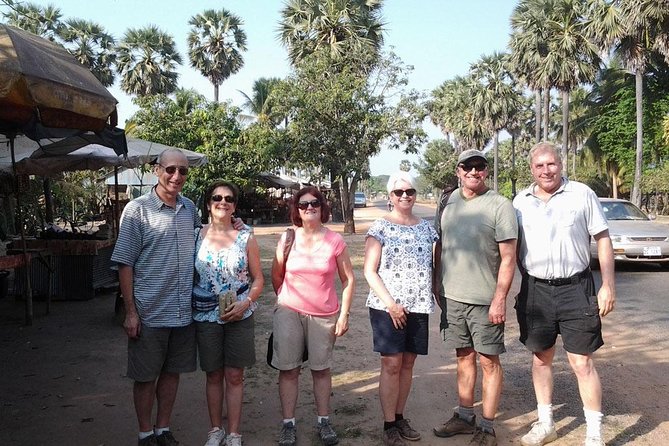
The private setup matters here. You are picked up at your hotel and travel with only your own group, guide, and driver. You can ask for explanations about Cambodian village life, request a short pause, or decide if an optional stop is worth your remaining time. That freedom is much more useful on a long itinerary than it would be on a simple two-hour temple visit.
The tour lasts about eight hours. Since the route covers the Rolous area, Tonle Sap, Beng Mealea, and Banteay Srei, you should expect the day to feel active rather than leisurely. Wear comfortable shoes, carry sun protection, and use the provided bottled water.
More trips out to Banteay Srei:
- Full-Day Banteay Srei & 4 Temples – Grand Tours Join-in Tour
★ 5.0 · 1,155 reviews - Siem Reap Tour: Angkor Wat Sunrise, Bayon, Ta Prohm, Banteay Srei
★ 5.0 · 931 reviews - 2-Day Angkor Wat With Small, Big Circuit and Banteay Srei Tour
★ 5.0 · 545 reviews
Rolous Market: a practical start to the day
The first stop is Rolous Market, located beside the Rolous River. This is not presented as a polished tourist market. It is a place where local residents buy vegetables, meat, fruit, freshwater fish, and household goods.
That makes it a useful introduction to daily life in the Siem Reap countryside. You may see the market at its most active in the morning or late afternoon, when villagers shop for food and supplies. The planned visit lasts about 40 minutes, long enough to look around without turning the stop into a major delay.
I like this kind of opening because it gives you a clearer sense of how people shop and eat before you begin visiting famous monuments. The limitation is that market conditions can vary. This is a working market, not a staged cultural show, so the experience depends on what is happening when you arrive.
Kampong Phluk and Tonle Sap by short boat ride
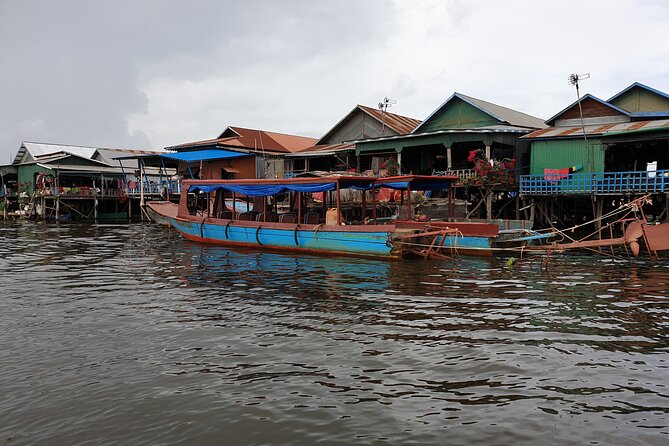
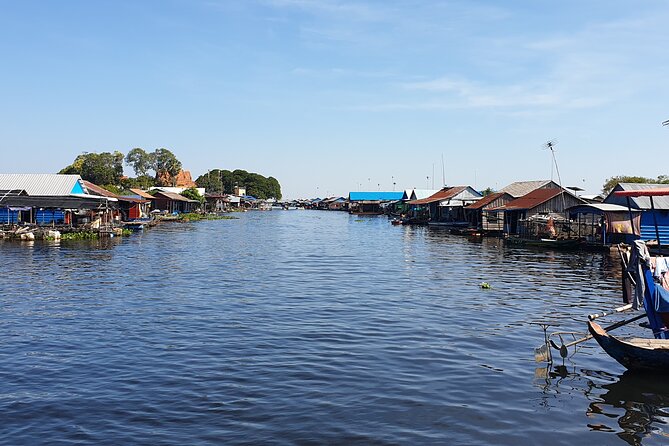
Kampong Phluk is the day’s most important living community stop. The route includes a short boat ride through the fishing village and flooded mangrove trees toward Tonle Sap Lake, followed by time to walk through part of the village.
Tonle Sap is central to Cambodian life. Fishing supplies a major source of food and income, and the water level changes sharply through the year. Those changes shape the village itself. Homes and other buildings are built on tall stilts, with some reaching roughly 6 to 9 meters so they can remain usable as the water rises and recedes.
During the wet season, the flooded forest is an especially important part of the visit. Trees that may look ordinary from the shore can become partly submerged, creating a watery route through the forest. During the dry season, generally November through April, the river thins and some residents turn to farming to supplement fishing income.
The boat ticket is not included, so check the cost before booking or before setting out. The tour description gives separate time for Kampong Phluk and the floating village, adding roughly 45 minutes and one hour to these parts of the route. In practice, the exact rhythm may depend on water levels, boat operations, and how much time you spend walking.
The village is not simply a scenic photo stop. Your guide is meant to explain how people live and work on land and water, and you can stop in selected places to meet local residents. Keep your expectations grounded. Tourism has become part of the local economy, so this is a real community that also receives visitors, not an untouched village frozen in time.
Wat Khsach and bamboo sticky rice
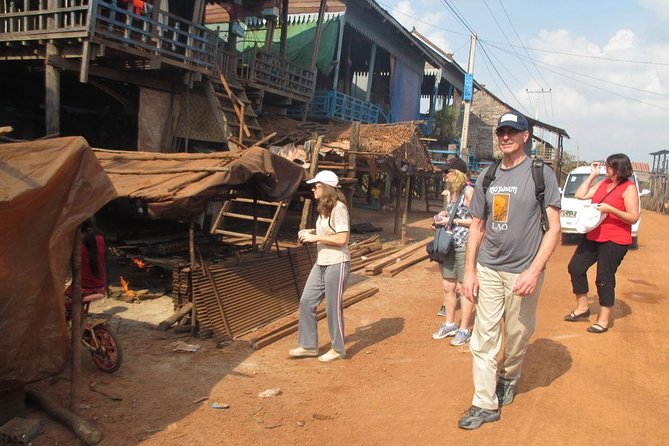
The Wat Khsach stop adds a small but enjoyable food detail to the day. You can taste sticky rice cooked inside bamboo, along with seasonal fruit, and take photographs in the village.
The sticky rice contains sweet rice, black beans, coconut cream, and other seasonings. It is cooked inside a piece of bamboo over heat, then removed for eating. This is a simple local food experience, but it helps explain how familiar ingredients become a portable village snack.
The stop is scheduled for about 30 minutes and has no listed admission fee. I would treat it as a pleasant break rather than a central reason to book the tour. If you are more interested in temples than food stops, ask your guide how much time remains before deciding how long to linger.
More trips out to Beng Mealea:
- Siem Reap: Kulen Mountain, Beng Mealea and Tonle Sap Tour
★ 5.0 · 1,483 reviews - Kulen Mountain with Beng Mealea and Tonle Sap Small Group Tour
★ 5.0 · 780 reviews - Koh Ker Temple Group & Beng Mealea Full-Day Join-in Tour
★ 5.0 · 710 reviews - From Siem Reap: Koh Ker and Beng Mealea Temples Tour
★ 4.9 · 293 reviews
Beng Mealea: Cambodia’s rough-edged temple experience
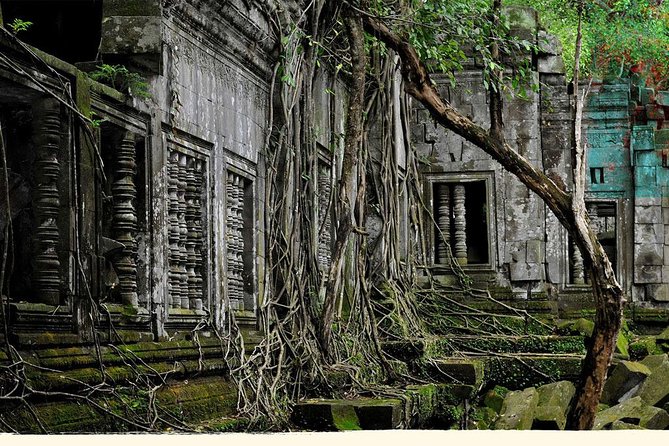
Beng Mealea is the strongest reason to choose this route instead of staying near the main Angkor complex. The 11th-century temple is associated with King Suryavarman II and shares several design features with Angkor Wat. Yet its condition is far more rugged.
Parts of the temple remain remarkably intact. Other sections have collapsed into piles of stone, while tree roots cover walls and doorways. The result is an atmospheric site where you can see how time, jungle growth, and conflict affected ancient monuments.
Beng Mealea was isolated during Cambodia’s civil war, and its distance from the main Angkor sites helped preserve a quieter feel. You should not expect the polished walkways or broad, formal presentation found at Angkor Wat. Getting around may require more careful footing, which is why flat shoes with good comfort are important.
The temple visit is planned for about one hour. That is enough to see the main structures and hear the guide’s explanation, but not enough for a slow, detailed exploration of every gallery. Beng Mealea’s admission fee is extra. Your guide will send a link for purchasing the temple entrance e-ticket in advance, so handle that before the tour day.
For me, the appeal is the sense of discovery without pretending the ruins are untouched. The broken stone and tree growth are not decoration. They are part of what makes the site different from the better-maintained temples closer to Siem Reap.
The ancient quarry and the stones of Angkor
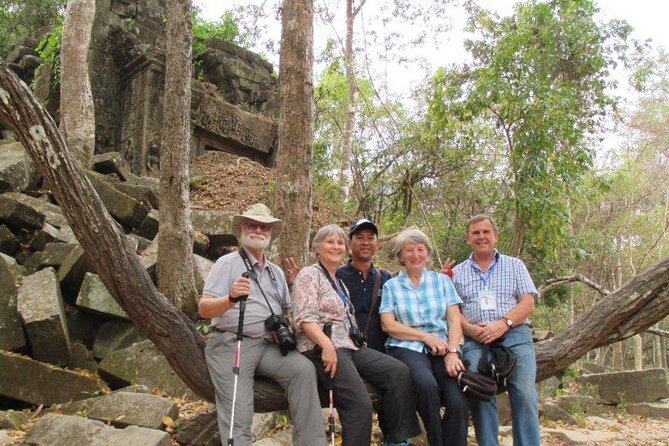
After Beng Mealea, the tour visits an ancient quarry where Khmer stonecutters worked material used to build Angkor Wat. Hundreds of cut stones are said to remain at the site.
This is a valuable stop because it connects the temple to the physical work behind it. Monumental Khmer architecture did not appear by magic. Stone had to be selected, cut, shaped, and moved across difficult distances. Your guide explains how the stones were cut and transported.
The visit lasts about 40 minutes and has no listed admission fee. It is less visually dramatic than Beng Mealea, but it gives you a practical way to understand the scale of ancient construction. If you enjoy engineering, building methods, or the behind-the-scenes side of archaeology, this stop may stay with you longer than expected.
Banteay Srei and its red sandstone carvings
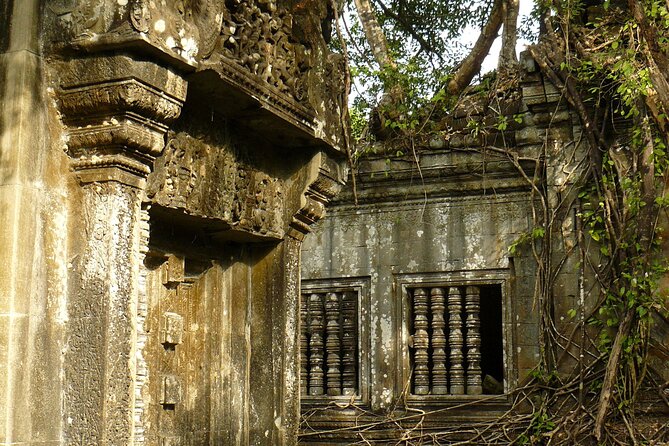
Banteay Srei provides a sharp contrast with Beng Mealea. Instead of large, weathered ruins and jungle-covered corridors, you find a smaller temple known for precise red sandstone decoration.
The temple was built in the 10th century by a royal counselor rather than by a monarch. Its carvings are the main attraction. Look closely at the wall reliefs and decorative details, which remain unusually clear and skillful.
The red sandstone allowed artisans to create fine patterns and figures. This is a place where you should slow down and let your guide point out details that may be easy to miss from a distance. The planned visit lasts one hour.
The admission fee is not included. The information supplied for this tour lists admission separately for Beng Mealea and Banteay Srei, even though the itinerary section shows no ticket charge for Banteay Srei. Treat both temple fees as extra and confirm the current amount before you go.
Banteay Srei can be more visually delicate than the larger temples, but it may also feel busier because it is a popular stop. That is one reason the private guide is useful. You can focus your time on the carvings instead of simply walking around the outer walls.
Optional stops worth considering
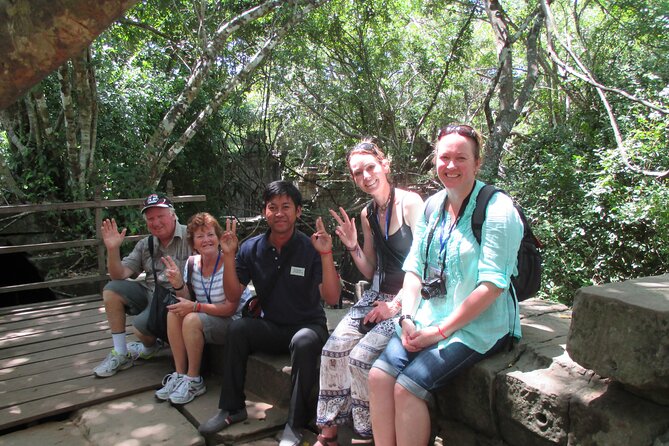
The tour can include several additional visits if you ask your guide. These are not required parts of the route, and adding them may reduce time elsewhere.
The Cambodia Landmine Museum and Relief Center explains the dangers of landmines and supports education for Cambodian children. It also presents itself as a place focused on healing and a better future. If you want context about Cambodia’s modern struggles, this is the most serious optional stop.
The BBC Butterfly Zoo near Angkor Wat presents local butterflies and moths in a large enclosed garden. Founded in 2009, it connects responsible tourism with environmental conservation. This choice may suit families or anyone interested in insects and nature, though it is less connected to the temple and village theme.
You can also visit a Khmer palm sugar-producing village. Your guide can explain how locals collect palm juice and turn it into palm sugar. This is a useful rural industry stop, especially if you want to see how traditional food production supports village life.
Because the base itinerary is already full, I would not try to add every optional site. Choose one based on your interests and ask your guide about the timing.
What the $79 price really covers
At $79 per person, the value depends on your group size and priorities. You receive hotel pickup, a private air-conditioned vehicle, an English-speaking guide, bottled water, and a short boat ride. You also avoid arranging separate transport to distant Beng Mealea and Banteay Srei.
The private vehicle is the biggest practical benefit. These sites are spread out, and arranging separate rides for the lake, quarry, and temples would take effort. A guide also adds meaning to the market, quarry, and village visits, which can otherwise be easy to skim over.
You still need to budget for admission. Kampong Phluk has a separate ticket, and Beng Mealea and Banteay Srei require additional temple fees. Lunch is not listed among the inclusions, so ask your guide how the midday meal is handled before departure. That is an important point when calculating the day’s true cost.
Group discounts may improve the value for families or friends traveling together. Solo visitors pay more per person for the private format, but they also receive the most flexibility.
Who should book this private day?
I would choose this tour if you want more than a standard Angkor Wat day. It suits you if you enjoy seeing local markets, food production, fishing communities, and rural Cambodia alongside historic sites.
It is also a good fit for families or small groups who prefer their own vehicle and guide. Most people can participate, but you should be ready for walking at the temples and wear clothing that covers your knees and shoulders when entering sacred areas.
I would think twice if you want a slow temple study day. The itinerary covers a lot of ground in eight hours, and the extra driving makes it harder to linger at Beng Mealea or Banteay Srei. Someone focused mainly on photography may prefer fewer stops and more time at each temple.
The tour has free cancellation up to 24 hours before the start time. Changes or cancellations made later are not accepted for a refund.
FAQ
How long does the tour last?
The tour lasts approximately eight hours.
Is hotel pickup included?
Yes. Pickup is offered from your hotel, with a guide and driver using a private air-conditioned vehicle.
Is this a private tour?
Yes. Only your own group participates in the activity.
Is an English-speaking guide included?
Yes. An English-speaking tour guide is included.
Are temple entrance fees included?
No. Admission fees for Beng Mealea and Banteay Srei are not included. The guide will send you a link to purchase the temple entrance e-ticket in advance.
Is the Kampong Phluk boat ticket included?
No. The Kampong Phluk admission fee is listed as not included.
What should I wear to the temples?
Wear clothing that covers your knees and shoulders when entering sacred areas. Flat shoes that are comfortable for walking are also recommended.
Is bottled water provided?
Yes. Bottled water is included.
Can I visit the Landmine Museum or palm sugar village?
Yes, you can ask your guide to stop at the Cambodia Landmine Museum, the butterfly center, or a Khmer palm sugar-producing village. These are optional stops.
Should you book this tour?
Book it if you want a wide-ranging private day that puts Tonle Sap village life, rural food, ancient stonework, and two very different temples into one route. The clean car, private format, and praised guiding from Mr. Sim and the Journey2 Angkor team add real value.
Skip it if you prefer a slow pace or want every minute devoted to major Angkor temples. For most small groups, though, the combination is compelling: Kampong Phluk shows how people live with changing water, Beng Mealea shows a temple reclaimed by time, and Banteay Srei rewards a close look at Khmer carving. Just confirm the extra admission costs and lunch arrangements before booking.
More Floating Village Trips
- From Siem Reap: Kampong Phluk Floating Village Tour by Boat
★ 4.9 · 6,979 reviews - Sunset tour of Kampong Phluk stilts home village on the Tonle Sap
★ 5.0 · 4,865 reviews - Siem Reap: Kampong Phluk Floating Village Tour with Boat
★ 4.9 · 3,843 reviews - Siem Reap Floating Village Kampong Phluk Sunset with Boat
★ 5.0 · 1,962 reviews
Newest reviews from Siem Reap
- War Museum, Killing Field, and APOPO Hero RATs Tour★ 5.0 · 7 reviews
- Angkor Wat at Sunrise★ 4.0 · 7 reviews
- Siem Reap Angkor Airport Taxis (from Airport to Hotel)★ 5.0 · 44 reviews
- Cambodian Cooking Class and Oxcart Ride with Local Village Tour★ 5.0 · 4 reviews
- Secret Temples of Angkor – Guided Tour in Siem Reap★ 5.0 · 6 reviews
- Short Cycling at Countryside★ 5.0 · 29 reviews
- SIEM REAP E-BIKE HALF-DAY COUNTRYSIDE (25-30 km)★ 4.0 · 1 review
- Unveiling the Mystical Beauty of Phnom Kulen National Park★ 5.0 · 6 reviews
Banteay Srei Tours, compared.
Full-Day Banteay Srei & 4 Temples – Grand Tours Join-in Tour
Read our review →
Siem Reap Tour: Angkor Wat Sunrise, Bayon, Ta Prohm, Banteay Srei
Read our review →
2-Day Angkor Wat With Small, Big Circuit and Banteay Srei Tour
Read our review →
3-Days Discovery Of Angkor: Waterfalls,Floating Village and Banteay Srei temple
Read our review →
Banteay Srei, Kulen Waterfall & Beng Mealea Exploration
Read our review →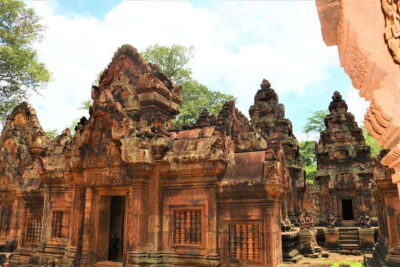
Banteay Srei and Grand Circuit Heritage Tour from Siem Reap
Read our review →Browse the lists this tour appears in