
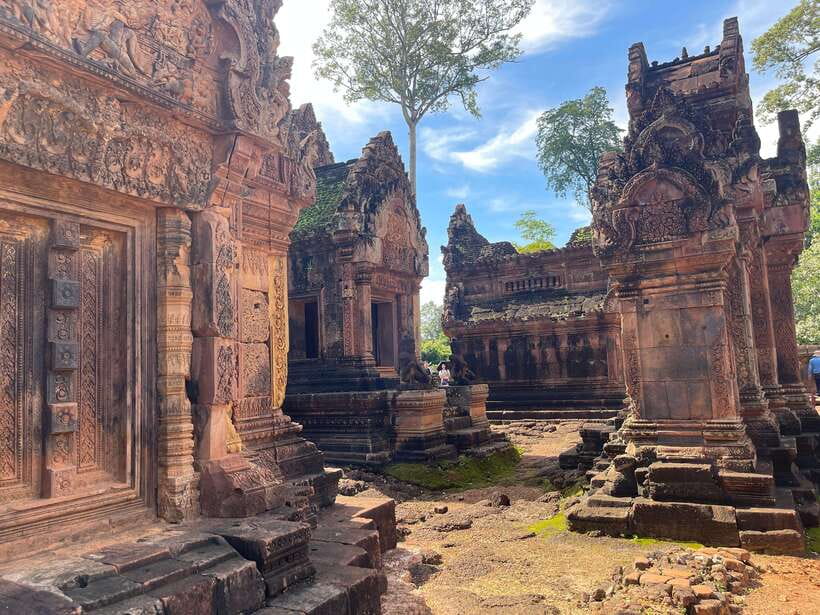
Reviewed · BANTEAY SREI TOURS
From Siem Reap: Banteay Srei and Kulen Waterfall Guided Tour
Ancient carvings, cool waterfalls, and village life await. This eight-hour trip from Siem Reap links Phnom Kulen’s sacred sites with the pink-stone temple of Banteay Srei, giving you a full day beyond the main Angkor complex. I especially like the mix of nature and Khmer art, plus the chance to try palm cake and seasonal fruit rather than simply moving from one temple to the next. The English-speaking guide and driver also earn high marks, with Sam praised for clear explanations, good organization, and a warm manner.
The main drawback is cost and effort. The advertised $49 price does not include the $20 Kulen Mountain National Park fee, the Angkor Pass needed for Banteay Srei, lunch, drinks, or tips. The mountain portion includes walking and steps, so anyone with joint problems or limited mobility may find the day demanding.
In This Review
- Key points at a glance
- What the $49 price really covers
- Setting out for Phnom Kulen
- Peng Chruonh and the ridge views
- Preah Ang Thom and the reclining Buddha
- The River of 1000 Lingas
- Kulen’s two waterfalls
- Lunch and the road to Banteay Srei
- Banteay Srei’s pink sandstone carvings
- Preah Dak and an everyday Cambodian stop
- Transport, group size, and the pace of the day
- Who should book this day?
- Should you book it?
- FAQ
- How long does the tour last?
- What language does the guide speak?
- Is hotel pickup included?
- Is this a private tour or a group tour?
- Is lunch included?
- Do I need separate entrance tickets?
- Are the waterfalls the same size all year?
- Can I cancel the booking for a refund?
Key points at a glance
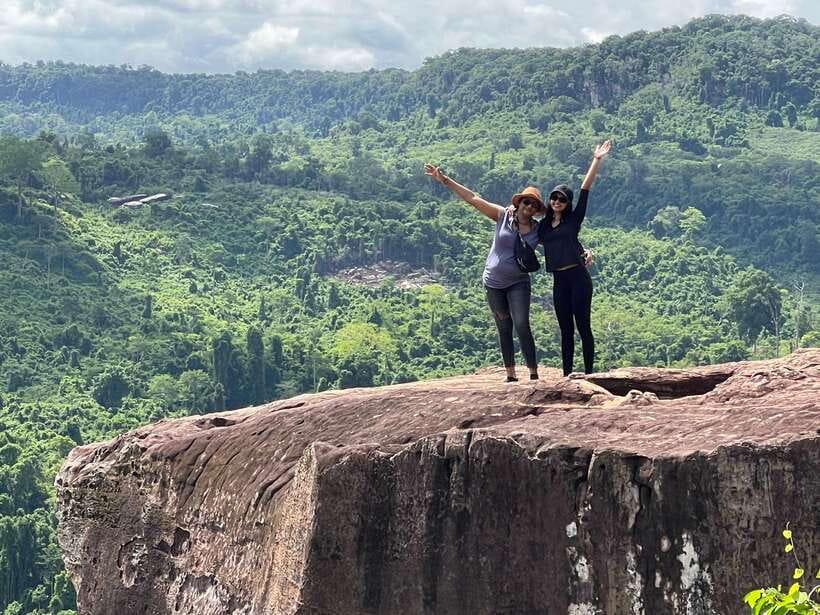
- Peng Chruonh viewpoint: Pause on Kulen Mountain’s ridge for broad views from a lesser-known stop.
- 1000 Lingas River: See more than 500 metres of carvings showing lingas, yonis, and Vishnu in the riverbed.
- Preah Ang Thom: Visit an eight-metre reclining Buddha carved from a large natural sandstone boulder.
- Seasonal waterfalls: See two falls whose height and width change with the rains.
- Banteay Srei: Admire delicate 10th-century carvings in warm pink sandstone.
- Preah Dak village: Try local palm cake, taste seasonal fruit, and see village crafts and noodles.
What the $49 price really covers
At first glance, $49 per person looks like a good price for an eight-hour private or small-group outing with hotel pickup. You get an air-conditioned vehicle, an English-speaking guide, bottled water, a towel, the listed sightseeing, palm cake, and seasonal fruit tasting.
The headline price is not the final cost, though. You need to add the $20 Kulen Mountain National Park entrance fee, the Angkor Pass for Banteay Srei, lunch, other drinks, and guide and driver tips. That makes this a better value for someone who wants a guided day with several different stops, rather than for someone focused only on seeing Banteay Srei as cheaply as possible.
The value improves if you appreciate context. A good guide can explain why river carvings, a reclining Buddha, a Hindu temple, and a modern village belong in the same day. Sam, who led one small group, was praised for explaining changes clearly when two groups were combined. Another guide was described as polite, attentive, well prepared, and able to explain both Cambodia and its past in clear English.
You can cancel up to 24 hours ahead for a full refund, and you can reserve now and pay later. Starting times depend on availability, so check the pickup time before booking.
More trips out to Banteay Srei:
- Full-Day Banteay Srei & 4 Temples – Grand Tours Join-in Tour
★ 5.0 · 1,155 reviews - Siem Reap Tour: Angkor Wat Sunrise, Bayon, Ta Prohm, Banteay Srei
★ 5.0 · 931 reviews - 2-Day Angkor Wat With Small, Big Circuit and Banteay Srei Tour
★ 5.0 · 545 reviews
Setting out for Phnom Kulen
The day begins with pickup at your hotel in Siem Reap. The tour allows private or small-group arrangements, and that matters here. A smaller group makes it easier to adjust the pace at viewpoints, temples, and the waterfall, while a private outing gives you more control over stops.
The air-conditioned vehicle is useful in Cambodia’s heat. Cold bottled water and a cold towel were appreciated on one outing, especially after time outside. The drive and mountain roads take up a fair part of the day, so comfort is not a minor detail.
Phnom Kulen National Park is the main outdoor section, scheduled for about three hours. The route takes you to several places on the mountain, including a ridge viewpoint, a sacred pagoda, the River of 1000 Lingas, and the waterfall area.
This is not a slow temple circuit with flat paths all day. You should expect walking, steps, and uneven ground. One traveler with a reasonable level of fitness found the day manageable but warned that joint problems or limited mobility could make it difficult. Take that advice seriously. The views and waterfall are rewarding, but the mountain portion requires more effort than a standard Angkor temple visit.
Peng Chruonh and the ridge views
Peng Chruonh, also called Peng Takhu or Peng Chrunh, is a small viewpoint on the ridge of Kulen Mountain. It is reached from a signpost on the right side of the road, about 50 metres from the marked location.
The stop is valuable because it breaks up the ride with a broad view from the mountain ridge. It is also less familiar than the major temple sites, giving the day a change of pace before the sacred locations and waterfall.
Do not expect a long sightseeing session here. It is a short viewpoint stop, but that is part of its usefulness. You can stretch your legs, take in the panorama, and get a sense of the mountain’s height before continuing.
Preah Ang Thom and the reclining Buddha
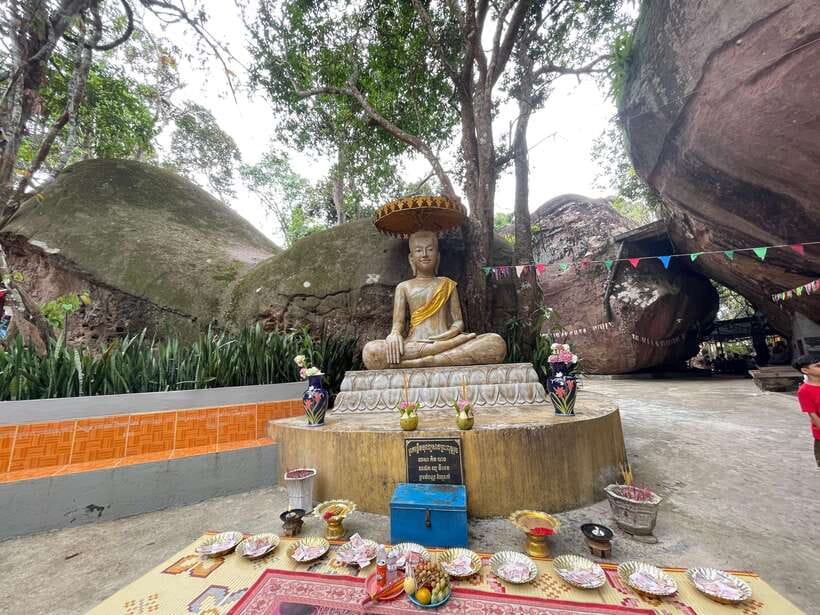
Preah Ang Thom Pagoda is one of the most important spiritual stops on Kulen Mountain. Its central figure is an eight-metre reclining Buddha, carved into a huge natural sandstone boulder. A modern staircase leads up to the statue, and a shelter protects the site.
The Buddha represents the moment of reaching nirvana. The religious meaning is central, so this is not simply a photo stop. The site is sacred to Cambodians, and patrons are regularly present. At busy times, you may need to share the steps and viewing area with a crowd.
Dress and behave with care at the pagoda. The added staircase makes access possible, but the steps still require attention. If you tire easily, ask your guide about the pace before climbing. The stop rewards quiet observation more than a rushed photograph.
More days on Phnom Kulen:
- Kulen Waterfall Join-in Tour (local Picnic lunch)
★ 5.0 · 2,434 reviews - Kulen Mountain: Small-Group Tour and Picnic lunch
★ 4.9 · 1,802 reviews - Siem Reap: Kulen Mountain, Beng Mealea and Tonle Sap Tour
★ 5.0 · 1,483 reviews - Phnom Kulen Waterfall & the Sacred 1000 Lingas (with Lunch)
★ 4.8 · 974 reviews
The River of 1000 Lingas
Along roughly 500 metres of riverbed, you can see carvings of lingas, several large and small yonis, and a large image of Vishnu. Smaller carvings also appear along the riverbed walls.
These carvings connect the waterway with Hindu religious ideas. The linga is associated with Shiva, while the yoni represents the complementary female principle. Water passing over or near these sacred forms gave the site an important ritual role.
This stop is one of the reasons a guide adds real value. Without explanation, the carvings can look like scattered shapes in rock. With context, you begin to understand that the river itself is part of the monument.
The condition and visibility of the carvings may vary with water and weather. Wear sensible footwear and watch your footing. The site is outdoors and uneven, not a polished museum floor.
Kulen’s two waterfalls
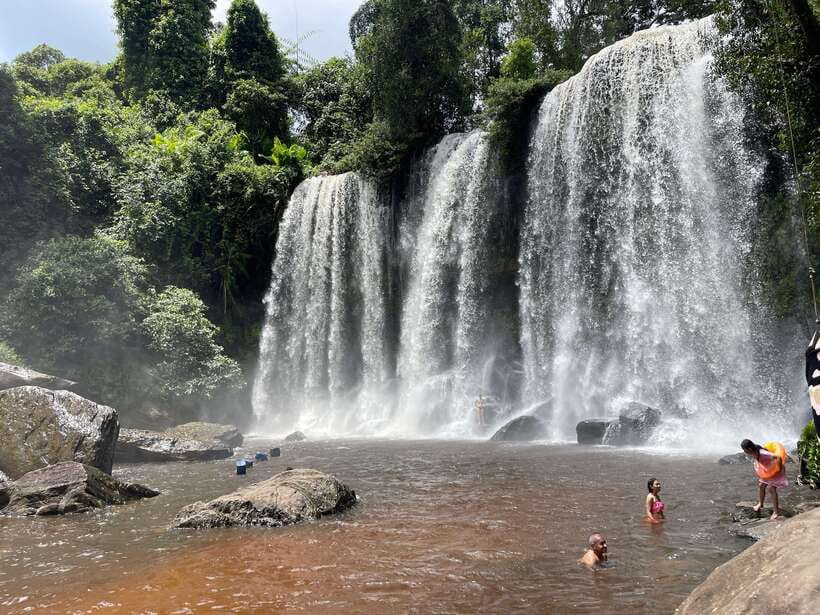
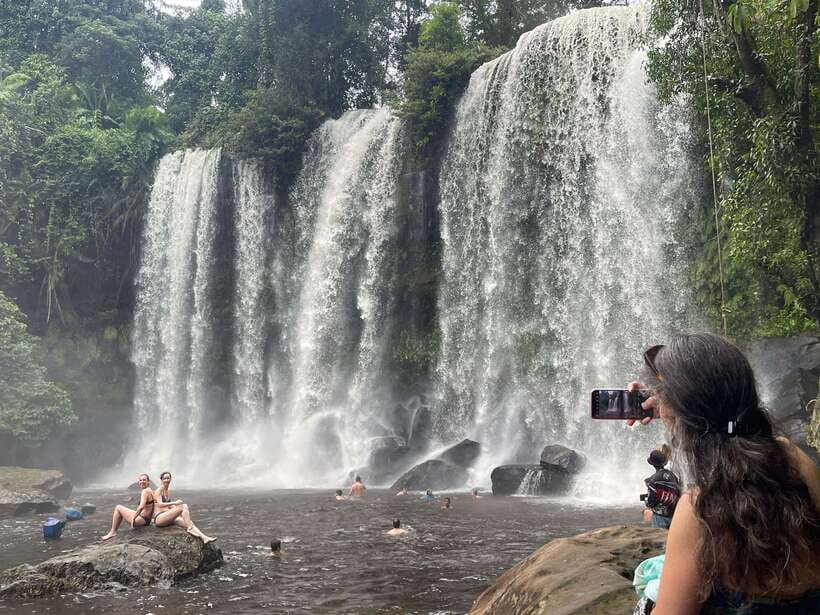
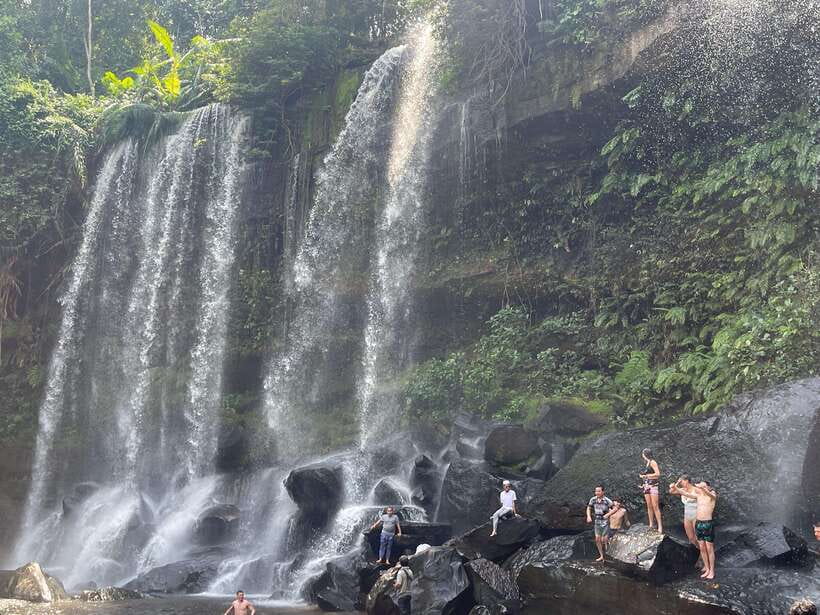
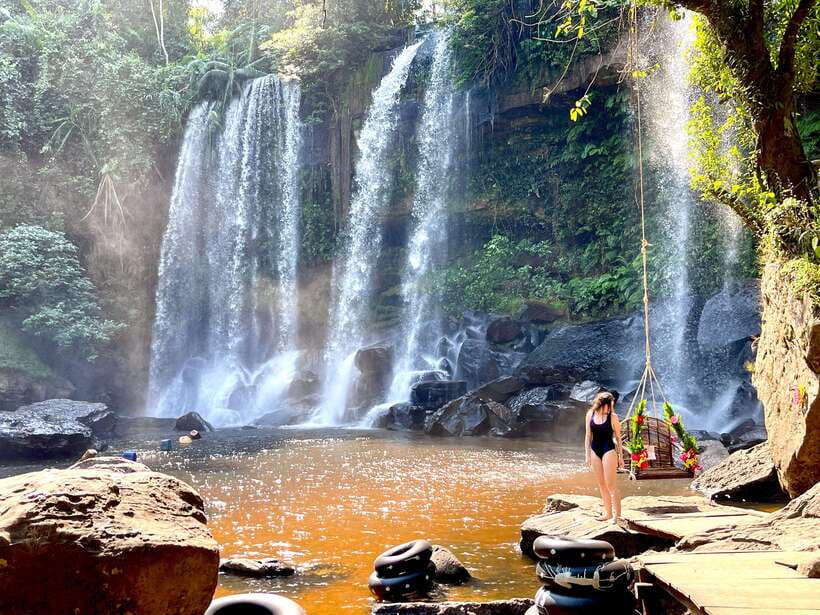
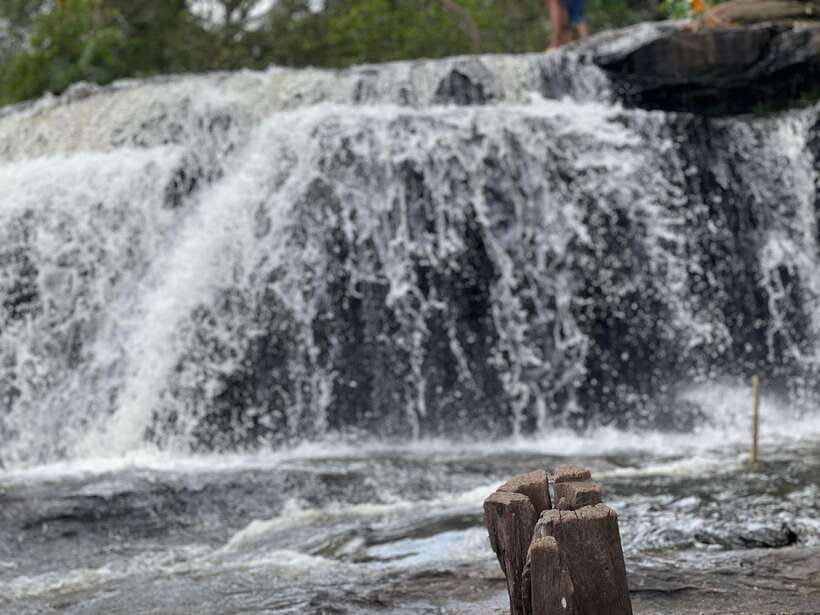
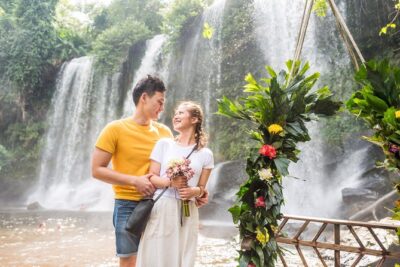
The waterfall stop brings a welcome change after the religious sites. Phnom Kulen has two main waterfalls. The first is about four to five metres high and around 25 metres wide during the rainy season. The second reaches roughly 15 to 20 metres in height and about 15 metres in width during the rainy season.
Those figures are seasonal, not fixed. Rain changes the volume and appearance of both falls, so your experience depends on when you visit. In wetter months, the water should make a stronger impression. In drier periods, the falls may look smaller.
The falls are popular, and the area can be active when conditions are good. Your guide and driver can help keep the day moving so you do not spend all your energy at the first stop. One especially well-organized outing adjusted the plan to avoid wasting energy in hot weather while still allowing time for the main sights.
Bring a sense of proportion. This is not a full-day walk through untouched countryside. It is a well-packed mountain visit with a few significant stops, and the waterfall is the most scenic pause.
Lunch and the road to Banteay Srei
After about three hours on Phnom Kulen, the tour stops at a local restaurant for lunch, scheduled for one hour. Lunch is not included, so budget separately for the meal and drinks.
That hour gives you a useful break before the temple visit. The day begins early or runs through the hottest part of the afternoon, depending on the start time, so sitting down for food matters. Keep some water with you even though bottled water is provided.
The route then continues to Banteay Srei. This temple is about 25 kilometres northeast of the main Angkor temple group, near Phnom Dei. Its position makes it a natural partner for Kulen Mountain, though the two sites feel very different.
Banteay Srei’s pink sandstone carvings
Banteay Srei is a 10th-century temple dedicated to Shiva and Parvati. It is famous for its pink sandstone and fine carvings, which are often more delicate and closely worked than the larger Angkor monuments.
The temple is compact compared with Angkor Wat, but do not confuse small size with a quick visit. The appeal lies in the detail. Look closely at the carved figures, doorways, and decorative panels. The warm stone gives the temple a distinctive colour, especially when the light is favourable.
Your visit here is scheduled for about one hour. That is enough for a focused look, particularly if your guide points out the main sculptures and explains the temple’s religious setting. It is not enough for a long, unhurried study of every detail.
You need an Angkor Pass to enter Banteay Srei, and that cost is separate. Check your ticket position before the day begins so the temple stop does not become an expensive surprise.
Preah Dak and an everyday Cambodian stop
The final planned visit is Preah Dak, a village near Siem Reap, for about 20 minutes. This is a short stop, but it adds something the mountain and temple cannot: a glimpse of daily village life.
Preah Dak is known for nom ban chok noodles. It has also become a model village through projects such as the One Village, One Light Bulb solar scheme. The village promotes cleanliness and sustainability while retaining its local character.
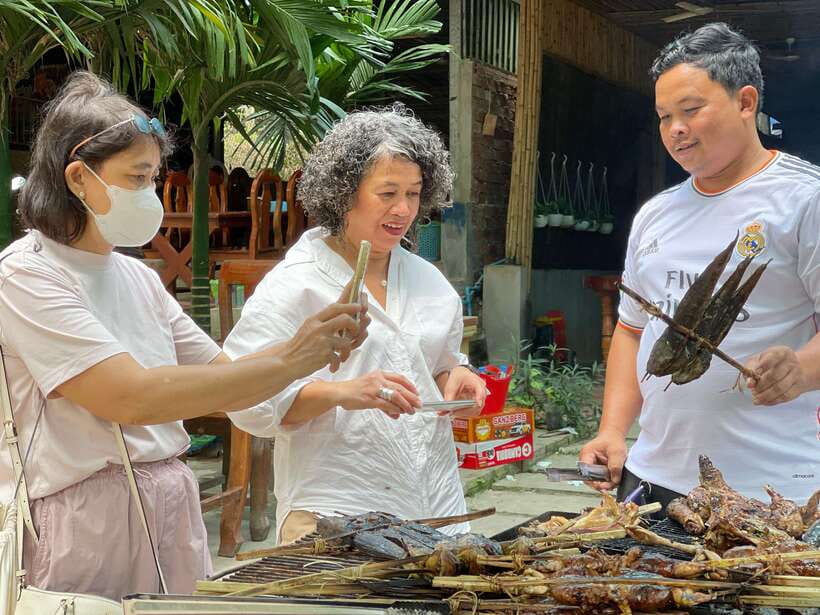
You may see basket making and get a taste of village food and produce. The tour includes palm cake and seasonal fruit tasting, giving you a small but direct connection to local flavours. These tastes are modest, not a full cooking class or market tour, so keep your expectations at the right level.
I like this stop because it prevents the day from becoming a parade of monuments. Cambodia is more than temples, and even 20 minutes in a village can help you notice how people live, work, and present local traditions.
Transport, group size, and the pace of the day
The tour lasts eight hours, including pickup and drop-off in Siem Reap. That is a long day, but the route covers a lot: a mountain park, four main mountain stops, lunch, Banteay Srei, and Preah Dak.
An air-conditioned vehicle is included, and the small-group format can make the schedule more comfortable. A private booking may suit you if you want more control over walking breaks or photo stops. A shared small group can cost less per person and still feel personal if the group remains compact.
The guide is central to the experience. The strongest feedback points to clear English, careful attention to individual needs, and the ability to explain information in simple language. Sam was specifically praised for being charming, well informed, and direct when the group arrangement changed.
The driver matters too. Cold water, cold towels, and a comfortable minibus can make a real difference after a hot walk. You should still pace yourself. The mountain route is active, and the day includes stairs and uneven surfaces.
Who should book this day?
I would choose this tour if you want to see more than the central Angkor temples and you enjoy a day with contrasting stops. It suits people who like sacred places, carved stone, waterfalls, viewpoints, local food, and a guide who can tie the pieces together.
It is also a good choice if you have limited time in Siem Reap but want both Banteay Srei and Phnom Kulen. Booking them together saves you from arranging separate transport and figuring out the mountain route on your own.
I would think twice if you have joint problems, limited mobility, or little tolerance for heat and walking. The tour may not be exhausting for a reasonably fit person, but it is not effortless. The extra entrance fees also mean the real budget is higher than $49.
Pack light, wear shoes with a good grip, and keep water close. Ask about the starting time, group size, and the Angkor Pass before paying. If the waterfall is especially important to you, remember that water levels change by season.
Should you book it?
Book this tour if you want a well-organized day that combines Phnom Kulen’s sacred sites with Banteay Srei’s exquisite pink sandstone. The best parts are the 1000 Lingas River, the reclining Buddha, the waterfall, and the steady support of a capable English-speaking guide.
Skip it if you only want the major Angkor temples, need a flat and easy route, or are trying to keep the total cost close to $49. For everyone else, it offers a strong mix of culture, scenery, and local life, with enough variety to make the long day feel worthwhile.
FAQ
How long does the tour last?
The tour lasts eight hours, including pickup and drop-off in Siem Reap.
What language does the guide speak?
The live tour guide speaks English.
Is hotel pickup included?
Free pickup and drop-off at city hotels are included. Pickup is optional when booking.
Is this a private tour or a group tour?
Private and small-group options are available.
Is lunch included?
No. Lunch at a local restaurant is scheduled for one hour, but food and drinks are not included.
Do I need separate entrance tickets?
Yes. The $20 Kulen Mountain National Park entrance fee is not included, and Banteay Srei requires an Angkor Pass.
Are the waterfalls the same size all year?
No. Their size changes with the seasons and rainfall. The stated waterfall measurements describe conditions during the rainy season.
Can I cancel the booking for a refund?
Yes. You can cancel up to 24 hours in advance for a full refund. You can also reserve now and pay later.
Newest reviews from Siem Reap
- War Museum, Killing Field, and APOPO Hero RATs Tour★ 5.0 · 7 reviews
- Angkor Wat at Sunrise★ 4.0 · 7 reviews
- Siem Reap Angkor Airport Taxis (from Airport to Hotel)★ 5.0 · 44 reviews
- Cambodian Cooking Class and Oxcart Ride with Local Village Tour★ 5.0 · 4 reviews
- Secret Temples of Angkor – Guided Tour in Siem Reap★ 5.0 · 6 reviews
- Short Cycling at Countryside★ 5.0 · 29 reviews
- SIEM REAP E-BIKE HALF-DAY COUNTRYSIDE (25-30 km)★ 4.0 · 1 review
- Unveiling the Mystical Beauty of Phnom Kulen National Park★ 5.0 · 6 reviews
Banteay Srei Tours, compared.
Full-Day Banteay Srei & 4 Temples – Grand Tours Join-in Tour
Read our review →
Siem Reap Tour: Angkor Wat Sunrise, Bayon, Ta Prohm, Banteay Srei
Read our review →
2-Day Angkor Wat With Small, Big Circuit and Banteay Srei Tour
Read our review →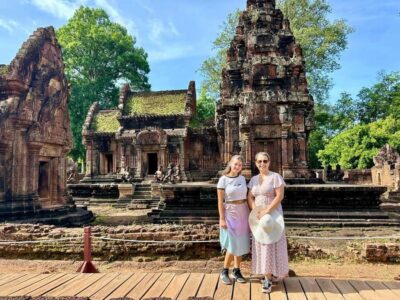
3-Days Discovery Of Angkor: Waterfalls,Floating Village and Banteay Srei temple
Read our review →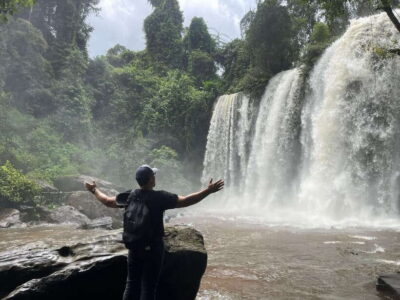
Banteay Srei, Kulen Waterfall & Beng Mealea Exploration
Read our review →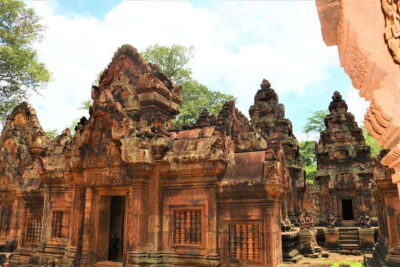
Banteay Srei and Grand Circuit Heritage Tour from Siem Reap
Read our review →Browse the lists this tour appears in