
Reviewed · ANGKOR WAT TOURS
Angkor Wat 2-Day Tour
Two days can reveal Angkor’s many moods. This private tour combines the major temples around Angkor Thom with quieter ruins, a sunset choice, and a second day devoted to Angkorian art and the River of a Thousand Lingas. I like the private format, since your group can ask questions and adjust the pace, and I like the small comforts of cold towels and drinking water after long walks in the heat. The main drawback is the $360 price, which does not include temple tickets or lunch.
The tour begins at 8:00am from Siem Reap and uses an English-speaking guide with private transportation. Past visitors have singled out drivers such as Ly Hol, Mr Ly, Vutha, Mr Pheach, Bunanal, and Ten for punctual service, flexibility, and friendly help. One guide, Lucky, was also praised for combining temple explanations with photography help. Still, you should confirm who will lead your visit before booking, since the assigned staff can vary.
In This Review
- Key points at a glance
- What the two days are really designed to do
- Starting at Angkor Wat at 8:00am
- South Gate and the road into Angkor Thom
- Bayon’s smiling towers
- Baphuon, the pyramid temple of Shiva
- Royal ceremonies at the Terraces
- Chau Say Tevoda, Thommanon, and Takeo
- Ta Prohm and the trees in the stones
- Banteay Kdei and the quiet waters of Srah Srang
- Choosing between Angkor Wat and Bakheng Mountain at sunset
- What the second day adds
- Guides, drivers, and the value of a private vehicle
- Is $360 good value?
- Who should book it?
- FAQ
- Where does the tour start?
- Is this a private tour?
- What is included in the $360 price?
- Are temple tickets included?
- Is lunch included?
- What should I wear to visit the temples?
- Can I cancel for a full refund?
Key points at a glance
- Bayon’s 216 carved faces give Angkor Thom its most memorable moment, with serene expressions looking down from 54 towers.
- Ta Prohm offers the classic tree-and-ruin scene, including the setting often associated with the film Tomb Raider.
- The private setup suits families and solo visitors, and a solo guest was able to arrange a private guide and driver.
- Cold towels and bottled water matter here, especially after walking through exposed courtyards and stone stairways.
- The $360 cost covers transport and guiding, but you must pay separately for temple admission, lunch, and personal expenses.
- Sunset is flexible, with a choice between Angkor Wat and Bakheng Mountain, subject to the practical limits of the day.
What the two days are really designed to do
This is not just a quick Angkor Wat photo stop. The first day follows the compact temple circuit around Angkor Thom, then moves through several nearby monuments before ending at sunset. You get the famous places, but also smaller stops that help you understand how the Angkorian capital was arranged.
The second day is described around two special destinations: the jewel of Angkorian art and the River of a Thousand Lingas. The supplied details do not give exact visit times or a full stop-by-stop schedule for that day, so I would ask the operator to confirm the names of the temples, driving time, walking distance, and planned return time before paying.
That lack of detail is the one weak point in an otherwise clear plan. Day one is easy to picture. Day two needs a little more checking.
More ways to see Angkor Wat:
- Angkor Wat Sunrise or Sunset Tour with Guide from Siem Reap
★ 5.0 · 12,109 reviews - Siem Reap: Angkor Wat: Small-Group Sunrise or Sunset Tour
★ 5.0 · 9,444 reviews - Siem Reap: Angkor Wat 2-Day Tour with Sunrise and Sunset
★ 4.9 · 4,429 reviews
Starting at Angkor Wat at 8:00am
The morning begins with a short drive from Siem Reap to Angkor Wat. The temple is the largest religious building in the world, but that label alone does not prepare you for its scale. Long galleries, towers, courtyards, and carved stone panels make it a place where a guide can add real value.
I would not rush this first stop. Angkor Wat rewards a slow look at its architecture, not just a walk to the famous front reflection view. Ask your guide to explain the building’s religious purpose and the scenes shown in its carvings. An English-speaking guide is included, so you can use the time to ask about details that are easy to miss on your own.
The 8:00am start is practical for a full day, though it is not a sunrise departure. The itinerary later offers sunset at Angkor Wat or Bakheng Mountain, so you may spend many hours moving through temples before the day ends. Wear proper shoes, carry only what you need, and expect heat, stone surfaces, and repeated walking.
Temple admission is not included. This is important because the $360 headline price is not your final cost. You should confirm the current temple ticket price and buying procedure before the tour begins.
South Gate and the road into Angkor Thom
The South Gate is one of the most striking entrances in the park. It was built to protect Angkor Thom, the great capital associated with the reign of King Jayavarman VII.
The approach is especially memorable because two rows of devas and asuras line the causeway. They come from the Hindu story of the Churning of the Sea of Milk, and their stone figures create a dramatic entrance into the old capital.
This is a good place to listen rather than hurry. The gate gives you a sense of Angkor Thom as a planned royal city, not a random group of ruins scattered through the trees. It also makes a useful introduction to the symbols and religious ideas that appear again at later stops.
Bayon’s smiling towers
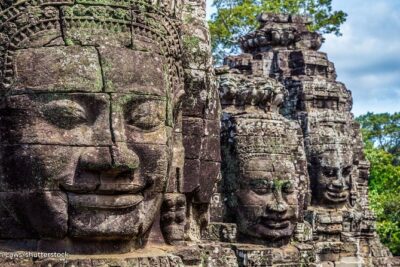
About 1 kilometer beyond the South Gate, Bayon forms the heart of Angkor Thom. It served as the state temple of Jayavarman VII and is known for 54 towers decorated with 216 carved faces of Avalokiteshvara.
Bayon can feel confusing at first. Towers overlap, passageways turn sharply, and faces appear at different heights. That is where a guide helps. You will get more from the temple if someone points out how the faces are positioned and explains what they represent.
The famous expressions are calm and almost human, but the effect is strange too. The faces seem to follow you through the stone corridors. The description of an alien construction is not entirely wrong, especially when you first see the towers rising above the narrow passages.
Allow time for both close viewing and wider photographs. Bayon is not best understood from one viewpoint. You need to move through it.
More multi-day routes in Siem Reap:
- Angkor 2-Day Sunset & Sunrise Small-Group Tour
★ 5.0 · 2,567 reviews - Siem Reap: Angkor Sunrise 1- or 2-Day Guided Temples Tour
★ 4.9 · 1,132 reviews - 2-Day Angkor Wat With Small, Big Circuit and Banteay Srei Tour
★ 5.0 · 545 reviews - Siem Reap: 2-Day Temple Highlights Sunrise and Sunset Option
★ 4.9 · 445 reviews
Baphuon, the pyramid temple of Shiva
Baphuon is the second-largest temple in Angkor Thom. It was built in the mid-11th century as a state temple for King Udayadityavarman II and was dedicated to Shiva.
Its pyramid shape gives it a different feel from Bayon. Three tiers rise above the surrounding area, and the design makes the climb and approach part of the experience. The structure is impressive even before you examine the carvings.
This stop is a good reminder that Angkor was not built for one ruler or one religious tradition. The tour places a Hindu temple after the Buddhist Bayon, helping you see the changes that took place across the Angkorian period.
Stone steps and raised temple levels can make this visit tiring. The included vehicle is useful because it limits the amount of unnecessary walking between sites, but you still need to be comfortable walking inside the monuments.
Royal ceremonies at the Terraces
The Terrace of Elephants and the Terrace of the Leper King sit near the former Angkor Royal Palace. They are close together, so visiting both gives you a compact look at royal display and carved stone work.
The Terrace of Elephants stretches about 350 meters. It served as a viewing platform for public ceremonies and as a base where the king could watch military training. Its length helps you picture the scale of royal events, even though the palace itself is no longer intact in the same way.
The Terrace of the Leper King lies just north of it. The outer walls and inner carvings are the main reason to stop. Look closely rather than treating it as a quick walk-by. The details can be easy to miss if you only photograph the long terrace beside it.
These terraces are less about a single dramatic tower and more about how power was presented. Your guide can connect the carvings and platforms to the daily business of the old capital.
Chau Say Tevoda, Thommanon, and Takeo
Outside Angkor Thom, the tour continues to Chau Say Tevoda, Thommanon, and Takeo. These temples are often overshadowed by Angkor Wat, Bayon, and Ta Prohm, but they help fill out the picture of Angkor’s architecture.
Chau Say Tevoda and Thommanon are located near each other, making them useful for comparing temple design. Takeo brings a more strongly pyramid-like form and a sense of height. The three stops also break up the day’s larger monuments with different scales and layouts.
Do not expect every stop to have the same dramatic impact. That is part of the value. If you only visit the most famous sites, Angkor can seem like a parade of similar ruins. These smaller temples give your eyes a break and let you notice changes in proportions, decoration, and construction.
The itinerary calls them impressive temples that should not be missed. I would treat them as important supporting stops rather than the main event. Your guide’s explanations will make the difference.
Ta Prohm and the trees in the stones
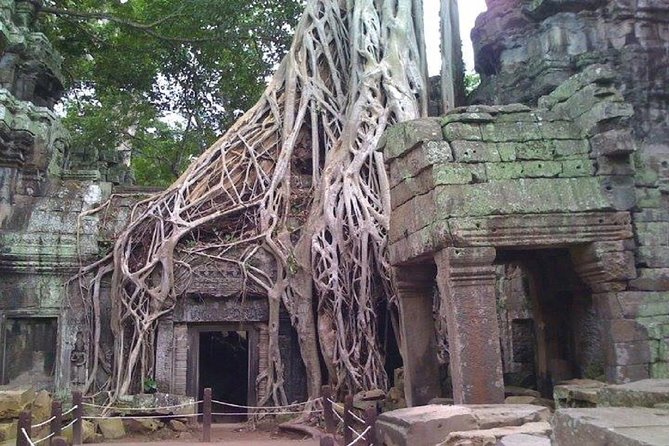
Ta Prohm is the day’s most instantly recognizable ruin after Angkor Wat. It once served as a Buddhist monastery and university during the Angkor period. It is also associated with Tomb Raider, which has made its tree-covered corridors famous around the world.
The appeal is not only the film connection. Large trees grow through the temple, their roots pressing over walls and doorways. Stone and vegetation share the same space, creating a setting that feels less orderly than Angkor Wat or Bayon.
This is one of the best places to slow down for photographs, but it can also be one of the most crowded and visually busy stops. I would ask your guide to point out less obvious carvings and architectural details instead of spending the entire visit at the best-known tree.
Ta Prohm also shows the cost of time. The roots are beautiful, but they are part of the pressure placed on the old structure. You are seeing a monument shaped both by human design and by the natural forces that took hold after the city changed.
Banteay Kdei and the quiet waters of Srah Srang
Banteay Kdei was recently restored and remains open to the public. The forest around it gives the temple a quieter, more mysterious character than the grand central sites.
I like the way this stop follows Ta Prohm. After the famous tree temple, Banteay Kdei gives you room to notice smaller architectural details without the same sense of spectacle. The surrounding forest is part of the experience, so do not treat the temple as just another stone building.
Nearby Srah Srang is a baray, or reservoir, connected with Banteay Kdei. Its water views are especially attractive at sunrise and sunset. On this tour, it adds a calmer pause after several hours among towers, galleries, and carved walls.
The schedule may determine how long you can stay. Since the tour also offers sunset at Angkor Wat or Bakheng Mountain, ask your guide how Srah Srang fits into the timing if you have a strong preference for a particular view.
Choosing between Angkor Wat and Bakheng Mountain at sunset
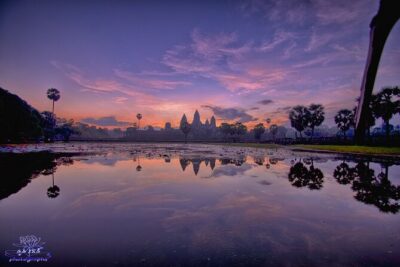
The first day ends with a sunset option at Angkor Wat or Bakheng Mountain. Angkor Wat gives you the chance to see the great monument in softer evening light. Bakheng offers a hilltop temple setting and broad views from above.
These are different experiences, not interchangeable photo locations. Angkor Wat is about the monument itself. Bakheng is about height, open views, and the temple on the top of the mountain.
I would make the choice based on your priorities and the day’s conditions. If you want the classic temple silhouette, choose Angkor Wat. If you prefer a higher viewpoint, Bakheng Mountain may suit you better. Ask about access and timing on the day, since the itinerary does not guarantee which location will be available or how long you will spend there.
The sunset stop is a pleasant way to close a demanding day, but it also makes the schedule long. Bring water, use the supplied cold towel, and save some energy for the final walk.
What the second day adds
The second day focuses on two major themes: refined Angkorian art and the River of a Thousand Lingas. The wording suggests a more specialized day than the first, which is built around the best-known central temples.
That matters if you want more than the standard Angkor Wat circuit. The second day gives the tour room to show a different side of the region, with more attention to artistic detail and a sacred water setting.
The exact itinerary is not fully spelled out, so get the practical details before booking. Ask which sites are included, how much driving is involved, whether the route includes uneven walking, and what time you will return to Siem Reap. This is especially important if you have evening travel plans.
One guide, Seng, also added a visit to Tonle Sap Lake and a boat ride through a fishing village on stilts when the group wanted it. That sounds like useful flexibility, but it should not be treated as part of the standard tour unless the operator confirms it in advance.
Guides, drivers, and the value of a private vehicle
The strongest part of this experience is the personal service. Drivers named Ly Hol, Ly, and Vutha were praised for punctuality, flexibility, and a friendly manner. Vutha also received warm comments for being good with children, including a three-year-old boy.
That matters on a temple tour. You are repeatedly getting in and out, walking in heat, and deciding how long to spend at each site. A driver who brings water, supplies cold towels, and accepts reasonable detours can make the day much easier.
The private format is also useful for solo visitors. One person was able to arrange a private guide and driver rather than being turned away because of traveling alone. Families may appreciate the ability to slow down, while couples can spend more time at the sites that interest them most.
The guide quality may vary by assignment, but several named guides were praised for clear English, good explanations, responsiveness, and photography help. Ask for an English-speaking guide and tell the operator what you care about most: history, architecture, photography, family pacing, or local life.
Is $360 good value?
At $360, this is not a budget temple visit, especially because temple tickets, lunch, and personal expenses are extra. Yet the price covers two days, private transportation, an English-speaking guide, drinking water, and cold towels.
The value depends heavily on group size. Split among several people, the cost can be reasonable for a private two-day service. For a solo visitor, it is a larger expense, though the private arrangement and personal attention may justify it if you want a structured visit.
The strongest value is convenience and flexibility, not admission savings. You are paying to have transport arranged, receive explanations at the monuments, and avoid joining an unknown group. You should still compare the total cost after adding tickets and meals.
Because the listing shows a mobile ticket feature while also saying temple tickets are not included, confirm exactly what the mobile ticket refers to. That small point could prevent confusion at the start.
Who should book it?
I would recommend this tour to you if you want a private, guided introduction to Angkor and prefer a full two-day plan. It suits families, solo visitors, couples, and small groups who value flexibility over the lowest possible price.
It is also a good match if you want both famous sites and less celebrated temples. Bayon, Ta Prohm, and Angkor Wat provide the major highlights, while Banteay Kdei, the terraces, and the smaller temples add variety.
I would hesitate if you want a tightly specified second day, an all-inclusive price, or a very early sunrise start. The first day is detailed, but the second needs clarification, and the extra costs can change the final budget.
Before booking, ask three things: who your guide and driver will be, which exact sites are planned for day two, and how temple tickets will be handled. If the answers are clear, this looks like a friendly and flexible way to see Angkor without being hurried through it.
FAQ
Where does the tour start?
The tour starts in Siem Reap, Siem Reap Province, at 8:00am.
Is this a private tour?
Yes. Only your group participates in the activity.
What is included in the $360 price?
The price includes transportation, cold towels, drinking water, and an English-speaking guide.
Are temple tickets included?
No. Temple tickets are not included in the tour price.
Is lunch included?
No. Lunch near the temples is not included.
What should I wear to visit the temples?
You need to follow the dress code rules required at the temples.
Can I cancel for a full refund?
Yes, if you cancel at least 24 hours before the experience start time. Cancellations made less than 24 hours in advance are not refunded, and changes during that period are not accepted.
Newest reviews from Siem Reap
- War Museum, Killing Field, and APOPO Hero RATs Tour★ 5.0 · 7 reviews
- Angkor Wat at Sunrise★ 4.0 · 7 reviews
- Siem Reap Angkor Airport Taxis (from Airport to Hotel)★ 5.0 · 44 reviews
- Cambodian Cooking Class and Oxcart Ride with Local Village Tour★ 5.0 · 4 reviews
- Secret Temples of Angkor – Guided Tour in Siem Reap★ 5.0 · 6 reviews
- Short Cycling at Countryside★ 5.0 · 29 reviews
- Khmer Cooking Class in Cambodia★ 5.0 · 36 reviews
- SIEM REAP E-BIKE HALF-DAY COUNTRYSIDE (25-30 km)★ 4.0 · 1 review
Angkor Wat Tours, compared.
Angkor Wat Sunrise or Sunset Tour with Guide from Siem Reap
Read our review →
Angkor Wat: Small-Group Sunrise or Sunset Tour
Read our review →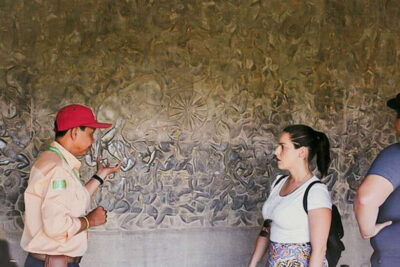
Angkor Wat 2-Day Tour with Sunrise and Sunset
Read our review →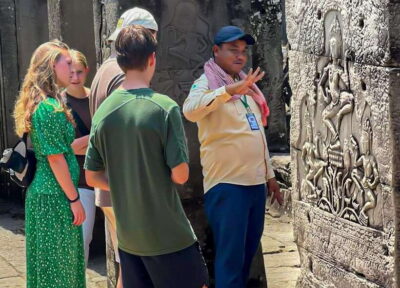
Angkor Wat Sunrise tour with Small – Group and Guide tours
Read our review →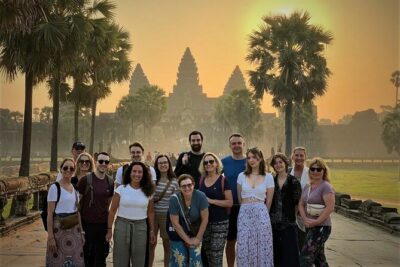
Angkor Wat Highlights and Sunrise Guided Tour from Siem Reap
Read our review →
Angkor Wat Sunset Small Group Tour with Lunch Included
Read our review →
Full-Day Angkor Wat Sunrise Private Tour with Guide from Siem Reap
Read our review →Browse the lists this tour appears in