
Reviewed · BANTEAY SREI TOURS
2-Days Angkor & Banteay Srei & Kulen Mountian Waterfall Tour
Two days reveal Angkor’s full scale. This private tour pairs Angkor Wat at sunrise with the remote temples and waterfall of Phnom Kulen, giving you far more than a quick temple circuit. I like the clear variety: one day focuses on Angkor’s grand stone city, while the second reaches Mahendraparvata, the 1000 Lingas, and Preah Ang Thom. I also like the personal guiding, especially with Mean Chanra, whose detailed stories about Cambodian history earned strong praise.
The main drawback is the pace. You leave at 4:30 AM on day two, drive about 65 kilometers to Phnom Kulen, and return to Siem Reap around 6:30 PM. Add temple walking, heat, and an extra ticket cost, and this is best for active sightseers rather than anyone seeking a slow, easy holiday.
In This Review
- Key points to know before booking
- Why this two-day route works
- Day one: Angkor Wat before the jungle temples
- Ta Nei and Angkor Thom’s stone faces
- Day two: sunrise, sacred water, and an early start
- Phnom Kulen and the ancient city of Mahendraparvata
- Banteay Srei’s pink sandstone detail
- Banteay Samre and Pre Rup close the circuit
- What the $126 price really covers
- Practical advice for handling the two long days
- Who should book this tour?
- Should you book it?
- FAQ
- What is included in the $126 tour price?
- Are temple admission tickets included?
- Is the Phnom Kulen entrance ticket included?
- Does the tour include meals?
- What time does the sunrise day begin?
- Is the tour suitable for wheelchair users or people with back problems?
Key points to know before booking
- Angkor Wat sunrise begins at 4:30 AM: You watch the temple brighten from across the water, then return to your hotel for breakfast.
- Phnom Kulen adds a different side of Cambodia: The mountain visit includes Mahendraparvata, the 1000 Lingas, Preah Ang Thom, and a waterfall.
- Banteay Srei is the finely carved stop: Its pink sandstone and smaller scale make it a sharp contrast to Angkor Wat.
- The tour includes a private English-speaking guide: Mean Chanra received particular praise for detailed, friendly explanations.
- The advertised price excludes major costs: The $126 price does not include the temple pass, Phnom Kulen ticket, or meals.
- The days are long and active: Comfortable shoes, sun protection, and a willingness to start early matter here.
Why this two-day route works
Siem Reap is often treated as a base for Angkor Wat alone. That misses much of what makes the area rewarding. The temples around Angkor show the power and ambition of the Khmer Empire, while Phnom Kulen connects those monuments with sacred water, mountain worship, and the early city of Mahendraparvata.
This tour gives you both settings. Day one stays close to the famous Angkor complex, moving from the scale of Angkor Wat to jungle-covered Ta Prohm and the carved faces of Bayon. Day two reaches farther out, first to Phnom Kulen and then back toward Banteay Srei and the eastern temples.
I like that arrangement because the two days do not feel identical. You get major monuments, small jungle ruins, a mountain resort, a waterfall, and a sunrise. The tradeoff is that the schedule leaves little spare time. You are paying for coverage, not lingering at one temple for an entire morning.
The tour is private, with hotel pickup and drop-off in an air-conditioned car, van, or bus with a driver. The exact vehicle depends on the booking, but air conditioning matters in Cambodia, especially during long drives and after walking through exposed temple courtyards. Cool drinking water and towels are included, which are small comforts that become useful quickly.
More trips out to Banteay Srei:
- Full-Day Banteay Srei & 4 Temples – Grand Tours Join-in Tour
★ 5.0 · 1,155 reviews - Siem Reap Tour: Angkor Wat Sunrise, Bayon, Ta Prohm, Banteay Srei
★ 5.0 · 931 reviews - 2-Day Angkor Wat With Small, Big Circuit and Banteay Srei Tour
★ 5.0 · 545 reviews
Day one: Angkor Wat before the jungle temples
The first day begins at 8:00 AM after breakfast. Your guide meets you in the lobby, then takes you to get the temple ticket before beginning the route.
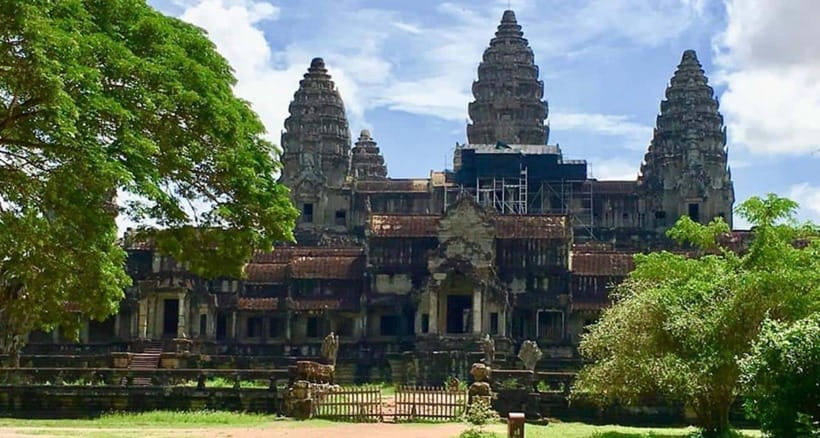
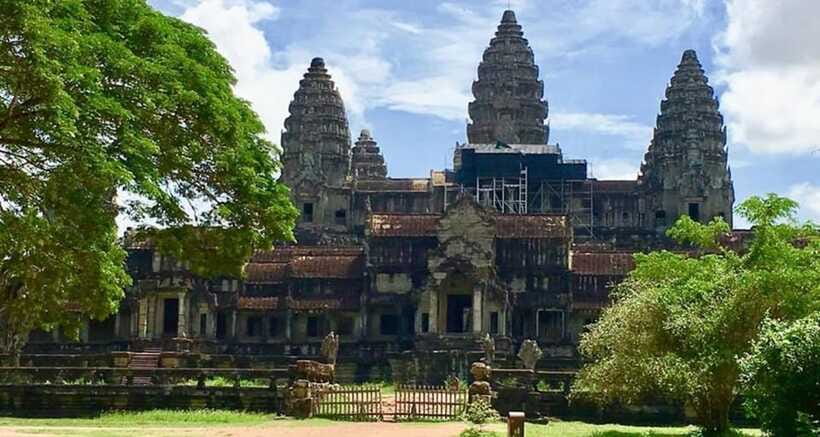
Angkor Wat is the anchor. Built as a Hindu temple, it is the largest religious temple complex in the world and one of Cambodia’s defining sights. The first impression comes from its broad approach, towers, galleries, and long lines of carved stone. You should allow yourself time to look past the famous outer view. The structure is not just a single photo stop. Its scale becomes clear as you move through the courtyards and galleries.
A guide adds real value here. Without context, Angkor Wat can become a parade of towers and stones. With a good explanation, the layout, religious purpose, and changing use of the site become easier to understand. Mean Chanra was praised for sharing detailed stories about Cambodian history and for taking time with explanations. If he is assigned to your booking, his interest in Cambodian culture may make the large complex easier to read.
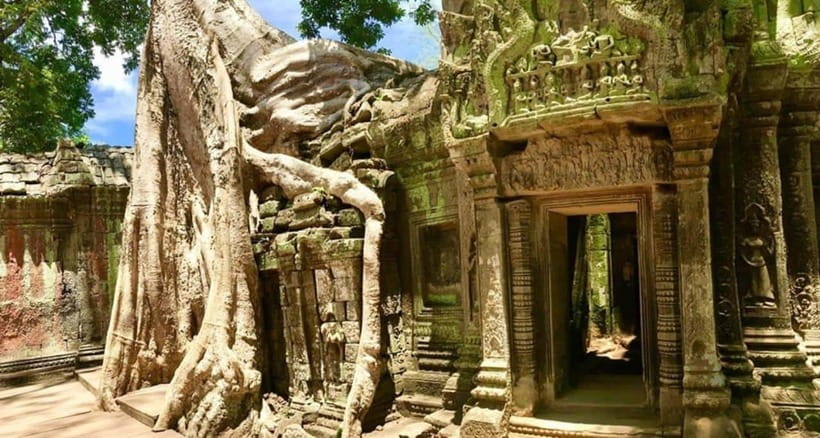
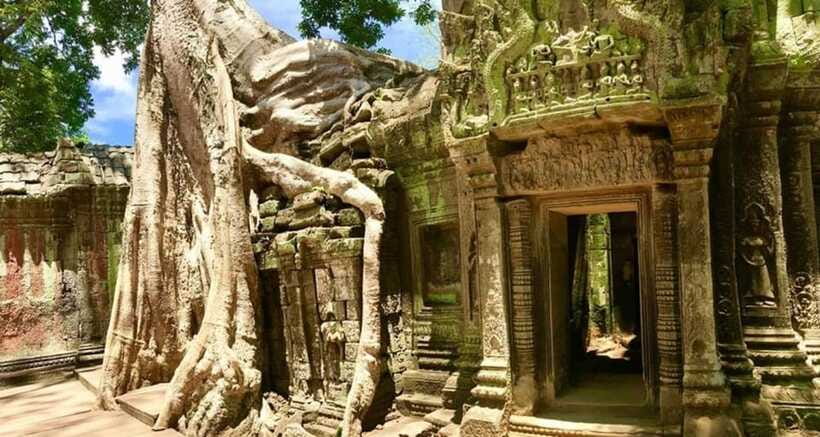
After Angkor Wat, the route turns to Ta Prohm. This temple is famous for large trees growing through and around its stonework. The image is dramatic, but the site is more than a backdrop for photographs. Ta Prohm lets you see how the jungle has shaped the way people imagine Angkor, with roots and masonry appearing to hold one another in place.
I like the contrast between the ordered grandeur of Angkor Wat and the tangled feel of Ta Prohm. Still, the most photographed sections can feel busy, and you should expect a fair amount of walking. Comfortable shoes are not optional decoration on this trip.
Ta Nei and Angkor Thom’s stone faces
Lunch is taken at a local restaurant near the next temple, though meals are not included in the tour price. This gives you a chance to eat near the route rather than losing time returning to Siem Reap, but you should budget separately for food.
Ta Nei is a smaller classic temple set in the jungle. It does not have the same fame as Angkor Wat or Ta Prohm, and that is part of its appeal. Its modest scale gives you a break from the biggest monuments. You can focus on stone details and the setting without trying to take in an entire city of temples at once.
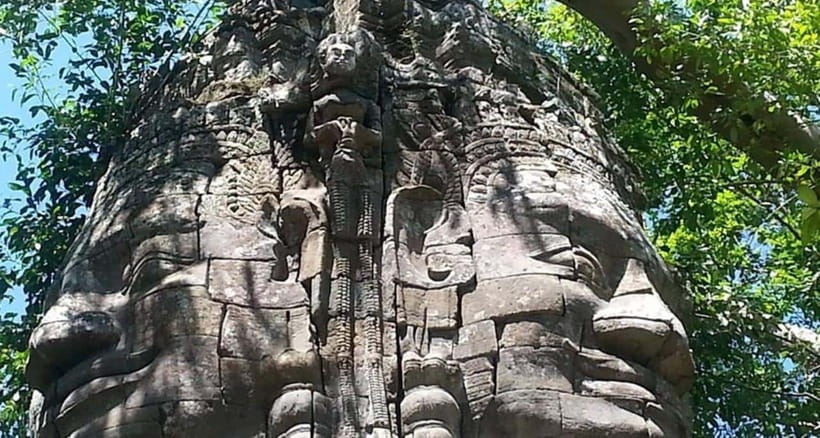
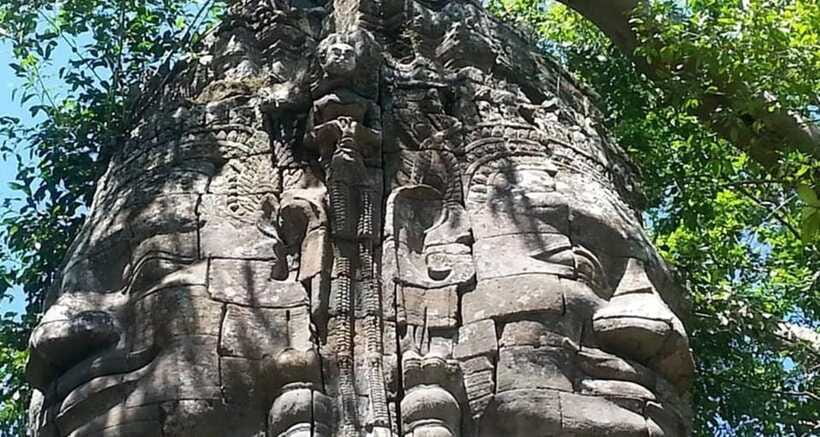
The tour then enters Angkor Thom through its East Gate. Angkor Thom was a major walled city, and the gate helps you understand that the temples were part of a larger urban and ceremonial center. The route continues to Bayon, recognized for its huge smiling faces carved into the towers.
Bayon can be confusing at first. The faces seem to appear from different directions as you move through the temple. I recommend looking up and around rather than rushing straight through. The repeated faces create a very different mood from the long, formal lines of Angkor Wat.
Baphoun follows. This artificial mountain temple rises in tiers and gives you another example of how Khmer builders used height to express sacred importance. The route also includes the Royal Enclosure wall, the Elephant Terrace, and the Terrace of the Leper King.
These stops work well together because they show Angkor Thom as a royal center rather than a collection of unrelated ruins. The Elephant Terrace, in particular, is tied to the ceremonial heart of the city. Your guide can help connect the walls, terraces, temple, and gates into one readable place.
The first day ends at Phnom Bakheng for sunset, with return to your hotel planned around 6:30 PM. This makes for a full day. You will have started after breakfast, walked through several major sites, and remained outside for much of the afternoon. If you want a relaxed dinner, do not schedule anything demanding afterward.
Day two: sunrise, sacred water, and an early start
Day two begins at 4:30 AM. The goal is sunrise in front of Angkor Wat, followed by a return to your hotel for breakfast.
This early departure is one of the tour’s strongest features and one of its hardest demands. Seeing the sky brighten behind the temple can be a memorable way to begin, especially because the quiet morning setting differs from the heat and activity later in the day. You should prepare your clothes, camera, hat, and sunscreen the night before. A 4:30 AM pickup leaves little room for forgotten items.
The tour returns to your hotel after sunrise, so you can eat breakfast before heading out again. That pause helps, but day two remains long. The next destination is Phnom Kulen, about 65 kilometers from Siem Reap.
A few more options around Siem Reap worth reading up on
- Angkor Wat Sunrise or Sunset Tour with Guide from Siem Reap
★ 5.0 · 12,109 reviews - Siem Reap: Angkor Wat: Small-Group Sunrise or Sunset Tour
★ 5.0 · 9,444 reviews - From Siem Reap: Kampong Phluk Floating Village Tour by Boat
★ 4.9 · 6,979 reviews - Sunset tour of Kampong Phluk stilts home village on the Tonle Sap
★ 5.0 · 4,865 reviews
Phnom Kulen and the ancient city of Mahendraparvata
Phnom Kulen is not simply a stop for scenery. It was the site of an ancient city called Mahendraparvata, a name meaning the great mountain of Indra. Visiting the mountain gives you a chance to connect Angkor’s later monuments with an earlier sacred and political center.
The 1000 Lingas are carved into the bottom of the river. These figures represent the holy river of Shiva and are linked with the idea of bathing to wash away evil sins. Water is central here, both as a physical force and as a religious symbol. It is a useful contrast with the dry stone temples farther south.
You then visit Preah Ang Thom, home to the largest reclining Buddha sculpture described in the tour. The Buddha is carved from a large natural stone. That setting makes the stop different from the carefully built temple monuments around Angkor. The experience is tied to the mountain itself, not only to constructed walls and towers.
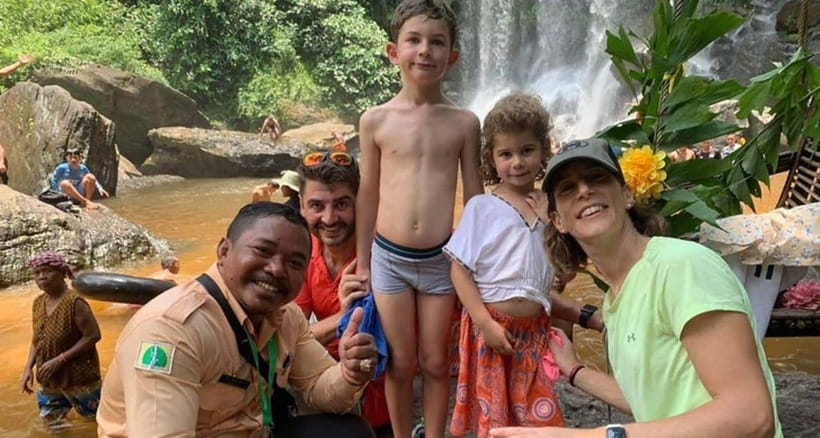
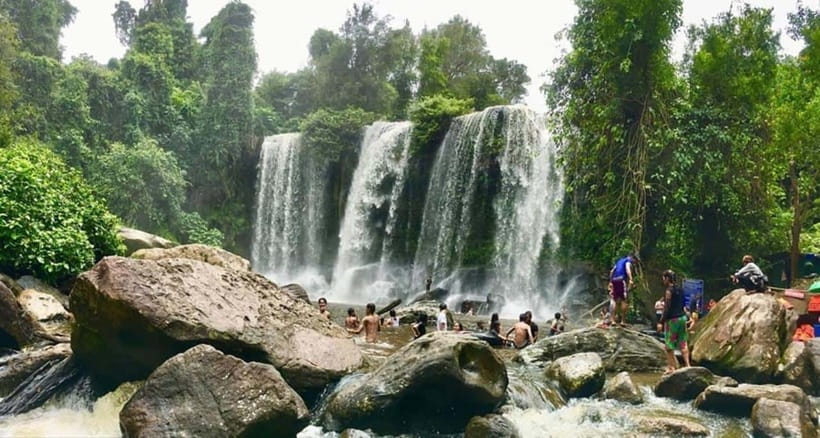
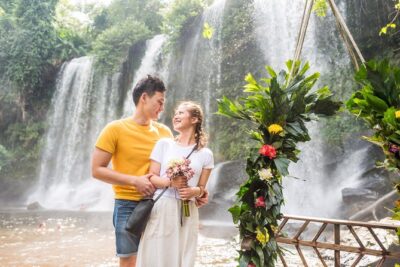
The waterfall is the final major feature of Phnom Kulen. The holy water is associated with bathing to wash away evil sins, giving the waterfall a religious meaning beyond its appearance. It also offers a change of pace after the earlier temple visits, though the mountain visit still includes walking and time outdoors.
Phnom Kulen tickets cost $20 per person and are not included. This is important when comparing the headline price with your likely total. You should also expect a separate meal cost, since lunch is not included and may be taken at a local restaurant or at the top of the mountain.
The mountain drive is what makes this day special, but it also adds time. If you prefer a compact temple visit with short transfers, this route may feel tiring. If you want a broader view of Cambodian sacred places, the extra distance earns its place.
Banteay Srei’s pink sandstone detail
After coming down from Phnom Kulen and taking lunch, the tour continues to Banteay Srei. This temple is often called the Ladies’ Temple and was built from pink sandstone in the late 10th century under the Hindu king Rajendravarman II.
Banteay Srei is smaller than Angkor Wat, but its carvings are a major reason to include it. The pink stone gives the temple a warmer color, and the scale makes the carved details easier to appreciate. I find it a good reminder that Angkor’s appeal is not only about size. Fine workmanship can make a smaller monument just as memorable.
The stop also breaks up the long mountain day. After the natural setting of Phnom Kulen, Banteay Srei brings you back to formal temple architecture, but with a more intimate feel than Angkor’s largest sites.
You should keep the schedule in mind. By this point, you will have already watched sunrise, driven to the mountain, visited several sites, and eaten lunch. Banteay Srei rewards attention, but you may need to make a conscious effort not to hurry through it.
Banteay Samre and Pre Rup close the circuit
Banteay Samre is the next temple on the route. Its inclusion adds another architectural stop without sending you back into the busiest central part of Angkor. Details about its construction are not specified in the tour information, so the main value here is seeing another temple within the broader circuit and comparing its form with Banteay Srei and Pre Rup.
Pre Rup is also called the crematorium temple. It has three volcanic rock levels and five brick towers at the top. The rising arrangement makes it easy to see why the temple is described as a mountain form.
These final stops are useful because they prevent the trip from ending with only the best-known monuments. You get a wider range of temple styles and settings. By the planned return at about 6:30 PM, though, you will have spent two full days on a demanding schedule.
What the $126 price really covers
The advertised price is $126 per person. It includes an English-speaking guide, an air-conditioned vehicle with driver, parking fees, road tolls, hotel pickup and drop-off, drinking water, and towels.
It does not include temple admission, Phnom Kulen admission, or meals. For a two-day visit to Angkor, a three-day temple pass at $62 per person is the practical listed option because the temple visits are spread across two separate days. The one-day pass is $37, while the seven-day pass is $72, but the seven-day ticket only makes sense if you plan to return to the temples after this tour.
Add the $20 Phnom Kulen ticket, and the listed tour plus the three-day temple pass and mountain admission comes to $208 per person before meals. That is the number I would use for a realistic comparison, not $126 alone.
The value is strongest if you want a private guide and transport for a long, varied route. You are not only paying for a driver. The package handles the mountain transfer, early sunrise pickup, temple transfers, and local guiding over two days. Larger groups may pay less per person, according to the tour information, but the group type is described as private, so confirm the vehicle and final group arrangement when booking.
Free cancellation up to 24 hours ahead and reserve-now, pay-later terms give you some flexibility. Those details are helpful, but they do not change the main calculation: admission and food add a noticeable amount.
Practical advice for handling the two long days
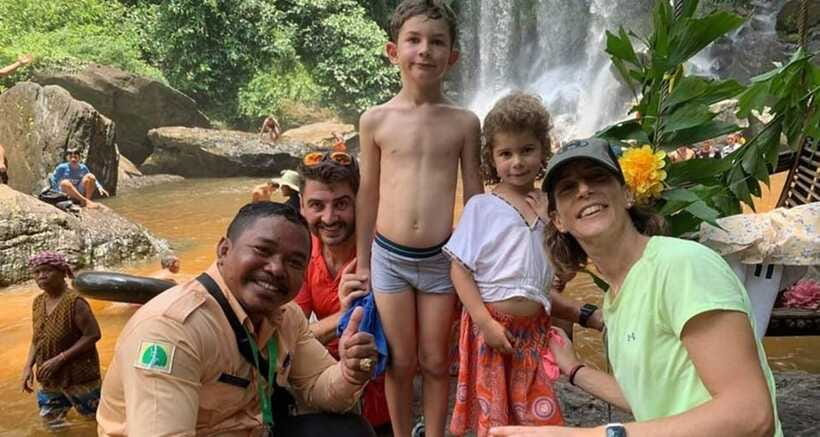
Bring comfortable shoes, a hat, sunscreen, and a camera. The route includes temple grounds, jungle settings, a mountain area, and a waterfall, so footwear that can handle a full day of walking is the sensible choice.
Carry water, even though cool drinking water is included. The supplied towels are useful, but they do not replace sun protection or a change of shirt if you are sensitive to heat.
Smoking is not allowed on the tour. People with back problems should think carefully before booking, and the experience is not suitable for wheelchair users. The early start, long vehicle transfers, and active temple schedule are the main reasons to be realistic about your stamina.
I would also leave your evening open on both days. Returning around 6:30 PM means the schedule is designed to use the daylight hours fully. That is good for sightseeing, but not ideal if you want a tour followed by nightlife or a late dinner reservation.
The strongest guide feedback centers on Mean Chanra. He was described as friendly, helpful, highly invested, and able to share detailed stories that went beyond basic facts. That kind of guide can make a major difference at Angkor, where the size of the sites can overwhelm you. Guide assignments can vary, so ask if you particularly want Chanra.
Who should book this tour?
I would choose this tour if you have only two days in Siem Reap and want to combine the major Angkor temples with Phnom Kulen. It suits you if you enjoy early starts, full days, private transport, and historical explanation.
I would be more cautious if you dislike long drives, have back problems, use a wheelchair, or prefer to spend several hours at one temple without watching the clock. The $126 starting price also needs careful reading because tickets and meals are extra.
Should you book it?
Book this tour if your priority is variety and coverage. You will see Angkor Wat at sunrise, Ta Prohm’s trees, Bayon’s faces, the smaller Ta Nei, Banteay Srei’s pink sandstone, and the sacred sites of Phnom Kulen in one organized trip.
Skip it if you want a gentle schedule or a low final cost. For the right person, the route offers strong value because it combines a private guide, transport, mountain access, and two very different sides of Siem Reap. Mean Chanra’s detailed storytelling is another reason to request him if possible.
FAQ
What is included in the $126 tour price?
The price includes an English-speaking guide, an air-conditioned car, van, or bus with driver, parking fees, road tolls, cool drinking water, towels, and hotel pickup and drop-off.
Are temple admission tickets included?
No. Temple tickets cost $37 for one day, $62 for three days, or $72 for seven days per person. A three-day pass is the practical listed option for temple visits spread over both tour days.
Is the Phnom Kulen entrance ticket included?
No. The Phnom Kulen ticket costs $20 per person.
Does the tour include meals?
No. Breakfast, lunch, and dinner are not included. Lunch is planned at a local restaurant or may be taken at the top of Phnom Kulen.
What time does the sunrise day begin?
The second day begins at about 4:30 AM, when you leave your hotel to watch sunrise in front of Angkor Wat.
Is the tour suitable for wheelchair users or people with back problems?
No. The experience is listed as unsuitable for wheelchair users and people with back problems. Comfortable shoes are recommended for the active temple and mountain route.
Newest reviews from Siem Reap
- War Museum, Killing Field, and APOPO Hero RATs Tour★ 5.0 · 7 reviews
- Angkor Wat at Sunrise★ 4.0 · 7 reviews
- Siem Reap Angkor Airport Taxis (from Airport to Hotel)★ 5.0 · 44 reviews
- Cambodian Cooking Class and Oxcart Ride with Local Village Tour★ 5.0 · 4 reviews
- Secret Temples of Angkor – Guided Tour in Siem Reap★ 5.0 · 6 reviews
- Short Cycling at Countryside★ 5.0 · 29 reviews
- SIEM REAP E-BIKE HALF-DAY COUNTRYSIDE (25-30 km)★ 4.0 · 1 review
- Unveiling the Mystical Beauty of Phnom Kulen National Park★ 5.0 · 6 reviews
Banteay Srei Tours, compared.
Full-Day Banteay Srei & 4 Temples – Grand Tours Join-in Tour
Read our review →
Siem Reap Tour: Angkor Wat Sunrise, Bayon, Ta Prohm, Banteay Srei
Read our review →
2-Day Angkor Wat With Small, Big Circuit and Banteay Srei Tour
Read our review →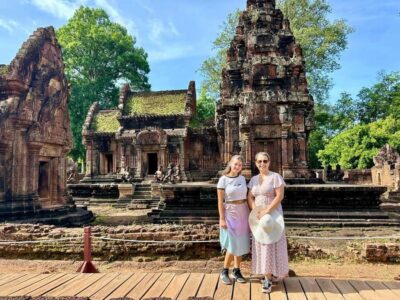
3-Days Discovery Of Angkor: Waterfalls,Floating Village and Banteay Srei temple
Read our review →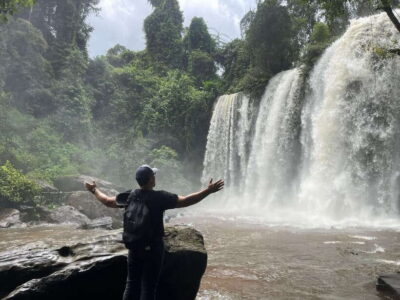
Banteay Srei, Kulen Waterfall & Beng Mealea Exploration
Read our review →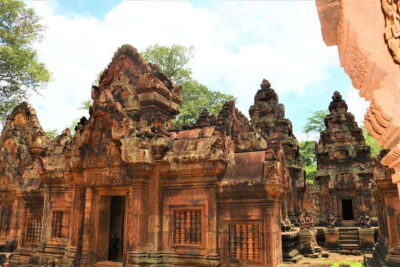
Banteay Srei and Grand Circuit Heritage Tour from Siem Reap
Read our review →Browse the lists this tour appears in