
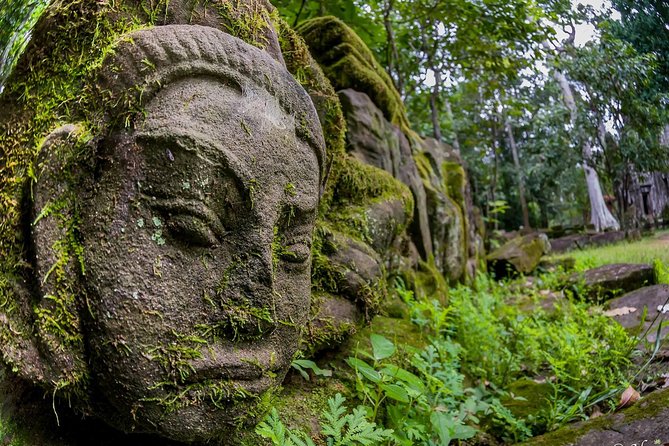
Reviewed · ANGKOR WAT TOURS
2-Day Angkor Wat with Temples On Small Circle & Kulen Waterfall
Angkor’s best sights come with long days. This two-day private tour combines the main temples of the small circuit with a sunrise at Angkor Wat, sunset at Phnom Bakheng, and a full excursion to Kulen Mountain. I like the mix of famous ruins and quieter Ta Nei Temple, and I like having a licensed English-speaking guide, air-conditioned transport, water, and hotel pickup included. The main drawback is the pace: sunrise begins at 5:00am, and the second day continues for hours after a long drive.
I also like the range of sites. You move from the giant roots of Ta Prohm to the many-faced towers of Bayon, then from ancient temples to Kulen’s carved riverbed and waterfall. The extra costs matter, though. The listed price is $181.75 per person, but you must add $62 for temple admission, $20 for Kulen National Park, and lunch.
In This Review
- Key points to know before booking
- What the two days are really like
- Angkor Wat at 8:00am on day one
- Ta Prohm and Ta Nei on the small circuit
- Angkor Thom, from Victory Gate to the Terrace of the Leper King
- Sunset at Phnom Bakheng
- Sunrise at Angkor Wat requires discipline
- Kulen Mountain, the 1,000 Lingas, and the waterfall
- Banteay Srei, Banteay Samre, and Pre Rup
- What is included, and what you still pay
- Who should book this two-day route?
- Should you book it?
- FAQ
- How long does the tour last?
- What time does pickup begin on the first day?
- What time does pickup begin for sunrise on the second day?
- Is the Angkor temple pass included?
- Is Phnom Kulen National Park admission included?
- Are meals included?
- Is this a private tour?
Key points to know before booking
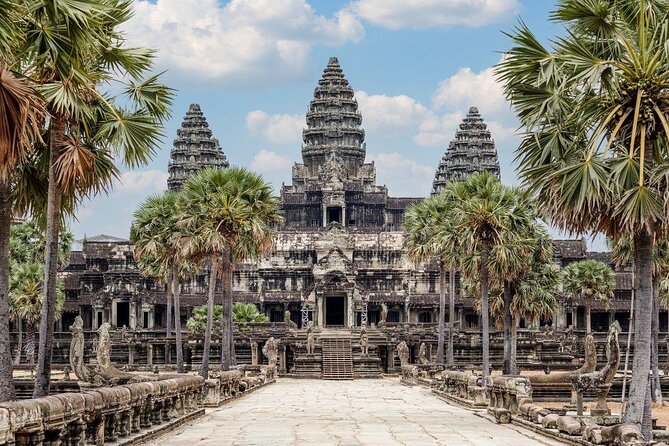
- Two very different days: Day one focuses on Angkor’s major temples, while day two adds sunrise, a mountain park, a waterfall, and more temples.
- Private transport is included: You receive an air-conditioned vehicle with a driver, hotel pickup and drop-off, road tolls, parking, drinking water, and wet towels.
- The early start is real: Pickup for sunrise is scheduled at 5:00am, so this is not a gentle holiday schedule.
- Ta Nei offers a quieter stop: This small, less-restored temple is included between the better-known sites and can provide a break from the busiest ruins.
- Kulen adds a change of scenery: The park is more than 60 kilometers from Angkor Park and includes the 1,000 Lingas, a reclining Buddha, and a waterfall.
- Budget beyond the tour price: Angkor admission, Kulen admission, and meals are separate, bringing the known total before lunch to at least $263.75 per person.
What the two days are really like
This is a private activity, so only your group takes part. That gives you more control than a large coach tour, especially at a place like Angkor where the difference between a calm stop and a rushed stop can be substantial.
The schedule is full. Day one begins at 8:00am and ends with a possible sunset at Phnom Bakheng. Day two starts before dawn, then runs through Kulen Mountain and three more temples. The tour is best for someone who wants to cover a lot in limited time, not for someone who prefers one or two temples with long, unhurried visits.
Your guide meets you in the lobby of your hotel or guest house. The route includes a stop to buy the temple pass, and admission is not included in the tour price. Keep that extra cost in mind when comparing this experience with other Angkor packages.
More ways to see Angkor Wat:
- Angkor Wat Sunrise or Sunset Tour with Guide from Siem Reap
★ 5.0 · 12,109 reviews - Siem Reap: Angkor Wat: Small-Group Sunrise or Sunset Tour
★ 5.0 · 9,444 reviews - Siem Reap: Angkor Wat 2-Day Tour with Sunrise and Sunset
★ 4.9 · 4,429 reviews
Angkor Wat at 8:00am on day one
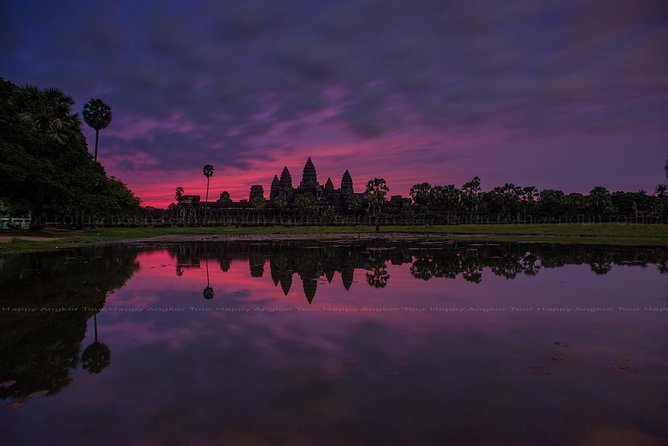
The first temple is Angkor Wat, with about two and a half hours set aside. That is enough time to see the main areas with a guide, take in the scale of the complex, and begin to understand how the temple fits into the wider Angkor site.
Angkor Wat is a strong opening because it gives you the grandest architectural setting before the day becomes a sequence of different styles and smaller stops. I would use this first visit to listen closely to the guide and note the parts you may want to revisit during the sunrise stop on day two.
There is an important scheduling point here. You see Angkor Wat twice, first during daylight on day one and again at sunrise on day two. That repetition is useful. The first visit lets you learn the layout without the pressure of darkness, while the second gives you the classic early-morning view.
Ta Prohm and Ta Nei on the small circuit
After Angkor Wat, the route continues to Ta Prohm for about two hours. This is the temple associated with gigantic tree roots growing across the ruins and with the film Tomb Raider. The roots are not a minor detail. They are the reason Ta Prohm feels so different from the more orderly lines of Angkor Wat.
Ta Prohm is also one of the tour’s more popular stops, so the timing can affect how peaceful it feels. Your guide can help explain what you are seeing, but you should expect to spend time walking around uneven temple remains and waiting for clear photo angles.
Ta Nei follows, with about 45 minutes. It is smaller, surrounded by large trees, and less restored. That makes it valuable as a contrast. Instead of another major monument, you get a quieter ruin where the incomplete condition is part of the appeal.
I particularly like this pairing. Ta Prohm gives you the famous roots and movie connection. Ta Nei gives you a less polished stop and a chance to see a temple without the same level of attention. The visit is short, though, so do not expect a long exploration.
Angkor Thom, from Victory Gate to the Terrace of the Leper King
The afternoon moves into Angkor Thom, the great walled city. The first stop is the Victory Gate on the east side, a quick ten-minute photo stop. It is brief, but it helps you see that Angkor Thom was not simply a collection of isolated temples. Gates, walls, terraces, and central monuments formed part of a planned royal city.
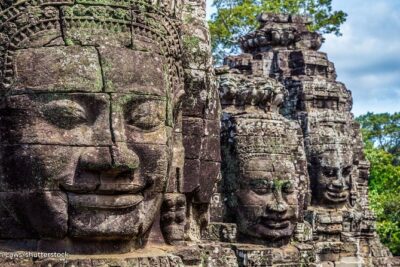
Bayon follows for about 45 minutes. Its towers carry the famous carved faces associated with the Buddhist figure Avalokitesvara. The tour description counts 49 towers and 196 faces, a detail that gives you a sense of the monument’s unusual design.
Bayon rewards close looking. Rather than viewing it only from a distance, notice how the faces appear from different angles as you walk among the towers. Forty-five minutes is enough for an introduction, but it is not a leisurely study of every carving.
Baphuon comes next, with 15 minutes. This Hindu temple dates to the 11th century and predates Angkor Wat. Behind it is a large reclining Buddha built in the 16th century. The short stop means you will see the main feature and hear the basic explanation, but you should not expect a full tour of the structure.
The nearby Phimeanakas is another 15-minute stop. This pyramid-shaped Hindu temple dates to the 10th century and sits in the center of the old royal palace area. The route also includes the ancient Royal Enclosure Wall, which adds useful context to the royal setting.
The Terraces of the Elephants and the Leper King receive about ten minutes each. The Elephant Terrace was used by kings to view returning armies, and its walls carry elephant carvings. The Terrace of the Leper King is nearby on the north side.
These are quick stops, so I would treat them as guided orientation points rather than full visits. They are worthwhile because they show the ceremonial and royal side of Angkor Thom, but the schedule gives you more time at the headline temples than at these platforms.
More days on Phnom Kulen:
- Kulen Waterfall Join-in Tour (local Picnic lunch)
★ 5.0 · 2,434 reviews - Kulen Mountain: Small-Group Tour and Picnic lunch
★ 4.9 · 1,802 reviews - Siem Reap: Kulen Mountain, Beng Mealea and Tonle Sap Tour
★ 5.0 · 1,483 reviews - Phnom Kulen Waterfall & the Sacred 1000 Lingas (with Lunch)
★ 4.8 · 974 reviews
Sunset at Phnom Bakheng
The first day ends with up to two hours at Phnom Bakheng. You climb the hill and wait for sunset. The schedule allows time for the view, but sunset stops can become long waits, especially if you arrive before the best light.
The tour allows you to skip this part if you do not want to wait. That flexibility matters. After a full day of temple walking, some people will prefer an earlier dinner and more rest before the 5:00am pickup. Others will consider the sunset one of the highlights.
I would decide based on your energy and the weather that day. Phnom Bakheng is not simply another ruin stop. It is a hilltop viewpoint, so the appeal is the changing light and broad view rather than a long temple visit.
Sunrise at Angkor Wat requires discipline
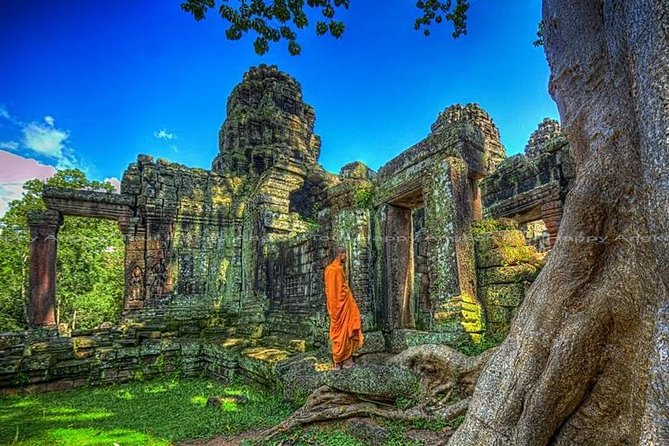
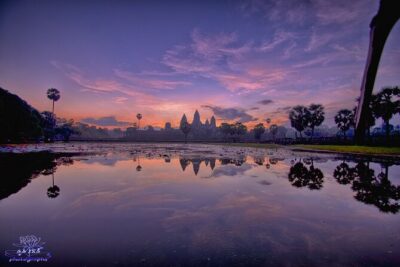
Day two begins at 5:00am. The aim is to see sunrise over Angkor Wat, and about one hour and 45 minutes is scheduled for the stop.
This early start is the tour’s biggest practical challenge. You need to be ready in your hotel lobby before dawn, then continue with a long day after breakfast. If sunrise photographs matter to you, the early alarm is part of the price of the experience. If you dislike early mornings, this may feel like work.
The benefit of seeing Angkor Wat in two different conditions is considerable. Daylight on day one helps with architecture and detail. Sunrise brings a completely different mood and gives you the famous view across the temple’s reflecting pool area, though the exact quality of the sunrise depends on conditions.
Since the temple pass is separate, you will need the appropriate Angkor admission for both days. The stated cost is $62 per person for Angkor and all temples.
Kulen Mountain, the 1,000 Lingas, and the waterfall
After breakfast, the route leaves Angkor Park for Phnom Kulen National Park. The park is more than 60 kilometers from Angkor, and the sightseeing portion is planned for about five hours.
This is not another temple circuit. Kulen changes the rhythm of the tour with a riverbed covered in carvings of Lingas, symbols connected with the Hindu god Shiva. The site is known as the 1,000 Lingas, although the supplied description presents the carved riverbed as the central feature to see.
You also visit a large reclining Buddha carved from a single stone. That stop gives the mountain excursion a different religious and artistic focus from the sandstone temple ruins around Siem Reap.
The waterfall is the other major attraction. It adds a natural stop after a morning of carved stone and temple walls. The five-hour allocation suggests that Kulen is not a rushed photo stop. It is a substantial part of the second day.
Kulen National Park admission costs $20 per person and is separate from the tour price. The long distance is worth considering. You spend a good part of the day getting there and back, so this portion suits you if you want more than the standard Angkor loop.
Banteay Srei, Banteay Samre, and Pre Rup
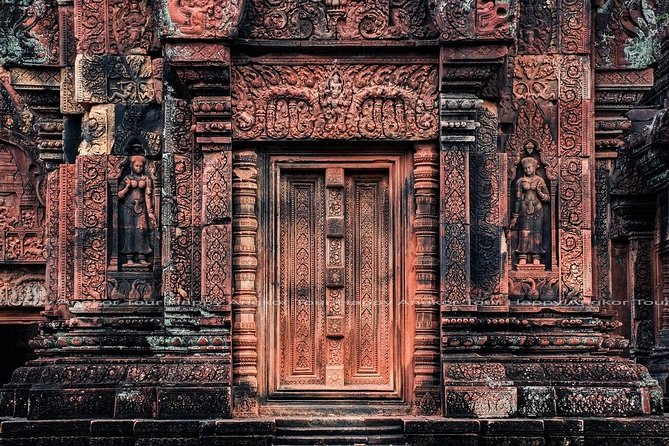
After lunch, the tour continues to Banteay Srei, with about one hour at the temple. It is also called the Ladies Temple and was built from pink sandstone in the second half of the 10th century by the Hindu King Rajendravarman II. The temple was dedicated mainly to Shiva and the Hindu trinity.
The pink sandstone is the key visual difference. After the larger monuments of Angkor Wat and Bayon, Banteay Srei feels more intimate and finely detailed. The hour-long stop gives you time to look at the carvings and hear why this temple is often treated as a special addition to the main Angkor route.
Banteay Samre follows for about 45 minutes. This 12th-century Hindu temple is thought to have an architectural model similar to Angkor Wat, although the available historical evidence does not establish every detail. That uncertainty is worth noting. A guide can explain what is known and what remains interpretation, rather than presenting every theory as fact.
The final stop is Pre Rup, with 30 minutes. Built in the late 10th century and dedicated to Hindu gods, it is associated with the belief that funerals took place at a temple on the far edge of a settlement. The name is explained as turn the body, adding a cultural detail to the final visit.
Ending at Pre Rup makes sense from a historical point of view, but the day will already be long. After sunrise, the drive to Kulen, five hours in the park, lunch, and three temples, you may appreciate the final half-hour more for its viewpoint and structure than for an extended architectural study.
What is included, and what you still pay
The $181.75 price covers the working parts of the tour:
- Private air-conditioned vehicle with driver
- Licensed English-speaking guide
- Parking fees and road tolls
- Cool drinking water and wet towels
- Pickup and drop-off at your hotel
Those inclusions give the price real value, especially on the long Kulen day. Private transport also means you are not sharing the vehicle with a large group, and the tour is limited to your own party.
The required additions are:
- Angkor and all temple admission: $62 per person
- Phnom Kulen National Park admission: $20 per person
- Lunches: about $5 per person, depending on the menu
That produces a known base of $263.75 per person before lunch. The final amount will be higher once meals are added. Group discounts may be available, but the supplied details do not state the discount amount.
The tour has a 4.9 rating from 11 ratings, with 100 percent recommending it. One especially useful detail is the positive mention of guide Chhay, who is described as friendly, informative, willing to explain the sites, and happy to take photographs. Guide assignments can vary, so you should not assume Chhay will lead every departure, but the guide service is clearly an important part of the experience.
Who should book this two-day route?
I would choose this tour if you have only two days in Siem Reap and want the major Angkor sights plus Kulen Mountain. It suits people who want history, photography, varied scenery, and private transport without arranging each temple and admission separately.
It is also a good match for solo visitors who value help with photographs and navigation. The private format gives you your own vehicle and guide, while the included water and wet towels are small but welcome comforts in Cambodia’s heat.
I would hesitate if you want a slow temple holiday. The itinerary includes many stops, two long days, a sunset wait, and a 5:00am start. Phnom Bakheng can be skipped, but the rest of the schedule is built around seeing a lot.
Confirmation is provided at booking, most people can participate, and free cancellation is available up to 24 hours before the start time. Changes or cancellations inside that 24-hour window are not accepted for a refund.
Should you book it?
Book this tour if you want a packed, private introduction to Angkor and are happy to pay the separate admission fees. The strongest reasons are the licensed guide, air-conditioned vehicle, quieter Ta Nei stop, repeat Angkor Wat visit, and the rare chance to pair the temples with Kulen’s carved riverbed and waterfall.
Skip it if you prefer fewer sites, later mornings, or a lower total cost. For the right person, this is a practical way to cover a great deal in two days. Just arrive rested, budget at least $263.75 before lunch, and treat the 5:00am sunrise pickup as a firm part of the deal.
FAQ
How long does the tour last?
The tour lasts approximately two days, with temple visits and sightseeing scheduled across both days.
What time does pickup begin on the first day?
Pickup begins at 8:00am from your hotel or guest house lobby.
What time does pickup begin for sunrise on the second day?
Pickup is scheduled for 5:00am from your accommodation.
Is the Angkor temple pass included?
No. Angkor and all temple admission costs $62 per person and must be paid separately.
Is Phnom Kulen National Park admission included?
No. Admission to Phnom Kulen National Park costs $20 per person.
Are meals included?
No. Lunch is not included. The stated guide price for lunch is about $5 per person, depending on the food selected from the menu.
Is this a private tour?
Yes. Only your group participates, and the tour includes a private air-conditioned vehicle with a driver.
More Multi-day Routes in Siem Reap
- Angkor 2-Day Sunset & Sunrise Small-Group Tour
★ 5.0 · 2,567 reviews - Siem Reap: Angkor Sunrise 1- or 2-Day Guided Temples Tour
★ 4.9 · 1,132 reviews - 2-Day Angkor Wat With Small, Big Circuit and Banteay Srei Tour
★ 5.0 · 545 reviews - Siem Reap: 2-Day Temple Highlights Sunrise and Sunset Option
★ 4.9 · 445 reviews
Newest reviews from Siem Reap
- War Museum, Killing Field, and APOPO Hero RATs Tour★ 5.0 · 7 reviews
- Angkor Wat at Sunrise★ 4.0 · 7 reviews
- Siem Reap Angkor Airport Taxis (from Airport to Hotel)★ 5.0 · 44 reviews
- Cambodian Cooking Class and Oxcart Ride with Local Village Tour★ 5.0 · 4 reviews
- Secret Temples of Angkor – Guided Tour in Siem Reap★ 5.0 · 6 reviews
- Short Cycling at Countryside★ 5.0 · 29 reviews
- SIEM REAP E-BIKE HALF-DAY COUNTRYSIDE (25-30 km)★ 4.0 · 1 review
- Unveiling the Mystical Beauty of Phnom Kulen National Park★ 5.0 · 6 reviews
Angkor Wat Tours, compared.
Angkor Wat Sunrise or Sunset Tour with Guide from Siem Reap
Read our review →
Angkor Wat: Small-Group Sunrise or Sunset Tour
Read our review →
Angkor Wat 2-Day Tour with Sunrise and Sunset
Read our review →
Angkor Wat Sunrise tour with Small – Group and Guide tours
Read our review →
Angkor Wat Highlights and Sunrise Guided Tour from Siem Reap
Read our review →
Angkor Wat Sunset Small Group Tour with Lunch Included
Read our review →
Full-Day Angkor Wat Sunrise Private Tour with Guide from Siem Reap
Read our review →Browse the lists this tour appears in