
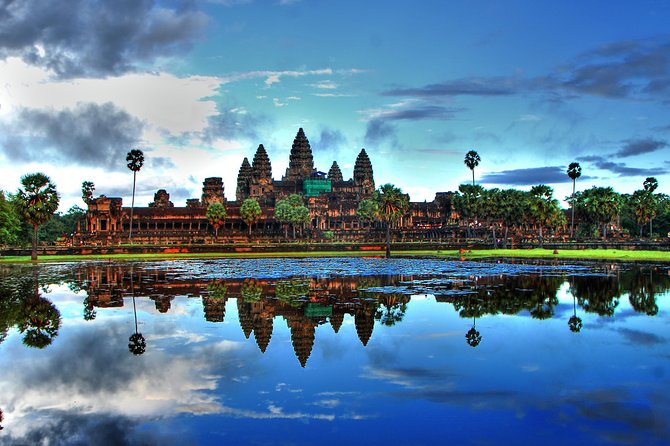
Reviewed · ANGKOR WAT TOURS
2-Day Angkor Wat & Tonle Sap Tour
Two days cover a lot of Cambodia. This private Siem Reap tour combines Angkor’s famous temples, a sunset at Phnom Bakheng, an early sunrise at Angkor Wat, and a boat trip through the stilted villages of Tonle Sap Lake. I like the way it joins the major sights with less familiar stops, and I especially like the flexibility of a private guide and vehicle. The main drawback is the pace: long temple days, a 5:00 a.m. start, and a distant drive to Banteay Srei demand real energy.
I also like that Mr. Seng is praised for explaining both Cambodian history and temple mythology while adjusting the timing to suit the group. That personal touch matters at Angkor, where a guide can help you see meaning in a carved face or courtyard instead of simply pointing out another old stone. The price is $250.26 per group of up to three, which is fair for private transport, guiding, hotel transfers, and the boat, but you must add temple passes and meals.
The schedule is ambitious rather than leisurely. You will see a wide range of sites, but you will not spend a full quiet morning at every temple. The sunset and sunrise visits also depend on weather and crowd limits, so treat them as worthwhile attempts rather than guaranteed perfect photographs.
In This Review
- Key points to know before booking
- Day one begins with Angkor Thom’s stone faces
- Ta Prohm brings roots, ruins, and movie fame
- Three hours at Angkor Wat gives the main temple room
- Phnom Bakheng sunset requires patience
- Sunrise at Angkor Wat starts before breakfast
- Banteay Samre and Pre Rup make day two more varied
- Banteay Srei is worth the long drive
- Tonle Sap shows daily life beyond the temples
- Private transport is where the price earns its keep
- What makes the guiding particularly useful
- Who should book this two-day plan?
- Should you book it?
- FAQ
- Is the Angkor temple pass included?
- What does the tour price include?
- Are meals included?
- What time does the tour start?
- Is this a private tour?
- What level of fitness is needed?
- Can I cancel for a full refund?
Key points to know before booking
- Sunset and sunrise are both included: Phnom Bakheng comes late on day one, followed by an Angkor Wat departure at about 5:00 a.m. on day two.
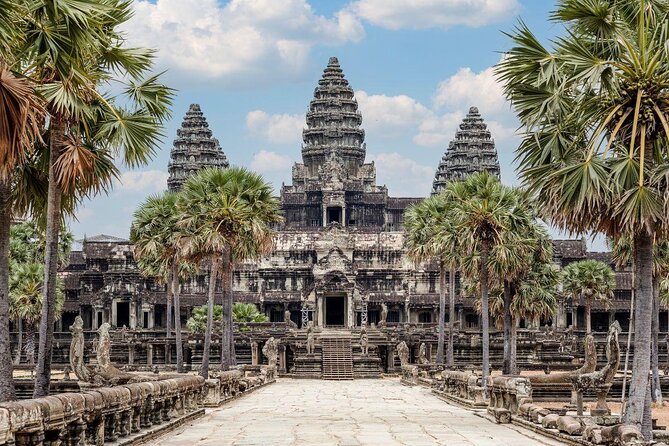
- The tour mixes famous and quieter stops: Bayon, Ta Prohm, and Angkor Wat share the plan with Banteay Samre, Banteay Srei, and the Terrace of the Leper King.
- A private group keeps the day flexible: Only your party takes part, and the guide can adjust the pace within the time available.
- Tonle Sap adds a different side of Cambodia: The motorized boat passes stilted and floating homes, a floating cafe, and an island pagoda.
- The listed price is per group, not per person: Up to three people can share the $250.26 cost, while temple admission, meals, and drinks are extra.
- You need moderate fitness: Expect lots of walking, temple steps, heat, early starts, and long periods in and around the Angkor complex.
Day one begins with Angkor Thom’s stone faces
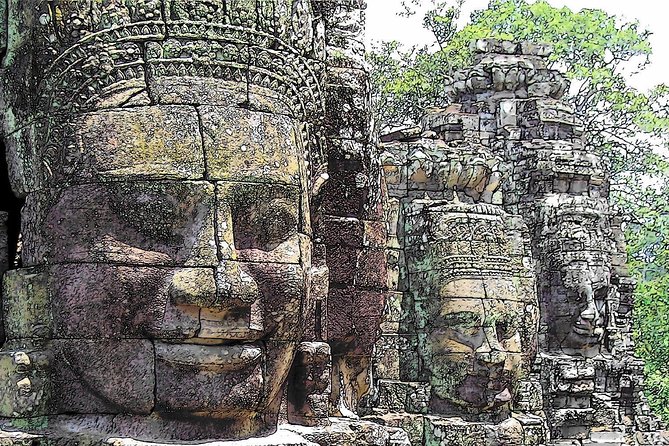
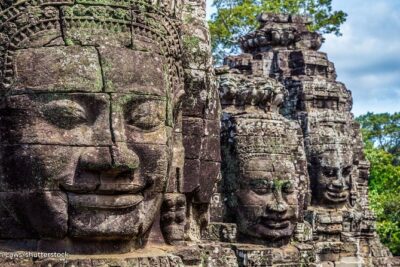
Your first major stop is Angkor Thom, the immense walled city that contains several important monuments. After arranging your Angkor Park tickets, you head to Bayon, the temple famous for its huge carved faces.
Bayon is a strong opening stop because it gives you an immediate sense of Angkor’s scale and character. The faces appear on towers throughout the central temple, and your guide can explain the religious and political ideas behind the carvings. Allow about two hours here. That sounds generous, but the complex has several galleries, stairways, courtyards, and viewpoints worth seeing.
Next comes Baphuon, a short distance away. The visit lasts about 30 minutes, so expect a quick look rather than a long architectural study. Baphuon has a different feel from Bayon, and the contrast helps you see that Angkor Thom was not one single temple but a large ceremonial city filled with monuments from different periods.
The Terrace of the Elephants and the Terrace of the Leper King follow. Both are within the Angkor Thom area, making them efficient additions to the morning. The Terrace of the Elephants served as a ceremonial viewing platform, while the Terrace of the Leper King is known for its carved walls and figures.
These terraces are easy to rush past. I would listen closely to the guide here, since the value is in understanding how these platforms functioned, not simply in taking another photograph of weathered stone. The scheduled visit is about 30 minutes.
More ways to see Angkor Wat:
- Angkor Wat Sunrise or Sunset Tour with Guide from Siem Reap
★ 5.0 · 12,109 reviews - Siem Reap: Angkor Wat: Small-Group Sunrise or Sunset Tour
★ 5.0 · 9,444 reviews - Siem Reap: Angkor Wat 2-Day Tour with Sunrise and Sunset
★ 4.9 · 4,429 reviews
Ta Prohm brings roots, ruins, and movie fame
Leaving Angkor Thom, the vehicle heads east to Ta Prohm. This is one of the most atmospheric stops of the tour, with massive tree roots spreading across parts of the temple walls and galleries.
Ta Prohm became widely known after appearing in Tomb Raider, but you do not need to be a film fan to enjoy it. The trees and broken structures show the long struggle between the monument and the forest around it. At the same time, the popularity of the site means you should expect other people at the most famous corners.
The schedule gives Ta Prohm about an hour. That is enough for a useful visit, though not enough to explore every passage slowly. Wear shoes that handle uneven ground, and keep your attention on footing as well as photographs. The temple has a rough, irregular character that is part of its appeal.
Three hours at Angkor Wat gives the main temple room
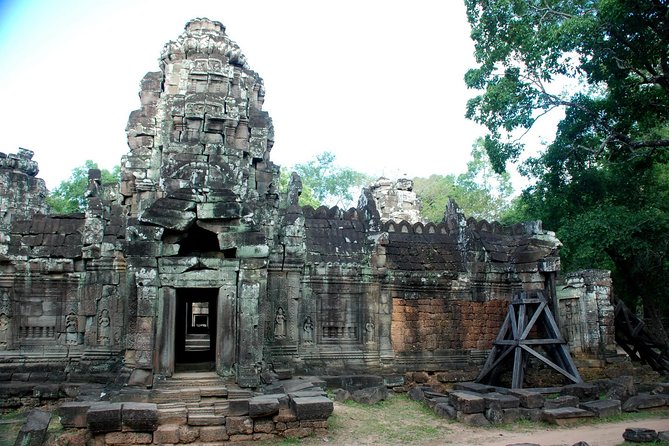
After lunch at a nearby restaurant, you continue to Angkor Wat for roughly three hours. Meals are not included, so budget separately for lunch and any drinks. The stop is long enough to move beyond the famous front view and examine the galleries, courtyards, towers, and carved scenes inside.
Angkor Wat rewards patience. The approach across the causeway gives you the classic view, but the interior tells a larger story through its reliefs and religious imagery. This is also where a guide can make a major difference. Mr. Seng is praised for answering questions carefully and explaining historical and mythological details in a way that helps connect the carvings to the wider Khmer tradition.
Do not assume the sunset visit later replaces this stop. Angkor Wat is seen properly during daylight on day one, then revisited briefly before sunrise on day two. That repeated look is useful because the temple changes with the light, and the two visits serve different purposes.
Phnom Bakheng sunset requires patience
The first day ends at Phnom Bakheng, where the tour allows about two hours. The ancient hilltop temple is a popular place for sunset, and access to the summit is limited. You may arrive early, wait your turn, and then share the viewpoint with a large crowd.
This is the least peaceful part of the plan, but the sunset attempt remains worthwhile if you want the classic evening view from Angkor. The important practical point is that the summit is not simply an open platform where everyone can arrive at the last moment. Number restrictions mean timing matters.
You should also keep expectations sensible. A cloudy evening can soften or block the sunset, and a busy summit can make the experience feel more like organized waiting than quiet temple time. Still, the stop adds a memorable end to a full first day.
More time out on the Tonle Sap:
- Sunset tour of Kampong Phluk stilts home village on the Tonle Sap
★ 5.0 · 4,865 reviews - Siem Reap: Kulen Mountain, Beng Mealea and Tonle Sap Tour
★ 5.0 · 1,483 reviews - Tonle Sap Lake & Kampong Phluk Village Half-Day Tour
★ 5.0 · 1,045 reviews - Kulen Mountain with Beng Mealea and Tonle Sap Small Group Tour
★ 5.0 · 780 reviews
Sunrise at Angkor Wat starts before breakfast
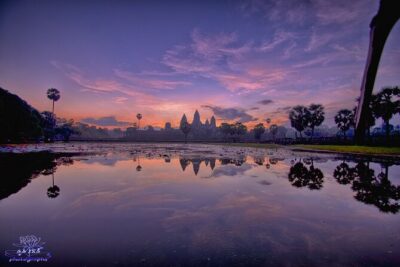
Day two begins at about 5:00 a.m., or earlier, with a direct trip from your hotel to Angkor Wat. You wait with the early risers for sunrise over the temple. The sight depends on weather, but the early start gives you the best chance to be in place before the morning light develops.
This is a beautiful idea, but it is also the tour’s toughest scheduling choice. You will already have spent the previous day walking through temples and waiting at Phnom Bakheng. If you are tired, the sunrise may require determination. The reward is a different mood at Angkor Wat, with the towers and reflection pool gradually taking shape as the sky brightens.
After about an hour, you return to the hotel for included breakfast, assuming breakfast is part of your room rate. You can also stop at a restaurant if you prefer. This return is a practical feature, giving you time to eat and regroup before the long second half of the day.
Banteay Samre and Pre Rup make day two more varied
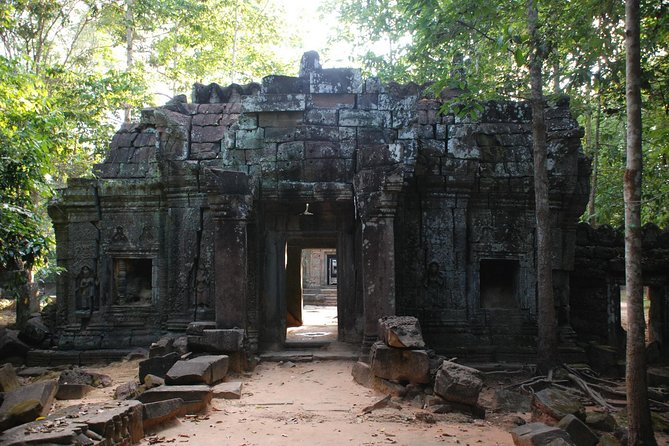
After breakfast, the route continues toward Pre Rup and Banteay Samre. The schedule places these temples within a three-hour section that also allows time for a short stop connected with palm sugar production or the landmine museum.
Pre Rup gives you another example of Angkor’s temple architecture without repeating the exact experience of Bayon or Ta Prohm. Banteay Samre is especially useful for seeing a temple that receives less attention than Angkor Wat and Ta Prohm, while still offering detailed stonework and a strong sense of scale.
The wording of the schedule groups Pre Rup with the Banteay Samre portion, so ask your guide how much time will be given to each on the day. A private tour helps here, since you can express your preferences. If you care most about temples, you may want to protect time at the monuments. If local life interests you, the palm sugar or museum stop may add useful context.
Banteay Srei is worth the long drive
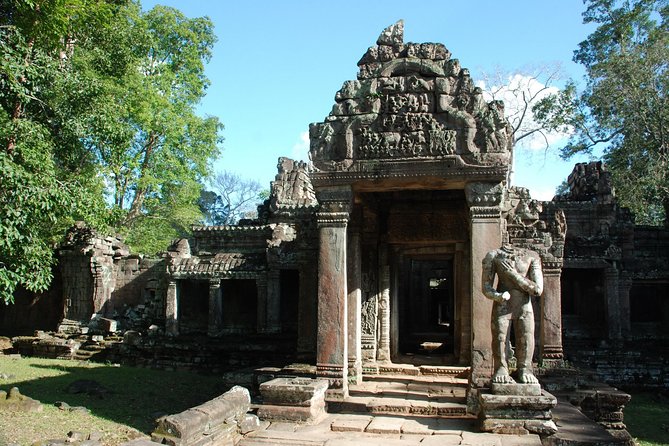
The route then continues to Banteay Srei, often called the pink ladies temple because of its pink sandstone and delicate carvings. The drive is long, but this is one of the most distinctive stops on the tour.
Banteay Srei is smaller than Angkor Wat, yet its carved decoration is unusually fine. The monument feels different from the broad ceremonial spaces visited earlier. The planned visit lasts about two hours, giving you enough time to look at the doorways, lintels, and carved figures rather than making only a quick roadside stop.
The distance is the tradeoff. You spend a significant part of the day in the vehicle, and the early start makes the return trip to the Siem Reap area feel even longer. I would choose this tour partly because of Banteay Srei, but I would not recommend it to someone who wants a slow, restful temple holiday.
Tonle Sap shows daily life beyond the temples
After lunch, the tour moves to the Kompong Pluk area on Tonle Sap Lake. The boat trip lasts about three hours and uses a motorized boat to cruise around the village.
This changes the rhythm completely. Instead of stone galleries and temple towers, you see homes raised on stilts and water villages shaped by the lake’s seasonal conditions. The route includes a floating cafe and a stop at an island pagoda, giving you more than a simple boat ride past houses.
The Tonle Sap portion is valuable because it shows how life around Siem Reap extends beyond the Angkor monuments. You get a look at water-based communities, local structures, and the practical role of the lake. At the same time, keep the setting in perspective. This is a scheduled sightseeing visit through a village, not an open-ended chance to wander independently.
The boat fee is included, as are bottled water and cold towels. Those small comforts matter after two hot days outside. Lunch, soft drinks, and alcohol are not included, so carry or purchase what you need within the tour’s arrangements.
Private transport is where the price earns its keep
At $250.26 per group of up to three, the cost works out well if three people share it. The package includes an air-conditioned vehicle, hotel pickup and drop-off, a private guide, motorized boat fee, bottled water, and cold towels.
The private format is more important than it may first appear. You are not tied to strangers’ walking speeds or interests, and the guide can respond when you want more time at a carving or less time at a particular stop. One party even had the second day extended after missing the first day because of a flight, allowing the guide to make the most of the remaining time. That kind of adjustment cannot be assumed, but it shows why direct communication with the guide matters.
The price does not include the two-day temple pass. It also excludes meals, soft drinks, and alcohol. Build those costs into your budget before deciding that the tour is inexpensive. Even so, splitting the fee between three people makes the private vehicle and guide a practical value compared with arranging separate transport and boat services.
What makes the guiding particularly useful
A good Angkor guide does more than identify temples. The strongest part of this experience appears to be the explanation of Cambodian history, religious stories, and temple symbolism.
Mr. Seng is singled out for answering questions with precision and allowing people to explore at their own pace. That combination is important. You need clear information at a huge archaeological site, but you also need breathing room to look, photograph, and simply absorb the place.
The guide’s role is also useful during the busy sunset and sunrise visits. Phnom Bakheng has crowd controls, and Angkor Wat before dawn involves waiting and timing. Having someone manage the sequence can take some stress out of a complicated morning.
Still, the tour is not a private archaeological seminar. The schedule covers many sites, and the guide must keep the day moving. If you want extended photography at one temple or a very slow inspection of every relief, you should say so early and accept that another stop may need to be shortened.
Who should book this two-day plan?
This tour suits you if you have only a short stay in Siem Reap and want the major Angkor sights plus Tonle Sap in one organized package. It is also a good fit for couples, families, or small groups who value private transport and want the option to adjust the pace.
The plan is especially appealing if you want both famous and less familiar temples. Bayon, Ta Prohm, and Angkor Wat provide the essential first visit, while Banteay Samre, Banteay Srei, Pre Rup, and the terraces add variety.
I would think twice if you dislike early mornings, crowded viewpoints, long drives, or full days on your feet. The moderate fitness requirement is real. You will walk through temple compounds, handle uneven surfaces, and repeat the Angkor Wat area after a very early wake-up.
Free cancellation is available up to 24 hours before the start time. Changes made within 24 hours are not accepted, and the local cut-off time applies. That is useful protection while your Siem Reap plans are still taking shape.
Should you book it?
Book this tour if your priority is efficient coverage with a private guide, especially if you are sharing the $250.26 price among three people. The strongest reasons are the carefully varied route, the included boat trip, the chance to see both sunset and sunrise, and the personal guiding associated with Mr. Seng.
Skip it if you want a relaxed schedule or plan to study only a few temples in depth. For most first-time visitors with two days, though, this is a practical and well-rounded way to connect Angkor’s great monuments with the living communities of Tonle Sap.
FAQ
Is the Angkor temple pass included?
No. The two-day temple pass is not included in the tour price.
What does the tour price include?
The price includes private transportation in an air-conditioned vehicle, hotel pickup and drop-off, a guide, the motorized boat fee, cold bottled water, and cold towels.
Are meals included?
No. Meals, soft drinks, and alcohol are not included. On day one, lunch is at a nearby restaurant. On day two, you can return to your hotel for breakfast if it is included with your room, or stop at a restaurant.
What time does the tour start?
The stated meeting time is 8:30 a.m. on day one. Day two starts very early, with hotel pickup at 5:00 a.m. or earlier for the Angkor Wat sunrise.
Is this a private tour?
Yes. Only your group participates, with a maximum of three people per booking.
What level of fitness is needed?
A moderate level of physical fitness is recommended. The tour involves temple walking, uneven surfaces, and long sightseeing days.
Can I cancel for a full refund?
Yes, if you cancel at least 24 hours before the experience start time. Cancellations or changes made less than 24 hours before the start time are not accepted for a refund.
More Multi-day Routes in Siem Reap
- Angkor 2-Day Sunset & Sunrise Small-Group Tour
★ 5.0 · 2,567 reviews - Siem Reap: Angkor Sunrise 1- or 2-Day Guided Temples Tour
★ 4.9 · 1,132 reviews - 2-Day Angkor Wat With Small, Big Circuit and Banteay Srei Tour
★ 5.0 · 545 reviews - Siem Reap: 2-Day Temple Highlights Sunrise and Sunset Option
★ 4.9 · 445 reviews
Newest reviews from Siem Reap
- War Museum, Killing Field, and APOPO Hero RATs Tour★ 5.0 · 7 reviews
- Angkor Wat at Sunrise★ 4.0 · 7 reviews
- Siem Reap Angkor Airport Taxis (from Airport to Hotel)★ 5.0 · 44 reviews
- Cambodian Cooking Class and Oxcart Ride with Local Village Tour★ 5.0 · 4 reviews
- Secret Temples of Angkor – Guided Tour in Siem Reap★ 5.0 · 6 reviews
- Short Cycling at Countryside★ 5.0 · 29 reviews
- SIEM REAP E-BIKE HALF-DAY COUNTRYSIDE (25-30 km)★ 4.0 · 1 review
- Unveiling the Mystical Beauty of Phnom Kulen National Park★ 5.0 · 6 reviews
Angkor Wat Tours, compared.
Angkor Wat Sunrise or Sunset Tour with Guide from Siem Reap
Read our review →
Angkor Wat: Small-Group Sunrise or Sunset Tour
Read our review →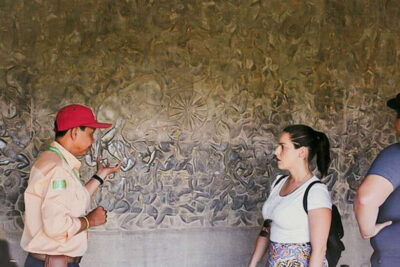
Angkor Wat 2-Day Tour with Sunrise and Sunset
Read our review →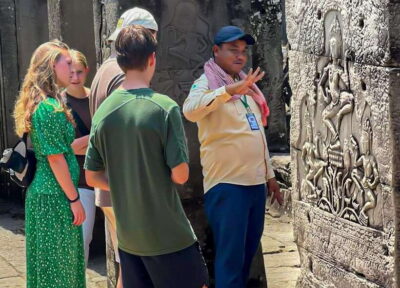
Angkor Wat Sunrise tour with Small – Group and Guide tours
Read our review →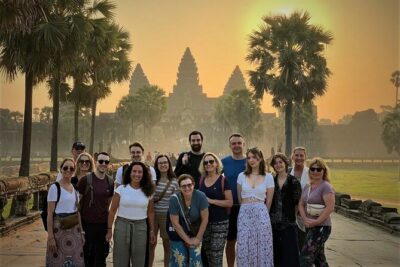
Angkor Wat Highlights and Sunrise Guided Tour from Siem Reap
Read our review →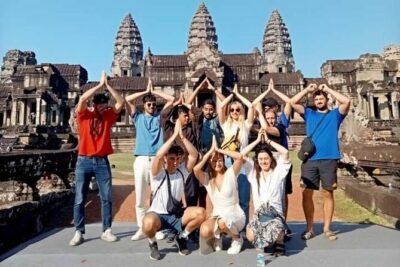
Angkor Wat Sunset Small Group Tour with Lunch Included
Read our review →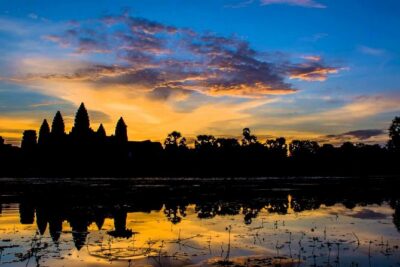
Full-Day Angkor Wat Sunrise Private Tour with Guide from Siem Reap
Read our review →Browse the lists this tour appears in