
Reviewed · BANTEAY SREI TOURS
Trip to Big Circle included Banteay Srey and Banteay Samre
The quieter temples reward curious explorers. This private six-hour tour from Siem Reap covers the Big Circle’s main sights, then adds Banteay Samre and Banteay Srei, two temples with very different personalities. I like the mix of large monuments, small atmospheric ruins, and countryside views. I also like that the $165 price covers a private group of up to six, with transport, driver, guide, fuel, parking, and hotel pickup included.
The main drawback is pace. You receive only 30 minutes at Neak Pean, Ta Som, East Mebon, and Banteay Samre, so anyone who wants long photographic pauses or quiet time at every site may feel hurried. Temple tickets and lunch are extra, and the tour is not suitable for wheelchair users or people with visual impairments.
In This Review
- Key points to know before booking
- What the six-hour route really covers
- Preah Khan: trees, galleries, and a rare two-storey building
- Neak Pean: an island temple shaped by water
- Ta Som: a small temple with a personal dedication
- East Mebon: a temple that once sat in a reservoir
- Lunch break and the shift toward the countryside
- Banteay Samre: a compact Hindu temple in Angkor Wat style
- Banteay Srei: the tour’s finest carved detail
- How the private format affects the value
- Practical advice for a smoother temple day
- Who will enjoy this Big Circle tour most?
- Should you book this tour?
- FAQ
- How long does the Big Circle tour last?
- Where does the tour begin?
- Is this a private tour?
- How many people can join for $165?
- Is an English-speaking guide included?
- Are temple tickets included?
- Is lunch included?
- Which temples are visited?
- What should I bring?
- Can I cancel the booking?
Key points to know before booking
- A private group of up to six: You do not share the vehicle or guide with another booking, which makes the day more flexible and keeps the price reasonable for a small group.
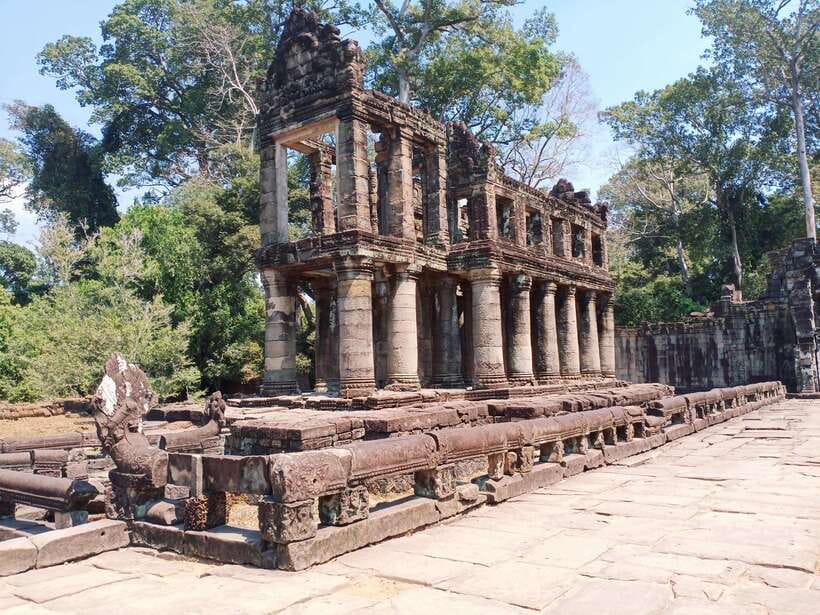
- Preah Khan has Angkor’s unusual two-storey structure: High stone columns support this rare building, an architectural detail easy to miss without guidance.
- Neak Pean changes with the season: Its island setting looks most dramatic when the surrounding reservoir holds water.
- Banteay Srei is the artistic highlight: Fine carvings in warm pink sandstone make this compact late tenth-century temple unlike the larger Angkor monuments.
- The route includes several quieter stops: Ta Som, East Mebon, and Banteay Samre offer a break from the most famous temple crowds.
- Mr Vanna earns special praise: His clear explanations, friendly manner, and careful time management are a strong part of the experience.
What the six-hour route really covers
This is a busy circuit, but it is not a marathon through every corner of Angkor. The route gives you short guided visits to five major temple areas, with about an hour at Preah Khan and about an hour at Banteay Srei. Hotel pickup and drop-off in Krong Siem Reap are included, and the first transfer is listed at around 15 minutes.
The vehicle is air-conditioned, an important detail in Cambodia. You also receive cold water and wipes, while the licensed driver handles the road, parking, tolls, and fuel. A licensed English-speaking guide joins you throughout the day.
Because this is a private tour, you can ask questions without holding up a large group. That matters at places such as Preah Khan, where the site plan can feel confusing, and Banteay Srei, where a guide can point out small carvings that are easy to pass without noticing.
More trips out to Banteay Srei:
- Full-Day Banteay Srei & 4 Temples – Grand Tours Join-in Tour
★ 5.0 · 1,155 reviews - Siem Reap Tour: Angkor Wat Sunrise, Bayon, Ta Prohm, Banteay Srei
★ 5.0 · 931 reviews - 2-Day Angkor Wat With Small, Big Circuit and Banteay Srei Tour
★ 5.0 · 545 reviews
Preah Khan: trees, galleries, and a rare two-storey building
Preah Khan is the longest stop, with one hour for walking, photographs, and explanation. It is a smart place to begin because it gives you scale. The temple is large, layered, and full of corridors, courtyards, carved walls, and traces of the way the complex was built and used.
The trees and roots here are a major part of the mood. They have taken hold around the old stonework, producing the kind of dramatic meeting between forest and temple that many people associate with Ta Prohm. Preah Khan can give that famous site serious competition, especially if you prefer a less obvious stop.
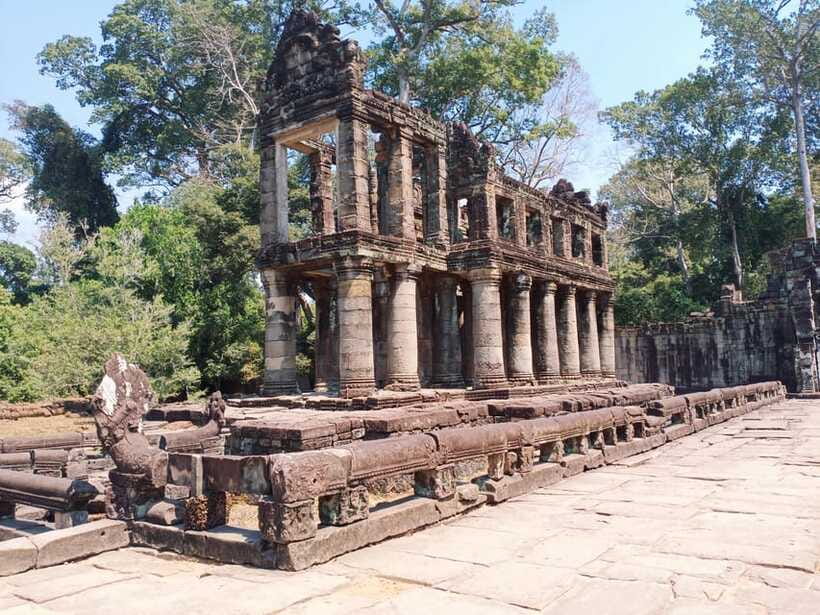
Do not rush past the two-storey construction. It is described as the only two-storey building in Angkor, supported by tall columns. That makes it one of the tour’s most useful architectural details. From a distance, it may look like another part of the complex. Your guide can help you locate it and explain why it is unusual in Khmer architecture.
I would use this hour for more than photographs. Look at how the temple’s spaces open and close as you walk. Notice the roots, the carved surfaces, and the changes from broad courtyards to narrow passages. The site is more rewarding when you let the guide establish the layout before you wander.
Neak Pean: an island temple shaped by water
The visit to Neak Pean lasts about 30 minutes. That is enough to walk along the raised wooden causeway, see the central temple, and take photographs, but it is not a long stop.
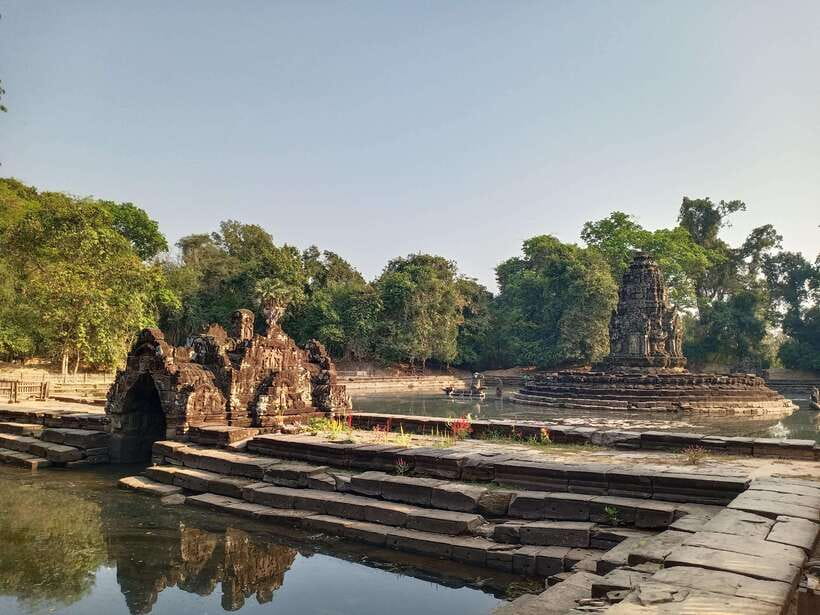
Neak Pean means coiling snakes, a name connected with the serpent imagery around the temple. The monument sits on an island in the Northern Baray, an ancient reservoir. The approach is part of the appeal. When water fills the area, the causeway appears to lead across a broad pool, and submerged tree trunks can give the scene a ghostly look.
This is the stop most affected by weather and season. The setting is particularly striking in the wet season, when water surrounds the temple. In drier conditions, you may find less of the island effect that makes Neak Pean memorable.
The short visit works best if you know what to expect. Neak Pean is not mainly about exploring a huge complex. It is about the relationship between the small shrine, the water, the causeway, and the surrounding trees. Have your camera ready, but allow time to listen as well.
Ta Som: a small temple with a personal dedication
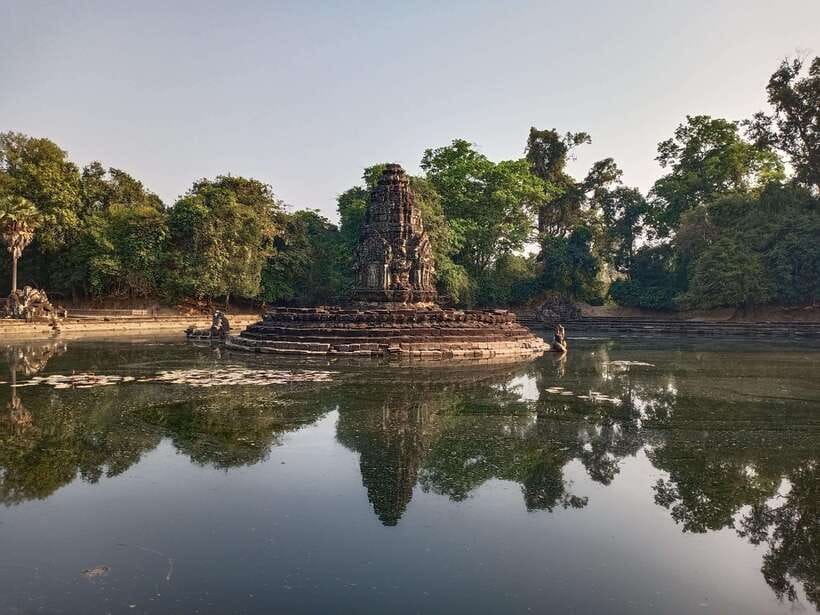
Ta Som receives another 30-minute visit. It is a small temple northeast of Angkor Thom and east of Neak Pean, built near the end of the twelfth century during the reign of King Jayavarman VII.
The temple was dedicated to the king’s father, Dharanindravarman II, who ruled the Khmer Empire from 1150 to 1160. That detail gives Ta Som a more personal feeling than simply being another stop on a temple list. Your guide can connect the monument to the royal family and the period in which it was built.
Its smaller size makes it easier to grasp in half an hour. You can walk through the main areas, study the carvings, and photograph the stonework without needing to cover a huge amount of ground. The trade-off is that the visit is brief. If you enjoy slow architectural study, you may wish for more time here.
I like the way Ta Som follows Neak Pean. Neak Pean is shaped by water and open views, while Ta Som brings you back into enclosed temple spaces. The contrast keeps the middle part of the tour from feeling repetitive.
A few more options around Siem Reap worth reading up on
- Angkor Wat Sunrise or Sunset Tour with Guide from Siem Reap
★ 5.0 · 12,109 reviews - Siem Reap: Angkor Wat: Small-Group Sunrise or Sunset Tour
★ 5.0 · 9,444 reviews - From Siem Reap: Kampong Phluk Floating Village Tour by Boat
★ 4.9 · 6,979 reviews - Sunset tour of Kampong Phluk stilts home village on the Tonle Sap
★ 5.0 · 4,865 reviews
East Mebon: a temple that once sat in a reservoir
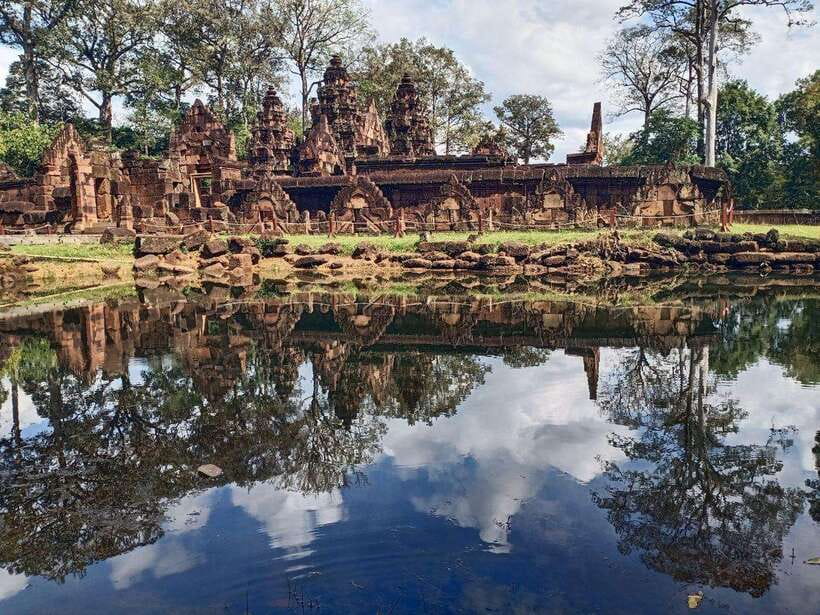
East Mebon is also scheduled for 30 minutes. Today it is a land-based temple, but it was once built on an artificial island at the center of the East Baray, a reservoir that is now dry.
The temple dates to the tenth century and was built during the reign of King Rajendravarman. It was dedicated to the Hindu god Shiva and honored the king’s parents. The change in setting is worth thinking about. What looks like an inland monument was once approached across water, giving it a very different setting from the one you see today.
This stop adds an earlier period of Khmer construction to a route that also includes the later temples of Jayavarman VII. The carved details and layout help show how Angkor’s religious architecture changed over time.
Again, 30 minutes is a practical introduction rather than an exhaustive visit. If you are interested in the reservoir system, ask your guide to explain how the temple and baray were connected. That background turns a quick stop into a clearer picture of how the ancient city was planned.
Lunch break and the shift toward the countryside
Lunch is not included, and the exact restaurant arrangement is not specified. You should budget separately and confirm the timing with your guide on the day.
After lunch, the route moves toward Banteay Samre and Banteay Srei. This part of the journey is valuable because the tour is not limited to temple courtyards. You also get views through villages and rural areas around Siem Reap Province.
The countryside section gives your eyes a break from stone. You may find yourself watching the road, homes, fields, and everyday scenes between the monuments. Since the tour specifically highlights village views, this is one of the quieter pleasures of the day. It also helps you see the temples as part of a wider setting rather than isolated photo stops.
Banteay Samre: a compact Hindu temple in Angkor Wat style
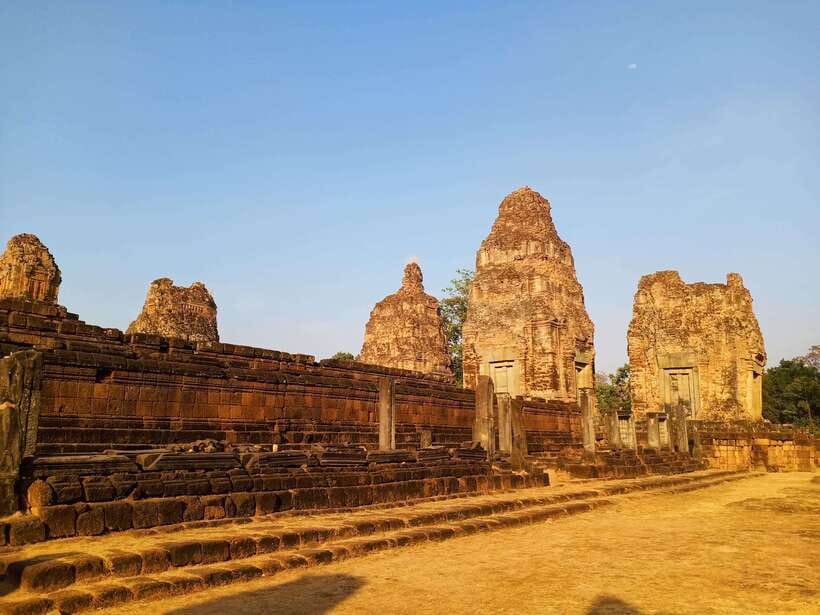
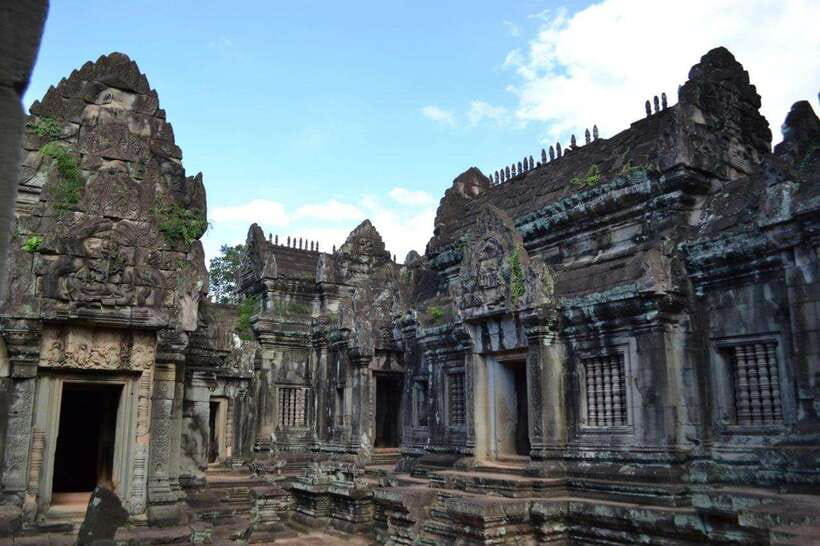
Banteay Samre is scheduled for about 30 minutes. It is located around 400 metres east of the East Baray and was built in the early twelfth century during the reigns of Suryavarman II and Yasovarman II.
The temple is Hindu and follows the Angkor Wat style. That makes it a useful companion to East Mebon and Banteay Srei. You can compare the older tenth-century monument with this later work, then see how Banteay Samre’s form and decoration relate to the better-known Angkor Wat period.
The short visit encourages a focused look. Pay attention to the enclosure, entrances, towers, and carved decoration rather than trying to race through every corner. The supplied route describes each monument as decorated in magnificent detail, and Banteay Samre is a good place to slow down mentally, even if the clock is moving.
For some people, Banteay Samre may be less essential than Banteay Srei. That is fair. Its value is strongest for anyone who wants a broader picture of Angkorian design and prefers a route that includes more than the headline sites.
Banteay Srei: the tour’s finest carved detail
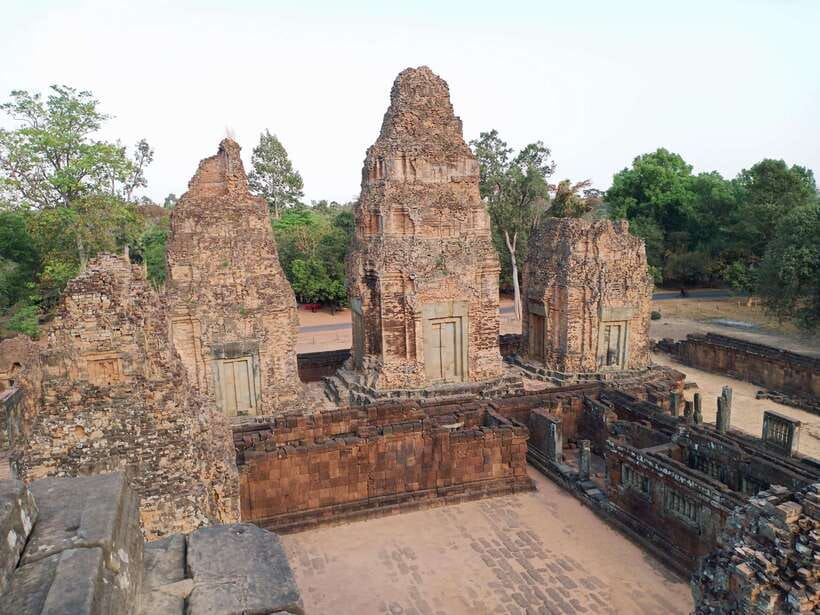
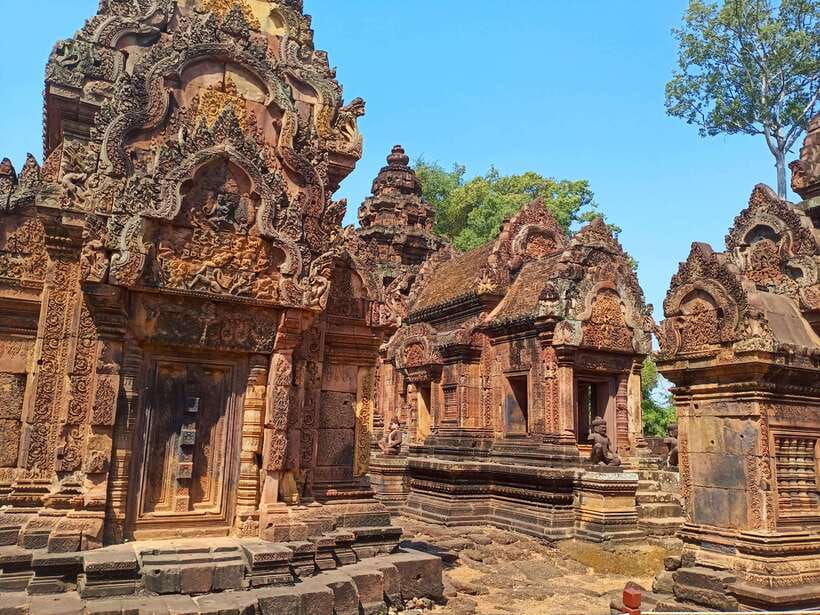
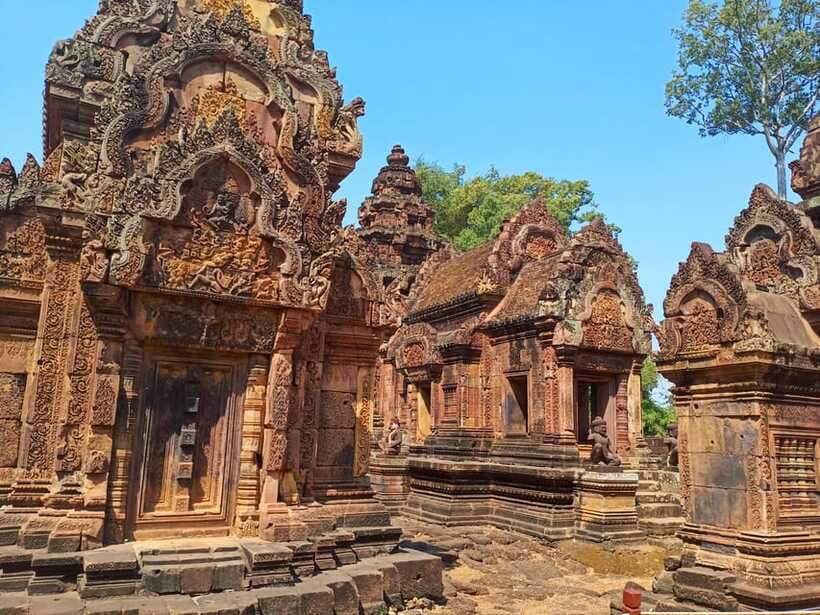
The final major stop is Banteay Srei, with about one hour for the visit. Its name is often translated as Lady Home, and it is famous for delicate carvings cut into warm pink sandstone.
Built in the late tenth century, Banteay Srei is compact and unlike the larger Angkorian temples. Its small scale makes the decoration feel especially close and concentrated. You are not looking at enormous galleries stretching into the distance. Instead, the appeal lies in the fine detail and the carefully worked surfaces.
This is where the guide’s explanations can make the biggest difference. The carvings are easy to admire as patterns, but it is more rewarding when you understand what you are looking at and where to focus. Mr Vanna received especially strong praise for clear, detailed explanations, friendliness, and keeping the tour on schedule. Those qualities matter at Banteay Srei, where a rushed glance can miss the best work.
The one-hour visit is generous compared with the other small temples on the route. Still, you should expect a focused introduction rather than unlimited time. Bring your camera, but do not let it turn the stop into a hunt for identical close-ups. Look from different angles and notice how the pink stone changes the character of the temple.
How the private format affects the value
The tour costs $165 per group of up to six people. That is not a per-person price. For six people, the effective cost is $27.50 each before temple tickets and lunch. For two people, it works out to $82.50 each, so the value depends heavily on your group size.
The package includes private air-conditioned transport, a licensed private driver, a licensed professional guide, toll roads, parking, gasoline, travel insurance, cold water, wipes, and hotel pickup and drop-off. You are also paying for a planned route that links several temples without having to arrange separate transport between them.
For a small group, the main value is convenience and privacy. You are not joining strangers, and you can ask the guide to clarify a carving or historical detail as you go. The private format may also make the six-hour schedule feel less rigid, although the stop times suggest that the route still needs to keep moving.
The important extra cost is the temple ticket. Meals are also excluded. Since the price does not include either, calculate the full day’s spending before booking rather than treating $165 as the final total.
Practical advice for a smoother temple day
Wear sunglasses, a sun hat, sunscreen, and comfortable walking clothes. The route includes repeated walks at temple sites, and Cambodia’s heat can make short distances feel longer than expected.
Carry cash, a camera, a power bank, and biodegradable insect repellent. Cold water and wipes are supplied, but your own essentials remain useful. Pets are not allowed.
The tour is offered in English and includes free hotel pickup and drop-off. You need to provide the hotel name and address so the guide and driver can meet you in the lobby. Pickup is within Krong Siem Reap according to the supplied information.
You can cancel up to 24 hours before the activity for a full refund, and you can reserve now and pay later. Starting times depend on availability, so check the schedule before you commit.
The route is not suitable for wheelchair users or people with visual impairments. The temple grounds involve walking, uneven historic surfaces, and visual details that form a central part of the experience.
Who will enjoy this Big Circle tour most?
I would recommend it to anyone who has already decided that Angkor is about more than Angkor Wat. The route gives you major architecture, quieter monuments, changing scenery, and a strong final stop at Banteay Srei.
It suits couples, families with older children, friends, and small groups who want a private vehicle. A group of four to six gets the strongest value from the fixed price.
It is less suitable if you want a slow, scholarly day at only two or three temples. The 30-minute stops are enough for an introduction, but not for detailed study of every carving. It is also not the best fit if you need wheelchair access or cannot manage regular walking.
The five-star rating from the verified booking is based on one review, so I would not treat it as a broad statistical record. Still, the specific praise for Mr Vanna is useful: clear explanations, warmth, and good time control are exactly what this schedule needs.
Should you book this tour?
Book it if you want a private, well-organized six-hour route through the Big Circle, with Banteay Srei and Banteay Samre added to the main circuit. The strongest reasons are the rare two-storey building at Preah Khan, Neak Pean’s water setting, the village scenery, and Banteay Srei’s remarkable pink sandstone carving.
Skip it if you prefer long unstructured visits, want lunch and temple tickets bundled into the price, or need accessible transport and paths. For a group of up to six, the $165 rate offers solid value, especially when you want an English-speaking guide and door-to-door transport without joining a larger group.
FAQ
How long does the Big Circle tour last?
The tour lasts six hours, including hotel pickup, temple visits, travel between stops, and return to Krong Siem Reap.
Where does the tour begin?
Pickup is provided from your hotel in Krong Siem Reap. You must provide the hotel name and address.
Is this a private tour?
Yes. The tour is private for the number of people booked, with no other groups added.
How many people can join for $165?
The price is $165 per group of up to six people.
Is an English-speaking guide included?
Yes. The tour includes a licensed professional guide who speaks English.
Are temple tickets included?
No. Temple admission tickets are not included in the price.
Is lunch included?
No. Meals are not included, so you should budget separately for lunch.
Which temples are visited?
The route includes Preah Khan, Neak Pean, Ta Som, East Mebon, Banteay Samre, and Banteay Srei.
What should I bring?
Bring sunglasses, a sun hat, sunscreen, a camera, cash, biodegradable insect repellent, and a power bank.
Can I cancel the booking?
You can cancel up to 24 hours in advance for a full refund. The tour also offers a reserve-now, pay-later option.
Newest reviews from Siem Reap
- Village walking & Cooking class in Siem Reap★ 5.0 · 2 reviews
- Ultimate Sunrise to Angkor Wat, Angkor Thom and Bayon Temple★ 5.0 · 3 reviews
- Angkor Wat Sunrise Shared Tours: Bayon, Ta Prohm And Kravan★ 5.0 · 1 review
- Twilight Tastes of Siem Reap Include Dinner★ 5.0 · 13 reviews
- Two Days Tour Angkor Complex; Banteay Srei, and Kulen Hill★ 5.0 · 1 review
- Trekking Tour at Phnom Kulen National Park from Siem Reap★ 5.0 · 3 reviews
- Full-Day Private Tour of Angkor Wat with Pick Up★ 5.0 · 12 reviews
- Waterfall & River of 1000 Siva Linga- Kulen Mountain Private Tour★ 5.0 · 3 reviews
Banteay Srei Tours, compared.
Full-Day Banteay Srei & 4 Temples – Grand Tours Join-in Tour
Read our review →
Siem Reap Tour: Angkor Wat Sunrise, Bayon, Ta Prohm, Banteay Srei
Read our review →
2-Day Angkor Wat With Small, Big Circuit and Banteay Srei Tour
Read our review →
3-Days Discovery Of Angkor: Waterfalls,Floating Village and Banteay Srei temple
Read our review →
Banteay Srei, Kulen Waterfall & Beng Mealea Exploration
Read our review →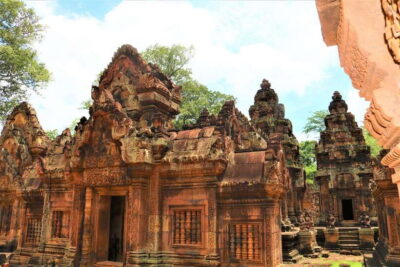
Banteay Srei and Grand Circuit Heritage Tour from Siem Reap
Read our review →Browse the lists this tour appears in