
Reviewed · CYCLING TOURS
Siem Reap: Angkor Sunset Bike & Boat Tour /E-Bike Available
Angkor looks different from a bicycle. This half-day outing takes you behind Angkor Wat, through rice fields and quiet village paths, then finishes with a peaceful Dragon Boat cruise. I like the small groups of up to six and the chance to see parts of the temple area that many visitors miss. I also like that the tour includes a support vehicle, water, fruit, snacks, and drinks.
The main consideration is physical comfort. You need to be able to cycle for several hours on a mixture of pathways, roads, and single-track lanes. Rain does not cancel the tour, the Angkor temple pass costs an additional $37, and younger children or nervous cyclists may find the distance tiring.
In This Review
- Key things to know before you book
- Starting at 1:45 PM in Siem Reap
- Riding behind Angkor Wat
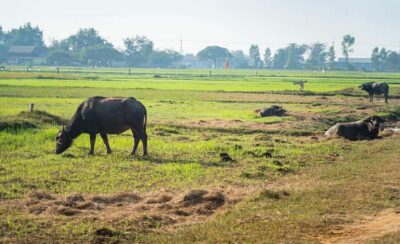
- Rice fields, buffalo, and quiet family parcels
- Angkor Park after the crowds thin out
- The Dragon Boat sunset on an ancient waterway
- How hard is the cycling?
- What the $65 price includes
- Who should choose this tour?
- Final verdict: should you book it?
- FAQ
- What time does the tour begin?
- Is the Angkor temple pass included?
- What does the $65 price include?
- Is an e-bike available?
- What should I bring?
- Does the tour operate in the rain?
Key things to know before you book
- The route reaches Angkor Wat from behind: You approach the famous temple along a quieter trail instead of joining the main exit traffic.
- The ride includes countryside and rice fields: Expect local farm parcels, village lanes, trees, and possible water buffalo rather than temples alone.
- The tour visits quieter temple areas: Depending on the guide and timing, you may see lesser-known temples or the Bayon after many people have left.
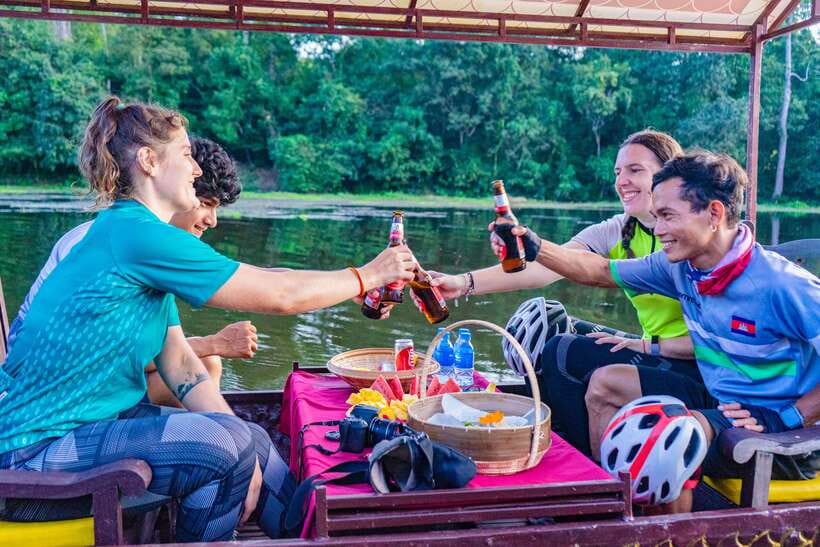
- The final boat ride is short and restful: A private Dragon Boat cruise on an old waterway provides a calm ending, with local snacks, beer, and other refreshments.
- A guide makes the difference: Guides including Rith, Muni, Son, Bunsom, Pat, and Sotin have been praised for friendly service, local knowledge, and adapting the pace.
- An e-bike is available: Ask about the e-bike option if you are concerned about heat, distance, or your cycling confidence.
Starting at 1:45 PM in Siem Reap
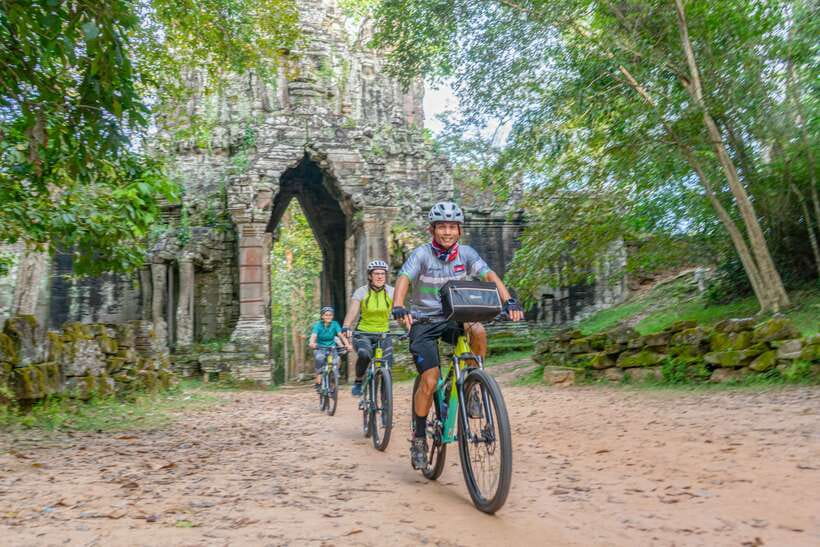
The tour begins with hotel pickup at about 1:45 PM, and you should wait in the lobby 15 minutes before the scheduled time. The afternoon start is useful in Siem Reap’s heat. You avoid the hardest midday sun and reach the temple area as the day begins to quiet down.
The ride starts from the Siem Reaper shop before crossing the Siem Reap River. A support vehicle follows the group, which is important if you need assistance, suffer a mechanical problem, or decide that the heat has taken enough of your energy.
The group size is limited to six people. That is a real advantage on narrow paths. Your guide can stop for photographs, answer questions, or adjust the pace without trying to manage a large line of cyclists. It also makes the countryside sections feel less like an organized procession.
Bicycles and helmets are included. You should wear comfortable cycling clothes, bring sunscreen, sunglasses, and carry a camera if you want photographs along the way. Bottled water is included, and the tour also provides local snacks and fresh fruit during the ride.
More Bike Tours in Siem Reap
- Siem Reap Countryside Bike Tour / E-Bike or Tuk Tuk
★ 5.0 · 935 reviews - Angkor Sunrise Bike Tour / E-Bike or Tuk Tuk
★ 5.0 · 615 reviews - Siem Reap: Bike the Angkor Temples – Full-Day 30km Tour
★ 5.0 · 463 reviews
Riding behind Angkor Wat
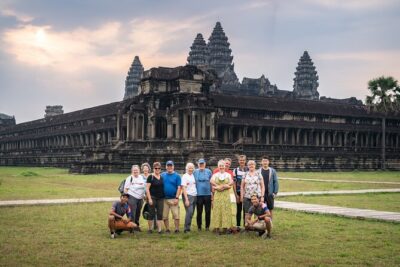
The first major surprise is the approach to Angkor Wat. Instead of heading straight along the busiest access routes, you take a trail leading behind the temple complex. This gives you a quieter view of one of Cambodia’s most important religious and historic sites.
The value here is not just avoiding crowds. A bicycle lets you notice the transition from town to countryside in a way that is hard to feel from a car or tuk-tuk. You cross the river, follow smaller paths, and reach the temple area at a slower pace. The setting changes gradually, rather than appearing suddenly at a parking area.
The route is described as peaceful, with an unobstructed view toward Angkor Wat. It is a good choice if you have already visited the main entrance and want another angle on the site. It also works well for a first visit if you prefer to approach the temple with time to absorb the surroundings.
You will pause for cold water and fresh fruit before continuing. That break matters. Afternoon cycling in Cambodia can be draining, even when much of the route is shaded. The guide can also stop when needed, which helped less confident cyclists feel safe and kept the ride manageable.
Rice fields, buffalo, and quiet family parcels
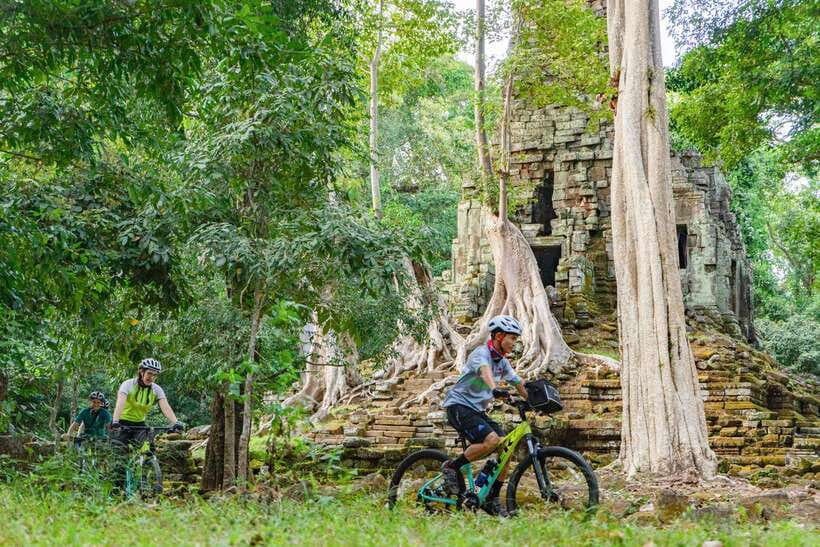
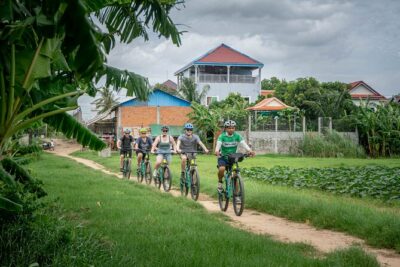
After Angkor Wat, the route avoids the crush of people leaving Angkor Park. You follow single-track lanes past rice fields and small family farm parcels. Several riders have spotted water buffalo in these fields, a simple but memorable reminder that people still farm around one of Southeast Asia’s great historic sites.
This part of the outing is one of its strongest features. The temples are important, but the countryside gives you a better sense of present-day Cambodia. You see paths used for ordinary local life, not just routes designed for sightseeing.
The wording about historic family parcels is useful. These are small pieces of land that have been held and worked across generations. You should not expect a staged village attraction or a formal cultural presentation. The appeal is more modest: quiet lanes, rice cultivation, trees, and a view of daily life continuing beside the temple zone.
The route can become muddy in wet weather. One rider noted that the bicycles were quite muddy by the end, though still in good condition. That is not a flaw if you are dressed for it, but you should avoid wearing clothes or shoes that cannot handle dirt and rain.
The tour operates rain or shine. July brought rain for one group, yet the ride still went ahead and remained enjoyable. Your experience will depend partly on the weather, and a cloudy or rainy afternoon may produce a less dramatic sunset. Pack accordingly rather than treating the weather policy as a footnote.
Angkor Park after the crowds thin out
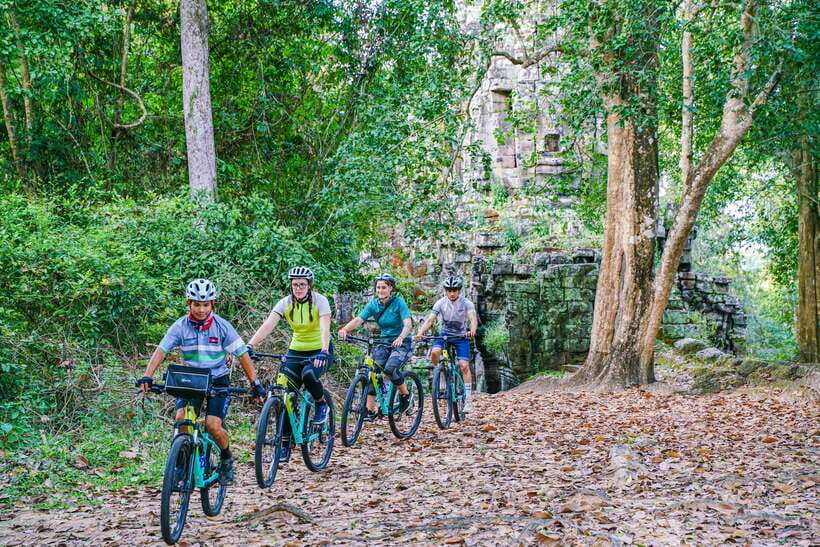
The ride eventually uses roads and trails within the Angkor Park area. This section gives you access to the temple surroundings from a different context. You are not simply being driven from one famous monument to the next. You are moving through the park under your own power, with the guide explaining what you are seeing.
The exact temple stops can vary. The route has included popular monuments as well as lesser-known temples, and one group saw the Bayon when most people had already left. That timing can make a major difference. Bayon is one of Angkor’s best-known sites, but the experience is far more pleasant when you are not sharing every path with a large crowd.
If you have already covered Angkor Wat, the Bayon, and the other four main sights, this tour can fill in the quieter corners of the park. A guide may take you to smaller temples and less-used paths that are not part of the usual first-day circuit.
The tour does not replace a full Angkor temple visit. The temple pass is not included and costs $37. You should budget for that separately. The supplied details do not promise a long interior visit at every monument, so book this for the cycling route and atmosphere as much as for detailed temple inspection.
Your guide is central to this part of the day. Rith, nicknamed the Lion, has been praised for his humor and clear explanations. Muni was appreciated for explaining the places along the route, while Son adapted the ride for a couple who had already visited the main monuments. Bunsom was noted for stopping when needed and shaping the outing around personal interests.
Those details tell you what to look for. A good guide should explain enough history to give the temples meaning without turning every stop into a lecture. The best version of this trip is flexible, especially in a group of only two to six people.
More Boat Trips in Siem Reap
- From Siem Reap: Kampong Phluk Floating Village Tour by Boat
★ 4.9 · 6,979 reviews - Siem Reap: Kampong Phluk Floating Village Tour with Boat
★ 4.9 · 3,843 reviews - Siem Reap Floating Village Kampong Phluk Sunset with Boat
★ 5.0 · 1,962 reviews - Kampong Phluk Floating Village Tour by Boat
★ 5.0 · 1,020 reviews
The Dragon Boat sunset on an ancient waterway
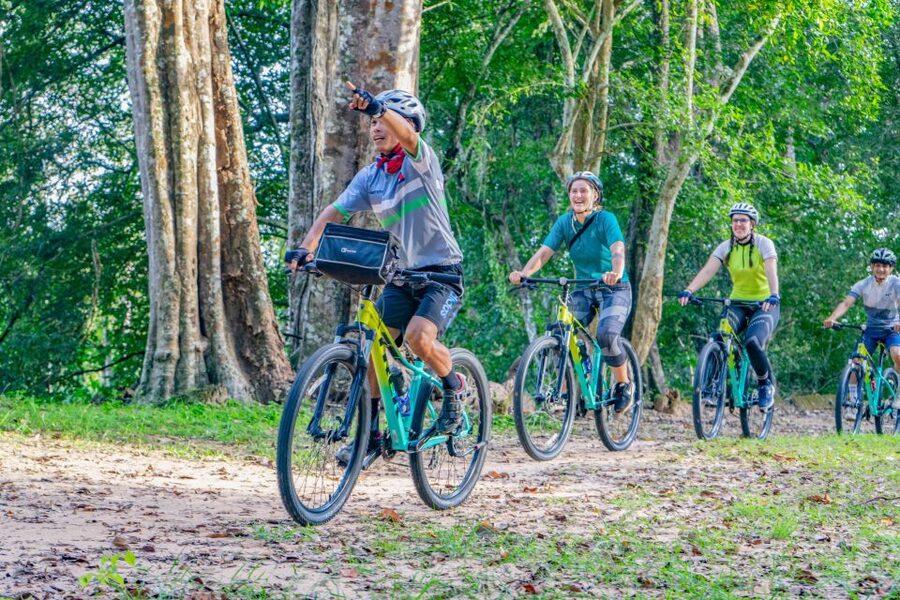
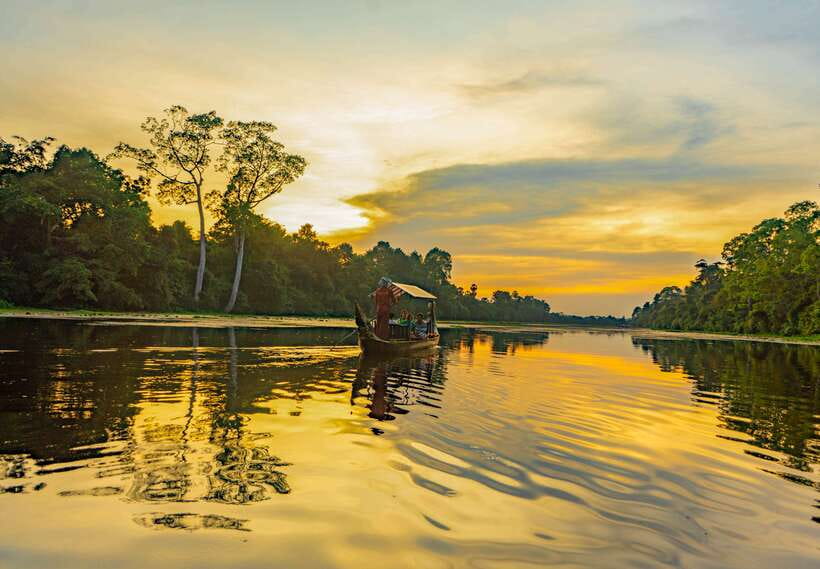
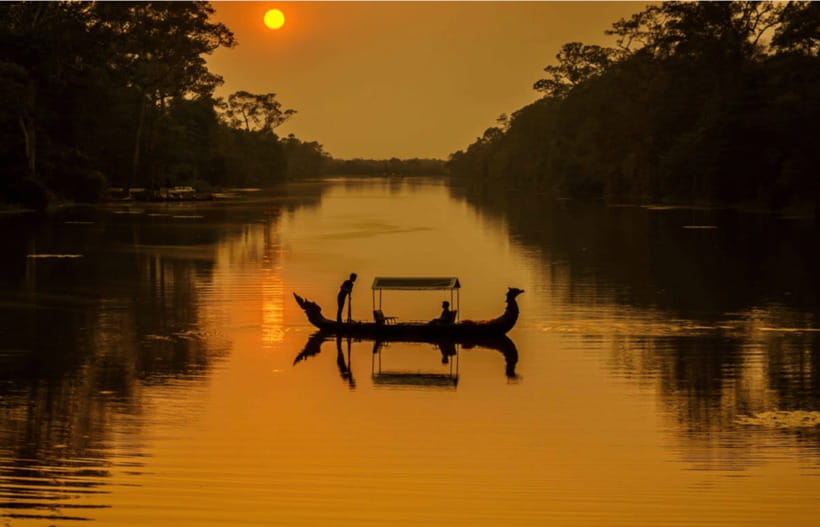
The final part of the outing is a private Dragon Boat cruise on an ancient waterway. After several hours on a bicycle, the change of pace is welcome. You sit back, watch the light shift, and enjoy local delicacies and refreshments onboard.
Food and drink are included. Past outings have included spring rolls, local snacks, beer, and other alcoholic beverages, along with bottled water. The exact selection may vary, but you should expect something casual rather than a full dinner.
The boat ride is described as short, making it a pleasant finish rather than a separate evening cruise. It gives you time to rest without adding another major activity to an already full afternoon. The view toward sunset can be beautiful, especially from the Angkor Thom moat area, though no sunset is guaranteed. Cloud, rain, and seasonal conditions decide that part.
I like this ending because it avoids the usual problem of a sunset tour: everyone gathers at one famous viewpoint and then leaves at the same time. Here, the boat provides a quieter setting and lets you enjoy a drink and snacks while the day winds down.
The cruise is also a good reason to choose this tour over a standard bicycle loop. You get two different experiences in one afternoon: active movement through the countryside and a calm view from the water. If you dislike cycling in heat, the boat does not remove the physical effort, but it gives the tour a satisfying rest at the end.
How hard is the cycling?
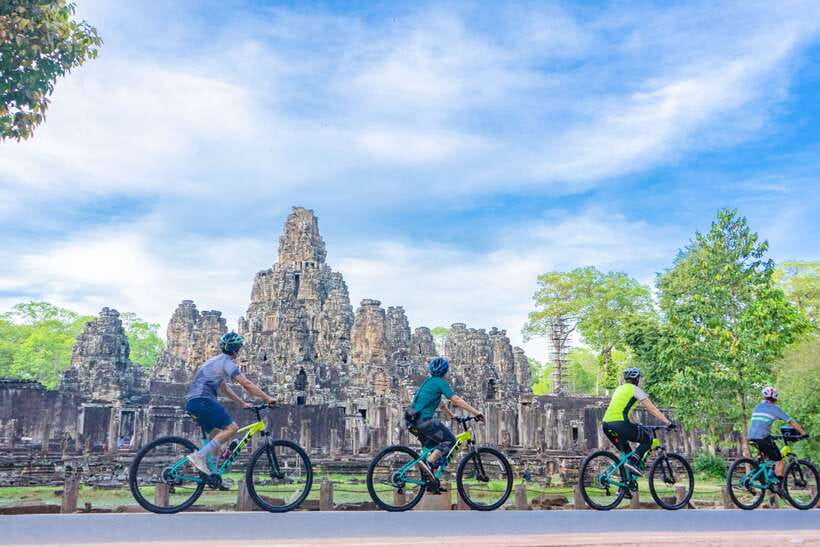
The route is manageable for many casual cyclists, but you should not treat it as a sightseeing ride with almost no effort. You will cycle through countryside, along park roads, and on narrower trails for much of the afternoon.
Several less confident cyclists found the pace comfortable, especially because the guides stopped when necessary and helped them feel secure. Much of the route passes under trees, so shade and moving air can make the heat easier than expected.
Still, your comfort will depend on your usual cycling ability, the weather, and the condition of the paths. Wet weather can make the ride muddy. You should also expect some uneven surfaces because the itinerary includes trails and single-track lanes rather than only paved roads.
An e-bike is available. If you are uncertain about the distance, cycling in tropical heat, or keeping up with a group, ask for the e-bike when booking. The information provided does not specify a separate charge or guarantee that one will be available, so confirm the details in advance.
This tour is not suitable for pregnant women. It may also be a poor fit for very young children, particularly if they are not confident on a bicycle. One family found the ride a little difficult for younger children, while adults with modest cycling experience managed it well.
What the $65 price includes
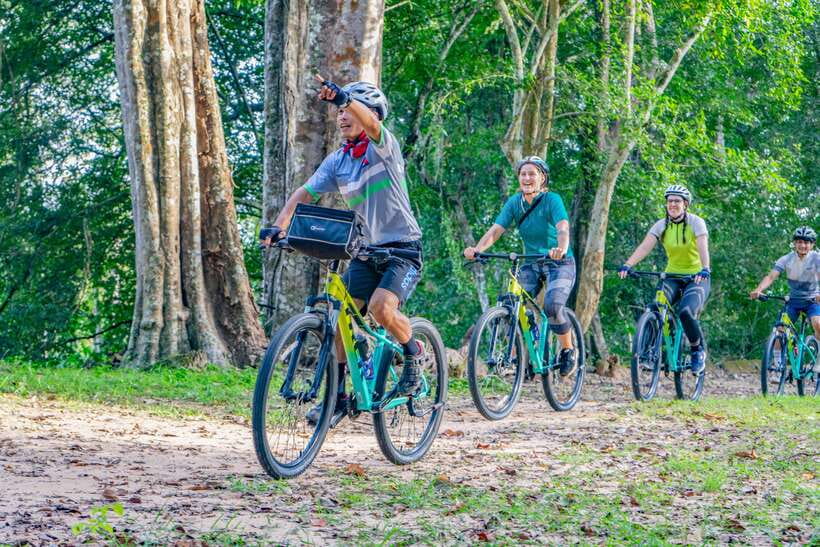
The price is $65 per person. That is not the cheapest way to see Angkor, especially once you add the $37 temple pass, but the price covers more than bicycle rental.
Included are hotel pickup and drop-off, a support vehicle, an English-speaking guide, bicycle and helmet, the Dragon Boat ride, alcoholic beverages, bottled water, and local snacks. For a small group, that is a fair package. You are paying for transport, equipment, guiding, refreshments, and a carefully linked afternoon route.
The support vehicle is particularly useful. It provides backup in the heat and means the day is not dependent on every participant completing every kilometer without help. The six-person limit also gives the tour more personal attention than a large coach outing.
The value is strongest for someone who wants a guided introduction to both Angkor and the surrounding countryside. If you only want to photograph Angkor Wat at sunset, this is more activity than you need. If you want to see the famous temple area, ride away from the main routes, and end on the water, the price makes better sense.
The temple pass remains an extra cost, and personal expenses are not covered. Keep that in mind when comparing this outing with a simple temple transfer.
Who should choose this tour?
I would choose this experience if you want to combine active sightseeing with local scenery. It suits adults and reasonably fit older children who can ride comfortably for several hours. It is also a good second-day activity after you have already visited Angkor’s main monuments.
The tour works especially well for solo visitors, couples, and small groups who prefer conversation with a guide rather than a fixed large-group schedule. The guides have shown an ability to adapt stops and information to individual interests.
You should think twice if you dislike mud, rain, uneven paths, or afternoon exercise. The boat ride is relaxing, but it comes after the bike ride, not instead of it.
Bring sunscreen, sunglasses, a camera, and cycling clothing. Wait in the hotel lobby 15 minutes before pickup. Since the outing runs in all weather, pack with rain in mind even if the sky looks clear at lunch.
Free cancellation is available up to 24 hours before departure for a full refund, and you can reserve now and pay later. Those terms are useful if your Siem Reap schedule is still shifting.
Final verdict: should you book it?
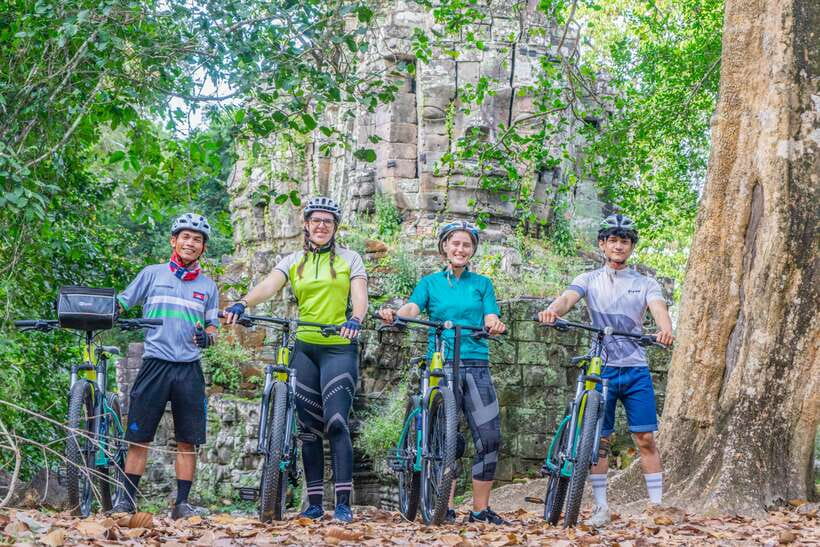
Book this tour if you want Angkor with fewer crowds, a guide who can adjust the pace, and a peaceful boat ride to finish the day. The strongest moments are the trail behind Angkor Wat, the rice fields with their working family parcels, and the chance to see temple areas after the main crowds have gone.
I would not book it for a quick, low-effort sunset stop. The cycling is the heart of the experience, and the extra temple pass cost needs to fit your budget. For confident cyclists, curious first-time visitors, and anyone who has already seen the major temples, this is a thoughtful way to spend an afternoon in Siem Reap.
FAQ
What time does the tour begin?
Hotel pickup begins at about 1:45 PM. You should wait in your hotel lobby 15 minutes before the scheduled pickup time.
Is the Angkor temple pass included?
No. The Angkor temple pass costs $37 per person and must be paid separately.
What does the $65 price include?
The price includes hotel pickup and drop-off, a support vehicle, an English-speaking guide, a bicycle and helmet, the Dragon Boat ride, alcoholic beverages, bottled water, and local snacks.
Is an e-bike available?
Yes, an e-bike option is available. Ask for details when booking, including availability and any additional cost.
What should I bring?
Bring sunglasses, a camera, sunscreen, and suitable cycling clothing. The tour provides bottled water and local snacks.
Does the tour operate in the rain?
Yes. The tour takes place rain or shine. Be prepared for wet or muddy paths, especially during rainy weather.
Newest reviews from Siem Reap
- War Museum, Killing Field, and APOPO Hero RATs Tour★ 5.0 · 7 reviews
- Angkor Wat at Sunrise★ 4.0 · 7 reviews
- Siem Reap Angkor Airport Taxis (from Airport to Hotel)★ 5.0 · 44 reviews
- Cambodian Cooking Class and Oxcart Ride with Local Village Tour★ 5.0 · 4 reviews
- Secret Temples of Angkor – Guided Tour in Siem Reap★ 5.0 · 6 reviews
- Short Cycling at Countryside★ 5.0 · 29 reviews
- SIEM REAP E-BIKE HALF-DAY COUNTRYSIDE (25-30 km)★ 4.0 · 1 review
- Unveiling the Mystical Beauty of Phnom Kulen National Park★ 5.0 · 6 reviews
Cycling Tours, compared.
Siem Reap Countryside Bike Tour / E-Bike or Tuk Tuk
Read our review →
Phnom Penh Silk Island Bike Tour/ E-Bike or Tuk Tuk
Read our review →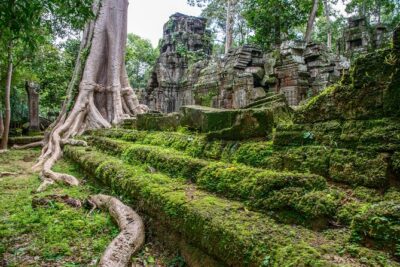
Angkor Wat Sunrise Bike Tour & Jungle Breakfast
Read our review →
Local Livelihood Half Day Bike Tour in Battambang
Read our review →Browse the lists this tour appears in