
Reviewed · ANGKOR THOM AND BAYON TOURS
Preah Khan, Ta Prohm, Bayon Off Beaten Track
The quieter side of Angkor is worth seeking. This private eight-hour outing links Preah Khan, Ta Prohm, and Bayon, three major temples tied to King Jayavarman VII, with a guide and driver for your group of up to three. I like the small-group format and the focus on temples beyond the usual single-stop visit. The main drawback is that the $159 price excludes both Angkor admission and lunch.
I also like the personal service associated with guide and driver Panha, who has helped visitors with temple planning, airport transfers, food, and local suggestions. The tour begins at 9:00 am, which is practical for a relaxed morning, but it is not the best choice if your main goal is sunrise or the very first quiet hour at Angkor.
In This Review
- Key points at a glance
- Why these three temples make a strong Angkor day
- Starting at 9:00 am with a private guide
- Preah Khan: two hours among long corridors
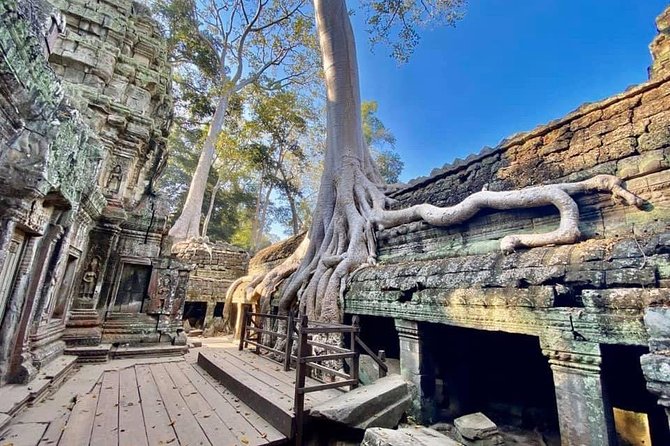
- Ta Prohm: the temple where nature takes the frame
- Bayon Temple: one focused hour of carved faces
- What the $159 group price really covers
- The guide and driver can shape the whole day
- Who will get the most from this experience
- Should you book the three-temple route?
- FAQ
- How long is the tour?
- What time does the tour start?
- Where does the tour begin?
- Where does the tour end?
- How many people can join the private tour?
- Are temple entrance fees included?
- Is lunch included?
- What is included in the price?
- Can I cancel for a full refund?
Key points at a glance
- Three Jayavarman VII temples in one day: You visit Preah Khan, Ta Prohm, and Bayon, all built during the reign of one of the Khmer Empire’s most important kings.
- Private transport for up to three people: Your party has its own licensed guide and driver rather than joining a large bus.
- Two hours at Preah Khan and Ta Prohm: The schedule gives the most time to the two sprawling temple complexes.
- One hour at Bayon: This works well as a focused visit to the famous face towers, though you may want more time if you enjoy detailed photography.
- Water is provided, lunch is not: Bring money or make your own plan for the midday meal.
- Admission is separate: The $159 covers the private experience, driver, guide, and bottled water, but not temple tickets.
Why these three temples make a strong Angkor day
Many first visits to Siem Reap focus almost entirely on Angkor Wat. That is understandable, but this route points you toward a different side of the complex. Preah Khan, Ta Prohm, and Bayon were all created in the period of King Jayavarman VII, whose building program reshaped Angkor in the late 12th and early 13th centuries.
The three temples also offer very different moods. Preah Khan is broad and layered, with long corridors and a sense of a former religious city. Ta Prohm is the atmospheric stop, famous for trees growing around its stonework. Bayon is more compact and visually intense, with its carved faces and crowded towers.
I like this combination because it avoids spending the whole day looking at similar walls. You get a wide ceremonial complex, a tree-covered ruin, and a temple filled with sculpture. The route gives you variety without sending you across unrelated parts of the Angkor area.
The advertised aim is to avoid the heaviest crowds and visit at useful temple times. Still, keep your expectations sensible. The 9:00 am start is later than a sunrise departure, and these are among the most popular temples in Cambodia. The private format helps your group move at its own pace, but it cannot make famous sites empty.
More of Angkor Thom and the Bayon:
- Siem Reap Tour: Angkor Wat Sunrise, Bayon, Ta Prohm, Banteay Srei
★ 5.0 · 931 reviews - Angkor Wat Private Driver Tours to Angkor Wat Sunrise, Angkor Thom & Ta Prohm
★ 5.0 · 98 reviews - Angkor Wat Sunrise and Angkor Thom Sunset Tour
★ 5.0 · 89 reviews
Starting at 9:00 am with a private guide
Pickup is offered, with the listed starting point at Prince Angkor Hotel & Spa on Sivutha Boulevard in Siem Reap. The tour ends back at the meeting point. If you are staying elsewhere, confirm the pickup arrangement when booking rather than assuming every hotel transfer is included.
Your group can include up to three people. That matters because a private vehicle and guide are shared only by your party. You can ask questions, pause for photographs, or adjust the pace without waiting for a busload of people.
The included team is a licensed tour guide and a driver. Panha is the named guide associated with the experience, and the strongest praise around his service concerns punctuality, flexibility, safety, and help with local plans. He has also assisted with airport pickups and offered advice on restaurants, bars, and temple choices. Those extras are not described as formal parts of this particular eight-hour route, so treat them as useful possibilities rather than guaranteed inclusions.
The private setup is especially helpful if one person in your group wants careful explanations while another prefers time to look around quietly. It also makes the day less rigid than a large organized coach tour. On the other hand, the itinerary still lists planned time at each temple, so you should discuss changes early if one site matters greatly to you.
Preah Khan: two hours among long corridors
Preah Khan means Royal Sword. King Jayavarman VII built it in the 12th century to honor his father. The temple lies northeast of Angkor Thom and west of the Jayatataka baray, or reservoir.
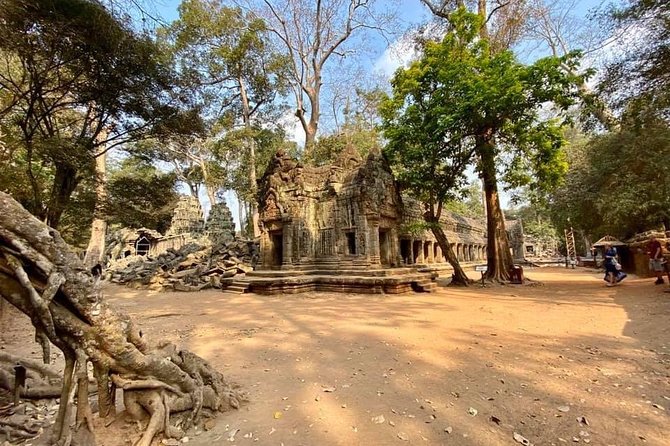
This is the first major stop, with about two hours allowed. That is a good allocation. Preah Khan is not a quick photo stop. Its long passageways, courtyards, towers, and carved stone details reward a slow walk.
I would use the first few minutes to get oriented, then let the guide explain how the complex fits into Jayavarman VII’s building program. After that, look closely at the transitions between open courtyards and narrow galleries. The contrast helps you understand that this was not designed as one simple tower, but as a large religious center with many layers.
Preah Khan can also set the tone for the day. It is less instantly recognizable than Ta Prohm, yet its size gives you more room to notice construction details and changing views through doorways. A guide is useful here because a casual walk can blur into a series of stone corridors without context.
The practical catch is physical effort. You should expect uneven surfaces and extended walking, which fits the stated requirement for moderate physical fitness. Water is supplied, but you should still plan for a warm day and wear footwear suited to rough ground.
Ta Prohm: the temple where nature takes the frame
Ta Prohm, whose modern name means ancestor of Brahma, was built in the Bayon style in the late 12th and early 13th centuries. Its original name was Rajavihara.
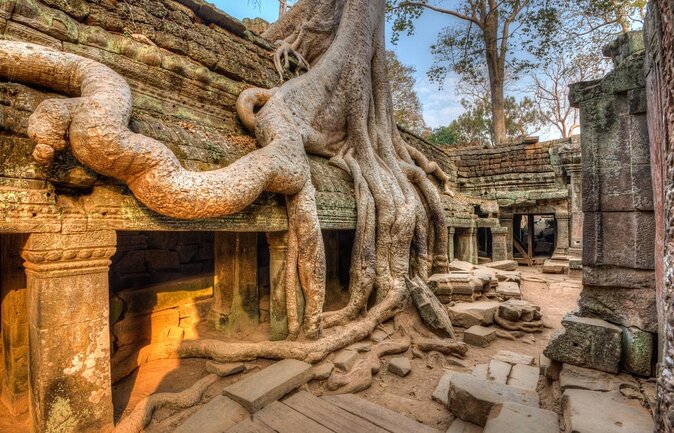
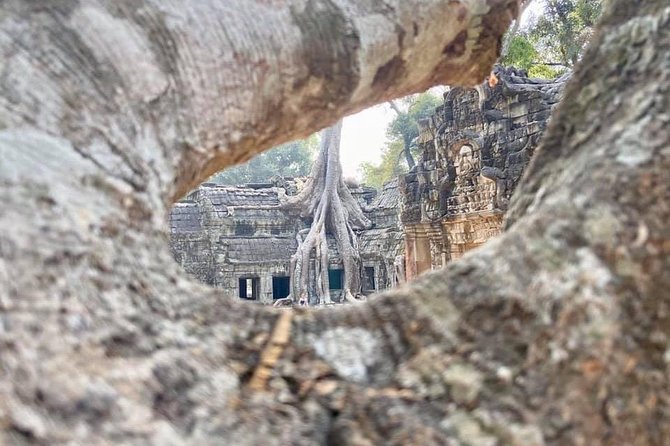
The two-hour visit here gives you time to see why Ta Prohm has become one of Angkor’s most recognizable sites. Trees and roots have grown around parts of the stone structure, creating the unusual scenes that appear in so many photographs. The setting feels less orderly than at a restored temple, and that is part of its appeal.
I would not rush straight to the best-known tree-covered sections. Let the guide lead you through the wider complex first, then spend time with the details around the galleries and doorways. Ta Prohm works best when you notice the tension between architecture and vegetation rather than treating it as only a backdrop for one photograph.
This is also where timing matters most. Ta Prohm is extremely popular, so the promise of avoiding crowds should be understood as a goal, not a guarantee. The private guide can help with the order of your walk and may know how to avoid standing still in the busiest spots, but the 9:00 am departure does not provide the same quiet conditions as an early dawn start.
Two hours is generous compared with the one-hour Bayon visit. That balance makes sense for Ta Prohm, since the temple has enough corners and passages to fill a proper visit. If you have limited mobility, the rough ground and extended walking may make this stop tiring. The tour asks for moderate physical fitness, and that guidance is worth taking seriously.
More visits to Ta Prohm:
- Private Temples Guided Tour (Angkor Wat, Ta Prom & Angkor Thom)
★ 5.0 · 75 reviews - One Full Day Private tour of Angkor Wat, Ta Prohm, Angkor Thom & Banteay Srie
★ 5.0 · 64 reviews - Siem Reap Private Day Tour: Angkor Wat Sunrise, Bayon & Ta Prohm
★ 5.0 · 48 reviews - A Day Angkor Wat Sunrise Tour, Ta Prohm & Hidden Gems Beng Mealea
★ 5.0 · 36 reviews
Bayon Temple: one focused hour of carved faces
The final temple is Bayon, the state temple of the Mahayana Buddhist King Jayavarman VII. Built in the late 12th or early 13th century, it is known for its richly decorated towers and large carved faces.
The schedule allows one hour here. That is enough for a clear introduction and the major sights, especially if your guide keeps the visit focused. Bayon is visually dense, so a good explanation can help you sort out what you are seeing instead of simply moving from one tower to the next.
Look upward as you move through the central area. The famous faces are not always obvious from every angle, and the temple can feel confusing because its towers and galleries overlap. I would ask the guide to explain the temple’s role under Jayavarman VII and point out the carvings that deserve a closer look.
The shorter time has a downside. If you enjoy photography, architectural detail, or quiet observation, one hour may feel tight. Bayon is also a place where you may want to stop repeatedly, because a small change in position can alter the expression and scale of the carved faces.
Ending at Bayon creates a strong final stop. Preah Khan gives you scale, Ta Prohm provides atmosphere, and Bayon delivers the most immediately recognizable sculpture. You finish with a temple that is compact in area but full of visual information.
What the $159 group price really covers
The cost is $159 per group of up to three people, not $159 per person. For three people, that works out to $53 each before admission and food. For two people, it becomes $79.50 each, and a solo visitor pays the full group rate unless the provider offers another arrangement.
The price includes a private tour, licensed guide, driver, and bottled water. You are paying for dedicated transport and personal attention rather than only a ride between temples. That can be good value for a small party, particularly if you want the freedom to ask questions and avoid the schedule of a large group.
You must budget separately for the entrance fee. Lunch is also not included. The tour description does not state the admission price, so check the current Angkor ticket cost before you book and add a meal budget. This is important because the headline price is not the complete cost of the day.
For a group of three, I think the value is strongest. The private format spreads the vehicle and guide cost across the group. For one person, the price is harder to justify unless personal guidance and private transport are a high priority.
The guide and driver can shape the whole day
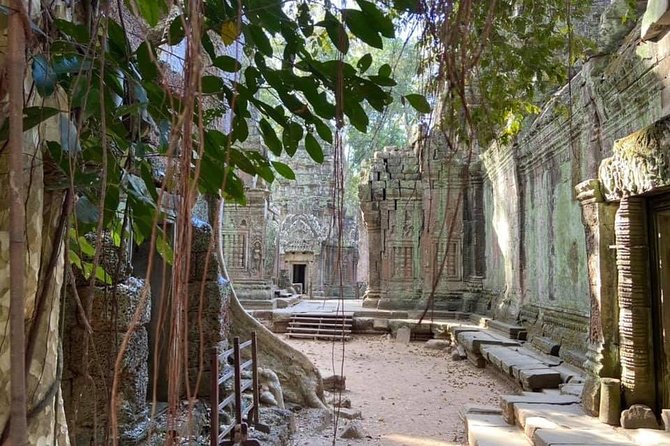
Temple sites are easier to appreciate when someone can connect the stones to people, religion, and royal power. This experience includes a licensed guide, and Panha is praised for making visitors feel safe, helping with schedules, and adjusting plans when needed.
His service record also points to a practical strength: he appears to work as more than a person who simply drives from gate to gate. He has helped people choose temples, offered suggestions around Siem Reap, and kept an eye on timing. One past outing included an early temple departure in an air-conditioned van, which shows flexibility in other arrangements, though this specific tour begins at 9:00 am.
You should still tell the guide what you want. Ask for more cultural explanation if you enjoy context. Ask for extra time at Ta Prohm if photographs matter most. If Bayon’s faces are your priority, say so before the final stop.
The driver matters too, especially after several hours of walking. A private vehicle gives you a place to return to between temples and keeps the route confined to your group. Bottled water is supplied, but lunch is your responsibility.
Who will get the most from this experience
I would recommend this tour to a small party that wants the main Jayavarman VII temples without joining a large coach. It fits couples, families of up to three, and friends who prefer a private guide.
It is also a good choice if you have already seen Angkor Wat and want a different temple day. The route has enough variety to feel purposeful rather than repetitive.
You may want another arrangement if sunrise photography is your top goal. The stated start time is 9:00 am, and the tour does not include Angkor Wat. You may also prefer a longer itinerary if you want more than one hour at Bayon or want to add further temples.
The moderate fitness requirement is another real consideration. You do not need to be an athlete, but the day involves walking through large historic structures on uneven surfaces. Plan for comfort, water, and sensible footwear.
Cancellation is flexible if your plans change early. You can receive a full refund by canceling at least 24 hours before the local start time. Cancellations or changes made within that final 24-hour period are not accepted for a refund.
Should you book the three-temple route?
Book it if you want a private, focused Angkor day built around Preah Khan, Ta Prohm, and Bayon. The $159 group rate is most appealing for three people, and the guide, driver, and bottled water make the cost easier to assess.
I would book with two questions in mind: confirm where pickup will occur, and add the entrance fee and lunch to your budget. If you want sunrise, Angkor Wat, or a slower photography schedule, ask about a different start or a custom plan.
For a small group seeking personal service and three of Angkor’s most distinctive temples, this is a strong choice. Its best qualities are the private format, the experienced local service associated with Panha, and an itinerary that gives each temple a clear purpose.
FAQ
How long is the tour?
The experience lasts approximately eight hours.
What time does the tour start?
The listed start time is 9:00 am.
Where does the tour begin?
The listed meeting point is Prince Angkor Hotel & Spa, Sivutha Boulevard B05, Sivatha Boulevard, Siem Reap.
Where does the tour end?
The activity ends back at the meeting point.
How many people can join the private tour?
The price covers one private group of up to three people.
Are temple entrance fees included?
No. Entrance fees are not included in the tour price.
Is lunch included?
No. Lunch is not included.
What is included in the price?
The price includes bottled water, a private tour, a licensed tour guide, and a driver.
Can I cancel for a full refund?
Yes. You must cancel at least 24 hours before the experience start time for a full refund. Changes or cancellations made less than 24 hours before the start are not accepted for a refund.
Newest reviews from Siem Reap
- War Museum, Killing Field, and APOPO Hero RATs Tour★ 5.0 · 7 reviews
- Angkor Wat at Sunrise★ 4.0 · 7 reviews
- Siem Reap Angkor Airport Taxis (from Airport to Hotel)★ 5.0 · 44 reviews
- Short Cycling at Countryside★ 5.0 · 29 reviews
- Cambodian Cooking Class and Oxcart Ride with Local Village Tour★ 5.0 · 4 reviews
- Secret Temples of Angkor – Guided Tour in Siem Reap★ 5.0 · 6 reviews
- SIEM REAP E-BIKE HALF-DAY COUNTRYSIDE (25-30 km)★ 4.0 · 1 review
- Unveiling the Mystical Beauty of Phnom Kulen National Park★ 5.0 · 6 reviews
Angkor Thom and Bayon Tours, compared.
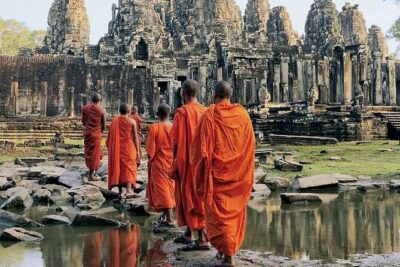
Siem Reap Tour: Angkor Wat Sunrise, Bayon, Ta Prohm, Banteay Srei
Read our review →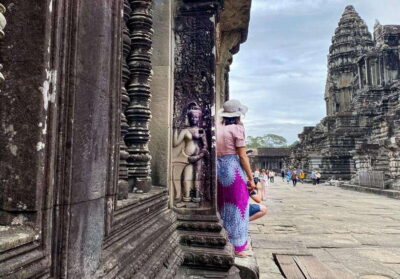
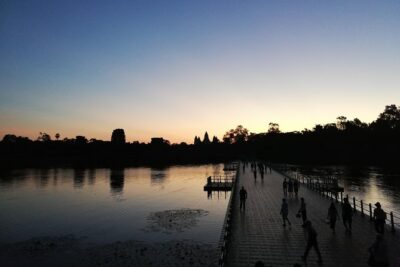
Angkor Wat Private Driver Tours to Angkor Wat Sunrise, Angkor Thom & Ta Prohm
Read our review →
Private Temples Guided Tour (Angkor Wat, Ta Prom & Angkor Thom)
Read our review →
One Full Day Private tour of Angkor Wat, Ta Prohm, Angkor Thom & Banteay Srie
Read our review →
Siem Reap Private Day Tour: Angkor Wat Sunrise, Bayon & Ta Prohm
Read our review →
Browse the lists this tour appears in