
Reviewed · ANGKOR WAT TOURS
Angkor Wat & Bayon: the Smiling Temple
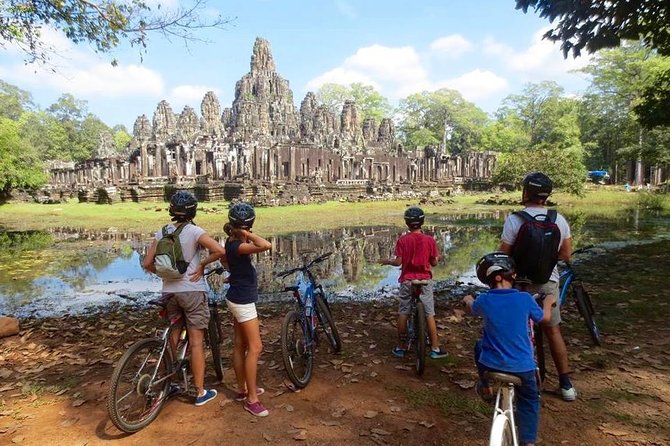
Ancient temples feel different from a bicycle seat. This small-group cycling tour gives you a relaxed way to reach Angkor Wat, Bayon, and several quieter corners of Angkor Thom, with an English-speaking guide, lunch, coconut water, and a Trek mountain bike included. I like the peaceful forest paths and the chance to see butterflies, flowers, and temple walls away from the main road. I also like the small maximum of 10 people, which keeps the ride personal. The main drawback is the heat, off-road riding, and long return ride, especially for young children or anyone unused to cycling.
The tour starts at 7:30 a.m. on Taphul Road in Siem Reap and lasts about five hours. You need to buy your own Angkor pass, priced at $37 for one day, and arrange your own way to the meeting point. That makes the actual cost about $87 per person before getting to the start, but the price includes a good deal of practical equipment and refreshments.
In This Review
- Key points to know before booking
- Why cycling works well at Angkor
- Starting at 7:30 a.m. on Taphul Road
- Angkor Wat: a grand first temple stop
- Quiet trails with butterflies and flowers
- South Gate of Angkor Thom and the defensive wall
- The unrestored West Gate
- Bayon and its 216 smiling faces
- Lunch, coconut water, and the real cost
- Heat, family needs, and riding ability
- Who should book this Angkor bicycle tour?
- FAQ
- How much does the tour cost?
- Is the Angkor entry ticket included?
- What time does the tour start?
- Where does the tour begin?
- Where does the tour end?
- Is hotel pickup included?
- What equipment is provided?
- Are food and drinks included?
- How large is the group?
- What should I wear to Angkor?
- Can I cancel for a full refund?
- Should you book it?
Key points to know before booking
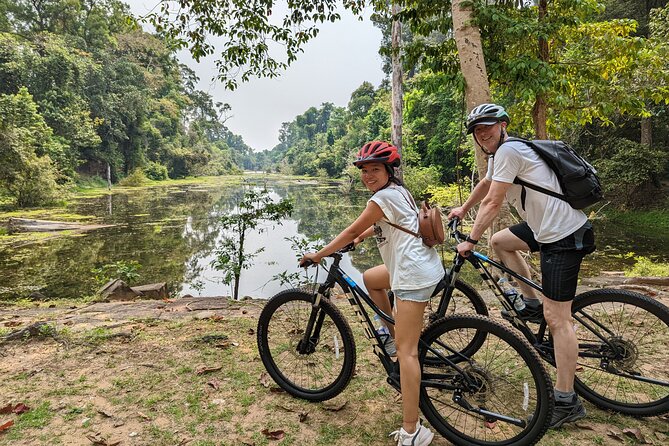
- A bicycle changes the temple day: You move through forest paths and open spaces at a slower, quieter pace than a vehicle allows.
- The group is limited to 10 people: This is useful when you need riding help, temple explanations, or a slower pace.
- The route includes off-road sections: It is described as easy and leisurely, but not every part is paved or perfectly smooth.
- Angkor entry costs extra: Add the $37 one-day temple pass to the $50 tour price.
- Heat can change the plan: A family had to stop before finishing and received help with transport back to Siem Reap.
- The best extras are already included: You get a Trek mountain bike, helmet, guide, lunch, coconut water, and drinking water.
Why cycling works well at Angkor
Angkor is vast. Seeing only the famous buildings from the back seat of a vehicle can make the day feel like a string of stops. A bicycle gives you more time between temples, when the sounds of nature and the tree cover become part of the experience.
I like this approach for a first visit because it combines two major temples with less obvious parts of Angkor Thom. You are not simply dropped at Angkor Wat, hurried through the courtyards, and moved on. You ride through the area, hear about the ancient capital from a local guide, and get a better sense of how the temples sit within their wider setting.
The pace is meant to be easy. This is not a sporty ride or an endurance challenge. The tour specifically suits non-professional riders and people looking for a fun few hours rather than an adventurous expedition. Still, easy does not mean effortless. The heat, sun, uneven paths, and five-hour schedule deserve your attention.
The supplied Trek mountain bike and helmet remove two common worries. You do not need to bring your own bicycle, and you have basic head protection for the road and off-road sections. You also receive drinking water, coconut water, and lunch, which matter in Cambodia’s heat.
More ways to see Angkor Wat:
- Angkor Wat Sunrise or Sunset Tour with Guide from Siem Reap
★ 5.0 · 12,109 reviews - Siem Reap: Angkor Wat: Small-Group Sunrise or Sunset Tour
★ 5.0 · 9,444 reviews - Siem Reap: Angkor Wat 2-Day Tour with Sunrise and Sunset
★ 4.9 · 4,429 reviews
Starting at 7:30 a.m. on Taphul Road
You meet at Angkor Cycling Tour on Taphul Road in central Siem Reap. There is no hotel pickup or drop-off, so you need to reach the meeting point on your own and return there at the end.
The early start is sensible. Morning gives you a better chance of cooler riding before the strongest heat arrives, although you should still bring sunscreen and sunglasses. The five-hour timing also gives you a half-day tour rather than an all-day commitment.
After fitting the bike and helmet, your English-speaking guide leads the group toward the Angkor temple area. The group limit of 10 is one of the tour’s strongest practical features. A smaller group is easier to manage on paths, and you can ask questions without trying to catch a guide at the front of a large pack.
Bring a camera, sunscreen, sunglasses, and enough respect for the site to dress properly. Angkor remains an active spiritual place. Shorts or skirts above the knees and bare shoulders are not allowed in sacred palaces, and modest clothing is strongly encouraged throughout the complex.
Angkor Wat: a grand first temple stop
Angkor Wat is the headline stop, and for good reason. The temple is one of the world’s most famous ancient monuments, with long galleries, towers, courtyards, and detailed stonework. Seeing it by bicycle gives you a gradual approach instead of an instant arrival in a parking area.
Your guide provides historical background as you move through the temple zone. That support is useful because Angkor Wat can feel overwhelming at first. There is a lot to look at, and an explanation of the site’s purpose and design helps you notice more than the famous central towers.
The bicycle is not used for riding through every interior section. You will park and explore on foot where needed, then return to the bike for the next stretch. This combination keeps the route varied, but you should expect some walking, standing, and temple steps in addition to cycling.
Angkor entry is not part of the $50 price. You must purchase the one-day pass separately for $37. Put the two costs together when comparing this tour with other ways of visiting the temples. You are paying $87 per person before local transport, but the cycling company supplies the bike, helmet, guide, lunch, coconut water, and drinking water.
Quiet trails with butterflies and flowers
The less obvious paths are where the ride earns its place. The route includes trails away from the busiest temple approaches, with butterflies, flowers, and the sound of nature. That softer section gives your eyes a break from stone towers and your ears a break from road traffic.
I especially like the idea of this middle ground. You are still visiting the major monuments, but you are not spending every minute in front of a postcard view. Riding through the trees lets you see Angkor as a large historic area rather than a collection of isolated buildings.
The paths also bring the main caution. The route includes some off-road biking. The tour is described as easy, but an uneven trail can be tiring if you rarely cycle. A standard bicycle path and a forest track do not feel the same, especially under a hot sun.
If you have children, ask yourself how well they handle several hours outdoors. One family found that their younger children could not manage the full ride back from the temples. The tour leader arranged a tuk tuk home for them, which shows useful flexibility, but you should not treat that as the standard plan or a guaranteed included service.
More of Angkor Thom and the Bayon:
- Siem Reap Tour: Angkor Wat Sunrise, Bayon, Ta Prohm, Banteay Srei
★ 5.0 · 931 reviews - Angkor Wat Private Driver Tours to Angkor Wat Sunrise, Angkor Thom & Ta Prohm
★ 5.0 · 98 reviews - Angkor Wat Sunrise and Angkor Thom Sunset Tour
★ 5.0 · 89 reviews - Private Temples Guided Tour (Angkor Wat, Ta Prom & Angkor Thom)
★ 5.0 · 75 reviews
South Gate of Angkor Thom and the defensive wall
The South Gate of Angkor Thom is one of the most recognizable approaches in the complex. It gives you a strong sense of the ancient city’s defensive design, with its monumental entrance and sculptural details.
The route then includes a climb onto the protection wall, leading toward Prasat Chrung. This is an unusual addition to a standard Angkor visit. Instead of staying only at the central monuments, you get a high viewpoint and a different angle on the surrounding area.
The wall section is also the point where you should be realistic about your comfort. Riding a bicycle is one thing. Climbing and walking along an old defensive structure is another. The schedule calls the ride leisurely, but the wall stop adds physical variety and may not suit anyone who wants a completely flat, smooth outing.
The reward is the view from Prasat Chrung. The information provided describes it as breathtaking, and the value here is less about another major temple interior than about seeing Angkor from an elevated, quieter position. It breaks up the day and gives you a better idea of the scale of Angkor Thom.
The unrestored West Gate
The West Gate of Angkor Thom is described as never restored. That gives the stop a different feel from the more polished or heavily visited monuments. You can look at the gate as a structure that has retained more of its weathered character.
I find stops like this useful because they slow the tour down. You do not need every minute to feature the most famous building. An unrestored gate helps you notice age, stonework, and the long process of preserving a huge archaeological area.
The guide’s role matters here. Without context, a gate may look like a brief photo stop. With an explanation of where it fits into Angkor Thom, it becomes part of the city’s design rather than a random ruin along the route.
Bayon and its 216 smiling faces
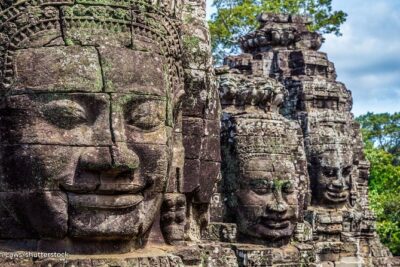
Bayon is the second major temple of the day and one of Angkor’s most memorable sights. It has 54 towers and 216 smiling faces, carved into the towers and turned in different directions.
The faces are the reason many people remember Bayon more clearly than other temples. They appear as you move through the close-set towers, giving the temple a playful and slightly mysterious character. After the broad scale of Angkor Wat, Bayon feels more enclosed and intricate.
Your guide can help you understand the layout and point out details that are easy to miss in the crowded stonework. The small group works well here because Bayon can be visually confusing. You have a better chance of staying with the guide and asking about what you are seeing.
Like Angkor Wat, Bayon involves walking after you leave the bike. Wear shoes suitable for both cycling and temple exploration. The tour includes a helmet, but it does not list special cycling clothing or other equipment, so you should keep your own outfit practical and modest.
Lunch, coconut water, and the real cost
Lunch, coconut water, and pure drinking water are included. These are not flashy additions, but they are exactly the sort of things I want on a hot bicycle tour. You can keep riding without having to arrange every drink and meal yourself.
The $50 tour price is reasonable if you value the guide and equipment. You are not just paying for access to two temples. The fee also covers a premium Trek mountain bike, helmet, route planning, local guiding, lunch, coconut water, and water. The temple pass remains separate, and there is no hotel transfer.
At $87 per person with the one-day pass, this is not the cheapest way to see Angkor. It can still be good value if you want a more active and quieter visit. If your priority is simply reaching the temples with the least physical effort, a vehicle-based tour may make more sense.
The trip is usually booked about 10 days ahead, so I would not leave it until the last minute if your Siem Reap dates are fixed. You can cancel free of charge up to 24 hours before the start time, which gives you some flexibility if your plans change.
Heat, family needs, and riding ability
Most people can take part, and the tour is specifically aimed at easy, non-adventurous riding. That makes it suitable for adults who are comfortable on a bicycle and families with older children who can handle several hours outside.
The phrase leisurely should not make you ignore the weather. One outing was cut short because the heat became too much, and the company sent a car to collect the group. That is a useful sign of practical support, but it also confirms the need to judge your energy honestly.
I would be cautious about booking this for very young children. A family had to arrange a tuk tuk for the children when they could not complete the return ride. The company helped, but the published tour is still planned as a cycling outing from and back to the Taphul Road meeting point.
Tell the company about dietary needs when you book. The tour includes lunch, but the available information does not specify the menu, so advance notice is the sensible step.
Who should book this Angkor bicycle tour?
I would choose this tour if you want Angkor Wat and Bayon, but also want time among trees, gates, walls, and quieter trails. It suits you if a bicycle ride sounds enjoyable rather than burdensome, and if you prefer a small group to a large coach excursion.
It is a particularly good fit for adults, couples, friends, and families with children who already ride comfortably. The English-speaking guide, included equipment, and refreshments make the day easy to organize.
I would think twice if you dislike heat, uneven paths, temple walking, or early starts. I would also compare the total price carefully if you are traveling on a tight budget, since the $37 Angkor pass is extra and hotel transport is not included.
The excellent 4.9 rating from 47 ratings and 100 percent recommendation indicate a consistently strong experience. The important qualification is that the ride depends on weather and fitness. The company has shown flexibility when people could not finish, but the best experience comes when you arrive prepared for a warm, active morning.
FAQ
How much does the tour cost?
The tour costs $50 per person. The Angkor temple pass is not included and costs $37 for one day, bringing the combined cost to $87 per person before local transport.
Is the Angkor entry ticket included?
No. You must purchase the temple pass separately. The stated price for a one-day pass is $37.
What time does the tour start?
The tour starts at 7:30 a.m.
Where does the tour begin?
It begins at Angkor Cycling Tour on Taphul Road, Krong Siem Reap 17252, Cambodia.
Where does the tour end?
The activity ends back at the meeting point on Taphul Road.
Is hotel pickup included?
No. Hotel pickup and drop-off are not included, so you need to arrange your own way to and from the meeting point.
What equipment is provided?
The tour includes a premium Trek mountain bike and helmet.
Are food and drinks included?
Yes. Lunch, coconut water, and pure drinking water are included.
How large is the group?
The group has a maximum of 10 people.
What should I wear to Angkor?
Wear respectful clothing that covers the shoulders and reaches below the knees. Revealing clothing, shorts or skirts above the knees, and bare shoulders are prohibited in sacred palaces.
Can I cancel for a full refund?
Yes. You can cancel at least 24 hours before the experience start time for a full refund. Cancellations or changes made less than 24 hours before the start time are not accepted for a refund.
Should you book it?
Book this tour if you want a small-group bicycle day that mixes Angkor Wat and Bayon with quieter trails and less familiar Angkor Thom sights. The guide, Trek bike, helmet, lunch, coconut water, and water give the $50 price real value, even after adding the temple pass.
Skip it if you want a short, effortless temple visit or if your group may struggle with heat and off-road riding. For everyone else, this is a thoughtful way to see the famous temples while giving the spaces between them equal time.
Newest reviews from Siem Reap
- War Museum, Killing Field, and APOPO Hero RATs Tour★ 5.0 · 7 reviews
- Angkor Wat at Sunrise★ 4.0 · 7 reviews
- Siem Reap Angkor Airport Taxis (from Airport to Hotel)★ 5.0 · 44 reviews
- Cambodian Cooking Class and Oxcart Ride with Local Village Tour★ 5.0 · 4 reviews
- Secret Temples of Angkor – Guided Tour in Siem Reap★ 5.0 · 6 reviews
- Short Cycling at Countryside★ 5.0 · 29 reviews
- Khmer Cooking Class in Cambodia★ 5.0 · 36 reviews
- SIEM REAP E-BIKE HALF-DAY COUNTRYSIDE (25-30 km)★ 4.0 · 1 review
Angkor Wat Tours, compared.
Angkor Wat Sunrise or Sunset Tour with Guide from Siem Reap
Read our review →
Angkor Wat: Small-Group Sunrise or Sunset Tour
Read our review →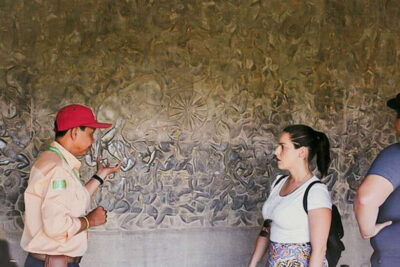
Angkor Wat 2-Day Tour with Sunrise and Sunset
Read our review →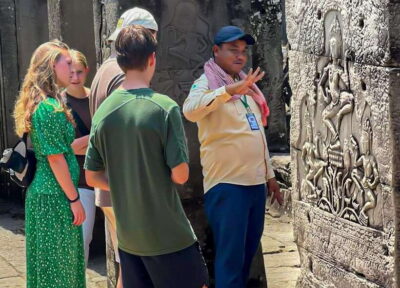
Angkor Wat Sunrise tour with Small – Group and Guide tours
Read our review →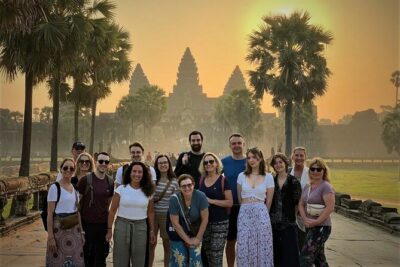
Angkor Wat Highlights and Sunrise Guided Tour from Siem Reap
Read our review →
Angkor Wat Sunset Small Group Tour with Lunch Included
Read our review →
Full-Day Angkor Wat Sunrise Private Tour with Guide from Siem Reap
Read our review →Browse the lists this tour appears in