
Reviewed · ANGKOR WAT TOURS
Four-day tour Angkor Wat, Banteay Srey, Beng Melea and Siem Reap discovery
Angkor rewards a slower look. This four-day private tour combines the great temples with remote ruins, a floating village, a museum, and a local craft center, giving you more than a quick Angkor Wat visit. I especially like the private vehicle and English-speaking guide, which let you set a sensible pace, and the mix of major sights with places such as Beng Mealea and Kompong Phluk. The price is $202.57 per person, but remember that temple tickets and all meals are extra.
The itinerary is ambitious. Some days run for many hours, and day two includes Kbal Spean plus several temples after a long drive. You will need good walking shoes, patience in the heat, and enough energy to appreciate the later stops rather than simply collect them.
In This Review
- The essential points at a glance
- Why a private four-day plan works well
- Day one: Bayon faces, jungle roots, and Angkor Wat
- Day two: Kbal Spean and the fine carving of Banteay Srei
- Day three: the rough beauty of Beng Mealea and the Roluos group
- Day four: Tonle Sap life, museum context, and local crafts
- What the $202.57 price really covers
- Who will appreciate this tour most
- Practical advice before you go
- Should you book these four days?
- FAQ
- Where does the tour begin?
- How long does the experience last?
- Is this a private tour?
- Is transportation included?
- Is an English-speaking guide included?
- Are temple entrance tickets included?
- Are meals included?
- Does the tour visit Kompong Phluk?
- Does the tour include Beng Mealea and Banteay Srei?
- Can children participate?
The essential points at a glance
- A full Angkor program: Bayon, Ta Prohm, Angkor Wat, Banteay Kdei, Eastern Mebon, Neak Pean, and Preah Khan are all included.
- Beyond the main circuit: You reach Kbal Spean, Banteay Srei, Beng Mealea, and the older Roluos temples.
- A private four-day format: Only your own group participates, with an air-conditioned vehicle and an English-speaking guide.
- Cambodian life beyond temples: Kompong Phluk on Tonle Sap Lake, the Angkor National Museum, and Artisans Angkor add culture and present-day context.
- Guide quality matters: Sa receives repeated praise for clear English, temple knowledge, Buddhist and Hindu mythology, Khmer stories, and explanations of daily Cambodian life.
- Budget carefully: The listed price excludes every entrance ticket and breakfast, lunch, and dinner.
Why a private four-day plan works well
Angkor is not one temple. It is a huge archaeological area spread around Siem Reap, with grand monuments, smaller sanctuaries, reservoirs, forest ruins, and sites far outside the usual circuit. A private plan helps connect these places without asking you to arrange separate transport each day.
The air-conditioned vehicle is a practical benefit, not a luxury detail. You will spend significant time on the road, especially on the journeys to Kbal Spean and Beng Mealea. Cold water and a cold towel are also included, which will be welcome after walking among sun-baked stones.
The tour begins at 8:30 a.m. each day according to the supplied information. The guide will try to arrange visits to limit crowds, though no schedule can guarantee quiet conditions at Angkor Wat or Ta Prohm. If avoiding busy periods is especially important to you, ask how the daily order will be handled before booking.
The strongest part of the experience is likely to be the guide. Several comments praise Sa for his English, his grasp of Hindu and Buddhist traditions, and his ability to explain Khmer legends in plain terms. He is also praised for discussing family life and everyday Cambodian culture, not just dates and architectural labels. If Sa is available for your departure, requesting him could make a meaningful difference.
More ways to see Angkor Wat:
- Angkor Wat Sunrise or Sunset Tour with Guide from Siem Reap
★ 5.0 · 12,109 reviews - Siem Reap: Angkor Wat: Small-Group Sunrise or Sunset Tour
★ 5.0 · 9,444 reviews - Siem Reap: Angkor Wat 2-Day Tour with Sunrise and Sunset
★ 4.9 · 4,429 reviews
Day one: Bayon faces, jungle roots, and Angkor Wat
The first day focuses on the best-known temples in the central Angkor area. You begin at the South Gate of Angkor Thom, the former royal city that includes Bayon and Baphuon.
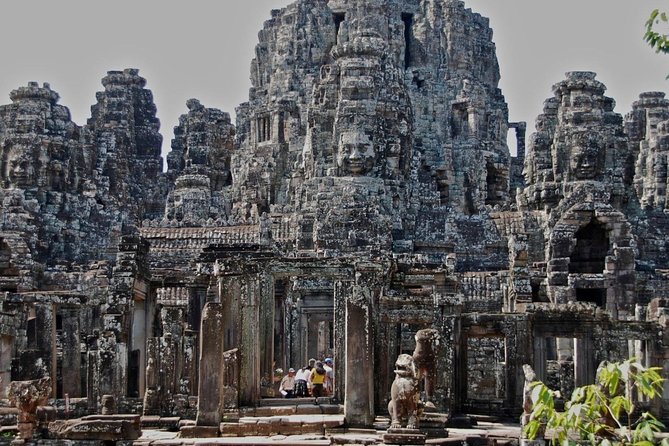
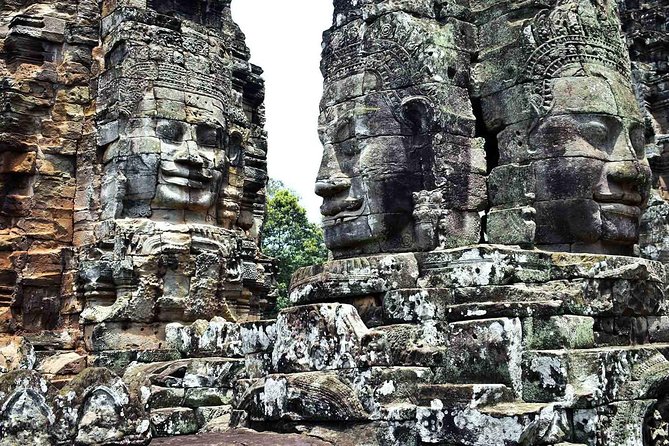
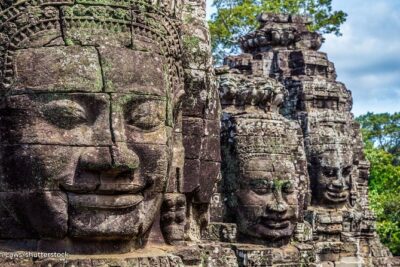
Bayon is memorable for its towers carved with large serene faces associated with Avalokitesvara. The plan allows two hours here, enough time to study the faces, pass through the galleries, and hear how the temple fits into the reign of Jayavarman VII. A guide is useful because Bayon can feel like a maze of stone corridors. Without context, you may see only repeated towers. With an explanation of the temple’s religious and royal purpose, the design becomes easier to read.
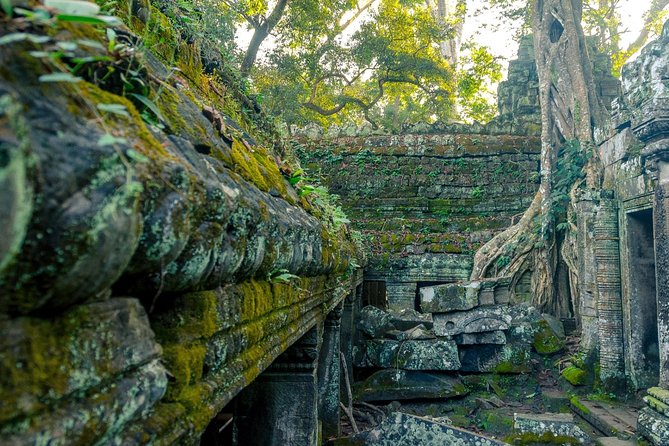
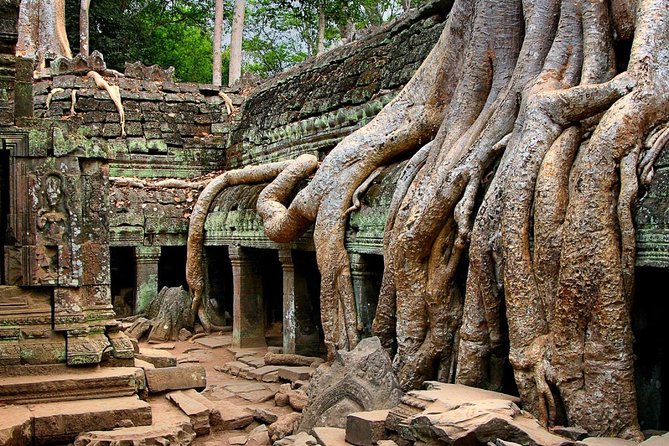
Ta Prohm follows, with another two-hour visit. Its fame comes from the trees growing around and over the ruins. The roots are dramatic, but the temple deserves more than a quick photograph. Look for the carved galleries, collapsed sections, and the way the vegetation has become part of the site’s modern identity.
The drawback is crowd pressure. Ta Prohm is one of the most popular stops in Cambodia, and even a carefully planned schedule cannot make it private. The guide’s timing may help, but expect narrow passages and plenty of stops for photographs.
Banteay Kdei offers a quieter contrast. Built by Jayavarman VII in the late 12th century, it has a less polished, more worn character than Angkor Wat. One hour is enough for a useful visit, though anyone fascinated by temple details may want more time.
The day ends with three hours at Angkor Wat. That is the right place for a longer stop. The temple was built in the early 12th century by Suryavarman II and dedicated to Vishnu, making it distinct from the later Buddhist monuments associated with Jayavarman VII.
Your guide can help you follow the reliefs, towers, galleries, and changing religious purpose. The overview also describes ending the day by watching the sunset over Angkor Wat and the surrounding temples. Treat this as an intended part of the schedule rather than a guaranteed spectacle, since weather and timing are beyond the operator’s control.
Day two: Kbal Spean and the fine carving of Banteay Srei
Day two is the most demanding. Kbal Spean takes about four hours, followed by Banteay Srei and three more temple stops. The long day gives you access to places many short Angkor programs leave out, but it will test your stamina.
Kbal Spean is known for carvings in and around the riverbed, including representations connected with Vishnu and Brahma. The site combines water, forest, and sculpture in a way that feels quite different from the monumental temple compounds. You should expect walking, and the four-hour allocation suggests that this is not a roadside stop.
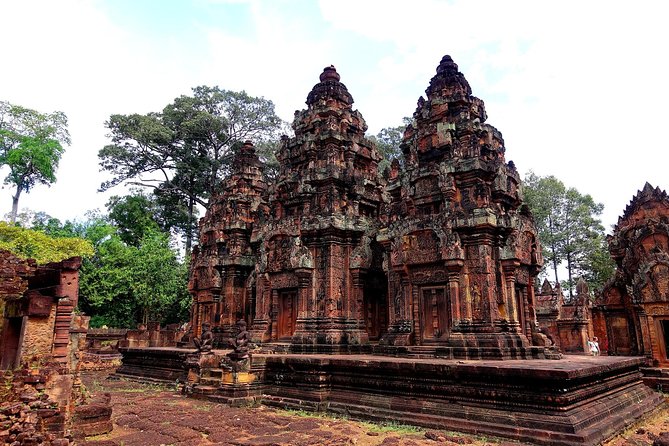
Banteay Srei is about an hour from Siem Reap and is often regarded as one of the finest examples of Angkorian stone carving. Its pinkish sandstone allows unusually detailed decoration, with carefully worked figures and ornamental patterns.
Two hours here gives you time to appreciate the craftsmanship rather than rush around the enclosure. Banteay Srei is smaller than Angkor Wat, but its scale is part of its appeal. It is a place to look closely.
After returning toward the central Angkor area, you visit Eastern Mebon, Neak Pean, and Preah Khan. Eastern Mebon is a temple mountain with a strong sense of formal design. Neak Pean sits on an artificial island in an ancient reservoir, giving the visit a different setting from the enclosed temple compounds.
Preah Khan is the day’s final temple and deserves its one-hour allocation. This large monastic complex offers plenty to explore, with long corridors, courtyards, and a mixture of religious and architectural details. By this point, however, you may be tired. Bring water, wear practical footwear, and do not expect day two to feel leisurely.
Day three: the rough beauty of Beng Mealea and the Roluos group
Beng Mealea lies about 70 kilometers northeast of Siem Reap. The four-hour visit is a major reason to choose this tour over a standard Angkor circuit.
The temple is often associated with the idea of a lost or remote Angkorian ruin. Its partially collapsed condition and less central setting create a stronger sense of discovery than the carefully managed main temples. You will see stone, vegetation, fallen galleries, and sections that feel less orderly than Angkor Wat or Bayon.
That roughness is both the attraction and the limitation. Beng Mealea may be less comfortable to explore, and the long drive takes up much of the day. If you want only the most famous monuments, this is time that could feel excessive. If you enjoy ruins with a less polished appearance, it may be the most memorable stop of the whole program.
The afternoon moves to the Roluos group, about 11 kilometers southeast of the Siem Reap market area. Bakong, Lolei, and Preah Ko are close together, so you can see three early monuments without another long transfer.
The Roluos temples help show how Khmer temple design developed before the later Angkor masterpieces. Bakong, Lolei, and Preah Ko each add a different piece to the story, and a guide can make the sequence easier to understand. Three hours is a generous allocation, although the overall day will still involve plenty of time in the vehicle.
More trips out to Banteay Srei:
- Full-Day Banteay Srei & 4 Temples – Grand Tours Join-in Tour
★ 5.0 · 1,155 reviews - Siem Reap Tour: Angkor Wat Sunrise, Bayon, Ta Prohm, Banteay Srei
★ 5.0 · 931 reviews - 2-Day Angkor Wat With Small, Big Circuit and Banteay Srei Tour
★ 5.0 · 545 reviews - From Siem Reap: Banteay Srei Temple & Grand 5 Temple Tour
★ 4.8 · 262 reviews
Day four: Tonle Sap life, museum context, and local crafts
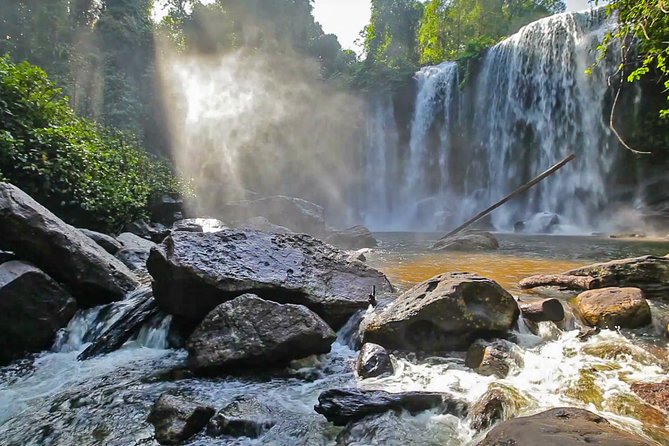
The final day changes the subject from ancient stone to Cambodian life and cultural work. Kompong Phluk is about a 45-minute drive from Siem Reap and offers access to Tonle Sap Lake, described in the tour information as the largest freshwater lake in Southeast Asia.
The floating village visit is intended to show how communities live around the lake. Water levels shape daily routines, homes, transport, and work. Conditions can vary, and the experience is tied closely to the lake environment, so it will not feel like another temple visit.
Four hours is a substantial amount of time for Kompong Phluk. That gives you room to see more than a quick stop, though it also means the day begins with a sizeable commitment. The tour does not include meals, so plan to ask the guide about the day’s meal timing.
Back in Siem Reap, the Angkor National Museum provides an indoor break and useful background. Its collection includes Buddha statues and other relics connected with the region’s religious and artistic traditions. One hour is enough for an introduction, though museum lovers may want longer.
The last stop is Artisans Angkor, a local NGO working to improve conditions for disadvantaged Cambodians from rural areas. You visit the workshop and can be shown stone carving. This adds a present-day human element to a program otherwise dominated by ancient monuments.
I like this ending. After four days of royal temples and archaeological sites, you finish by seeing how craft skills are taught and maintained today. It gives the trip a broader frame than a simple monument checklist.
What the $202.57 price really covers
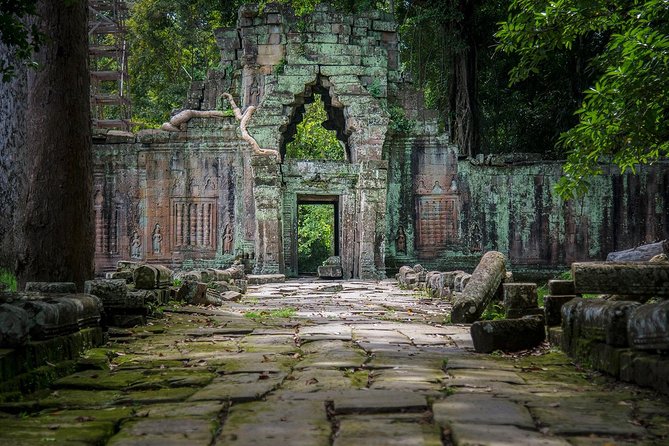
At $202.57 per person, the price is easiest to judge if you are traveling with family or friends. You receive four days of private touring, an air-conditioned vehicle, an English-speaking guide, cold water, and cold towels. Group discounts may also be available.
The private format has real value. You are not tied to strangers’ interests or a fixed pace, and you can ask for explanations about mythology, architecture, or Cambodian life. That matters at sites such as Bayon, where a good explanation can turn confusing ruins into a readable place.
The advertised price does not include entrance tickets. It also excludes breakfast, lunch, and dinner. Those costs can change the final budget considerably, so calculate them before deciding that the tour is inexpensive.
There is no need to pay separately for basic transport or guiding within the listed inclusions. Still, clarify the entrance requirements for the different temple areas and sites before you go. The tour covers many locations, and not all admission arrangements are necessarily identical.
Who will appreciate this tour most
I would recommend this program to anyone who wants a broad first visit to Siem Reap and prefers a guide over independent transport planning. It suits people interested in architecture, Hindu and Buddhist traditions, Khmer stories, and local life.
It is also a good match for families, couples, or small private groups that value flexibility. Children can participate, but they must be accompanied by an adult. Most people can take part, although the itinerary includes long days, walking, outdoor heat, and the more demanding Kbal Spean and Beng Mealea visits.
You should think twice if you prefer slow mornings, long meals, or only a few major sights each day. Four days gives you breadth, but the schedule is packed. You may need to accept that some late-day temples receive less energy than the first ones.
The tour is less suitable if your main aim is a single sunrise photograph or a brief Angkor introduction. The stated program emphasizes a full day beginning at 8:30 a.m. and mentions sunset over Angkor Wat, not a dedicated sunrise visit.
Practical advice before you go
Wear shoes that can handle uneven temple paths and longer walks. Carry only what you need, since you will be getting in and out of the vehicle often.
Use the guide actively. Ask Sa, if he is your guide, to explain the difference between Hindu and Buddhist imagery, point out important carvings, and connect the temples with Cambodian daily life. His praised strengths are storytelling, clear communication, and explaining history in an approachable way.
Keep your expectations realistic about crowds. The guide will try to arrange the order to reduce them, but Angkor Wat and Ta Prohm are major attractions. A private tour improves your flexibility, not the laws of time and popularity.
The cancellation terms are generous if your plans remain uncertain: you can receive a full refund when cancelling at least 24 hours before the start time. Changes or cancellations inside that period are not accepted for a refund.
Should you book these four days?
Book it if you want the full Siem Reap picture: famous temples, remote ruins, early monuments, Tonle Sap, museum collections, and Cambodian craft work. The guide is the most important part of the value, and Sa’s repeated praise for language, stories, and cultural explanations is a strong reason to request him when possible.
Skip it if you want a relaxed temple holiday or do not want to pay entrance fees and meals on top of the listed price. For an energetic visitor who wants breadth and private transport, though, this is a well-filled four-day plan that reaches far beyond Angkor Wat’s postcard view.
FAQ
Where does the tour begin?
The tour begins with pickup in Siem Reap at 8:30 a.m.
How long does the experience last?
The experience lasts approximately four days.
Is this a private tour?
Yes. Only your own group participates in the private activity.
Is transportation included?
Yes. An air-conditioned vehicle is included.
Is an English-speaking guide included?
Yes. An English-speaking tour guide is included.
Are temple entrance tickets included?
No. All entrance ticket fees are excluded from the listed price.
Are meals included?
No. Breakfast, lunch, and dinner are not included.
Does the tour visit Kompong Phluk?
Yes. Day four includes Kompong Phluk on Tonle Sap Lake, with a drive of about 45 minutes from Siem Reap.
Does the tour include Beng Mealea and Banteay Srei?
Yes. Beng Mealea is scheduled for day three, while Banteay Srei is visited on day two.
Can children participate?
Yes, but children must be accompanied by an adult. Most people can participate in the activity.
Newest reviews from Siem Reap
- War Museum, Killing Field, and APOPO Hero RATs Tour★ 5.0 · 7 reviews
- Angkor Wat at Sunrise★ 4.0 · 7 reviews
- Siem Reap Angkor Airport Taxis (from Airport to Hotel)★ 5.0 · 44 reviews
- Short Cycling at Countryside★ 5.0 · 29 reviews
- Cambodian Cooking Class and Oxcart Ride with Local Village Tour★ 5.0 · 4 reviews
- Secret Temples of Angkor – Guided Tour in Siem Reap★ 5.0 · 6 reviews
- SIEM REAP E-BIKE HALF-DAY COUNTRYSIDE (25-30 km)★ 4.0 · 1 review
- Unveiling the Mystical Beauty of Phnom Kulen National Park★ 5.0 · 6 reviews
Angkor Wat Tours, compared.
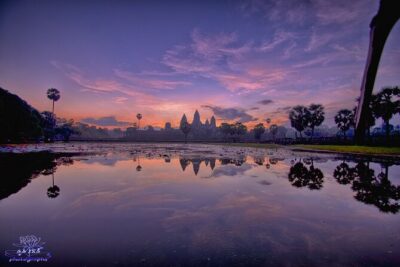
Angkor Wat Sunrise or Sunset Tour with Guide from Siem Reap
Read our review →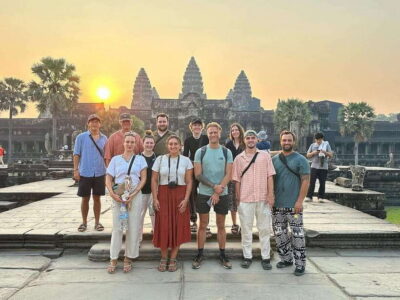
Angkor Wat: Small-Group Sunrise or Sunset Tour
Read our review →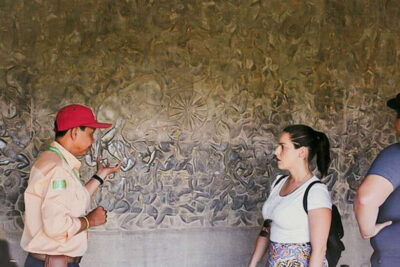
Angkor Wat 2-Day Tour with Sunrise and Sunset
Read our review →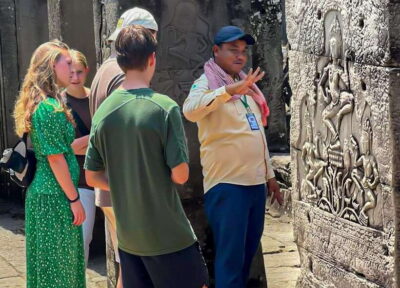
Angkor Wat Sunrise tour with Small – Group and Guide tours
Read our review →
Angkor Wat Highlights and Sunrise Guided Tour from Siem Reap
Read our review →
Angkor Wat Sunset Small Group Tour with Lunch Included
Read our review →
Full-Day Angkor Wat Sunrise Private Tour with Guide from Siem Reap
Read our review →Browse the lists this tour appears in