
Reviewed · HISTORICAL TOURS
Exploring Battambang History (Walking Tour)
Battambang’s past is written into its streets. I like the way this half-day experience links French colonial buildings, Chinese religious life, and Cambodia’s difficult modern history instead of treating the city as a quick stop between temples. I also like the personal side: guides such as Sothea, Sothai, and Reaksa are praised for clear English, friendliness, and a real interest in sharing local culture. The main drawback is the mixed description: it is called a walking tour in some places and a cycling tour in others, so you should confirm the exact format before booking.
At $25 per person, the tour offers a useful introduction to Battambang without taking a full day. Hotel pickup and drop-off are offered from Battambang hotels, water and entrance fees are included, and groups are limited to 15 people. The early 7:30 am start is practical in Cambodia’s heat, though it may feel brisk if you prefer slow mornings.
In This Review
- Key points before you book
- Why Battambang deserves a closer look
- Starting at the Central Market
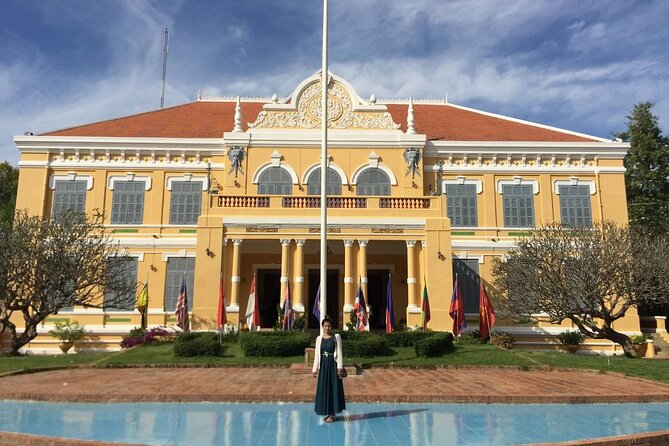
- The 300 French colonial houses
- White elephants, Naga Peace, and changing rule
- The Governor’s House and Battambang’s hardest years
- A Chinese temple and Cambodia’s many religions
- The Indochina Bank and the story of money
- Walking, cycling, or a blend of both?
- The guides are a major part of the value
- Is $25 a fair price?
- Who should book this experience?
- Practical advice for the morning
- Should you book it?
- FAQ
- Where does this tour take place?
- How long does the tour last?
- What time does the tour start?
- Is hotel pickup available?
- Is the experience a walking tour or a cycling tour?
- What is included in the price?
- What is not included?
- What should I bring?
- Can I cancel for a full refund?
Key points before you book
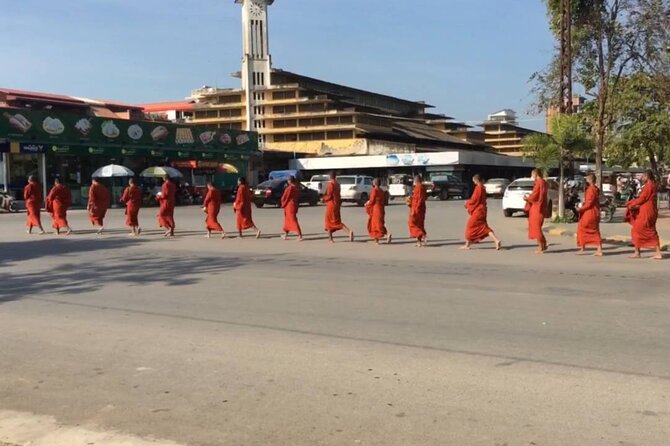
- French-era Battambang: See the Central Market, old colonial buildings, and around 300 houses linked to the French period.
- A city shaped by many faiths: Learn about Buddhist, Hindu, Christian, and Muslim influences, including a Chinese temple.
- A difficult modern past: The Governor’s House and other stops help explain civil war and Khmer Rouge-era suffering.
- Walking or cycling format: The experience information uses both descriptions, so ask the provider what your departure includes.
- Early start, half-day pace: Begin at 7:30 am and finish after roughly three to four hours.
- Small-group local guidance: The maximum group size is 15, with English-speaking guides including Sothea, Sothai, and Reaksa.
Why Battambang deserves a closer look
Battambang is often treated as a quiet pause between Cambodia’s bigger sights. That misses the point. This is a city where architecture, trade, religion, farming, and war sit close together.
The tour aims to explain how Battambang became an important trading center and part of Cambodia’s rice-producing heartland. You are not simply shown an old building and handed a date. The guide connects the building to the way money, people, religion, and political power moved through the city.
I especially like that the program covers both attractive and painful parts of the past. You hear about French colonial influence, Thai control, Chinese business and religious life, civil war, and the Khmer Rouge period. That range gives you a more honest picture than a sightseeing walk focused only on photogenic façades.
The city tour is also designed for people who want context without exhausting themselves. One account describes it as an easy few-hour outing that leaves plenty of time for the rest of your day. That makes it a smart first activity in Battambang, particularly if you have just arrived and want to understand the city before visiting places farther out.
More History Tours in Battambang:
- 2 Days Guided Historical Tour in Angkor
★ 5.0 · 855 reviews - Siem Reap: Banteay Srei and Grand Circuit Heritage Tour
★ 4.9 · 163 reviews - Banteay Srei and Grand Circuit Heritage Tour from Siem Reap
★ 5.0 · 142 reviews
Starting at the Central Market
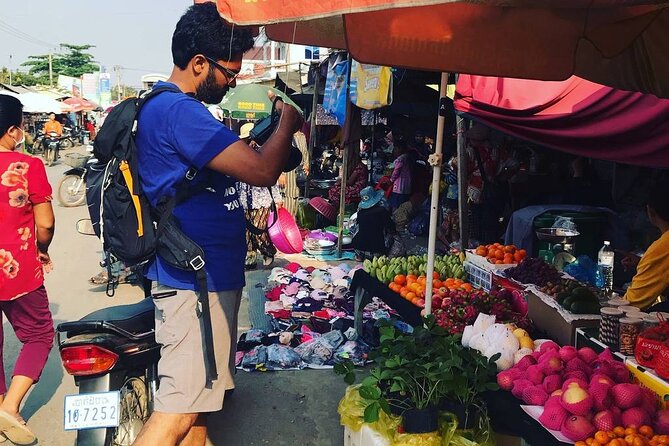
The Central Market is one of the clearest starting points for understanding Battambang as a commercial city. Its French-style design points to the period when colonial planning shaped parts of the town.
Your guide can use the market to explain more than architecture. This is where the story of trade becomes easier to picture: produce, rice, household goods, and money all passed through the city’s commercial center. The market is therefore not just a place to take photographs. It helps explain why Battambang mattered.
You should expect a working city setting rather than a polished museum. That is part of the appeal, but it also means the experience may feel less orderly than a formal historic site. Keep your camera ready, but listen for the explanation behind the building rather than rushing from one photograph to the next.
The 300 French colonial houses
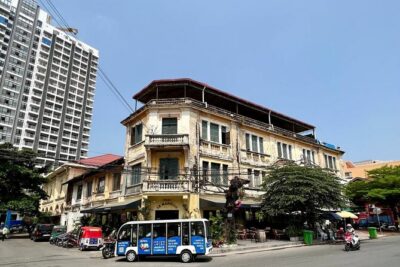
One of the more unusual details is the reference to roughly 300 houses built during the French colonial period. These buildings give the walk a wider focus. Instead of seeing one restored landmark, you get a sense of how an entire part of Battambang developed.
The value here is scale. A single colonial building can look like an isolated curiosity. A large group of houses shows that the French period affected the city’s streets and domestic life, not only its government offices.
Some of the buildings may show age and wear. Do not expect every façade to look freshly restored. The charm comes from seeing old urban fabric still woven into daily life, with modern Battambang moving around it.
This is also where a local guide matters. Architecture can be easy to glance at and forget. A guide who explains what the buildings were used for, and how the city changed around them, gives those streets a stronger meaning.
White elephants, Naga Peace, and changing rule
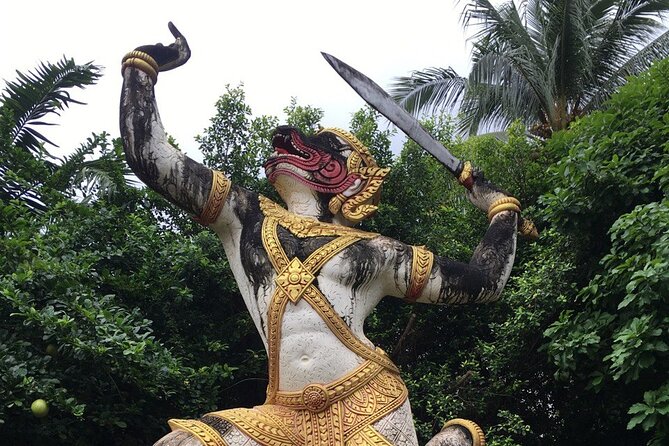
The route includes a white elephant connected with the period when Thailand controlled Battambang. This is a useful reminder that the city’s identity was not shaped by French rule alone.
Battambang’s location helped make it important, but it also exposed the area to shifting political control. The white elephant offers a visual way to discuss that earlier chapter without turning the tour into a list of dates.
Naga Peace represents a different idea: Cambodia’s hope for an end to war. The symbol lets the guide move from older regional power struggles to the more recent need for peace after years of conflict.
These stops may not take long, but they add balance. You see that Battambang’s story includes outside influence, local belief, political change, and the lasting wish for stability. I like this kind of stop because it gives you something to think about after the tour, even if it is not the grandest sight of the morning.
More Walking Tours in Battambang:
- Customs and Culture Half Day Walk and Bike Tour in Battambang
★ 5.0 · 23 reviews - Morning Walking Tour at Local Livelihood in Battambang
★ 5.0 · 1 review - Siem Reap: City Walking Tour
★ 4.6 · 583 reviews - Siem Reap City Walking Tour
★ 4.5 · 114 reviews
The Governor’s House and Battambang’s hardest years
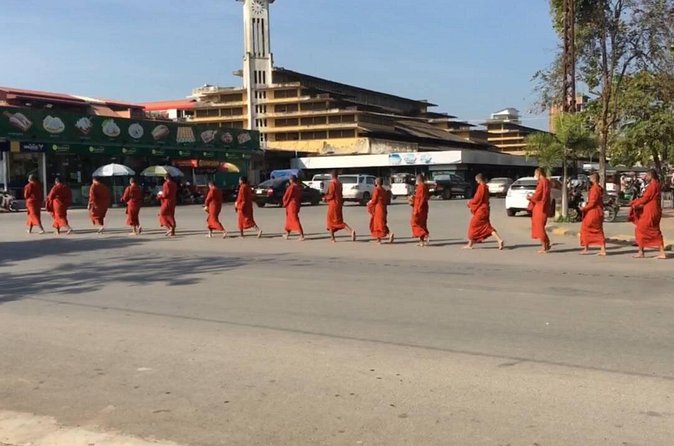
The Governor’s House is tied to a very painful period in Battambang’s past. The information provided describes it as connected to a bad time in the city’s history, and the tour also covers civil war and the Khmer Rouge era.
This part requires a respectful attitude. The purpose is not dramatic storytelling for its own sake. It is to help you understand how political violence affected a real city and its people.
The exact depth of this discussion will depend on the guide and the time available. That is worth keeping in mind. A three to four-hour introduction cannot explain every part of Cambodia’s modern history, and the tour is not presented as a specialist historical seminar.
Still, this stop gives the outing weight. Battambang is not only old markets and attractive colonial streets. You are encouraged to see the city as a place that endured major upheaval and then continued rebuilding ordinary life.
A Chinese temple and Cambodia’s many religions
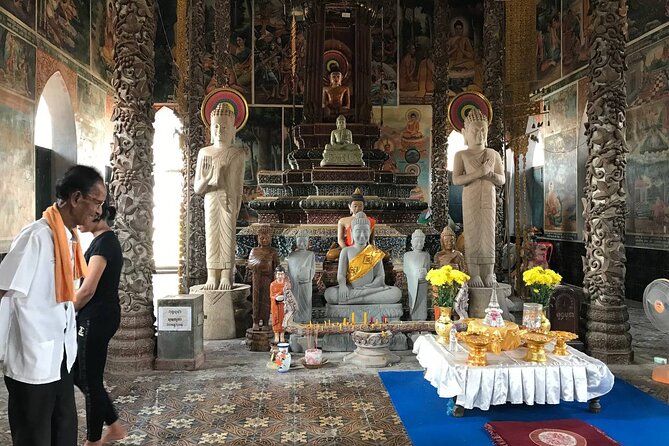
The Chinese temple adds another layer to the city’s story. It shows how Chinese communities and beliefs influenced Battambang, especially in a city shaped by commerce.
The tour also introduces Hinduism, Buddhism, Christianity, and Islam. That is a broad subject for a short outing, but it helps you avoid seeing Cambodian culture as one single tradition.
The Chinese temple may be especially useful if you have already visited major Buddhist sites elsewhere in Cambodia and want a wider view of religious life. Here, faith is linked to migration, trade, family, and community rather than presented only through monumental architecture.
You should treat this as an introduction, not a full study of each religion. The strongest benefit is the connection between different communities and the city’s growth. A guide can show how religious buildings reflect the people who lived, worked, and traded in Battambang.
The Indochina Bank and the story of money
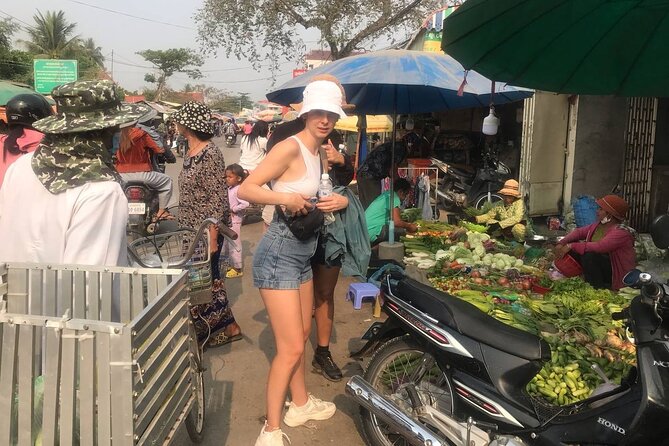
The former Indochina Bank represents the financial side of Battambang’s past. The tour uses it to explain how money moved through the city and why Battambang became a trading center.
This is a small but important detail. Visitors often notice temples and old houses first, yet banks reveal how a city functioned. Trade needs credit, records, exchange, and institutions. The bank helps connect the elegant streets to the practical business that supported them.
It also rounds out the itinerary. You have the market for daily commerce, colonial houses for urban development, religious buildings for community life, and the bank for finance. Together, these stops create a better picture of the city than any one landmark could provide.
Walking, cycling, or a blend of both?
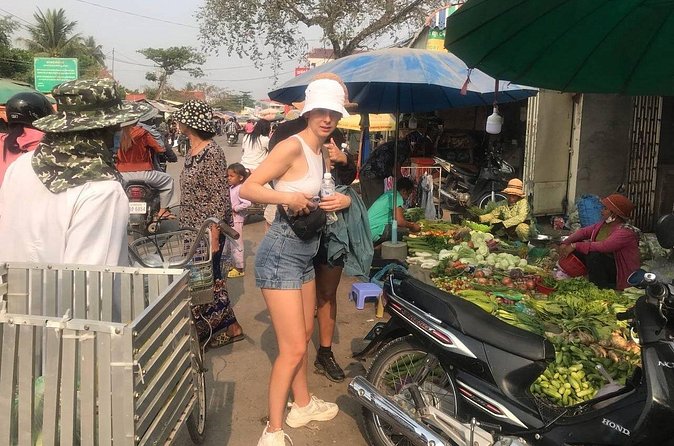
You need to clarify the format before you set out. The experience is titled as a walking tour, while the description also promises cycling through the countryside, photo stops without parking worries, and visits to a temple and crocodile farm.
The itinerary supplied for the history portion focuses on city sights and says admission is free. The cycling description points toward a broader outing, including rice fields, farms, cows, villages, and encounters with local people. Those are different experiences in pace and physical effort.
The safest approach is to ask The Adventure Bike whether your booking is for the urban walking route, the countryside bicycle route, or a combination. This is not a minor detail. You will want different clothing, energy, and expectations for a city history walk than for a half-day ride.
For the cycling version, bring flexible or sports clothing, sunglasses, sun lotion, and a camera. For the walking version, those same items remain useful in Cambodia’s morning sun. Bottled drinking water is included, but you should still dress for heat.
The cycling accounts describe routes through rice fields and farms, as well as friendly contact with villagers and children. That offers a more intimate look at life outside central Battambang, but it may not suit you if you specifically want a concentrated architecture tour.
The guides are a major part of the value
The strongest praise is directed at the guides. Sothea is repeatedly described as friendly, experienced, and able to explain Cambodian culture, tradition, and history in good English. Sothai is praised for being kind, approachable, and well informed about Battambang’s past. Reaksa is noted for gentle manner, strong English, and a good connection with local communities on the bicycle route.
That matters because many of the stops are valuable only if someone explains them. An old building can look like a tired façade. With a good guide, it becomes evidence of colonial planning, commerce, political change, or family life.
Guide quality can vary from departure to departure, so you should not assume you will receive a particular person unless the provider confirms it. Still, the repeated emphasis on personal guiding suggests that this company’s strength is interpretation rather than grand attractions.
The maximum group size is 15. That is small enough for questions to be possible, though a full group may feel less personal than a private walk. If you want the most conversation, ask about a private option, but no private upgrade is specified here.
Is $25 a fair price?
At $25, this is a reasonable half-day introduction to Battambang. You are paying for an English-speaking local guide, bottled water, all listed fees and taxes, and offered hotel pickup and drop-off from Battambang hotels.
The price makes the most sense if you value explanation. You could walk past many of these buildings for free, but you would miss the links between French planning, Thai control, Chinese influence, religion, banking, and war.
The value is less clear if you want a tightly defined bicycle excursion with every countryside attraction guaranteed. Because the description combines city walking and countryside cycling, confirm what is included before you commit.
Personal expenses and insurance are not included. Bring money for anything additional you choose to buy, and arrange your own travel coverage.
Who should book this experience?
I would point this tour toward first-time visitors to Battambang, solo visitors who want an easy way to meet a local guide, and anyone who prefers culture and context to a checklist of major monuments.
It also suits people with only a few hours available. The start time is 7:30 am, and the experience lasts about three to four hours, leaving most of the day open.
The walking version should appeal to visitors interested in architecture, politics, religion, and urban life. The cycling version is a better match if you want rice fields, farms, village scenes, and a little distance from central streets.
You may want to choose something else if you dislike early starts, cannot tolerate hot outdoor conditions, or want a highly specialized account of the Khmer Rouge period. The tour introduces difficult subjects, but it cannot cover them in full detail during one morning.
Practical advice for the morning
The start time is 7:30 am. Hotel pickup is offered, but check that your accommodation is within the stated Battambang hotel area and confirm the meeting arrangement after booking.
Wear light, flexible clothing. Sun lotion and sunglasses are specifically recommended, and a camera is worthwhile for the colonial streets, religious sites, and countryside scenery if your booking includes cycling.
Service animals are allowed, the activity is near public transportation, and most people can participate. No special fitness requirement is stated, but you should ask about the walking or cycling format if mobility or exertion is a concern.
Confirmation is provided at booking. Free cancellation is available if you cancel at least 24 hours before the local start time. Inside that window, the payment is not refunded and changes are not accepted.
Should you book it?
Book it if you want Battambang to make sense, not just look pleasant. The best part is the way a local guide can connect market life, colonial streets, Chinese religion, banking, war, and peace in a few focused hours.
Before paying, confirm the central point that remains unclear: walking, cycling, or both. If the format matches your plans, $25 is a fair price for an accessible introduction, especially for solo visitors and first-time arrivals. If you want countryside riding, confirm that the temple, crocodile farm, farms, and village route are part of your exact departure.
FAQ
Where does this tour take place?
The experience takes place in Battambang, Cambodia, with the historical route focused on city sights and the cycling description including countryside areas.
How long does the tour last?
It lasts approximately three to four hours.
What time does the tour start?
The stated start time is 7:30 am.
Is hotel pickup available?
Yes. Pickup and drop-off are offered from Battambang hotels.
Is the experience a walking tour or a cycling tour?
The information describes both a walking history tour and a cycling tour. Confirm the exact format with The Adventure Bike before booking.
What is included in the price?
The $25 price includes a local English-speaking guide, bottled drinking water, and all fees and taxes.
What is not included?
Personal expenses and travel insurance are not included.
What should I bring?
Bring a camera, flexible or sports clothing, sun lotion, and sunglasses.
Can I cancel for a full refund?
Yes, if you cancel at least 24 hours before the experience start time. Cancellations within 24 hours are not refunded.
Newest reviews from Battambang
- Private Taxi Transfer From Battambang – Kampot★ 5.0 · 1 review
- Private Taxi Transfer Battambang from/to Phnom Penh★ 5.0 · 7 reviews
- Private Taxi Transfer From Battambang – Siem Reap City★ 5.0 · 4 reviews
- Afternoon tour to Original Bamboo train. Bat cave. Killing cave★ 5.0 · 25 reviews
- Afternoon Tour BambooTrain & Bat Cave★ 5.0 · 57 reviews
- Private Boat from Battambang to Siem Reap via Tonle Sap Lake★ 4.5 · 3 reviews
- Private Half-Day Tuk Tuk Tour in Battambang★ 5.0 · 2 reviews
- Tuk Tuk Tour (Full-Day)★ 5.0 · 7 reviews
Historical Tours, compared.
Banteay Srei and Grand Circuit Heritage Tour from Siem Reap
Read our review →
Bokor Mountain Adventure – History, Sights and Waterfalls
Read our review →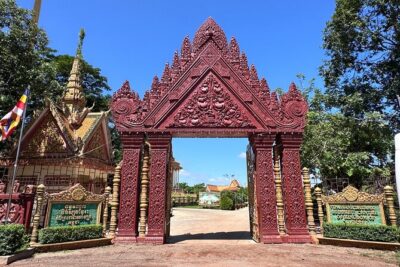
Angkor World Heritage with Sunrise – Small Group
Read our review →
Browse the lists this tour appears in