
Reviewed · HISTORICAL TOURS
Guided Phnom Penh Heritage Tour
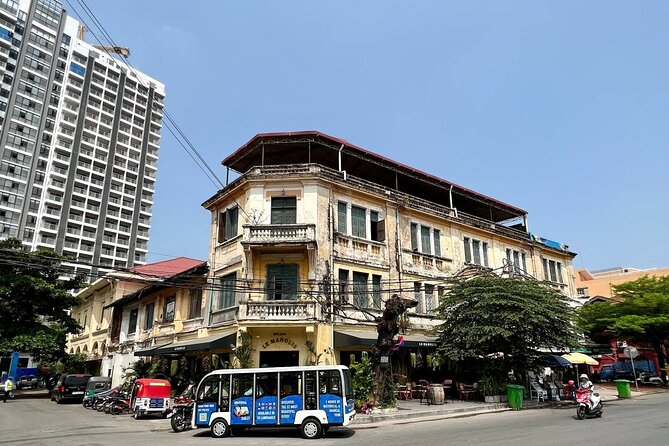
Phnom Penh’s past is hiding in plain sight. This compact heritage tour links 22 historic sites with old photographs, films, and clear historical stories, giving you a useful introduction to the Cambodian capital’s French-era streets, royal landmarks, Chinese temples, and darker modern history. I especially like the tablet and headphones, which let you see how buildings looked in earlier years, and the fact that Oliver, the guide, is available for questions in French and English.
I also like the tour’s choice of less obvious stops, including the former governor’s house, Hokkien Temple, the old police station, and the Royal University of Fine Arts. The main consideration is pace: you see many places in about two and a half hours, but several stops are viewed from outside or from the vehicle. Entry to Wat Phnom, the National Museum, and the Royal Palace is not included.
At $24.36 per person, this is best viewed as an orientation tour rather than a full museum visit. It can help you decide where to return later, especially if Phnom Penh is your first stop in Cambodia or you have only a short time in the city.
In This Review
- Key points to know before you book
- Why this tour works as a first look at Phnom Penh
- From the Post Office to the old Indochina Bank
- Chinese houses, Hokkien Temple, and the old Naga Bridge
- The National Library, Raffles Hotel, and Phnom Penh’s public life
- From the No Problem Villa to the Royal University of Fine Arts
- The National Museum and the riverfront heritage sequence
- How the tablet guide changes the experience
- Price, group size, and practical comfort
- Who will get the most from this heritage tour
- Should you book the Phnom Penh Heritage Tour?
- FAQ
- How long does the Phnom Penh Heritage Tour last?
- How many sites are included?
- What languages are available?
- Who is the guide?
- Is transportation included?
- Is admission to Wat Phnom included?
- Is admission to the National Museum included?
- Is admission to the Royal Palace included?
- Can you visit any buildings inside?
- What is the group size?
- Where does the tour start and finish?
- Can you cancel for a full refund?
Key points to know before you book
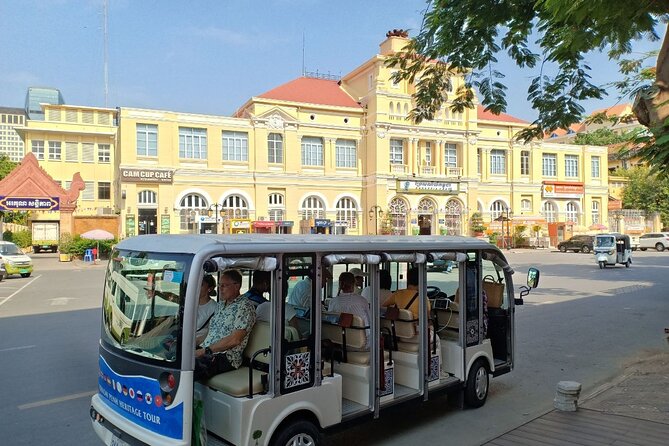
- Twenty-two sites in roughly two and a half hours: You cover a broad slice of Phnom Penh, from the Post Office to Street 240.
- Historical films and vintage photographs: The tablet guide shows how important buildings and streets looked in earlier periods.
- Oliver provides the human touch: He meets you at the busy starting point, answers questions, and offers the tour in French and English.
- The Royal University of Fine Arts is a highlight: This is the longest stop, with a guided visit and the possibility of seeing students practicing their art.
- Several interiors are not included: Wat Phnom, the National Museum, and the Royal Palace require separate entry if you want to go inside.
- Small-group format: The maximum group size is 10 people, making questions easier than on a large coach tour.
Why this tour works as a first look at Phnom Penh
Phnom Penh can feel hard to read at first. The streets mix royal buildings, French colonial structures, Chinese religious sites, modern hotels, markets, and reminders of the Khmer Rouge period. Without some context, you may pass an elegant facade without understanding what it once was.
This tour gives those buildings a storyline. It explains how a fishing village became the capital, how the city was first laid out on a French model, and how Art Deco design shaped public buildings and commercial life. It also looks at the royal family, the habits of the early 20th-century elite, and the painful years under the Khmer Rouge regime.
The format helps. You wear headphones and watch a series of audiovisual segments on a tablet. Old photographs are especially useful because many buildings have changed, been repurposed, or disappeared behind newer construction. You are not simply told that a hotel or bank is historic. You can see its earlier appearance and connect the present-day facade with its former role.
I would schedule this near the beginning of your Phnom Penh stay. One previous participant specifically wished they had taken it earlier, since the tour offered ideas for places to revisit. That is sound advice. Use the outing to get your bearings, then return to the National Museum, Wat Phnom, Central Market, or the Royal Palace with more purpose.
More History Tours in Phnom Penh
- Oudong Mountain History and Pagoda Tour
★ 5.0 · 39 reviews - Phnom Penh Historical Tour
★ 5.0 · 13 reviews - Udong Historical Site Tour
★ 5.0 · 8 reviews
From the Post Office to the old Indochina Bank
The meeting point is at the corner of Street 102 and Street 13, near the Phnom Penh Post Office. This can be a busy area, so Oliver’s role matters from the start. He identifies the group and leads you to the vehicle.
The first audiovisual segments introduce Phnom Penh and explain how the capital developed. At the Cambodia Post Office, you learn about the building and the city’s early communications network. The next stop, the former Bank of Indochina, adds a financial angle to the story. If the old bank is open, there may be a chance to see inside, but that access is not guaranteed.
The former Grand Hotel, now associated with Le Manolis, follows. This stop looks at Phnom Penh’s first hotel and the arrival of a more formal urban lifestyle. It is a small detail with a larger point: hotels, banks, government offices, and post services helped turn the capital into a functioning colonial city.
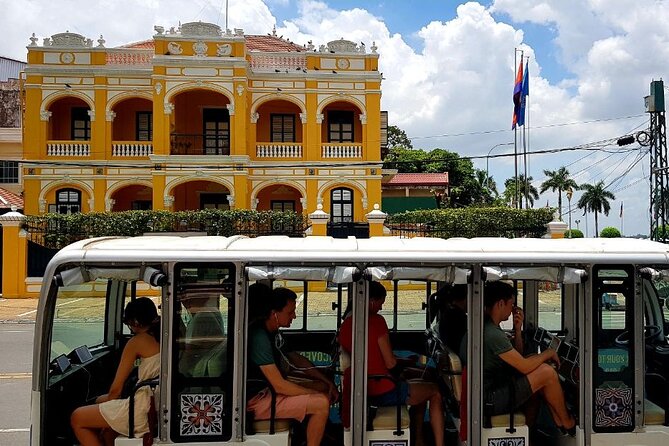
The old Phnom Penh Municipal Police station gives the tour a different edge. Rather than focusing only on grand architecture, the route considers the institutions that organized public life. The former governor’s house, now connected with the Council for the Development of Cambodia, continues that theme.
These early stops are viewed quickly, generally with about five minutes of audiovisual material at each. That keeps the route moving, though you should not expect time for a long independent visit.
Chinese houses, Hokkien Temple, and the old Naga Bridge
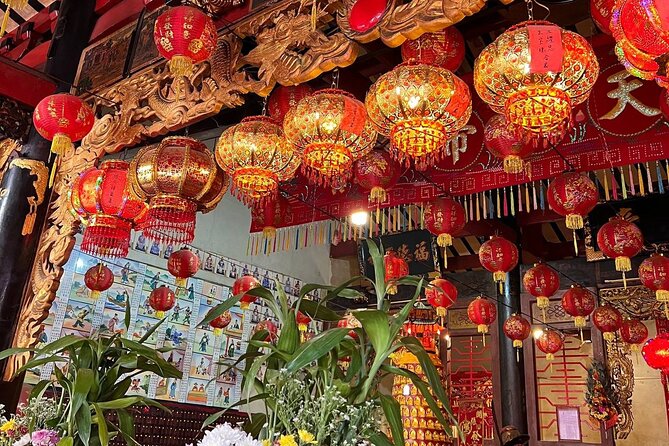
The Chinese house and Hokkien Temple offer some of the most distinctive cultural detail on the route. These stops show how Chinese communities helped shape Phnom Penh’s commercial and religious life. The Hokkien Temple may be open for an interior visit, while the Chinese house is mainly presented through the audiovisual guide.
I like this part because it moves beyond the standard royal and colonial story. Phnom Penh’s character was also formed by merchants, immigrant communities, temples, and neighborhood networks. The two stops receive a longer combined treatment than several of the earlier buildings.
The old Naga Bridge is a brief stop, with only a few minutes of historical material. It may not be a major sightseeing moment on its own, but it helps you understand how roads, bridges, and waterways supported the city’s growth.
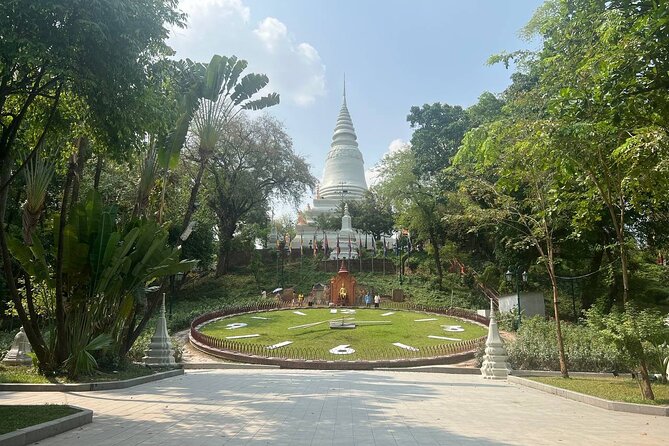
Wat Phnom is one of the route’s more recognizable landmarks. The guide explains the site and allows time for photographs, but admission to the hilltop temple is not included. If you want to enter, plan on paying separately. The tour is useful here as an introduction, but it is not a substitute for exploring the temple grounds at your own pace.
Another stop concerns the former country club, located where the United States Embassy now sits. Photography is not allowed at this location. The point is historical context, not a photo opportunity, so listen carefully and respect the restriction.
The National Library, Raffles Hotel, and Phnom Penh’s public life
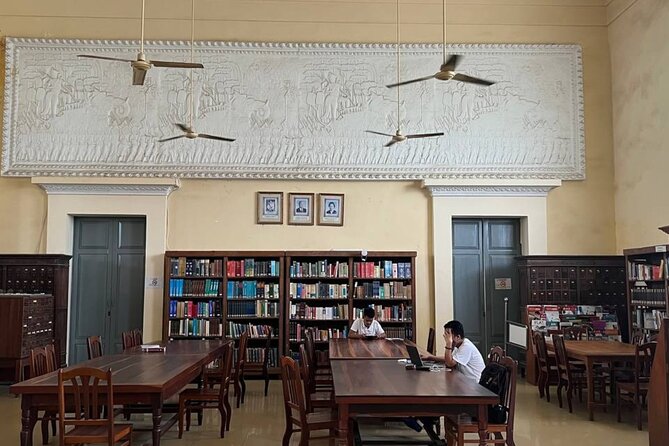
The National Library provides a chance to look at another important French-era building. If it is open, you may be able to visit inside. That qualification matters, since access depends on opening conditions rather than being guaranteed as part of every tour.
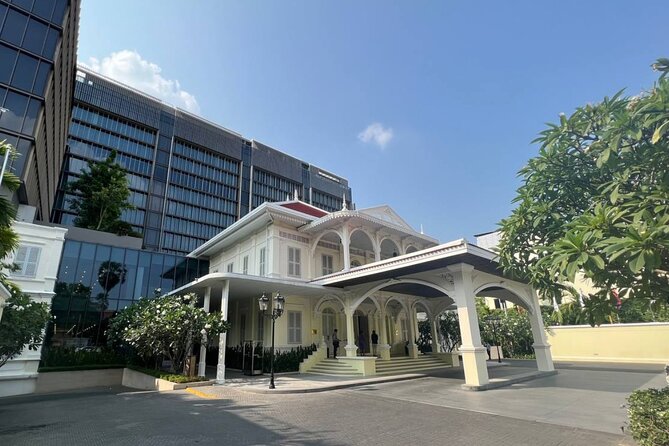
Raffles Hotel Le Royal follows, with the audiovisual guide presenting it as one of Cambodia’s leading hotels. The building connects to Phnom Penh’s former upper-class social world and to the city’s reputation as an important regional capital.
The railway station and Central Market add a more everyday side to the route. The station points to transport and movement, while Central Market reflects commerce and urban life. These stops help balance the grand residences and government buildings with places used by ordinary residents and shoppers.
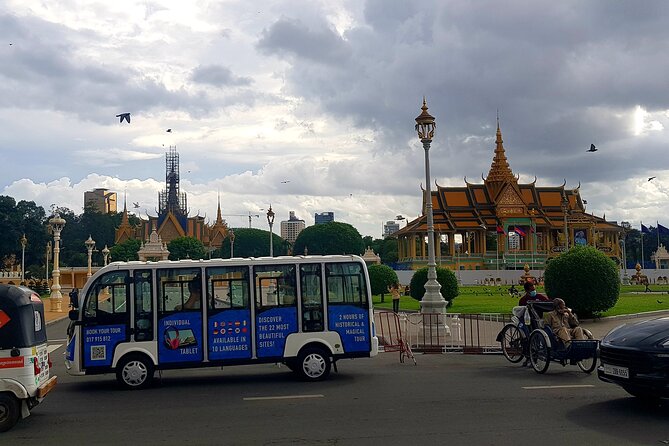
Much of the route is designed so you can take photographs from the vehicle. That is a practical advantage on a hot day, and one participant specifically valued the chance to see many places without walking between all of them in the heat. The tradeoff is that your view may be brief, and traffic or street activity can make some scenes harder to study.
Something completely different for another day:
- The Killing Field and Toul Sleng Genocide Museum (S21) Tour
★ 5.0 · 1,977 reviews - Phnom Penh: Sunset Cruise with Unlimited Beers & BBQ Buffet
★ 4.5 · 727 reviews - Aroma Therapy Massage, Relaxation therapeutic aromatherapy oil massages.
★ 5.0 · 645 reviews - Killing field and Toul Sleng genocide museum Tour
★ 5.0 · 610 reviews
From the No Problem Villa to the Royal University of Fine Arts
The former No Problem Villa, now associated with the Hyatt Regency Phnom Penh, continues the tour’s look at elite residences and changing city life. The name itself hints at Phnom Penh’s layered past, where old villas and new hotels can occupy the same urban setting.
The Royal University of Fine Arts is the longest and most hands-on stop. The audiovisual guide introduces the institution, followed by a guided visit with stories and anecdotes. When conditions allow, you may see students practicing their art.
This is one of the strongest parts of the tour because it connects heritage with living creative work. You are not only looking at an old building. You are seeing how artistic training remains part of Phnom Penh’s cultural life today.
The visit lasts about 25 minutes, longer than most stops. That gives Oliver more room to explain the university and answer questions. If you care about architecture, art, or Cambodian culture, this stop may carry more weight than the quick exterior views elsewhere.
The National Museum and the riverfront heritage sequence
The National Museum receives a short audiovisual introduction, but entry is not part of the tour. If you want to see its Khmer sculpture and other collections, you need to return separately and pay the admission charge. Treat the stop as a useful preview rather than a museum visit.
The old mansion linked with FCC Phnom Penh is currently under renovation and covered, according to the supplied 2024 and 2025 information. That means the building itself may be difficult to appreciate at present. The historical explanation still gives the stop value, but your visual expectations should be modest.
The UNESCO house offers another short historical segment. Together, these stops show how international institutions and private buildings became part of Phnom Penh’s central district.
The Royal Palace is one of the city’s essential landmarks, but the tour only presents it from the outside and through the audiovisual guide. Admission is not included. This arrangement is sensible for a quick orientation, though you should set aside separate time if you want to visit the palace grounds.
The final section reaches Street 240 and the British Ambassador’s residence. The closing material covers the street, the residence, and an epilogue to the tour. The finish near Oknha Chhun Street, close to the Royal Palace and Wat Botum Square, is convenient if you want to continue sightseeing in the central area.
How the tablet guide changes the experience
The tablet is more than a map or a list of dates. It provides 24 audiovisual segments in 10 languages, using film, historical photographs, and spoken explanation. The old images are the most useful feature for me because they make architectural change easy to understand.
You can see why a plain-looking building matters, even when its original function is no longer obvious. The format also allows the tour to address places you cannot enter, including certain official buildings and restricted sites.
There is a small risk of information overload. Twenty-two sites and 24 segments is a lot for one sitting. The short presentations work well as signposts, but you may want to write down the names of places that interest you so you can return later.
Oliver adds flexibility that a recorded guide alone would lack. He is available for questions, and the tour has been described as operating in both French and English. The tablet itself covers 10 languages, which makes the experience accessible to a wider range of visitors.
Price, group size, and practical comfort
At $24.36 per person, the tour offers solid value if you want broad coverage and historical explanation in a short period. You are paying for the guide, tablet, headphones, bottled water, and the structured route through 22 major sites. You are not paying for private transportation or for admission to the main ticketed attractions.
The maximum group size is 10 people. That is small enough to make questions practical and far more personal than a large city coach. The compact format also makes sense for people who want to cover ground without spending the entire day on foot.
The tour lasts about two hours and 30 minutes. The exact time at each location varies, with many audiovisual segments lasting five minutes and the art university receiving about 25 minutes. You get enough time to take photographs from the vehicle, but not enough for long independent exploration at every stop.
Bottled water is included, which is welcome in Phnom Penh’s heat. Wear comfortable clothing, bring sun protection, and keep your expectations clear: this is a moving overview, not a series of full interior visits.
Confirmation is sent within 48 hours, subject to availability. Free cancellation is available up to 24 hours before the start time. Changes or cancellations inside that period are not refunded.
Who will get the most from this heritage tour
I would choose this experience if you are visiting Phnom Penh for the first time, staying only briefly, or planning a longer trip and want historical context before exploring alone. It is also a good fit if heat makes a walking tour less appealing.
The tour suits people who enjoy architecture, old photographs, urban development, and cultural history. The Royal University of Fine Arts is a particular plus for anyone interested in Cambodian art.
It is less suitable if you want long visits inside museums, temples, and palaces. You should also choose another format if your main goal is food, shopping, or a detailed discussion of the Khmer Rouge period. The tour touches on that difficult era, but its scope is much wider.
Should you book the Phnom Penh Heritage Tour?
Book it if you want a fast, thoughtful introduction to Phnom Penh with a small group, a real guide, and strong visual material. I especially recommend taking it early in your stay, then using the route as a list of places to revisit.
Skip it if you prefer to spend two and a half hours inside a single museum or temple. For most first-time visitors, though, the combination of 22 sites, vintage photographs, Oliver’s help, and a $24.36 price makes this a practical way to understand a complicated city before exploring it on your own.
FAQ
How long does the Phnom Penh Heritage Tour last?
The tour lasts approximately two hours and 30 minutes.
How many sites are included?
The route covers 22 major sites around Phnom Penh, presented through 24 audiovisual segments.
What languages are available?
The tablet audiovisual guide is available in 10 languages. The guide service is described as being available in French and English.
Who is the guide?
The guide named in the tour information is Oliver. He welcomes the group, shares stories and anecdotes, and answers questions.
Is transportation included?
Private transportation is not included. The tour does use a vehicle for the route, with time to see locations and take photographs from the bus.
Is admission to Wat Phnom included?
No. The tour provides an audiovisual presentation and a chance to take photographs, but admission to the hilltop temple is not included.
Is admission to the National Museum included?
No. The National Museum is introduced through the audiovisual guide, but the museum visit itself is not included.
Is admission to the Royal Palace included?
No. The Royal Palace is covered through the audiovisual guide, but entry is not included in the city tour.
Can you visit any buildings inside?
Interior access may be possible at the old bank, Hokkien Temple, and the National Library if they are open. The Royal University of Fine Arts includes a guided visit.
What is the group size?
The tour has a maximum of 10 people.
Where does the tour start and finish?
It starts at the corner of Street 102 and Street 13 in Phnom Penh. It ends on Oknha Chhun Street, also known as Street 240, near the Royal Palace and Wat Botum Square.
Can you cancel for a full refund?
Yes. You can cancel at least 24 hours before the start time for a full refund. Cancellations or changes made within 24 hours are not refunded.
Newest reviews from Phnom Penh
- 10 Day Ethical Animals Tour Where the Wild Things Roam★ 5.0 · 1 review
- Watch Live Khmer Traditional boxing in Phnom Penh★ 5.0 · 46 reviews
- Watch Khmer Kickboxing with Free Beers by Ringside Seats★ 5.0 · 11 reviews
- The killing field and Toul Sleng Genocide museum (S21) Tour★ 4.5 · 19 reviews
- Warm Stone Massage★ 5.0 · 23 reviews
- Private Transfer from Phnom Penh to Siem Reap by VIP Alphard 2005★ 5.0 · 2 reviews
- S-21 Prison and Killing Fields★ 5.0 · 8 reviews
- Private Taxi Between Phnom Penh – Siem Reap Stop Sightseeing★ 5.0 · 23 reviews
Historical Tours, compared.
Banteay Srei and Grand Circuit Heritage Tour from Siem Reap
Read our review →
Bokor Mountain Adventure – History, Sights and Waterfalls
Read our review →
Angkor World Heritage with Sunrise – Small Group
Read our review →
Private Angkor Wat Tour & Angkor Park/Heritage With Local Guide
Read our review →Browse the lists this tour appears in