
Reviewed · CYCLING TOURS
Cambodia 9 Day Adventure Tour: Cycling, Trekking, Boating
Cambodia rewards active curiosity. This nine-day private trip links Angkor’s famous temples with quiet jungle paths, rural craft villages, Tonle Sap’s floating communities, and Cambodia’s difficult modern history. I like the way it combines cycling, trekking, boating, and road travel instead of keeping you at temple gates all day. I also like the practical setup: airport pickup, private transport, an English-speaking guide, mountain bikes, entrance tickets, eight breakfasts, and hotel choices from three-star to five-star.
The main consideration is pace. You cover much of Cambodia in nine days, moving from Siem Reap to Battambang and then Phnom Penh. Several days pack in multiple temples or museums, and the itinerary describes moderate physical fitness as necessary. This is a strong choice if you want variety, but it may feel rushed if you prefer long mornings, slow meals, or unplanned time.
In This Review
- Five things that define this Cambodia adventure
- Arriving in Siem Reap with the practical details handled
- Cycling from Angkor Wat to Ta Nei on day two
- Angkor’s quieter monuments and Banteay Srei
- Kampong Phluk and the changing waters of Tonle Sap
- Phnom Kulen: sacred sites, forest trails, and waterfalls
- Battambang’s old streets, bamboo train, and bat flight
- The road to Phnom Penh through Oudong and craft villages
- Phnom Penh’s royal landmarks and painful recent past
- What the $1,599 price delivers
- Who should book this active Cambodia itinerary?
- FAQ
- Where does the tour begin?
- Where does the tour finish?
- Is this a private tour?
- What equipment is provided for cycling?
- Are meals included?
- What level of fitness is required?
- Should you book this Cambodia adventure?
Five things that define this Cambodia adventure
- Angkor by bicycle: Ride between Angkor Wat, Angkor Thom, Bayon, Ta Prohm, Ta Nei, and jungle roads rather than relying only on a vehicle.
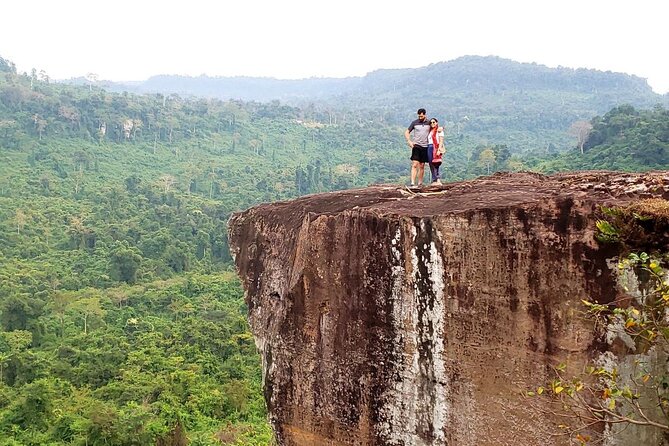
- A three-hour Phnom Kulen trek: Walk through forest to the River of 1000 Lingas, Preah Ang Thom, viewpoints, and waterfalls.
- Private Tonle Sap boating: See Kampong Phluk’s houses, boats, and daily life on the water, with a route through mangrove areas.
- Cambodia beyond Siem Reap: Continue to Battambang, Oudong, Kampong Chhnang, and Phnom Penh.
- Hotels in three price levels: Choose listed three-star, four-star, or five-star accommodations, with double, twin, or triple sharing rooms.
- A full cultural range: Ancient Hindu and Buddhist temples, village crafts, colonial-era Battambang, Khmer Rouge memorial sites, and the modern capital all appear in one trip.
Arriving in Siem Reap with the practical details handled
Your guide and driver meet you at Siem Reap Angkor International Airport with a sign showing the company logo and your name. The transfer to your hotel takes about two hours, according to the schedule, and gives you an introduction to the city and local daily life before check-in.
That airport welcome matters after a long flight. You do not need to arrange a taxi, negotiate a fare, or find a hotel on your own. The first evening is otherwise light, with no major sightseeing planned, so you can rest before the active days begin.
Hotel selection changes the feel of the trip. The three-star option is Royal Crown Hotel & Spa or a similar property, the four-star option is Regency Angkor Hotel or similar, and the five-star option is Angkor Paradise Hotel or similar. The exact hotel is not presented as guaranteed, so I would confirm the category and property before paying.
More Bike Tours in Siem Reap
- Siem Reap Countryside Bike Tour / E-Bike or Tuk Tuk
★ 5.0 · 935 reviews - Angkor Sunrise Bike Tour / E-Bike or Tuk Tuk
★ 5.0 · 615 reviews - Siem Reap: Bike the Angkor Temples – Full-Day 30km Tour
★ 5.0 · 463 reviews
Cycling from Angkor Wat to Ta Nei on day two
The first major day begins with breakfast and a meeting with the cycling guide in your hotel lobby. You receive a short briefing and your bike before riding northeast from Siem Reap along the riverside road toward Angkor Wat.
Cycling is a smart way to experience the temple area. You approach through greenery and quieter paths, and the movement between monuments becomes part of the day rather than wasted vehicle time. The tour includes a mountain bike and helmet, so you do not need to bring your own equipment.
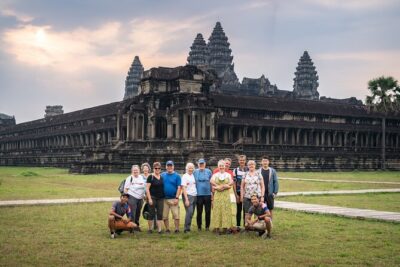
Angkor Wat is the obvious star, but the route gives you more than the postcard view. You continue through jungle toward Angkor Thom, the enormous ancient city, then reach Bayon with its famous carved faces. Lunch takes place at a local restaurant inside the Angkor Park, and the schedule specifically describes the meal as healthy Khmer food.
After lunch, Ta Prohm brings the familiar sight of trees growing through loosened stone. Its film connection has made it one of the busiest places in the park, so do not expect solitude. The route also includes Victory Gate and Ta Nei, a late-12th-century temple dedicated to Buddha and set away from the main crowds.
The schedule lists three hours for the cycling portion, yet the day includes several stops, a meal, and substantial time around Angkor Thom and Ta Prohm. Treat the timing as approximate. The ride may be easy for a regular cyclist, but heat, uneven paths, and repeated walking around ruins add up.
Angkor’s quieter monuments and Banteay Srei
Day three shifts from cycling to a vehicle-based temple circuit. The plan names Preah Khan, Neak Pean, Ta Som, East Mebon, Banteay Samre, Banteay Srei, and Pre Rup, followed by a village visit and sunset at Phnom Bakheng.
Preah Khan is a large 12th-century temple built by King Jayavarman VII in honor of his father. It gives you a sense of Angkor as a working religious and political center, not simply a collection of isolated ruins. Neak Pean, built on an artificial island in the Jayatataka Baray, is more unusual in design and setting.
Banteay Samre has the strong lines associated with the Angkor Wat period, while Pre Rup is a brick, laterite, and sandstone temple mountain built in the 10th century. These sites spread out the day and help prevent the famous central temples from becoming your only impression of Angkor.
Banteay Srei is the visual high point for many people. Its pink and red sandstone carries unusually fine carvings, and it is often called the crown jewel of Khmer art. The temple is smaller than Angkor Wat, but the detail rewards close attention.
On the return to Siem Reap, you stop at a village with traditional Khmer houses and see palm sugar production. This is an important change of pace. You are not only looking at royal monuments; you are also seeing a living rural tradition.
Phnom Bakheng is scheduled for sunset, though access and crowd conditions can affect the experience. The hilltop temple gives broad views, but the climb and timing can make this a tiring finale after a full day. I would carry water and avoid assuming that the sunset stop will be leisurely.
Kampong Phluk and the changing waters of Tonle Sap
Day four places Cambodia’s great lake at the center of the trip. You travel by boat around Tonle Sap and visit Kampong Phluk, a community where homes and other structures are adapted to life on changing water levels.
Tonle Sap is unusual because its flow changes with the seasons. During the wet season, water from the Mekong moves into the lake. In the dry season, the flow reverses toward the Mekong. That seasonal rhythm shapes fishing, transport, homes, and local routines.
The boat trip is private, which gives your group more control than a large shared excursion. You can expect to see houses built on boats or bamboo supports, fishing activity, and a community organized around the water rather than roads. The route also includes mangrove areas, although the exact conditions will depend on the season.
This visit is valuable because it shows a part of Cambodian life that temple sightseeing cannot explain. At the same time, you should approach it respectfully. You are passing through a working community, not a staged attraction. Stay attentive to your guide’s directions and avoid treating homes as scenery.
Back in Siem Reap, the day continues at Wat Preah Prom Rath, one of the city’s older pagodas, with preserved wall paintings from the 17th century. Artisans Angkor adds a craft and employment angle, showing how young people in rural areas are connected with revived Khmer traditions.
West Baray and Svay Romiet Pagoda round out the day. West Baray is a huge man-made reservoir surrounded by an earthen embankment, while the pagoda sits directly on its bank. After a boat ride and several cultural stops, the afternoon may feel full, but the variety is useful.
Something completely different for another day:
- Angkor Wat Sunrise or Sunset Tour with Guide from Siem Reap
★ 5.0 · 12,109 reviews - Siem Reap: Angkor Wat: Small-Group Sunrise or Sunset Tour
★ 5.0 · 9,444 reviews - From Siem Reap: Kampong Phluk Floating Village Tour by Boat
★ 4.9 · 6,979 reviews - Sunset tour of Kampong Phluk stilts home village on the Tonle Sap
★ 5.0 · 4,865 reviews
Phnom Kulen: sacred sites, forest trails, and waterfalls
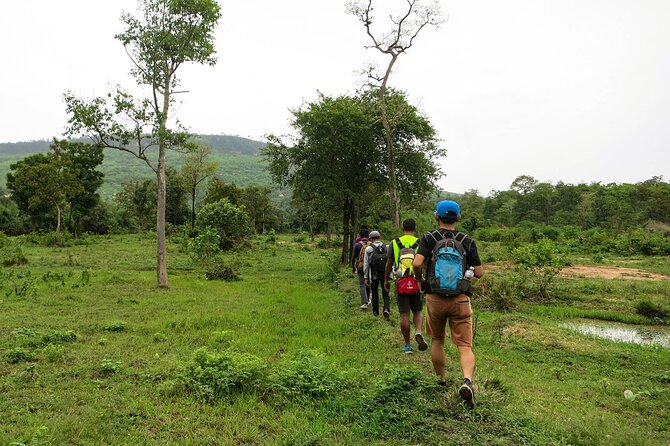
Day five is the most physically demanding part of the tour. You transfer to Phnom Kulen National Park and begin a guided trek at Preah Ang Choub, near the foot of the mountain. The planned hike takes about three hours, although visiting the full area can take much longer.
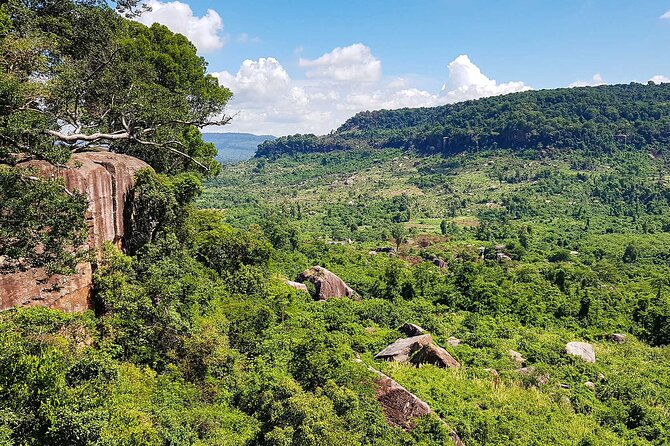
The route includes the Valley of 1000 Lingas, where carvings sit in and beside the riverbed. Water flows over the lingas, connecting the natural setting with Hindu religious symbolism. This is one of the most distinctive stops on the trip because the sacred art is part of the stream rather than confined to a built temple.
At Preah Ang Thom, you see a large reclining Buddha carved from sandstone. The statue is a major sacred site for Cambodians, and the area can be busy with people making visits and offerings. You should dress and behave respectfully, especially around the pagoda and statue.
Poeng Ta Kho, known as Amazing Cliff, offers views across a canyon and mountain ranges. The itinerary also includes Preah Ang Choub Pagoda, rainforest trails, Kbal Spean carvings, and Phnom Kulen Waterfall.
The waterfall has two drops, with sizes that change by season. The largest listed measurements are about 25 meters wide and 5 meters high for the first fall, and about 15 meters high and 15 meters wide for the second. Swimming and relaxing are part of the appeal, especially after the hike.
Good shoes are important here. The route involves forest walking, uneven ground, and a climb through a national park. Moderate fitness is the official requirement, but heat and humidity can make the day harder than the distance suggests. If you dislike slippery paths or strenuous walking, this is the day to consider carefully.
Battambang’s old streets, bamboo train, and bat flight
Day six moves you from Siem Reap to Battambang, Cambodia’s second-largest city. The city is known for colonial buildings and traditional wooden houses, some more than a century old. This overnight stop gives the trip a different urban character.
The Bamboo Train is a lighthearted break from the heavier historical sites. You ride on an open bamboo platform along an old track through the countryside, with souvenir stalls at the end. It is a simple attraction, but the unusual ride makes it memorable.
In town, the Royal Residence and Damrey Sor Pagoda add architecture and local history. Damrey Sor, also called the White Elephant Pagoda, is known for its elaborate design and central location.
The mood changes sharply at the Killing Caves of Phnom Sampeau. The site records executions carried out during the Khmer Rouge period. A memorial contains human remains, and the location should be approached quietly. This is not an attraction to rush through or photograph casually.
Near Phnom Sampeau, millions of bats leave the caves around sunset. The sight is striking, but it follows a difficult memorial visit, and the contrast can feel emotionally sharp. Phnom Sampow also contains temples, wells, and mountain sites linked with Cambodian folk legends.
Phnom Banan finishes the day with one of the best-preserved Khmer temples in Battambang Province. Its five towers sit above a laterite staircase, offering a smaller-scale temple experience than Angkor.
The road to Phnom Penh through Oudong and craft villages
Day seven is mainly a transfer from Battambang to Phnom Penh, but the stops keep it from becoming a simple highway day. In Pursat, you visit a village associated with marble stone carving. In Kampong Chhnang, you see pottery traditions made from red clay.
The pottery villages are valuable because the craft is an ancestral practice maintained by local families. The scheduled stop is brief, so do not expect a long workshop unless your guide adjusts the timing. Still, it gives you a useful look at how Cambodian craft traditions continue outside the major cities.
Phnom Oudong, also called Phnom Preah Reach Troap, was Cambodia’s capital before Phnom Penh in the 16th century. You hike up the mountain to see sacred sites and remains connected with earlier settlements. The climb adds a final active element before the capital, though the day already includes a long road transfer.
You sleep in Phnom Penh, with listed options including King Grand Boutique Hotel, Sun & Moon Urban Hotel, or Sun & Moon Riverside, depending on the chosen category.
Phnom Penh’s royal landmarks and painful recent past
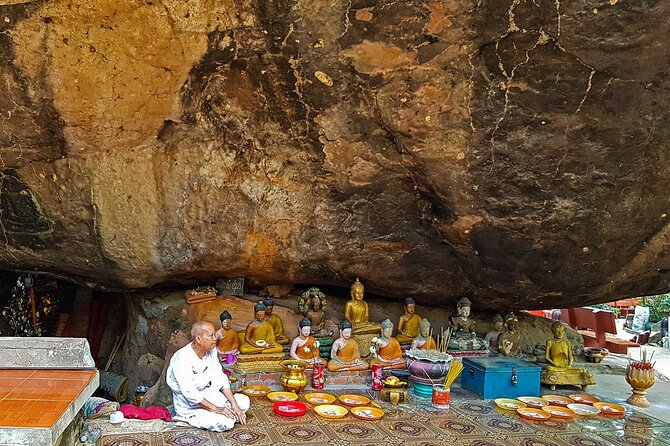
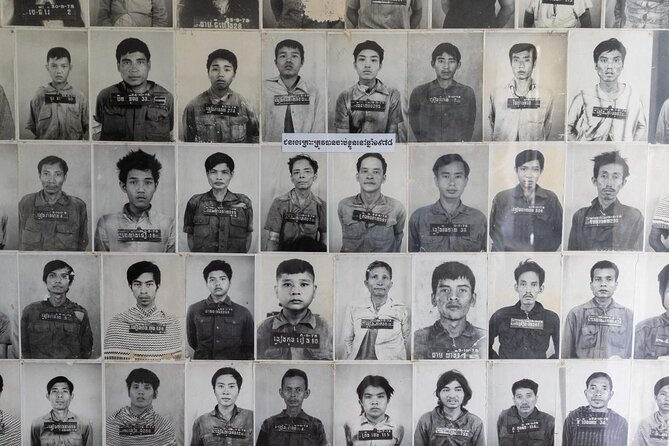
Day eight is the most history-heavy day. You visit Tuol Sleng Genocide Museum and the Choeung Ek Genocidal Center, often called the Killing Fields. Tuol Sleng was formerly a secondary school used as Security Prison 21 by the Khmer Rouge between 1975 and 1979.
Choeung Ek was an execution and burial site where thousands of bodies were found after the regime fell. These places are essential for understanding Cambodia, but they are emotionally difficult. Allow yourself quiet time between them, and do not schedule another demanding activity immediately afterward if you know memorial sites affect you strongly.
The Royal Palace and Silver Pagoda provide a different view of Phnom Penh. The palace remains the primary residence of Cambodia’s king, so only some sections are open. The Silver Pagoda is known for its silver-tiled floor and Buddha images, including the figure associated with the Emerald Buddha name.
Wat Phnom sits on a tree-covered hill and is tied to the traditional story of a woman named Penh finding Buddha statues carried by the river. Wat Ounalom, one of Phnom Penh’s five original monasteries, serves as an important Buddhist center.
The day also includes the King Father Norodom Sihanouk Memorial, the Independence Monument area, and the Central Market. The schedule is crowded, but it gives you a useful first look at the capital’s royal, religious, political, and commercial sides.
What the $1,599 price delivers
At $1,599 per person, this is not a bare-bones package. The price includes private transport, an English-speaking guide, mountain bike and helmet, private boat tour, hotel accommodation in a double, twin, or triple room, breakfast on eight mornings, and sightseeing entrance fees.
That bundle has real value. Angkor admission alone can add up, and private transport is especially helpful on the long transfers to Battambang, Phnom Kulen, Oudong, and Phnom Penh. You also avoid arranging separate boats, guides, and airport transfers.
The main variable is accommodation. Three-star, four-star, and five-star hotel options are listed, but the price difference between categories is not provided. Ask exactly which category your $1,599 price covers, what happens if a similar hotel replaces the named property, and whether solo occupancy costs more.
Tips for the guide and driver are not included. Budget for those separately. The tour also includes breakfast, but lunches and other meals are not stated as included except for the described local lunch on the temple day, so clarify meal arrangements before departure.
Who should book this active Cambodia itinerary?
I would choose this tour if you want Cambodia’s major sights but dislike spending every day in a vehicle. The cycling day, Phnom Kulen trek, Tonle Sap boat trip, bamboo train, and Oudong climb keep the trip moving.
It suits couples, families with suitably fit older children, friends, and private groups who want their own guide and vehicle. Group discounts may improve the per-person value for a larger party.
You should think twice if your priority is slow travel. The itinerary covers a lot of ground, and the daily schedules include many stops. You should also be comfortable with heat, walking, uneven trails, long road transfers, and emotionally heavy genocide museums.
Cancellation terms are strict close to departure. A full refund is available when you cancel at least six full days before the start time. A 50 percent refund applies two to six days before departure, and no refund applies within two days.
FAQ
Where does the tour begin?
The tour begins with pickup at Siem Reap Angkor International Airport in Cambodia.
Where does the tour finish?
The tour finishes with a transfer from your Phnom Penh hotel to Phnom Penh International Airport on day nine.
Is this a private tour?
Yes. Only your group participates in the private tour or activity.
What equipment is provided for cycling?
A mountain bike and helmet are included. An English-speaking guide accompanies the cycling portion.
Are meals included?
Eight breakfasts are included. The itinerary also describes lunch at a local Khmer restaurant during the Angkor cycling day. Other meal arrangements are not specified.
What level of fitness is required?
A moderate level of physical fitness is required. The most active section is the Phnom Kulen trek, which is planned to take about three hours and includes forest paths, sacred sites, viewpoints, and a waterfall.
Should you book this Cambodia adventure?
Book it if you want a broad first visit with built-in transport, guides, entrance fees, cycling, hiking, and a private boat. Its best feature is the range: you move from Angkor’s monumental temples to water-based communities, forest sanctuaries, craft villages, colonial Battambang, and Phnom Penh’s modern history.
I would not book it for a restful holiday or a temple-only visit. The schedule is full, some timing is approximate, and the physical and emotional demands are real. But if you pack light, carry water, wear good walking shoes, and confirm your hotel category and meal details, the $1,599 package offers a practical way to see far more of Cambodia than Siem Reap alone.
More Walks and Treks in Siem Reap
- Kbal Spean Trekking Tour with Banteay Srei and Landmine Museum
★ 5.0 · 14 reviews - Private Kbal Spean Trekking Tour with Banteay Srei
★ 5.0 · 4 reviews - Kbal Spean Trekking Tour with Banteay Srei & Landmine Museum
★ 5.0 · 3 reviews - From Siem Reap: Phnom Kulen National Park Trekking Tour
★ 5.0 · 2 reviews
Newest reviews from Siem Reap
- War Museum, Killing Field, and APOPO Hero RATs Tour★ 5.0 · 7 reviews
- Angkor Wat at Sunrise★ 4.0 · 7 reviews
- Siem Reap Angkor Airport Taxis (from Airport to Hotel)★ 5.0 · 44 reviews
- Cambodian Cooking Class and Oxcart Ride with Local Village Tour★ 5.0 · 4 reviews
- Secret Temples of Angkor – Guided Tour in Siem Reap★ 5.0 · 6 reviews
- Short Cycling at Countryside★ 5.0 · 29 reviews
- SIEM REAP E-BIKE HALF-DAY COUNTRYSIDE (25-30 km)★ 4.0 · 1 review
- Unveiling the Mystical Beauty of Phnom Kulen National Park★ 5.0 · 6 reviews
Cycling Tours, compared.
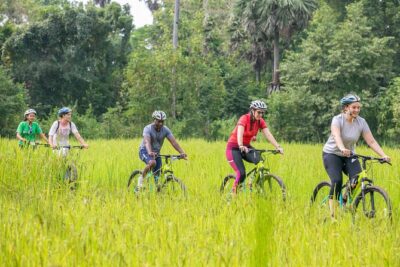
Siem Reap Countryside Bike Tour / E-Bike or Tuk Tuk
Read our review →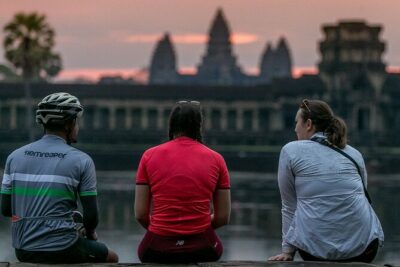
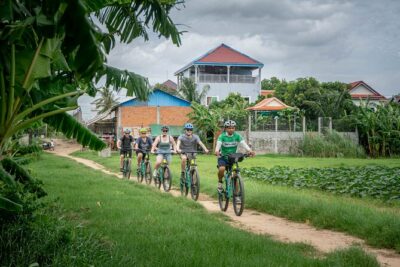
Phnom Penh Silk Island Bike Tour/ E-Bike or Tuk Tuk
Read our review →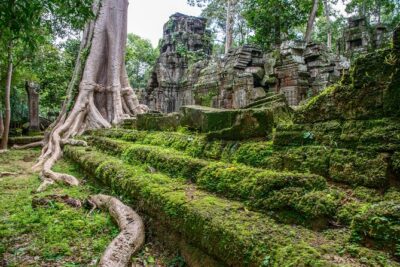
Angkor Wat Sunrise Bike Tour & Jungle Breakfast
Read our review →
Local Livelihood Half Day Bike Tour in Battambang
Read our review →Browse the lists this tour appears in