
Reviewed · ANGKOR WAT SUNRISE TOURS
Angkor Wat Sunrise and Tonle Sap Lake 1.5 Days
Rise before the birds for Angkor Wat. This two-day experience packs Siem Reap’s biggest sights into a manageable schedule, pairing a pre-dawn temple visit with Angkor Thom, Bayon, Ta Prohm, and a boat trip through Kampong Phluk. I especially like the small group size of up to 10 people and the chance to reach Angkor Wat from its quieter eastern side. The air-conditioned vehicle also saves you from sorting out transport in the dark.
The tour’s other strong point is its range. You get grand stone temples on day one and a close look at life around Tonle Sap Lake on day two. The main drawback is the early start, with pickup around 4:10 to 4:30 am, plus the extra $37 temple pass, which is not included in the $59 tour price.
In This Review
- Key points at a glance
- Why this 1.5-day plan works in Siem Reap
- Angkor Wat at 4:20 am
- Angkor Thom and the South Gate
- Bayon’s stone faces and Angkor Thom
- Terraces and the royal scale of Angkor Thom
- Ta Prohm and the power of atmosphere
- The $37 temple pass changes the price
- Rolous Market on the way to Tonle Sap
- Kampong Phluk and Tonle Sap’s seasonal water
- Guide quality matters more than usual here
- Who should book this experience?
- Should you book Angkor Wat Sunrise and Tonle Sap Lake?
- FAQ
- What time does the tour start?
- Is the Angkor temple pass included?
- What is included in the $59 tour price?
- Are meals included?
- Is the Tonle Sap boat cruise included?
- How large is the tour group?
Key points at a glance
- Angkor Wat before sunrise: Enter the temple in darkness from the eastern side and watch the morning light build around one of Cambodia’s great monuments.
- Three major temple stops: Angkor Wat, Bayon in Angkor Thom, and tree-covered Ta Prohm give you three very different views of the Angkor complex.
- Kampong Phluk by boat: The second day shifts from temples to Tonle Sap, with a three-hour visit that includes the boat cruise and entrance fee.
- A useful group limit: With no more than 10 people, the tour should feel more manageable than a large coach outing.
- The real cost is $96 before food: The $59 tour fee plus the required $37 temple pass gives you a clearer picture of the budget.
- A guide adds context: Mr Sokpee received especially warm praise for explaining both the temples and Cambodian culture.
Why this 1.5-day plan works in Siem Reap
Siem Reap rewards time, but not everyone has several days to spare. This tour gives you a strong first look without asking you to arrange a car, driver, temple route, lake transport, and guide on your own.
The schedule is split sensibly. Day one focuses on the Angkor Archaeological Park, where the distances between temples make organized transport useful. Day two heads out toward Tonle Sap Lake and Kampong Phluk, giving you a different side of the region.
I like that the two days do not repeat the same experience. You move from imperial stonework and carved faces to a lake community shaped by seasonal water levels. That change helps the trip feel fuller than a temple-only package.
The trade-off is intensity. The first morning starts very early and includes several major sites. You will see a lot, but you should expect walking, stairs or uneven ground in places, and limited time at each stop. Comfortable walking shoes are a sensible choice.
More ways to see Angkor Wat:
- Angkor Wat Sunrise or Sunset Tour with Guide from Siem Reap
★ 5.0 · 12,109 reviews - Siem Reap: Angkor Wat: Small-Group Sunrise or Sunset Tour
★ 5.0 · 9,444 reviews - Siem Reap: Angkor Wat 2-Day Tour with Sunrise and Sunset
★ 4.9 · 4,429 reviews
Angkor Wat at 4:20 am
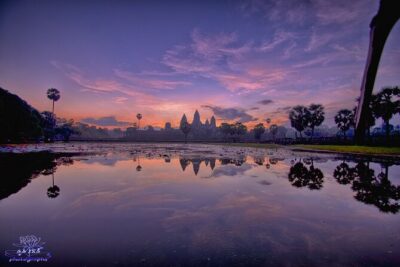
Pickup begins around 4:10 to 4:30 am, depending on the time of year, with the listed meeting time around 4:20 am. That is not a gentle holiday start. Still, arriving before daylight is one of the best reasons to choose this tour.
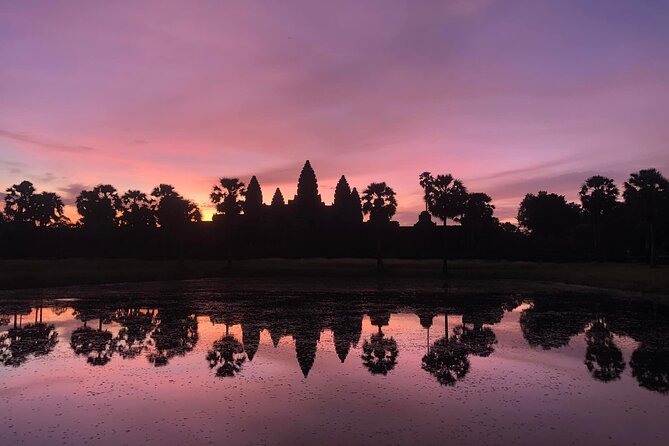
The route enters Angkor Wat from the eastern side while it is still dark. This approach is described as less visited than the familiar western entrance, which may give you a quieter first encounter with the temple. You then make your way toward the sunrise viewing area.
The famous reflection of Angkor Wat across the ponds can draw a crowd, and the quality of the sunrise depends on the weather. The tour requires good weather, so poor conditions can lead to a change of date or a refund. Even without a perfect sky, the slow change from darkness to morning around the temple is a memorable way to begin.
Allow about three hours for the Angkor Wat portion. That time is not only for photography. Your guide can point out the temple’s layout, explain its role, and help you understand what you are seeing instead of leaving you to wander through a huge complex with no sense of direction.
One useful tip is to dress for both the hour and the site. Early morning can feel cool, but temple rules still require your knees and shoulders to be covered. Bring water, wear shoes you can walk in, and keep your clothing respectful throughout the day.
Angkor Thom and the South Gate
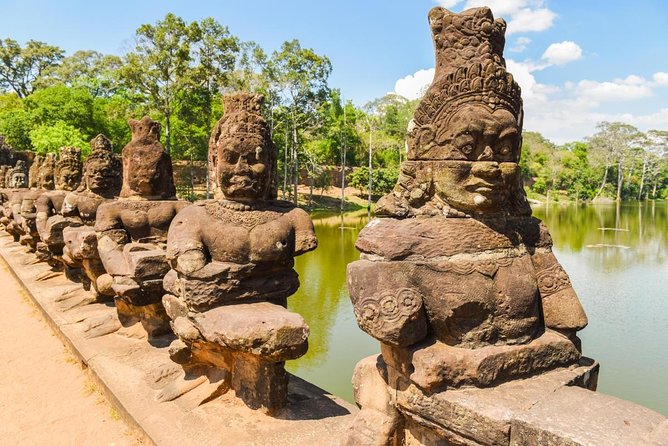
After Angkor Wat, the tour continues to the South Gate of Angkor Thom for about 30 minutes. This entrance gives you an immediate sense of the scale of the former Khmer capital.
The gate is more than a quick photo stop. Its monumental design introduces the city’s protective walls and the grand religious and political ideas behind Angkor Thom. You get a short pause here before continuing inside.
The stop is brief, so you should not expect a long guided visit. Its value is mainly in setting up the next part of the morning. After seeing Angkor Wat as a temple complex, you begin to understand Angkor Thom as a planned capital with its own dramatic center.
Bayon’s stone faces and Angkor Thom
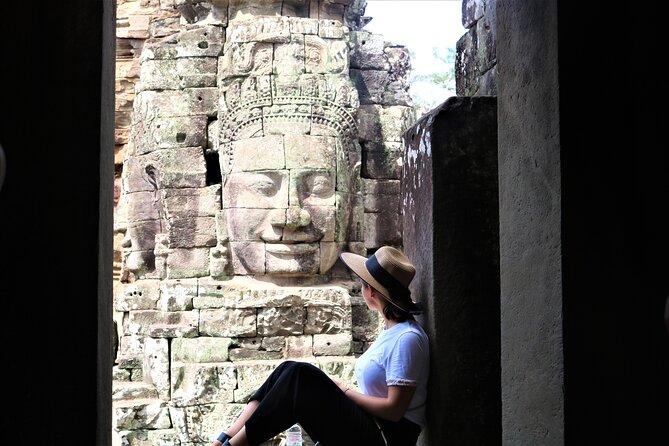
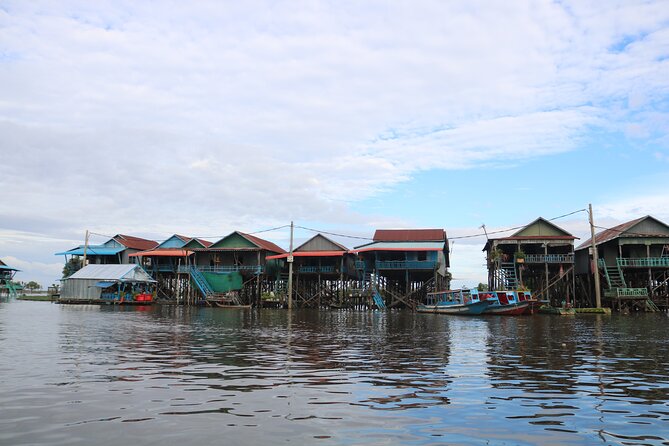
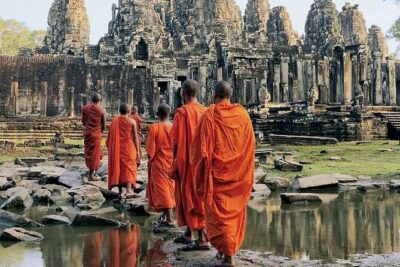
The tour allows about 90 minutes for Angkor Thom. The main focus is Bayon, the temple famous for its enormous carved faces.
Bayon feels different from Angkor Wat. Angkor Wat is broad, ordered, and strongly framed by its towers and galleries. Bayon is more enclosed and visually busy, with towers and carvings appearing as you move through the structure.
This is a good place for a guide to earn the extra space in your day. A trained guide can help you notice details that are easy to miss among the stones. Mr Sokpee was praised for explaining not just the temples, but also Cambodian culture, which is useful when the site begins to blur into a series of walls, towers, and courtyards.
The 90-minute stop gives you time to look closely without turning the morning into a marathon at one temple. If you want a slow photographic study of every carving, you may find the schedule tight. If your goal is to understand the main sites and keep moving, the timing is more practical.
More sunrise starts at Angkor Wat:
- Angkor Wat Sunrise tour with Small – Group and Guide tours
★ 5.0 · 3,655 reviews - Full-Day Angkor Wat Sunrise Private Tour with Guide from Siem Reap
★ 5.0 · 2,920 reviews - Angkor Wat Sunrise & 3 Main Temples with Breakfast – Small Group
★ 5.0 · 2,857 reviews - Siem Reap: Angkor Wat Sunrise and Full-Day Sightseeing Tour
★ 4.9 · 2,828 reviews
Terraces and the royal scale of Angkor Thom
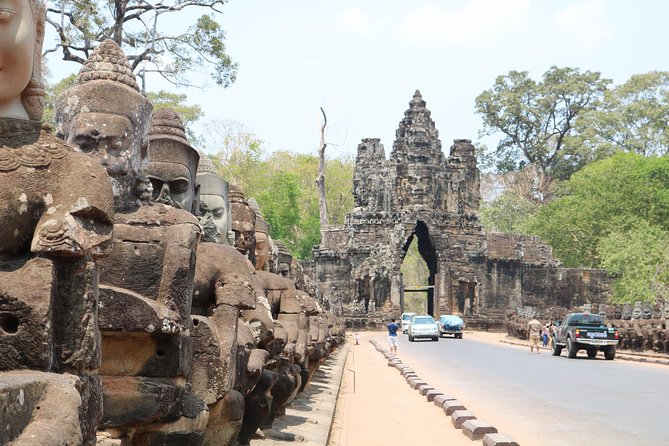
The route also passes the Terrace of the Elephants and the Terrace of the Leper King. The supplied timing gives this part around two hours, though the description indicates that some of the terraces are passed along the way rather than treated as separate, extended visits.
These terraces help you picture Angkor Thom as a functioning royal center rather than a collection of isolated ruins. The Terrace of the Elephants is tied to public and ceremonial space, while the Terrace of the Leper King adds another layer of carved stonework and symbolism.
This section can feel less focused than the major temple stops. You may spend time looking from the vehicle or walking along designated areas rather than entering a single dramatic building. Still, it adds useful context. Without it, Angkor Thom can seem like a short stop at the South Gate followed by Bayon. The terraces show how much larger the ancient city was.
Ta Prohm and the power of atmosphere
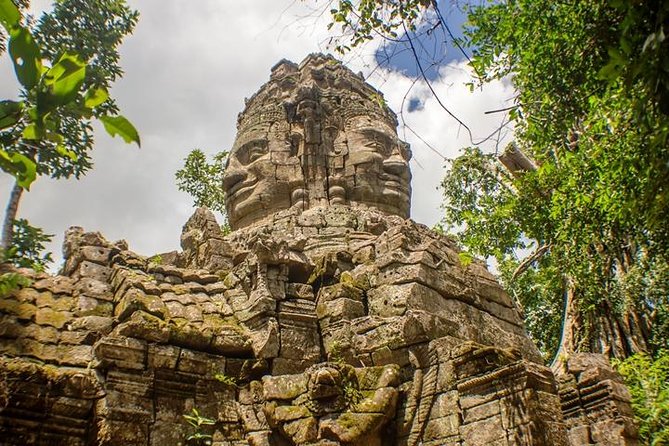
Ta Prohm is the final major temple stop on day one, with about an hour set aside. It is one of the most atmospheric places in the Angkor complex because trees and roots have grown through parts of the ruins.
The site once housed 2,740 monks, and its present appearance recalls the condition seen when French explorer Henri Mouhot described the temple in the 1850s. That background makes Ta Prohm more than a picturesque ruin. You are seeing a place shaped by both human construction and long years of abandonment.
I like that Ta Prohm comes after Angkor Wat and Angkor Thom. By this point, you have seen the empire’s grand scale. Ta Prohm offers a quieter, more enclosed contrast, with stone galleries and vegetation creating a different mood.
An hour is enough to appreciate the main areas, but not enough for every corner. Expect uneven footing and watch your step. The temple is popular, and certain corridors or tree-framed views can become crowded. Your guide and the group’s timing will help keep the visit moving.
By the end of day one, you will have seen the core temple highlights in a single morning and early afternoon schedule. The benefit is efficiency. The cost is that you may feel ready for a quiet meal and rest afterward.
The $37 temple pass changes the price
The advertised tour price is $59 per person, but you must add a $37 temple pass paid directly at the site. That brings the basic cost to $96 per person before meals.
At that price, the tour includes several useful services: hotel pickup and drop-off, an English-speaking licensed guide, air-conditioned transport, mineral water, and the full Tonle Sap entrance fee and boat cruise. For someone with limited time, that is a reasonable bundle because the transport and guiding are handled across both days.
You should not compare the $59 figure with a self-guided outing without adding the pass. The temple ticket is a required expense, not an optional extra. Meals are also separate, though food is available at your own choice.
The group maximum of 10 is another point in the tour’s favor. It does not guarantee a quiet experience at Angkor Wat, but it is a much more personal size than a large sightseeing bus. The minimum booking is two people, so solo visitors cannot book this experience alone under the stated conditions.
Rolous Market on the way to Tonle Sap
Day two begins with hotel pickup and a drive through small communities toward the lake. The first stop is Rolous Market, for about 20 minutes.
This is a short visit, but it breaks up the drive and gives you a look at local daily commerce. You can take photographs and see a market setting rather than another formal monument. Because the stop is brief, think of it as a local snapshot, not a full market tour.
The change of pace is welcome after the temple day. You are no longer looking at carved stone and royal compounds. You are moving through communities connected to the lake and its fishing economy.
Kampong Phluk and Tonle Sap’s seasonal water
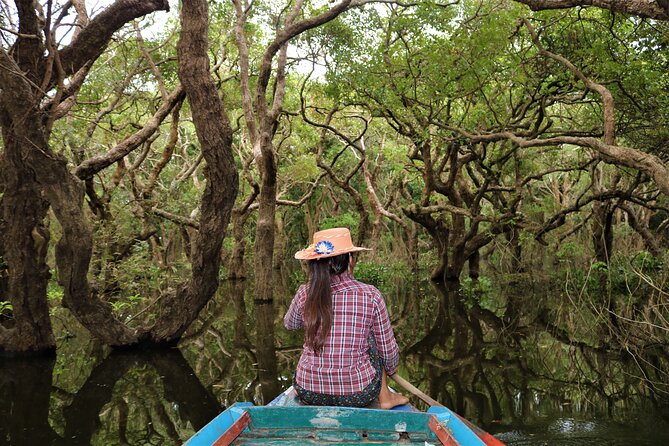
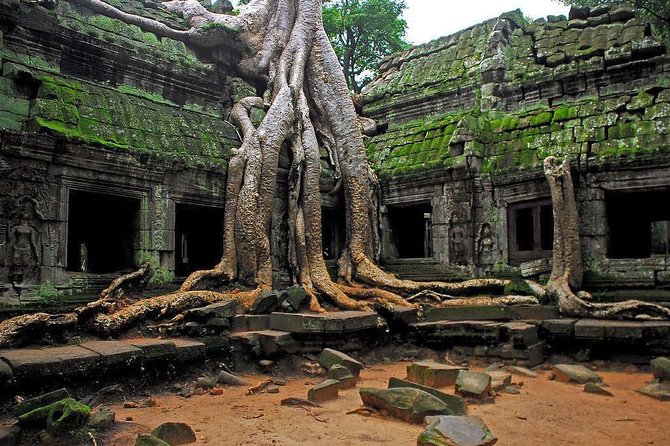
The main event on day two is Kampong Phluk, a fishing village associated with Tonle Sap Lake. The visit lasts about three hours and includes the lake entrance fee and boat cruise.
Tonle Sap is one of the world’s most productive freshwater bodies. Its size changes sharply with the seasons. During the wet season, it can expand to about 12,000 square kilometers. During the dry half of the year, it may shrink to around 2,500 square kilometers, leaving a much smaller body of water.
That seasonal change is the key to understanding Kampong Phluk. Life in the village is shaped by water levels, fishing, boat travel, and the rhythm of the lake. You are not simply taking a scenic cruise. You are seeing a community whose surroundings can change dramatically during the year.
The boat ride provides a more direct view of the village and its connection to the water. The exact appearance can vary with the season, so I would keep expectations flexible. A dry-season visit and a wet-season visit may feel quite different because the lake and waterways do not remain at the same size.
Three hours gives the stop enough time to feel worthwhile rather than rushed. It also makes day two much lighter than the temple morning. You can take in the setting, listen to the guide, and watch local life without racing between several major monuments.
Guide quality matters more than usual here
A temple complex as large as Angkor can be confusing without help. Names, dates, rulers, religious changes, and architectural styles quickly pile up. A good guide turns the morning into a connected story instead of a string of photo stops.
Mr Sokpee received specific praise for explaining both the temples and Cambodian culture. That combination matters. You need more than architectural facts to understand why Angkor Wat, Angkor Thom, and Ta Prohm feel so different.
Guiding is also useful at Tonle Sap. The lake’s seasonal cycle and the village’s way of life are easier to understand when someone explains what you are seeing. Since the group is capped at 10, you have a better chance of hearing the guide than you would in a large vehicle.
The experience has an overall rating of 4.9 from 39 ratings, with 100 percent recommending it. Those figures point to a consistently strong experience, especially around the guide and the well-timed early visit. You should still remember that sunrise tours depend on weather and require a demanding start.
Who should book this experience?
I would choose this tour if you have limited time in Siem Reap and want the main Angkor sights plus Tonle Sap without arranging separate transport. It suits couples, families with older children, and small groups who prefer a planned route.
It is also a good fit if you want a guide to explain the temples rather than simply drive you between them. The air-conditioned vehicle is helpful in Cambodia’s heat, and hotel pickup and drop-off reduce the need to organize taxis around two very different days.
You should think twice if you dislike pre-dawn starts, prefer spending half a day at one temple, or want complete control over how long you stay at each site. Children younger than five are not allowed, and children must be accompanied by an adult.
Dress modestly for the temples, covering your knees and shoulders. Bring water, wear comfortable shoes, and plan for meals separately. The tour includes mineral water, but food is not included.
Cancellation is free up to 24 hours before the start time. Changes or cancellations inside that period are not accepted for a refund. Poor weather or failure to meet the minimum number of participants can lead to a new date, another experience, or a full refund.
Should you book Angkor Wat Sunrise and Tonle Sap Lake?
Book it if you want an efficient first look at Siem Reap and accept the early alarm. The combination of Angkor Wat at sunrise, Bayon, Ta Prohm, and Kampong Phluk gives you a useful balance of monuments and present-day lake life.
The $59 price looks low until you add the required $37 temple pass, but the full $96 still covers transport, guiding, the lake ticket, boat cruise, hotel transfers, and water. For a two-day plan with a group limit of 10, that is fair value.
I would not choose it for a slow temple holiday. I would choose it when time is short, planning is not your favorite part of travel, and you want a capable guide to connect Cambodia’s ancient capital with the communities around Tonle Sap.
FAQ
What time does the tour start?
Pickup begins around 4:10 to 4:30 am, with the listed start time around 4:20 am. The exact departure depends on the time of year.
Is the Angkor temple pass included?
No. You must pay an additional $37 temple pass directly at the site on the day of the activity.
What is included in the $59 tour price?
The price includes a licensed English-speaking guide, air-conditioned transport, hotel pickup and drop-off, mineral water, the Tonle Sap entrance fee, and the boat cruise at Kampong Phluk.
Are meals included?
No. Meals are not included, but food is available at your own choice.
Is the Tonle Sap boat cruise included?
Yes. The Kampong Phluk visit includes the Tonle Sap entrance fee and boat cruise.
How large is the tour group?
The tour has a maximum of 10 participants. A minimum of two people is required per booking.
More Sunrise Tours in Siem Reap
- Angkor Wat Highlights and Sunrise Guided Tour from Siem Reap
★ 5.0 · 3,213 reviews - Angkor 2-Day Sunset & Sunrise Small-Group Tour
★ 5.0 · 2,567 reviews - Siem Reap: Angkor Wat Sunrise or Sunset Guided Tour
★ 4.9 · 2,123 reviews - Angkor Wat: Highlights and Sunrise Guided Tour
★ 4.9 · 1,586 reviews
More Time out on the Tonle Sap
- Sunset tour of Kampong Phluk stilts home village on the Tonle Sap
★ 5.0 · 4,865 reviews - Siem Reap: Kulen Mountain, Beng Mealea and Tonle Sap Tour
★ 5.0 · 1,483 reviews - Tonle Sap Lake & Kampong Phluk Village Half-Day Tour
★ 5.0 · 1,045 reviews - Kulen Mountain with Beng Mealea and Tonle Sap Small Group Tour
★ 5.0 · 780 reviews
Newest reviews from Siem Reap
- War Museum, Killing Field, and APOPO Hero RATs Tour★ 5.0 · 7 reviews
- Angkor Wat at Sunrise★ 4.0 · 7 reviews
- Siem Reap Angkor Airport Taxis (from Airport to Hotel)★ 5.0 · 44 reviews
- Cambodian Cooking Class and Oxcart Ride with Local Village Tour★ 5.0 · 4 reviews
- Secret Temples of Angkor – Guided Tour in Siem Reap★ 5.0 · 6 reviews
- Short Cycling at Countryside★ 5.0 · 29 reviews
- SIEM REAP E-BIKE HALF-DAY COUNTRYSIDE (25-30 km)★ 4.0 · 1 review
- Unveiling the Mystical Beauty of Phnom Kulen National Park★ 5.0 · 6 reviews
Angkor Wat Sunrise Tours, compared.
Angkor Wat Sunrise or Sunset Tour with Guide from Siem Reap
Read our review →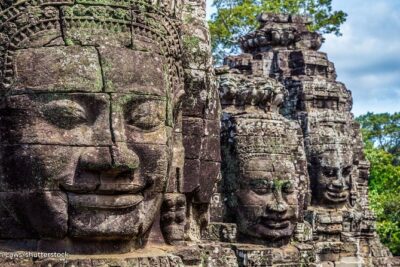
Angkor Wat Sunrise tour with Small – Group and Guide tours
Read our review →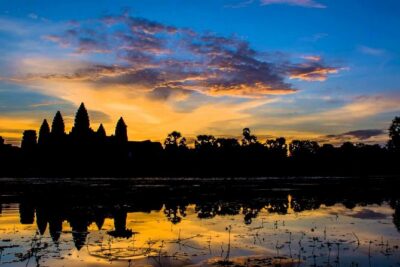
Full-Day Angkor Wat Sunrise Private Tour with Guide from Siem Reap
Read our review →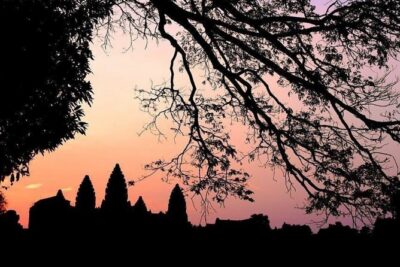
Angkor Wat Sunrise & 3 Main Temples with Breakfast – Small Group
Read our review →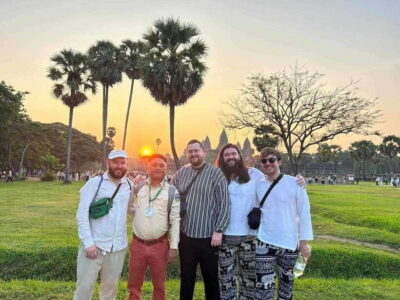
Angkor Wat Sunrise and Full-Day Sightseeing Tour
Read our review →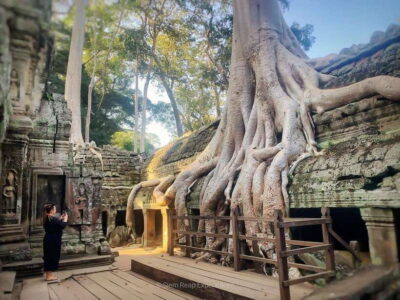
Siem Reap Tour: Angkor Wat Sunrise, Bayon, Ta Prohm, Banteay Srei
Read our review →
Angkor Wat Sunrise Explore The Most Iconic Temples
Read our review →Browse the lists this tour appears in