
Reviewed · ANGKOR WAT TOURS
Angkor Wat Cycling Tour (20-25 km)
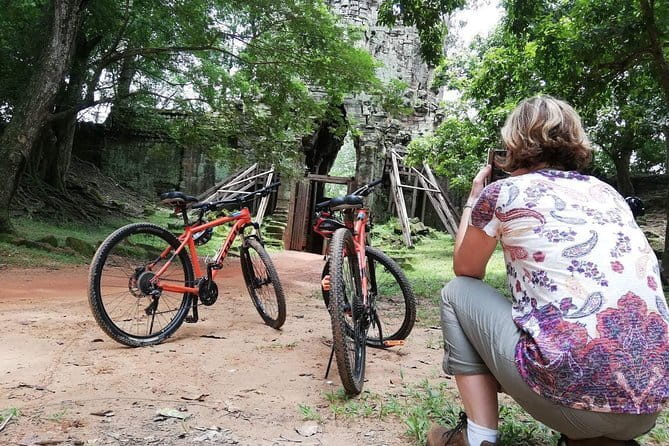
Ancient temples feel different from a bicycle seat. This 20 to 25-kilometer ride from Siem Reap combines Angkor Wat, Angkor Thom, Bayon, and Ta Prohm with quieter back paths, a licensed guide, lunch, and hotel pickup. I like the way it trades some air-conditioned comfort for fresh air and a closer look at the countryside.
I also like the small group limit of 10 people and the chance to have a guide such as Mr. Young explain the temples while taking photographs along the way. The main drawback is the heat: seven to eight hours of cycling and temple walking can be tiring, especially outside the cooler months of November through January.
In This Review
- Key points to know before booking
- Starting in Siem Reap at 8:00 AM
- Riding toward Angkor Wat
- Crossing into Angkor Thom through the South Gate
- Bayon and the stone faces of Angkor Thom
- Baphuon, Phimeanakas, and the Royal Palace area
- A Khmer lunch near the temples
- Ta Prohm and the famous tree roots
- Optional smaller temples on the return
- Heat, clothing, and cycling effort
- Guide quality and group size
- Who should book this Angkor cycling tour?
- Should you book it?
- FAQ
- How long does the Angkor Wat cycling tour last?
- How far do you cycle?
- What temples are included?
- Is hotel pickup included?
- Is the Angkor Pass included in the price?
- How much does the cycling tour cost?
- Are bicycles and helmets provided?
- Is lunch included?
- What should you wear?
Key points to know before booking
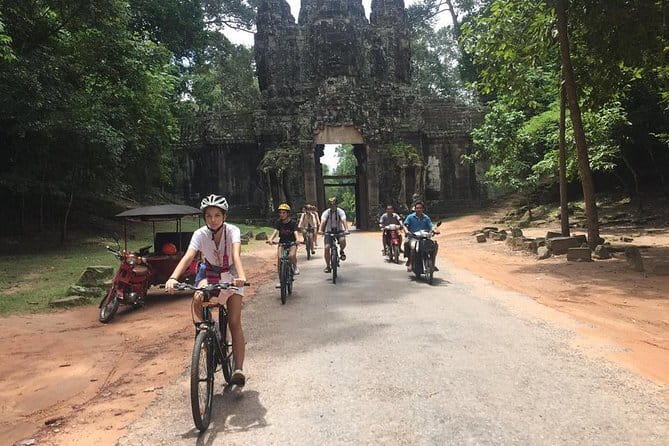
- A 20 to 25-kilometer route: You cover the major Angkor sights by bicycle, not just one temple and a quick return.
- Quiet routes beyond the main roads: The ride includes back paths around the archaeological park, giving you a calmer way to move between the large temples.
- Four major temple areas: The day includes Angkor Wat, Angkor Thom, Bayon, and Ta Prohm, with additional stops possible.
- Lunch, snacks, and refreshments included: You do not need to arrange a separate midday meal near the temples.
- Small group of up to 10 people: This should make it easier to hear the guide and keep the group together.
- Angkor Pass costs extra: The one-day park ticket is USD 37 per person, in addition to the USD 55 tour price.
Starting in Siem Reap at 8:00 AM
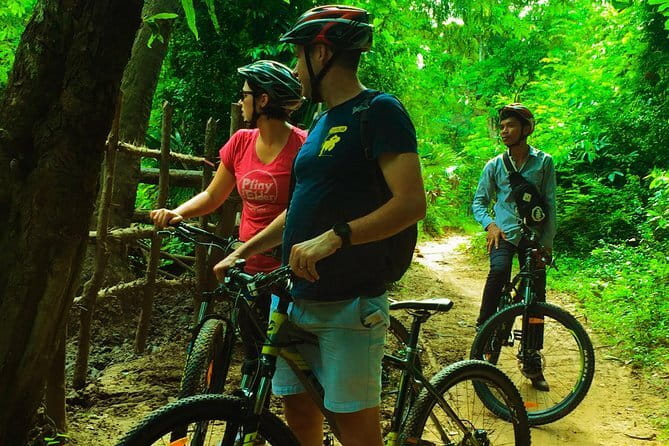
The day begins with hotel pickup at about 7:50 AM, followed by an 8:00 AM start from the Peacock Asia Tours office or the arranged meeting point. You are fitted with a maintained mountain bike and helmet before setting off with a licensed guide.
The opening ride passes through Siem Reap town toward the Royal Residence and Royal Garden. You stop near the main shrine in the center of the garden, which gives you a gentle start before the longer ride beyond town.
This first section matters because it puts the temples in context. You are not simply dropped at a gate and moved from one monument to another. You begin in modern Siem Reap, then gradually leave town for fresher air and rural scenery. That change is one of the pleasures of cycling here.
The route is about 20 to 25 kilometers in total, but the full day also includes walking and extended temple visits. You should think of this as an active sightseeing day rather than a short bike outing. Light cotton clothing, water, sunscreen, and sensible footwear will make a real difference.
More Bike Tours in Siem Reap
- Siem Reap Countryside Bike Tour / E-Bike or Tuk Tuk
★ 5.0 · 935 reviews - Angkor Sunrise Bike Tour / E-Bike or Tuk Tuk
★ 5.0 · 615 reviews - Siem Reap: Bike the Angkor Temples – Full-Day 30km Tour
★ 5.0 · 463 reviews
Riding toward Angkor Wat
The ride from town leads to Angkor Wat, the best-preserved and most famous temple in the park. Built in the early 12th century, it was created as a major statement of Khmer power and religious life. Its scale becomes clear before you enter, as the approach takes you across the rainbow bridge and past the wide moat and reflective pools.
The bicycle gives you a useful advantage here. You arrive with a sense of the temple’s setting instead of seeing only the entrance. The long approach, water, towers, and stone galleries work together as one carefully planned complex.
Inside, expect time to walk through the galleries and study the carved bas-reliefs. These scenes are not just decoration. They show religious stories, battles, processions, and figures from the Khmer world. A good guide can help you understand what you are looking at, since the carvings can otherwise become a long parade of stone figures.
The main caution is time and energy. Angkor Wat is large, and the stone surfaces can be tiring under a hot sun. Your guide’s explanation adds value here, but you should pace yourself rather than trying to see every corner at speed. The tour is designed to continue, so a little restraint early in the day will help later.
Crossing into Angkor Thom through the South Gate
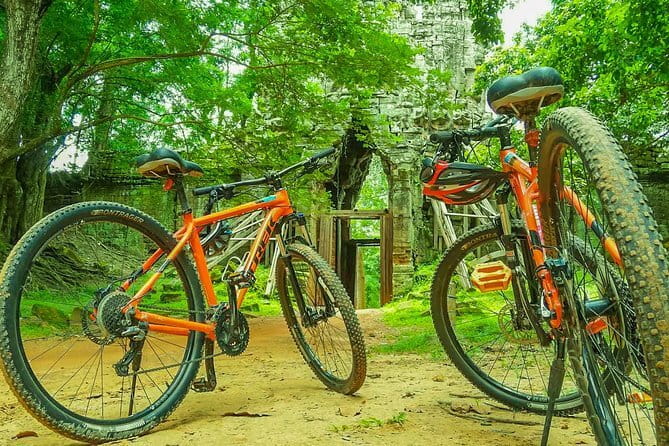
After Angkor Wat, you cycle toward the ancient city of Angkor Thom. The South Gate is a memorable approach, with a bridge lined by sculpted figures. It offers one of the clearest transitions from the temple complex into the former royal city.
Angkor Thom is not a single temple. It is a large walled city that once contained religious, royal, and civic spaces. Moving through it by bicycle makes practical sense because the distances between its major monuments are too great for a relaxed walk.
The road through the gate also gives you a sense of scale. You can pause, look at the gate, and then continue without spending the entire morning on foot. This is one place where the bicycle is more than a novelty. It helps connect separate parts of the old city.
The route may use quieter paths around the main temple roads. That was one of the strongest details associated with guide Mr. Young, who was praised for leading a back-road itinerary that felt quieter and more adventurous. You should still expect an active ride, but these routes can make the movement between monuments feel less like a queue.
Bayon and the stone faces of Angkor Thom
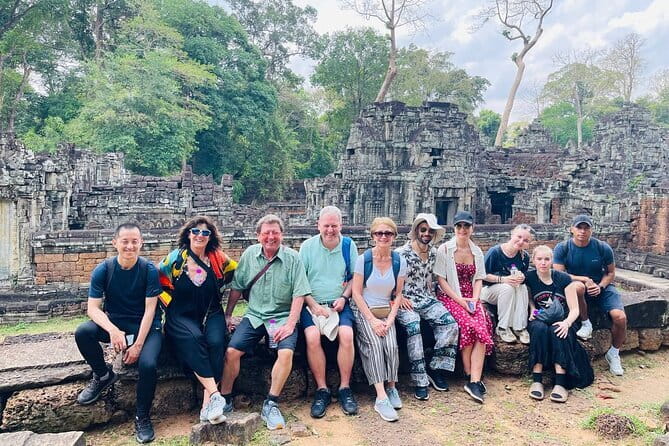
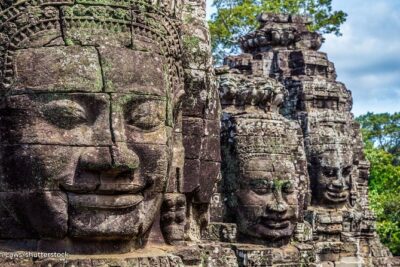
Bayon is the emotional center of Angkor Thom for many people. Its towers carry large carved faces that look out from several directions, giving the temple an unusual, almost watchful character.
You will walk through narrow passages and around towers that seem to shift as you move. The faces are best appreciated slowly. From one angle, the temple can appear crowded and confusing. From another, the repeated expressions and stacked stone towers form a remarkably ordered design.
A guide is especially useful at Bayon because the site rewards explanation. The temple’s layout, images, and later changes are not always obvious when you first enter. A clear guide can point out what deserves your attention without turning every stop into a lecture.
This is also a good place to keep your camera ready. The guide may help with photographs, a specific strength noted about Mr. Young. That can be helpful because the best views often require someone to frame you among the towers rather than simply taking another picture of the monument.
More ways to see Angkor Wat:
- Angkor Wat Sunrise or Sunset Tour with Guide from Siem Reap
★ 5.0 · 12,109 reviews - Siem Reap: Angkor Wat: Small-Group Sunrise or Sunset Tour
★ 5.0 · 9,444 reviews - Siem Reap: Angkor Wat 2-Day Tour with Sunrise and Sunset
★ 4.9 · 4,429 reviews - Siem Reap: Full-Day Angkor Wat Guided Tour with Sunset
★ 4.9 · 3,803 reviews
Baphuon, Phimeanakas, and the Royal Palace area
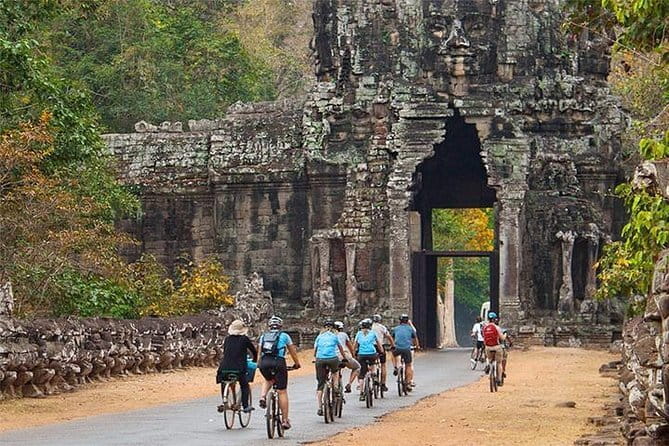
The day continues through the royal center of Angkor Thom, including Baphuon, Phimeanakas, the Royal Palace area, and the Elephant Terrace. These stops differ from Bayon, which keeps the day from becoming a succession of similar temple interiors.
Baphuon is known for its imposing stepped form. You will see how the temple rises above the surrounding area, creating a strong sense of height and ceremony. The climb and uneven stone require attention, so do not treat this as a completely effortless sightseeing stop.
Phimeanakas and the former Royal Palace area help explain how Angkor Thom functioned as a seat of power. Much of what you see is less intact than Angkor Wat, but the remaining structures and layout still suggest a place built for rulers, ritual, and court life.
The Elephant Terrace is a particularly useful stop because its carvings are easy to understand at a glance. Elephants, ceremonial figures, and long sculpted sections line the terrace. It is a place where the role of pageantry becomes clear, and your guide can connect the carvings to royal processions and public display.
You should expect some walking between the bicycle and the monuments. Comfortable clothing is important, but temple rules matter too. Shorts and shirts should cover the knees and shoulders. Tank tops are not accepted, and a scarf or shawl is not accepted as a substitute.
A Khmer lunch near the temples
Lunch is served at a local Khmer restaurant near the temples and is prepared by the tour team. This is a welcome pause because the ride and temple visits occupy most of the day.
The practical value is simple: you do not need to leave the park to find food, and lunch is included in the USD 55 price. Snacks and refreshments are included as well, which helps reduce the number of small purchases you need to make along the route.
Do not expect the lunch break to turn the tour into a long rest day. You still have more cycling and temple walking ahead. Use the stop to eat, drink, and cool down rather than rushing through the meal.
The price deserves a clear look here. At USD 55 per person, the tour includes the bicycle, helmet, guide, pickup, drop-off, refreshments, snacks, and lunch. You must add the USD 37 one-day Angkor Pass, bringing the known total to USD 92 per person before any other personal spending.
That is fair value if you want an organized full-day route with transport at both ends and a guide to explain the major sites. It is less attractive if you already have a bicycle, know the park well, and prefer to set your own pace. The value comes from the planning and guiding, not just from the bike.
Ta Prohm and the famous tree roots
After lunch, the route continues to Ta Prohm, often called the Tomb Raider temple. It is famous for the giant tree roots that grip parts of the stone buildings.
Ta Prohm has a mood unlike Angkor Wat. The temple feels more enclosed and irregular, with roots, fallen stones, narrow passages, and partially restored sections shaping the visit. The trees are the obvious attraction, but the real appeal is the tension between living growth and built stone.
This stop can be crowded and visually busy, so you may need patience while walking through the most photographed sections. The cycling format helps because you arrive as part of a planned route rather than spending the whole day at only the most popular monument.
Ta Prohm is also one of the places where a guide can help you look past the famous photo spots. The temple was designed as a functioning religious complex, not as a movie backdrop. Give yourself time to notice the galleries, doorways, carvings, and signs of repair.
Optional smaller temples on the return
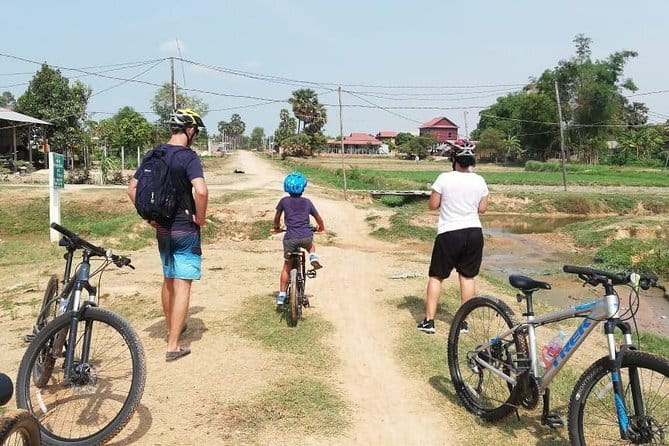
Depending on the day’s timing, you may visit Banteay Kdei and Kravan on the way back. These smaller temples are optional, which is sensible after several hours of riding and walking.
Banteay Kdei offers another chance to see a quieter temple setting without the scale of Angkor Wat or the visual drama of Ta Prohm. Kravan is smaller still and can provide a brief final stop before returning to Siem Reap.
Because these visits are optional, the exact experience may depend on your group’s pace, weather, and energy. That flexibility is useful. If everyone is still comfortable, the extra temples add variety. If the heat has caught up with you, returning directly may be the better choice.
The tour then returns to Siem Reap, with hotel drop-off included. After a full day outside, that final ride back is a practical finish rather than an afterthought.
Heat, clothing, and cycling effort
The biggest challenge is Cambodia’s heat and humidity. The route is not presented as a technical mountain-bike ride, but 20 to 25 kilometers, plus temple walking, is still a serious physical day.
November, December, and January are described as the nicest months for the weather. Outside that period, light cotton clothing is the sensible choice. Bring clothing that meets temple rules from the start, since you may not be able to correct an unsuitable outfit with a scarf or shawl.
You should also remember that a helmet is included and the bicycles are maintained. That removes two common worries, but it does not remove the need to ride carefully and conserve energy.
The tour is suitable for most people according to the supplied participation information, though the day will suit you best if you are comfortable with several hours of moderate activity. A private vehicle-based tour may be better if you have mobility limits, dislike heat, or want to spend longer inside each temple.
Guide quality and group size
The guide can make or break an Angkor cycling day. Mr. Young received especially warm praise for clear explanations of Angkor Wat’s history and culture, quiet routes, and useful photographs. Those details are worth noting because they describe the parts of a guided tour that matter most: clear interpretation, smart routing, and help recording the day.
The group limit is 10 people. That is small enough to make questions possible and should be easier to manage on bicycles than a large convoy. Still, the experience may feel less personal than a private tour, and the exact guide assigned to you is not guaranteed in the supplied details.
Pickup is offered, with the stated pickup time around 7:50 AM and the main start at 8:00 AM. Confirmation is provided at booking. Free cancellation is available up to 24 hours before the start time, while cancellations or changes inside that window are not accepted for a refund.
Who should book this Angkor cycling tour?
I would choose this tour if you want to see the major Angkor temples in one day but do not want to spend every minute inside a vehicle. The countryside sections, quiet paths, and bicycle travel add a sense of place that a standard car route can miss.
It is a good fit for active couples, friends, and solo visitors who appreciate a guide but still want movement and fresh air. The included meal, refreshments, equipment, and hotel transfers also make the day easy to organize.
I would think twice if your main goal is an unhurried study of every temple. The itinerary covers a lot, and seven to eight hours can pass quickly. A private or slower plan may suit you better if photography, long temple walks, or detailed architectural study matters more than seeing several major sites.
Remember the total cost. The tour is USD 55, but the required one-day Angkor Pass adds USD 37, for a known entry cost of USD 92 per person. That remains reasonable for a full day with a licensed guide, bike, helmet, lunch, refreshments, and hotel service, but it is not a budget temple ticket.
Should you book it?
Book this Angkor Wat cycling tour if you want a well-organized, active day that joins the major monuments with quieter routes through the park. The strongest reasons are the broad itinerary, small group size, included lunch and equipment, and the guide-led cycling experience associated with Mr. Young.
Skip it if heat, distance, or temple stairs will make the day unpleasant. For everyone else, this is a practical way to see Angkor Wat, Angkor Thom, Bayon, and Ta Prohm while adding a little countryside and adventure between the famous stones.
FAQ
How long does the Angkor Wat cycling tour last?
The tour lasts approximately seven to eight hours, beginning at 8:00 AM and returning to Siem Reap later in the day.
How far do you cycle?
The route covers approximately 20 to 25 kilometers, including cycling between the major temple areas and the return to Siem Reap.
What temples are included?
The planned route includes Angkor Wat, Angkor Thom, Bayon, Baphuon, Phimeanakas, the Royal Palace area, the Elephant Terrace, and Ta Prohm. Banteay Kdei and Kravan may be visited optionally on the return.
Is hotel pickup included?
Yes. Pickup is included, with the stated pickup time at approximately 7:50 AM. Hotel drop-off is also included.
Is the Angkor Pass included in the price?
No. The Angkor Pass is required but not included. A single-day pass costs USD 37 per person.
How much does the cycling tour cost?
The tour costs USD 55 per person. The Angkor Pass is an additional USD 37 per person.
Are bicycles and helmets provided?
Yes. A maintained mountain bike and helmet are included.
Is lunch included?
Yes. A local Khmer lunch near the temples is included, along with snacks and refreshments.
What should you wear?
Wear light cotton clothing suited to hot and humid conditions. Clothing must cover the knees and shoulders for temple visits. Tank tops are not allowed, and a scarf or shawl cannot be used in place of suitable clothing.
Newest reviews from Siem Reap
- War Museum, Killing Field, and APOPO Hero RATs Tour★ 5.0 · 7 reviews
- Angkor Wat at Sunrise★ 4.0 · 7 reviews
- Siem Reap Angkor Airport Taxis (from Airport to Hotel)★ 5.0 · 44 reviews
- Short Cycling at Countryside★ 5.0 · 29 reviews
- Cambodian Cooking Class and Oxcart Ride with Local Village Tour★ 5.0 · 4 reviews
- Secret Temples of Angkor – Guided Tour in Siem Reap★ 5.0 · 6 reviews
- SIEM REAP E-BIKE HALF-DAY COUNTRYSIDE (25-30 km)★ 4.0 · 1 review
- Unveiling the Mystical Beauty of Phnom Kulen National Park★ 5.0 · 6 reviews
Angkor Wat Tours, compared.
Angkor Wat Sunrise or Sunset Tour with Guide from Siem Reap
Read our review →
Angkor Wat: Small-Group Sunrise or Sunset Tour
Read our review →
Angkor Wat 2-Day Tour with Sunrise and Sunset
Read our review →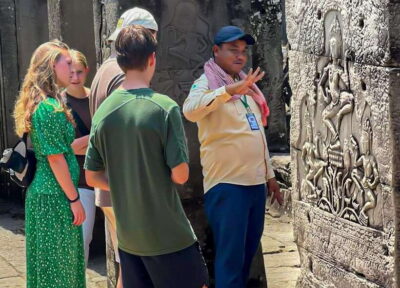
Angkor Wat Sunrise tour with Small – Group and Guide tours
Read our review →
Angkor Wat Highlights and Sunrise Guided Tour from Siem Reap
Read our review →
Angkor Wat Sunset Small Group Tour with Lunch Included
Read our review →
Full-Day Angkor Wat Sunrise Private Tour with Guide from Siem Reap
Read our review →Browse the lists this tour appears in