
Reviewed · CYCLING TOURS
Angkor Sunrise Bike Tour – Breakfast & Lunch included
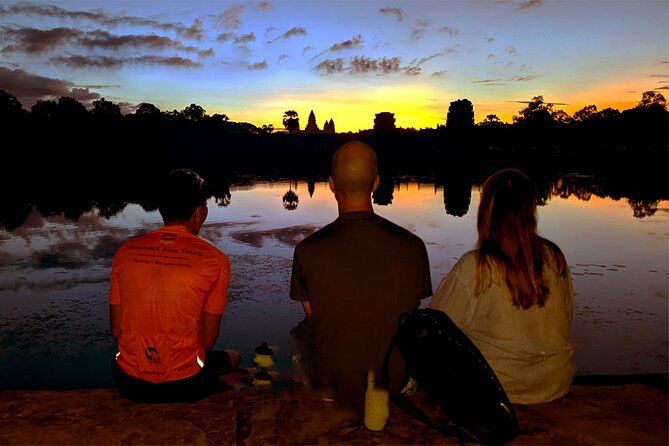
Wake before dawn, then ride into history. This Siem Reap tour pairs Angkor Wat at sunrise with the Bayon, Ta Prohm, quiet temple roads, and Khmer meals, giving you more than a standard temple circuit. I especially like the small maximum group of eight and the support vehicle, which make a long cycling day feel manageable. I also like that breakfast, lunch, water, fruit, snacks, a bike, helmet, guide, and hotel transfers are included.
The main catch is the early start: pickup begins around 4:45 a.m., and the day lasts about 10 hours. You also pay the Angkor entrance fee separately, currently $37 per person, bringing the practical total to about $116 before personal expenses and travel insurance.
In This Review
- Key points to know before booking
- Why cycling is a smart way to see Angkor
- 4:45 a.m. pickup and the first ride into Angkor
- Three hours at Angkor Wat at dawn
- Breakfast after the temple, not before it
- Angkor Thom’s south gate and the smiling Bayon
- Ta Prohm and the power of nature
- Quiet trails and a less-visited temple
- Khmer lunch near Srah Srang
- Guides, bikes, and the human side of the day
- Is $79 a fair price?
- Who should book this cycling day?
- Should you book the Angkor Sunrise Bike Tour?
- FAQ
- What time does the Angkor Sunrise Bike Tour start?
- How long does the tour last?
- Is the Angkor entrance fee included?
- What meals are included?
- What equipment does the tour provide?
- How many people can join the tour?
- Can I cancel for a full refund?
Key points to know before booking
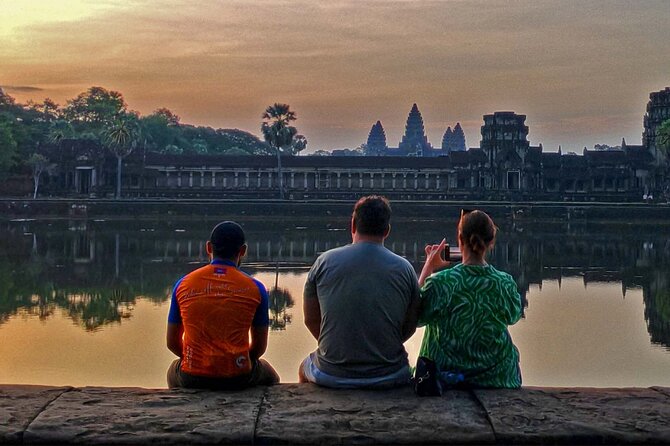
- Sunrise begins at Angkor Wat: You get about three hours at Cambodia’s most famous temple before breakfast and cycling.
- The ride uses park trails and roads: The route includes Angkor Thom, Bayon, Ta Prohm, and quieter temple areas, with about two hours of cycling spread through the day.
- Meals are part of the experience: A private picnic breakfast follows Angkor Wat, while lunch is Khmer food at a local restaurant near Srah Srang.
- The group stays small: A maximum of eight people allows the guide to adjust pace, distance, and terrain more easily.
- The support setup is practical: You ride a Trek mountain bike with a helmet while a support vehicle and driver follow the tour.
- Guide quality is a major strength: Guides named Lot, Muen, Chen, Kimsan, Sothea, and Bota have been praised for temple knowledge, good humor, route choices, and personal attention.
Why cycling is a smart way to see Angkor
Angkor is too large to understand as a string of car-window stops. The temples sit within a wide park of tree-lined roads, old walls, reservoirs, and smaller ruins. A bicycle lets you feel the space between the monuments.
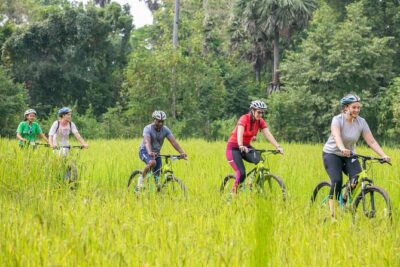
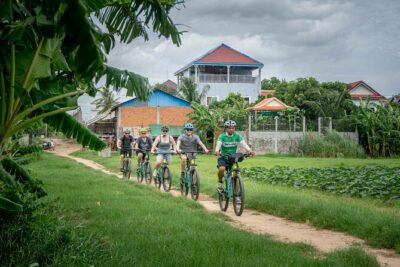
This is not a race. The published timing gives you roughly two hours of cycling, with the rest of the day spent at temples, eating, taking breaks, and transferring by vehicle. That balance matters. You get the pleasure of riding without turning the temple visit into an endurance test.
I like the way the support vehicle changes the equation. If the heat, distance, or early morning start catches up with you, you are not entirely on your own. The guide can also shape the ride around your requested distance, time, and terrain. Bota, in particular, has been praised for adapting the route and arranging a stop for coffee or a smoothie during a ride.
You should still be comfortable on a bicycle. Angkor’s roads and trails can vary, and the day is long even if the cycling itself is moderate. This is a good fit for someone who cycles casually or regularly, but not for someone hoping to avoid physical activity altogether.
More Bike Tours in Siem Reap
- Siem Reap Countryside Bike Tour / E-Bike or Tuk Tuk
★ 5.0 · 935 reviews - Angkor Sunrise Bike Tour / E-Bike or Tuk Tuk
★ 5.0 · 615 reviews - Siem Reap: Bike the Angkor Temples – Full-Day 30km Tour
★ 5.0 · 463 reviews
4:45 a.m. pickup and the first ride into Angkor
The day starts before sunrise with pickup from your accommodation in Siem Reap. You are driven through the park to Angkor Wat, saving your energy for the temples and the later ride.
The start time is not a minor detail. You need to be ready well before dawn, and the first part of the experience is built around the changing light at Angkor Wat. Bring a small day bag, water-friendly clothing, and something light for the cooler early hours. Water, Khmer snacks, and seasonal fruit are supplied, so you do not need to pack a full day’s food.
The tour provides a Trek mountain bike and cycling helmet. Bike condition has been praised, but you should still check the saddle height, brakes, and gears before setting off. A quick adjustment can make a long morning much more pleasant.
With a maximum of eight people, the group should be easier to manage than a large coach tour. That is especially useful at dawn, when keeping track of a crowd can become awkward and guide time gets spread thin.
Three hours at Angkor Wat at dawn
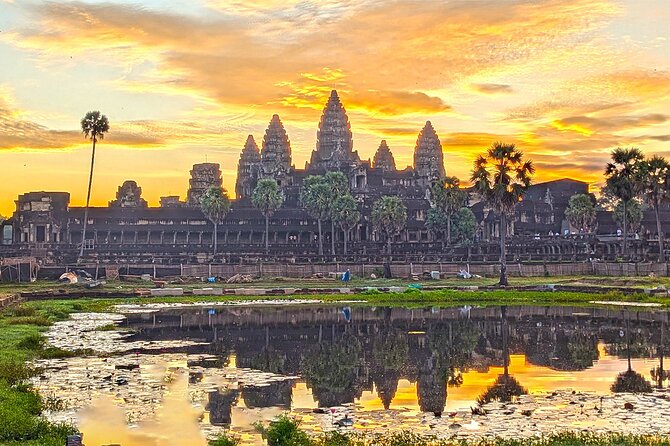
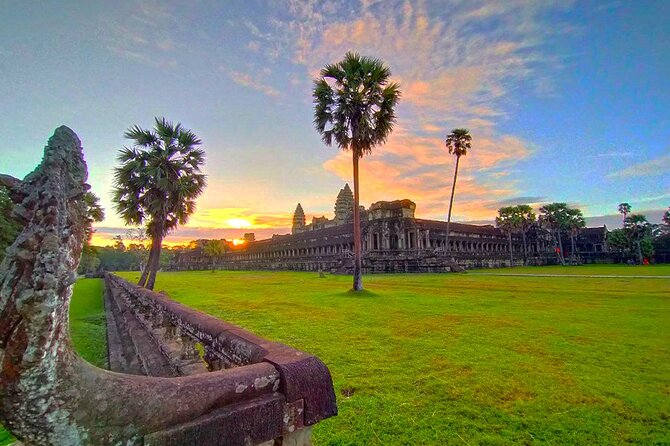
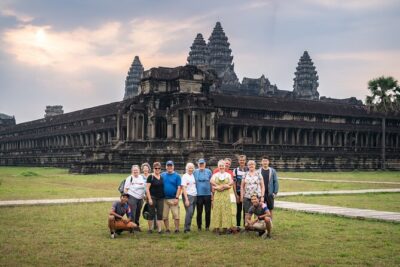
Angkor Wat is the anchor of the day, and the first temple receives the longest visit, about three hours. At dawn, the scale of the complex becomes clear slowly. First you see the silhouette and towers, then the galleries, carvings, courtyards, and layered structure begin to show detail.
The appeal of this early visit is the light and mood. The temple feels quieter and more atmospheric before the full heat of the day arrives. You have time to look beyond the famous front view and pay attention to the architecture itself.
Three hours is generous, but it does not mean every corner will be covered. Angkor Wat is enormous. Your guide can help you focus on the major features and explain the scenes carved into the stone, while you still have room to pause for photographs or simply look.
The admission ticket is not included. The current listed cost is $37 per person, and you need to add that to the $79 tour price. That brings the basic cost to $116 per person. It is worth including this in your budget from the start, since the tour price alone does not cover entry to the park.
Breakfast after the temple, not before it
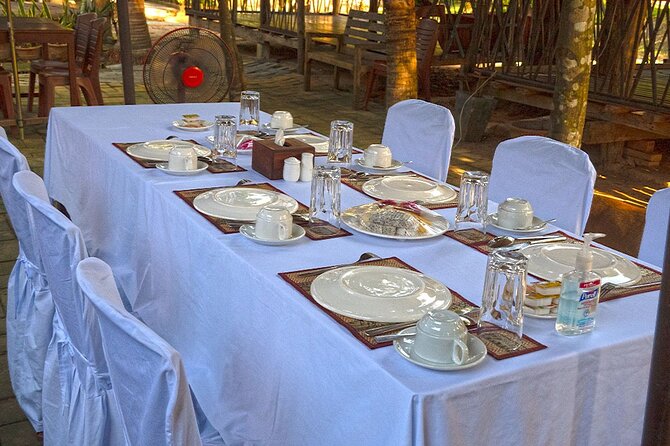
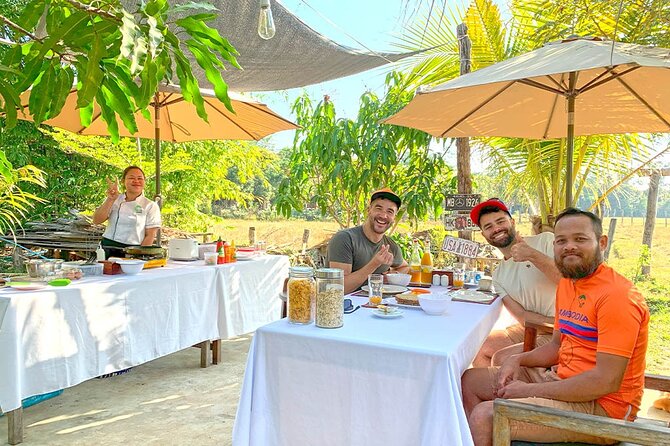
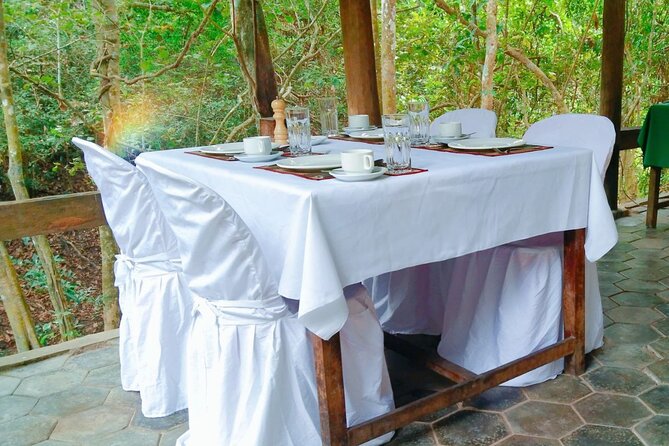
After Angkor Wat, the group pulls over for a private picnic breakfast on site. This is a thoughtful point in the schedule. You see the main temple first, then sit down to eat rather than trying to manage breakfast before a pre-dawn departure.
The meal is described as a romantic breakfast, with water, Khmer snacks, and seasonal fresh fruit also included. The setting gives you a pause after the first temple and before the cycling begins in earnest.
I value this kind of meal more than a rushed hotel breakfast. It keeps the day tied to the place you came to see. At the same time, you should not expect a long café-style morning. The entire day has several moving parts, and breakfast is one stop within a packed program.
Food quality appears to be one of the tour’s strong points. The breakfast has received particularly warm praise, while the lunch has been described as solid but less memorable by comparison. That is a fair expectation to carry: enjoy the meals, but book the tour mainly for the temples and riding.
More Sunrise Tours in Siem Reap:
- Angkor Wat Sunrise or Sunset Tour with Guide from Siem Reap
★ 5.0 · 12,109 reviews - Siem Reap: Angkor Wat: Small-Group Sunrise or Sunset Tour
★ 5.0 · 9,444 reviews - Siem Reap: Angkor Wat 2-Day Tour with Sunrise and Sunset
★ 4.9 · 4,429 reviews - Angkor Wat Sunrise tour with Small – Group and Guide tours
★ 5.0 · 3,655 reviews
Angkor Thom’s south gate and the smiling Bayon
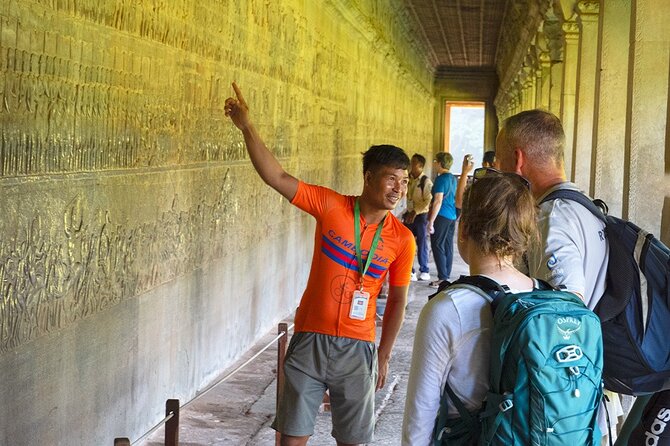
The next major stop is the south gate of Angkor Thom, with about 15 minutes set aside for a look. The gate is decorated with carved figures of gods and demons, giving you an immediate sense of the monumental scale of the ancient city.
This is a short stop, so it works best as an introduction rather than a full study of the gate. Your guide can point out the carvings and explain their role, but the schedule does not leave room for a long, quiet examination.
From there, you continue to Bayon for about an hour. Bayon is famous for its large stone faces, but the temple is more than a collection of smiling heads. The bas-reliefs show scenes of daily life, giving you a glimpse of ordinary activity alongside royal and religious imagery.
This is where a good guide earns the fee. Without context, Bayon can feel like a maze of towers and narrow passages. With clear explanations, the carvings become easier to read and the temple feels less like a pile of stones and more like a record of a society.
Guides such as Chen, Lot, Muen, and Sothea have been praised for combining temple knowledge with an easy manner. That balance matters during a long day. You want accurate explanations, but you also want enough breathing room to look around without being talked at every second.
Ta Prohm and the power of nature
Ta Prohm receives about an hour, enough time to see why it is one of Angkor’s most memorable ruins. Towering trees grow over and around the temple, with roots and branches pressing against the old stone structure.
The charm here comes from the tension between architecture and nature. Angkor Wat feels ordered and monumental. Bayon feels crowded with sculpted faces. Ta Prohm is more dreamlike, with walls, doorways, trees, and shadows tangled together.
The stop can be busy, and the most famous tree-framed views naturally attract attention. The advantage of arriving by bicycle is not that it guarantees an empty temple, but that the route can include quieter stretches between the major monuments.
You should allow time for uneven ground and stairs at the temple stops. The tour information says most people can participate, but it does not promise a step-free route or special accessibility services. If mobility is a concern, ask the provider before booking.
Quiet trails and a less-visited temple
One of the most appealing parts of the day comes between the headline temples. The route includes off-road trails and a quick pull-over at a serene temple that is less visited than Angkor Wat, Bayon, and Ta Prohm.
The unnamed stop is brief, but it adds variety. You get a glimpse of a quieter ruin rather than spending every minute at the three best-known temples. The ride itself also takes you away from the most direct sightseeing pattern.
A particularly memorable option, based on the route described by one guide, is cycling on top of the wall at Angkor Thom. That kind of experience shows why a bike tour can feel different from a standard vehicle circuit. It is not simply faster transport. It lets you use paths and viewpoints that feel connected to the park’s structure.
The precise route can vary with time, distance, and terrain. Bota has been praised for tailoring the ride to what the group requested, while Muen has been described as adjusting rides for everyone from casual cyclists to stronger riders. Do not assume every booking will follow the exact same trail. Tell the guide early what pace you prefer.
Khmer lunch near Srah Srang
The day concludes with a Khmer lunch at a local restaurant inside the park, described in the schedule as taking place near Srah Srang. This is a welcome meal after the temples and cycling.
You are given a chance to try Cambodian food with its fresh ingredients, distinctive spices, and local flavors. The lunch is not presented as a luxury restaurant experience, and that is part of its appeal. It keeps the focus on a practical local meal in the Angkor area.
The food locations have been praised, though lunch has received slightly more measured feedback than breakfast. I would treat it as a pleasant and useful part of the day rather than the main reason to book.
After lunch, the group transfers back to your accommodation. The return drive takes about 20 minutes, and the full experience runs about 10 hours from pickup to drop-off. That final transfer is useful because you can finish the day without needing to arrange your own ride from the park.
Guides, bikes, and the human side of the day
The strongest part of this experience is the guide service. Lot has been praised for teaching visitors about culture, temples, food, and local surroundings. Muen has been singled out for route planning and personal attention, while Chen has received praise for temple explanations, excellent bikes, and a lively sense of humor.
Kimsan has been described as helpful, honest, and efficient, a combination families often appreciate. Sothea has been praised for guiding people along trails away from the busiest areas. These details suggest that the company’s guide quality is not limited to one personality or one lucky booking.
That said, individual guide style will always vary. Some guides may be more talkative, while others may give you more quiet time. You can improve the fit by explaining your interests at the beginning: temple design, religion, daily life, photography, cycling, or local food.
The bikes are Trek mountain bikes, and their condition has been praised. Helmets are supplied. The support vehicle and driver are valuable on a hot, extended day, especially if you are traveling with family members or a mixed-ability group.
Is $79 a fair price?
At $79 per person, this is not the cheapest way to see Angkor. Add the $37 entrance fee and the basic cost becomes about $116. Still, the price includes a lot: hotel pickup and drop-off, guide, bike, helmet, driver, support vehicle, breakfast, lunch, water, snacks, and fruit.
You are also buying a full day rather than a short sunrise transfer. The guide’s interpretation and the access to cycling trails give the tour more substance than a simple temple shuttle.
The value is best for you if you want an active day with meals included and do not want to organize transport, bike rental, food, and route planning separately. If you only want to see Angkor Wat at dawn and a couple of temples by car, this tour may be more than you need.
The maximum group size of eight helps justify the price. It offers a more personal setup than a large bus and gives the guide a better chance to adjust the pace. Group discounts are available, so families and friends should check the final price before booking.
Who should book this cycling day?
I would recommend this tour to you if you:
- Want to see Angkor Wat at sunrise and continue beyond the famous postcard view
- Enjoy cycling but do not want an all-day endurance challenge
- Prefer a small group over a large organized coach
- Care about guide explanations and local food
- Like mixing major temples with quieter trails and a less-visited stop
- Want transport, equipment, meals, and a support vehicle arranged in advance
I would hesitate if you dislike pre-dawn starts, struggle with a 10-hour day, or want a slow, highly flexible temple visit. The program covers a lot, and the early start means you should plan a quiet evening before it.
Free cancellation is available up to 24 hours before the start time. Changes or cancellations made inside that window are not accepted for a refund, so keep the 4:45 a.m. pickup in mind when making your plans.
Should you book the Angkor Sunrise Bike Tour?
Book it if you want Angkor with movement, context, and a small-group feel. The best features are the sunrise timing, strong guide service, good bikes, included meals, and the chance to ride beyond the standard temple route.
The separate entrance fee and long day are the main drawbacks. For an active visitor who wants more than a quick temple checklist, the $79 price is reasonable. For you, the deciding question is simple: do you want to sit back and be driven between monuments, or do you want to earn some of the views by bicycle?
FAQ
What time does the Angkor Sunrise Bike Tour start?
Pickup begins at approximately 4:45 a.m. The early start is designed for a dawn visit to Angkor Wat.
How long does the tour last?
The experience lasts approximately 10 hours, including temple visits, cycling, breakfast, lunch, fruit and snack breaks, and the transfer back to your accommodation.
Is the Angkor entrance fee included?
No. The Angkor entrance fee is listed separately at $37 per person.
What meals are included?
The tour includes a private picnic breakfast at the site and a Khmer lunch at a local restaurant inside the park, near Srah Srang. Water, Khmer snacks, and seasonal fresh fruit are also included.
What equipment does the tour provide?
You receive a Trek mountain bike and cycling helmet. A support vehicle with a driver is also included.
How many people can join the tour?
The maximum group size is eight people.
Can I cancel for a full refund?
Yes. You can cancel up to 24 hours before the experience starts for a full refund. Cancellations or changes made less than 24 hours before the start time are not accepted for a refund.
More Lunch Experiences in Siem Reap
- Angkor Wat Sunset Small Group Tour with Lunch Included
★ 5.0 · 3,059 reviews - Kulen Waterfall Join-in Tour (local Picnic lunch)
★ 5.0 · 2,434 reviews - Kulen Mountain: Small-Group Tour and Picnic lunch
★ 4.9 · 1,802 reviews - Phnom Kulen Waterfall & the Sacred 1000 Lingas (with Lunch)
★ 4.8 · 974 reviews
Newest reviews from Siem Reap
- Village walking & Cooking class in Siem Reap★ 5.0 · 2 reviews
- Ultimate Sunrise to Angkor Wat, Angkor Thom and Bayon Temple★ 5.0 · 3 reviews
- Angkor Wat Sunrise Shared Tours: Bayon, Ta Prohm And Kravan★ 5.0 · 1 review
- Twilight Tastes of Siem Reap Include Dinner★ 5.0 · 13 reviews
- Two Days Tour Angkor Complex; Banteay Srei, and Kulen Hill★ 5.0 · 1 review
- Trekking Tour at Phnom Kulen National Park from Siem Reap★ 5.0 · 3 reviews
- Trip to Big Circle included Banteay Srey and Banteay Samre★ 5.0 · 1 review
- Full-Day Private Tour of Angkor Wat with Pick Up★ 5.0 · 12 reviews
Cycling Tours, compared.
Siem Reap Countryside Bike Tour / E-Bike or Tuk Tuk
Read our review →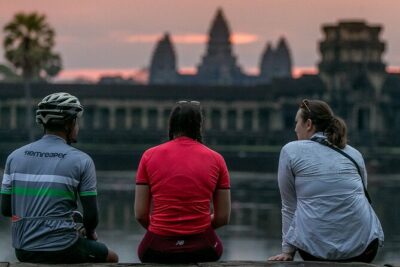
Phnom Penh Silk Island Bike Tour/ E-Bike or Tuk Tuk
Read our review →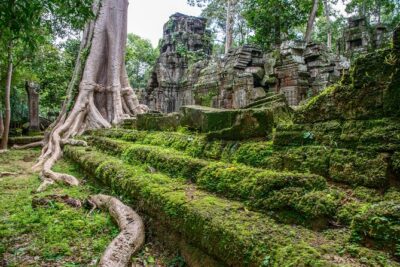
Angkor Wat Sunrise Bike Tour & Jungle Breakfast
Read our review →
Local Livelihood Half Day Bike Tour in Battambang
Read our review →Browse the lists this tour appears in