
Reviewed · CYCLING TOURS
Angkor Jungle Biking Adventure Private Cycling Tour
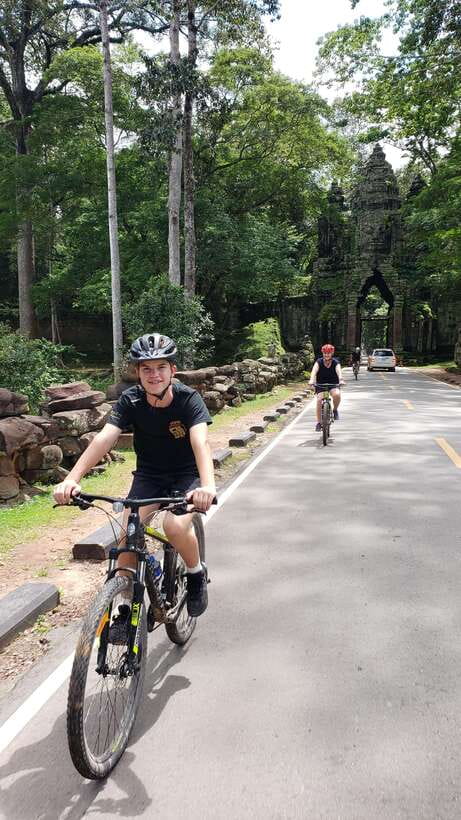
Angkor is better at bicycle pace. This eight-hour ride takes you from Siem Reap through riverside communities, temple roads, and jungle paths to Angkor Wat, Bayon, Ta Nei, and Ta Prohm. I like the mix of major monuments and quieter routes, plus the chance to hear Cambodia’s past explained by an English-speaking guide rather than simply racing from one photo stop to the next.
I also like that the tour includes hotel pickup, a mountain bike, helmet, guide, and drinking water for $22 per person. The main caution is the distance: you will cycle roughly 25 to 35 kilometers, and sandy stretches can make the ride harder than the itinerary sounds. Temple tickets are not included, and lunch costs extra.
The guide names associated with this experience include Leap, also written Liap, and the available feedback gives special praise to his clear explanations and helpful manner. One useful detail is that the operator has bike sizes from children’s models through XXL, along with tagalong bikes for less confident children.
In This Review
- Key points to know before you book
- Why cycling changes your Angkor day
- From Siem Reap to the Angkor Park entrance
- Angkor Wat: the grand opening stop
- Ta Prohm and the pull of the jungle
- Ta Nei, the quieter temple stop
- Walls, dams, and Angkor Thom’s gates
- Angkor Thom and Bayon’s stone faces
- Lunch at Sok Kun Restaurant 22
- What the $22 price really covers
- Who should book this cycling tour?
- Practical details for a smoother day
- Should you book the Angkor Jungle Biking Adventure?
- FAQ
- How long is the Angkor Jungle Biking Adventure?
- How far will I cycle?
- What temples are included?
- Is hotel pickup included?
- Is an English-speaking guide provided?
- Is a bicycle and helmet included?
- Is drinking water included?
- Are Angkor temple entrance tickets included?
- Is lunch included?
- Can children join the tour?
Key points to know before you book
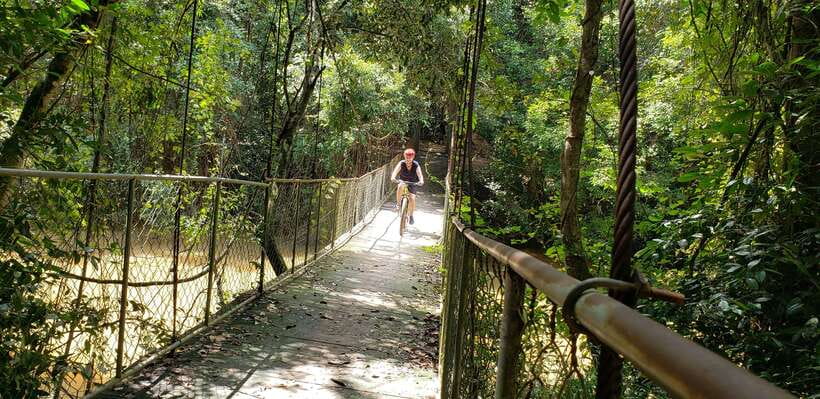
- The ride covers Angkor’s big names and quieter corners: Angkor Wat, Bayon, Ta Nei, and Ta Prohm are joined by jungle roads, gates, walls, and lesser-known stops.
- Expect a real day on the saddle: The route covers about 25 to 35 kilometers, though the cycling is described as non-technical apart from sandy patches.
- Your guide adds the meaning: Commentary covers Cambodia’s past and the purpose of the temples, making the ruins easier to understand.
- Lunch is separate: You stop at Sok Kun Restaurant 22 for about 50 minutes, but the meal is not included in the tour price.
- The Angkor Pass is essential: You must buy temple admission separately, either before the tour or at the entrance to the Angkor temple zone.
- The group format stays personal: Private and small-group options are available, with hotel pickup and drop-off included.
Why cycling changes your Angkor day
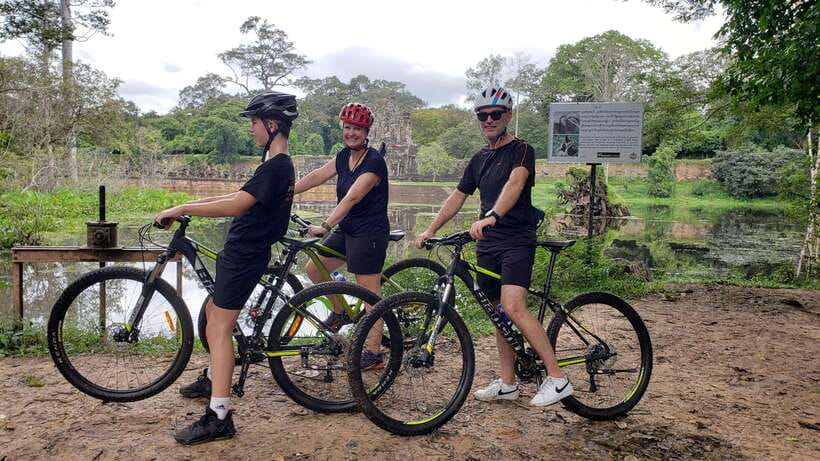
The usual way to see Angkor is by tuk-tuk. That works well, especially in the heat, but a bicycle gives the day a different rhythm. You move slowly enough to notice the road, trees, old walls, and daily life around the park. You also avoid spending the whole day stepping out of one vehicle, taking pictures, and climbing back in.
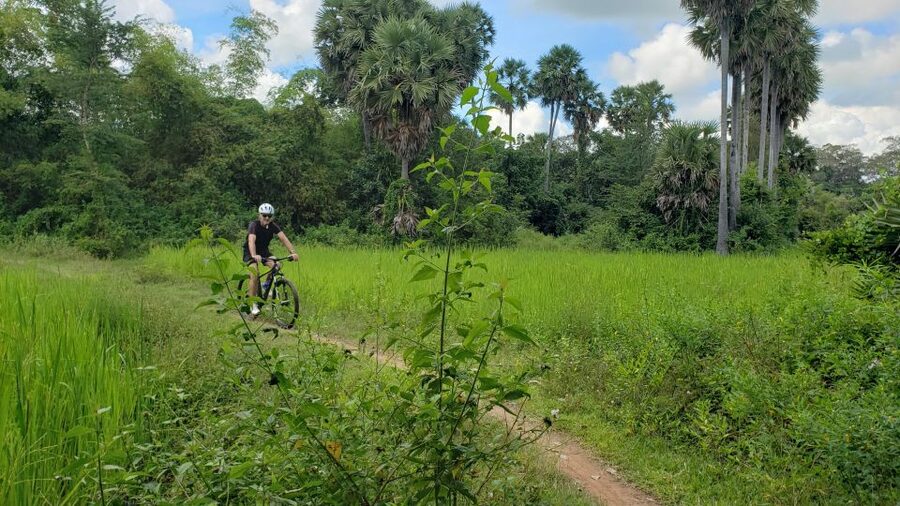
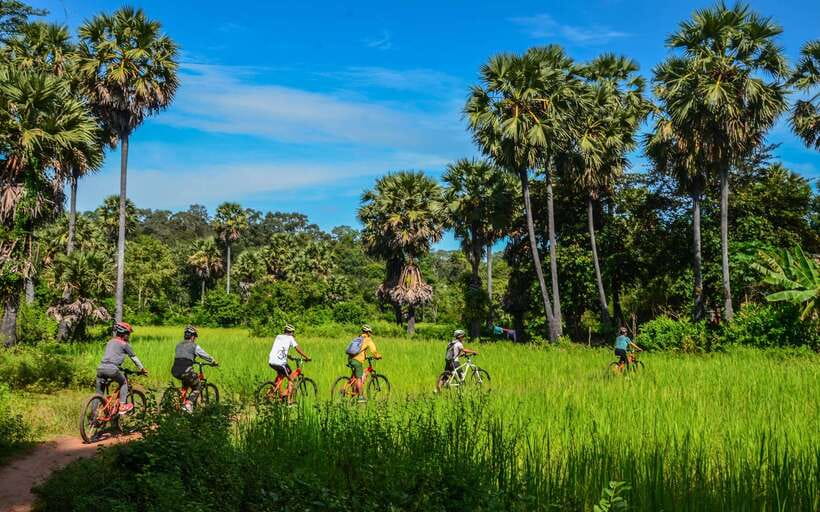
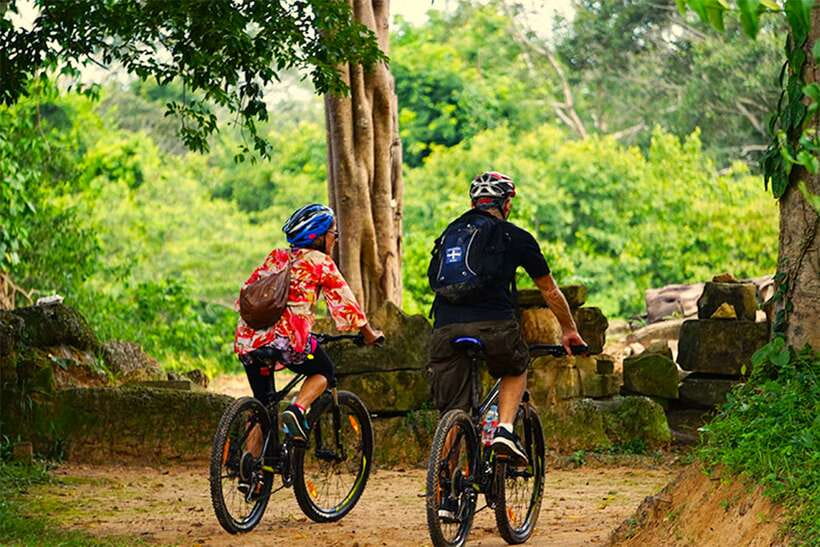
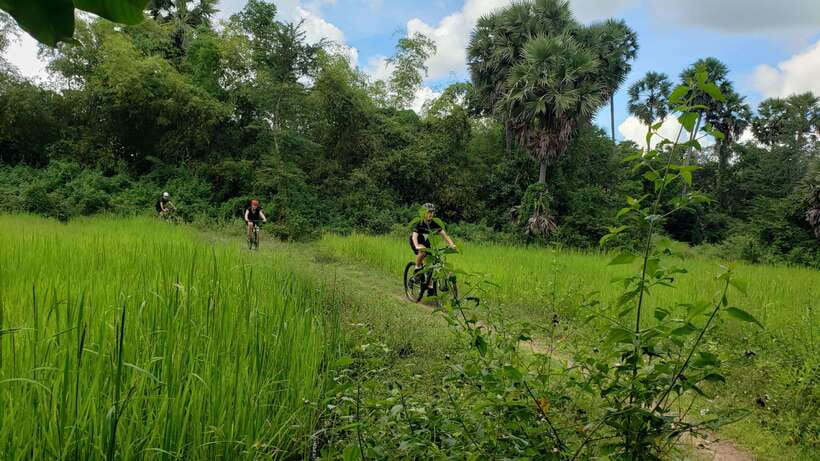
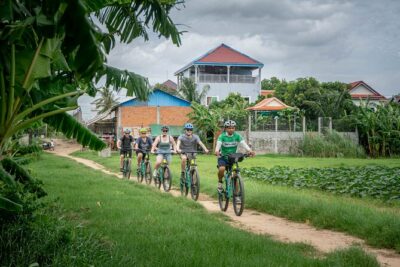
I like the sense of space this creates. The ride begins on the riverside road northeast of Siem Reap, where you pass local communities on the way toward the Angkor Pass counters. After that, the route moves through the temple zone and into wooded sections where the sound of nature replaces much of the town noise.
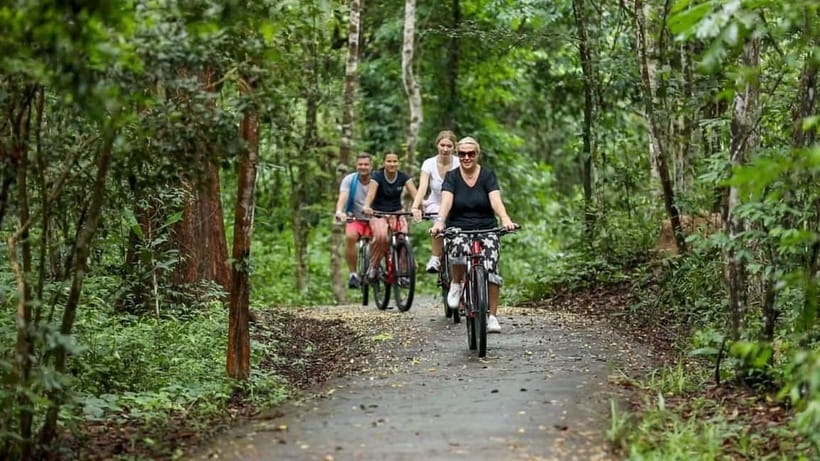
This is not a technical mountain-bike trip. The feedback describes the riding as manageable, with some sandy areas. Still, 25 to 35 kilometers is a serious distance if you rarely cycle. The day also includes walking around temple sites, so you should think of it as an active sightseeing tour rather than a gentle pedal between monuments.
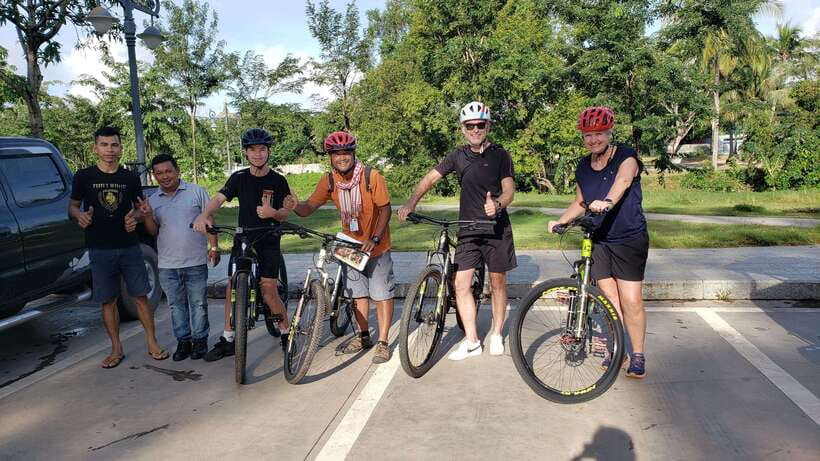
You receive a mountain bike and helmet, and drinking water is supplied. The operator offers several bike sizes, including children’s bikes, XXL bikes, and tagalong options. Children under five and pregnant women are not permitted.
More Bike Tours in Siem Reap
- Siem Reap Countryside Bike Tour / E-Bike or Tuk Tuk
★ 5.0 · 935 reviews - Angkor Sunrise Bike Tour / E-Bike or Tuk Tuk
★ 5.0 · 615 reviews - Siem Reap: Bike the Angkor Temples – Full-Day 30km Tour
★ 5.0 · 463 reviews
From Siem Reap to the Angkor Park entrance
The day starts with pickup at your hotel after breakfast. A tuk-tuk transfer of about 15 minutes brings you to the cycling starting point. At Spean Neak, you receive a safety briefing, a short presentation about the bike, and an introduction to the route.
That opening matters. You can check the fit of the bike before the longer ride begins, and you have a chance to ask questions about the pace. Since pickup requires your hotel name and address, provide those details when booking so the guide and driver know where to meet you in the lobby.
The first cycling section follows the riverside road and heads northeast out of Siem Reap. This is one of the more useful parts of the trip for anyone who wants to see something beyond temple facades. You pass communities and get a look at the local setting around the tourist center before reaching the Angkor zone.
You need an Angkor Pass for the temple visits. The tour price does not cover it. You can buy the pass at the entrance to the temple zone on the morning of the tour or through the official Angkor Enterprise website. Do not forget this requirement, since the day depends on access to the park.
Angkor Wat: the grand opening stop
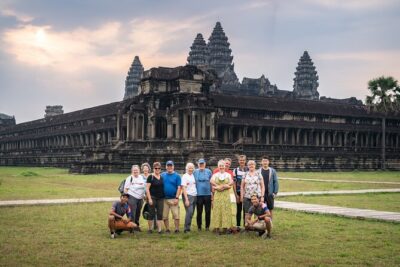
The first major temple visit is Angkor Wat, with about 90 minutes set aside for cycling, walking, sightseeing, photographs, and guided explanation. That is enough time to get a broad sense of the monument, though it is not an invitation to inspect every corridor and carving.
A guide is especially useful here. Angkor Wat can feel overwhelming because of its scale. Commentary helps you connect the buildings, galleries, and religious purpose instead of treating the site as one enormous picture backdrop. You can expect stops for photographs and time to walk around the main areas.
The bicycle also helps with the approach. Rather than arriving only at the front entrance by vehicle, you experience the transition from road to temple grounds at a slower pace. I like that change of mood. It makes Angkor Wat feel connected to the surrounding park, not isolated as a single attraction.
The tradeoff is time. If Angkor Wat is your main reason for visiting Cambodia, you may want a separate visit with more hours at the temple. This tour gives you a well-rounded day across several sites, so its aim is variety rather than exhaustive study of one monument.
Ta Prohm and the pull of the jungle
Ta Prohm receives another 90-minute stop, making it one of the longest visits on the route. This is the temple associated with the Tomb Raider film, and it is easy to see why it has such a strong hold on the imagination. Trees press against crumbling stone, and the structure feels partly claimed by the forest.
Your guide provides history along the way, while you have time to walk, take photographs, and study the remains. The temple’s broken form makes it especially rewarding to explore slowly. You can see how roots, walls, doorways, and corridors create a setting very different from the ordered grandeur of Angkor Wat.
The popularity of Ta Prohm can also mean a busier stop than Ta Nei. The tour’s bicycle route helps place it within a larger day, but you should not expect complete solitude. The benefit is that you reach it after cycling through wooded roads, so the jungle setting begins before you enter the temple itself.
Something completely different for another day:
- Angkor Wat Sunrise or Sunset Tour with Guide from Siem Reap
★ 5.0 · 12,109 reviews - Siem Reap: Angkor Wat: Small-Group Sunrise or Sunset Tour
★ 5.0 · 9,444 reviews - From Siem Reap: Kampong Phluk Floating Village Tour by Boat
★ 4.9 · 6,979 reviews - Sunset tour of Kampong Phluk stilts home village on the Tonle Sap
★ 5.0 · 4,865 reviews
Ta Nei, the quieter temple stop
Ta Nei gets about 45 minutes. It is smaller and more secluded in character than the headline temples, and the ride takes you farther into the trees. The approach is part of the appeal. You are not simply moving from one paved parking area to another.
I would pay attention here to the guide’s storytelling and to the structure itself. Ta Nei is the kind of stop that makes a cycling tour worthwhile because the route feels less programmed around the most famous photographs. You get a closer sense of the forest setting and a pause from the larger crowds and grand scale of the better-known temples.
The drawback is that 45 minutes passes quickly. You will have time for a guided visit and photographs, but not unlimited wandering. That is typical of a full circuit day: the tour offers many places, but each one has a set window.
Walls, dams, and Angkor Thom’s gates
Between the main temples, the route includes several shorter stops that add texture to the day. At Mur d’enceinte, you spend about 15 minutes exploring and hearing the guide’s explanation. The French Dam follows with a 25-minute break, sightseeing, and photographs.
These pauses are useful because they break up the longer stretches of cycling. They also show that Angkor is more than a short list of famous temples. Walls, waterworks, gates, and roads were part of how the ancient city functioned. I like having these smaller stops included, since they help you picture Angkor as a connected urban center rather than a group of unrelated ruins.
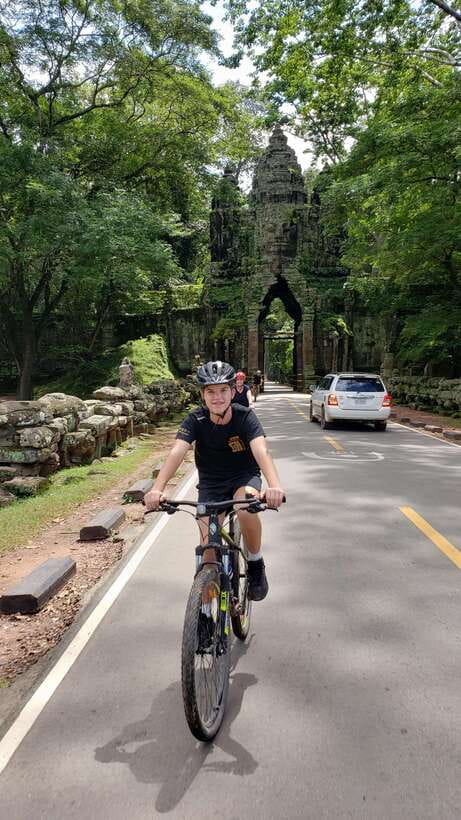
The Victory Gate receives about 10 minutes. This is a quick stop, mainly for photographs and a short explanation, but it helps introduce Angkor Thom before the longer visit inside the ancient city.
Cycling through these areas gives you a better feel for distance. The temples were not placed side by side for modern convenience. The ride between them shows the scale of the old city and lets you approach the gates in a more natural way.
Angkor Thom and Bayon’s stone faces
Angkor Thom receives about 45 minutes, followed by a full hour at Bayon Temple. The ancient city stop includes riding, walking, sightseeing, and guided commentary. The Victory Gate helps set up the visit, and the route through the city gives you a sense of its old boundaries and ceremonial purpose.
Bayon is the visual centerpiece of Angkor Thom. Its towers and carved faces reward time spent looking upward and from different angles. One hour is a useful amount of time for a guided visit, photographs, and a walk through the temple, though the uneven stones mean you should watch your footing.
This is another place where an English-speaking guide can make a real difference. Bayon’s appearance is striking at first glance, but an explanation of what you are seeing gives the visit more shape. The guides are also responsible for helping you manage the day’s pace, water breaks, and transitions between cycling and walking.
After Bayon, the route also passes Prohm Kel Temple and Nara Art, with only about five minutes at each. These are brief stops rather than full visits. A short coffee stop at a local café follows, then the tour continues toward lunch and the return route.
Lunch at Sok Kun Restaurant 22
Lunch lasts about 50 minutes at Sok Kun Restaurant 22, a local restaurant inside the Angkor Park. The meal is described as authentic, healthy Khmer food, but it is not included in the $22 price.
That extra cost is worth planning for. After several hours of cycling and temple walking, a proper break is practical, not decorative. You can use the stop to cool down, refill your energy, and give your legs a rest before the final section.
The tour information does not specify a fixed menu or meal price, so budget separately for lunch. The available feedback describes the food as very good, but you should still confirm the cost and choices with the guide if you want a precise spending plan.
What the $22 price really covers
At $22 per person, this is inexpensive for an eight-hour private or small-group experience. The price includes hotel pickup and drop-off, an English-speaking cycling guide, a mountain bike, a helmet, and drinking water. It also includes the structure of a full day with route planning and temple explanations.
The value is strongest if you want more than transport. A tuk-tuk can carry you between temples with less physical effort, but this tour gives you the bicycle, the guide, and the slower route through the park. The personal commentary is a key part of the cost, particularly at Angkor Wat, Bayon, and Ta Prohm.
You must add the Angkor Pass and lunch. Tips for the guide and driver are also not included, along with any other expense not listed. Once those costs are added, the final amount is higher than $22, but the starting price remains appealing for a full day with hotel service and equipment.
I would compare it with your energy level, not only your budget. If you want the cheapest possible temple transport, a standard vehicle may be simpler. If you want to connect the temples by movement and see the park at ground level, the bicycle offers better value.
Who should book this cycling tour?
I would recommend it to active visitors who are comfortable spending most of a day outdoors. It suits people who want major temples plus quieter roads, and it is a good match for anyone who finds tuk-tuk sightseeing too passive.
Families can consider it because bike sizes range from children’s models to XXL, and tagalong bikes are available for children who are not confident cyclists. However, children under five cannot join, and the 25 to 35 kilometer distance still requires a realistic look at each child’s stamina.
You should think twice if you dislike heat, sandy paths, long rides, or repeated walking on uneven temple surfaces. The route is not described as technical, but not technical does not mean effortless. You need to be ready for a full active day.
The private format is useful if you want to ask questions, adjust the pace within reason, or keep the day focused on your interests. Small groups are also available, so check the format and group size when you book.
Practical details for a smoother day
Start with breakfast at your hotel and wear clothing suited to cycling and walking. Bring any personal items you need for a long day, since the included drinking water is helpful but does not replace every supply you may want.
Give the operator your hotel name and complete address. Pickup and drop-off are included, but the driver and guide need accurate information to meet you in the lobby.
Set aside money for the Angkor Pass, lunch, and tips. If you do not already have a pass, buy it at the temple-zone entrance in the morning or use the official Angkor Enterprise website.
The tour is scheduled to return to your hotel at about 3:30 PM. Timing can feel full because the route includes major temples, short stops, lunch, and a substantial ride back to town. I would keep the rest of the afternoon light.
Cancellation is flexible up to 24 hours before departure for a full refund, and you can reserve now and pay later. Starting times vary, so check availability before choosing your date.
Should you book the Angkor Jungle Biking Adventure?
Book it if you want Angkor to feel like a place you move through, not just a string of vehicle stops. The combination of a personal English-speaking guide, mountain bike, water, hotel transfers, and a 25 to 35 kilometer route gives you a lot for the base price.
The strongest reasons to choose it are the guide’s clear explanations, the friendly assistance associated with Leap or Liap, and the variety of the route. You see Angkor Wat, Bayon, Ta Prohm, and Ta Nei, while also riding past walls, gates, dams, and forest roads.
Skip it if you want a slow, single-temple study day or if cycling for several hours sounds tiring. For the right rider, though, this is a practical and memorable way to connect Siem Reap with the wider Angkor complex.
FAQ
How long is the Angkor Jungle Biking Adventure?
The tour lasts about eight hours and is expected to return you to your hotel around 3:30 PM.
How far will I cycle?
The total cycling distance is approximately 25 to 35 kilometers from start to finish.
What temples are included?
The route includes Angkor Wat, Ta Prohm, Ta Nei, Angkor Thom, and Bayon Temple, along with several shorter stops near walls, gates, and other sites.
Is hotel pickup included?
Yes. Pickup and drop-off at your hotel in Siem Reap are included. You need to provide the hotel name and address.
Is an English-speaking guide provided?
Yes. A professional English-speaking cycling tour guide accompanies the experience.
Is a bicycle and helmet included?
Yes. A mountain bike and helmet are included. Bike sizes range from children’s sizes through XXL, and tagalong bikes are available for less confident children.
Is drinking water included?
Yes. Drinking water is included in the tour.
Are Angkor temple entrance tickets included?
No. You need to purchase an Angkor Pass separately, either at the entrance to the Angkor temple zone or through the Angkor Enterprise website.
Is lunch included?
No. Lunch at Sok Kun Restaurant 22 is an extra cost. The lunch stop lasts about 50 minutes.
Can children join the tour?
Children under five cannot join. Children who are old enough may use the available children’s bikes or tagalong bikes, depending on their cycling confidence.
Newest reviews from Siem Reap
- War Museum, Killing Field, and APOPO Hero RATs Tour★ 5.0 · 7 reviews
- Angkor Wat at Sunrise★ 4.0 · 7 reviews
- Siem Reap Angkor Airport Taxis (from Airport to Hotel)★ 5.0 · 44 reviews
- Cambodian Cooking Class and Oxcart Ride with Local Village Tour★ 5.0 · 4 reviews
- Secret Temples of Angkor – Guided Tour in Siem Reap★ 5.0 · 6 reviews
- Short Cycling at Countryside★ 5.0 · 29 reviews
- SIEM REAP E-BIKE HALF-DAY COUNTRYSIDE (25-30 km)★ 4.0 · 1 review
- Unveiling the Mystical Beauty of Phnom Kulen National Park★ 5.0 · 6 reviews
Cycling Tours, compared.
Siem Reap Countryside Bike Tour / E-Bike or Tuk Tuk
Read our review →
Phnom Penh Silk Island Bike Tour/ E-Bike or Tuk Tuk
Read our review →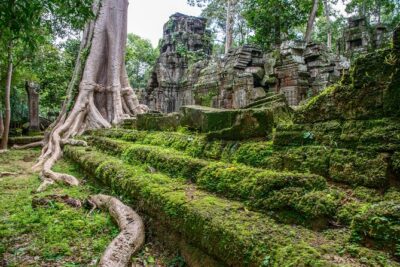
Angkor Wat Sunrise Bike Tour & Jungle Breakfast
Read our review →
Local Livelihood Half Day Bike Tour in Battambang
Read our review →Browse the lists this tour appears in