
Reviewed · CYCLING TOURS
Angkor Cycling Tour
Ancient temples look better from a bicycle seat. This seven-hour Angkor cycling tour mixes quiet forest trails with famous Khmer monuments, giving you a slower and more personal way to move around the temple complex. I especially like the 70 percent off-road route and the chance to watch birds around Jayatataka Baray. The main consideration is the Cambodian heat: 35 kilometers of riding can feel demanding, even though most of the route is rated medium and several riders found it fairly easy.
The tour also earns points for its practical support. You get a mountain bike, helmet, guide, lunch, snacks, water, spare parts, a first aid kit, and free tuk tuk transfers. You still need to buy your own temple pass, and the route is not suited to pregnant women or anyone uncomfortable with rough tracks.
In This Review
- Quick reasons to consider this ride
- Why a bicycle works so well at Angkor
- The 7:45 AM start and bike fitting
- Angkor Wat by moat and forest path
- Bakheng Hill and Angkor Thom’s ancient wall
- Bayon’s stone faces and lunch at Elephant Terrace
- Ta Nie, a quieter temple in the trees
- Birdwatching at Jayatataka Baray
- Ta Prohm and the famous tree roots
- The 12-kilometer ride back to Siem Reap
- What the $65 price really covers
- Who should book this Angkor ride?
- Should you book the Angkor Cycling Tour?
- FAQ
- How long is the Angkor Cycling Tour?
- What time does pickup begin?
- Is the temple pass included?
- How much of the route is off-road?
- What temples are included?
- What is included in the price?
- What should I wear and bring?
- Is the tour suitable for pregnant women?
- Can I cancel the tour for a refund?
Quick reasons to consider this ride
- Seventy percent off-road: Forest paths, single tracks, and countryside routes keep you away from much of the road traffic.
- A full Angkor circuit: The day includes Angkor Wat, Bayon, Angkor Thom, Ta Nie, Ta Prohm, and several lesser-used paths.
- Wildlife by Jayatataka Baray: Bring patience for cranes, egrets, kingfishers, butterflies, monkeys, and possibly freshwater otters.
- A useful medium-level challenge: Most of the riding is manageable, with a few moderate sections and plenty of breaks.
- Lunch beside the Elephant Terrace: A local meal breaks up the temple visits and gives your legs time to recover.
- Good practical coverage: Bikes come in all sizes, and the operator carries spare parts and a first aid kit.
Why a bicycle works so well at Angkor
Angkor is huge. The famous temples are not packed into one compact site, and moving between them by vehicle can make the day feel like a sequence of parking lots and short walks. On a bicycle, the spaces between monuments become part of the experience.
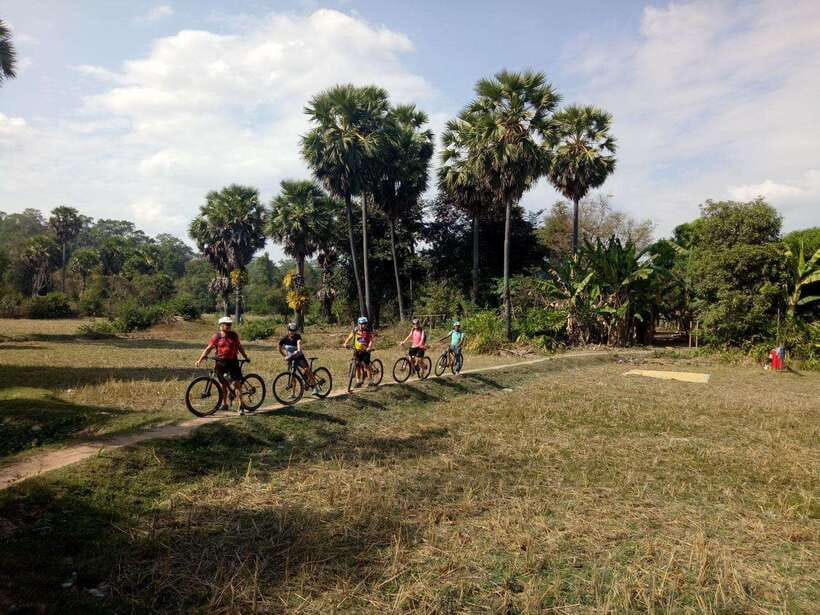
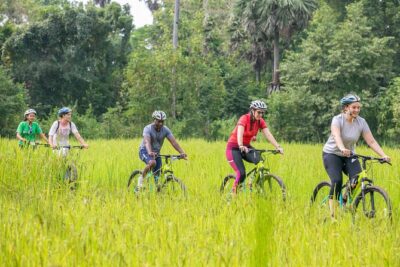
You ride beside the moat of Angkor Wat, follow the Siem Reap River, pass into rainforest tracks, and travel through sections of countryside and forest where the temples feel less crowded. The route uses paved roads for about 30 percent of the day, but most of the time you are on dirt paths or narrow tracks.
That mix is the heart of the tour. You still see the grand monuments, but you also get the sound and feel of the area around them. The ride offers a better sense of scale than a simple temple transfer. You begin to understand that Angkor was not just a group of stone buildings. It was a vast urban and religious center connected by water, roads, walls, and woodland.
I would not book this expecting a hard-core mountain bike challenge. The route is rated medium, and one rider described most of it as easy with only a few moderate sections. The challenge comes more from distance, heat, uneven surfaces, and the length of the day than from steep climbs.
More Bike Tours in Siem Reap
- Siem Reap Countryside Bike Tour / E-Bike or Tuk Tuk
★ 5.0 · 935 reviews - Angkor Sunrise Bike Tour / E-Bike or Tuk Tuk
★ 5.0 · 615 reviews - Siem Reap: Bike the Angkor Temples – Full-Day 30km Tour
★ 5.0 · 463 reviews
The 7:45 AM start and bike fitting
Pickup takes place about 15 minutes before the tour begins from the lobby of hotels, apartments, and Airbnbs in Siem Reap city. Depending on the size of the group, transport is by tuk tuk or minivan.
At the shop, you meet the guide and have a quick bike fitting. Mountain bikes are available in all sizes, and helmets are included. Give the staff your height in centimeters when booking, as this helps them prepare the right bike.
The early start is sensible. You want to reach Angkor Wat before the day becomes hottest, and an early departure also gives you a better chance of enjoying the first part of the route at a calm pace. Carry sunscreen and sunglasses. The sun can be strong even when the morning feels pleasant.
Wear closed-toe shoes. Light clothing is fine for the cycling, and shorts are allowed while riding, but you need spare clothing for the temple visits. Loose clothing is not allowed on the tour, so choose practical, fitted sportswear rather than anything that can catch on branches or bicycle parts.
Angkor Wat by moat and forest path
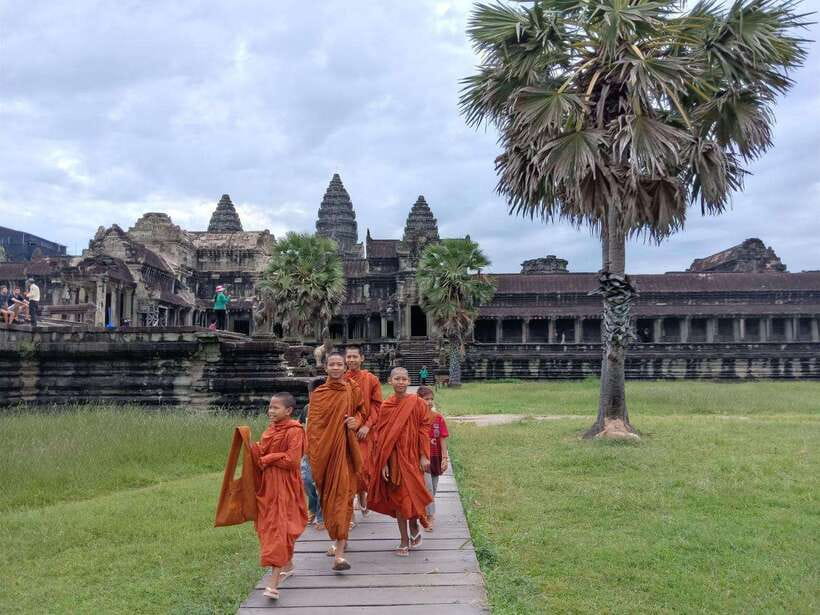
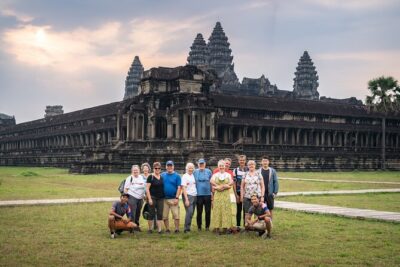
The first major stop is Angkor Wat, where you spend about two hours with your guide. The approach by bicycle sets the tone. Rather than arriving only by vehicle, you ride along the ancient moat and reach the temple as part of a larger route through water, trees, and old access roads.
Angkor Wat deserves time. Its scale can be hard to grasp from photographs, and two hours gives you room to walk, look closely, take pictures, and hear the stories behind the stone carvings. The guide leads the visit in English or Spanish, depending on the booking.
This is also the most physically gentle section of the day. You have already started riding, but the long temple walk is broken up by time on foot rather than continuous cycling. Take advantage of the water and snack support here. You will want both later.
The only catch is the temple pass. It is not included in the $65 tour price, so budget for that separately. This is an important extra cost, but it is unavoidable for the Angkor sites included in the route.
Bakheng Hill and Angkor Thom’s ancient wall
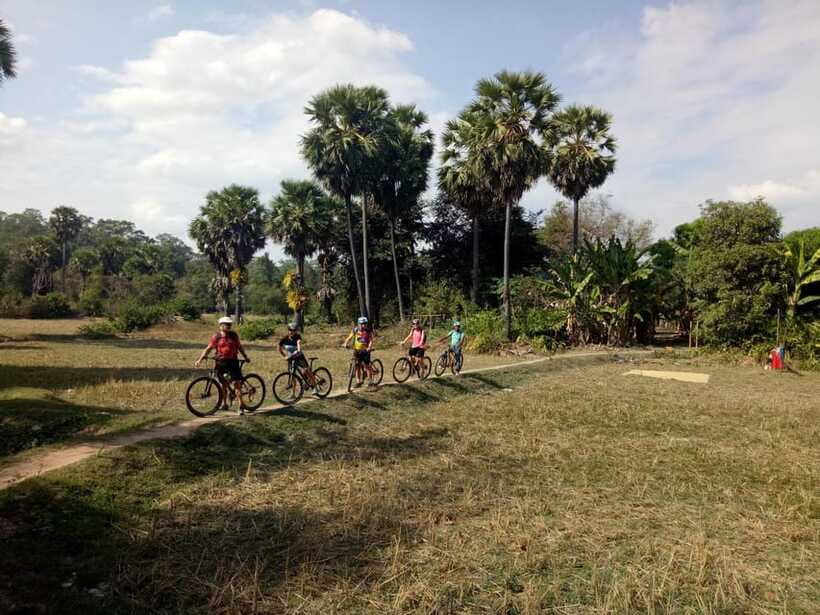
After Angkor Wat, the tour follows the moat and heads toward the forest trails around Bakheng Hill. This is where the route feels more adventurous. You leave the main paved stretches and use off-road tracks that lead away from the heaviest flow of sightseeing traffic.
The route then enters Angkor Thom through the South Gate. One of the day’s memorable sections is riding on top of the ancient city wall. It is an unusual way to see the complex, and it gives you a strong sense of the scale of Angkor Thom’s defensive system.
The surface here matters. A bicycle makes the wall section possible in a way that a standard vehicle tour cannot match, but narrow or uneven tracks require attention. You should be comfortable steering over rough ground and slowing down when needed. This is not a race. The point is to enjoy the route, not to prove anything to the person ahead of you.
A stop at the Ghost Gate adds a quieter historical moment. The guide shares stories and allows time for photographs. The name alone gives the place a little mystery, but the real pleasure is the contrast with the grander temple stops. You are seeing a less polished part of Angkor and moving through it under your own power.
Something completely different for another day:
- Angkor Wat Sunrise or Sunset Tour with Guide from Siem Reap
★ 5.0 · 12,109 reviews - Siem Reap: Angkor Wat: Small-Group Sunrise or Sunset Tour
★ 5.0 · 9,444 reviews - From Siem Reap: Kampong Phluk Floating Village Tour by Boat
★ 4.9 · 6,979 reviews - Sunset tour of Kampong Phluk stilts home village on the Tonle Sap
★ 5.0 · 4,865 reviews
Bayon’s stone faces and lunch at Elephant Terrace
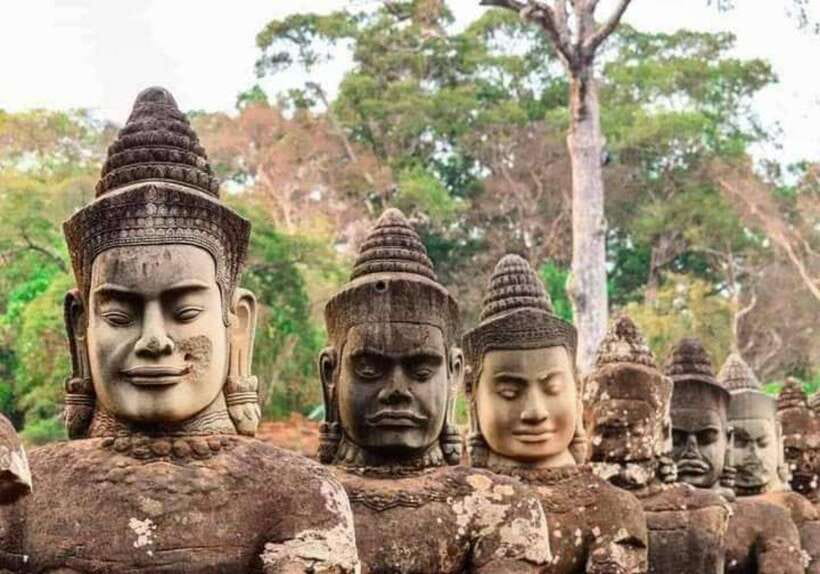
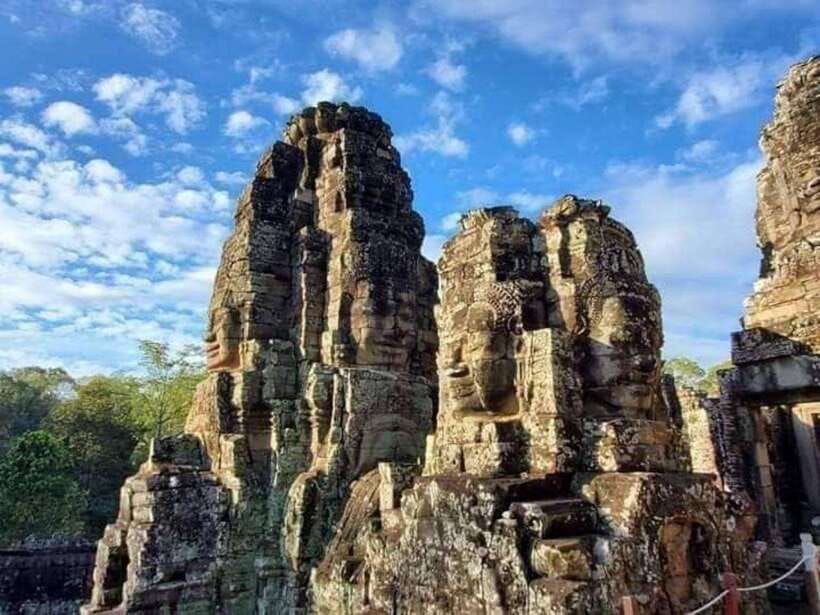
About one kilometer from the Ghost Gate, you reach Bayon Temple. Its carved faces are among the most recognizable images in Cambodia, with calm expressions looking out from the towers. Bayon feels different from Angkor Wat. Angkor Wat impresses through scale and symmetry, while Bayon rewards close attention to its carved details and unusual layout.
The cycling makes this stop feel well placed. You have had a substantial ride through Angkor Thom, then a short transfer by bicycle brings you to one of the complex’s essential monuments. The tour does not rush straight from one major temple to another by vehicle.
Lunch follows at a local restaurant in front of the Elephant Terrace. This is a practical break, not a decorative luxury. By this point, you have ridden through forest tracks, visited major stone sites, and spent time in the sun. A meal, cold water, seasonal fruit, and snacks give you a chance to reset.
The setting also helps. The Elephant Terrace was used as a grand platform for royal processions, and lunch nearby connects the modern stop with the ceremonial world of Angkor Thom. Khmer specialties are included, though the supplied details do not list the exact menu, so tell the operator about any dietary needs before the ride if necessary.
Ta Nie, a quieter temple in the trees
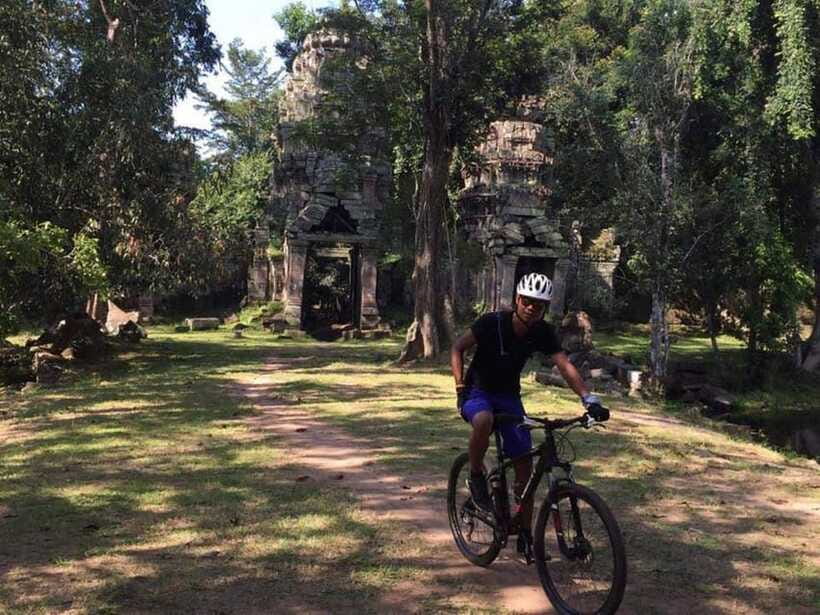
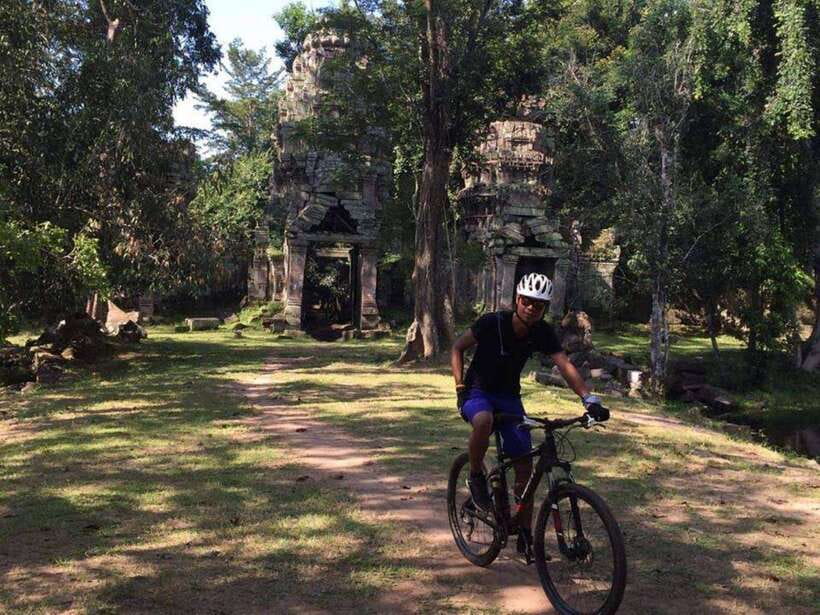
Ta Nie is one of the stops that makes this route different from a standard first-time Angkor circuit. The temple is smaller and more secluded, with forest around the stonework. You do not visit only the sites that appear on every postcard. You also reach a sanctuary where the setting is part of the appeal.
The approach is by bicycle through forest tracks, so the ride and the stop belong together. Ta Nie is less about a single overwhelming view and more about finding traces of the Angkorian world along a quieter path.
This part of the day may appeal most to people who like atmosphere and exploration. If your priority is seeing every major carving at length, the time spent cycling to smaller sites means less time available for extended temple study. For me, that trade is worthwhile because the route gives you a more varied day.
The operator also describes a peaceful tree nursery garden along the way. It is a small detail, but it fits the tour’s wider balance between monuments and living surroundings.
Birdwatching at Jayatataka Baray
Jayatataka Baray is a welcome pause after the temple visits. The water area supports birdlife, and you might spot cranes, egrets, lesser whistling ducks, or kingfishers. Butterflies and monkeys may also appear, and with luck you could see freshwater otters playing in the river.
Wildlife sightings are never guaranteed, so bring the right attitude. This is not a formal animal-watching excursion with fixed sightings. It is a chance to stop, look, and notice the natural side of Angkor that can be missed when you focus only on stone towers.
The stop also gives the ride a useful rhythm. Temple visits involve walking, stairs, heat, and concentration. A quiet break near the water lets you cool down and watch the surroundings before the final major temple.
Bring a phone or camera, but do not let it replace your attention. A kingfisher may appear for only a moment, and the peaceful value of the stop does not depend on getting a perfect photograph.
Ta Prohm and the famous tree roots
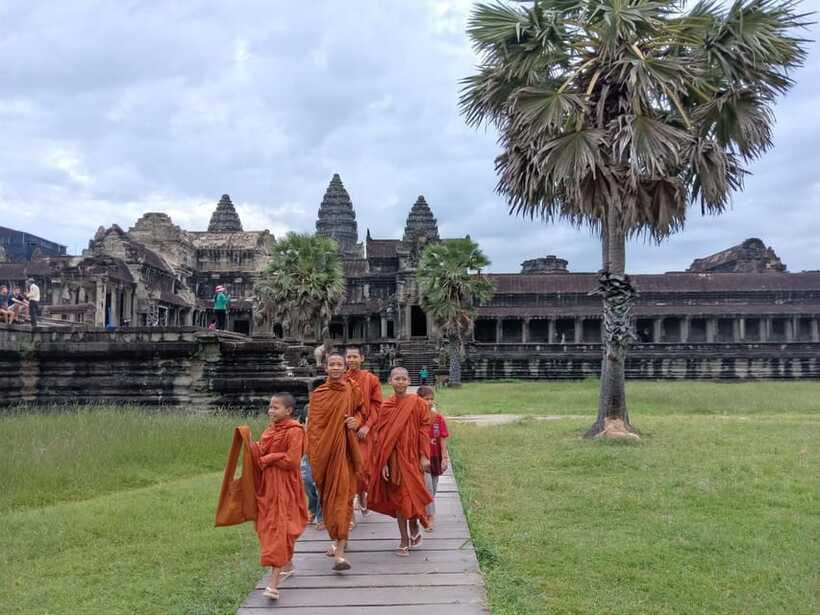
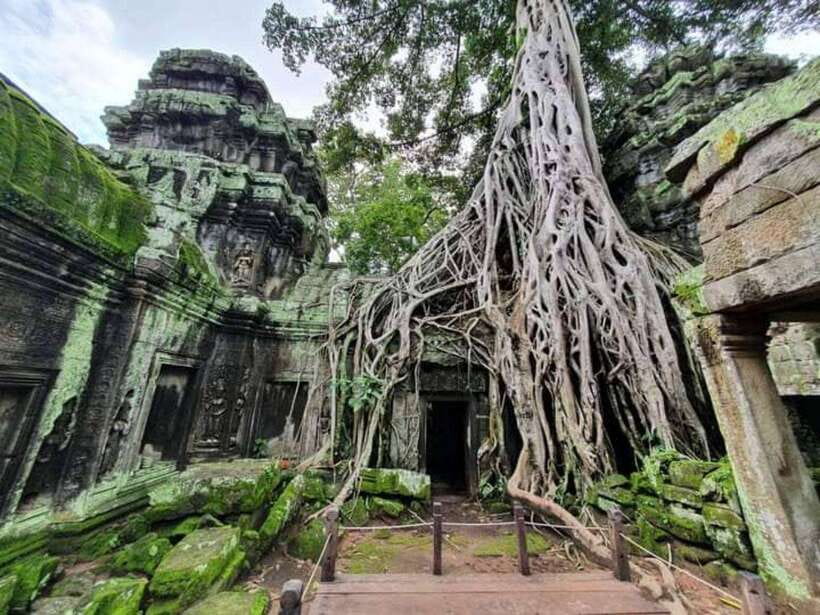
The final headline temple is Ta Prohm, the site often associated with the film Tomb Raider. Huge tree roots grip the stone walls, creating the famous meeting point of jungle and architecture.
Ta Prohm can be busy, but reaching it after a day of forest cycling gives the visit extra meaning. You have already seen trees, waterways, smaller ruins, and old walls. The roots here are not an isolated spectacle. They complete the day’s theme of nature and monuments sharing the same space.
Allow yourself time to look beyond the most photographed corners. Ta Prohm has crumbling galleries, courtyards, and carved stone details that reward a slower walk. The tour includes a guided visit, but you should still expect some independent time for photographs and quiet observation.
This is also the point when tired legs may make themselves known. The tour is seven hours, and Ta Prohm comes after most of the day’s riding. Drink at every temple break rather than waiting until you feel thirsty.
The 12-kilometer ride back to Siem Reap
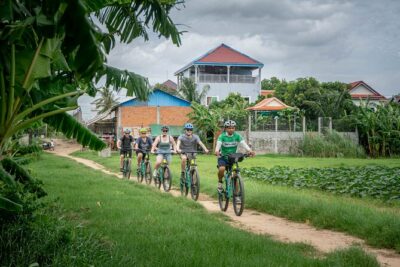
The return covers about 12 kilometers on winding single tracks and smoother bike lanes. This final stretch brings the day back toward town with a mix of adventure and easier riding.
It is a good finish because you do not simply return in a vehicle after the last temple. You get one more chance to enjoy the paths and let the day settle. At the same time, the smoother sections give you a break after the rougher forest trails.
You return to Siem Reap Province or Krong Siem Reap, depending on the selected drop-off point. Free tuk tuk transfers are included, which is useful if the final section leaves you hot and tired.
What the $65 price really covers
At $65 per person, the tour offers solid value if you want more than transport between temples. The price includes the bicycle, helmet, English or Spanish speaking guide, lunch, water, snacks, seasonal fruit, temple break refreshments, transfers, spare parts, and a first aid kit.
The guide is a major part of the value. One verified booking described a patient and dedicated guide, while another praised the personal approach and good mood provided by the guide from Camouflage Adventure Cambodia. Another rider called the day well organized and said the guide was accommodating. Those details matter because a long bike route can quickly become frustrating if the pace or support is poor.
The temple pass is extra, as are travel insurance and personal expenses. Factor the pass into your total budget before booking. Even with that addition, the package is attractive for anyone who would otherwise pay separately for transport, a guide, food, and bike hire.
Free cancellation up to 24 hours before the tour and a reserve now, pay later option also make the booking less risky. The activity is valid for seven hours from activation.
Who should book this Angkor ride?
I would recommend this tour to you if you want a full day that combines major temples with quieter routes. It is especially suitable if you like cycling, want some distance from the busiest paths, and prefer a slower pace than a vehicle-based circuit.
It also suits people who want variety. You get monumental architecture at Angkor Wat, Bayon, and Ta Prohm, but you also get forest tracks, ancient walls, a smaller temple, a water stop, and a local lunch.
You should think twice if you dislike heat, dirt tracks, or long days outdoors. The medium rating does not mean effortless. The 35-kilometer distance, uneven surfaces, and Cambodian sun still demand reasonable fitness.
Pregnant women should not book this activity. You also need closed-toe shoes, practical clothing, sunscreen, sunglasses, and modest clothing for temple visits. Pack spare clothes so you can change after cycling before entering the sacred sites.
Should you book the Angkor Cycling Tour?
Book it if you want Angkor to feel like a place rather than a list of monuments. The strongest features are the 70 percent off-road route, the ride along Angkor Thom’s wall, the peaceful wildlife stop at Jayatataka Baray, and the patient guide support described in the feedback.
Choose another option if you want the shortest possible route between temples or a fully air-conditioned day. For most reasonably fit visitors, though, this is a well-balanced way to see Angkor. You get the famous ruins, the forgotten paths, a proper lunch, and enough practical support to keep the adventure enjoyable.
FAQ
How long is the Angkor Cycling Tour?
The tour lasts seven hours and covers about 35 kilometers.
What time does pickup begin?
The tour starts at 7:45 AM. Pickup is provided about 15 minutes before the start from hotel, apartment, and Airbnb lobbies in Siem Reap city.
Is the temple pass included?
No. The Angkor temple pass is required but not included in the $65 price.
How much of the route is off-road?
About 70 percent of the route uses off-road trails. The remaining 30 percent uses paved roads.
What temples are included?
The route includes Angkor Wat, Bayon, Ta Nie, and Ta Prohm. It also visits Angkor Thom’s wall, the Ghost Gate, the Elephant Terrace, and areas around Bakheng Hill.
What is included in the price?
The price includes a mountain bike, helmet, guide, lunch at a local restaurant, water, snacks, seasonal fruit, a first aid kit, spare bike parts, and free tuk tuk transfers.
What should I wear and bring?
Wear closed-toe shoes and light, breathable clothing. Bring sunscreen, sunglasses, and spare clothing for temple visits. Shorts are allowed while cycling, but temple clothing must be modest.
Is the tour suitable for pregnant women?
No. The activity is not suitable for pregnant women.
Can I cancel the tour for a refund?
Yes. You can cancel up to 24 hours in advance for a full refund. A reserve now, pay later option is also available.
Newest reviews from Siem Reap
- War Museum, Killing Field, and APOPO Hero RATs Tour★ 5.0 · 7 reviews
- Angkor Wat at Sunrise★ 4.0 · 7 reviews
- Siem Reap Angkor Airport Taxis (from Airport to Hotel)★ 5.0 · 44 reviews
- Cambodian Cooking Class and Oxcart Ride with Local Village Tour★ 5.0 · 4 reviews
- Secret Temples of Angkor – Guided Tour in Siem Reap★ 5.0 · 6 reviews
- Short Cycling at Countryside★ 5.0 · 29 reviews
- SIEM REAP E-BIKE HALF-DAY COUNTRYSIDE (25-30 km)★ 4.0 · 1 review
- Unveiling the Mystical Beauty of Phnom Kulen National Park★ 5.0 · 6 reviews
Cycling Tours, compared.
Siem Reap Countryside Bike Tour / E-Bike or Tuk Tuk
Read our review →
Phnom Penh Silk Island Bike Tour/ E-Bike or Tuk Tuk
Read our review →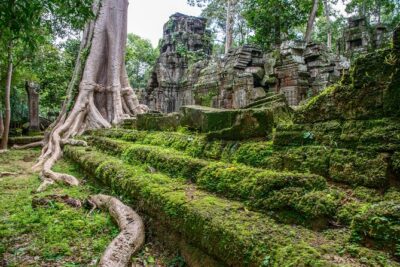
Angkor Wat Sunrise Bike Tour & Jungle Breakfast
Read our review →
Local Livelihood Half Day Bike Tour in Battambang
Read our review →Browse the lists this tour appears in