
Reviewed · BENG MEALEA TOURS
5-Day All Major Temples & Kulen Mount Waterfall & Koh Ker & Beng Mealea
Angkor is only the beginning. This five-day private tour from Siem Reap reaches the famous temples, remote ruins, Phnom Kulen National Park, a craft center, and a local market. I like the mix of major sights and quieter out-of-town stops, and I like having an air-conditioned vehicle, drinking water, and cool towels throughout the long days.
The guide and driver pairing is another strong point. Thean, the English-speaking guide, is praised for detailed Khmer Empire explanations, while SAN is described as a skilled and polite driver who kept the vehicle supplied with water and cool towels. The main drawback is cost: the $455 tour price excludes accommodation, meals, and all major entrance fees, so your final bill will be higher.
In This Review
- Key points at a glance
- Five days that cover far more than Angkor Wat
- Day one: Angkor Thom and the first grand view of Angkor Wat
- Day two: sunrise, Roluos, and the pink stone of Banteay Srei
- Day three: Koh Ker and the rough beauty of Beng Mealea
- Day four: quieter temples, Ta Prohm, and Phnom Bakheng
- Day five: Phnom Kulen, local crafts, and Siem Reap’s Old Market
- What the $455 price really includes
- Thean and SAN make the long schedule easier
- Who should book this five-day temple tour?
- Should you book it?
- FAQ
- Is accommodation included?
- Are temple entrance fees included?
- Is this a private tour?
- What transport is provided?
- Are meals included?
- Can I skip the sunset at Phnom Bakheng or the Old Market?
Key points at a glance
- Five full days from Siem Reap: You cover Angkor, the Roluos temples, Banteay Srei, Koh Ker, Beng Mealea, Phnom Kulen, and more.
- Private transport with Thean and SAN: Your group travels in a private air-conditioned vehicle rather than joining a large coach.
- Remote ruins add variety: Koh Ker and Beng Mealea bring a rougher, quieter feel than the polished central Angkor sites.
- Sunrise and sunset are included: Day two begins at Angkor Wat before dawn, while day four offers sunset at Phnom Bakheng.
- Entrance fees are extra: Plan on $72 for Angkor and its temples, $15 for Koh Ker, and $20 for Kulen Mountain.
- Accommodation stays flexible: You choose and pay for your own hotel or guest house in Siem Reap.
Five days that cover far more than Angkor Wat
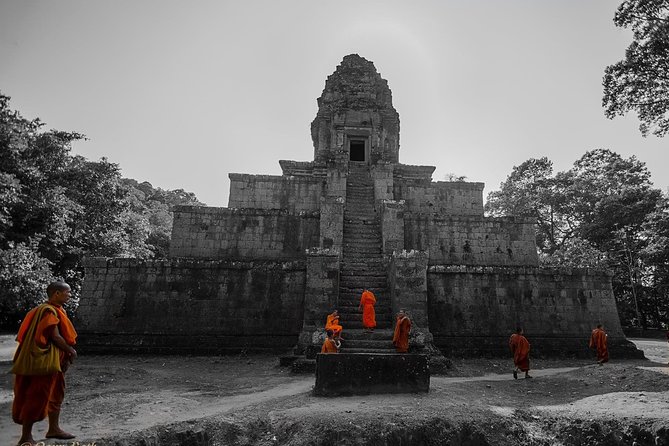
This is a serious temple itinerary. You are not getting one morning at Angkor Wat followed by a quick photo stop elsewhere. You spend five days moving through royal cities, temple mountains, jungle ruins, countryside roads, and sacred sites outside the main Angkor complex.
That breadth is the tour’s greatest strength. I would choose it if you want Cambodia’s Khmer-era monuments to feel like a connected story rather than a collection of famous names. You also get the convenience of returning to the same Siem Reap base each night, since accommodation is not built into the package.
The pace is demanding. Several days begin early or involve long drives, and day three reaches sites more than 150 kilometers northeast of Siem Reap. You should be comfortable with walking, uneven temple surfaces, stairs, heat, and long stretches in a vehicle.
More trips out to Beng Mealea:
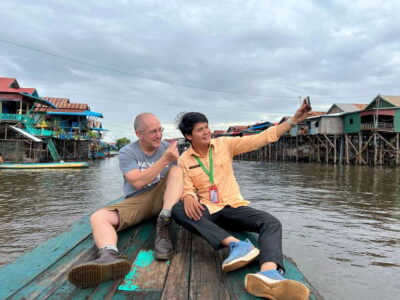
- Siem Reap: Kulen Mountain, Beng Mealea and Tonle Sap Tour
★ 5.0 · 1,483 reviews - Kulen Mountain with Beng Mealea and Tonle Sap Small Group Tour
★ 5.0 · 780 reviews - Koh Ker Temple Group & Beng Mealea Full-Day Join-in Tour
★ 5.0 · 710 reviews
Day one: Angkor Thom and the first grand view of Angkor Wat
Pickup begins at 8:00am from your hotel or guest house. The route first goes toward the temple pass office, where you arrange the Angkor admission needed for the day. Since the pass is not included, bring this expense into your budget before you start.
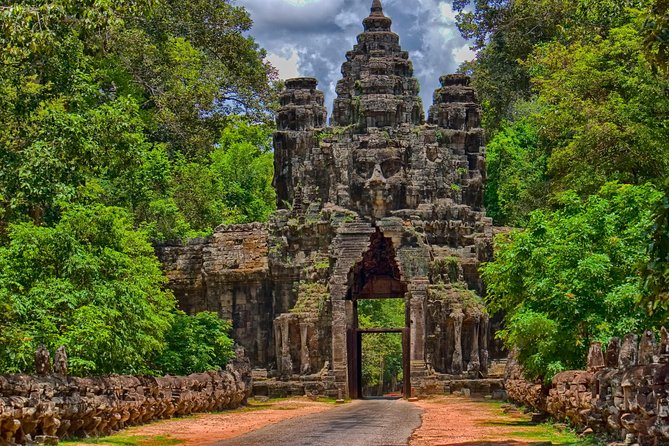
The morning begins at Angkor Thom’s South Gate, a short stop that introduces the walled city. From there, you reach Bayon, the complex’s visual star. Its towers carry the famous serene faces associated with Avalokitesvara, and the guide can help you make sense of the repeated faces, galleries, and royal symbolism instead of leaving you with only a quick photograph.
Allow about an hour at Bayon. The nearby Baphuon gives you a different look, with its tall Hindu temple structure and a later reclining Buddha built behind it. The walk continues through the Royal Enclosure and to Phimeanakas, a pyramid temple once located within the old royal palace area.
The Terrace of the Elephants and Terrace of the Leper King are shorter stops, but they help explain how Angkor Thom functioned as a royal center. Carved elephants line the first platform, while the second has detailed reliefs that are easy to miss without a guide.
After that, you pass through the Victory Gate and visit Chau Say Tevoda and Thommanon. These smaller temples are close together, so you can compare their Angkor-era design without spending much time in the vehicle.
The afternoon is reserved for Angkor Wat, with about three and a half hours scheduled. That is enough time to see the outer galleries and central structure at a useful pace, though you may still wish for more time if you study every carved panel.
Angkor Wat began as a Hindu temple dedicated to Vishnu and later became a Buddhist site. That change is part of what makes a guided visit worthwhile. The building is not simply large and photogenic; it reflects changing religious use across centuries.
Lunch is not included, and the suggested meal cost is about $5 per person, depending on the menu. Ask your guide how the day’s timing will work so you know whether you have a relaxed meal or a quick break between temples.
Day two: sunrise, Roluos, and the pink stone of Banteay Srei
The second day starts at 5:00am for sunrise at Angkor Wat. This is an early start, but it gives you a chance to see the temple in its best-known morning setting before the day’s heat builds. Sunrise conditions can vary, so think of the early departure as a chance to see the temple at dawn, not a guarantee of a dramatic sky.
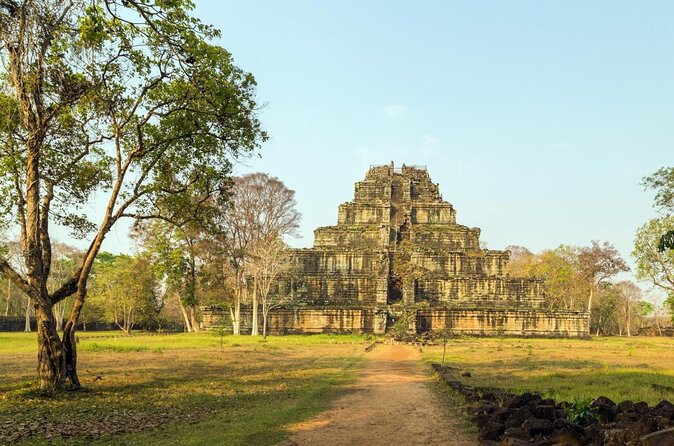
After Angkor Wat, the route heads to the Roluos Group. Preah Ko was the first temple built in the ancient city of Hariharalaya, while Bakong is the largest and one of the earliest major sandstone temple mountains in the group. Lolei is smaller, but its ninth-century date helps show how Khmer temple design developed before the great Angkor monuments.
Banteay Srei is the day’s big visual change. Built from pink sandstone in the tenth century, it is known for fine carvings and a more compact scale than Angkor Wat. The site is associated with Shiva and was built under King Rajendravarman II.
You also visit Banteay Samre, a twelfth-century Hindu temple whose form is often compared with Angkor Wat. Its location makes it a useful companion to Banteay Srei, since you see both delicate pink sandstone work and a larger, more fortified-looking temple style on the same day.
Pre Rup is a temple mountain from the late tenth century. Its name is commonly connected with turning the body and funeral rites, although you should ask your guide how local interpretation frames that association. The temple gives you a strong sense of the stepped design used for Hindu monuments.
After lunch, the route includes Banteay Kdei, a Buddhist temple from the period of King Jayavarman VII. The itinerary gives about 45 minutes here. It is a shorter visit than the time allocated at Angkor Wat, but the change of scale helps prevent every temple from blending into the next.
Day three: Koh Ker and the rough beauty of Beng Mealea
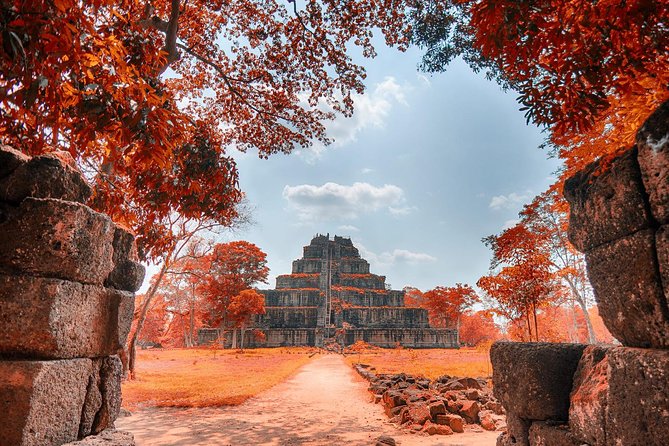
Day three is the most ambitious road day. Koh Ker lies more than 150 kilometers northeast of Siem Reap and served briefly as the Khmer Empire’s capital from 928 to 944.
The Koh Ker group includes several temples, with around four hours set aside for exploration. This is where the tour moves beyond the standard Angkor circuit. The distance takes time, but it also gives the day a more remote character and shows that Khmer power extended well beyond the monuments most people see from Siem Reap.
Your vehicle matters here. Private air-conditioning, road tolls, parking fees, water, and cool towels are included, which makes the long transfer easier. SAN’s driving is especially important on a day built around substantial time on the road.
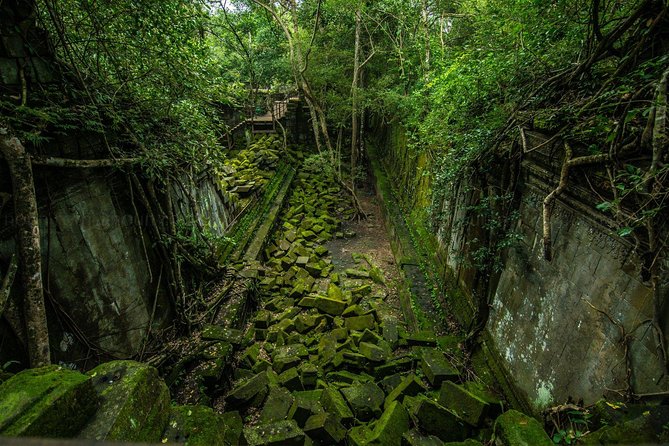
Beng Mealea follows with about 90 minutes. Nature has spread across the temple, and the site is known for its collapsed galleries, broken stones, and rougher paths. It was built on a plan similar to Angkor Wat, but the experience is less formal and more exploratory.
I would not choose this day if you want only polished, easy-to-reach ruins. I would choose it if you like seeing temples in a less restored condition. Wear practical footwear, since uneven stones and broken sections can make the visit more physical than the central Angkor stops.
More trips out to Koh Ker:
- From Siem Reap: Koh Ker and Beng Mealea Temples Tour
★ 4.9 · 293 reviews - Preah Vihear: Full-Day Preah Vihear and Koh Ker Temple Tour
★ 4.9 · 263 reviews - Full-Day Preah Vihear, Koh Ker and Beng Mealea Private Tour
★ 4.4 · 101 reviews - Preah Vihear temple – Koh Ker & Other temple with Small Group
★ 5.0 · 96 reviews
Day four: quieter temples, Ta Prohm, and Phnom Bakheng
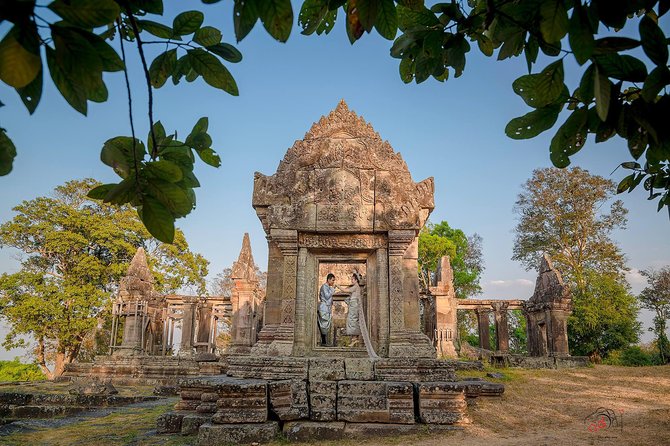
Day four returns to the Angkor area but focuses on the Grand Circuit and smaller sites. Preah Khan is a large Buddhist temple built by King Jayavarman VII and dedicated to his father. Give yourself time to notice the long corridors and layers of construction rather than rushing straight to the most photographed doorway.
Neak Pean is unusual because it sits on a small island in the middle of the last Baray reservoir. Krol Ko is a much smaller Buddhist temple nearby, with only about ten minutes scheduled. These stops are brief, but they show how water, religious sites, and royal planning worked together.
Ta Som is another small Buddhist temple, located east of Neak Pean. It receives about 30 minutes, enough for a compact visit and photographs without turning the stop into a major walk.
Eastern Mebon brings you back to a larger temple mountain. Its three levels and five towers are joined by large elephant statues at the corners. This is a good place to compare temple proportions with the monuments seen earlier in the trip.
The route then includes Ta Keo, a large Hindu temple mountain dedicated to Shiva, and Ta Nei, a small, quiet temple surrounded by large trees. Ta Nei is one of the better choices for a slower moment because it has seen less restoration and is presented as a place for avoiding crowds.
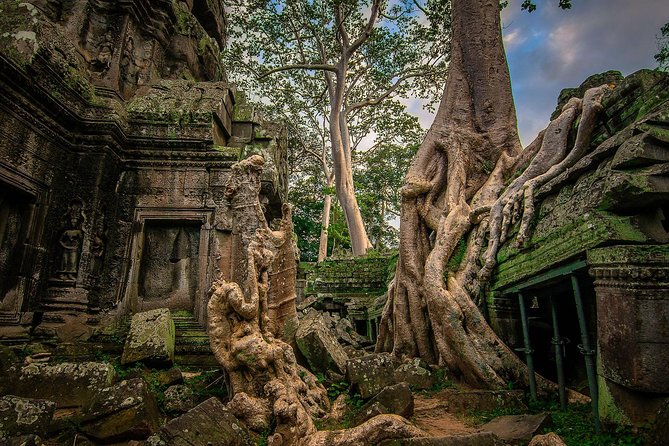
Ta Prohm is the headline stop of the afternoon. Its giant tree roots and partially overtaken galleries made it famous as the setting associated with the film Tomb Raider. The fame means it is not necessarily quiet, but the roots and stonework still create a powerful sight.
Prasat Kravan is a small brick temple, a useful contrast with the sandstone monuments elsewhere. The day ends at Phnom Bakheng, where you can climb the hill and wait for sunset. Access is limited by the number of people allowed at the top, so arriving does not guarantee that you will reach the viewing area.
You can skip the sunset if you do not want to wait. That flexibility is valuable after a long day, especially if you prefer dinner and rest to standing in a queue for a view.
Day five: Phnom Kulen, local crafts, and Siem Reap’s Old Market
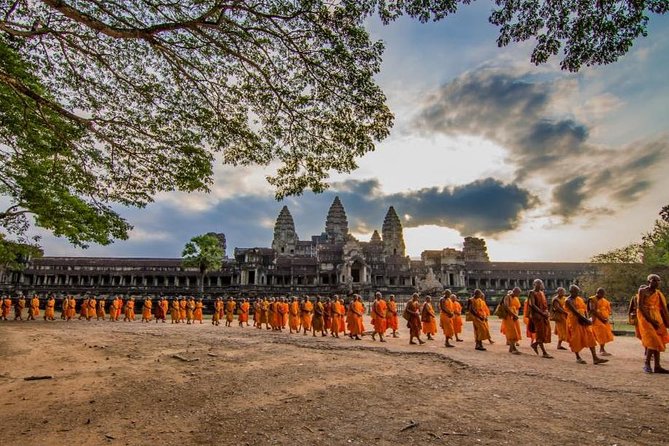
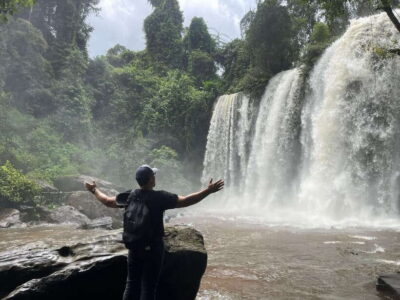
The final day leaves the main Angkor Park for Phnom Kulen National Park, more than 60 kilometers from Angkor. The site is not simply another temple stop. You see a riverbed carved with lingas, symbols linked with Shiva, and the itinerary also includes a waterfall.
About five hours are planned here, making it the main event of the day. The Kulen admission fee is extra at $20 per person. Because the area differs from the Angkor temples, this visit adds religious and natural variety to a schedule otherwise dominated by stone monuments.
After Kulen, you visit Artisans Angkor for about 30 minutes. The center is known for traditional craft skills including stone carving, wood carving, lacquering, gilding, and silk processing. This stop gives you a look at living craft traditions rather than only ancient construction.
The last stop is Psar Chaa, the Old Market in central Siem Reap. You have about an hour there, but the stop is optional. If you want time for shopping or a look at local market life, keep it. If five days of temples have filled your head and camera, you can ask to skip it and return to your hotel.
What the $455 price really includes
At $455 per person, the tour provides a private air-conditioned vehicle, driver, licensed English-speaking guide, water, cool towels, parking fees, road tolls, and hotel pickup and return. The private format is important because your group can avoid the fixed pace of a large bus and discuss which optional parts, such as Phnom Bakheng sunset or the Old Market, are worth keeping.
The advertised price does not include the major costs that make this trip work. Add:
- $72 per person for Angkor and all listed temple admission
- $15 per person for Koh Ker
- $20 per person for Phnom Kulen
- About $5 per person for lunch, depending on the menu
- Your own hotel or guest house
That brings the tour and stated entrance fees to at least $562 per person before meals and accommodation. For a five-day private service with a dedicated guide and driver, that can be reasonable if you value convenience and depth. It is less attractive if you only want the main Angkor highlights and do not care about Koh Ker or Kulen.
The tour is booked an average of 40 days ahead, which suggests you should plan early if your dates are fixed. Confirmation is provided at booking, and cancellation is free up to 24 hours before the start time. Changes or cancellations inside that window are not refunded.
Thean and SAN make the long schedule easier
The strongest personal detail connected with this experience is the guide and driver team. Thean is praised for extensive Khmer Empire explanations and for pointing out small details in the temples. That matters at Bayon, Preah Khan, and Ta Prohm, where a short explanation can turn scattered stones and carvings into a readable place.
SAN is praised for skilled, polite driving. On a program with early pickups, remote roads, and long transfers, that is not a minor detail. The vehicle also carries drinking water and cool towels, simple comforts that become very welcome between exposed temple visits.
Since this is a private activity, only your group participates. You can ask for more time at a favorite site when the day allows, or skip Phnom Bakheng sunset and the Old Market. The published schedule is packed, so do not assume every stop can be extended without affecting later visits.
Who should book this five-day temple tour?
I would recommend it to anyone who wants a broad first look at Cambodia’s Khmer monuments from one Siem Reap base. It suits people who enjoy a full sightseeing schedule, want both famous and remote temples, and prefer a private guide over arranging separate taxis and admissions each day.
It is also a strong fit for visitors who value historical explanation. Thean’s detailed approach, as described, should help you understand why Bayon differs from Angkor Wat, how the Roluos Group fits into the story, and why Beng Mealea feels so different from a restored monument.
I would hesitate if you dislike early mornings, long road transfers, steep or uneven temple routes, or repeated full days of sightseeing. You also need to budget beyond the headline price. The tour does not include hotels, lunches, or admission tickets, and the total cost is much closer to $562 per person before those extras.
Should you book it?
Book this tour if you want the widest temple coverage in five days and like having the same private vehicle, driver, and guide throughout. Thean and SAN are a particularly appealing pairing, and the mix of Angkor classics, quiet Ta Nei, remote Koh Ker, overgrown Beng Mealea, and Phnom Kulen gives the trip real range.
Choose a shorter or more focused plan if Angkor Wat, Bayon, and Ta Prohm are your only priorities. This experience earns its price through coverage and convenience, but it asks you to trade leisure time for a very full Cambodian itinerary.
FAQ
Is accommodation included?
No. You choose and pay for your own hotel or guest house in Siem Reap.
Are temple entrance fees included?
No. Angkor and all listed temples cost $72 per person, Koh Ker costs $15, and Phnom Kulen costs $20.
Is this a private tour?
Yes. Only your group participates in the activity.
What transport is provided?
The tour includes a private air-conditioned vehicle with a driver, hotel pickup and return, parking fees, road tolls, drinking water, and cool towels.
Are meals included?
No. Lunch is not included. The stated guide price for lunch is about $5 per person, depending on the menu.
Can I skip the sunset at Phnom Bakheng or the Old Market?
Yes. The Phnom Bakheng sunset can be skipped if you do not want to wait, and the Old Market visit is also optional.
More Multi-day Routes in Siem Reap
- Siem Reap: Angkor Wat 2-Day Tour with Sunrise and Sunset
★ 4.9 · 4,429 reviews - Angkor 2-Day Sunset & Sunrise Small-Group Tour
★ 5.0 · 2,567 reviews - Siem Reap: Angkor Sunrise 1- or 2-Day Guided Temples Tour
★ 4.9 · 1,132 reviews - 2-Day Angkor Wat With Small, Big Circuit and Banteay Srei Tour
★ 5.0 · 545 reviews
Newest reviews from Siem Reap
- War Museum, Killing Field, and APOPO Hero RATs Tour★ 5.0 · 7 reviews
- Angkor Wat at Sunrise★ 4.0 · 7 reviews
- Siem Reap Angkor Airport Taxis (from Airport to Hotel)★ 5.0 · 44 reviews
- Cambodian Cooking Class and Oxcart Ride with Local Village Tour★ 5.0 · 4 reviews
- Secret Temples of Angkor – Guided Tour in Siem Reap★ 5.0 · 6 reviews
- Short Cycling at Countryside★ 5.0 · 29 reviews
- SIEM REAP E-BIKE HALF-DAY COUNTRYSIDE (25-30 km)★ 4.0 · 1 review
- Unveiling the Mystical Beauty of Phnom Kulen National Park★ 5.0 · 6 reviews
Beng Mealea Tours, compared.
Kulen Mountain, Beng Mealea and Tonle Sap Tour
Read our review →
Kulen Mountain with Beng Mealea and Tonle Sap Small Group Tour
Read our review →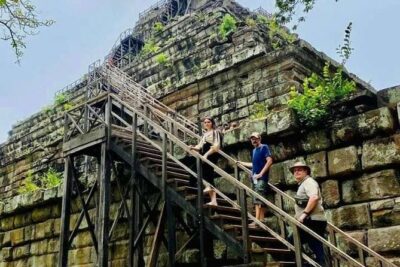
Koh Ker Temple Group & Beng Mealea Full-Day Join-in Tour
Read our review →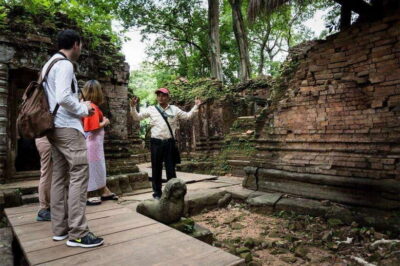
Banteay Srei, Kulen Waterfall & Beng Mealea Exploration
Read our review →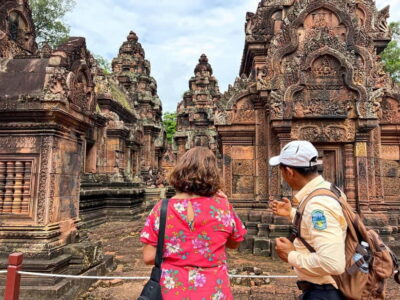
Banteay Srei, Beng Mealea and Kulen Mountain with Picnic
Read our review →Kulen Mountain, Beng Mealea, and Tonle Sap Tour
Read our review →
Private Beng Mealea and Floating Village Tour with Sunset
Read our review →Browse the lists this tour appears in