
Reviewed · TONLE SAP TOURS
3-Day ‘Temples & Tonle Sap’ Tour
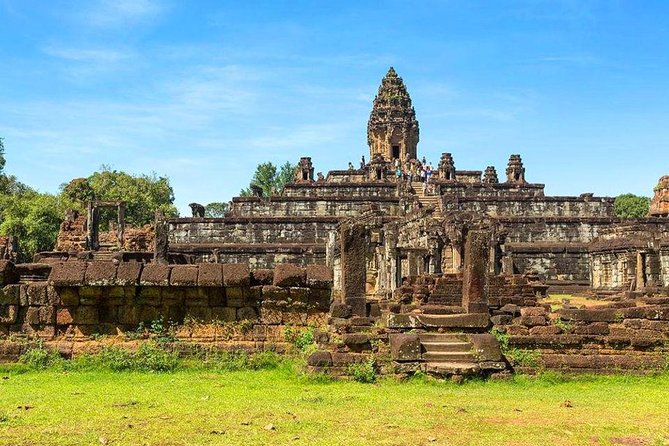
Angkor rewards careful planning. This three-day private tour packs Siem Reap’s biggest sights into a clear route, from Bayon and Angkor Wat to the stilt villages of Tonle Sap and the early Khmer temples at Roluos.
I like the included hotel transfers and air-conditioned vehicle, which remove much of the daily guesswork. I also like the English-speaking guide, motorized boat ride, bottled water, and cold towels. The main drawback is the pace: this is an action-packed program with plenty of walking, early starts, and long temple days.
In This Review
- Five things to know before booking
- Why this route works for a short Siem Reap stay
- Day 1: Bayon faces, jungle ruins, and Angkor Wat
- Day 2: Sunrise, remote temples, and Banteay Srei
- Day 3: Tonle Sap life at Kampong Phluk
- What the $250 price really covers
- Pace, comfort, and practical limits
- Who should book this Siem Reap tour?
- FAQ
- What is included in the tour price?
- Is the Angkor temple pass included?
- How much is the seven-day Angkor pass?
- Are meals included?
- Is this a private tour?
- What time does the tour begin?
- Does the tour include hotel transfers?
- Is the boat ride at Tonle Sap included?
- Is the tour suitable for children?
- Can I cancel for a full refund?
- Should you book it?
Five things to know before booking
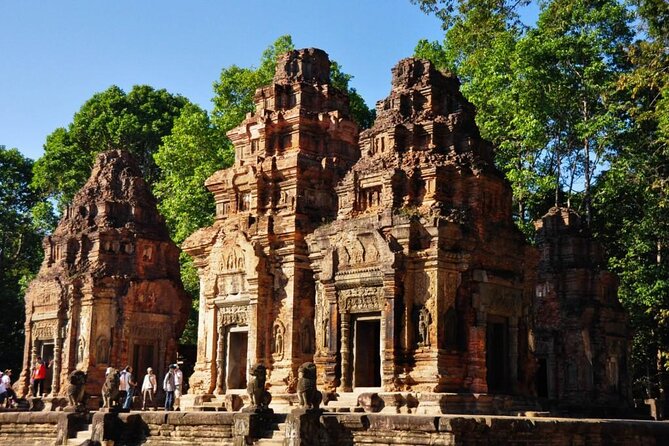
- Angkor Wat appears twice: You visit the famous temple on Day 1, then return before dawn on Day 2 for sunrise.
- The route goes beyond the headline sights: Bayon, Ta Prohm, and Angkor Wat share the schedule with Roluos, Banteay Samre, East Mebon, and other quieter temples.
- Tonle Sap is part of the price: The motorized boat fee for Kampong Phluk is included, but food and drinks are not.
- The $250 price covers transport and service, not admission: You must buy a three-day Angkor pass separately, listed at $62 per person.
- You get a private experience: Only your own group participates, with pickup and drop-off at your hotel.
- Fitness matters: Most people can take part, but the program is not suited to anyone who cannot walk normally or has less than average fitness.
Why this route works for a short Siem Reap stay
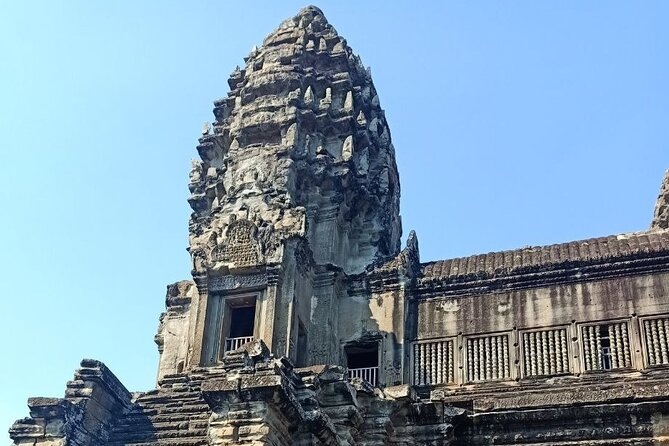
Siem Reap can seem easy on a map, but the temples spread over a wide area. Angkor Wat, Banteay Srei, Roluos, and Kampong Phluk are not one compact sightseeing stop. A driver, a planned route, and a guide who knows how the sites fit together can save you a lot of time.
This tour also gives you three different views of Cambodia. You see the grand ceremonial architecture of Angkor, the smaller and more intimate temples outside the central circuit, and a living community on Tonle Sap. That mix gives the trip more balance than a program focused only on famous ruins.
The schedule is still demanding. Day 1 includes Angkor Thom, Ta Prohm, Angkor Wat, and Phnom Bakheng. Day 2 begins with sunrise at Angkor Wat before continuing to several temples farther from the center. Day 3 changes the mood with a boat trip and market stops.
The tour has earned strong praise for its punctual organization and professional service. That matters here. When your first pickup is at 8:30 in the morning, and another day begins before sunrise, reliable timing is not a small detail.
More time out on the Tonle Sap:
- Sunset tour of Kampong Phluk stilts home village on the Tonle Sap
★ 5.0 · 4,865 reviews - Siem Reap: Kulen Mountain, Beng Mealea and Tonle Sap Tour
★ 5.0 · 1,483 reviews - Tonle Sap Lake & Kampong Phluk Village Half-Day Tour
★ 5.0 · 1,045 reviews
Day 1: Bayon faces, jungle ruins, and Angkor Wat
The first day begins with a stop at the Angkor Enterprise ticket office. You need to buy the three-day Angkor pass here, at a listed cost of $62 per person. The tour price does not include this admission, so add it to your budget before comparing the total cost with other options.
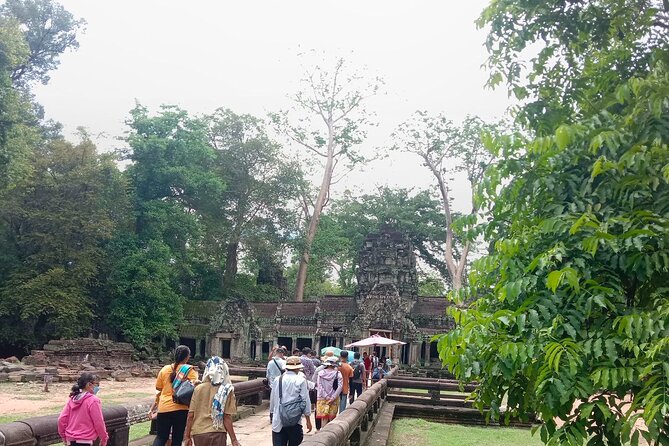
Your first temple stop is Bayon, the central temple of Angkor Thom. Its famous stone faces give the site a calm but slightly mysterious character. Built under King Jayavarman VII as a Mahayana Buddhist state temple, Bayon is much more than a quick photo stop. Allow about an hour to look closely at the carved towers and reliefs.
Next comes Baphuon, a three-tiered temple mountain northwest of Bayon. It was built in the mid-11th century as a Hindu temple dedicated to Shiva. The contrast with Bayon is useful: you can see how religious purpose, royal power, and Khmer architectural style changed over time.
The Terrace of the Elephants follows, with about 30 minutes set aside. This long royal platform formed part of the eastern edge of the palace grounds and faced the parade area. The stop is shorter than the temple visits, but it helps you picture Angkor as a royal capital rather than a collection of isolated ruins.
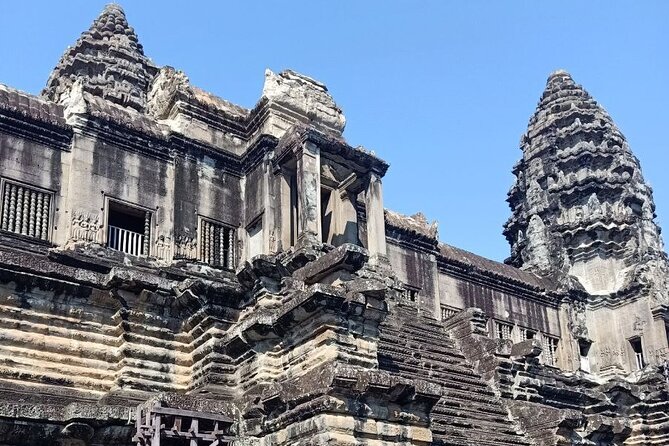
After lunch, the day reaches its major attraction, Angkor Wat. Three hours is a sensible amount of time for the complex, though you should still expect to choose what deserves your attention. Angkor Wat is enormous, and its galleries, towers, courtyards, and bas-reliefs can easily fill an afternoon.
The temple began as a Hindu monument and later became a Buddhist site. That layered religious past is part of what makes it so important. Your guide can add meaning to the carvings and structure, while you focus on the scale and details that are easy to miss when rushing.
The final stop is Phnom Bakheng, a temple mountain dedicated to Shiva and built during the reign of Yasovarman. The temple sits on a hill and is scheduled for about three hours, suggesting a slower visit than the other stops. Since the site is known as a popular tourist location, the end of the day may feel less quiet than the earlier temples.
Day 1 is the hardest day to underestimate. You are not just visiting Angkor Wat. You are walking through multiple large sites, often on uneven ground, with a hilltop temple added at the end. Wear practical shoes, carry the provided water, and use the cold towels as a welcome reset between stops.
Day 2: Sunrise, remote temples, and Banteay Srei
Day 2 starts with a return to Angkor Wat for sunrise. The exact pickup time is not stated, but it must be early enough to reach the temple before dawn. You then return to your hotel for breakfast, a useful break after the early start.
Seeing Angkor Wat twice is one of the tour’s better decisions. The first visit gives you time to understand the complex in daylight. The sunrise visit lets you see the monument in a different mood, without forcing the entire temple experience into one hurried morning.
After breakfast, you visit Preah Khan, Neak Pean, Ta Som, and East Mebon. These temples are grouped together, which keeps the day efficient. The schedule gives about two hours for this cluster, so expect a guided overview rather than unlimited time at every structure.
Preah Khan is an especially worthwhile stop because it gives you another large religious complex connected with Jayavarman VII. Neak Pean offers a very different plan, with a central structure associated with water and sacred healing. Ta Som is smaller, while East Mebon reflects an earlier period of Khmer construction. Together, the four stops help prevent Angkor from becoming one long sequence of similar stone walls.
After lunch, you travel to Banteay Srei, often called the ladies temple. This 10th-century Hindu temple is dedicated to Shiva and lies about 25 kilometers northeast of the main Angkor area, near Phnom Dei. Its distance is exactly why a private vehicle is helpful. Reaching it independently takes more planning than visiting the central temples.
Banteay Srei is smaller than Angkor Wat, but its carved sandstone details are a major reason to make the trip. The schedule allows two hours, enough to look at the decoration without treating the stop as a rushed roadside visit. The long drive also changes the rhythm of the day and takes you farther from the central temple zone.
Banteay Samre comes next, with about an hour. Built during the reigns of Suryavarman II and Yasovarman II, it is a Hindu temple in the Angkor Wat style. Its inclusion is valuable for visitors who want more than the usual two or three famous names.
The day ends at Banteay Kdei, a Buddhist temple whose name means Citadel of Chambers. It was built during the mid-12th to early 13th centuries and lies southeast of Ta Prohm. After sunrise, breakfast, several temples, lunch, and the trip to Banteay Srei, you may find this final stop tiring. Still, it gives the day a strong finish and adds another architectural style to the route.
Day 3: Tonle Sap life at Kampong Phluk
The third day shifts away from temple stones and toward present-day life on Tonle Sap. Kampong Phluk is a group of villages largely built on stilts, and fishing is central to the local economy. The village name means Harbor of the Tusks.
The setting changes with the seasons. During Cambodia’s wet season, from May through October, the community spends much of its time fishing. The stilted construction is not just an unusual sight for visitors. It is a practical response to the changing water level around the lake.
A three-hour visit gives you time for the motorized boat ride and a proper look at the village setting. The boat fee is included, which makes this a useful part of the package rather than an extra expense added at the dock. The tour does not include meals, soft drinks, or alcohol, so plan to pay separately for anything you eat or drink during the day.
Kampong Phluk also provides an important counterpoint to Angkor. The temples show the power and ambition of ancient Khmer rulers. The lake villages show how communities continue to organize daily life around water. That contrast makes the three-day route feel more complete.
The program then turns back toward Siem Reap for the Roluos temples. The Roluos Group includes some of the earliest permanent Khmer structures, dating from the late ninth century. These temples mark the beginning of the classical period of Khmer civilization.
Roluos is a good choice for anyone who wants historical sequence, not just famous monuments. The temples are earlier than the major Angkor monuments, so your guide can help you notice the changes in design and construction. The three-hour allowance gives this part of the day real weight.
The final stops are Phsar Leur, Phsar Chas, and Artisans d’Angkor. Phsar Leur is known as the top market, while Phsar Chas is the old market. The tour allows about two hours for these stops, though the details of shopping or demonstrations are not specified.
These markets give you a chance to shift from ancient sites to modern Siem Reap. You can browse local goods, see a more everyday side of the city, and visit Artisans d’Angkor before returning to your hotel. Since the tour ends with shopping-oriented stops, you can decide how much time you want to spend browsing rather than treating every minute as a formal sightseeing visit.
More multi-day routes in Siem Reap:
- Siem Reap: Angkor Wat 2-Day Tour with Sunrise and Sunset
★ 4.9 · 4,429 reviews - Angkor 2-Day Sunset & Sunrise Small-Group Tour
★ 5.0 · 2,567 reviews - Siem Reap: Angkor Sunrise 1- or 2-Day Guided Temples Tour
★ 4.9 · 1,132 reviews - 2-Day Angkor Wat With Small, Big Circuit and Banteay Srei Tour
★ 5.0 · 545 reviews
What the $250 price really covers
At $250, this is not an all-inclusive three-day holiday. Temple admission is extra, and the three-day Angkor pass is listed at $62 per person. Meals, soft drinks, and alcohol are also excluded.
The value comes from the private structure and the amount of ground covered. You receive hotel pickup and drop-off, an air-conditioned vehicle, a professional English-speaking guide, bottled water, cold towels, and the motorized boat fee. You also avoid arranging separate transport for central Angkor, Banteay Srei, Roluos, and Kampong Phluk.
For a solo visitor, $250 may feel high once the temple pass and meals are added. For a couple, family, or small private group, the calculation is more favorable because the vehicle and guide support your own party. Group discounts are offered, though the exact discount is not provided, so ask for the current rate before booking.
The private format is especially useful on the sunrise morning. You are not sharing the entire schedule with a large group, and the vehicle returns to your hotel for breakfast after Angkor Wat. That pause would be harder to manage on a rigid shared bus route.
Pace, comfort, and practical limits
Pickup is complimentary, and the stated start time is 8:30 a.m. on the regular tour schedule. The vehicle departs your hotel at the tour start time, so be ready rather than expecting a long waiting window.
The air-conditioned vehicle is important in a three-day program. The same is true of the included water and cold towels. They do not remove the heat or the walking, but they make the long transfers and temple circuits easier to handle.
You should be comfortable walking normally and spending several hours on your feet. The tour is not suitable for people with less than average fitness, and it is not available for children under three. Most people can participate, and the route is near public transportation, though the included vehicle is the practical way to cover all the distant stops.
The tour is confirmed at booking, and free cancellation is available up to 24 hours before the start time. Canceling or changing the booking within 24 hours means no refund, so keep that deadline in mind when your Siem Reap plans are still shifting.
Who should book this Siem Reap tour?
I would choose this tour if you have only a few days in Siem Reap and want the major temples plus Tonle Sap without managing drivers, tickets, and route planning yourself. It suits couples, families with older children, and small groups who value a private vehicle and a guide.
It is also a good match for anyone who wants historical range. You will see early Khmer architecture at Roluos, major royal and religious monuments at Angkor, later Buddhist temples, a working lake community, and present-day markets.
I would hesitate if you prefer slow travel. The schedule has little spare time, and Day 1 and Day 2 are full. Independent visitors can spend an entire morning at one temple, while this program asks you to keep moving.
The strongest parts are the organization, punctuality, and professional approach. The whole route is designed to make a short stay count, and the return to Angkor Wat for sunrise adds a worthwhile second look at Cambodia’s most famous monument.
FAQ
What is included in the tour price?
Hotel pickup and drop-off, an air-conditioned vehicle, a professional English-speaking guide, the motorized boat fee, bottled water, and cold towels are included.
Is the Angkor temple pass included?
No. You must buy the Angkor pass separately at the Angkor Enterprise ticket office. A three-day pass is listed at $62 per person.
How much is the seven-day Angkor pass?
The listed price for a seven-day pass is $72 per person.
Are meals included?
No. Meals, soft drinks, and alcohol are not included in the tour price.
Is this a private tour?
Yes. Only your own group participates in the private tour or activity.
What time does the tour begin?
The stated start time is 8:30 a.m. The vehicle departs your hotel at the tour start time.
Does the tour include hotel transfers?
Yes. Complimentary hotel pickup and drop-off are available.
Is the boat ride at Tonle Sap included?
Yes. The fee for the motorized boat is included. The visit is to Kampong Phluk.
Is the tour suitable for children?
The tour is not available for children under three years old. Most people can participate, but the program requires average or better fitness and regular walking.
Can I cancel for a full refund?
Yes, if you cancel at least 24 hours before the experience start time. Cancellations or changes made within 24 hours are not refunded.
Should you book it?
Book this tour if you want a tightly planned, private introduction to Siem Reap and have enough energy for long sightseeing days. The combination of Angkor Wat, lesser-known temples, Tonle Sap, and market stops gives you a strong sense of both ancient and modern Cambodia.
Skip it if you want unhurried temple days or plan to spend most of your time choosing one site at a time. For everyone else, the $250 fee is reasonable when you value a private guide, air-conditioned transport, hotel transfers, and a route that would take real effort to arrange independently.
Newest reviews from Siem Reap
- War Museum, Killing Field, and APOPO Hero RATs Tour★ 5.0 · 7 reviews
- Siem Reap Angkor Airport Taxis (from Airport to Hotel)★ 5.0 · 44 reviews
- Angkor Wat at Sunrise★ 4.0 · 7 reviews
- Cambodian Cooking Class and Oxcart Ride with Local Village Tour★ 5.0 · 4 reviews
- Secret Temples of Angkor – Guided Tour in Siem Reap★ 5.0 · 6 reviews
- Short Cycling at Countryside★ 5.0 · 29 reviews
- SIEM REAP E-BIKE HALF-DAY COUNTRYSIDE (25-30 km)★ 4.0 · 1 review
- Unveiling the Mystical Beauty of Phnom Kulen National Park★ 5.0 · 6 reviews
Tonle Sap Tours, compared.
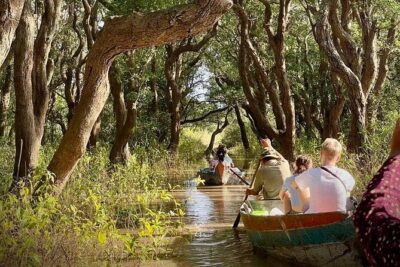
Sunset tour of Kampong Phluk stilts home village on the Tonle Sap
Read our review →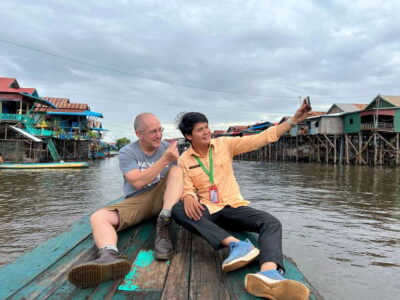
Kulen Mountain, Beng Mealea and Tonle Sap Tour
Read our review →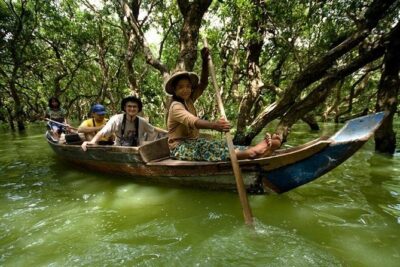
Tonle Sap Lake & Kampong Phluk Village Half-Day Tour
Read our review →
Kulen Mountain with Beng Mealea and Tonle Sap Small Group Tour
Read our review →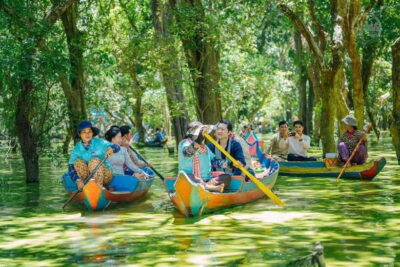
Tonle Sap, Kampong Phluk & Floating Village Tour
Read our review →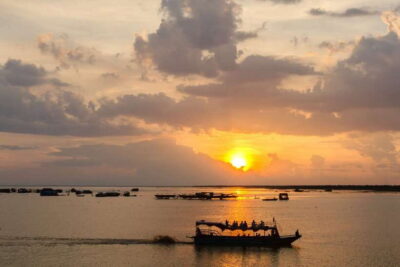
Sunset Dinner Tour: Tonle Sap Lake Floating Village
Read our review →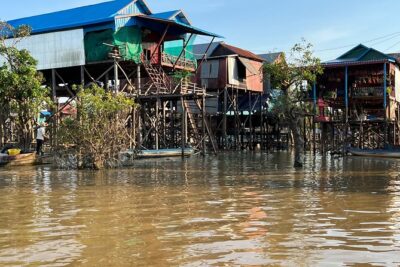
Half Day Kompong Pluck stilt home Village on Tonle Sap & Sunset
Read our review →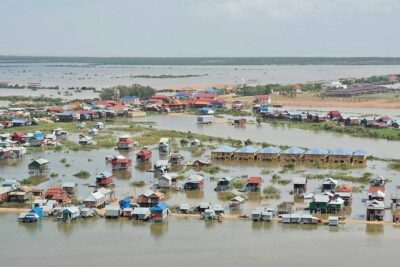
Tonle Sap Lake and Kampong Phluk Village Private Half Day Tour
Read our review →Browse the lists this tour appears in