
Reviewed · ANGKOR WAT TOURS
2days Explore Angkor wat Small Tour & Big Tour + Banteay Srei (Private tour)
Temples reward an early start. This private two-day tour covers Angkor’s major sights at a useful pace, from the smiling towers of Bayon to the carved pink sandstone of Banteay Srei. I like the flexible private format, which lets you spend more time at favorite ruins, and I like the air-conditioned vehicle with cold water and towels, a small comfort that matters in Cambodia’s heat. The English-speaking driver also handles hotel pickup, parking, and the road between far-flung temples.
The main drawback is clear: temple admission is not included in the $159 price. You also visit many sites in two days, so the schedule can feel full, especially on Day 1. This is a driver-led tour with tour information, not necessarily a full licensed guide at every ruin, so visitors who want detailed archaeological explanations should confirm that point before booking.
- Bayon and Angkor Thom in one morning: See the four-faced towers, royal terraces, and the South Gate without arranging separate transport.
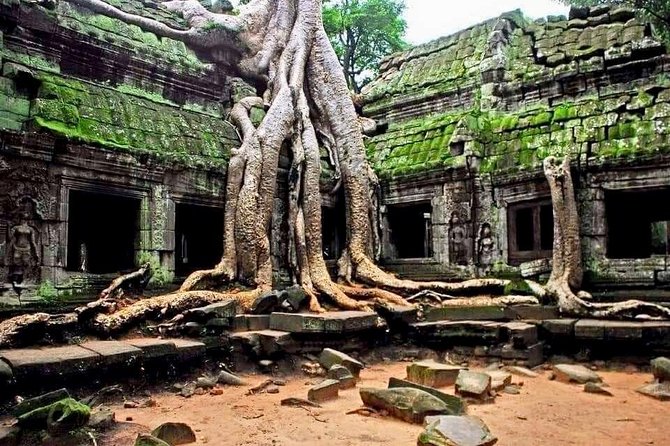
- Ta Prohm gets a full hour: The famous tree-covered temple is not treated as a quick photo stop.
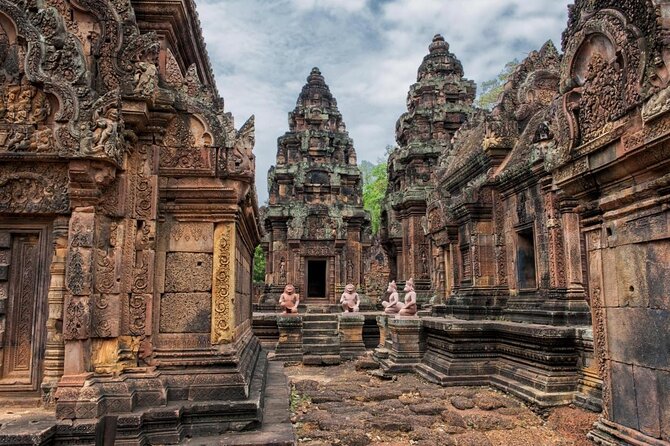
- Banteay Srei adds a different style: Its fine pink sandstone carvings make a strong contrast with the larger temple complexes.
- A private car keeps the plan adaptable: You travel only with your own group and can set your pace within the day’s route.
- Drivers receive strong praise for care: Heng, Kimsun, and Frank are named in past bookings, with particular praise for safe driving, patience, English, and cold drinks.
- The $159 price covers transport, not temple tickets: Work out the total cost before you reserve.
In This Review
- What Two Days Around Angkor Really Give You
- Day One: Royal Power and Jungle Ruins
- South Gate and the Four Faces of Bayon
- Baphuon, Phimeanakas, and the Royal Center
- Elephant Carvings and the Leper King
- Chau Say Tevoda, Thommanon, and Ta Keo
- Ta Prohm and Banteay Kdei
- Day Two: The Grand Circuit and Fine Stonework
- Preah Khan, a Monastic City in Ruins
- Neak Pean and Ta Som
- Eastern Mebon and Pre Rup
- Banteay Srei, the Small Temple with Big Detail
- Why the Private Vehicle Matters in the Heat
- Is $159 a Fair Price?
- Who Should Book This Two-Day Plan?
- My Call: A Strong Choice with One Important Check
- FAQ
- Is temple admission included in the $159 price?
- Is this a private tour?
- Does the tour include hotel pickup and drop-off?
- What is included besides transportation?
- How long is the experience?
- Can I cancel for a full refund?
What Two Days Around Angkor Really Give You
This is a broad sampler of the Angkor region, not a slow study of just three temples. Across two days, you visit the central Angkor Thom area, the small temples east of Angkor Wat, the Grand Circuit, Ta Prohm, and the outlying Banteay Srei.
I like the way the route mixes famous names with quieter stops. Bayon and Ta Prohm will probably be the headline attractions, but Banteay Kdei, Ta Som, and Chau Say Tevoda give you room to notice smaller details without the same scale at every turn.
The private setup matters here. A shared group can leave you watching the clock while someone else takes photographs. With your own vehicle and driver, you can ask for a shorter visit at one ruin and more time at another, provided the overall route still fits the day.
The tour lasts about two days, with pickup and drop-off at your hotel in Siem Reap. The vehicle is private and air-conditioned. Water, towels, parking, and an English-speaking driver are included. The admission fee is not, so keep that separate in your budget.
Day One: Royal Power and Jungle Ruins
More ways to see Angkor Wat:
- Angkor Wat Sunrise or Sunset Tour with Guide from Siem Reap
★ 5.0 · 12,109 reviews - Siem Reap: Angkor Wat: Small-Group Sunrise or Sunset Tour
★ 5.0 · 9,444 reviews - Siem Reap: Angkor Wat 2-Day Tour with Sunrise and Sunset
★ 4.9 · 4,429 reviews
South Gate and the Four Faces of Bayon
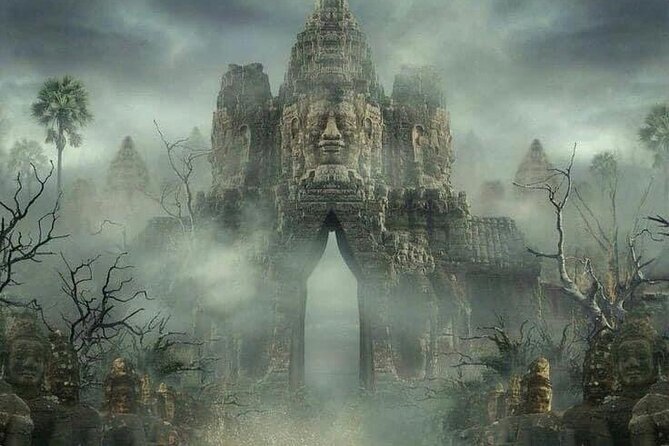
The first stop is Angkor Thom South Gate, a short visit of about 20 minutes. The gate presents the familiar Churning of the Ocean of Milk scene, with rows of figures lining the approach. It is a useful opening because it shows you that Angkor’s monuments were not isolated buildings. Gates, roads, walls, and moats all formed part of a much larger royal city.
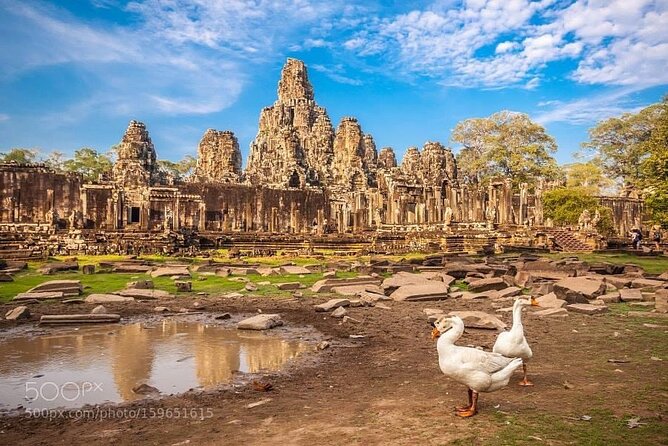
After the temple ticket is handled, the route continues into Angkor Thom and Bayon. Allow about an hour here. Bayon is famous for its towers with calm, smiling faces, and the close quarters make it feel quite different from the wide, open plan of Angkor Wat.
I would not rush Bayon. Look up often, since the faces appear at different heights and angles. The lower galleries also contain carvings that reward a slower walk, though the details can be harder to follow without a guide giving context.
Baphuon, Phimeanakas, and the Royal Center
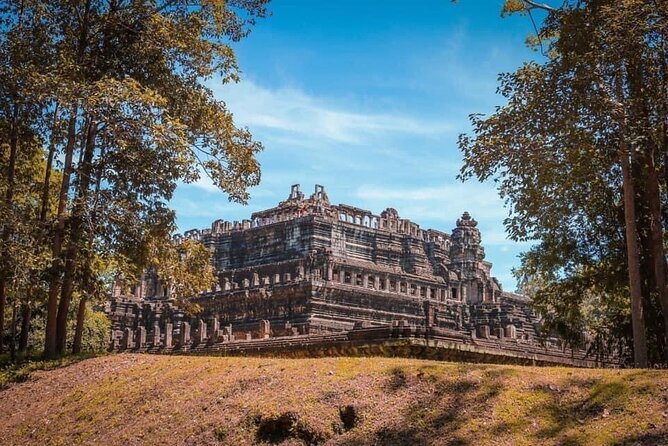
Baphuon is only a short distance away, but it belongs to a different period and religious tradition. Built as a Hindu temple in the 11th century, it predates Angkor Wat. A reclining Buddha was added behind the temple in the 16th century, giving the monument a visible reminder of how sacred sites changed over time.
The visit is planned for about 30 minutes. That is enough for an overview, though you may want longer if you enjoy climbing and studying the structure. The route then moves to Phimeanakas, a 10th-century pyramid temple set within the former royal center of Angkor Thom.
Phimeanakas receives about 20 minutes, along with the old Royal Enclosure Wall. It is not as instantly dramatic as Bayon, but its position matters. You are looking at part of the city’s administrative and ceremonial heart, not just another isolated ruin.
Elephant Carvings and the Leper King
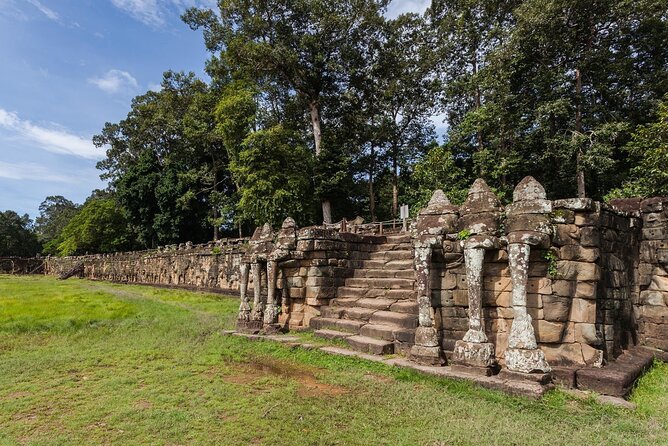
The Terrace of the Elephants takes about 15 minutes. Kings used this long platform to watch victorious armies return, and the elephant carvings along the wall explain its modern name.
Nearby, the Terrace of the Leper King adds another 15-minute stop. These visits are brief, but together they help you read Angkor Thom as a functioning capital. I would treat them as visual history lessons rather than places requiring a long exploration.
The short timings also show the tradeoff in this tour. Day One covers a lot of ground, and the schedule makes room for major temples later. If you prefer to linger over every carved panel, you may need to ask your driver which stop can be shortened.
More trips out to Banteay Srei:
- Full-Day Banteay Srei & 4 Temples – Grand Tours Join-in Tour
★ 5.0 · 1,155 reviews - Siem Reap Tour: Angkor Wat Sunrise, Bayon, Ta Prohm, Banteay Srei
★ 5.0 · 931 reviews - 2-Day Angkor Wat With Small, Big Circuit and Banteay Srei Tour
★ 5.0 · 545 reviews - From Siem Reap: Banteay Srei Temple & Grand 5 Temple Tour
★ 4.8 · 262 reviews
Chau Say Tevoda, Thommanon, and Ta Keo
The route leaves Angkor Thom and visits Chau Say Tevoda and Thommanon, two temples about 500 meters east of the Victory Gate. Each receives around 20 minutes. Both were dedicated to Brahmanic worship and were built in the late 11th or early 12th century under King Suryavarman II.
Seeing the two together is useful because they are close in setting and similar in broad period. Rather than spending an hour at one small temple, you get a quick comparison between related Khmer designs.
Ta Keo follows with a 15-minute stop. This pyramid temple rises through five levels to about 40 meters. Its plain, strong form gives it a more severe appearance than the finely carved structures nearby. The supplied plan lists admission as free here, while most other temples show admission as not included. I would still confirm current entry arrangements before the day begins, since temple access rules can change.
Ta Prohm and Banteay Kdei
Ta Prohm receives a full hour, and that is welcome. Known as the jungle temple used in Tomb Raider, it has trees growing through and around the stonework. The roots and ruined galleries create the scene many people picture when they think of Angkor.
The fame can make Ta Prohm feel busy, but one hour gives you a fair chance to move beyond the first photograph. Pay attention to the way the trees and masonry compete for space. The site is not simply a ruin decorated by nature. Its appeal comes from seeing architecture and vegetation in an uneasy, changing balance.
Banteay Kdei follows for about 30 minutes. Its name means Citadel of Chambers, and the layout fits that description. The ruin is a maze of chambers and passages, often more peaceful than the better-known sites.
I like ending the first day with Banteay Kdei. After Bayon, terraces, and Ta Prohm, this smaller temple lowers the volume. You can focus on doorways, corridors, and the feel of the place instead of trying to take in another giant monument.
Day Two: The Grand Circuit and Fine Stonework
Preah Khan, a Monastic City in Ruins
Day Two begins at Preah Khan, with about an hour to explore. King Jayavarman VII built it in honor of his father, and the complex served as a Buddhist monastery and school. More than 1,000 monks were associated with it.
Preah Khan is large enough to feel like a small city. Long corridors, courtyards, and carved details make it a place where a driver’s practical advice helps. Ask where the most convenient entrance is and how long the walk will be. Past service notes praise drivers for choosing useful temple entrances and waiting with drinks, which is exactly the kind of help that makes a large site easier.
Neak Pean and Ta Som
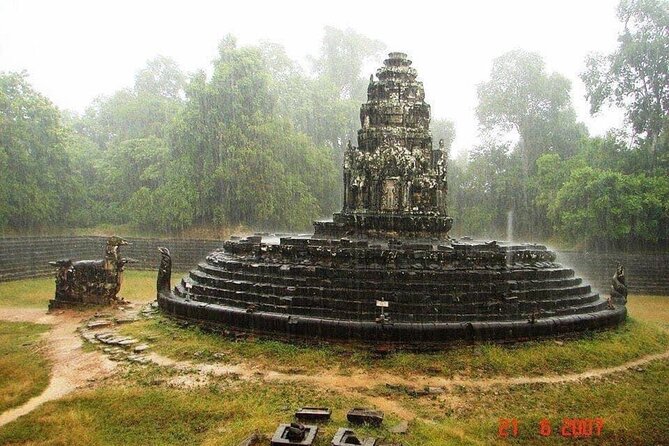
Neak Pean is a small island temple in the middle of the last baray, or reservoir, on this route. The walk to the island gives the visit a different rhythm after the enclosed corridors of Preah Khan. The temple is linked with the horse Balaha, shown rescuing drowning sailors.
The planned visit is about 40 minutes. The site itself is small, so much of that time may involve the approach and taking in the water setting. I would not expect a long temple interior here. The value is the unusual island plan and the story attached to the horse statue.
Ta Som allows about 45 minutes. It is a small, classic temple, known especially for the large tree growing from the top of the eastern gopura. This is one of the better stops for travelers who enjoy the meeting of roots and stone without needing the scale of Ta Prohm.
Eastern Mebon and Pre Rup
Eastern Mebon takes around 45 minutes. This temple-mountain rises through three levels and has five towers at the top. Its original setting was connected with a reservoir, though the present experience is one of walking through a monumental structure set above the surrounding ground.
Pre Rup receives about an hour. Built in the late 10th century and dedicated to Hindu gods, it has a strong brick-and-stone profile and a high position that gives it a different visual character from the low, enclosed temples.
The name Pre Rup means turn the body and is linked with beliefs about funerary rites. You do not need to accept every traditional explanation to appreciate the temple’s role in Khmer religious life. I find Pre Rup particularly useful after Eastern Mebon because the two stops show how temple-mountains could dominate the ceremonial setting.
Banteay Srei, the Small Temple with Big Detail
The final stop is Banteay Srei, about an hour from the main Angkor circuit. Built in pink sandstone in the second half of the 10th century, it was dedicated mainly to Shiva and associated with the Hindu trinity.
Banteay Srei is smaller than Bayon, Preah Khan, or Ta Prohm, but its carvings are unusually fine. The pink stone and careful decoration make it feel distinct from the larger gray sandstone complexes. I would save energy for this visit because the details are the reason to come.
The distance is the key consideration. Banteay Srei sits away from the central cluster, so the drive takes time. That makes it a poor choice for anyone who wants to spend both days entirely among the largest central temples. For me, the contrast is worth it. After two days of immense royal compounds, a smaller temple with precise carving gives the tour a satisfying final note.
Why the Private Vehicle Matters in the Heat
Angkor is not one building. It is a broad zone of temples separated by roads and forest. A private, air-conditioned vehicle turns those transfers into useful recovery time.
Cold mineral water and a towel are included, and past service details place special emphasis on drivers waiting with ice-cold drinks. That may sound minor when planning from home, but after walking temple paths in heat, it is one of the most welcome parts of the arrangement.
The drivers named in past bookings include Heng, Kimsun, and Frank. Kimsun is specifically praised for safe driving around a family with a toddler. Frank is praised for patient waiting, strong English, and choosing convenient entrances. Heng is associated with airport pickup as well as temple touring and other Siem Reap activities.
These details suggest a service built around transport and practical care. I would still confirm who will drive your group and whether a formal temple guide is included. The listed inclusions promise tour information and an English-speaking driver, but they do not clearly promise a separate licensed guide.
Is $159 a Fair Price?
At $159, the tour offers two full days of private transport, hotel pickup and drop-off, parking, air conditioning, water, towels, and an English-speaking driver. For a couple, family, or small group, that can be good value because you are paying for a vehicle and service shared only with your own party.
The price is less attractive if you are traveling alone, since the private cost falls on one person. You also need to add the temple admission fee, which is excluded. Do not compare $159 with a group tour price until you have added every required cost and considered the value of having your own car.
I would judge the price mainly by the driver service. Safe driving, clear communication, patience, and sensible drop-off points can save time and energy across two long days. The strongest praise connected with this experience focuses on exactly those points.
Who Should Book This Two-Day Plan?
I would recommend it to couples, families, and small groups who want the major Angkor sites without sharing a vehicle. It suits you especially well if you value a flexible pace, hotel pickup, and a driver who can help with entrances and timing.
Families with young children may also appreciate the private format. Kimsun’s careful driving with a toddler shows the service can work well for a family, though you should still discuss your child’s needs when booking.
The tour is less suitable if you want long scholarly talks at every temple. It is also demanding for anyone who prefers a very slow morning and a short afternoon. Day One contains eleven stops, and even the well-planned schedule leaves little room for long detours.
Free cancellation is available when you cancel at least 24 hours before the start time. Changes or cancellations inside that window are not accepted for a refund.
My Call: A Strong Choice with One Important Check
I would book this tour if I wanted a private, practical way to cover both the Small Tour and Big Tour routes, plus Banteay Srei. The route is broad, the vehicle comforts are useful, and the strongest service details concern the things that often make or break temple days: safe driving, patience, cold drinks, and convenient entrances.
Before paying, I would confirm the total cost of temple tickets and ask if you will have only a driver or also a separate guide. If you are happy with driver-led touring and want flexibility, $159 is a sensible starting price for a private two-day plan. If detailed historical explanation is your top priority, clarify that service first.
FAQ
Is temple admission included in the $159 price?
No. Temple entrance fees are not included in the tour price. Ta Keo is listed with free admission, while the other stops list admission as not included.
Is this a private tour?
Yes. Only your group participates, and the tour uses a private vehicle.
Does the tour include hotel pickup and drop-off?
Yes. Pickup and drop-off at your hotel in Siem Reap are included.
What is included besides transportation?
The package includes an air-conditioned vehicle, an English-speaking driver, tour information, parking fees, cold mineral water, and a towel.
How long is the experience?
The experience lasts approximately two days. Day One includes Angkor Thom, Bayon, Baphuon, Phimeanakas, the royal terraces, several smaller temples, Ta Prohm, and Banteay Kdei. Day Two includes Preah Khan, Neak Pean, Ta Som, Eastern Mebon, Pre Rup, and Banteay Srei.
Can I cancel for a full refund?
Yes, if you cancel at least 24 hours before the experience start time. Cancellations or changes made less than 24 hours before the start time are not accepted for a refund.
Newest reviews from Siem Reap
- War Museum, Killing Field, and APOPO Hero RATs Tour★ 5.0 · 7 reviews
- Angkor Wat at Sunrise★ 4.0 · 7 reviews
- Siem Reap Angkor Airport Taxis (from Airport to Hotel)★ 5.0 · 44 reviews
- Secret Temples of Angkor – Guided Tour in Siem Reap★ 5.0 · 6 reviews
- Short Cycling at Countryside★ 5.0 · 29 reviews
- Cambodian Cooking Class and Oxcart Ride with Local Village Tour★ 5.0 · 4 reviews
- SIEM REAP E-BIKE HALF-DAY COUNTRYSIDE (25-30 km)★ 4.0 · 1 review
- Unveiling the Mystical Beauty of Phnom Kulen National Park★ 5.0 · 6 reviews
Angkor Wat Tours, compared.
Angkor Wat Sunrise or Sunset Tour with Guide from Siem Reap
Read our review →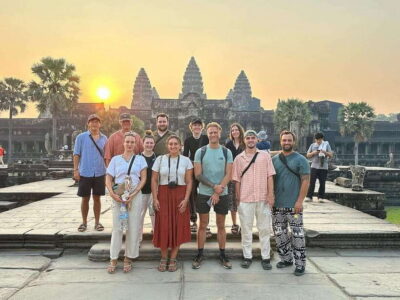
Angkor Wat: Small-Group Sunrise or Sunset Tour
Read our review →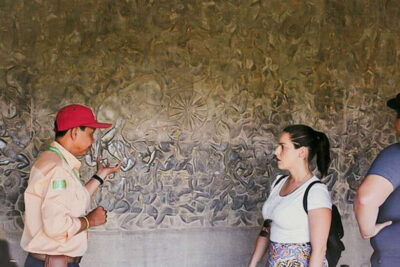
Angkor Wat 2-Day Tour with Sunrise and Sunset
Read our review →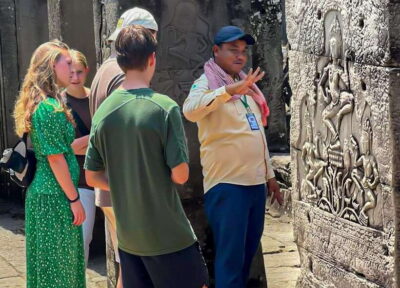
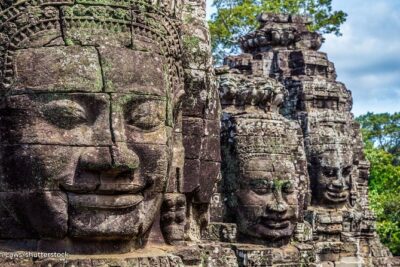
Angkor Wat Sunrise tour with Small – Group and Guide tours
Read our review →
Angkor Wat Highlights and Sunrise Guided Tour from Siem Reap
Read our review →
Angkor Wat Sunset Small Group Tour with Lunch Included
Read our review →
Full-Day Angkor Wat Sunrise Private Tour with Guide from Siem Reap
Read our review →Browse the lists this tour appears in