

Reviewed · ANGKOR WAT TOURS
2-Days Unique Angkor Wat Small, Big Circuit and Banteay Srei
Two days make all the difference. This private Siem Reap tour gives you time for Angkor Wat, Ta Prohm, Bayon, and Banteay Srei without forcing every major temple into one frantic morning. I like the air-conditioned transport and hotel pickup, and I like the mix of famous sights and quieter ruins such as Ta Nei.
The main drawback is the packed schedule. You will spend long hours in the heat, climb temple steps, and rise around 5:00 a.m. for sunrise. The $44 price is attractive, but it does not include the Angkor pass, meals, or tips, so your final cost will be higher.
In This Review
- Key points before you book
- Why two days work better at Angkor
- Day one: Angkor Wat, tree roots, and Angkor Thom
- Ta Nei offers a quieter temple stop
- Angkor Thom brings the stone faces
- Phnom Bakheng sunset requires patience
- Day two starts with Angkor Wat sunrise
- Preah Khan and the Big Circuit
- Banteay Srei is the artistic highlight
- Guide quality can shape the whole experience
- Is $44 good value?
- Who should book this Angkor tour?
- FAQ
- What is included in the $44 tour price?
- Is the Angkor admission pass included?
- What time does the sunrise day begin?
- Are meals included?
- Is this a private tour?
- Can I skip Phnom Bakheng sunset?
- What is the cancellation policy?
Key points before you book
- A private two-day plan: Your group travels with its own English-speaking guide and driver rather than joining a large shared bus.
- Sunrise at Angkor Wat: The second day begins with an early pickup, followed by a return to your hotel for breakfast.
- Quiet Ta Nei included: This small, less-restored temple offers a calmer stop than the major monuments.
- Banteay Srei takes extra time: The Ladies Temple sits outside the main temple cluster, but its pink sandstone carving makes the drive worthwhile.
- The Angkor pass costs extra: Admission is not part of the $44 tour price. Children under 12 enter free, according to the tour details.
- A flexible sunset choice: Phnom Bakheng can be skipped, but waiting for sunset may take 1 hour and 45 minutes to 2 hours.
Why two days work better at Angkor
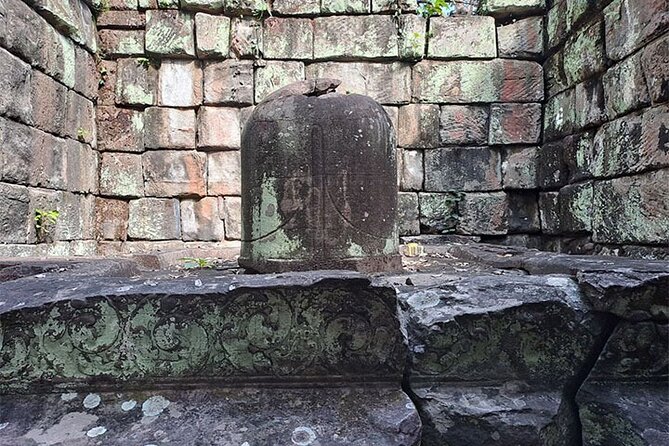
Angkor is not one temple. It is a wide archaeological area with temple roads, reservoirs, gates, terraces, towers, and forest-lined paths spread around the former Khmer capital. Trying to see the Small Circuit, Big Circuit, Banteay Srei, and sunset in a single day would leave you looking at stones through a fog of fatigue.
This plan gives you two long days, with a break back at your hotel after sunrise. That pause matters. You can eat breakfast, refill your water, and change before heading back out for the Big Circuit.
You will still have a full schedule. Day one combines Angkor Wat, Ta Prohm, Ta Nei, Angkor Thom, and Phnom Bakheng. Day two covers the northern and eastern temples, then travels out to Banteay Srei and Banteay Samre before finishing at Banteay Kdei.
The private format gives your group more control than a large coach tour. You can ask questions, stop for photographs, and discuss skipping Phnom Bakheng if the sunset wait feels too long. The exact pace still depends on your guide, the heat, and how long you spend at each temple.
More ways to see Angkor Wat:
- Angkor Wat Sunrise or Sunset Tour with Guide from Siem Reap
★ 5.0 · 12,109 reviews - Siem Reap: Angkor Wat: Small-Group Sunrise or Sunset Tour
★ 5.0 · 9,444 reviews - Siem Reap: Angkor Wat 2-Day Tour with Sunrise and Sunset
★ 4.9 · 4,429 reviews
Day one: Angkor Wat, tree roots, and Angkor Thom
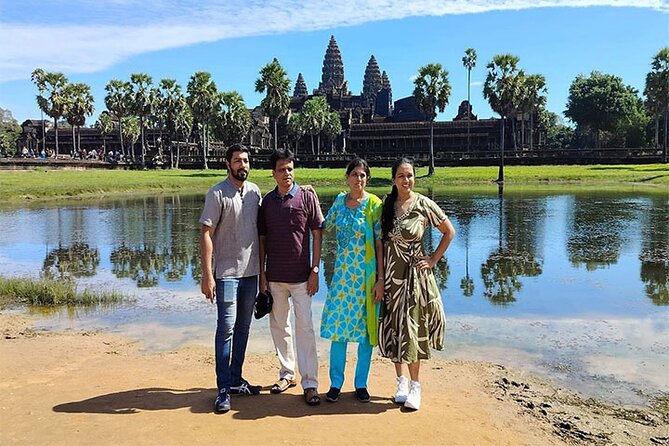
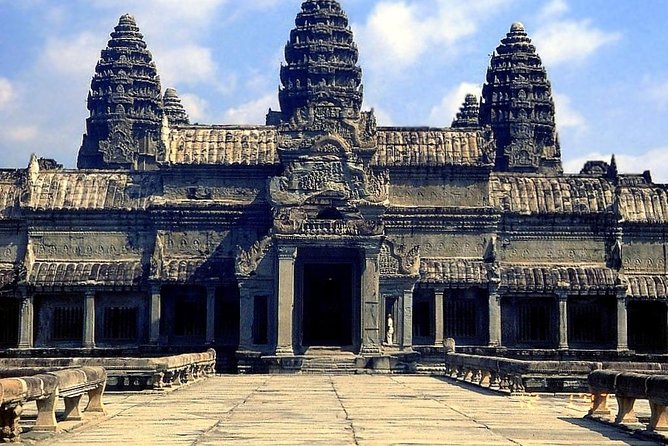
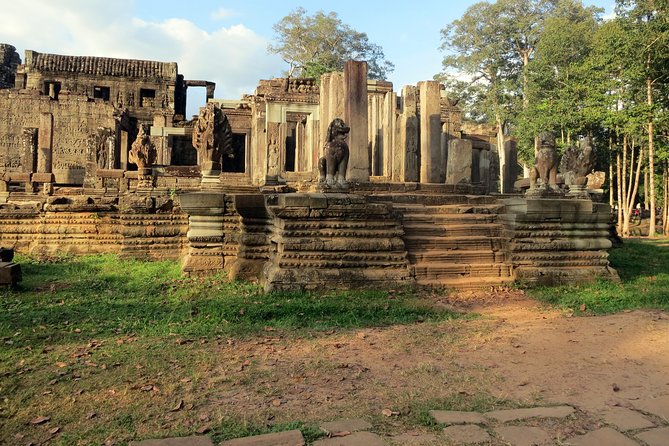
The day begins with Angkor Wat, the grandest stop on the route. The planned visit lasts about two hours, which gives you time to see the approach, outer galleries, courtyards, and central towers without treating the temple as a quick photo stop.
Angkor Wat rewards a slow start. Look for the long galleries and carved scenes before moving toward the inner sanctuary. The site can feel especially demanding in the morning because of its size, so comfortable shoes and water are essential.
The tour then moves to Ta Prohm, the temple made famous by the film Tomb Raider. Its most memorable feature is the way enormous tree roots grip the stone walls and towers. This is not just a pretty backdrop. The roots show how the forest has become part of the site’s modern identity, even as conservation teams work to protect the remaining structure.
Ta Prohm is one of the busiest temples on the route. The hour listed here is enough for a good look, but you may need patience around its best-known root-covered sections. The schedule also mentions Ta Prohm again later in the day, after Phnom Bakheng, so ask your guide how the timing will work. The key point is that you should have a proper visit, not just a rushed stop.
Lunch comes around noon or 1:00 p.m. at a nearby local restaurant. Food is not included, and the supplied cost guidance says dishes can begin around $5, depending on what you order. Carry some Cambodian riel or small US dollar notes if needed, though the tour details do not specify payment methods at the restaurant.
Ta Nei offers a quieter temple stop
After lunch, Ta Nei gives you a useful change of pace. It is a small temple with less restoration and plenty of large trees around it. The scheduled visit is about 45 minutes.
I like this stop because it helps you see more than the best-known Angkor sights. Ta Nei does not have the scale of Angkor Wat or the instantly recognizable towers of Bayon, but its quieter setting can make the ruins easier to appreciate. You might find uneven ground and a more unfinished feel here, so do not expect polished paths or a fully restored monument.
For many people, Ta Nei will be one of the most pleasant parts of the day. The famous temples explain why Angkor draws people from around the world. A smaller stop like Ta Nei gives you room to notice the forest, worn stone, and layout of a temple without the same pressure to move along.
Angkor Thom brings the stone faces
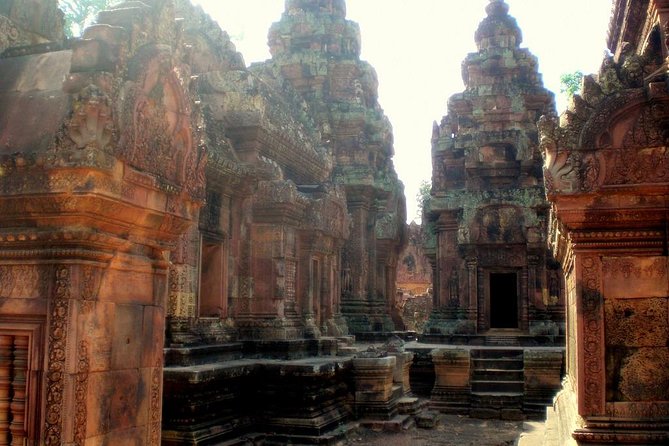
The afternoon continues through Angkor Thom, the great walled city. Your first stop is the Victory Gate on the east side, with about 45 minutes for a quick visit and photographs. It is a useful introduction to the city’s defensive scale and ceremonial entrances.
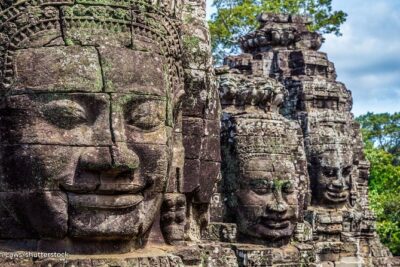
Bayon comes next. This temple sits at the center of Angkor Thom and is known for towers carved with serene faces. The tour description counts 49 towers and 196 faces associated with Avalokitesvara, the Buddhist bodhisattva of compassion. The listed visit is only 30 minutes, so you will want to move with purpose.
Bayon can be confusing at first. The towers overlap, corridors turn sharply, and the faces appear at different heights. Stay close to your guide if you want the basic layout explained. Thirty minutes lets you see the main effect, but it is not a long time for every gallery and carving.
Baphuon is a nearby Hindu temple built before Angkor Wat in the 11th century. A reclining Buddha was added behind it in the 16th century. The visit lasts about 30 minutes, and the contrast between the earlier temple and later addition gives your guide a useful way to explain how Angkor’s religious life changed over time.
Phimeanakas is another 30-minute stop. This pyramid-shaped Hindu temple dates to the 10th century and once sat within the old royal palace area of Angkor Thom. The nearby Royal Enclosure Wall helps you picture the former palace zone, even though the palace buildings themselves were largely made from perishable materials.
The Terraces of the Elephants and Leper King follow, with roughly 30 minutes at each. The Elephant Terrace served as a viewing platform for kings and returning armies. Its carvings are the main attraction, so use the time to study the wall rather than treating it only as a walkway.
The Terrace of the Leper King sits nearby on the north side. It is another ceremonial platform, but its carved walls and enclosed passages create a different feel from the more open Elephant Terrace. Together, these stops show how Angkor Thom was designed for royal display as well as religious use.
More trips out to Banteay Srei:
- Full-Day Banteay Srei & 4 Temples – Grand Tours Join-in Tour
★ 5.0 · 1,155 reviews - Siem Reap Tour: Angkor Wat Sunrise, Bayon, Ta Prohm, Banteay Srei
★ 5.0 · 931 reviews - 2-Day Angkor Wat With Small, Big Circuit and Banteay Srei Tour
★ 5.0 · 545 reviews - From Siem Reap: Banteay Srei Temple & Grand 5 Temple Tour
★ 4.8 · 262 reviews
Phnom Bakheng sunset requires patience
The final major stop on day one is Phnom Bakheng, a hilltop temple used for sunset viewing. The climb and the wait can take 1 hour and 45 minutes to 2 hours.
Access to the summit is limited when the site is busy. Your guide may take you up early so you can secure a place, which means a longer wait before sunset. That is the tradeoff: you may get the view, but you will spend a large part of the late afternoon standing or sitting on the hill.
If you are tired, you can skip sunset. I would make that decision based on your energy rather than treating it as a duty. The temple itself is interesting, but the view is weather-dependent and the waiting period is substantial.
Day two starts with Angkor Wat sunrise
The second morning begins around 5:00 a.m. at your hotel or guest house. The advertised general start time is 8:00 a.m., but sunrise pickup clearly requires the earlier departure, so confirm the exact arrangement when booking.
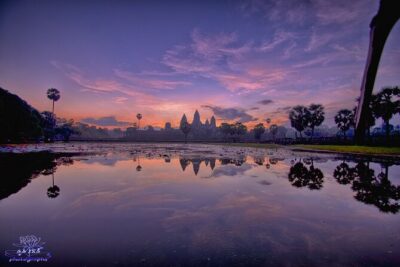
Sunrise at Angkor Wat is a strong reason to choose this two-day plan. You get to see the temple before the day’s heat builds, then return to your accommodation for breakfast. The sunrise portion lasts about 1 hour and 30 minutes.
Do not expect the break to feel luxurious. You will be awake before dawn and will soon head back out. Still, the return to your hotel is far better than spending the entire morning without a proper meal or chance to rest.
Preah Khan and the Big Circuit
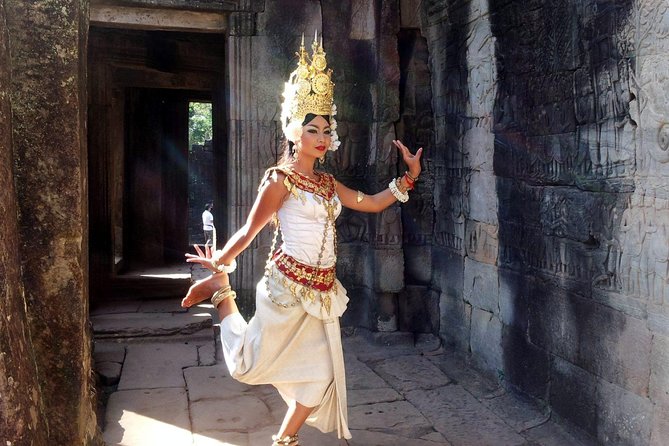
After breakfast, the guide returns to collect you. The route heads to Preah Khan, a large monastic complex built by King Jayavarman VII in honor of his father. It also served as a Buddhist monastery and school with more than 1,000 monks.
The planned visit lasts an hour. Preah Khan has long corridors, courtyards, carved details, and a strong sense of scale. It is one of the day’s more substantial temple visits, so listen to the explanation of how the complex worked as more than a shrine.
Neak Pean is a much shorter stop, about 30 minutes. This small island temple sits in the middle of a baray, or reservoir. The approach across the water gives it a distinct setting, but the visit is brief and the central temple is compact.
Ta Som follows for about 15 minutes. It is a small, classic temple that resembles some of the better-known late Angkor sites in style. The short stop makes sense as part of a circuit, but you will not have time for a slow inspection of every carving.
East Mebon is another 15-minute visit. This temple-mountain rises in three levels and is topped by five towers. Its former setting in the middle of a reservoir is important to its design, even if the water is no longer the main feature you imagine from the original period.
Pre Rup comes next, with about an hour. Built in the late 10th century for Hindu worship, it is often linked to funerary beliefs and the phrase turn the body. Its stepped structure gives you a clear view of the temple-mountain form, but the climb can be tiring in the heat.
Lunch follows around noon or 1:00 p.m., with about 45 minutes to an hour at a nearby restaurant. Again, the meal is not included. Plan for food costs from about $5 per dish based on the supplied guidance, with the final price depending on your order.
Banteay Srei is the artistic highlight
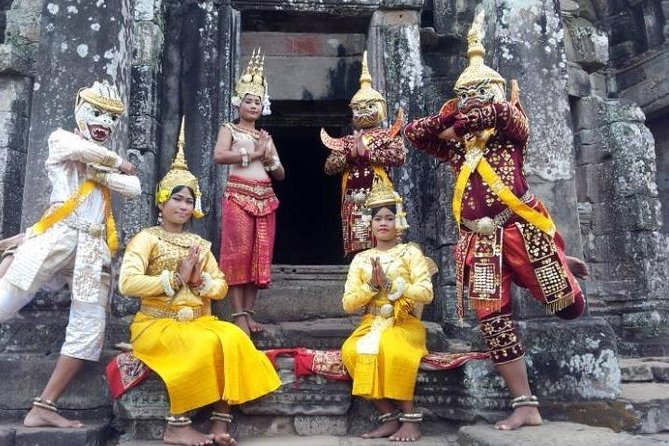
After lunch, the route goes to Banteay Srei, also called the Ladies Temple. It was built in the second half of the 10th century by the Hindu King Rajendravarman II and dedicated mainly to Shiva and the Hindu trinity.
Banteay Srei is smaller than Angkor Wat, but its pink sandstone carvings are unusually fine. The one-hour visit gives you time to notice the detail around doorways, lintels, and pediments. This is the stop where a good guide can make a real difference, since small figures and patterns are easy to miss.
The extra drive is the main consideration. Banteay Srei lies away from the central Angkor cluster, so you spend more time in the vehicle. For me, the temple earns that travel time because it offers a different color, scale, and level of carving than the larger monuments.
Banteay Samre comes next for about 30 minutes. This 12th-century Hindu temple is often compared in design with Angkor Wat. Its layout makes a useful comparison after seeing the main temple, though the short visit means you will need to keep moving.
The final stop is Banteay Kdei, a 12th-century Buddhist temple with a style similar to Ta Prohm and Bayon. The half-hour visit gives you one last look at the temple forms linked with King Jayavarman VII’s period.
Guide quality can shape the whole experience
The tour includes a licensed English-speaking guide, which is important at Angkor. The stones are impressive, but the meaning of a face tower, royal terrace, reservoir, or temple enclosure is not always obvious without context.
One guide named Tiadet received especially strong praise for being friendly, well informed, and a very good photographer. If Tiadet is assigned to your group, you may value that extra help with temple explanations and photographs. Guide assignments can vary, so treat the name as a useful detail to confirm rather than a promise.
The private setup also includes a driver and an air-conditioned vehicle. That matters in Siem Reap, especially across two long days. You can cool down between temples, and your group does not have to fit the pace of a large bus.
The tour is listed as suitable for most people, and service animals are allowed. Still, the schedule includes temple steps, uneven ruins, long walks, heat, and a pre-dawn start. If you have mobility concerns, ask the operator for more details before booking.
Is $44 good value?
At $44 per person, the tour offers a strong starting price for two days of private guiding, hotel pickup and drop-off, air-conditioned transport, and a route covering the main Angkor temples plus Banteay Srei.
The price does not include the Angkor admission pass. It also excludes lunch and gratuities, with tips appreciated for the guide and driver. Because the pass is separate, compare the total cost rather than judging the tour by the advertised price alone.
The value is best for two or more people sharing a private vehicle. A solo visitor still gets the private format, but the per-person price may feel less compelling once admission and meals are added.
Free cancellation is available if you cancel at least 24 hours before the experience start time. Cancellations or changes within 24 hours are not refunded or accepted.
Who should book this Angkor tour?
I would choose this tour if you want the major temples arranged in a sensible two-day plan and prefer private transport to a large group. It suits couples, families with older children, and small groups that want to ask questions or adjust the sunset stop.
You should also choose it if Banteay Srei matters to you. Some temple routes stay close to Angkor Wat and Angkor Thom, while this one makes room for the pink sandstone temple and the quieter Ta Nei.
I would hesitate if you dislike early mornings, long temple days, or scheduled sightseeing. The plan covers a lot of ground, and the Phnom Bakheng wait can become a test of patience. You may also prefer a slower private tour with fewer stops if you want to study every carving.
Overall, the strongest reason to book is the balance between famous monuments and less crowded sites. Ask about the exact pickup time, confirm how Ta Prohm is scheduled, and decide in advance if you want Phnom Bakheng sunset. If those details suit your energy level, this is a practical way to see Angkor without trying to squeeze the entire complex into one exhausting day.
FAQ
What is included in the $44 tour price?
The price includes a licensed English-speaking guide, hotel pickup and drop-off, an air-conditioned vehicle, and two days exploring Angkor’s major temples, including Banteay Srei.
Is the Angkor admission pass included?
No. The Angkor pass is not included. Children under 12 years old enter free according to the tour details.
What time does the sunrise day begin?
The guide is scheduled to meet you at your accommodation around 5:00 a.m. for sunrise at Angkor Wat. The general tour start time is listed as 8:00 a.m., so confirm the sunrise pickup time when booking.
Are meals included?
No. Lunch is not included. The schedule allows about 45 minutes to one hour for lunch at a local restaurant, and dishes may cost from about $5 depending on what you order.
Is this a private tour?
Yes. Only your group participates in the activity, with a private guide and vehicle.
Can I skip Phnom Bakheng sunset?
Yes. The itinerary says you can skip the sunset stop. If you go, waiting and viewing the sunset may take about 1 hour and 45 minutes to 2 hours.
What is the cancellation policy?
You can cancel for a full refund up to 24 hours before the experience start time. Cancellations or changes made less than 24 hours before the start time are not refunded or accepted.
Newest reviews from Siem Reap
- War Museum, Killing Field, and APOPO Hero RATs Tour★ 5.0 · 7 reviews
- Siem Reap Angkor Airport Taxis (from Airport to Hotel)★ 5.0 · 44 reviews
- Angkor Wat at Sunrise★ 4.0 · 7 reviews
- Cambodian Cooking Class and Oxcart Ride with Local Village Tour★ 5.0 · 4 reviews
- Secret Temples of Angkor – Guided Tour in Siem Reap★ 5.0 · 6 reviews
- Short Cycling at Countryside★ 5.0 · 29 reviews
- SIEM REAP E-BIKE HALF-DAY COUNTRYSIDE (25-30 km)★ 4.0 · 1 review
- Unveiling the Mystical Beauty of Phnom Kulen National Park★ 5.0 · 6 reviews
Angkor Wat Tours, compared.
Angkor Wat Sunrise or Sunset Tour with Guide from Siem Reap
Read our review →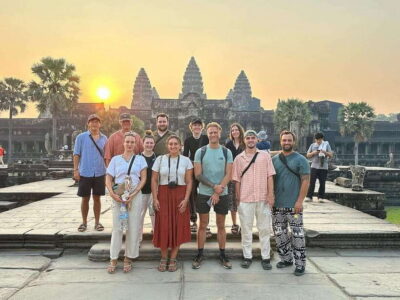
Angkor Wat: Small-Group Sunrise or Sunset Tour
Read our review →
Angkor Wat 2-Day Tour with Sunrise and Sunset
Read our review →
Angkor Wat Sunrise tour with Small – Group and Guide tours
Read our review →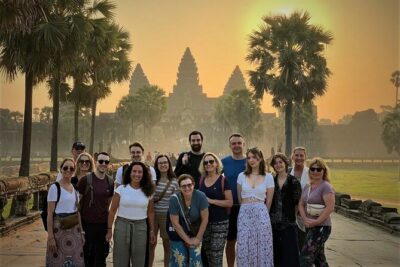
Angkor Wat Highlights and Sunrise Guided Tour from Siem Reap
Read our review →
Angkor Wat Sunset Small Group Tour with Lunch Included
Read our review →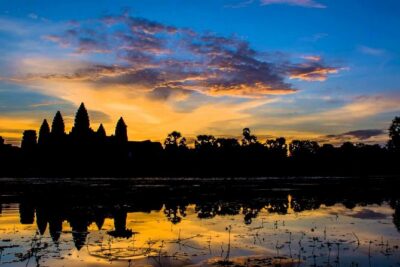
Full-Day Angkor Wat Sunrise Private Tour with Guide from Siem Reap
Read our review →Browse the lists this tour appears in