
Reviewed · ANGKOR WAT TOURS
Two-days tour discovering Angkor Wat and Floating Village
Ancient stones, living villages. This two-day Siem Reap tour pairs Angkor’s major temples with a visit to Kompong Phluk on Tonle Sap, giving you both Cambodia’s monumental past and its water-based present. I like the private format, air-conditioned transport, and the chance to move at your group’s pace. I also like that the program adds the Angkor National Museum and a hands-on stone-carving session instead of stopping at temples alone. The main drawback is clear: entrance tickets and meals cost extra, so the $92 price is not your final bill.
You begin at 8:30 a.m. on both days, with an English-speaking guide, driver, cold water, and a cold towel provided. Sen is one guide named in the tour’s feedback, praised for being positive, upbeat, and easy to contact. The service has a current five-star rating from seven published ratings, but the exact guide may vary.
In This Review
- Key points to know before booking
- Why two days works better than one
- Bayon and Angkor Thom, faces in stone
- Ta Prohm and the appeal of weathered ruins
- Banteay Kdei, a quieter afternoon pause
- Angkor Wat and the long afternoon finish
- Kompong Phluk and the life of Tonle Sap
- Angkor National Museum, a useful indoor hour
- Artisans Angkor and your stone-carving attempt
- What the $92 price really covers
- Who should book this two-day plan?
- Should you book it?
- FAQ
- How long does the tour last?
- What time does the tour start?
- Is this a private tour?
- Is hotel pickup available?
- Are entrance tickets included?
- Are meals included?
- What is included in the $92 price?
- Can children join the tour?
Key points to know before booking
- Bayon and Ta Prohm receive generous time: You have about two hours at each, enough to look beyond the standard photo stops.
- Angkor Wat is scheduled for three hours: The day also aims to finish with sunset near the famous temple.
- Kompong Phluk adds a very different Cambodia: Tall stilt houses, fishing life, a floating hospital, and Tonle Sap replace temple corridors on day two.
- The tour is private: Only your own group takes part, which makes breaks, questions, and pacing easier to manage.
- The $92 rate covers transport and guiding, not admission: Budget separately for every entrance ticket and all meals.
- A stone-carving workshop gives you something to do: At Artisans Angkor, you can try shaping stone rather than simply looking at finished objects.
Why two days works better than one
Angkor is too large for a quick visit. A rushed day can give you plenty of photographs but little sense of how the temples differ. This program gives you a full temple day, then shifts to Tonle Sap and Siem Reap’s cultural institutions on the second day.
I like that division. Day one is built around the best-known ruins, while day two gives your eyes a rest from carved sandstone. The change also helps you see Cambodia as more than an archaeological site. You get ancient royal architecture, modern craft training, museum collections, and a community that still depends on the lake.
The tour is private, but it is not described as a custom-designed program. The stops and approximate visit lengths are already set. That is useful if you want a clear plan, though you should tell the operator early if your group needs a slower pace or extra time at one temple.
Transport matters in Siem Reap. The temples are spread across a large area, and the Cambodian heat can make an outdoor day tiring. An air-conditioned vehicle between stops gives you a practical place to cool off. Cold water and a cold towel are small additions, but they become welcome ones after walking among exposed ruins.
More ways to see Angkor Wat:
- Angkor Wat Sunrise or Sunset Tour with Guide from Siem Reap
★ 5.0 · 12,109 reviews - Siem Reap: Angkor Wat: Small-Group Sunrise or Sunset Tour
★ 5.0 · 9,444 reviews - Siem Reap: Angkor Wat 2-Day Tour with Sunrise and Sunset
★ 4.9 · 4,429 reviews
Bayon and Angkor Thom, faces in stone
The first stop is the south gate of Angkor Thom, followed by Bayon and Baphuon. This opening gives you a strong introduction to the scale of the Angkor complex before you enter its most famous temple.
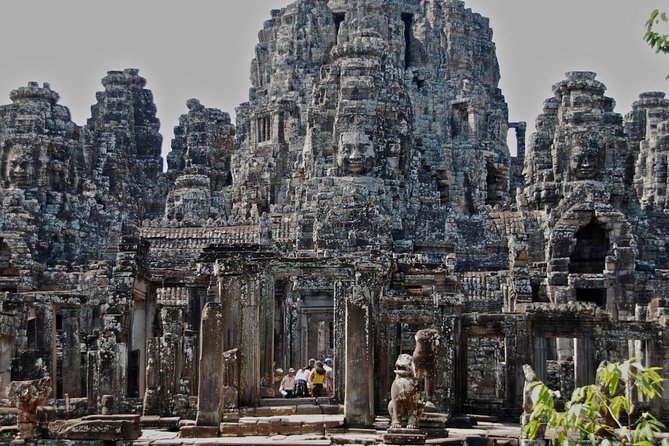
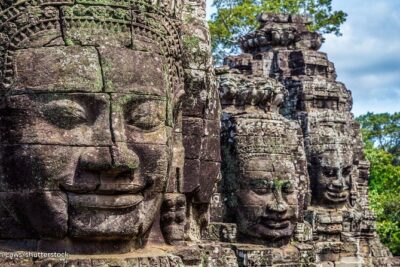
Bayon is known for its towers and carved faces linked with the Buddhist figure Avalokitesvara. The tour description refers to 54 towers and 216 faces, figures that help explain why the temple feels so different from Angkor Wat. Instead of one grand, easily understood outline, Bayon brings you into a maze of towers and close-set stone corridors.
You have about two hours here. That is a sensible amount of time because Bayon rewards slow looking. I would use the first part to follow your guide through the main areas, then reserve a few minutes to study the carvings at your own pace.
Baphuon adds another layer to the stop. The temple was built before Bayon and has a different character, so this part of the morning is not simply one repeated ruin after another. The south gate, Bayon, and Baphuon together show how much architectural variety can fit inside Angkor Thom.
The practical issue is heat. Even with a cool vehicle waiting, you will spend much of this visit outdoors and on stone surfaces. Comfortable shoes, water, and clothing suitable for temple visits are important. The tour supplies water, but you should not count on that alone for a full day in the sun.
Ta Prohm and the appeal of weathered ruins
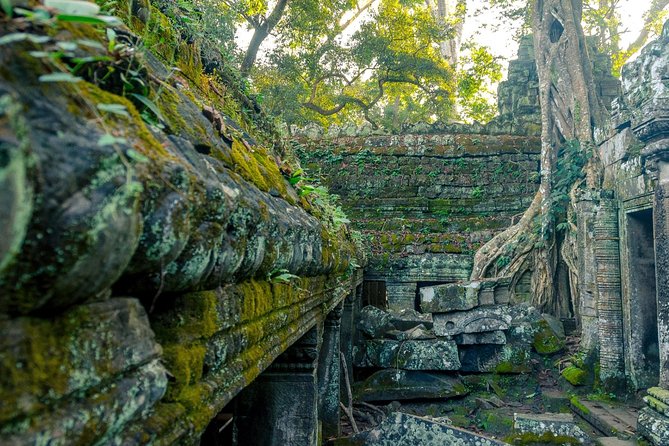
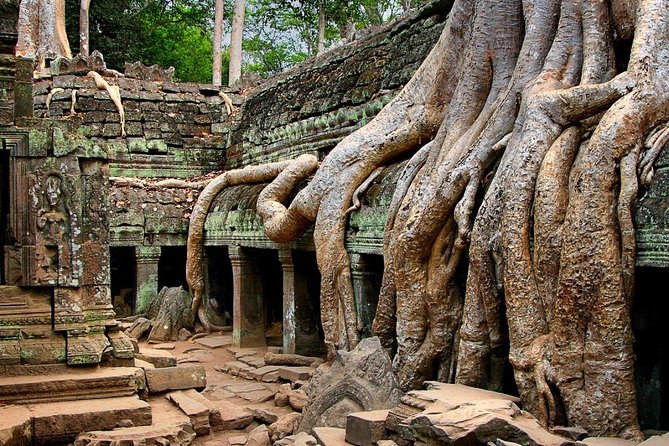
Ta Prohm is the stop most likely to trigger instant recognition. Large tree roots press around the temple stones, giving the site its familiar jungle-covered appearance. The roots are not decoration added for visitors. They are part of the reason Ta Prohm feels less orderly and more mysterious than the carefully framed views at Angkor Wat.
You get around two hours here, which is generous for a popular temple. That extra time lets you look at the carved doorways and galleries instead of treating the trees as a quick backdrop for photographs.
I like the contrast between Bayon and Ta Prohm. Bayon is dense with faces and towers, while Ta Prohm is about the tension between built stone and growing trees. Your guide can help make that difference clear, especially if you are new to Khmer temple architecture.
There is also a practical consideration. Ta Prohm’s fame means it can be a busy stop. The tour says it aims to avoid busy queues, but no schedule can guarantee a quiet temple at every moment. The private vehicle and guide still help by removing the need to organize transport or find your way through the site yourself.
Banteay Kdei, a quieter afternoon pause
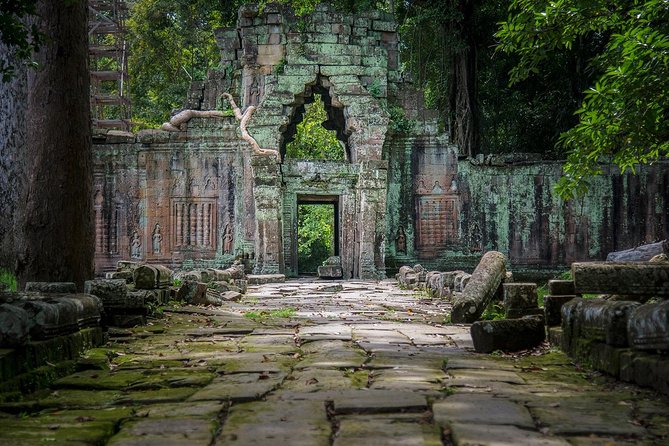
After Ta Prohm, you spend about an hour at Banteay Kdei. The temple was built by King Jayavarman VII in the late 12th century, placing it in the same broad period as several major works associated with his reign.
This shorter visit changes the rhythm of the day. You have already seen two major sites, so Banteay Kdei can work as a calmer stop where you notice layout, stonework, and atmosphere without trying to cover another enormous complex.
One hour is enough for an overview, but it may feel brief if you want a slow architectural study. That is one reason the private format helps. If your group is moving efficiently, you can ask whether a little more time is possible, depending on the rest of the day and the planned sunset stop.
Banteay Kdei may not carry the same fame as Bayon or Ta Prohm, yet including it makes the program feel less like a checklist of only the most photographed temples. You get another example of Khmer religious architecture and a useful pause before Angkor Wat.
More floating village trips:
- From Siem Reap: Kampong Phluk Floating Village Tour by Boat
★ 4.9 · 6,979 reviews - Sunset tour of Kampong Phluk stilts home village on the Tonle Sap
★ 5.0 · 4,865 reviews - Siem Reap: Kampong Phluk Floating Village Tour with Boat
★ 4.9 · 3,843 reviews - Siem Reap Floating Village Kampong Phluk Sunset with Boat
★ 5.0 · 1,962 reviews
Angkor Wat and the long afternoon finish
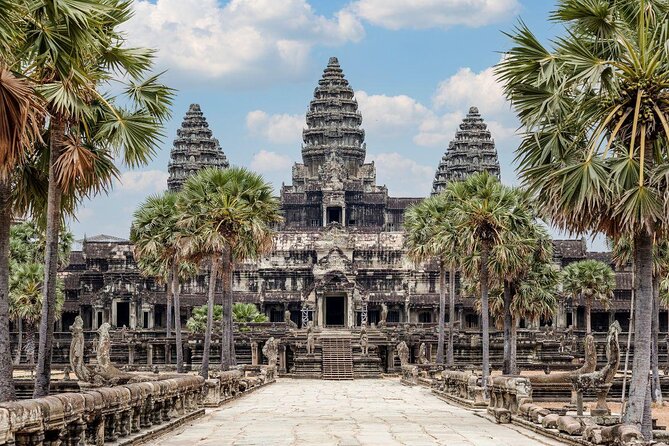
Angkor Wat receives about three hours, the longest temple visit of the day. That is appropriate. The complex is vast, and a short stop would leave you with only a distant view of its towers and a hurried walk through its galleries.
The temple is a UNESCO World Heritage Site and one of Southeast Asia’s most important archaeological places. Your guide can help you make sense of its scale, religious purpose, carved surfaces, and grand approach. Without context, it is easy to spend the whole visit searching for the famous central view. With three hours, you have time to look beyond that single image.
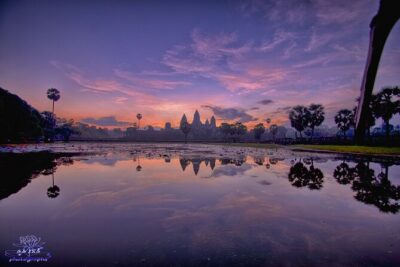
The plan also calls for ending the day with sunset over Angkor Wat. Sunset timing can depend on the date, weather, and the day’s pace, so treat this as a planned feature rather than a guaranteed dramatic sky. Still, placing Angkor Wat at the end gives the first day a strong finish.
This is a demanding schedule. Bayon, Ta Prohm, Banteay Kdei, and Angkor Wat add up to several hours on foot, often in hot conditions. I would not choose this program if you want a very relaxed temple visit with long café breaks. I would choose it if you want the main Angkor sights covered efficiently and prefer having transport handled for you.
Admission tickets are not included. The tour does not state the ticket prices or specify which Angkor pass you need, so confirm the current entrance requirements before departure. This is the biggest budget point to settle in advance.
Kompong Phluk and the life of Tonle Sap
Day two begins with about four hours at Kompong Phluk, described as a traditional Khmer floating village around 30 kilometers from Siem Reap. The village is known for tall stilted houses, fishing activity, a floating hospital, and daily life shaped by Tonle Sap.
This is the tour’s most important change of subject. At the temples, you look at the remains of a powerful ancient civilization. At Kompong Phluk, you see how people organize homes, work, and public services around the water.
The program describes the village as sitting above the surface of Southeast Asia’s largest freshwater lake. That setting is not a side detail. It explains the tall houses and the local dependence on fishing. You can expect a visit focused on the village’s structure and traditional way of life rather than another monument to photograph.
Four hours is a substantial portion of the day. That gives the stop room to feel like a real part of the tour instead of a quick add-on. It also means you should be prepared for a different type of outing, with water and village conditions replacing paved temple paths.
The admission fee is not included here either. The description does not identify the exact ticket or boat charge, so ask for a clear breakdown before you go. That question matters because the advertised tour price covers the vehicle and guide, but not all costs connected with the stops.
Angkor National Museum, a useful indoor hour
The Angkor National Museum follows the lake visit and lasts about one hour. Its collection includes Buddha statues and religious relics, giving you an indoor way to place the temples in a wider cultural setting.
I like the museum’s position on day two. After seeing the ruins in person, you can look at sculpture and objects with better questions in mind. A museum visit before Angkor might feel abstract. After Bayon, Ta Prohm, and Angkor Wat, it can help connect the carvings you saw outdoors with the beliefs and artistic traditions behind them.
One hour is enough for a focused visit, not a complete museum study. If you have a strong interest in Khmer art, you may want to confirm how much of the collection your guide plans to cover. The stop is best understood as an introduction.
The overview also describes a visit to Siem Reap’s old market. The detailed stop schedule names the museum and Artisans Angkor, but does not give the old market a separate time. If that market visit matters to you, confirm how it fits into the day rather than assuming it will receive a full guided stop.
Artisans Angkor and your stone-carving attempt
The final listed stop is Artisans Angkor, a local nonprofit organization that aims to improve the lives of disadvantaged Cambodians from rural areas. You visit its workshop and can try making your own stone carving.
That hands-on element gives the afternoon a welcome change. You are not only looking at old carvings behind barriers. You get a small sense of the patience and control required to shape stone.
Do not expect to produce a temple panel in one hour. The value is in trying the craft and seeing a workshop linked with training and employment. The social purpose also gives the stop more substance than a standard souvenir-shop visit.
This part should suit families and anyone who likes practical cultural activities. Children must be accompanied by an adult, and most people can take part. Since the tour is private, your guide can explain the process to your group without the distractions of a large shared party.
What the $92 price really covers
At $92 per person, the tour offers solid value for a private two-day program if you are traveling with others and want a driver, air-conditioned vehicle, and English-speaking guide arranged together.
The cost covers:
- Air-conditioned transport on both days
- An English-speaking guide
- Cold water
- A cold towel
- Private participation for your own group
It does not cover temple, museum, village, or other entrance tickets. Breakfast, lunch, and dinner are also excluded. The final cost therefore depends on how many people are in your group, the current admission charges, and your meal choices.
The private format improves the value for couples, families, or small groups that would otherwise arrange separate transport and guiding. Solo visitors may find the per-person price less attractive once extra tickets and meals are added.
The tour is booked, on average, six days ahead. That suggests you do not need to plan many months in advance, but I would still reserve early if your Siem Reap dates are fixed. Confirmation is provided at booking, and pickup is offered, though the supplied details do not name a specific hotel pickup window beyond the 8:30 a.m. start.
Who should book this two-day plan?
I would recommend it to you if you want the major Angkor temples without spending time arranging drivers, routes, and daily transport. It also suits first-time visitors who want a guide to connect the ruins with Cambodia’s wider culture.
Families may appreciate the private vehicle, cold towels, and stone-carving activity. The floating village offers a change of pace for anyone who worries that two full days of temples might feel repetitive.
You should think twice if you want to choose every stop yourself, spend half a day at one temple, or avoid additional entrance fees. The program is structured, and the first day is active. It is also less suitable for anyone looking for a low-cost package with meals and admissions already bundled.
The guide can make a real difference. Sen is specifically praised for being easy to communicate with, positive, accommodating, and upbeat. If you are assigned Sen, that is encouraging. If not, confirm your guide’s name and pickup details before the first morning.
Should you book it?
Book this tour if your priority is a well-organized first look at Angkor combined with a genuine change of scene at Tonle Sap. The strongest features are the private transport, generous time at Bayon and Ta Prohm, the three-hour Angkor Wat visit, and the unusual chance to try stone carving.
Before paying, ask exactly which entrance tickets you must buy, how the Kompong Phluk charges are handled, and when the old market fits into the schedule. If those extra costs suit your budget, this is a practical two-day introduction to both Cambodia’s ancient temples and its present-day lake communities.
FAQ
How long does the tour last?
The experience lasts approximately two days. Day one focuses on Angkor’s temples, while day two visits Kompong Phluk, the Angkor National Museum, and Artisans Angkor.
What time does the tour start?
The stated start time is 8:30 a.m. on both days.
Is this a private tour?
Yes. Only your own group participates in the activity.
Is hotel pickup available?
Pickup is offered. The provided details do not specify individual pickup times for specific hotels, so confirm your pickup arrangement before the first day.
Are entrance tickets included?
No. All entrance ticket fees are excluded from the price.
Are meals included?
No. Breakfast, lunch, and dinner are not included.
What is included in the $92 price?
The price includes an air-conditioned vehicle, an English-speaking guide, cold water, and a cold towel.
Can children join the tour?
Yes. Children can participate, but they must be accompanied by an adult.
Newest reviews from Siem Reap
- Village walking & Cooking class in Siem Reap★ 5.0 · 2 reviews
- Ultimate Sunrise to Angkor Wat, Angkor Thom and Bayon Temple★ 5.0 · 3 reviews
- Angkor Wat Sunrise Shared Tours: Bayon, Ta Prohm And Kravan★ 5.0 · 1 review
- Twilight Tastes of Siem Reap Include Dinner★ 5.0 · 13 reviews
- Two Days Tour Angkor Complex; Banteay Srei, and Kulen Hill★ 5.0 · 1 review
- Trekking Tour at Phnom Kulen National Park from Siem Reap★ 5.0 · 3 reviews
- Trip to Big Circle included Banteay Srey and Banteay Samre★ 5.0 · 1 review
- Full-Day Private Tour of Angkor Wat with Pick Up★ 5.0 · 12 reviews
Angkor Wat Tours, compared.
Angkor Wat Sunrise or Sunset Tour with Guide from Siem Reap
Read our review →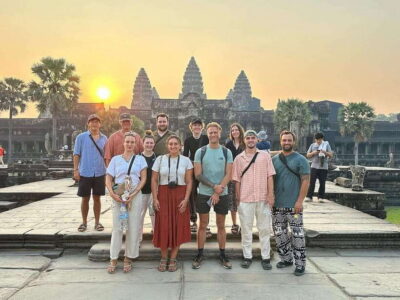
Angkor Wat: Small-Group Sunrise or Sunset Tour
Read our review →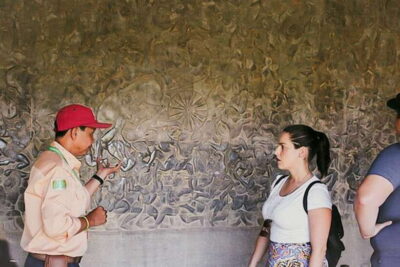
Angkor Wat 2-Day Tour with Sunrise and Sunset
Read our review →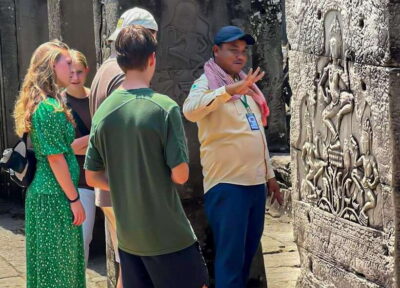
Angkor Wat Sunrise tour with Small – Group and Guide tours
Read our review →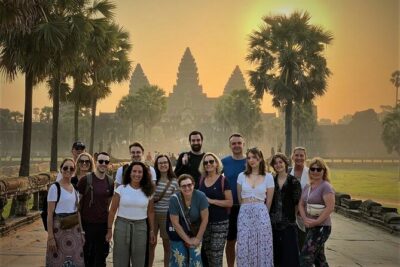
Angkor Wat Highlights and Sunrise Guided Tour from Siem Reap
Read our review →
Angkor Wat Sunset Small Group Tour with Lunch Included
Read our review →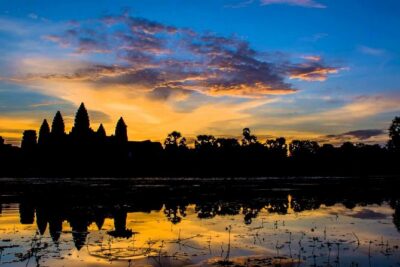
Full-Day Angkor Wat Sunrise Private Tour with Guide from Siem Reap
Read our review →Browse the lists this tour appears in