
Reviewed · TONLE SAP TOURS
Tonle Sap Fishing Village & Flooded Forest Community Guide
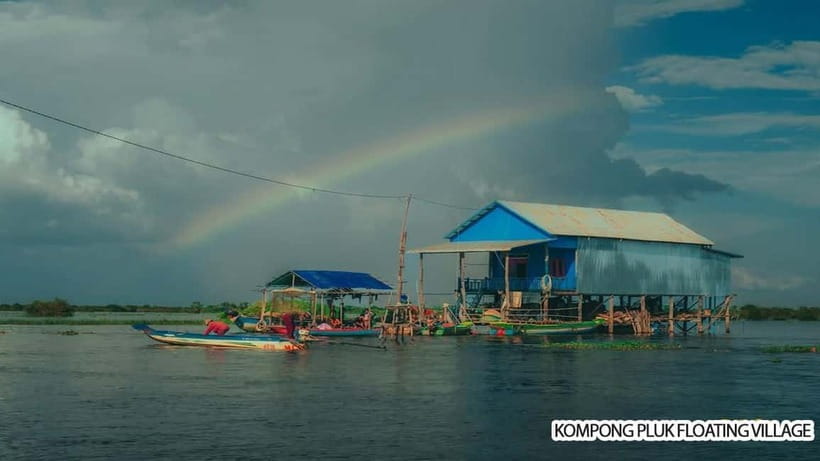
Water changes everything here. A visit to Kampong Phluk gives you a close look at Cambodian life shaped by the rising and falling waters of Tonle Sap, Southeast Asia’s largest freshwater lake. You’ll pass stilt houses, floating homes, schools, a pagoda, mangrove trees, and working fishing communities rather than simply ticking off another Siem Reap attraction.
I especially like the small group size of up to 14 people and the chance to see both village life and the countryside beyond the lake. The English-speaking guide, hotel pickup, air-conditioned vehicle, mineral water, and cool towel also make this a fairly easy half-day outing. The main catch is cost clarity: the advertised $18 price does not include the boat ticket, which costs $20 per person for groups of more than two, or $27 if you are alone.
In This Review
- Key points to know before you go
- Why Tonle Sap is worth your half-day
- The 45-minute drive from Siem Reap
- Arriving at Kampong Phluk’s tall stilt houses
- The boat ride through the flooded forest
- Religious life beside the waterways
- What changes during the dry season
- A five-hour schedule that stays manageable
- Is $18 good value?
- Who will enjoy this experience most?
- Should you book the Tonle Sap village tour?
- FAQ
- How long does the Tonle Sap village tour last?
- What time does the tour begin?
- Is hotel pickup included?
- What type of transport is provided?
- Is the boat ticket included in the $18 price?
- Is the mangrove rowboat included?
- What happens during the dry season?
- Is the tour wheelchair accessible?
Key points to know before you go
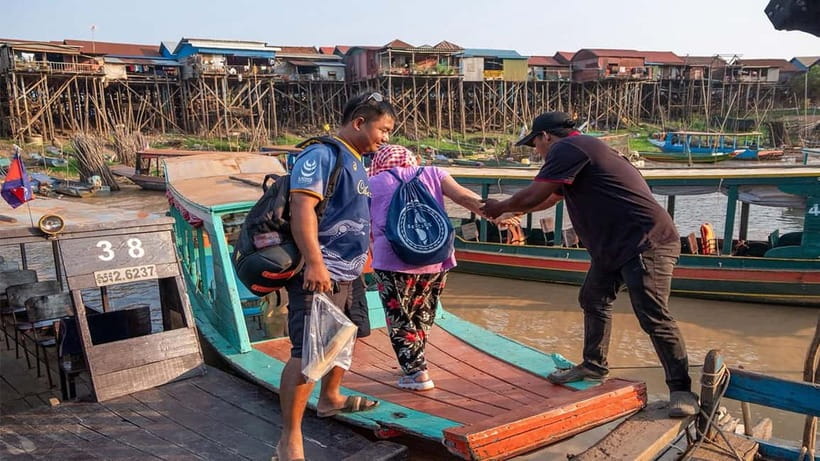
- Kampong Phluk sits about 45 minutes from Siem Reap, with a countryside drive through Roluos and nearby rural communities.
- Stilt houses can reach about 9 meters high, built to cope with Tonle Sap’s major seasonal changes.
- The flooded forest is best seen when water levels are high, and a separate rowboat fee applies for the mangrove area.
- Your timing affects the village experience, since dry-season conditions may bring a walking visit or a switch to Chong Khneas.
- The community includes about 1,000 families, many of whom work as fishermen or farmers.
- The five-hour trip includes transport and guiding, but no meal, boat ticket, or mangrove rowboat.
Why Tonle Sap is worth your half-day
Tonle Sap is not just a large body of water beside Siem Reap. It is a seasonal system that changes size dramatically, reaching an area described as equivalent to about 12,000 soccer fields during the rainy season. That annual rise supports fishing, farming, transport, and village life.
For you, the key point is that the lake does not look or function the same way all year. During wetter months, water reaches the village and boat travel becomes the natural way to get around. During drier months, the water pulls back and the same community becomes easier to see on foot.
That change gives the visit its value. You are not looking at a staged village built only for sightseeing. You are seeing how homes, schools, religious buildings, farms, and daily work adjust to water levels.
The trip also provides a useful contrast with the stone temples around Siem Reap. Angkor is about monuments and royal power. Kampong Phluk is about ordinary households making a living in a difficult but productive setting.
More time out on the Tonle Sap:
- Sunset tour of Kampong Phluk stilts home village on the Tonle Sap
★ 5.0 · 4,865 reviews - Siem Reap: Kulen Mountain, Beng Mealea and Tonle Sap Tour
★ 5.0 · 1,483 reviews - Tonle Sap Lake & Kampong Phluk Village Half-Day Tour
★ 5.0 · 1,045 reviews
The 45-minute drive from Siem Reap
Pickup begins around 8:00 AM, and you should be ready at your hotel at least 30 minutes before the scheduled pickup. The exact vehicle can vary according to the group, with transport provided by tuk-tuk SUV, car, minivan, or air-conditioned minibus.
I like the fact that the drive is part of the experience rather than dead time. As you leave Krong Siem Reap, the city gives way to open Cambodian countryside. The route passes through markets and the small town of Roluos, giving you a look at daily commerce beyond the hotel zone.
You might see people planting rice, working with ducks, or catching crickets along the way. These details help explain how closely food, farming, and seasonal water are tied together here.
The drive can also be the least polished part of the outing. Road conditions, vehicle type, and pickup timing may vary, and a shared group means several hotel stops are possible. The air conditioning, bottled water, and cool towel help, but I would still treat this as a practical rural excursion, not a luxury transfer.
Arriving at Kampong Phluk’s tall stilt houses
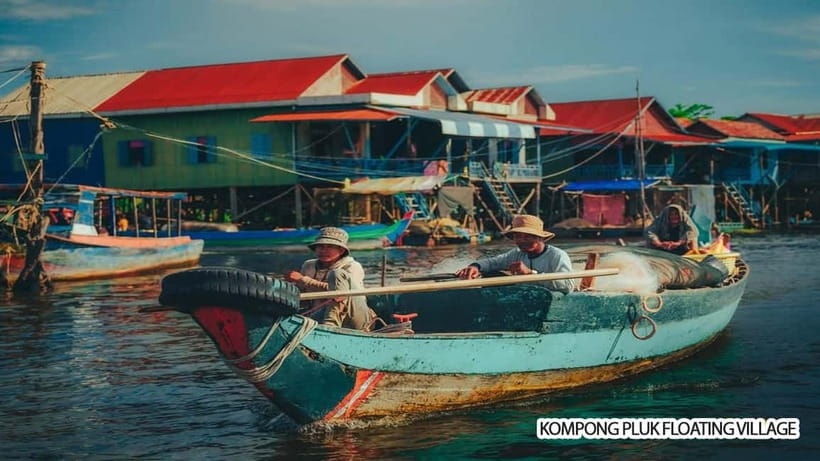
Kampong Phluk is known for houses raised high above the ground. Some stilts reach roughly 9 meters, a remarkable sight when you first approach the village. In the dry season, the height can look almost excessive. Once you understand the seasonal rise of Tonle Sap, it makes practical sense.
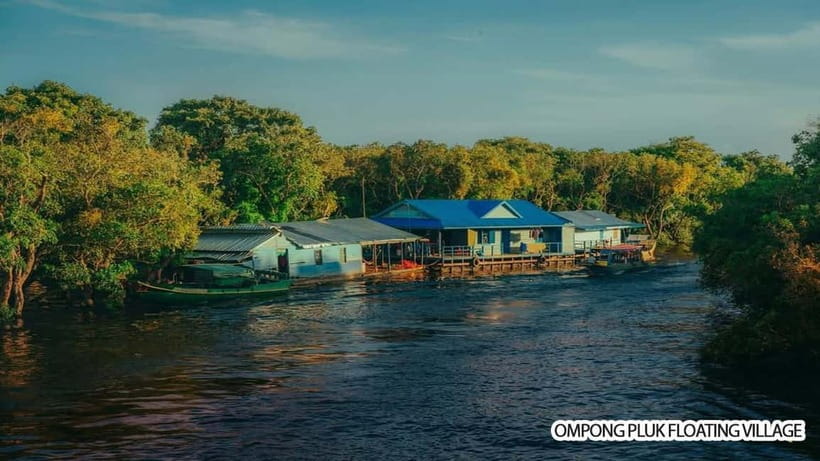
The houses are part of a wider system that includes floating homes and buildings used by the community. Schools, religious sites, work areas, and transport all have to function despite changing water levels.
Your guide should help explain what you are seeing, but it is worth taking a moment to observe the village without rushing. Notice the distance between the ground and the homes. Look at how people move around the community. Think about how different the view must be when the water rises beneath the houses.
The village is home to about 1,000 families, with fishing and farming forming the main livelihoods. That matters because the visit is not just an architectural stop. It gives you a direct look at a working community.
You may meet local residents during the visit, and children are described as friendly and curious. Be polite and restrained with photography. A smile and a greeting are better than treating people as scenery.
The boat ride through the flooded forest
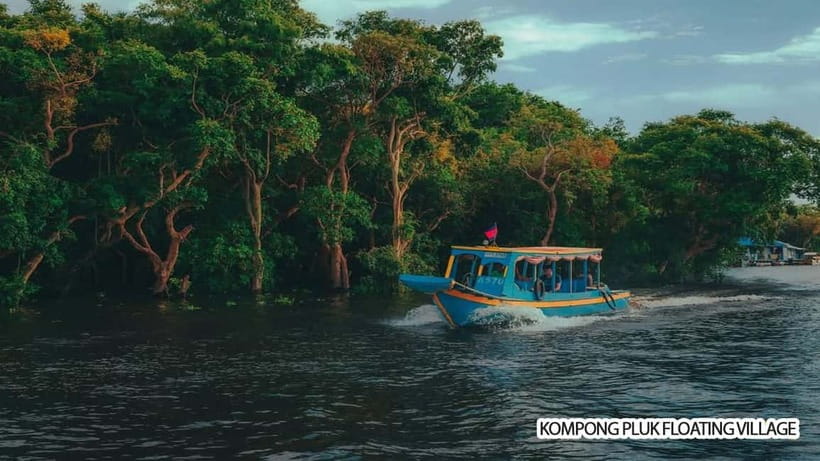
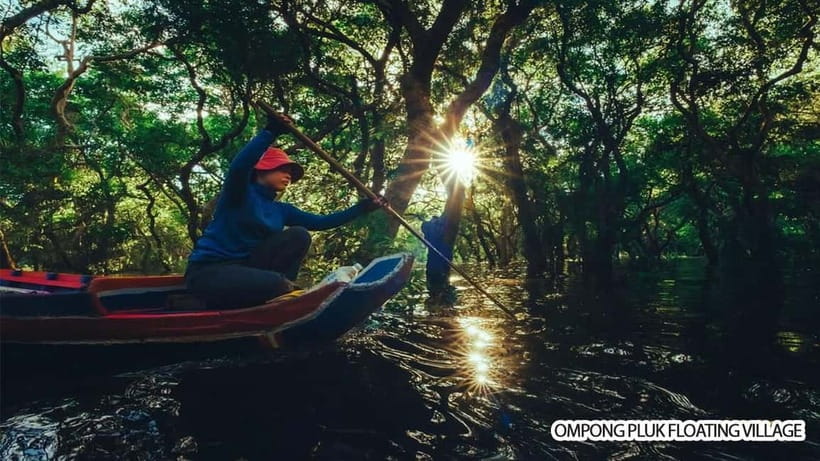
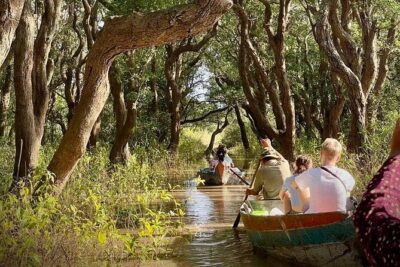
In the wetter season, the boat ride is the central part of the experience. You travel through the village and out toward the flooded forest, where mangrove trees and other plants grow in water that covers the lower ground.
The forest offers a different view of Tonle Sap from the stilt houses. Instead of looking down a village street, you move through narrow waterways surrounded by trees and water plants. You might spot small animals and birds, although the tour information does not promise specific wildlife sightings.
This is also the point where the extra fees matter. The main price does not include the boat ticket. It is listed at $20 per person when more than two people are traveling, or $27 per person if you are alone. A separate rowboat for the mangrove forest is also not included.
That can change the value calculation quickly. A solo visitor may pay $18 for the tour and another $27 for the boat, before considering any optional rowboat or food. For a small group of more than two, the combined basic cost is closer to $38 per person. Read the final booking details carefully so the low headline price does not surprise you later.
The boat is still worth considering if water levels are high. It lets you see the village as residents do during the wet season and gives you access to parts of the flooded forest that are not practical to reach by road.
A few more options around Siem Reap worth reading up on
- Angkor Wat Sunrise or Sunset Tour with Guide from Siem Reap
★ 5.0 · 12,109 reviews - Siem Reap: Angkor Wat: Small-Group Sunrise or Sunset Tour
★ 5.0 · 9,444 reviews - From Siem Reap: Kampong Phluk Floating Village Tour by Boat
★ 4.9 · 6,979 reviews - Siem Reap: Angkor Wat 2-Day Tour with Sunrise and Sunset
★ 4.9 · 4,429 reviews
Religious life beside the waterways
The visit includes a religious building described as both Hindu and Buddhist in character, with colorful murals showing the way these traditions coexist in Cambodia. You may also visit a Buddhist monastery or pagoda.
This is one of the more meaningful parts of the outing because it adds local culture beyond fishing and housing. Cambodia is often presented through Angkor’s grand temple ruins, but village religious sites reveal a more immediate form of spiritual life.
The murals are especially useful for understanding how religious ideas overlap in Cambodia. Rather than expecting a monumental temple complex, you’ll see a community place of worship that serves people living in and around the village.
Dress modestly and behave quietly at the monastery or religious building. Comfortable walking shoes are recommended, and they will help on village paths as well as during the countryside portions of the trip.
What changes during the dry season
Seasonal timing deserves close attention. The information for this experience uses slightly different date ranges, describing the wet-season boat experience from June through March, recommending late July through early March as the best period, and identifying March 1 through July 31 as the dry season for operational purposes.
The practical lesson is simple: confirm the current route before booking. During the dry season, you may walk along the main street instead of traveling by boat through the village. This gives you a closer view of house construction, local work, and everyday activity, but it may not deliver the same flooded-forest scenery.
There is also a stated route change from Kampong Phluk to Chong Khneas from March 1 through July 31. That is important. Chong Khneas is a different village experience, so you should not assume the title of the tour guarantees Kampong Phluk at every time of year.
The dry-season walk has its own appeal. You can see new houses being built and observe how people use the main street when the water has receded. It may feel more grounded and personal than a boat ride, although it can also be hotter and less dramatic than seeing the homes surrounded by water.
A five-hour schedule that stays manageable
The advertised duration is five hours, including pickup, transport, the guided village visit, and the return to Siem Reap. That makes this a useful addition to a temple-heavy itinerary.
You leave around 8:00 AM, ride into the countryside, spend several hours around the village and lake, then return to Krong Siem Reap. A morning departure also avoids giving the outing an entire day, leaving time for lunch or another activity afterward.
The small group limit of 14 is a real advantage. You are less likely to feel lost in a large crowd, and it should be easier to hear the English-speaking guide. A smaller group also makes it simpler to move between the vehicle, boat, village paths, and religious sites.
Do not expect a private, slow-paced photography tour unless you select a private option. The guide must keep the group moving, and the timing may be shaped by boat operations and pickup arrangements.
No meal is included, so eat before leaving or plan for food after returning. Mineral water and a cool towel are provided, which is useful in Cambodia’s heat, but they are not a substitute for breakfast or lunch.
Is $18 good value?
At first glance, $18 for five hours, hotel pickup and drop-off, transport, an English-speaking guide, village admission, water, and a cool towel looks inexpensive. It is a reasonable base price for a half-day excursion from Siem Reap.
The boat fee changes the picture. If you are in a group of more than two, the stated boat ticket brings the basic total to about $38 per person. If you are alone, it rises to about $45 before any rowboat cost. That is still not unreasonable for a guided outing with transport, but it is no longer an ultra-cheap activity.
I would judge the value by what you want to see. If you want a simple lake transfer and a quick photo stop, the additional charges may feel high. If you want a guide, countryside transport, cultural context, and a chance to see the village from the water, the combined cost can make sense.
A private option is also available, although the supplied information does not give its price. That choice may suit families or couples who want more control over timing, but you should request the full cost before committing.
Who will enjoy this experience most?
I would recommend this trip to you if you want a break from temple ruins and are interested in how people live today. It suits visitors who enjoy local communities, rural transport, changing ecosystems, and practical cultural details.
Families may appreciate the short duration and the friendly, curious children in the village, although parents should supervise children carefully around boats and water. The tour also works well for first-time visitors who want a guided introduction to Tonle Sap without arranging several separate transfers.
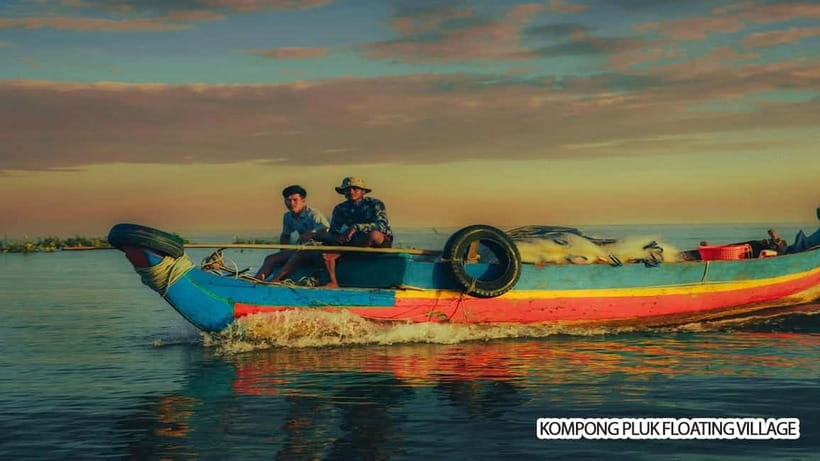
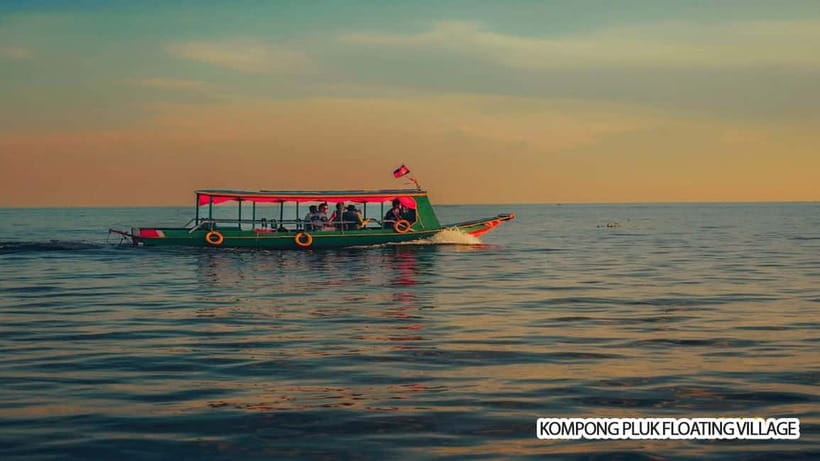
Photographers should choose the season carefully. High water offers reflections, boats, stilt homes surrounded by water, and the flooded forest. Dry conditions offer clearer access to streets, house construction, and village activity on land.
This is less suitable if you need wheelchair access, since the experience is not wheelchair accessible. It may also disappoint you if you expect a polished attraction with extensive facilities. Kampong Phluk is a working community, and that means uneven access, changing conditions, and basic infrastructure.
Keep your passport, airline tickets, and most of your cash at the hotel. Bring only what you need for the day, along with comfortable shoes and modest clothing for the monastery or religious building.
Should you book the Tonle Sap village tour?
Book it if you want to see a side of Cambodia that temples cannot provide. The combination of high stilt homes, seasonal water, fishing and farming, rural roads, religious murals, and the flooded forest gives you a fuller picture of life around Siem Reap.
Before paying, confirm three details: the current village route, the boat ticket price, and whether the mangrove rowboat is available and worth the extra fee. I would aim for the wetter period, especially late July through early March, if your priority is the boat ride and flooded forest.
If your visit falls between March and July, you may receive a walking tour or be taken to Chong Khneas instead. That does not make the outing pointless, but it does make the exact experience less predictable.
At $18 before boat charges, this is a fair, practical half-day trip. With the extra fees included, it becomes a moderate-cost cultural excursion. I think it earns its place in a Siem Reap itinerary for anyone willing to accept a working village rather than a perfectly staged attraction.
FAQ
How long does the Tonle Sap village tour last?
The experience lasts five hours, including hotel pickup, transportation, the guided visit, and the return to Krong Siem Reap.
What time does the tour begin?
The stated departure time is 8:00 AM. You should be ready at your hotel at least 30 minutes before pickup.
Is hotel pickup included?
Yes. Hotel pickup and drop-off in Krong Siem Reap are included.
What type of transport is provided?
Transport may be by tuk-tuk SUV, car, minivan, or air-conditioned minibus, depending on the number of people booked.
Is the boat ticket included in the $18 price?
No. The boat ticket is listed separately at $20 per person for groups of more than two, or $27 per person if you are alone.
Is the mangrove rowboat included?
No. The rowboat at the mangrove forest is not included in the tour price.
What happens during the dry season?
From March 1 through July 31, the route may switch from Kampong Phluk to Chong Khneas. When water levels are lower, the experience may also involve walking along the village’s main street rather than traveling through the village by boat.
Is the tour wheelchair accessible?
No. The experience is not wheelchair accessible.
Newest reviews from Siem Reap
- War Museum, Killing Field, and APOPO Hero RATs Tour★ 5.0 · 7 reviews
- Angkor Wat at Sunrise★ 4.0 · 7 reviews
- Siem Reap Angkor Airport Taxis (from Airport to Hotel)★ 5.0 · 44 reviews
- Short Cycling at Countryside★ 5.0 · 29 reviews
- Cambodian Cooking Class and Oxcart Ride with Local Village Tour★ 5.0 · 4 reviews
- Secret Temples of Angkor – Guided Tour in Siem Reap★ 5.0 · 6 reviews
- SIEM REAP E-BIKE HALF-DAY COUNTRYSIDE (25-30 km)★ 4.0 · 1 review
- Unveiling the Mystical Beauty of Phnom Kulen National Park★ 5.0 · 6 reviews
Tonle Sap Tours, compared.
Sunset tour of Kampong Phluk stilts home village on the Tonle Sap
Read our review →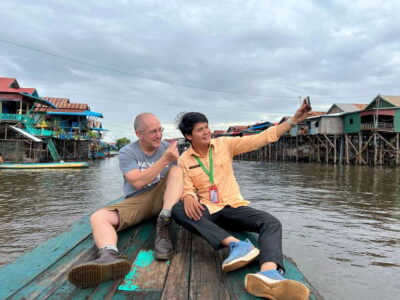
Kulen Mountain, Beng Mealea and Tonle Sap Tour
Read our review →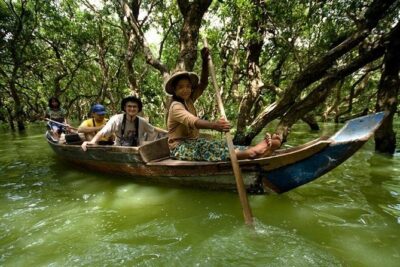
Tonle Sap Lake & Kampong Phluk Village Half-Day Tour
Read our review →
Kulen Mountain with Beng Mealea and Tonle Sap Small Group Tour
Read our review →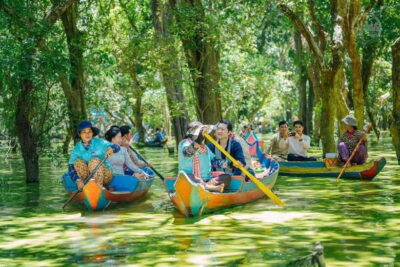
Tonle Sap, Kampong Phluk & Floating Village Tour
Read our review →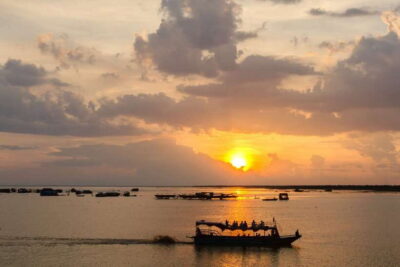
Sunset Dinner Tour: Tonle Sap Lake Floating Village
Read our review →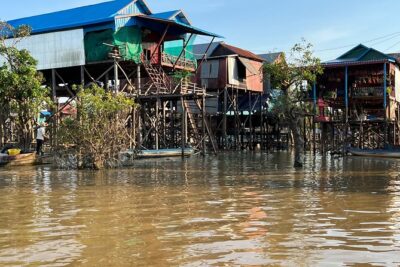
Half Day Kompong Pluck stilt home Village on Tonle Sap & Sunset
Read our review →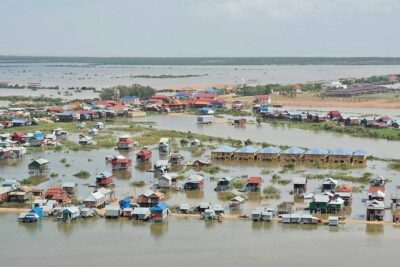
Tonle Sap Lake and Kampong Phluk Village Private Half Day Tour
Read our review →Browse the lists this tour appears in