Reviewed · ANGKOR WAT TOURS
To explore Angkor Wat for 3 days
Three mornings reveal three faces of Angkor. This private Siem Reap tour combines the famous temples with quieter sites, a distant jungle ruin, and a floating village. I like the well-planned three-day route, and I like having an English-speaking guide, air-conditioned car, cold water, and face towels included. The main drawback is that temple admission fees, taxes, and other unlisted costs are not included in the $175 price.
The schedule is full, but it gives you far more than a quick Angkor Wat visit. You will start before sunrise on day one, travel farther from Siem Reap on days two and three, and spend long periods walking in heat. Modest clothing, sunscreen, stamina, and early starts are essential.
In This Review
- Key points to know before booking
- What the $175 price really gives you
- Day one begins before sunrise at Angkor Wat
- Bayon and the heart of Angkor Thom
- The Elephant Terrace, Leper King Terrace, and Suor Prat
- Ta Prohm closes the first day
- Day two moves from quiet ruins to fine carvings
- Preah Khan provides space and silence
- Neak Pean and its artificial island
- Eastern Mebon shows a different building style
- Banteay Samre offers a quieter pause
- Banteay Srei rewards the long drive
- Day three reaches Beng Mealea and Kompong Phluk
- Beng Mealea feels remote and rough
- Kompong Phluk brings you to Tonle Sap
- How the private format affects the experience
- Clothing, comfort, and practical preparation
- Is this three-day Angkor tour worth booking?
- FAQ
- Where does this tour take place?
- How long does the experience last?
- What time does the first day begin?
- What time do days two and three begin?
- Is this a private tour?
- Is an English-speaking guide included?
- Is transportation included?
- Are temple admission tickets included?
- What clothing is required?
- Can I cancel for a full refund?
Key points to know before booking
- Sunrise starts at 4:50 am: Day one packs Angkor Wat, Angkor Thom, and Ta Prohm into a demanding but rewarding morning.
- The tour is private: Only your own group participates, which makes it easier to control the pace and ask questions.
- The route reaches beyond the usual circuit: Day two includes Banteay Srei, and day three reaches Beng Mealea and Kompong Phluk.
- Admission is extra: The tour price covers transport and guiding, but temple and other entrance fees are not included.
- Comfort items are provided: Expect an air-conditioned car, fuel, cold mineral water, and cold face towels.
- Temple clothing rules are strict: Both men and women must cover shoulders and knees at places of worship and selected museums.
What the $175 price really gives you
At $175 per person, this is not simply a ride to Angkor Wat. The price buys roughly three days of private transport, an English-speaking guide, fuel, and a planned route through the main temple area and several outlying places.
The air-conditioned car matters. Siem Reap can be hot, and day three involves a long trip to Beng Mealea, about 55 kilometers northeast of Angkor Wat, followed by a visit to Kompong Phluk. Having a cool vehicle between stops makes this much easier than arranging separate tuk-tuk or taxi rides.
Cold water and face towels are small additions, but useful ones. After walking across stone courtyards and temple terraces, a cold towel can feel like a better luxury than another souvenir.
The price needs careful reading, though. All fees and taxes are excluded, and every stop lists admission as not included. You should set aside extra money for the required entrance costs before you book. Since the exact ticket prices are not given here, confirm the current amounts with Angkor Boutique Tours.
The tour is booked, on average, 13 days ahead. That suggests planning early, especially if your visit falls during a busy period. Free cancellation is available up to 24 hours before the start time. Poor weather may lead to another date or a full refund.
More ways to see Angkor Wat:
- Angkor Wat Sunrise or Sunset Tour with Guide from Siem Reap
★ 5.0 · 12,109 reviews - Siem Reap: Angkor Wat: Small-Group Sunrise or Sunset Tour
★ 5.0 · 9,444 reviews - Siem Reap: Angkor Wat 2-Day Tour with Sunrise and Sunset
★ 4.9 · 4,429 reviews
Day one begins before sunrise at Angkor Wat
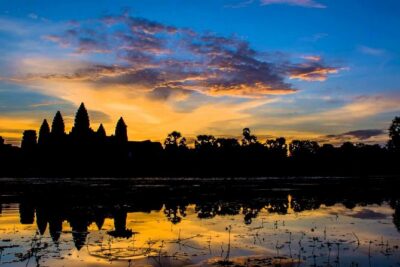
Pickup at 4:50 am is the hardest part of the entire experience. You leave in darkness, but the early start lets you reach Angkor Wat for sunrise and then continue through the central temple zone before the day becomes even hotter.
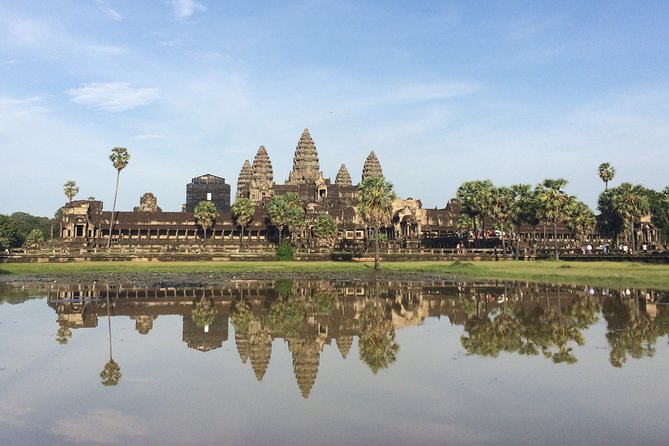
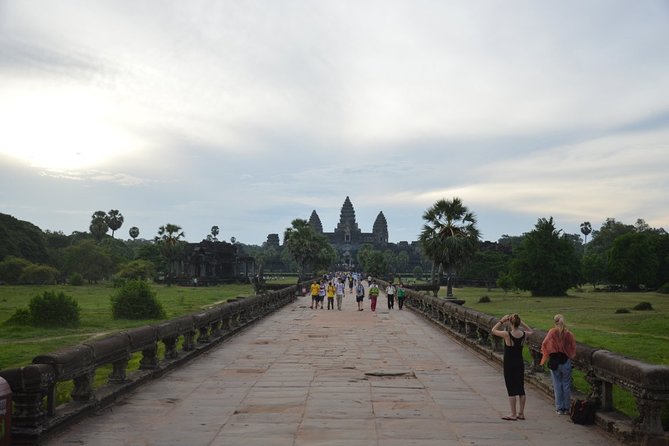
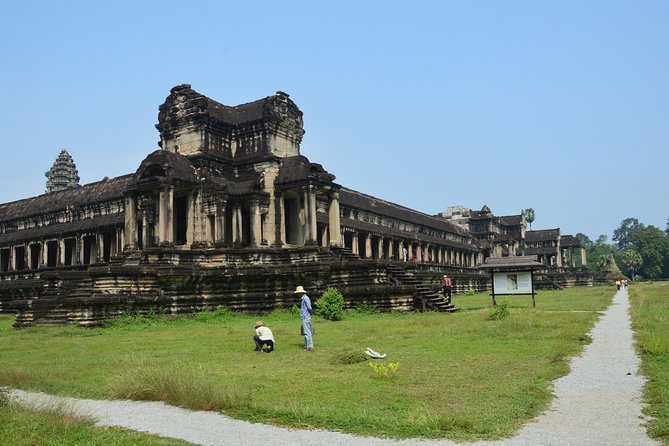
Angkor Wat receives about two hours, including roughly an hour and a half of exploration noted in the schedule. Built facing west, the temple has an unusual orientation for a major Khmer monument, and the guide explains the religious ideas connected with that direction. The temple is vast, so this first stop gives you a useful introduction to scale, design, and the role Angkor Wat played in the capital.
You will walk through galleries, courtyards, and open areas rather than simply stopping for a photograph. Wear shoes with a firm sole, and keep your clothing respectful from the start. Admission is not included.
Bayon and the heart of Angkor Thom
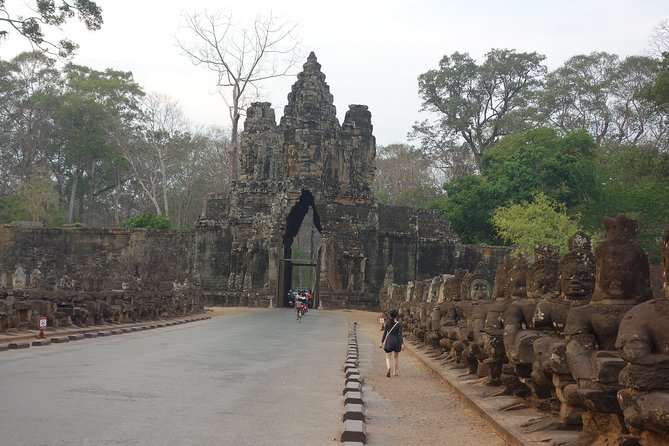
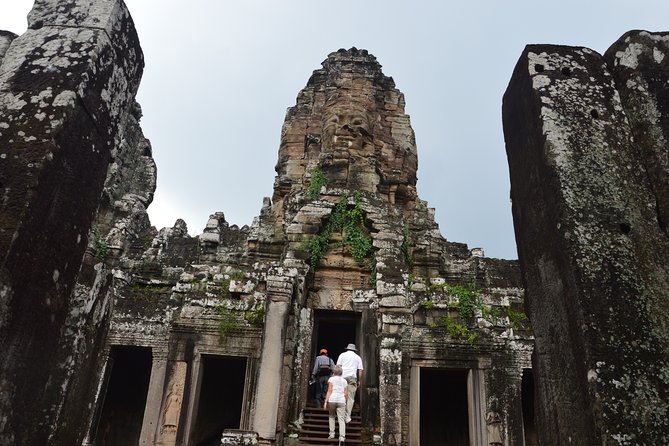
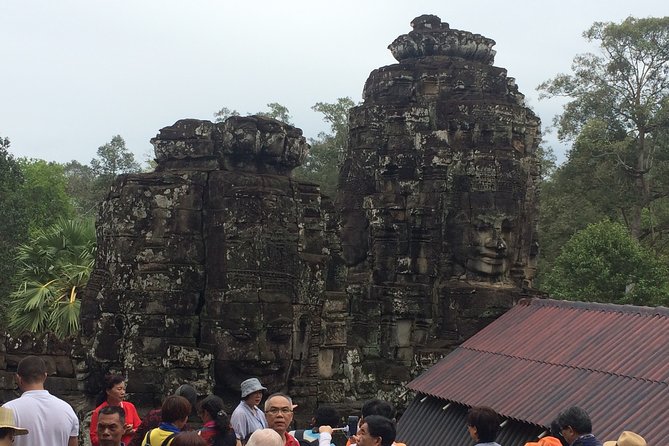
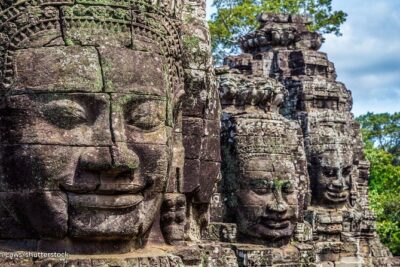
Bayon is a shorter stop, about 40 minutes, but it is one of the most memorable. Its stone faces look out in four directions, creating the famous impression of a temple watching over the ancient city.
The guide leads you through the lower sections and explains the carvings. This is especially helpful because Bayon can feel confusing at first. Towers, corridors, faces, and reliefs overlap in a tight space. A guided walk helps you notice what you would likely pass without understanding.
Baphuon follows for about 25 minutes. It is described as the largest temple in Angkor Thom, with a solid pyramid form and a huge Buddha figure on the rear. You must be in reasonably good physical condition to climb it. The stairs and height make this stop less suitable if you have difficulty with steep steps, though the itinerary notes that most people can participate in the overall tour.
Phimeanakas receives about 15 minutes. This pyramid temple sits in the former Royal Palace area, and the guide explains the connection between the king and the gods. It is a brief stop, but it adds political and religious context to the larger Angkor Thom visit.
The Elephant Terrace, Leper King Terrace, and Suor Prat
The Terrace of the Elephants takes about 10 minutes. It was used as a platform where royalty and dignitaries watched national games and festival events. Walking along the structure gives you a better sense of how it faced the main square.
The nearby Terrace of the Leper King is another short stop. It served as a royal crematorium in the 12th century, while the statue on top gave the terrace its local name. The guide helps separate the site’s historical use from later tradition.
Suor Prat is represented by twelve towers arranged from north to south. The tour connects them with the twelve-year lunar calendar. The schedule does not assign a separate long visit here, so think of it as a quick look or photo stop rather than a full temple exploration.
The day also includes a brief stop at an unfinished 10th-century temple. Details about its exact name are not specified, so ask the guide to identify it during the visit. This is one of the moments when a private tour helps, since you can request a short explanation instead of simply passing by.
A few more options around Siem Reap worth reading up on
- From Siem Reap: Kampong Phluk Floating Village Tour by Boat
★ 4.9 · 6,979 reviews - Sunset tour of Kampong Phluk stilts home village on the Tonle Sap
★ 5.0 · 4,865 reviews - Siem Reap: Kampong Phluk Floating Village Tour with Boat
★ 4.9 · 3,843 reviews - Siem Reap: Full-Day Angkor Wat Guided Tour with Sunset
★ 4.9 · 3,803 reviews
Ta Prohm closes the first day
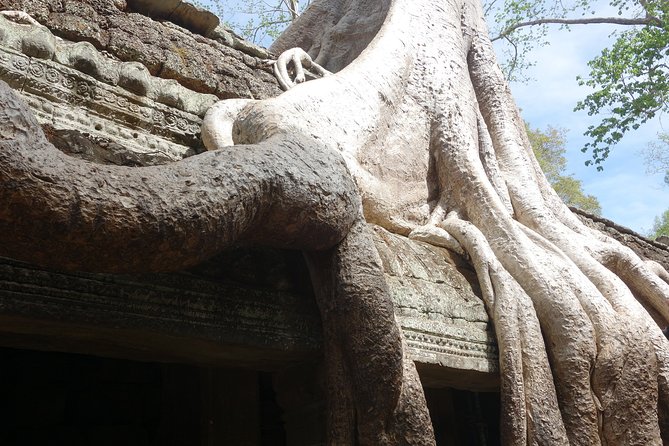
Ta Prohm receives about an hour and a half, making it one of the longer stops. Its fame comes partly from its appearance in the film Tomb Raider, but its real appeal is the collision between stone architecture and giant tree roots.
Parts of the temple are ruined and overgrown. Roots spread over walls and doorways, giving the site a rough, memorable character that differs from the more ordered Angkor Wat. You will want time here for photographs, but do not treat it as only a film location. The guide explains the temple’s story while you walk through its remaining galleries and courtyards.
By the end of day one, you will have covered a lot of ground. I would not plan an important evening activity after this morning-heavy schedule. Rest, eat, and prepare for another early start.
Day two moves from quiet ruins to fine carvings
Day two begins at 8:00 am, a welcome improvement after the 4:50 am pickup. It focuses on temples east and north of the central Angkor area, with a calmer rhythm and more time to look closely at architectural details.
Preah Khan provides space and silence
Preah Khan is scheduled for one hour. It was used as a temporary capital in the 12th century and is described as the second-largest temple in the Angkor complex.
Its ruined condition is part of its character. Instead of one compact monument, you move through a long, layered site with open sections and broken structures. The guide explains the king who built it and the role it played, helping you understand why the temple matters beyond its appearance.
Neak Pean and its artificial island
Neak Pean takes about 30 minutes. You reach the temple by a wooden bridge across an artificial island, so the approach is part of the stop.
The site was used as a hospital during the Angkor era. It is less about grand scale than about the setting and the idea behind the complex. Take your time on the bridge, where the view gives Neak Pean a distinct character from the larger stone temples.
Eastern Mebon shows a different building style
Eastern Mebon receives 30 minutes. This 10th-century temple uses brick for its five towers, with sandstone and laterite on the lower levels.
Elephant statues mark the corners. Look for the contrast between the brick towers and the heavier lower structure. This stop helps you see that Angkor architecture was not made in one single style or period.
Banteay Samre offers a quieter pause
Banteay Samre takes about 40 minutes and is presented as a peaceful temple with an architectural style similar to Angkor Wat. It was built by the same king associated with that great monument.
The value here is the slower pace. After Angkor Wat, Bayon, and Ta Prohm, Banteay Samre can feel like a chance to breathe and look carefully. If crowded temple visits wear you down, this stop may be one of the most pleasant parts of day two.
Banteay Srei rewards the long drive
The final temple of day two is Banteay Srei, about 30 kilometers north of the Angkor area. You receive about an hour here.
Banteay Srei is known for precise carvings and orange sandstone. About 90 percent of the structure is made from that material, giving it a warmer color and a finer visual texture than many of the larger monuments.
The drive is longer, but the change in scale makes the visit worthwhile. Banteay Srei is not the biggest temple on this route. Its appeal comes from neat detail, careful decoration, and the quality of the carving. You should think of it as a close-looking stop rather than a place where you simply walk around a massive enclosure.
Day three reaches Beng Mealea and Kompong Phluk
The final day also starts at 8:00 am. It is the most ambitious day geographically, taking you beyond the main Angkor zone to Beng Mealea and then to the floating village of Kompong Phluk.
Beng Mealea feels remote and rough
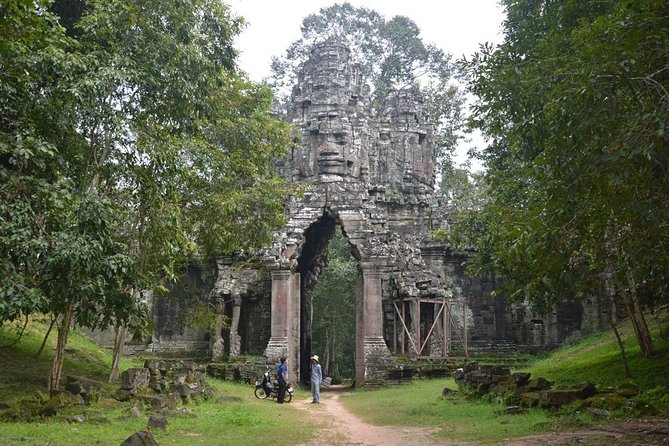
Beng Mealea is about 55 kilometers northeast of Angkor Wat and receives two hours. It lies near the stone quarry area connected with temples built during the Angkor era.
Many parts of the temple are overgrown with trees. Compared with the more organized paths and restored sections at some central monuments, Beng Mealea gives you a stronger sense of broken stone, vegetation, and abandoned space. The schedule describes it as dreamlike, and that is easy to understand from the setting.
The long drive is the main drawback. If you want only the famous Angkor temples, this day may feel too far-reaching. If you want a less polished ruin and are happy to spend more time in the car, Beng Mealea adds a different mood to the trip.
Kompong Phluk brings you to Tonle Sap
The final stop is Kompong Phluk, scheduled for about two hours. This village sits beside Tonle Sap, and its wooden houses are built on very tall stilts to cope with high water during the rainy season.
The village visit changes the focus from ancient stone buildings to present-day life shaped by the lake. The tall houses are the key feature, and the guide can explain how the seasonal water level affects the community. The description does not specify every activity included at the village, so confirm whether a boat ride or any local fees are part of your booking.
This final stop is valuable because it gives the three-day program a wider view of Siem Reap. You are not only seeing temples. You are also seeing how people live in a place where water controls the rhythm of the year.
How the private format affects the experience
Only your group participates, which is a major advantage on a route with several short stops. You can ask the guide to explain a carving, pause for photographs, or clarify the order of the sites without waiting for a large group.
The tour uses licensed guides and drivers with years of experience, according to the provider. The guide speaks English, and the private format should make it easier to communicate your needs. The description also emphasizes honesty in the guide and driver team, though you should still confirm any extra fees before the first day.
Pickup is offered, and the tour is near public transportation. An air-conditioned car is included, along with fuel. These details matter most on day three, when the route extends well beyond the central temple area.
The schedule remains demanding. Day one begins before dawn and includes several monuments. Day two has less punishing timing but still involves a full temple day. Day three adds a long road journey. I would recommend this program to people who want broad coverage and can handle heat, stairs, uneven stone, and long hours outside.
Clothing, comfort, and practical preparation
Temple dress rules are not optional. Your shoulders and knees must be covered for both men and women at places of worship and selected museums. Shorts and sleeveless tops may lead to refused entry, so wear loose trousers or a long skirt and a shirt that covers the shoulders.
Pack sunscreen. Also bring a hat, comfortable walking shoes, and a small bag for water and personal items. The operator supplies cold mineral water and face towels, but the information does not specify how much water is provided, so your own supply is sensible.
Most people can participate, but the itinerary includes climbing at Baphuon and extensive walking. The tour description specifically limits the climb to people in healthy physical condition. If steep stairs or uneven surfaces are a concern, tell the provider before booking and ask which stops can be adjusted.
Is this three-day Angkor tour worth booking?
I would book this tour if you want a private, temple-heavy visit with more variety than the central Angkor circuit. The combination of sunrise at Angkor Wat, Bayon’s faces, Ta Prohm’s tree roots, Banteay Srei’s detailed carvings, Beng Mealea’s ruined setting, and Kompong Phluk’s stilt houses gives you a broad experience of the Siem Reap area.
I would hesitate if you want slow mornings, short driving times, or a relaxed holiday schedule. The $175 price is reasonable for three days of private transport and guiding, but only after you budget separately for admission fees and taxes.
For an active visitor who wants the major temples plus several less central places, this is a strong choice. Book early, confirm all extra charges, dress correctly, and treat the 4:50 am start as part of the bargain rather than an unpleasant surprise.
FAQ
Where does this tour take place?
The tour is based in Siem Reap, Cambodia, and visits Angkor Wat, Angkor Thom, Ta Prohm, several other temples, Beng Mealea, and Kompong Phluk.
How long does the experience last?
The program lasts approximately three days.
What time does the first day begin?
Day one begins at approximately 4:50 am for sunrise at Angkor Wat.
What time do days two and three begin?
Both day two and day three begin at approximately 8:00 am.
Is this a private tour?
Yes. Only your own group participates in the activity.
Is an English-speaking guide included?
Yes. An English-speaking tour guide is included.
Is transportation included?
Yes. An air-conditioned car, fuel, and pickup are included.
Are temple admission tickets included?
No. Admission tickets are not included, and the price also excludes all fees and taxes.
What clothing is required?
You must cover your shoulders and knees at places of worship and selected museums. Shorts and sleeveless tops are not allowed.
Can I cancel for a full refund?
Yes, if you cancel at least 24 hours before the experience start time. Cancellations or changes made less than 24 hours beforehand are not accepted for a refund.
Newest reviews from Siem Reap
- Village walking & Cooking class in Siem Reap★ 5.0 · 2 reviews
- Ultimate Sunrise to Angkor Wat, Angkor Thom and Bayon Temple★ 5.0 · 3 reviews
- Angkor Wat Sunrise Shared Tours: Bayon, Ta Prohm And Kravan★ 5.0 · 1 review
- Twilight Tastes of Siem Reap Include Dinner★ 5.0 · 13 reviews
- Two Days Tour Angkor Complex; Banteay Srei, and Kulen Hill★ 5.0 · 1 review
- Trekking Tour at Phnom Kulen National Park from Siem Reap★ 5.0 · 3 reviews
- Trip to Big Circle included Banteay Srey and Banteay Samre★ 5.0 · 1 review
- Full-Day Private Tour of Angkor Wat with Pick Up★ 5.0 · 12 reviews
Angkor Wat Tours, compared.
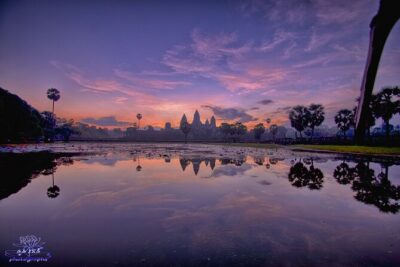
Angkor Wat Sunrise or Sunset Tour with Guide from Siem Reap
Read our review →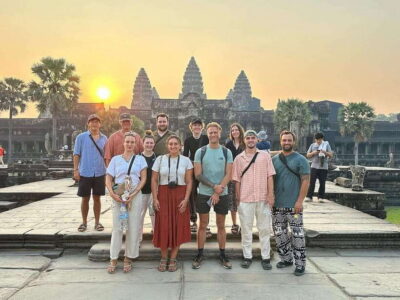
Angkor Wat: Small-Group Sunrise or Sunset Tour
Read our review →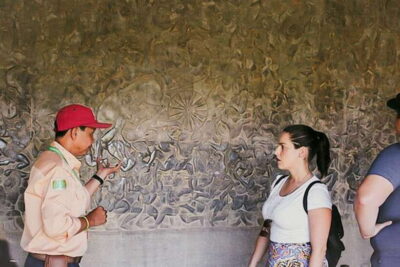
Angkor Wat 2-Day Tour with Sunrise and Sunset
Read our review →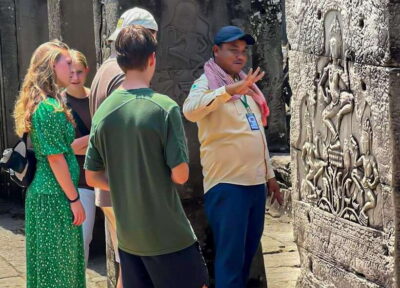
Angkor Wat Sunrise tour with Small – Group and Guide tours
Read our review →
Angkor Wat Highlights and Sunrise Guided Tour from Siem Reap
Read our review →
Angkor Wat Sunset Small Group Tour with Lunch Included
Read our review →