
Reviewed · TUK-TUK TOURS
The Angkor Temples from Sunrise by Tuk Tuk
Wake up before the birds. This private tuk-tuk tour pairs Angkor Wat at sunrise with a full day among Cambodia’s finest temple ruins. I especially like the included one-day Angkor pass and hotel pickup, which remove two common hassles. The drawback is the 5:00 a.m. start, followed by a long, walking-heavy day.
I also like the guide-led approach. A good guide can explain the carvings, Hindu and Buddhist ideas, and the story of the Khmer kings instead of leaving you to wander among beautiful stones without context. Guides such as Nob, Savery, Duong, and Sorin Mut received especially warm praise for their timing, patience, English, and ability to adjust the pace.
The $104 price is fair for a private vehicle, driver, guide, entrance pass, and roughly 13 hours of sightseeing. Still, lunch, drinks, tips, and personal spending are extra, and the sunrise itself depends on the weather. Some mornings deliver a glowing reflection behind Angkor Wat. Others offer a cloudy sky and the same magnificent temple.
In This Review
- Key points to know before booking
- Why the 5:00 a.m. start is worth it
- Breakfast beside Angkor Wat, or back at your hotel
- Angkor Thom, the old royal city
- Bayon Temple and its many stone faces
- Preah Khan, a large monastic complex
- Ta Nei and Ta Keo for a quieter change of pace
- Ta Prohm and the trees everyone remembers
- What the tuk-tuk adds to the day
- The guide can make or break Angkor
- Is $104 a good value?
- Who should book this sunrise temple tour?
- Final verdict: book it for a full Angkor introduction
- FAQ
- What time does the tour start?
- Is the Angkor entrance pass included?
- Is this a private tour?
- Is breakfast included?
- What should I wear to the temples?
- Does hotel pickup cover every Siem Reap accommodation?
Key points to know before booking
- Sunrise begins before sunrise: Pickup is scheduled for 5:00 a.m., so arrange your clothes, camera, and breakfast the night before.
- A private tour gives you control: Only your group participates, and the guide can adjust the pace or spend longer at a favorite temple.
- The best sunrise position matters: The left side of Angkor Wat’s main walkway, near the souvenir market, can offer a fine view between the towers.
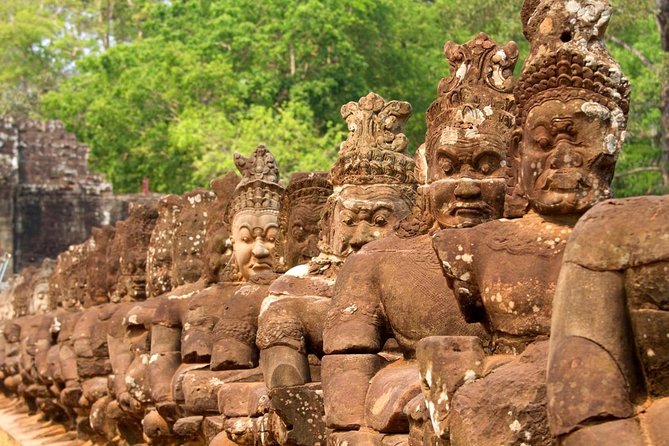
- The route covers the major names: Angkor Wat, Angkor Thom, Bayon, Preah Khan, Ta Nei, Ta Keo, and Ta Prohm all appear in the day.
- Expect plenty of walking: Comfortable shoes, covered shoulders, and clothing below the knees are essential at several sacred sites.
- Bring breakfast or expect a return: The planned schedule may take you back to your hotel after sunrise, but a packed breakfast lets you eat beside the temple and save time.
Why the 5:00 a.m. start is worth it
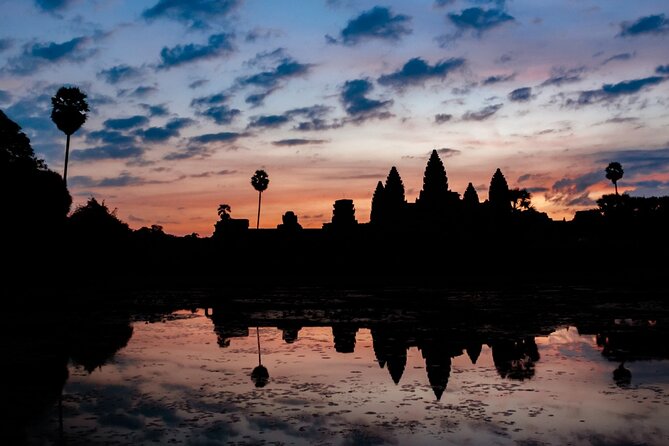
Angkor Wat is famous at sunrise for good reason. In the dim early light, the temple’s five towers rise behind the reflecting pond, and the stone takes on a softer shape before the heat arrives. The sight can be crowded, but the setting still feels special.
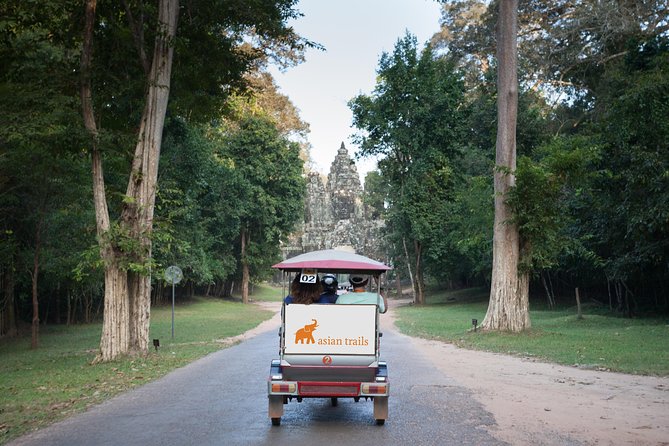
You leave Siem Reap in an open-air tuk-tuk with a driver and English-speaking guide. The ride gives you a practical feel for the early morning, though you should protect phones and cameras from rain, dust, and other natural elements.
Your first stop is the Angkor ticket office if you need the pass issued there. One useful piece of timing is that the guide may help you avoid the largest queues by arriving at the right moment. The one-day Angkor pass is included in the tour price, which adds real value.
At Angkor Wat, bring a small flashlight or use your phone carefully while walking before dawn. One visitor specifically praised the guide for carrying a flashlight, a small detail that matters when paths and temple edges are difficult to see.
For the classic photograph, head toward the pond and the main walkway. The left side of the walkway, closest to the souvenir market, may give you a better angle for seeing the sun appear between the towers. No guide can promise perfect color, though. Rain and cloud can soften the display, and the temple remains worth seeing even when the sunrise is modest.
More Tuk-Tuk Tours in Siem Reap
- Siem Reap: Angkor Wat Private Tuk-Tuk Tour
★ 4.9 · 2,222 reviews - Siem Reap Countryside Bike Tour / E-Bike or Tuk Tuk
★ 5.0 · 935 reviews - Angkor Sunrise Bike Tour / E-Bike or Tuk Tuk
★ 5.0 · 615 reviews
Breakfast beside Angkor Wat, or back at your hotel
The morning schedule needs a little clarification. The stated plan has you return to your hotel for breakfast after Angkor Wat, then go back into the park for the other temples. That arrangement may suit you if you want a proper meal, a shower, or a short rest.
The practical alternative is to ask your hotel for a packed breakfast. Several people found this better because they could eat near Angkor Wat while waiting for the sun, then continue without the extra return trip. The tour information also says lunch is not included, so you need to plan your own midday meal as well.
Ask about the exact morning plan when you book. The operator tries to confirm pickup details in advance, but the final pickup time may sometimes be confirmed the day before. Give accurate hotel information, especially if your accommodation changes.
Angkor Thom, the old royal city
After breakfast, the tour returns to the temple area and moves into Angkor Thom. This was not simply another isolated shrine. It was a large royal city, and entering its gates helps you understand Angkor as a planned capital rather than a collection of scattered monuments.
The scale changes the mood. Angkor Wat feels like a grand temple complex. Angkor Thom gives you a sense of roads, walls, gates, courtyards, and ceremonial space. Your guide can connect the stones to the wider Khmer civilization and explain how religious ideas shaped the city.
This stop is listed for about an hour, though the timing can shift depending on heat, crowds, and your interests. I would use this part of the day to ask questions about the city’s design before the later temple stops fill your head with names and carvings.
Bayon Temple and its many stone faces
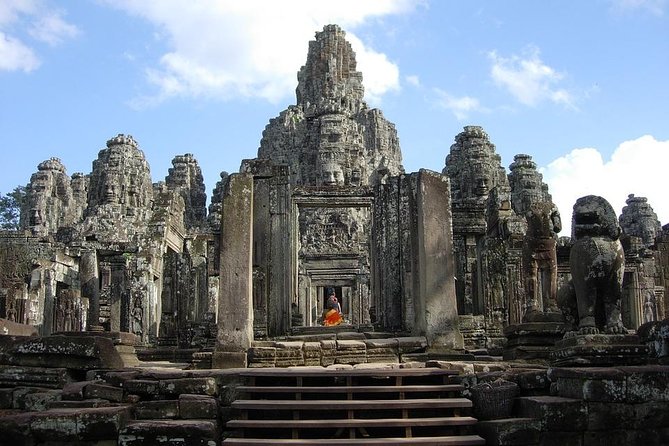
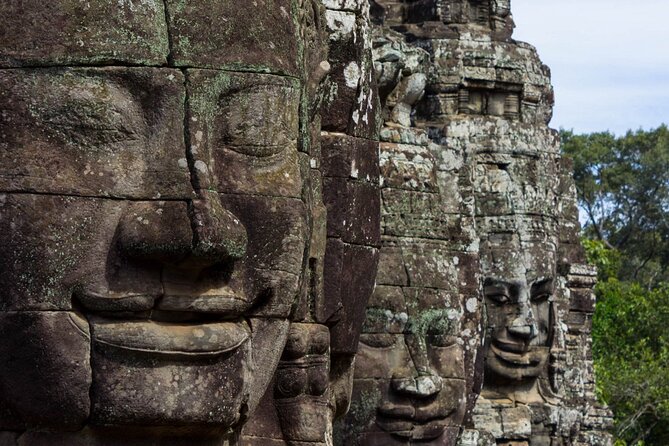
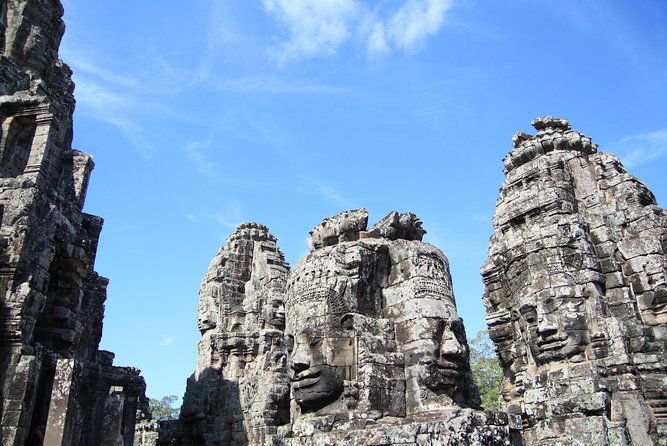
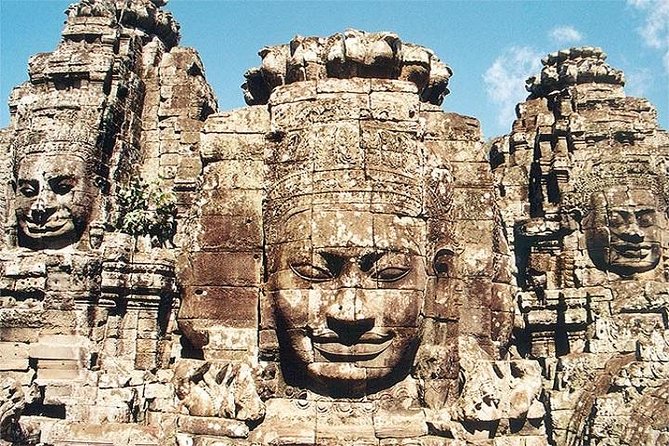
Inside Angkor Thom, Bayon is the dramatic centerpiece. Its towers carry large carved faces, and the tight arrangement of galleries and passageways makes the temple feel almost maze-like.
Bayon rewards a guide. The faces are the obvious attraction, but the bas-reliefs and the relationship between the inner and outer sections give the site more depth. Guides praised for this tour, including Nob and Savery, were valued for explaining the carvings and the ideas behind them rather than simply pointing at the famous features.
You have about 45 minutes here according to the planned schedule. That is enough for a focused visit, but not enough for a slow inspection of every carving. If you become absorbed by one gallery, tell the guide. Since this is a private outing, the day can often be adjusted within reason.
The stone surfaces can be uneven, and shade varies. Good footwear is more useful than stylish footwear here. This is one of the places where you may want to spend less time taking repeated photographs and more time listening to the explanation.
Something completely different for another day:
- Angkor Wat Sunrise or Sunset Tour with Guide from Siem Reap
★ 5.0 · 12,109 reviews - Siem Reap: Angkor Wat: Small-Group Sunrise or Sunset Tour
★ 5.0 · 9,444 reviews - From Siem Reap: Kampong Phluk Floating Village Tour by Boat
★ 4.9 · 6,979 reviews - Sunset tour of Kampong Phluk stilts home village on the Tonle Sap
★ 5.0 · 4,865 reviews
Preah Khan, a large monastic complex
Preah Khan, meaning Sacred Sword, spreads across a much larger area than its name might suggest. It was built under King Jayavarman VII as a monastery and teaching center, and the complex covers more than 56 hectares.
The temple’s appeal comes from its length and layers. You pass through successive spaces rather than seeing everything at one glance. It feels less like a single picture stop and more like a place to explore slowly.
The planned visit lasts about 30 minutes. That is fairly brisk for an extensive complex, so you will need to keep moving. The benefit is that the route fits more temples into one day. The cost is that you may not have time to study every doorway, courtyard, and carved detail.
Ask your guide to point out the sections that best explain Preah Khan’s purpose. This is where a clear historical explanation can turn a long walk through stone corridors into a much more meaningful stop.
Ta Nei and Ta Keo for a quieter change of pace
Ta Nei is one of the lesser-known stops on this route. It does not carry the same instant fame as Angkor Wat, Bayon, or Ta Prohm, and that makes it useful in the middle of a busy temple day.
The tuk-tuk takes you toward Ta Nei and Ta Keo near the Eastern Baray. The route gives you a break from the biggest sites and introduces you to temple ruins that can feel more understated. I like having these smaller stops included because Angkor is not only a checklist of famous monuments.
The planned time for this part is about 45 minutes. Do not expect the same scale or iconic view as Angkor Wat. Instead, look at the construction, the worn stone, and the way the ruins sit within the wider complex.
This is also a good point to tell the guide if you are getting tired. The heat and humidity can catch up with you, even during the dry season. Several people found their guides flexible about pace, and that flexibility is one of the best reasons to choose a private tour.
Ta Prohm and the trees everyone remembers
Ta Prohm is the final major stop, with about an hour and a half planned. The temple is closely linked with the image of giant tree roots pressing over old stone, and the decision to leave some of the forest growth in place gives the site its unusual character.
It was built by Jayavarman VII as a shrine to his mother. That personal purpose adds meaning to the ruined courtyards and galleries. The temple is also a good reminder that Angkor was a living religious and political center, not just a set of picturesque ruins.
Ta Prohm can be one of the most crowded stops, especially around the best-known tree-covered sections. A guide who knows the layout can help you reach the important areas without wasting time. Guides were also praised for finding good picture spots, which can make a real difference when other groups are moving through the same corridors.
The long scheduled visit is welcome, but you should not assume every minute will feel relaxed. There are uneven surfaces, narrow passages, and plenty of walking. Wear shoes with a secure grip and keep your camera protected from moisture and dust.
What the tuk-tuk adds to the day
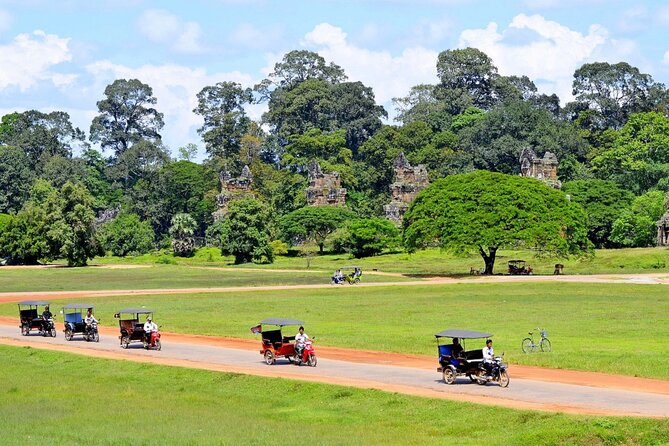
The open-air tuk-tuk is more than a way to move between temples. You get airflow during the rides and a closer view of the roads around the archaeological park. It also keeps the day feeling local and informal compared with a sealed vehicle.
The tradeoff is exposure. Sun, rain, dust, and humidity are part of the ride. Bring sunglasses, a hat, and high-SPF sunblock even if the morning begins cloudy. Cover electronic equipment properly, since the operator does not accept responsibility for damage caused by poor protection.
The driver and guide work as a team. The driver handles the routes and parking while the guide leads the visits and explains the sites. Several accounts praised drivers for being safe and courteous, which matters when you have already been awake since before dawn.
The guide can make or break Angkor
The monuments are extraordinary on their own, but the guide determines how much you understand. Strong guides on this route have explained Khmer history, Hinduism, Buddhism, royal construction, and the meaning of carvings in clear, approachable terms.
Nob was praised for being personable and for connecting temple history with wider religious ideas. Savery received particular praise for adjusting the pace and helping with phone photography. Duong was noted for fluent English, punctuality, and tailoring the route. Sorin Mut was described as professional, articulate, kind, and courteous.
Those specific guides may not be available on your date, so do not book on the assumption that you will receive one of them. English ability can vary. One person found a guide’s English difficult at times but still valued his help and strong knowledge of the sites.
The private format gives you a useful advantage. You can ask for more explanation, request a slower pace, or tell the guide when the information is becoming too detailed. One person found that some extended discussion of carvings felt less engaging and needed a gentle push to keep moving. That is a fair reminder that a private guide works best when you communicate openly.
Is $104 a good value?
At $104 per person, this is not the cheapest way to see Angkor. You are paying for a private guide, private tuk-tuk transport, driver, hotel pickup and drop-off within Siem Reap, and the one-day Angkor pass.
For a first visit, I think the price is reasonable. The pass alone removes a separate expense, and the private format lets you avoid the rigid pace of a large group. You also get a full route covering the major temples and several less prominent ones.
The value is weaker if you mainly want a quick sunrise photograph. In that case, a shorter visit may be enough. This tour makes more sense if you want a full introduction to Angkor in one demanding day and prefer help with transport, directions, timing, and interpretation.
Lunch and drinks are not included. Tips, shopping, personal expenses, and insurance are also your responsibility. Transfers outside central Siem Reap, including the airport, Tonle Sap, Koh Ker, and Banteay Srei, require extra arrangements or supplements.
Who should book this sunrise temple tour?
I would recommend it to a first-time visitor with one full day for Angkor. It suits you if you want to see the signature sites, learn the basic story of the Khmer kings and religions, and avoid arranging a tuk-tuk and temple route on your own.
It also works well for couples, families, and small private groups who want control over the pace. Most people can take part, but you should be comfortable with extended walking, uneven ground, heat, and an early start.
I would think twice if you dislike early mornings, struggle with long walks, or prefer to study one temple slowly. The 13-hour duration is an advantage for coverage but a challenge for energy. Some people finished around 2:00 p.m., while the exact end depends on the day’s pace and stops.
Dress with respect. Shoulders should be covered, and clothing should fall below the knees. Bright clothing and shirts with offensive or disrespectful images may cause problems at certain temples and palaces.
Final verdict: book it for a full Angkor introduction
Book this tour if you want the classic sunrise, the major Angkor temples, a private guide, and a tuk-tuk day that handles the main practical details. The best parts are the dawn view, the included pass, the private pace, and the chance to understand what you are seeing.
Skip it if you only want sunrise or if 5:00 a.m. sounds unbearable. For everyone else, bring a packed breakfast, sturdy shoes, sun protection, and patience for the heat. The sunrise may be cloudy, but Angkor Wat, Bayon, Preah Khan, Ta Nei, Ta Keo, and Ta Prohm still make this a strong use of one day in Siem Reap.
Free cancellation is available if you cancel at least 24 hours before the local start time. Changes or cancellations inside that window are not accepted for a refund.
FAQ
What time does the tour start?
Pickup is scheduled for 5:00 a.m. The operator aims to confirm the exact pickup time in advance, though final details may sometimes arrive the day before.
Is the Angkor entrance pass included?
Yes. The tour includes a one-day Angkor pass.
Is this a private tour?
Yes. Only your group participates, with a private English-speaking guide, tuk-tuk, and professional driver.
Is breakfast included?
No meal is listed as included. The planned schedule may return you to your hotel for breakfast after sunrise, but you can ask your hotel to prepare a packed breakfast. Lunch is also your own arrangement.
What should I wear to the temples?
Wear clothing that covers your shoulders and falls below the knees. Certain Angkor temples and palaces enforce a strict dress code.
Does hotel pickup cover every Siem Reap accommodation?
Pickup and return are included for customers staying in and inside Siem Reap’s general service area. Accommodation outside that area, including the airport, Tonle Sap, Koh Ker, and Banteay Srei, is excluded unless an additional supplement is arranged.
More Sunrise Tours in Siem Reap
- Siem Reap: Angkor Wat 2-Day Tour with Sunrise and Sunset
★ 4.9 · 4,429 reviews - Angkor Wat Sunrise tour with Small – Group and Guide tours
★ 5.0 · 3,655 reviews - Angkor Wat Highlights and Sunrise Guided Tour from Siem Reap
★ 5.0 · 3,213 reviews - Full-Day Angkor Wat Sunrise Private Tour with Guide from Siem Reap
★ 5.0 · 2,920 reviews
Newest reviews from Siem Reap
- War Museum, Killing Field, and APOPO Hero RATs Tour★ 5.0 · 7 reviews
- Angkor Wat at Sunrise★ 4.0 · 7 reviews
- Siem Reap Angkor Airport Taxis (from Airport to Hotel)★ 5.0 · 44 reviews
- Cambodian Cooking Class and Oxcart Ride with Local Village Tour★ 5.0 · 4 reviews
- Secret Temples of Angkor – Guided Tour in Siem Reap★ 5.0 · 6 reviews
- Short Cycling at Countryside★ 5.0 · 29 reviews
- SIEM REAP E-BIKE HALF-DAY COUNTRYSIDE (25-30 km)★ 4.0 · 1 review
- Unveiling the Mystical Beauty of Phnom Kulen National Park★ 5.0 · 6 reviews
Tuk-Tuk Tours, compared.
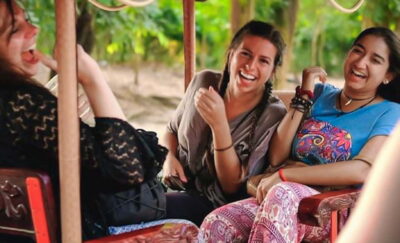
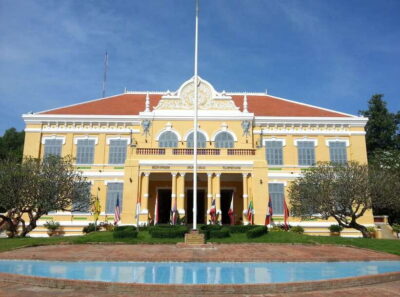
Tuk-Tuk, Bamboo Train, Killing/Bat Caves, Sunset
Read our review →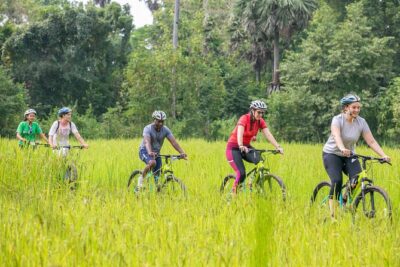
Siem Reap Countryside Bike Tour / E-Bike or Tuk Tuk
Read our review →
Battambang Tuk Tuk tour: Bambootrain, Killing & Bat Caves,Sunset
Read our review →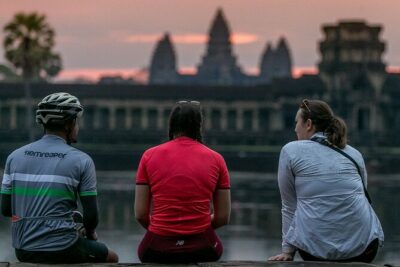
Phnom Penh Silk Island Bike Tour/ E-Bike or Tuk Tuk
Read our review →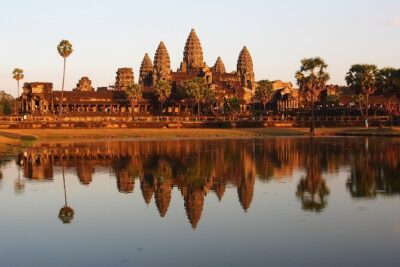
Angkor Wat Private Tuk-Tuk Tour (sunrise Option) & more
Read our review →
Ultimate Phnom Penh Food Tour by Tuk Tuk: 20 Tastings and Drinks
Read our review →Browse the lists this tour appears in