
Reviewed · SHOW
Snap! Sensational & Unique Show ! Back To Cambodian Archives
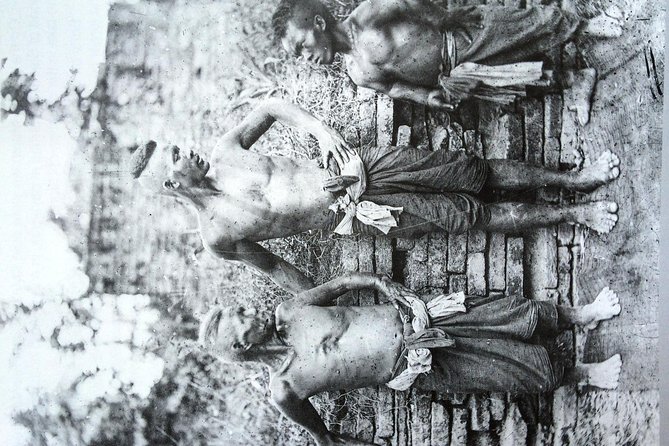
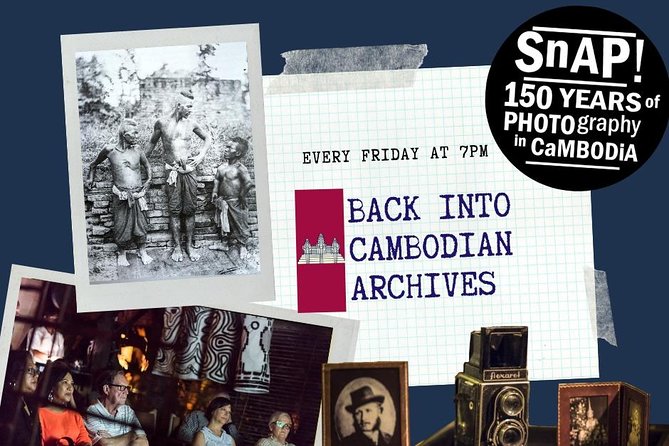
Cambodia’s past comes alive in photographs. Snap! Back to Cambodian Archives uses still images, moving footage, narration, and live music to trace the country from the first photographs of Angkor Wat in 1866 through colonial rule, independence, the joyful 1960s, war, the Khmer Rouge years, and peace. I like the way the show makes a large, difficult subject feel manageable in about an hour.
I especially like the rare archive material from John Thomson and Emile Gsell, along with the setting at Bambu Stage. The garden and warm welcome add charm before the performance even begins. The main consideration is that the show is not a long theatrical production, so you should book it for its historical storytelling and visual record, not for elaborate stage effects.
In This Review
- Key points to know
- Why this Siem Reap show is different
- Entering Bambu Stage at 7:00 pm
- Following the first photographs of Angkor Wat
- From colonial rule to Cambodian independence
- The joyful 1960s and the sound of Apsara dance
- The Vietnam War and Khmer Rouge years
- Reaching an era of peace
- How much value you get for $19
- Who will enjoy Snap! Back to Cambodian Archives
- Practical planning for your evening
- Should you book this Siem Reap experience?
- FAQ
- Where does Snap! Back to Cambodian Archives take place?
- What time does the show start?
- How long does the experience last?
- What is included in the ticket?
- How much does the experience cost?
- What historical periods does the show cover?
- Which photographers are featured in the archive?
- Is a mobile ticket available?
- Can I cancel or change my booking?
Key points to know
- 1866 marks the starting point: The show opens with some of the earliest photography connected with Cambodia and Angkor Wat.
- John Thomson and Emile Gsell appear in the archive: Their work gives the presentation a strong historical foundation.
- The story reaches beyond Angkor: You move through colonialism, independence, the 1960s, the Vietnam War, the Khmer Rouge period, and peace.
- Narration and music shape the experience: A narrator and musician accompany the projected images.
- Bambu Stage adds a pleasant setting: The gardens are part of the appeal, with a warm welcome at the venue.
- The show lasts roughly 45 minutes to one hour: The compact length fits well into an evening in Siem Reap.
Why this Siem Reap show is different
Siem Reap is famous for Angkor Wat, but Cambodia’s story did not begin and end with its temples. Snap! Back to Cambodian Archives gives you a look at the people, events, images, and changing moods of the country across more than 150 years.
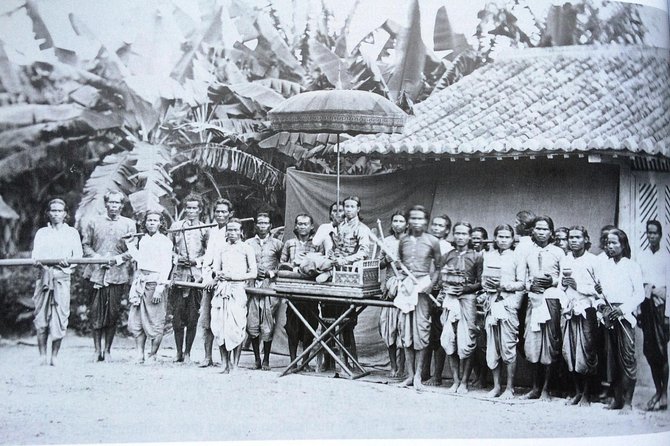
The presentation begins in 1866, when Cambodia was still largely unknown to European audiences. Photography was new, and early images of Angkor Wat helped introduce the temples to the wider world. That opening gives the show a useful sense of scale. You are not simply looking at old pictures. You are watching the country enter the photographic age.
From there, the story moves through major periods of Cambodian life. Colonialism, independence, the cheerful popular culture of the 1960s, Apsara dance, the Vietnam War, the Khmer Rouge struggles, and the later return of peace all receive a place in the sequence.
That range is the show’s greatest strength. It links the ancient world you see around Siem Reap with the recent past that still shapes Cambodia today.
More shows in Siem Reap:
- Phare: The Cambodian Circus Show in Siem Reap
★ 5.0 · 1,925 reviews - Siem Reap: Phare, the Cambodian Circus Show Tickets
★ 4.9 · 1,850 reviews - Siem Reap: Apsara Show Including Dinner & Hotel Pickup
★ 4.6 · 615 reviews
Entering Bambu Stage at 7:00 pm
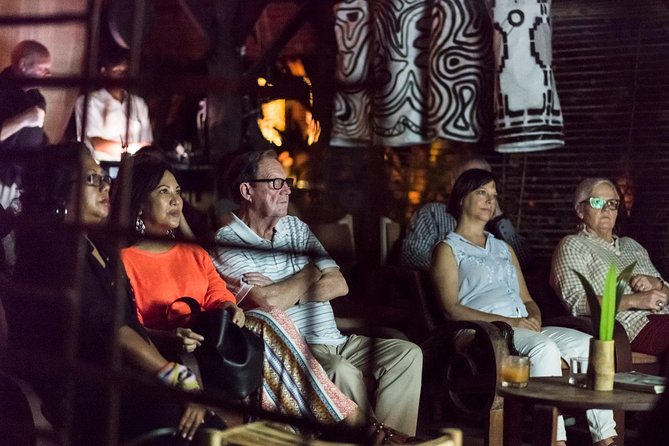
The performance begins at 7:00 pm at Bambu Stage in Siem Reap. That timing works well if you have spent the day visiting temples and want an evening activity that is thoughtful but not exhausting.
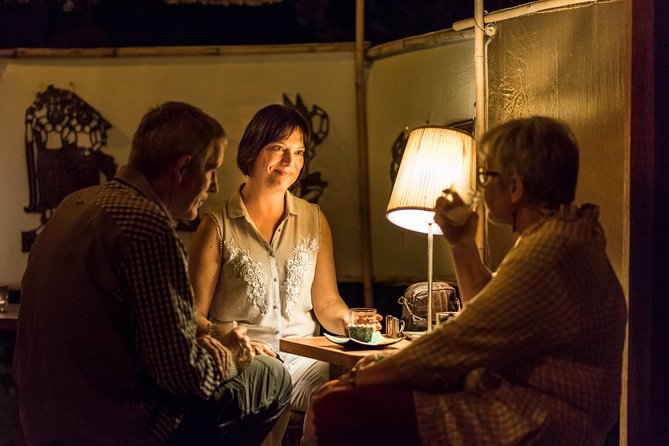
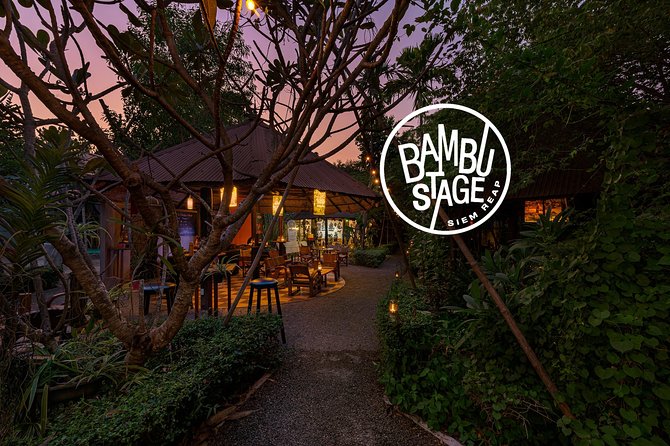
Bambu Stage is not presented as a plain meeting room. Its gardens are described as a delight, and the welcome is warm. I would allow a little time around the start of the evening so you are not rushing directly into the show. The garden setting helps create a calm transition from the busy streets of Siem Reap to the more reflective mood of the presentation.
The venue itself is part of the value. At $19 per person, you are paying for more than a quick projection of photographs. You receive an admission ticket to a staged cultural presentation in a pleasant setting, with narration and music included.
The available details do not give a seating plan or group size, so I would not book this expecting a large concert hall production. The appeal is more intimate and focused: images on screen, a spoken thread, and music that gives the material emotional shape.
Following the first photographs of Angkor Wat
The opening section reaches back to 1866, when the earliest photographs of Angkor Wat were taken. This is an excellent starting point because it connects directly with what brings most people to Siem Reap in the first place.
Old photographs can change the way you see a familiar monument. Angkor Wat is now one of the world’s most photographed sites, but the early images show it in a different visual age. The temple appears as part of an unfamiliar Cambodia, before modern tourism and mass photography changed the way the site was seen.
The archive material associated with John Thomson and Emile Gsell gives this section particular interest. Their names matter because the presentation is not relying only on modern images or general historical narration. It draws from photographers who documented Cambodia during an important period of early Western photographic contact.
You should expect the images to do much of the work. The show is animated by still and moving pictures, so the pace comes from the changing archive rather than from a conventional plot with actors. If you enjoy old photographs, visual records, and history told through original material, this opening should be one of the strongest parts.
From colonial rule to Cambodian independence
After the early photography, the show carries you through the colonial period and toward independence. This section helps explain how Cambodia changed as outside political forces became more powerful and as the country moved toward a new national identity.
The exact political detail provided for the presentation is limited, so you should not treat it as a full academic lecture. Instead, expect a visual overview that uses photographs and footage to show the passage of time. The format is useful for visitors who want context but do not want to spend an entire evening with a textbook-style talk.
I like this kind of approach because photographs can make historical change easier to grasp. Buildings, clothing, public gatherings, transport, ceremonies, and faces can reveal shifts that are hard to convey through dates alone.
The show also gives you a better frame for understanding modern Cambodia. After a day spent looking at centuries-old temples, it is useful to see the country as a place that continued to change through colonial rule, political transition, and independence.
A few more options around Siem Reap worth reading up on
- Angkor Wat Sunrise or Sunset Tour with Guide from Siem Reap
★ 5.0 · 12,109 reviews - Siem Reap: Angkor Wat: Small-Group Sunrise or Sunset Tour
★ 5.0 · 9,444 reviews - From Siem Reap: Kampong Phluk Floating Village Tour by Boat
★ 4.9 · 6,979 reviews - Sunset tour of Kampong Phluk stilts home village on the Tonle Sap
★ 5.0 · 4,865 reviews
The joyful 1960s and the sound of Apsara dance
The presentation includes Cambodia’s joyful 1960s, Apsara dance, and the country’s large pop culture. This section offers a needed change in mood after the earlier discussion of colonialism and political change.
Apsara dance is closely linked with Cambodian identity, and its inclusion helps connect traditional culture with the modern period. The show does not treat Cambodian culture as something frozen in the temple age. Instead, it presents dance, music, and popular life as part of a living society.
The reference to Cambodia’s pop culture is also important. It suggests that the country’s modern cultural life had its own energy and creativity before later conflicts disrupted it. The contrast between the joyful 1960s and the difficult years that follow can be especially powerful.
A narrator and musician accompany the images. That combination gives the presentation more character than a silent slideshow. The music helps carry you between sections, while the narration provides the basic thread that ties the archive together.
A previous audience member found that roughly 45 minutes passed quickly, which is a useful clue about the show’s pace. The advertised duration is approximately one hour, so allow about that much time, but be prepared for the main presentation to run closer to 45 minutes.
The Vietnam War and Khmer Rouge years
The later historical sections address the Vietnam War and the Khmer Rouge struggles. This is where the presentation becomes more serious, and rightly so. Cambodia’s recent past includes enormous suffering, and a show about the country’s photographic record cannot skip those years.
You should approach this part with respect. The available description does not provide details about how graphic the images are, so I would not assume that every photograph will be easy to watch. The subject matter alone tells you that the mood shifts sharply from the earlier scenes of dance, music, and popular culture.
The value here is the continuity of the story. The show does not present Cambodia as only an ancient civilization or as a place defined by tragedy. It places the difficult years within a longer sequence that begins with early photographs, passes through colonialism and independence, shows cultural confidence in the 1960s, and then follows the country through war and the Khmer Rouge period.
That broad view matters. You see how quickly a society can move from public celebration to crisis, and why the return of peace carries such weight.
Reaching an era of peace
The final part brings the story toward peace. This ending gives the presentation a sense of direction rather than leaving you with only images of conflict.
The phrase an era of peace is simple, but it carries real significance after the sections on war and the Khmer Rouge years. The final mood should help you leave with a fuller understanding of Cambodia, one that includes loss but also survival and renewal.
I appreciate that the show does not stop at the temples or at the darkest chapter of recent history. It allows the country to be seen across time, with periods of creativity, hardship, and recovery all included.
For someone visiting Siem Reap, this makes the show a useful companion to temple visits. Angkor gives you a view of Cambodia’s distant past. Snap! gives you a visual route through the more recent decades.
How much value you get for $19
At $19 per person, this is a moderate evening expense in Siem Reap. The value depends on what you want from a cultural activity.
You get an admission ticket, a presentation lasting approximately one hour, archive photographs and moving images, narration, music, and the Bambu Stage setting. The show also covers a large amount of history in a compact period, which is useful if your schedule is full.
I would consider the price fair for anyone who values cultural context and original visual material. It is less compelling if you want a full-length stage performance, a large dance production, or a hands-on activity.
The booking data suggests that people reserve this experience an average of 17 days ahead. That makes advance booking sensible, especially if your evening schedule is fixed. A mobile ticket also means you can keep the confirmation on your phone rather than arranging a paper voucher.
Confirmation is normally sent at booking. If you book within one hour of the start, confirmation is provided as soon as possible and depends on available space. Because the experience is non-refundable and cannot be changed, you should check your date carefully before paying.
Who will enjoy Snap! Back to Cambodian Archives
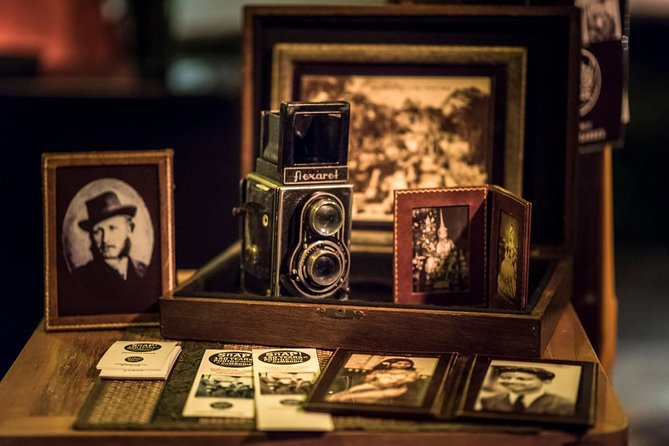
I would recommend this show to you if you like history told through photographs, documentary material, and personal stories of place. It is also a good choice if you want a quiet cultural evening after visiting Angkor.
The presentation should suit most participants, and service animals are allowed. The venue is near public transportation, which makes the 7:00 pm start easier to fit into an evening plan.
Families may appreciate the short format, though the serious material about war and the Khmer Rouge years means parents should decide if the subject is suitable for younger children. The information available does not specify age guidance or the exact content of every image.
You should think twice if you need a highly detailed historical lecture. The show appears designed to give a broad, emotional overview rather than a fully developed course in Cambodian politics. Likewise, if you prefer live performers at the center of an event, the photographs and footage remain the main focus here.
Practical planning for your evening
Book ahead if you know you want to attend. The show is commonly reserved well before the date, and advance booking helps secure your place and saves time at the venue.
Plan to arrive with your mobile ticket ready. The confirmed start time is 7:00 pm, and the presentation is compact enough that arriving late could mean missing part of the opening sequence, especially the important section on the first photographs of Angkor Wat.
Because the setting includes gardens, I would treat the venue as part of the evening rather than as a place to rush through. The available feedback praised the garden atmosphere and the welcome, so give yourself a little breathing room before the show begins.
The program is approximately one hour, with one account placing the main presentation at about 45 minutes. That makes it easy to combine with dinner or another evening plan, but you should leave enough time for the full advertised duration.
Should you book this Siem Reap experience?
Book Snap! Back to Cambodian Archives if you want a focused introduction to Cambodia’s modern history, especially through old photographs and moving footage. The work linked with John Thomson and Emile Gsell, the narration, the musician, and the Bambu Stage gardens give the evening more substance than a basic photo display.
The strongest reason to go is the way the program connects Angkor Wat with colonialism, independence, 1960s culture, war, the Khmer Rouge years, and peace. The main caution is its short format and serious subject matter. You will not get a long theatrical production or a detailed lecture.
For $19, it is a sensible choice for an evening of history and culture in Siem Reap. Reserve it if that sounds more appealing than another loud night out, and check the date carefully because the ticket cannot be refunded or changed.
FAQ
Where does Snap! Back to Cambodian Archives take place?
The experience takes place at Bambu Stage in Siem Reap, Cambodia.
What time does the show start?
The show starts at 7:00 pm.
How long does the experience last?
The advertised duration is approximately one hour. The main presentation has also been described as lasting about 45 minutes.
What is included in the ticket?
Admission to the show at Bambu Stage is included.
How much does the experience cost?
The listed price is $19 per person.
What historical periods does the show cover?
The presentation covers Cambodia from 1866 through colonialism, independence, the 1960s, the Vietnam War, the Khmer Rouge struggles, and an era of peace.
Which photographers are featured in the archive?
The show includes archived footage and photographs connected with John Thomson and Emile Gsell.
Is a mobile ticket available?
Yes. The experience provides a mobile ticket.
Can I cancel or change my booking?
No. The experience is non-refundable and cannot be changed for any reason.
Newest reviews from Siem Reap
- Village walking & Cooking class in Siem Reap★ 5.0 · 2 reviews
- Ultimate Sunrise to Angkor Wat, Angkor Thom and Bayon Temple★ 5.0 · 3 reviews
- Angkor Wat Sunrise Shared Tours: Bayon, Ta Prohm And Kravan★ 5.0 · 1 review
- Twilight Tastes of Siem Reap Include Dinner★ 5.0 · 13 reviews
- Two Days Tour Angkor Complex; Banteay Srei, and Kulen Hill★ 5.0 · 1 review
- Trekking Tour at Phnom Kulen National Park from Siem Reap★ 5.0 · 3 reviews
- Trip to Big Circle included Banteay Srey and Banteay Samre★ 5.0 · 1 review
- Full-Day Private Tour of Angkor Wat with Pick Up★ 5.0 · 12 reviews
Show, compared.
Phare: The Cambodian Circus Show in Siem Reap
Read our review →
Apsara Dance Show & Dinner with Tuk-Tuk Transfers
Read our review →
Dinner and Traditional Show with Hotel Transfer
Read our review →

Browse the lists this tour appears in